XV B-MRS Meeting/ XV Encontro da SBPMat Campinas (SP), Brazil, September, 25 – 29, 2016
In numbers
– Almost 1,800 registrations.
– 95% from Brazil (from all regions and 23 states of the country, with São Paulo in front, with 30% of the total registered).
– 23 countries represented.
– 62% students: 42% post-graduates and 20% undergraduates.
– More than 2,000 papers presented (80% posters) in the 20 symposia and 2 workshops.
– 9 countries represented in the organization of the symposia and workshops.
– 8 plenary lectures, 3 discussion panels, 2 tutorials and 12 technical presentations of companies.
– 12 lecture rooms for simultaneous oral presentations.
– 43 exhibitors.
– 18 awards given to students.
Messages from the organization
Publication of manuscripts. The articles based on contributions presented at the conference and submitted to certain IOP journals (see list in the link), provided they approved after conventional peer review, will be highlighted in an online collection dedicated to B-MRS. Submission will remain open for a few months (approximately 6). Instructions and additional information:http://sbpmat.org.br/en/publicacao-de-trabalhos-do-xv-encontro-da-sbpmat/
Proceedings. The annals of the XV B-MRS Meeting (ISBN:978-85-63273-29-1) with the abstracts of all papers presented are available online:http://sbpmat.org.br/15encontro/anais/home/
Multimedia coverage
Multimedia report. Learn about or look back on the various sessions on our new site through an account of the event, with photos, videos and archives of the presentations.Here.
Photos. See the full album of photos of the event in Google Photos and download your favorites. Here.
Files of the presentations. In Slideshare, access all files of the plenary talks, panel discussions and closing event that were provided by the authors. Here.
Videos. Watch all the brief speeches of the organizers and participants of the event. Here.
Opportunities
Inscripciones para el 26º Programa Becas de Verano CNPEM. Aqui.
Post-doc at IPEN (Brazil) on electroceramics with FAPESP scholarship. Here.
The comprehensive and diverse range of activities of the program was undoubtedly one of the highlights of the fifteenth edition of the annual event of the Brazilian Materials Research Society, the XV B-MRS Meeting. The organizing committee of the event, led by Professors Ana Flávia Nogueira (IQ-Unicamp, Brazil) and Mônica Alonso Cotta (IFGW-Unicamp, Brazil), envisaged and made possible a technical program consisting of tutorials, laboratory visits, plenary lectures, panel discussions, oral presentations, poster sessions, technical lectures of companies and exhibition stands.
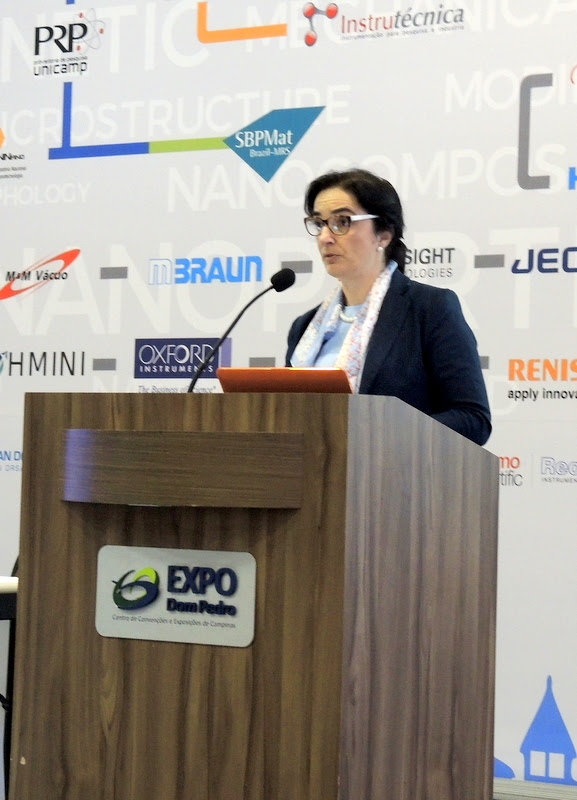
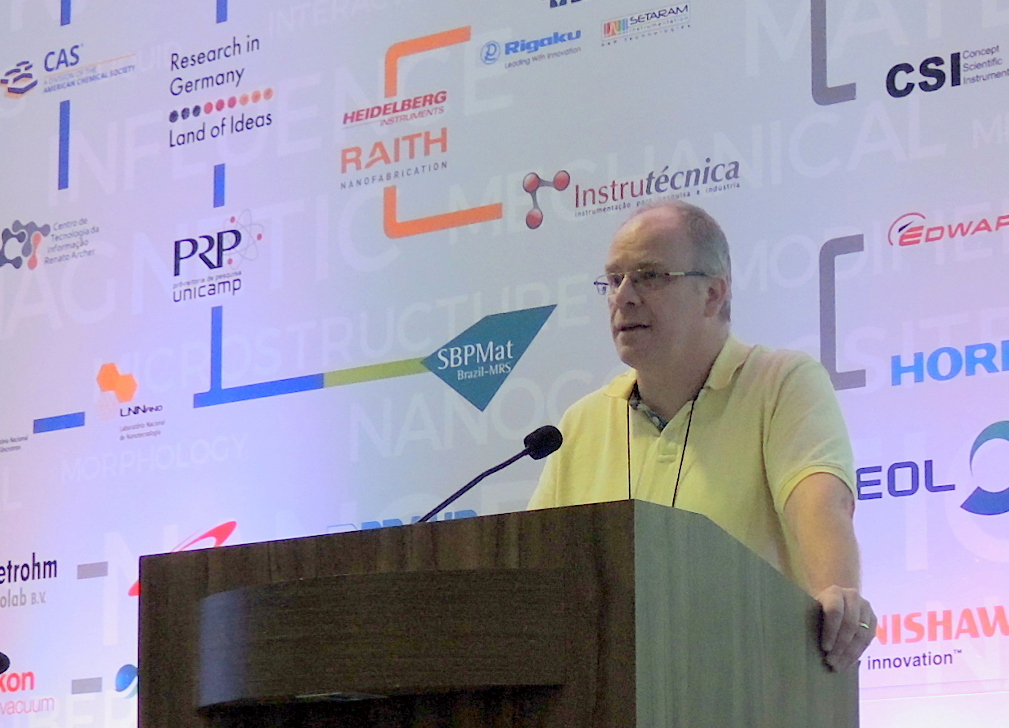
Chairlady of the event Mônica Cotta: diverse themes and formats over 11 hours of sessions.
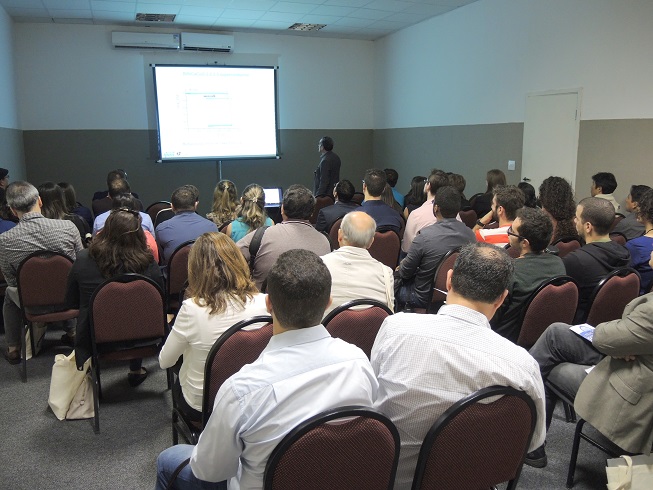
The proposal was overwhelmingly and enthusiastically accepted by the participants of the event, who packed auditoriums, halls and exhibitors area of the convention center Expo D. Pedro, in Campinas (state of São Paulo), to get to know, present and discuss recent advances and perspectives of Materials Science and Engineering. The number of participants registered (about 1,800) exceeded the expectations of the organizing team, given Brazil`s current resource scarcity.
Chairlady Ana Flávia Nogueira: grateful and satisfied with the results achieved in a difficult environment.
The various presentations and interactions during the event were mainly in English, but many different accents could be heard. In fact, the event was attended by participants from 23 countries from North and South America, Europe and Asia. Internationalization was also present in the organization of the meeting, through the symposium coordinators from Canada, Finland, France, Germany, Portugal, Spain, Sweden and USA, and obviously from Brazil.
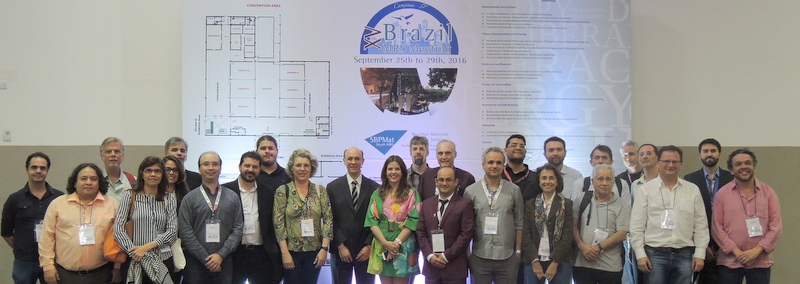
Some of the coordinators of the symposia alongside the chairladies and B-MRS president at the entrance hall of the convention center.
In the numerous sessions, advances and perspectives were discussed regarding the various types of materials (nanomaterials, biomaterials, two-dimensional, surface and interface materials, electronic organic materials, electroceramics, advanced metals, nanocellulose, semiconductors and superconductors, among other). Not only research but also technology and innovation in materials were included in the presentations and discussions, which covered methods for the discovery of new materials, manufacturing processes, studies on structure and properties of materials, and experimental and theoretical techniques to perform them. There were also countless references to material applications in segments such as energy, health, transportation, packaging, electronics and photonics, and others, including the presentation of cases in which research and development have generated innovation. These moments showed the strong relationship of materials research with the economic growth of countries, with improved quality of life and with the preservation of our planet’s natural resources.
B-MRS president Osvaldo N. de Oliveira Jr: Relationship of materials research with society is stronger than ever.
In fact, it was sustainability that guided the organizers of the event to not print the program books at this year’s meeting. Instead, the participants had a good internet connection and an app that could be downloaded to their mobile devices using a QR code provided at the entrance of the convention center or available in the virtual stores of Google and Apple. The app also included a QR code reader through which participants could obtain the abstracts of the papers presented in the poster sessions.
The XV B-MRS Meeting received support from the Brazilian funding agencies Capes, CNPq and FAPESP, as well as other entities, and sponsorship of the exhibiting companies.
SUNDAY AFTERNOON TUTORIALS AND VISIT TO CNPEM
Pesquisa de impacto na tarde de domingo.
The intensive schedule began on Sunday afternoon, before the opening of the event, with two tutorials. For nearly 3 hours, more than 200 participants learned about high-impact research, in particular concerning the publication of scientific articles with helpful pointers from Professor Valtencir Zucolotto (IFSC-USP, Brazil). The author of over 140 papers published in international journals, with more than 4,000 citations according to Google Scholar, Zucolotto developed and teaches courses on this subject in Brazil and abroad.
In parallel, in another room of the convention center, about 30 participants hunched over their laptops received theoretical and practical training in computer simulations by professors Pedro Autreto (UFABC, Brazil) and Ricardo Paupitz (UNESP, Brazil).
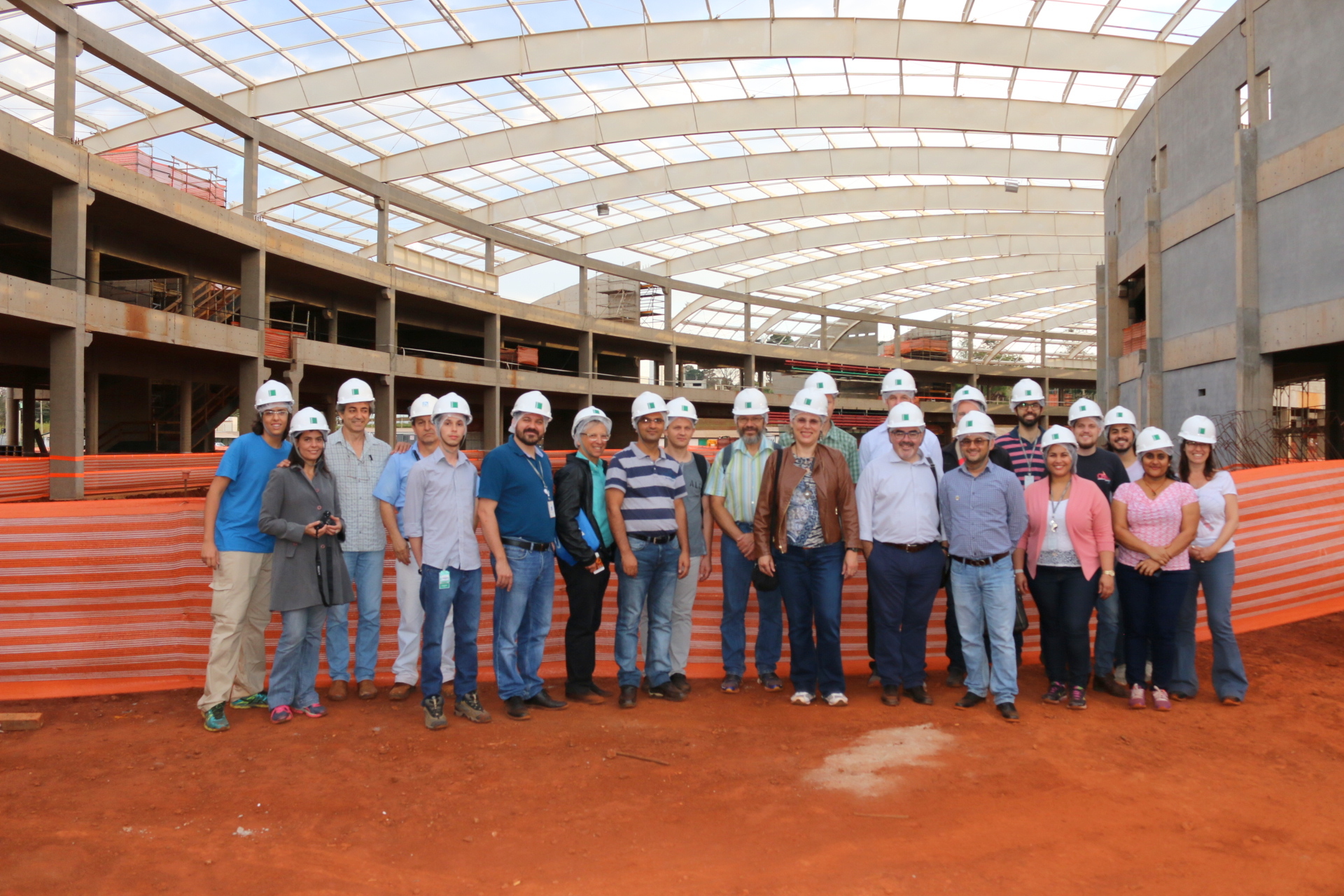
The group that visited the CNPEM, standing at the giant ring that will hold accelerated electrons at Sirius.
While the tutorials took place at Expo D. Pedro, about 10 kilometers away, a third group of participants of the XV B-MRS Meeting, composed of senior researchers from Brazil and abroad, visited the synchrotron light, nanotechnology and biosciences national laboratories, open to the international scientific community, which comprise the National Center for Research in Energy and Materials (CNPEM). The group also toured the under-construction facilities of Sirius, which will be the second fourth-generation synchrotron light source of the world when it opens before the end of this decade.
SUNDAY NIGHT: OPENING CEREMONY, TRIBUTES AND COCKTAIL
In the evening, at 7:30, almost 700 people occupied the largest room in the convention center to attend the official opening session of the event. “Meetings like this are celebrations of what scientists and technologists can do for the world, for humanity”, said the president of SBPMat, formally opening the XV B-MRS Meeting. On the stage, in addition to Professor Novais de Oliveira (IFSC-USP, Brazil), the table included the chairladies of the event and Professor Roberto Mendonça Faria (IFSC-USP, Brazil) representing the International Union of Materials Research Societies (IUMRS). They thanked the organizers and supporters, whished the participants a good event and announced some information about the event.
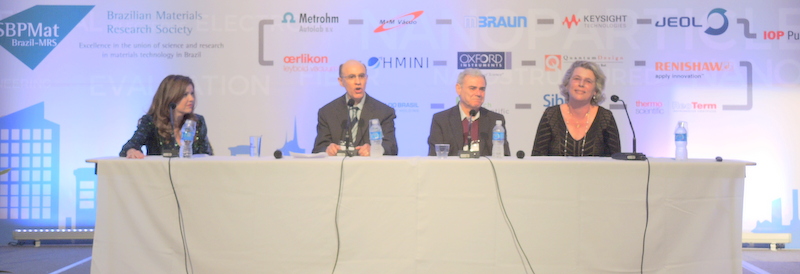
From the right, Ana Flávia Nogueira, Osvaldo Novais de Oliveira Jr, Roberto Faria e Mônica Cotta.
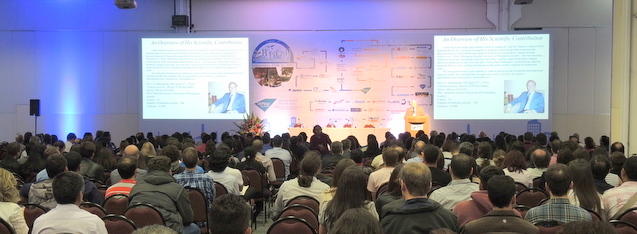
Next, tributes were paid to two scientists, who besides having actively participated in the history of B-MRS, developed international impact studies in the materials field. The first tribute was to Professor José Arana Varela, who passed away last May at age 72. Varela, who made important contributions in the field of ceramics (electroceramics, thin films, nanostructured ceramics, applications in sensors and varistors, among others), was one of the founders and presidents of B-MRS. A former student and friend of Varela, Professor Edson Roberto Leite (UFSCar, Brazil), gave a presentation on the scientific career of his former mentor, highlighting his pioneering work, his international recognition and his success in collaborating with companies. Leite used photographic slides to highlight Varela’s greatest legacy: friends and former students who continue his work. In fact, the next day many of these former students and friends also made a tribute to the master in one of the event symposia (“X Brazilian Electroceramics Symposium – In Honor of Prof. Dr. Jose Arana Varela”).
José Arana Varela was present through the In Memoriam tribute.
Before announcing the other tribute at the event opening, Professor Novais de Oliveira Junior took the floor to announce that SBPMat would soon launch its new site and showed a demo version. One of the objectives of the site, explained the president, is to highlight scientific images produced by the materials community, placing them as a background image on all pages, and he then invited those present to send their images.
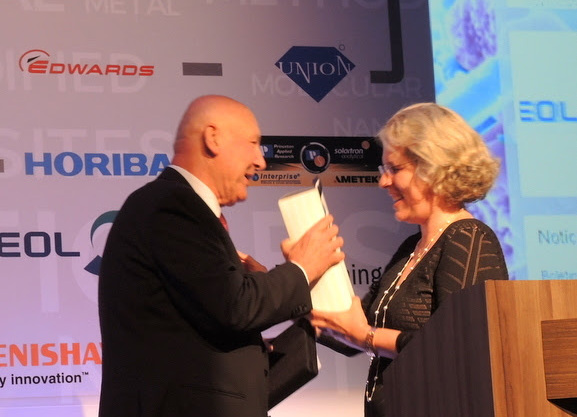
Distinction to Aldo Craievich.
The second tribute of the night was a distinction that B-MRS awards annually to scientists with outstanding carreer, asking them to present a lecture (Memorial Lecture “Joaquim da Costa Ribeiro”). The scientist elected was Professor Aldo Craievich (IF-USP, Brazil). Argentine, Craievich developed his research career mainly in Brazil and France. In addition to having made outstanding contributions to the study of structures and structural transformations in solids, the scientist was one of the protagonists in the design, construction and operation of the National Synchrotron Light Laboratory (LNLS), located in CNPEM, whose research resources have impacted the international Materials community – mainly the Latin American community. Craievich also participated in the creation process of B-MRS from the very beginning.
In his memorial lecture on advanced materials characterization, Professor Craievich drew attention to a limitation of one of the most widely used techniques to determine the structure of materials, X-ray diffraction. In a historical perspective, he commented on the important discoveries achieved over more than 100 years of using X-ray diffraction. However, the results obtained by this technique, explained Craievich, only show the average of the numerous data captured at the various locations of the sample and in consecutive sampling moments. Therefore, the X-ray diffraction cannot describe situations that are outside the average, but have great influence on the material properties: the material defects and the configurations formed by atoms in motion for very short time scales. These limitations, Craievich commented, began to be overcome with the use of fourth-generation (e.g., synchrotron light sources such as Sirius) and fifth-generation (e.g., the free electron laser) X-ray sources. At the end of a presentation abundant in scientific references, he presented a comic-strip of the famous Argentine cartoonist Quino to prompt future users of advanced X-ray sources to innovate in their experiments, and using photographs he shared some personal memories. See the file of Aldo Craievich´s presentation.
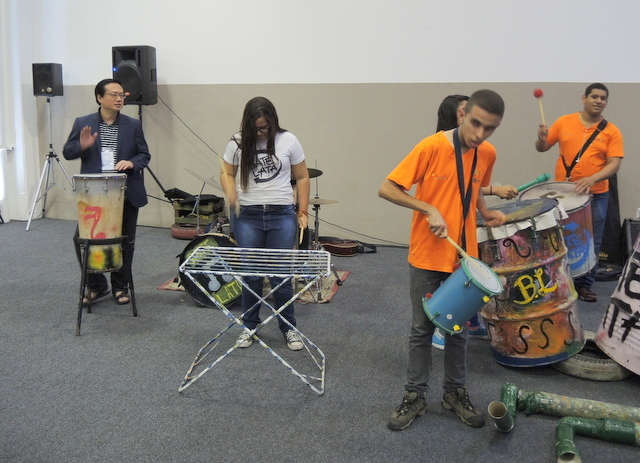
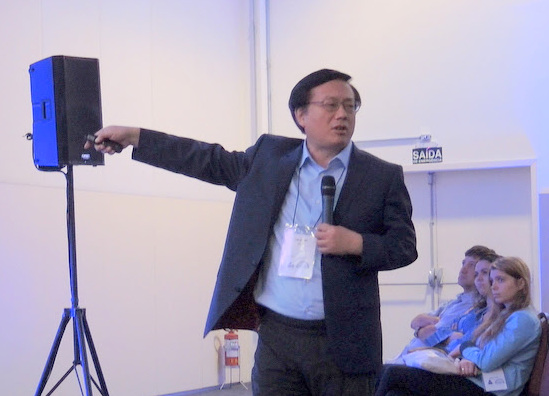
Scrap-materials instruments in the hands of Bate-Lata… and in plenary speaker Lei Jiang hands.
At around 8:45 pm, after the tributes and presentations, music, food and drink awaited the audience at the other side of the doors. Music was provided by the Bate Lata group, made up of children and adolescents associated to a program of sociocultural inclusion through music. The young musicians sang and played well-known popular Brazilian music, using traditional instruments and other instruments manufactured by them from scrap materials (clothesline, oil cans). The cocktail menu (bean broth, drumsticks, croquettes, cold beer and soft drinks) provided the mood of a São Paulo state bar. The confraternization resulted in many encounters and renewed encounters, anticipating the interactions and camaraderie that would reign until the end of the event.
ORAL AND POSTER SESSIONS OF THE SYMPOSIA.EXHIBITORS.
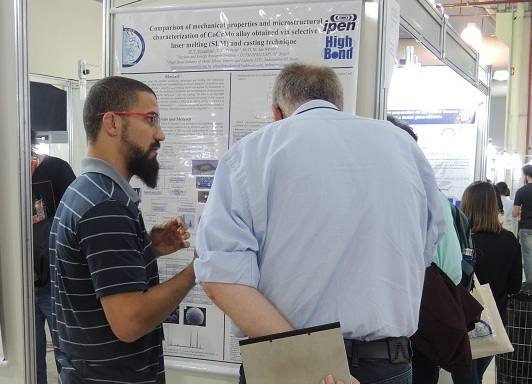
Between Monday and Thursday, more than 2,000 contributions were presented by their authors (undergraduate students to senior researchers) in the 20 thematic symposiums, in the form of posters, oral presentations and invited talks.
The event program also included two workshops, composed mainly of invited presentations. One was completely organized by students of the University Chapters of SBPMat. Another discussed sustainable development of materials with applications in social impact areas.
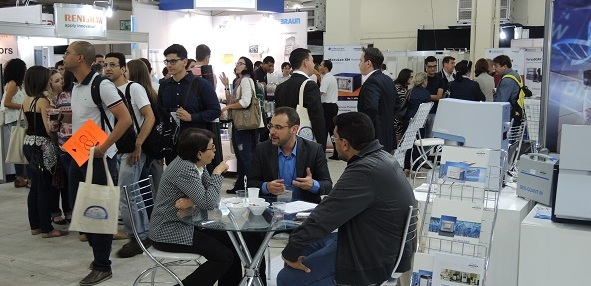
At the exhibition, the number of exhibitors set a record in the history of meetings of the society: there were 43 institutions and companies displaying their products and services (mostly scientific instruments) in the stands and in the 12 technical presentations.
Morning and afternoon coffee breaks: participants replenish their energy with coffee, juice and sweets, while interacting with each other and with the exhibitors.
DISCUSSION PANELS AT LUNCH TIME
At the time usually designated for lunch, from 12:00 to 2:00 pm, in this edition of the event it was possible to nourish the body while nourishing the intellect with the discussions that took place in the panel discussions.
Almoço + oportunidades na Alemanha.
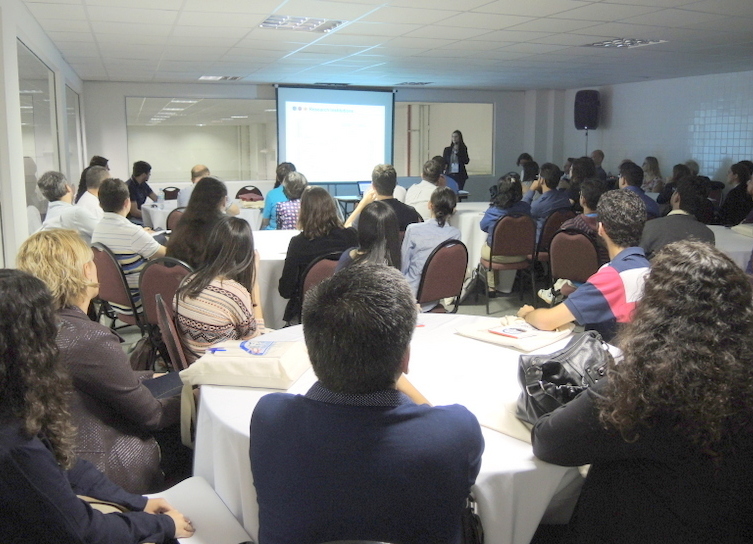
On Monday, the session organized by the campaign “Research in Germany” of the German government, which also sponsored the snacks, presented research opportunities in Germany. About 80 participants, sitting at round tables, attended presentations of the German Academic Exchange Agency (DAAD), of “Research in Germany” campaign and of researchers who work or have worked in German institutions. First, a panorama of the robust education and research German was presented (thousands of various research institutions, about 2.5 to 2.8% of their GDP invested in R&D, 600 thousand people working in this segment). In the last decade, as it was said, the system has increased the number of foreign researchers – a number that already exceeds fifty thousand. Also shown were several grant opportunities and other resources that can be used by Brazilian academics of all levels of educational training to develop research projects in Germany, as well as the links to find more information. Finally, German researchers spoke briefly about their institutions and research groups on advanced materials, materials for electronics and optoelectronics, and medicine/biomaterials. The “Science Lunch”, as this session was called, ended in a very participatory format: public and speakers seated at the round tables while interacting, possibly about potential collaborations. Six archives of the presentations in this session are available at B-MRS Slideshare.
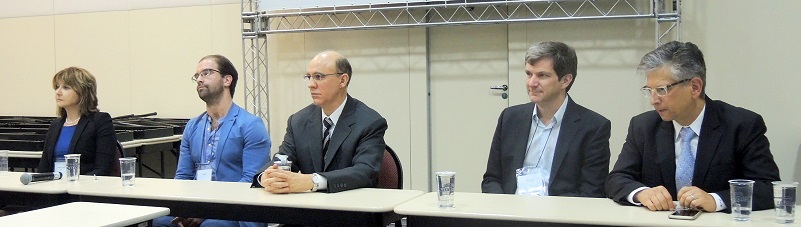
Panel of editors. From the lefts: Sinnott, Smith, Novais de Oliveira (moderator), Samuel e Weiss.
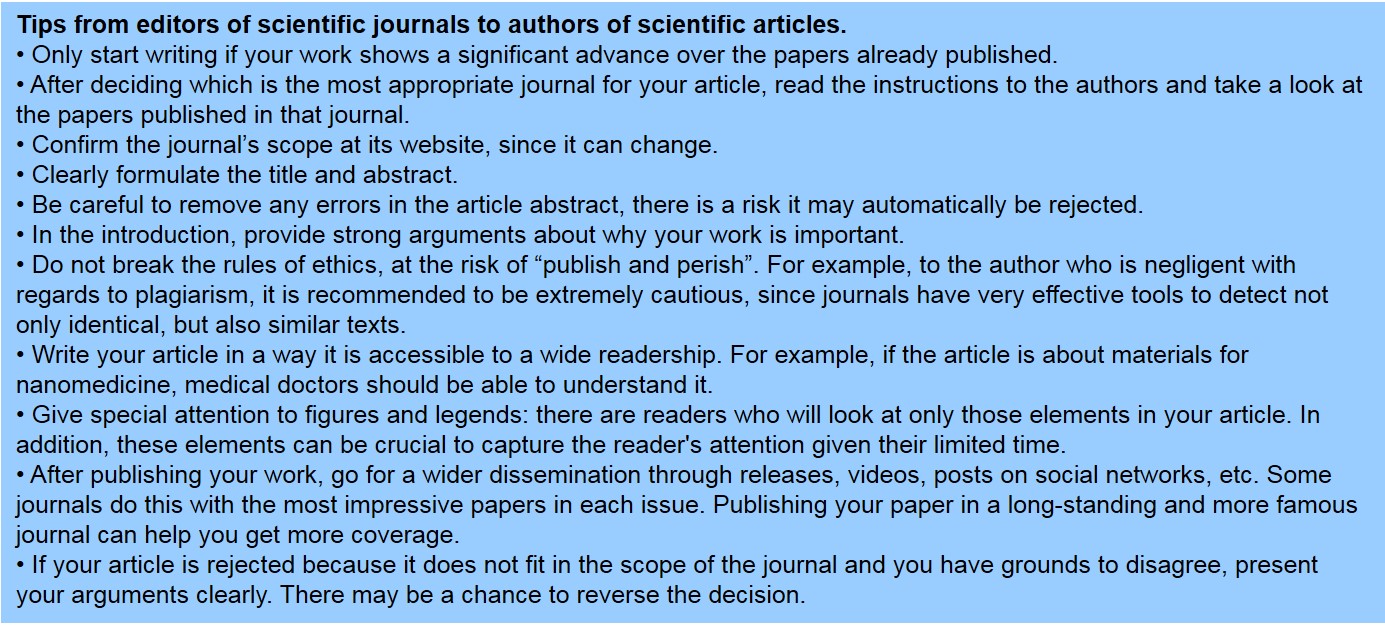
The issue of scientific writing and publication, which had already been discussed Sunday afternoon, resumed on Tuesday at lunchtime. The session, called “Meet the editors” consisted of a discussion panel that brought together a director and the editors-in-chief of scientific journals of the area to talk about the publication of scientific articles. The panelists were: Ifor Samuel (editor-in-chief of Synthetic Metals, from Elsevier, the first journal devoted to organic electronics), Paul Weiss (editor-in-chief of ACS Nano, of the American Chemical Society, impact factor 13,334), Susan Sinnott (chief editor of Computational Materials Science, Elsevier) and Tim Smith (director at the publishing house of the Institute of Physics, IOP). While the audience of about 80 people, savored snacks, sweets, juices and fruits offered by IOP, the editors briefly presented their journals and Tim Smith talked about the set of publications of IOP Publishing in the Materials area. Smith explained that this group of journals recorded a 560% increase in articles downloaded from Brazil in the last 10 years. He also announced that IOP Publishing will conduct a pilot project (experimental) of double-blind peer reviews from January to December 2017, as an option for authors of the journal Materials Research Express. In this mode, the names and affiliations of the authors are removed from the articles before they are sent to the reviewers. The project, Smith said, will be done in response to the demands from sectors of the Materials and Life Sciences communities. A central theme of the speeches of the panelists regarded suggestion to authors who want their articles published (see box). At the end of the session, the panelists answered several questions from the audience.
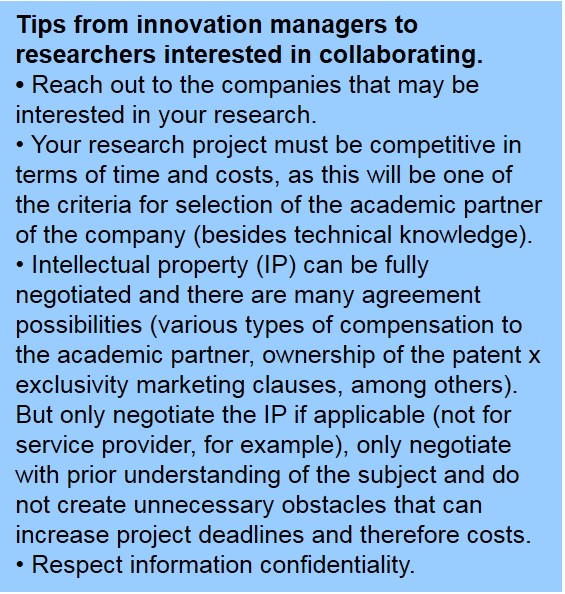
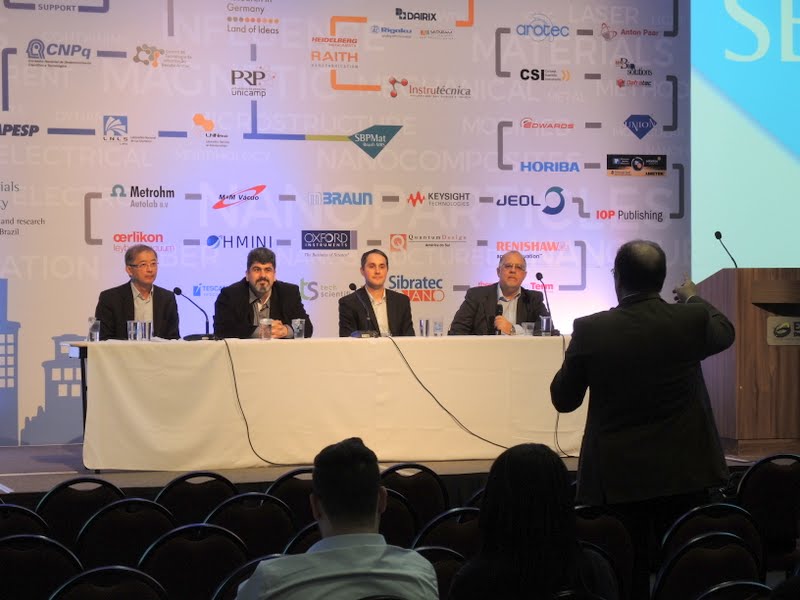
In the discussion on Wednesday, the theme was the contribution of materials research concerning the generation of technological innovation and competitiveness in companies. The theme was addressed with the presentation of Brazilian cases where innovations are generated from research and development projects carried out jointly by university and industrial enterprises. The panel was coordinated by a scholar of technological innovation, Professor Ruy Quadros (Geosciences Institute, Department of Science and Technology Policy, UNICAMP, Brazil). Quadros opened the session by explaining that in the last 15 years, in a slow and continuous process, companies in Brazil have become more innovative. However, he pointed out that resources for innovation (including cultural) in companies are still incipient, hence the important role of public research in the process. Next, the leader of innovation management of Mahle, André Ferrarese, Master in Mechanical Engineering from USP, presented the company: a multinational supplier of systems of the automotive industry, which has 11 technology centers in the world (with 1,950 employees), with one center in Brazil, in the city of Jundiaí (São Paulo state). To launch an average of 4 new products per year, the company begins the process of innovation with about 130 new ideas, which turn into 23 projects. Throughout the process, Mahle collaborates with various international actors: research institutes, universities, suppliers… Ferrarese presented, in particular, the Brazilian case of a consortium in which Mahle participates, which is dedicated to pre-competitive research (knowledge generation and technology development phase, prior to product development). Tribo-Flex (name of the consortium that refers to their study subject, the Tribology of flex engines) brings together automotive companies, including direct competitors like Fiat, Renault and Volkswagen, as well as research institutions and the São Paulo Research Foundation (FAPESP). The goal is to generate and disseminate scientific knowledge on topics of interest to companies. In the context of the consortium, experimental and theoretical studies, tests, courses, presentations at scientific events, and publication of articles were carried out. The origins of the consortium, Ferrarese explained, go back to 2009 when during an international crisis, some Mahle employees took advantage of their reduced work hours to attend university once a week. The relationship between industry and academia was transformed into the exchange of challenges, later into proposals and finally into projects that already have significant results in reducing the problems of engine components, in addition to preparing masters and doctors who can efficiently bridge the gap between industry and academia. See the file of the presentation.
Discussion on RD&I in Brazil.
The second company represented in the panel was Braskem, also a multinational company, but born in Brazil in 2002. A major petrochemical in the Americas and world leader in the production of biopolymers, the company has over 300 professionals working in the area of innovation, guided by an international scientific board of experts in areas relevant to the company. The company has already generated over 900 patents. Vinícius Galhard Grassi, leader of Polymer Science in the company, who has a Master`s degree in Materials Engineering and PhD in Chemistry from UFRGS, defended in the panel that both the university and companies are necessary for innovation. “Everyone does their part”, he said, showing in a slide the participation of each actor in the various stages of the innovation process (discovery, basic and applied research, product development and production). Companies need to aim at profit and cannot only promote science, said Grassi. Therefore, skills and resources that would be very costly to maintain internally, such as advanced characterization and frontier knowledge, are acquired at the university, where they already exist. Grassi also presented a series of Braskem’s innovation projects at various stages of development: self-healing plastics, smart polymeric packaging and a new polypropylene resin for producing foams, which after 10 years of project has just been released.
The third and final presentation of the discussion panel was given by Professor Milton Mori, executive director of Inova UNICAMP Innovation agency. Mori told briefly about the agency’s history and results. Inova UNICAMP is dedicated to identifying and promoting opportunities to stimulate innovation and entrepreneurship. The agency provides assistance to researchers in the partnerships with companies, support in the patenting process of inventions and their dissemination and licensing, courses, awards and competitions. It also manages the Science and Technology Park of UNICAMP. Founded in 2003, Inova offers a portfolio of over a thousand patents (of which 13% of the technologies are co-authored by UNICAMP and companies). Mori also highlighted the daughter-companies of UNICAMP (as another way to transform the knowledge generated at the university into innovation), which currently generate nearly 22 thousand jobs, according to the calculations of Inova.
PARTY
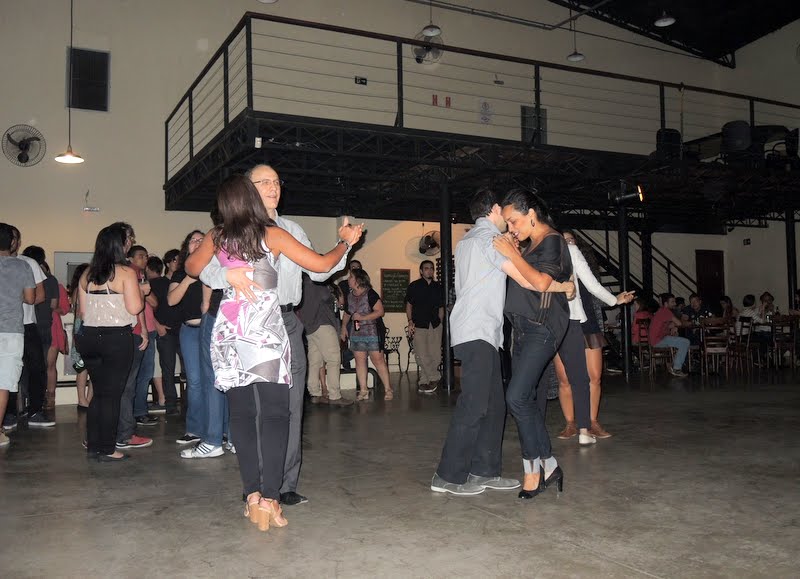
The meeting party.
On Wednesday night, about 200 participants of the meeting gathered under a different context: the party of the event. The venue chosen was Rudá, a bar and dance hall often frequented by students – an abounding group in Campinas, and particularly in Barão Geraldo, which has several higher education institutions.
Participants of the event began arriving shortly after 9:00 pm, but the party really started only after the arrival of the B-MRS president, a little before 11:00 pm. In fact, Professor Osvaldo Novais de Oliveira Junior showed that his expertise is not only in science but also at parties. After he talked to the DJ, the party perked up and several people started dancing forró.
The party was attended mainly by the students, but some professors, including some of the plenary speakers were also there.
PLENARY LECTURES
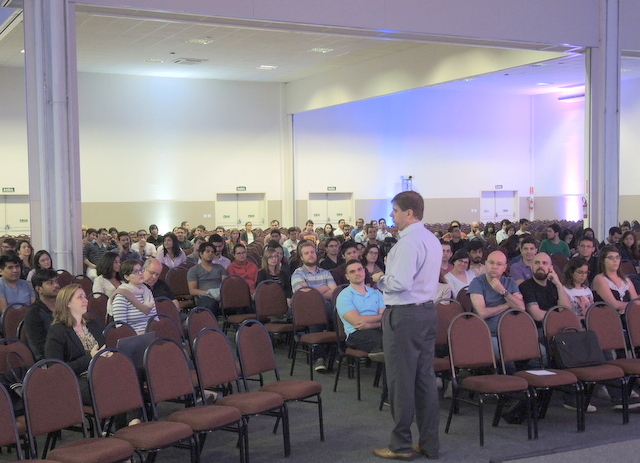
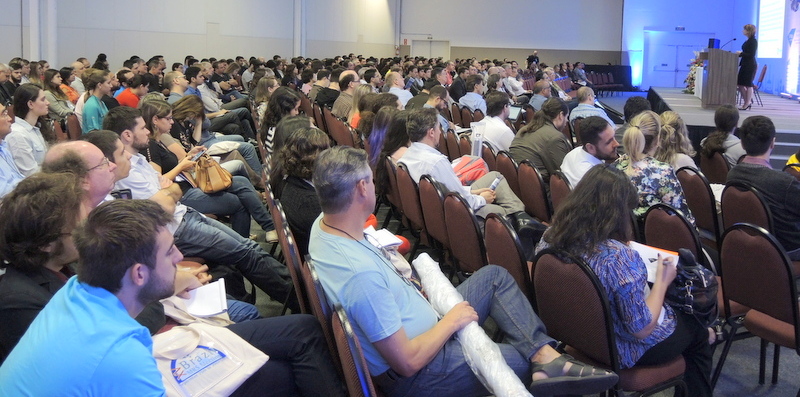
Hundreds of people attended the inspiring plenary lectures of the event.
One of the event highlights were the seven plenary lectures, in which scientists who are international protagonists in their research topics presented themes that are at the frontier of knowledge, ranging from basic research to products already on the market. To the satisfaction of the plenarists and organizers of the event, all plenary sessions were assisted by full auditoriums, with nearly 600 participants.
Elvira Fortunato
The first plenary of the event was delivered on Monday at 8:30 am by Professor Elvira Fortunato, director of the Materials Research Center (CENIMAT) of the University of New Lisbon (Portugal). Among the many important awards, this year she received the Blaise Pascal Medal for Materials Science from the European Academy of Sciences (EURASC). The speech of the Portuguese researcher focused on two materials for transistors, alternatives to silicon (usually used as semiconductor as well as insulator), that are more environmentally friendly and with some additional advantages. Firstly, Fortunato referred to the metal oxides, such as IGZO and ZTO. Besides displaying excellent performance as semiconductors, she explained, these materials offer high transparency – greatly desirable in displays – among other advantages. Metal oxides are already part of prototype screens that are on the market and which also continue being studied to reduce their manufacturing cost. The second alternative material presented by the speaker was no less than the role of paper, which she used to develop the award-winning paper-based transistor, where cellulose not only functions as a support but also as insulator. Flexible, lightweight, recyclable and cheap, Paper-e® opens up numerous application possibilities, from biosensors made in a common printer to intelligent electronic packaging, which when connected to the so-called “internet of things”, automatically updates the information it displays. To make the paper manufacturing process greener and faster, the CENIMAT group uses bacteria. Within two or three days in vinegar, they produce a nanocellulose which may have distinct properties with respect to plant cellulose, such as the desired transparency. See presentation of Elvira Fortunato.
Lei Jiang
The afternoon plenary on Monday, delivered by Professor Lei Jiang (of the Technical Institute of Physics and Chemistry – Chinese Academy of Sciences), primarily explained the extreme states of wettability, such as superhydrophobic surfaces, an area where the number of publications has increased dramatically in the last decade. Jiang began his presentation with an introduction about his way of doing research, which can be summarized as learning from nature, by observing it and drawing simple principles (discovery), to then imitate it (invention) and finally transfer this knowledge to industrial applications. Using microscopes and other relatively simple equipment, Jiang and his collaborators have analyzed the structure, in various micro and nanoscale resolutions, of surfaces of natural plants and animals in contact with water or oil, which have properties that are of interest to humans. Examples: the antifogging properties of mosquito eyes, the leaves of rice and lotus that do not get wet or dirty, butterfly wings in which water flows only in certain directions, the cobwebs and cacti that collect and store water efficiently, the underwater superoleophobicity behavior of fish scales. Inspired by these structures, Jiang designs and develops materials (polymers, ceramic thin films, hydrogels, photonic crystals, and others) and very useful devices (for water collecting systems, for water purification or for generating electricity, among many others). These discoveries and inventions have yielded Jiang and his team a collection of patents and publications in high impact journals, such as Nature, Nature Materials, Angewandte Chemie, Advanced Materials, Accounts of Chemical Research, Small and Journal of the American Chemical Society, among others. Moreover, several of the inventions are already circulating in society, outside the laboratory, such as hydro and oleophobic ties and scarves, which always remain clean; tempered-glass installed in public buildings in Beijing that clean themselves thanks to their superhydrophobic surface; water-oil separation systems that traverse the world’s seas in more than 700 ships, and even an innovative printing system, already used to print newspapers, based on materials with special wettability. In developing countries, research, including basic research, must play a role in economic growth, Jiang said in the lecture, referencing an article of the Brazilian physicist José Goldemberg, published in Science in 1998. During the lecture, the Chinese scientist also referred to a principle observed in nature in various Eastern and Western philosophical works throughout the history of mankind (dialectics, ying yang, i ching), the binary systems whose elements cooperate with each other. For this interaction to occur, giving rise to a new phenomenon, said Jiang, the elements must be at a certain distance, the distance of cooperation, which should be considered in the design of smart materials.
Susan Sinnott
On Tuesday, the event program began with a plenary lecture on computer modeling in nano and atomic scales by Professor Susan Sinnot, director of the department of Materials Science and Engineering at Penn State University (USA) and editor-in-chief of the journal Computational Materials Science (Elsevier). Throughout the presentation, Sinnott related the methods available and shared examples of their use in research on MAX phases, nickel-based superalloys, silicon copper-oxide interfaces and deformation of metals. The lecture showed that computational methods help explain the experimental behavior of materials, they are able to make predictions about their properties, help in the discovery of new materials, are critical to design “tailored” materials for certain applications, and also indicate the best routes to manufacture them. At the end of the lecture, professor Sinnott listed some of the limitations to be overcome in order to improve the computational materials science and expand its use, not only in academia but also in industry. For example, make error bars more accurate and more standard, and achieve greater integration in processing, characterization and simulation of materials. See presentation of Susan Sinnott.
Ado Jorio
A Brazilian scientist, professor at UFMG and with one of the highest H indexes in Brazil (75) was the plenary speaker on Tuesday. Ado Jorio talked about one of his specialities, the characterization of carbon nanostructures by optical techniques (particularly Raman spectroscopy), which, in few words, shed light on matter and measure what happens in the interaction, said Jorio. In these techniques, light is the probe in contact with matter, which he investigates. However, the wavelength of light is at least hundreds of nanometers greater than the study object. This characteristic limits the research… or presents opportunities to go further. Throughout the presentation professor Jorio showed a series of results, from the beginning of this century, in the study of carbon nanostructures, many of these achieved by improving the instrumentation. After sharing tips to enable looking into the tiny intimacy of the carbon structures by optical techniques, Jorio pointed to an interesting branch of his research work. He has participated in studies of the “Indian black earth” found in the Brazilian Amazon, which generally has very poor soil. This soil, however, displays high fertility because of the presence of carbon materials, which remained stable for hundreds of years. Using nanoscience characterization techniques, Jorio and colleagues found particular characteristics on the grain size of these carbon materials. These results can help develop in the laboratory a new black earth that can be used not only in agriculture but also as a way to store carbon sequestered from the atmosphere, where it contributes to global warming. See presentation of Ado Jorio.
Ifor Samuel
On Wednesday morning, the plenary room received the audience with a beautiful photograph of northern lights over the sky of St. Andrews (Scotland) projected onto the video screens. This image anticipated that the speaker, Ifor Samuel, was a professor of the ancient University of St. Andrews (founded in 1413) and that the talk would have much to do with light, specifically with how humans make use of it by means of optoelectronic devices. Optoelectronics, said Samuel, is an area that makes use of the ability of some materials to convert electrons into light and light into electricity, to create devices. In Organic Optoelectronics, the basis of these devices is conjugated polymers, organic materials that can conduct electricity. The discovery and development of these polymers, explained Samuel, was the subject of the Nobel Prize in Chemistry in 2000. Organic semiconductors have interesting features when compared to the conventional ones. They are flexible and light, and are manufactured by means of simple and inexpensive processes, its properties can be adjusted by changing its structure, and they also emit light. With these characteristics, they have numerous applications, some of which are already on the market. One of the best known is the flexible OLED screen, but there are many others and more are yet to come. In his plenary lecture, Samuel presented some new applications of these materials, developed in the Organic Semiconductor Centre at the University of St. Andrews, under his direction. In the area of Biology and Medicine, Professor Samuel showed, for example, a small light emitting device, thin, wearable and disposable, which allows ambulatory treatment of skin cancer by photodynamic therapy. The device has been tested in patients with excellent results both in terms of healing lesions as well as the comfort of treatment. In the communications area, Samuel listed a number of devices for data transmission via LiFi (a type of WiFi which uses a part of visible light of the electromagnetic spectrum to transmit information at high speed). In the field of sensors, he showed polymer lasers that can efficiently detect explosives. Many of the developments achieved by Samuel and his collaborators have generated patents, which are mostly licensed to companies. See presentation of Ifor Samuel.
Paul Weiss
The speaker on Wednesday afternoon was Paul Weiss, distinguished professor of chemistry and biochemistry and of materials science and engineering at UCLA (USA) and founding editor-in-chief of ACS Nano. During the lecture, the audience could know about the skills developed by Weiss, his research group and collaborators for conducting experimental research with molecules, not only to understand their structure and function but also to control them. Paul Weiss shared with the public a series of experiments in which molecules were individually isolated, displaced, placed in controlled environments, stimulated with light, modified, measured and encouraged to form self-assembled structures with specific functions. These scientific achievements have occurred thanks to the knowledge and expertise developed over years of work, and hundreds or thousands of measurements performed on instruments refined by the group. Knowledge and expertise which also helps Paul Weiss to carry out a study project concerning the features and disorders of the brain together with a number of collaborators – including his wife Anne Andrews, responsible for convincing him to devote efforts to a nano and chemical approach of neuroscience.
Anders Hagfeldt
As with all the other lectures, the last plenary lecture of the event clearly exposed the connection of materials research with the needs of society. In this case, the theme was solar cells, devices that produce electricity from sunlight, which is a source of renewable, clean, safe and practically inexhaustible energy. The speaker was Professor Anders Hagfeldt (EPFL, Switzerland), one of the most cited scientists in the world. There are several technologies at different stages of development in the area of solar cells, and they differ mainly by the material responsible for releasing electrons in response to the absorption of photons. In his plenary lecture, Hagfeldt referred to two technologies that are still in the research phase: perovskite solar cells (PSCs) and the dye-sensitized ones (DSSCs). The scientist spoke briefly about the history of the development of both technologies. In the case of DSSCs, the first solar cell with good efficiency in converting light to electricity was done in 1991 and reached the 7.1% mark. Today, 15 years later, the dye used is still the same (it could not be replaced) and its efficiency reached 14.3%. This value is similar to the starting point, 4 years ago, of PSCs, which now reach 22.1% efficiency, but it still does not exhibit stability. If, on the one hand DSSCs cannot replace competing technologies because of their low efficiency, on the other hand, Hagfeldt suggested, they can take ownership of some niches where they make a difference because of their color, low cost and because they are easy to manufacture. In fact, this was the technology chosen to compose kits for homemade solar cells, distributed in secondary schools in Sweden, Hagfeldt’s country of origin. The speaker also showed a number of attempts, some of them very successful, to increase efficiency and stability of solar cells from innovations in manufacture processes and composition of materials, in device structure and in by combinating various materials. See presentation of Anders Hagfeldt.
CLOSING SESSION
The closing session of the fifteenth edition of the annual SBPMat meeting began around noon with a few words and slides by Professor Mônica Cotta. The chairlady highlighted the public rooms full with participants, the packed program, the high participation and interaction of the public and the large number of participants – in spite of the fact that Campinas is not a tourist attraction, she joked. After thanking everyone who collaborated in the organization (SBPMat team, student volunteers) and to all who attended the event, she reminded everyone that the next SBPMat meeting will be in Gramado (RS) and announced that the chairman will be Professor Daniel Weibel (UFRGS).
Then, Professor Osvaldo Novais de Oliveira Junior, representing SBPMat, and Professor Rodrigo Martins, representing the European Materials Research Society (E-MRS) as a former president, signed a cooperation agreement between the two societies to promote scientific collaboration between researchers from Brazil and Europe and in particular to encourage the participation of SBPMat members in the events of E-MRS and members of the E-MRS in the SBPMat meetings, both as participants as well as symposium coordinators.
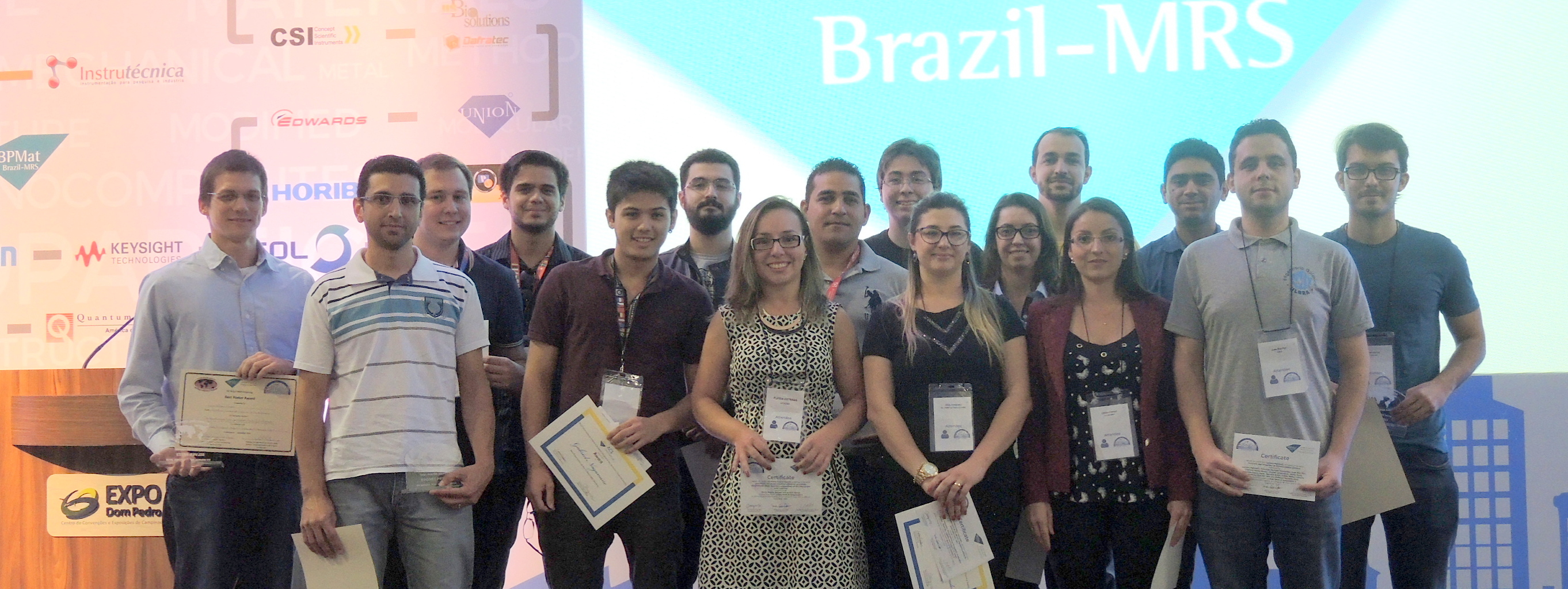
The event ended in a mood of celebration, with the presentation of awards to student authors for the best work presentations of the event. Professor Ana Flavia Nogueira gave thirteen Bernhard Gross awards, granted by SBPMat to the best contribution of each symposium. Then, Professor Cátia Ornelas (UNICAMP), chair of the Brazilian chapter of the American Chemical Society (ACS), gave the ACS awards to the best five works among the winners of the Bernhard Gross award. These students received a cash prize, sponsored by ACS, in addition to the certificate. Then, Professor Elvira Fortunato, representing the E-MRS, announced the winners of the prize offered by the european society to the best works of symposium B (nanocellulose materials). Finally, Professors Roberto Faria and Rodrigo Martins, representing the IUMRS as second vice president and committee coordinator, respectively, handed out the awards granted by that entity to the authors of the best posters of the event related to the sustainable use of raw materials from Brazil. In addition to receiving a trophy and certificate, the three winners were awarded free registration at the next IUMRS event, and the first place will also receive assistance to finance his/her stay. See here the full list of award winners.
Students awards winners.
SEE YOU IN GRAMADO AT THE XVI B-MRS MEETING! (SEPTEMBER 10-14, 2017)
A FAPESP Post-Doctorate Fellowship is available at the Center of Science and Technology of Materials (CCTM), Energy and Nuclear Research Institute, University of S. Paulo, Brazil. CCTM is a member of the Center for Development of Functional Materials, funded by FAPESP.
The candidate will take part on the research on “electric field-assisted sintering of electroceramics”, including experiments on flash sintering (details in (R. Muccillo e E.N.S. Muccillo, J. Eur. Ceram. Soc. 33,2014, p.515-520), X-ray diffraction, scanning electron and scanning probe microscopy, and electrochemical impedance spectroscopy.
The research work aims to provide data for modeling and for proposing physical-chemical mechanisms to explain the flash sintering phenomenon that produces dense ceramic bodies at temperatures lower than conventional, without the grain growth observed in conventionally sintered ceramics.
The interested candidates may send by e-mail a CV (max. 5 pages) with emphasis in their skill on the operation and interpretation of data on electrochemical impedance spectroscopy and sintering, attaching two recommendation letters from their previous supervisors, to Prof. Reginaldo Muccillo (muccillo@usp.br). Additional information may be obtained by sending e-mail to that address. The deadline for the application is November 15, 2016.
Travelling expenses for the selected candidate not living in S. Paulo will be covered by FAPESP.
Information on the fellowship is available in http://www.fapesp.br/en/postdoc.
SociedadeBrasileira de Pesquisa em Materiais (SBPMat)
Brazil – Materials Research Society (B-MRS)
NEWSLETTER – SPECIAL ISSUE Getting prepared for the XV B-MRS Meeting!
Meeting overview
International and interdisciplinary, the annual meeting of the B-MRS (SBPMat) is dedicated to the presentation and discussion of scientific and technological advances in the field of materials.
The 15th edition of the meeting will be held in September, 25 to 29, in the city of Campinas (State of São Paulo), at the Expo D. Pedro convention center.
Technical presentations: about 2,000 abstracts have been accepted.
Participants: more than 1,500 registrations, from 20 different countries (up to the moment).
Exhibition: 43 stands.
Technical program: 8 plenary lectures (including memorial lecture) + 20 thematic symposia with oral and poster sessions and invited lectures + 2 workshops + 2 tutorials + 3 discussion panels.
Scope: nanomaterials, biomaterials, surfaces, organic electronic materials, electroceramics, advanced metals, nanocellulose, experimental and computational techniques for materials study, materials performance under extreme conditions. Materials applications in the segments of energy, healthcare, transportation, neurosciences, electronics and photonics, among others. Also, RD&I, startup ventures, scientific writing and publishing, international collaboration, ethical issues.
We are looking forward to see you in Campinas! See message from the conference chairladies, Prof. Ana Flávia Nogueira (Unicamp, Institute of Chemistry) and Prof. Mônica Alonso Cotta (Unicamp, “Gleb Wataghin” Institute of Physics), here.
Useful information
Accommodation and tickets. See the list of the travel agency Follow Up with hotels, hostels, guesthouses, flights and travel information. Here.
Poster printing service. See options to print your poster at the convention center. Here.
Venue.See videoof the city of Campinas and folder about the Expo D. Pedro convention center.
How to get there.See map.Transfer to the venue will be available for Vitória hotels guests.For public transportation to venue, search bus options, or download the app with real-time info about buses.
Food, parking and services. Expo D. Pedro convention center is adjacent to one of the largest shopping centers in Latin America, which has big range of food, services, shopping and leisure options. The convention center holds some cafés that will be open during the event. Parking at the convention center is available at R$ 8 (12 hours).
Program. Short program and full program (symposium by symposium) are available on the website. Here.
Vacation packages. The Follow Up website also suggests tour packages for before and after the event. Here.
Publication of contributions: The papers presented at the XV B-MRS Meeting may be submitted by their authors to peer review for publication in IOP scientific journals. More info.
Registration. Registration for the event is still open. Here.
Special activities: free registration is required
Tutorial “Hands-on tutorial on simulations using Reactive ForceFields: overview and applications”. Sunday (25/09) from 14h00 to 17h00. Free registration in the registration form of the meeting, where activities can be selected. If you have already filled out the meeting registration form, but you have not selected the activity, log in again and modify your registration. Know more about this tutorial.
Tutorial “School of Scientists: Scientific Writing Tutorial”. Sunday (25/09) from 14h00 to 17h00.Free registration in the registration form of the meeting, where activities can be selected. If you have already filled out the meeting registration form, but you have not selected the activity, log in again and modify your registration. Know more about this tutorial.
Discussion panel “Science Lunch: Research in Germany”. Monday (26/09) from 12h00 to 14h00. This session will bring together scientists and funding agencies from Germany to discuss research opportunities in that country. Limited availability. An informal lunch will be offered to participants. Learn more and complete your registration free of charge. Here.
Discussion panel “Meet the Editors”. Tuesday (27/09) from 12h00 to 14h00. This round table will host Ifor Samuel (editor-in-chief of Synthetic Metals), Paul Weiss (editor-in-chief of ACS Nano), Susan Sinnott (editor-in-chief of Computational Materials Science), and Tim Smith (IOP Publishing director) who will discuss scientific publication. Limited availability. Lunch boxes sponsored by IOP will be offered to participants. Free registration in the registration form of the meeting, where activities can be selected. If you have already filled out the meeting registration form, but you have not selected the activity, log in again and modify your registration.
Discussion panel “Materials Research and Innovation”. Wednesday (28/09) from 12h00 to 14h00. This panel will bring together representatives of companies Mahle and Braskem and innovation agency Inova-Unicamp, who will present cases of university-industry collaboration for R&D in Brazil and discuss the role of materials research in innovation. Limited availability. Lunch boxes sponsored by IOP will be offered to participants. Free registration in the registration form of the meeting, where activities can be selected. If you have already filled out the meeting registration form, but you have not selected the activity, log in again and modify your registration.
Social Program Highlights
During the Opening Ceremony, starting onSunday (25/09) at 19h00, B-MRS will homage Prof. José Arana Varela, past president of the society and one its founders. Prof. Varela passed away on May, this year.
After the Opening Ceremony, by 19h30, B-MRS will bestowed the Memorial Lecture “Joaquim da Costa Ribeiro” on Prof. Aldo Craievich. This recognition is annually granted to researchers with outstanding work in materials science and technology, and it pays homage to Prof. Joaquim da Costa Ribeiro, a pioneer in experimental research in materials in Brazil. Prof. Aldo Craievich will deliver a lecture about advanced characterization of materials.
After the Memorial Lecture, by 20h30, don´t miss the Welcome Cocktail that will feature a very special and sustainable percussion performance.
The Students Awards Ceremony will be held during the Closing Session, on Thursday (29/09) from 12h00 to 14h00. B-MRS will bestow the tradicional “Bernhard Gross Award”, which highlights the best works in each symposium, and honors Bernhard Gross, a pioneer of materials science in Brazil. The American Chemical Society (ACS) and the European Materials Research Society (E-MRS ) will also confer awards. The winners have to be present at the Closing Ceremony in order to receive the prizes.
Plenary Lectures
Paper and metal oxides are some of the materials that Professor Elvira Fortunato (New University of Lisbon, Portugal) uses to develop electronic devices, which, besides producing low environmental impact, promise to make our many everyday objects become electronic, revolutionizing our lives. Learn more about these innovations and the trajectory of its inventor, who will deliver a plenary lecture on green electronics, on Monday (26/09) at 8h30. See interview.
Plants and animals are important sources of knowledge and inspiration for Professor Lei Jiang and his group. In their laboratories at the Technical Institute of Physics and Chemistry in Beijing (China), they develop smart materials, e.g., interfaces that switch between superhydrophilicity and superhydrophobicity. The findings of professor Lei Jiang, in addition to generating publications that received tens of thousands of citations, yielded products which are already widely used. Learn more about this scientist, his way of doing science, his discoveries and his scientific and also philosophical concept of binary cooperative complementary materials, which he will discuss in a plenary lecture on Monday (26/09) at 16h45. See interview.
Imagine yourself inserting in a computer the material properties you desire for a specific application and obtaining the project of the most appropriate material. This is a promise of computational materials science, an issue whose recent advances will be discussed by Professor Susan Sinnott on Tuesday (27/09) at 8h30. Sinnott heads the Department of Materials Science and Engineering at Pennsylvania State University (USA). She is editor-in-chief of the journal Computational Materials Science. Her scientific production includes important contributions to the development of simulation tools for heterogeneous material systems at the atomic scale. See interview.
On Tuesday (27/09) at 16h45, physicist Ado Jorio de Vasconcelos (Professor at the Brazilian Federal University of Minas Gerais, UFMG) will deliver a plenary lecture on the use of Raman spectroscopy for the study of carbon nanostructures. Jorio is an expert in the application of optics in nanostructure studies. In 2001, he became the first researcher to use an optical technique to study carbon nanotubes individually. He holds an H index of 74, one of the highest in Brazil, and is the author of approximately 200 publications with over 30,000 citations. See interview.
Organic semiconductors do not mystify Professor Ifor Samuel, leader and founder of a research group and a R&D center on this subject at the University of St Andrews (Scotland). In his daily routine, Prof. Samuel not only strives to thoroughly understand these materials, but also to find new applications for them in different fields, from dermatologic medicine to the detection of explosives. In addition to hundreds of articles, he has several patents which have been licensed to companies. On Wednesday (28/09) at 8h30, he will deliver a plenary lecture on optoelectronics based on organic semiconductors. See interview.
By exploring the limits of miniaturization, the nanoscientist Paul Weiss (UCLA , USA) and his team developed innovative instruments and techniques, as well as the ability to manipulate molecules. In this way, they have already set up and operated the smallest motors and switches in the world. On Wednesday (28/09) at 16h45, Professor Weiss, who is founder and editor-in-chief of ACS Nano, will talk about function at the nanoscale. Learn more about some of the major contributions of Paul Weiss to nanoscience and about the secrets of the impact of the journal he leads. See interview.
60 years ago, solar cells were only found in artificial satellites. Today, they are part of the energy matrix of many countries and, in the near future, maybe they will provide electricity to consumer electronics, among other applications. On Thursday (29/09) at 10h45, Professor Anders Hagfeldt (EPFL , Switzerland) will discuss recent scientific advances in two technologies, very promising for solar cells: those based on perovskite and dyes. Know more about solar cells and about Prof. Hagfeldt, who appears in several rankings due to his 47,000 citations and H index of 103. See interview.
We look forward to your participation at the XV B-MRS meeting, to be held in September, 25-29, in Campinas, São Paulo. This year the meeting congregates more than 1500 participants, with 2142 accepted abstracts. Fifteen years after the first annual meeting of SBPMat, as it was called then, our figures are impressive, both for the large number of participants and abstracts as well as for the high quality of the scientific contributions, divided in oral and poster presentations. The current edition of the Annual Meeting covers almost all relevant research areas of Materials Science.
The XV B-MRS Annual Meeting is comprised of 20 Symposia, 2 workshops and 2 Tutorials. The program also includes 7 Plenary Lectures from the most prestigious scientists in cutting edge materials science. The Opening Ceremony will be followed by the Memorial Lecture “Joaquim da Costa Ribeiro”; the renowned scientist Aldo Craievich will talk about the relevance and challenges on advanced materials characterization. Furthermore, in this Meeting program, three discussion panels will take place during lunchtime: Research in Germany, Meet the Editors and Materials Research and Innovation. In particular, the latter will discuss research, development and innovation in industry and the role of innovation agencies and startup ventures.
During the Closing Ceremony, the symposium organizers will honor students with the “Bernard Gross Award” for the best poster and best oral presentations of each Symposium. Awards from the European Materials Research Society (E-MRS) and the American Chemical Society (ACS) will be also granted for best posters and oral contributions.
On behalf of Organizing Committee, we would like to thank the Brazil-MRS staff and board, the funding agencies, the symposium organizers and the local committee members, for their commitment and great effort to make this Meeting possible.
We hope we can all enjoy a very hectic Meeting with stimulating exchange of scientific ideas and results, creating new insights and collaborations, to reach even further quality levels in Materials Science research.