
Sorry, this entry is only available in Brazilian Portuguese.
Author: Verónica Savignano
Waiver of E-MRS Meeting registration fee for B-MRS students.
Thanks to an agreement between B-MRS (SBPMat) and E-MRS (European Materials Research Society), up to ten (10) students, members of B-MRS, may have their registration fees waived for the Spring Meeting of E-MRS to be held in Strasbourg, from 22 through 26, May, 2017 (http://www.european-mrs.com/meetings/2017-spring-meeting).
The students interested may apply via email to emrs2017@sbpmat.org.br until 31 January, 2017, by sending the following documents:
1) abstract of the paper to be presented
2) certificate of student status
3) Curriculum vitae or address for the Lattes curriculum
Note: Only students who paid the B-MRS membership fees for 2017 are elegible
B-MRS newsletter. Year 3, issue 12.
|
||||||||||||||||||||
Cannot see this message? Click here.
New Year message.
In this message of New Year to the community of B-MRS/ SBPMat, in Brazil and abroad, my first words are of gratitude to all who contributed to the activities of B-MRS, especially at our Annual Meeting held in late September in Campinas. In spite of the difficulties that Brazil is experiencing, we had a significant number of participants, from all regions of the country and from many other countries. Particularly gratifying was observing the high scientific level of the Meeting, which is already a tradition of our Society, and the participation of large numbers of students. The vibrant performance of our young people is the guarantee of the continuity of quality research on materials.
It was also promising to follow the achievements and contributions of Brazilian researchers in diverse areas of materials research, many of them reported in our newsletters. It is a demonstration not only of the quality of our community, but also of its resilience to get through difficult times.
May I take the liberty of transmitting my personal wishes for a very successful 2017, looking forward to meeting the whole B-MRS community in Gramado, from September 10 to 14, for our next Meeting.
Professor Osvaldo Novais de Oliveira Junior
B-MRS President
Interview with a winner of the CNPq award for undergraduate research.
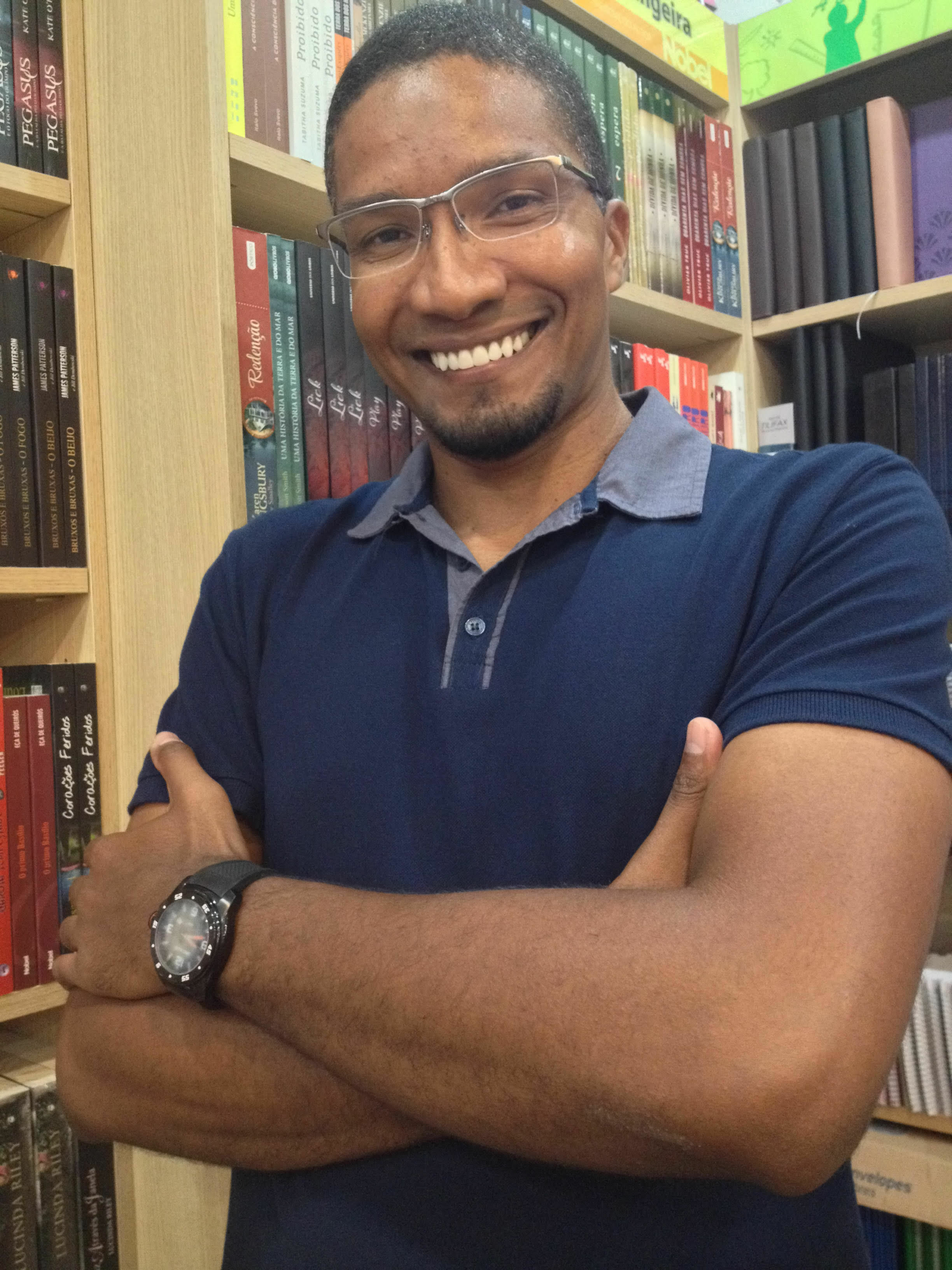 We interviewed Gleison Adriano da Silva, one of the winners of the 13th edition of the Special Award in Scientific and Technological Initiation (undergraduate research) of the Brazilian National Council for Scientific and Technological Development (CNPq). The young man, who in November graduated in Physics from the Federal University of Amazonas (UFAM), won the scientific initiation research award in the area of Exact Sciences, Earth and Engineering for his work on structural, thermal and optical characterization of semiconductor systems. The CNPq award highlighted six papers (the best in scientific initiation research and the best in technological initiation research in each area of knowledge) out of 467 works submitted, sent by 167 education and research institutions in Brazil.
The work that earned Gleison the award was developed over three scientific initiation projects that he developed within the Materials Group of the Physics Department of UFAM, under the guidance of Professor Sérgio Michielon de Souza, with funding from the Amazonas Research Foundation (FAPEAM) and CNPq. In these projects, nanostructured semiconductor materials were synthesized by a simple and low cost process. The materials were analyzed using X-ray diffraction, differential scanning calorimetry, micro-Raman spectroscopy, and photoacoustic absorption techniques, and showed good potential to be used as thermoelectric materials in the direct conversion of heat into electricity.
Gleison received a scientific initiation grant (first from FAPEAM and later from CNPq) shortly after beginning the Physics course at UFAM in 2011. His advisor, Sérgio Michielon de Souza, was a new professor at this institution that year and was putting together the Materials Laboratory at the Physics Department, a process in which Gleison actively participated. The first work phase was dedicated to the manufacture and study of Cd-Se system, and its results were published [http://dx.doi.org/10.1016/j.molstruc.2014.06.023] in September 2014 in the Journal of Molecular Structure (Elsevier), while he worked on the second work phase, focused on the Ni-Sb system. Also in September 2014, Gleison presented the partial results of the second phase of this work at the XIII SBPMat Meeting held in João Pessoa (PB). His poster received the Bernhard Gross award for the best presentation of the symposium S, dedicated to posters on advanced materials. In May 2015, the final results of the research on the Ni-Sb system were published [http://dx.doi.org/10.3139/146.111211] in the International Journal of Materials Research (publisher Carl Hanser Verlag GmbH & Co.). In September 2015, Gleison presented the third work phase, dedicated to the Sn-Se system, at the XIV SBPMat Meeting in Rio de Janeiro (RJ).
Finally, in July 2016, Gleison had the honor to receive the Scientific and Technological Initiation Outstanding Award, in Porto Seguro (BA), during the 68th Annual Meeting of the Society for the Advancement of Science (SBPC). It was the third time he was indicated by the Dean of Research and Post Graduation program of UFAM to compete for the CNPq award, and this time he won the award, with the final research results on the Ni-Sb system and the partial research results on the Sn-Se system. Three months later, Gleison defended his completion course work (TCC), from the studies of Ni-Sb and Sn-Se systems, and obtained a bachelor’s degree in Physics from UFAM.
See our interview with Gleison.
SBPMat newsletter: – Where were you born? Where did you live until starting university at UFAM?
Gleison Adriano da Silva: – I am originally from Central Brazil, Brasilia (DF), and it all started in 2008 when I applied to be a missionary/community worker of the Roraima Diocese in the North of Brazil, under the command of former titular bishop Dom Roque Paloscci, to work in communities in the lower Rio Branco up to its mouth in Rio Negro.
In 2009, I successfully passed the ENEM exam in Forest Engineering at UFAM, campus Manaus (AM). Without financial assistance, I lived in a hostel in Manaus (AM), however, after the selection process in the Secretary of Community Affairs, moved to the University’s Student Housing, UFAM. In 2011, due to the lack of affinity with the Forest Engineering course, I changed to the Physics course at the Institute of Exact Sciences of UFAM.
SBPMat newsletter: – Could you tell us briefly how your interest in science and research began? Was it at the university, during your childhood, in school?
Gleison Adriano da Silva: – It all happened very fast. Soon after I began the physics course in UFAM, I was invited to do scientific research by Professor Sérgio Michielon de Souza and upon joining the Materials Research Group in the Physics Department of UFAM, I had the opportunity to conduct scientific research focused on the determination of crystal structures, micro/nano-structural evolution and phase transformation in intermetallic materials using computer software and analytical techniques in the Materials Laboratory.
SBPMat newsletter: – In your opinion, what is the main contribution of the winning work? Or, what are the main contributions of the winning works?
Gleison Adriano da Silva: – An interesting observation is that the awarded investigations were coincidentally related to the 2014 and 2015 UNESCO celebratory themes – International Year of Crystallography and International Year of Light. From this perspective, the main contributions in the award-winning works were related to X-ray diffraction techniques, that is, changes and stability of crystallographic phases of samples of the Ni-Sb and Sn-Se semiconductor system during the solid state synthesis, where strong structural stability of nickel antimonide crystals (NiSb) and remarkable metastability of tin selenide crystals (SnSe) were observed.
A simple work that presents microstructural and thermodynamic characteristics of two new nanostructured materials of scientific and technological interest subjected to non-complex synthesis route and of low cost.
SBPMat newsletter: – What were the guiding criteria to conduct outstanding quality research at the national level? To what factors do you attribute this achievement?
Gleison Adriano da Silva: –There is no Columbus’ egg or success recipe, only hard work. Nothing happens without effort. As an undergraduate with a scientific initiation grant, I was always the first to arrive and the last to leave the lab. The achievement is the recognition of work, however, nothing can be done alone.
SBPMat newsletter: – Please leave a message for our readers who are conducting scientific initiation research work in the Materials area.
Gleison Adriano da Silva: – Believe in your potential and in the potential of your investigations. It is the dream that moves us, but it is not enough to dream, you must chase the dream. I also urge you to consider this as encouragement to disseminate your research results in scientific events in Brazil, especially in the SBPMat Annual Meetings.
SBPMat newsletter: – What are your plans now that you have graduated?
Gleison Adriano da Silva: – After this long process, I will probably look for a Graduate Program at the University of Brasilia (UNB) or at some renowned SP institution.
SBPMat newsletter: – Feel free to make another brief comment.
Gleison Adriano da Silva: – I would like to thank the congratulations letters and praise I received from the Head of the Physics Department of UFAM, Professor Marcílio de Freitas; from the Director-President of FAPEAM, Professor Maria Olívia de Albuquerque Ribeiro Simão; and from Senator Vanessa Grazziotin, Brazil’s National Congress (http://www.senado.leg.br/atividade/rotinas/materia/getPDF.asp?t=195150&tp=1).
I would also like to thank the city of Manaus (AM), the UFAM and all who directly or indirectly contributed to my personal and academic background.
Call for symposia proposals for the XVI B-MRS Meeting is open.
Proposals of thematic symposia for the XVI B-MRS Meeting can be submitted to the Brazilian Materials Research Society (B-MRS) until January, 31. This year, the annual event of the B-MRS will be held from September 10 to 14, 2017 in the charming city of Gramado (state of Rio Grande do Sul, Brazil), in the FAURGS convention center.
Anyone with a doctoral degree, performing research in Brazil or abroad can submit a symposium proposal on a subject related to Materials Science and Technology. Proposals must be filled in online at http://www.sbpmat.org.br/proposed_symposium/. Title, scope and topics of the symposium, data about the organizers and preliminary list of invited speakers are required. The proposals will be evaluated by the B-MRS event committee and by the organizers of the meeting, and then submitted to the executive board of the society.
The B-MRS annual meeting is an interdisciplinary and international event dedicated to the presentation and discussion, in English, of scientific and technological advances achieved in the field of materials. In the last editions, the meeting has gathered about 2,000 participants from various points in Brazil and dozens of other countries.
Thematic symposia are axes of B-MRS meetings program. At the 2016 meeting, held in the city of Campinas, more than 2,000 papers were presented at 22 symposia, covering the discovery, fabrication, characterization and applications of various types of materials, such as nanostructured materials, biomaterials, electronic organic materials, electroceramics and nanocellulose, among many others.
The site of the event will be released and announced soon.
Inscrições abertas para concurso docente no IQ/Unicamp, na área de Química Orgânica.
Estão abertas as inscrições para o concurso público de provas e títulos, para provimento de 01 (um) cargo de Professor Doutor na área de Química Orgânica, do Departamento de Química Orgânica do IQ/Unicamp.
Inscrições até 21 de março de 2017
Edital: http://www.sg.unicamp.br/dca/
B-MRS newsletter. Year 3, issue 11.
|
||||||||||||||||||||||||||||||||||||||
XVI B-MRS Meeting: call for symposia proposals.
 The call for symposia proposals for the XVI Brazilian MRS (B-MRS) Meeting is open until January, 31, 2017. The conference will take place in Gramado, RS at the Centro de Eventos de Gramado – Faurgs, from September 10th-14th, 2017.
Symposium proposals may be submitted by any PhD associated with educational and/or research institutions in Brazil or abroad, in any field of Materials Science and Engineering. The proposal presentation must be submitted through the form available at http://sbpmat.org.br/
– Description of the symposium scope
– List of topics of interest
– Tentative list of invited speakers
– Names and contacts of symposium organizers
We look forward to your participation to create an outstanding B-MRS Meeting!