We interviewed three winners of the 2016 Capes Thesis Award who carried out their award-winning research papers in postgraduate programs in Materials. The prize was awarded on December 14, 2016, in Brasilia, at the headquarters of Capes agency, linked to the Brazilian Ministry of Education in charge of promoting high standards for post-graduate courses in Brazil.
The Capes Thesis Award was created in 2005 to distinguish the best doctoral theses in each of the 48 areas of the Brazilian postgraduate programs. The theses defended in Brazil in the year prior to the award announcement can compete for the award. The candidates are registered by the postgraduate programs where the scientific research work was performed. The winners are selected by committees formed by members of the scientific community in each area. The evaluation process considers aspects of originality and relevance for scientific, technological, cultural, social, innovation and value added development to the educational system
In 2016, 774 PhD theses were entered. Of these, 48 were selected to receive awards and 88 received honorable mentions.
Here are the interviews with the winners of the awards in the Materials community.
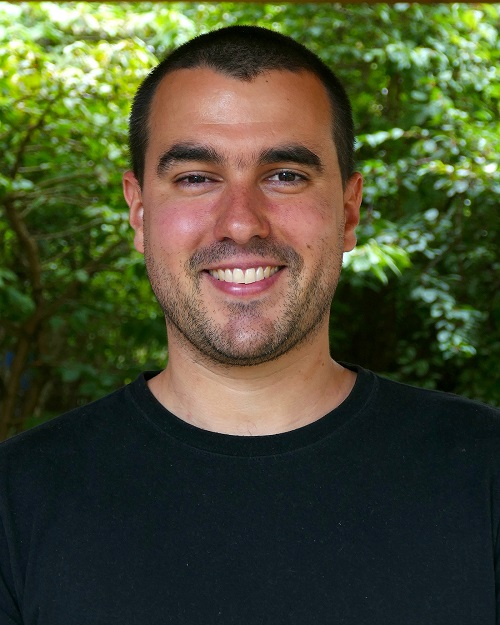
Interview with Antonio Cláudio Michejevs Padilha, winner of the Capes Thesis Award in the “Interdisciplinary” area
 Thesis: “Computational simulation of TiO2-based memristive systems: from the raw material to the device”.
Advisor: Gustavo Martini Dalpian. Co-advisor: Alexandre Reily Rocha.
Institution: Postgraduate Program in Nanosciences and Advanced Materials of the Federal University of ABC.
Antonio Cláudio Padilha graduated in Physics with a bachelor’s degree from the University of São Paulo (USP) in 2007. In 2009, he began the master’s degree in physics at USP, where he studied-developed molecular mechanics/quantum mechanics on pentacene agglomerates and carbon nanotubes, mentored by Professor Maria Cristina dos Santos. He defended his dissertation in 2011 and that same year began his doctorate in Nanosciences and Advanced Materials at the Federal University of ABC (UFABC), also in the state of São Paulo, under the guidance of professors Gustavo Martini Dalpian and Alexandre Reily Rocha. In 2015, he spent three months at the National University of Yokohama (Japan), during the “sandwich period”, in the group of Professor Hannes Raebiger. In the Master’s and PhD program, he received a research grant from the São Paulo Research Foundation (FAPESP). At the end of 2015, back in Brazil, he defended the thesis awarded by Capes. Since last year, Antonio Padilha is an associate researcher (postdoc) in the Department of Physics of York University (UK), in the group of Professor Keith McKenna. He is the author of 5 articles published in peer-reviewed international journals.
SBPMat Newsletter: – In your opinion, what is the most relevant contribution of the award-winning thesis?
Antonio Cláudio Padilha: – The thesis presents a possible alternative mechanism for the operation of a new electronic device known as a memristor. This device is formed by a thin film of insulating material with metallic electrodes placed around it. When a high charge is applied through the electrodes under certain conditions, the electrical resistance of the insulation material changes. Interestingly, this change is stable, making it possible to store information in this system.
Many authors point out that the charge applied could cause the atoms inside the insulator to be displaced from their original positions. Therefore, new phases would form in certain regions, which due to different structures and/or compositions, consequently would have different electrical resistivities. This could explain the different electrical resistances initially observed in the devices.
The project that gave rise to the thesis had the objective to describe the processes occurring within the device from computational simulations. We performed simulations to understand the properties of some of the oxygen-deficient phases of titanium oxide, and we realized that these phases could trap and release charges. This process could also change the properties of the material, leading to different electrical resistances and thereby explaining, through another mechanism, the function of the memristor.
There is still much discussion regarding which of these two mechanisms provides the best explanation of the experimental results. However, I believe that one mechanism does not necessarily exclude the other. Our work intended to show that there is probably no single ingredient that explains how these devices function and that the entrapment and release of charges may explain in part what is observed experimentally.
SBPMat Newsletter: – Please cite the main results generated from the award-winning thesis (papers, patents, products, startups, other awards, etc.).
Antonio Cláudio Padilha: – From the results presented in the thesis, we published 3 papers in international scientific journals. Of these, I would like to highlight my last work, a cooperation result with Professor Hannes Raebiger, from the University of Yokohama in Japan. He spent 11 months as a visiting professor at UFABC and later received me in his group for a 3-month research internship. This research collaboration resulted in another article that is in the process of being published.
These papers also helped me to win an award entitled “2015 Post Graduate Academic Excellence Award” awarded by the Postgraduate Office of the UFABC. This award took into account not only the volume but also the quality of the journals in which the articles were accepted.
SBPMat Newsletter: – In your opinion, which are the main factors for your outstanding research work at the national level (your thesis)?
Antonio Cláudio Padilha: –Without a doubt, the funding I received from the São Paulo Research Foundation – Fapesp – was fundamental for the success of the project. Fapesp was responsible for financing my PhD grant, the grant for my internship in Yokohama in Japan (BEPE internship) and it was also crucial to acquire the basic equipment, both through the technical reserve of my scholarships as well as through related theme projects. Professor Raebiger’s visit to UFABC was also funded by Fapesp.
Another important factor was the National High-Performance Data Pocessing Center in São Paulo – Cenapad-SP. It provided infrastructure in the form of supercomputers capable of running the simulations we needed, and also great support, the work we were able to carry out leaves nothing to be desired in relation to other countries that have numerous resources for science, technology and innovation.
Finally, the innovative environment of UFABC and the excellent faculty at the university were decisive factors to give visibility to the thesis through the award. I am particularly grateful to my advisors for their dedication, Professors, Gustavo Dalpian (UFABC, currently Visiting Professor at the University of Colorado – United States) and Alexandre Reily Rocha (IFT-Unesp, currently at MTI – United States) and my unofficial advisor Professor Hannes Raebiger (Yokohama University – Japan, visiting professor at UFABC in 2015).
SBPMat Newsletter: – Please leave a message to our readers, many who are undergraduate or graduate students.
Antonio Cláudio Padilha: – The research activity is full of ups and downs. We often find ourselves for weeks or even months insisting on experiments or simulations that give completely different results or even wrong results than what we had expected. This can be very disheartening, and when combine this scenario with the lack of recognition, the feeling many of us have is to give up our career and try our luck in another area.
However, persistence and dedication will inevitably be rewarded and recognized, we must be patient. Despite the difficult times ahead for Brazilian science, nothing will be able to destroy the curiosity and beauty of making new discoveries, inventing new solutions and the impetus to make this country a better place for everyone. This difficult phase for Brazilian science will not go on indefinitely, and when this phase is over, those who have endured the difficulties, in addition to being empowered, will be prepared to take advantage of the opportunities that will arise.
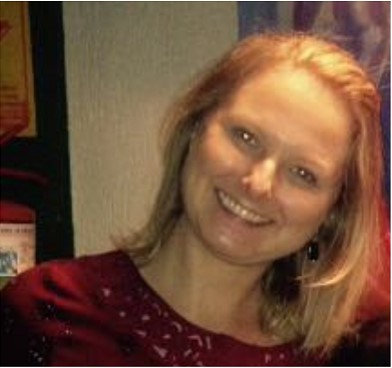
Interview with Fernanda Fiegenbaum, winner of the Capes Thesis Award in the “Materials” area.
 Thesis: “New ionic liquids for the production of hydrogen by water electrolysis”.
Advisor: Roberto Fernando de Souza. Co-advisor: Emilse Maria Agostini Martini.
Institution: Postgraduate Program in Materials Science (PGCIMAT) of the Federal University of Rio Grande do Sul (UFRGS).
Fernanda Fiegenbaum studied Industrial Chemistry at the University of Santa Cruz do Sul (UNISC), in Rio Grande do Sul, between 1998 and 2004. During this period, she carried out research activities in polymer laboratories. In 2005, she joined the Master’s Program in Chemical Engineering (PPGEQ) in the Federal University of Rio Grande do Sul (UFRGS), where she conducted research in the field of polymers, under the guidance of Professor Nilo Sergio Medeiros Cardozo, financed with a CAPES grant. She defended her dissertation in 2007. In 2011 she returned to UFRGS to continue her academic training in the PGCIMAT doctoral program, with a grant from the Research Support Foundation of the State of Rio Grande do Sul (FAPERGS). Under the supervision of Roberto Fernando de Souza and Professor Emilse M. A. Martini, she developed a research project on the use of new ionic liquids for the production of renewable energies. The thesis was defended in 2015 and that same year Fernanda went to Germany to undertake a postdoctoral internship at the University of Ulm, at the Institute of Electrochemistry. She returned to Brazil and UFRGS in June 2016. She is the author of 4 papers published in peer reviewed international journals and holds a patent application for innovation at INPI.
SBPMat Newsletter: – In your opinion, what is the most relevant contribution of the award-winning thesis?
Fernanda Fiegenbaum: – Currently, finding new environmentally friendly energy sources, that when used do not generate CO2, is an urgent challenge. Hydrogen gas is an energetic vector and its use does not generate pollutants, but it must be produced with a high degree of purity, which has a considerable cost. In my doctoral thesis, I synthesized new ionic liquids based on tetra-alkyl-ammonium-sulfonic acids that were used as electrolytes for the production of hydrogen gas by water electrolysis. The use of this new class of materials showed catalytic effect and compatibility with several materials (carbon, stainless steel) used as low cost electrodes, thereby increasing efficiency and reducing the cost to produce hydrogen gas. Therefore, I believe these results represent the major contribution of my thesis.
SBPMat Newsletter: – Tell us about the main results generated from the award-winning thesis (papers, patents, products, startups, other awards, etc.).
Fernanda Fiegenbaum: – The new acid ionic liquids of the tetra-alkyl-ammonium sulfonic family were patented, BR1020120275333: A process for the production of hydrogen by electrolysis of water using ionic liquids such as tetra-alkyl-ammonium sulfonic acid salts, its derivatives and product.
Four papers were published in high-impact international journals. Moreover, these results were disseminated in several national and international conferences: Greenchemistry 2012, CBCat 2013 and 2015, SBQ 2014, WiCaC 2014 and SIBEE 2015.
SBPMat Newsletter: – In your opinion, what are the main factors that allowed you to carry out outstanding research work at the national level (your thesis)?
Fernanda Fiegenbaum: – There were many factors that enabled the thesis award. But I believe there are some fundamental points.
Foremost and certainly the main factor is with regard to the guidance, support, help and teachings of my advisors, Professors Roberto Fernando de Souza (in memoriam) and Emilse M. A. Martini, which enabled the successful completion of my PhD.
Definitely, my ability to accept new challenges was decisive, for instance, search the literature for the scientific basis on the synthesis of materials and modern techniques of characterization. This search helped increase my understanding about the role of the electrolyte on the process of electrolysis of water and I designed an ionic liquid with the proper properties, but without the undesirable characteristics, such as a toxic and corrosive agent.
The laboratory where I was able to conduct my activities, Laboratory of Reactivity and Catalysis (LRC) of the Federal University of Rio Grande do Sul (UFRGS), has the necessary modern equipment and laboratories adapted to carry out the synthesis, characterization and application of these new ionic liquids. The financial support of various development agencies to the LRC allowed acquiring the reagents and equipment. Moreover, I had access to the high quality infrastructure of the Institute of Chemistry of UFRGS, Center of Microscopy (CME) and CNANO, support agencies of UFRGS and fundamental for high quality scientific production.
Another important factor was the collaboration of colleagues and other professors at LRC, which I portray as a motivating and supportive relationship that was fundamental to develop my thesis.
SBPMat Newsletter: – Please leave a message to our readers, many who are undergraduate or graduate students.
Fernanda Fiegenbaum: – The message I would like to pass on to those who are starting or continuing their studies is that despite the everyday difficulties and stress, at the end of the day, it is extremely gratifying to participate in the scientific construction of solutions to the great challenges in Brazil and the world. Brazil is a country where cutting edge research is carried out and with excellent researchers and laboratories that compete with “first world countries”. However, we must not forget that continuous support is fundamental to value and give continuity to everything that has already been achieved. I end with a quote by Marie Skłodowska-Curie: “Nothing in life is to be feared, it is only to be understood. Now is the time to understand more, so that we may fear less.”
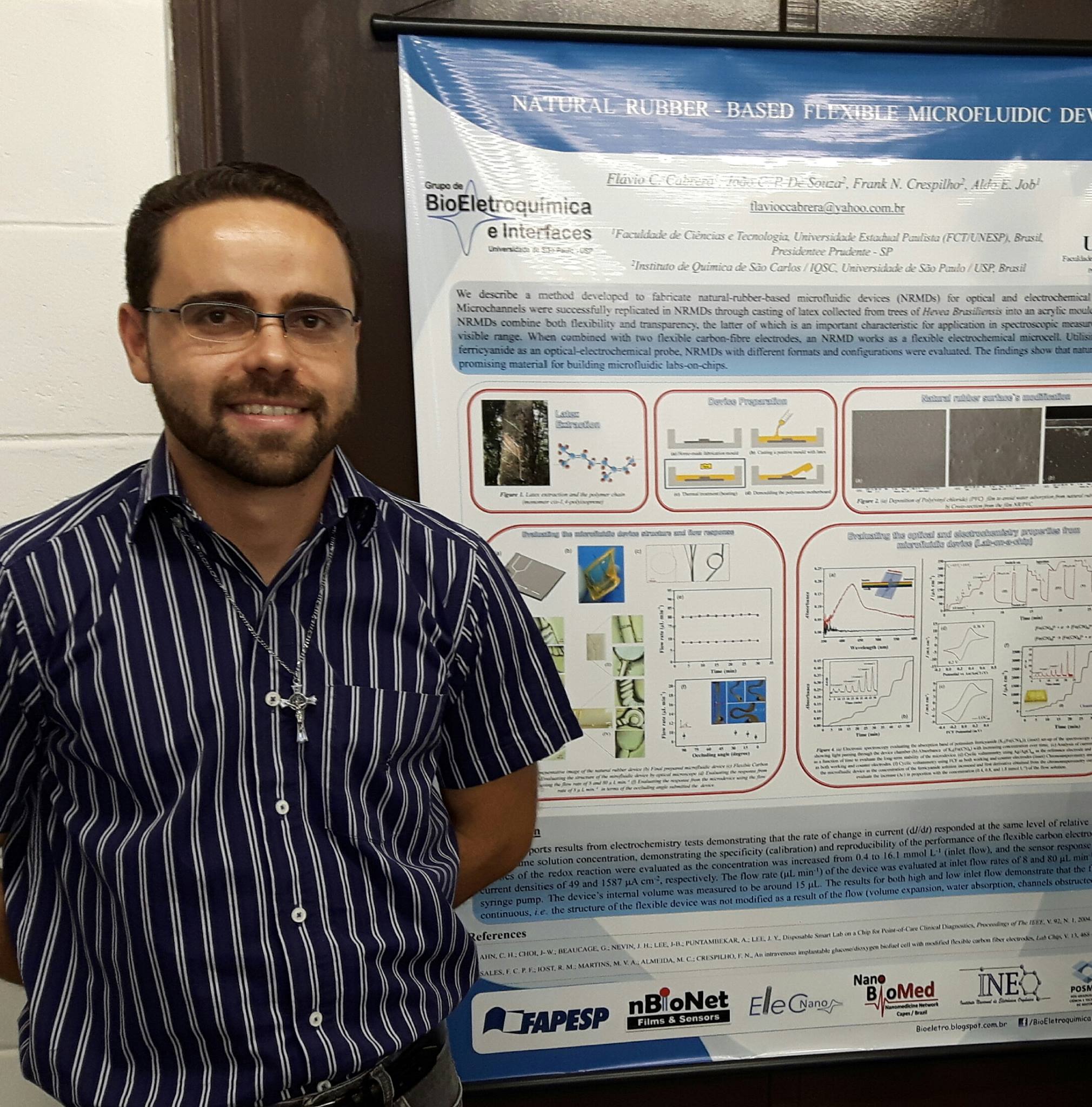
Interview with Flávio Camargo Cabrera, who won an honorable mention of the Capes Thesis Award in the “Materials” area.
 Thesis: “Natural-rubber-based microfluidic device (lab-on-a-chip)”.
Advisor: Aldo Eloizo Job.
Institution: Post-Graduate Program in Materials Science and Technology (POSMAT) of the Paulista State University “Júlio de Mesquita Filho”, Presidente Prudente campus (UNESP/PP).
Flávio Camargo Cabrera completed his undergraduate studies in Physics (2006 – 2009) at UNESP/PP, Master’s in Materials Science and Technology (2010-2012) and a PhD in Materials Science and Technology (2012-2015). Starting in the undergraduate scientific initiation up to the doctorate, he developed research projects based on the use of natural rubber, always under the guidance of Professor Aldo Eloizo Job and with FAPESP grants. He is currently associated with POSMAT of UNESP as a CAPES postdoctoral fellow. He is the author of 15 papers published in peer reviewed international journals and one patent application.
SBPMat Newsletter: – In your opinion, what is the most important contribution of the awarded thesis?
Flávio Camargo Cabrera: – The thesis presents a new concept of flexible microfluidic device using natural rubber as an alternative, organic, biocompatible, easy to handle and low cost material, for the preparation of lab-on-a-chip platforms.
The use of new materials opens up a range of new applications based on the properties of these materials. The largest contribution is that it highlights the importance of Materials Science for the development of pre-existing technologies. We believe that with the evolution of preparation techniques and miniaturization, it is possible to develop implantable biological sensors from this new polymeric device concept.
SBPMat Newsletter: – From your perspective, what are the main factors that allowed to carry out a research work highlighted at the national level (your thesis)?
Flávio Camargo Cabrera: – The interdisciplinarity and partnership between the FCT UNESP, Presidente Prudente campus and the Bioelectrochemistry group coordinated by Professor Frank Crespilho of IQSC (Chemistry Institute of USP in São Carlos), was fundamental to undertake the project. In addition, INEO projects (National Institute for Organic Electronics) and FAPESP financing (Proc. 2011/23362-0) provided conditions for developing the project.
SBPMat Newsletter: – Please leave a message to our readers, many who are undergraduate or graduate students.
Flávio Camargo Cabrera: – When we graduate, we are tempted to fight for survival, the ideal to graduate, publish a paper, achieve indices, seek recognition, and others. Not that this is a bad idea, but you should not let this tendency take away your possibility to stop for a moment, a day, a week, to reflect, think about, allow your dreams and ideas to beyond the limit known as impossible and materialize them, it may be we do not solve the big questions of the universe, but we may serve as an incentive so that one day someone can do it.


![Cross-section SEM-FEG image of a bismuth telluride sample protected with an amorphous tellurium cover. Adapted from the image of the APL Mat article [http://aip.scitation.org/doi/full/10.1063/1.4964610] under license CC BY 4.0 [https://creativecommons.org/licenses/by/4.0]](http://sbpmat.org.br/site/wp-content/uploads/2017/01/MEV_eng.jpg)