
|
||||||||||||||||||||||||||||||||||||
|
||||||||||||||||||||||||||||||||||||
Paper: Annealing effects on the microwave linewidth broadening of FeCuNbSiB ferromagnetic films. Alves, M.J.P.; Gonzalez-Chavez, D. E.; Bohn, F.; Sommer, R. L. Journal of Applied Physics. 117, 123913(2015) DOI: 10.1063/1.4915330.
A team of scientists from the Brazilian Center for Research in Physics (CBPF) and the Federal University of Rio Grande do Norte (UFRN) conducted a study on magnetic properties of thin films made of a nanocrystalline material (i.e, formed by nanometric grains) type FINEMET. The conclusions of this scientific research can help produce high quality magnetic materials suitable for use in small-sized devices, such as magnetic random access memories (MRAMs) or nano-oscillators. Results of the study were reported in a recent article in the Journal of Applied Physics.
FINEMET type materials are alloys based on iron (Fe), silicon (Si) and boron (B) with small additions of copper (Cu) and niobium (Nb). They have very good magnetic properties when they are produced by rapid cooling followed by annealing. However, there is not yet an established route that allows obtaining the material having these properties in the form of thin films, which are better suited for miniaturized applications.
In the work of the Brazilian team, magnetic thin films FeCuNbSiB were synthesized at CBPF by scientists from UFRN and CBPF. Samples of the film were analyzed using various techniques such as grazing incidence X-ray diffraction, magnetometry and, in particular, broadband ferromagnetic resonance (FMR). “We explored this technique to the limit,” said Rubem L. Sommer, one of authors of the Journal of Applied Physics paper. “It is powerful and has allowed the study of nanostructured materials with great efficiency,” added the CBPF researcher. Sommer and his team have been contributing to the development of broadband ferromagnetic resonance technique since 2011.
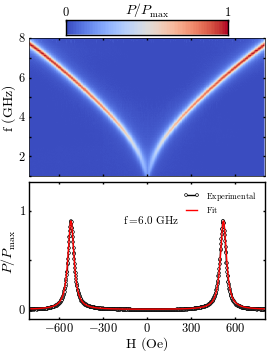
The ferromagnetic resonance technique is used to study the magnetization of the material, measuring the amount of electromagnetic radiation in the microwave range that a particular material absorbs. In the conventional version of this technique, explains Sommer, this absorption is measured at a fixed frequency, and the external magnetic field is varied to tune the equipment in resonance. In the microwave range, the frequency may be between 300 MHz and 300 GHz, and 1 Hz equals 1 oscillation per second. “In the case of ferromagnetic resonance broadband, we scan frequency and the external field, making a direct mapping of the material dispersion relation,” explains Sommer.
Based on the combination of the films analyses obtained by the various techniques, the team of scientists unveiled the mechanisms that are responsible for broadening the ferromagnetic resonance linewidht in the material. “The thinner the resonance line, the higher the quality of the material for applications”, said Sommer. The scientists could conclude that the residual stresses (those who remain in the materials after the elimination of their causes) were causing the enlargement of the resonance linewidth, and that annealing reduced these tensions.
The study reported in the article was funded by Brazilian agencies CNPq and CAPES and was developed mainly in the doctoral research of Marcos Alves held in CBPF and recently defended. The doctoral dissertation of Diego González-Chávez, defended in 2013, was also important for the article, as it allowed the successful development of the broadband FMR technique.
The authors of the article are part of a larger network of collaboration that includes, in addition to researchers from CBPF and UFRN, contributors from PUC-Rio and the federal universities of Santa Maria (UFSM) and Rio Grande do Sul (UFRGS), says Sommer. “I believe that this work, as well as the performance of a network spread over different institutions is a very positive aspect of the current Brazilian scientific and technological research reality”, he said. The network develops research on nanostructured materials and magnetic devices for use at high frequencies. “Our research has always a double bias: basic research to understand the phenomena and application development,” said Sommer.
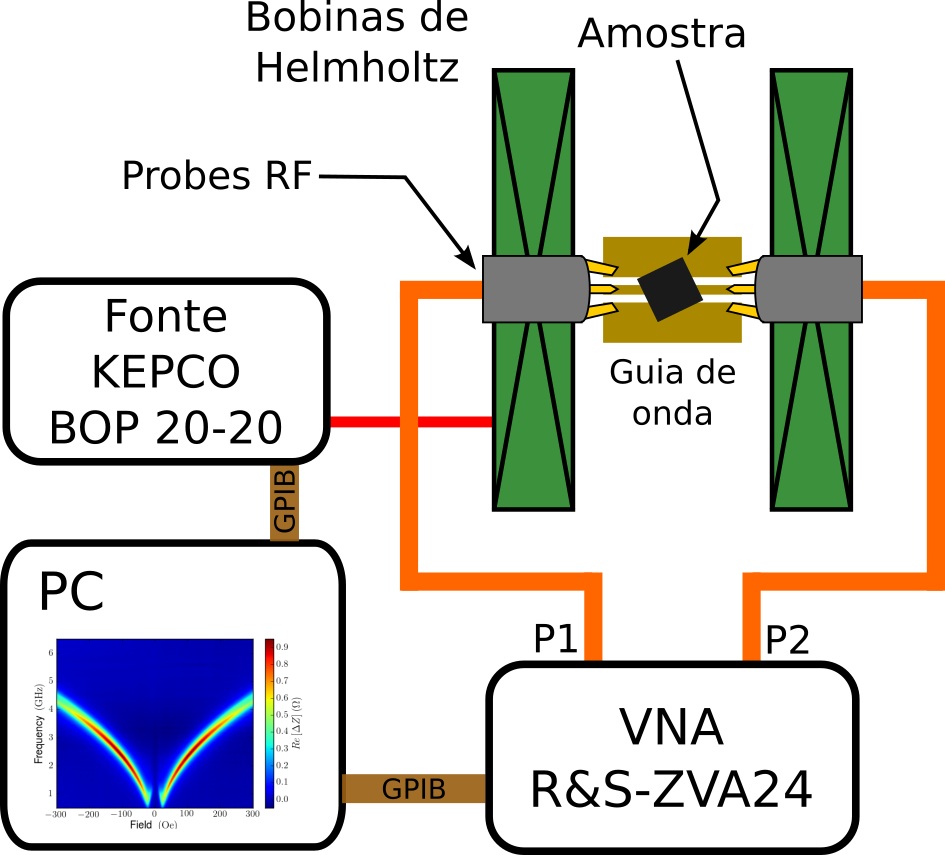
Scheme of ferromagnetic resonance equipment used in broadband research. The Kepco source feeds the magnetizing circuit (Helmholtz coils) and the signal is measured with a vector Network Analyzer (VNA). The sample is placed on a coplanar waveguide with micrometric dimensions.
Results typical broadband of FMR: microwave absorption curve (color) depending on the field and frequency.
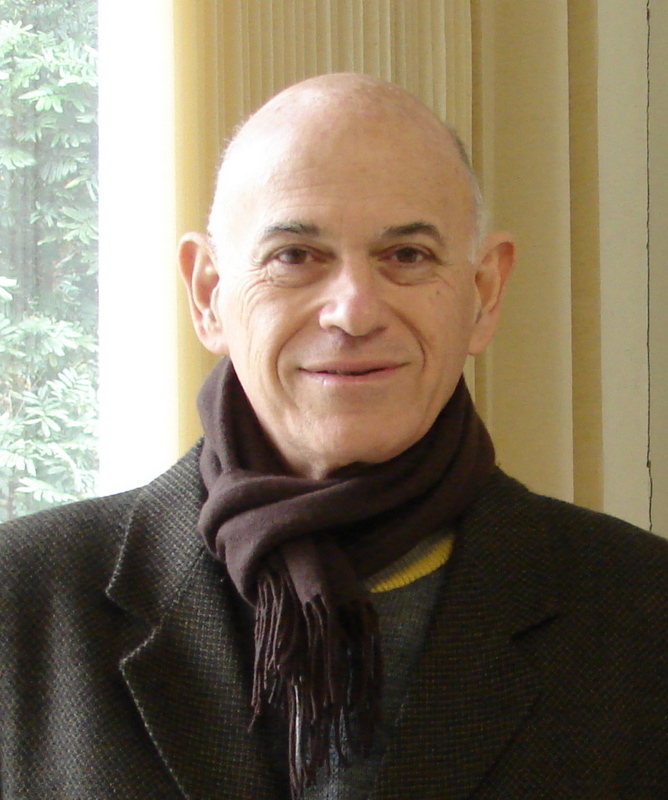 Israel Jacob Rabin Baumvol was born in Rio Grande do Sul, in the city of São Gabriel, in the last day of 1947. When he was a child, he moved to the city of Porto Alegre with his parents and siblings. When he was 19 years old, he entered the Federal University of Rio Grande do Sul (UFRGS) to study Physics. In the following years, in addition to participating in the political activity that occurred in the university against the existing military government, Baumvol dedicated a lot of effort to his studies, trying to reach the academic standard of the bachelor’s degree in Physics of the university. In 1971, he completed the graduation course – without honors, according to him. In the following year, he moved to the city of São Paulo to take a Master’s Degree in the University of São Paulo (USP), in Nuclear Physics and under the orientation of Professor Oscar Sala. In 1975, he returned to UFRGS to undertake his Doctorate, with orientation of Professor Fernando Zawislak, studying composites of perovskite structures. During the doctorate, he became a professor at UFRGS. In 1977, he defended his thesis. For the postdoctoral course, Baumvol chose an institution of industrial research in England, today known as Harwell campus. There, between 1979 and 1981, he worked with techniques of ionic implantation and its applications, mainly the plasma immersion ionic implantation (PIII), and he took part in research contracts with large companies. Due to his expertise in PIII, Baumvol entered the world of the materials for microelectronics, an area in which he made significant scientific contributions and obtained international reputation.
In the United States, Israel Baumvol was an invited researcher of the IBM research center from 1984 to 1988 and, from 1998 to 1999, of the Bell Laboratories, belonging to company Lucent. In France, between 1992 and 1996, he was a visiting professor at the Université Pierre et Marie Curie and at the Université Paris Diderot (Paris 7). In 1997, after coming first in a public entrance examination, he was nominated full professor at Paris 7, but he did not take over the position to stay in UFRGS. From 1995 to 1996, he was a guest professor of the Ruhr Universität, in Germany.
Baumvol was also coordinator of international events held outside Brazil. In 2000 and 2005, he was coordinator (chairman) of international symposia of Physical-Chemistry of silicon oxide and silicon – silicon dioxide interface, organized by the Electrochemical Society. In 2001, he coordinated the International Workshop on Device Technology of the Materials Research Society (MRS), held in Porto Alegre. In 2004, he was meeting chair of the MRS Spring Meeting & Exhibit, that occurs annually in San Francisco (United States).
In 2003, after retiring from his position of full professor of UFRGS, he led the creation of the Materials Science and Engineering Potgraduation Program of the University of Caxias of Sul (UCS), near 130 km far from Porto Alegre, and he was coordinator and researcher of the program until 2014.
From 2002 to 2003, Baumvol presided the Research Support Foundation of the State of Rio Grande do Sul (FAPERGS). More recently, between 2011 and 2013, he was vice-coordinator of the Materials Department in Capes (a federal agency for higher education improvement). Baumvol also coordinated big projects in the Materials segment, such as the first National Network of Research in Nanostructured Materials (2001-2005) and the National Institute of Surface Engineering (2009 to 2010).
Throughout his scientific career, Israel Baumvol has carried out research in subjects related to ionic implantation, thin layer physics and surface modification, in addition to materials for microelectronics.
Baumvol holds the highest productivity level scholarship in CNPq, the Brazilian federal science council. He has authored over 270 peer-reviewed articles, besides books and book chapters. His scientific production has approximately 3,000 citations. He acted as advisor in about 30 Master’s Degree and Doctorate dissertations.
In 2000, he was chosen Prominent Researcher by FAPERGS; in 2010, he was nominated Commander of the National Order of the Scientific Merit by the Presidency of the Brazilian Republic and in the following year, he was named Professor Emeritus by UFRGS. In May of this year, the “Professor Israel Baumvol Microscopy Center” was inaugurated in UCS.
Here is an interview with the scientist.
SBPMat newsletter: – Tell us what led you to become a scientist and to work in subjects of the Materials field.
Israel Baumvol: – It was the junction of three factors. The first one was the desire to use my knowledge one day to be able to contribute to the progress of the country and its citizens. This desire was developed through reading and great political participation during the graduation course. However, seeing as in Porto Alegre the tradition of basic research was very strong and there was nobody working in applied physics, I had a strict academic formation, that was very good for my future. The second factor was my post-doctorate, for which I chose an institution of industrial research, in England. I went there in 1979 to learn ionic implantation, because the institution was a pioneer in this method. There, I became acquainted with ionic implantation, specially its applications, such as reduction of the friction in metallic components (for example Ti-Al alloys) by means of implantation of species and heavy ionic composites, increase of the resistance to wear and corrosion of steel by nitriding, oxinitriding and nitrocarburizing using the method of ionic implantation by immersion in plasma (PIII). At that time, they were constructing there the first industrial-scale reactor of PIII, with a volume of approximately 30 m3, which was later spread throughout the world, including by companies that manufactured these reactors, such as Eaton and several others, including two companies in Brazil. This environment of applied physics fascinated me due to its possibilities. I participated in many research contracts, such as the one about bone prosthesis for a Japanese manufacturer, another about turbine blades for Rolls-Royce and another on cut blades for the future electric shavers project for Philips. These projects, in addition to fascinating me, had a component that for me was romantic: they were confidential projects. The third and last factor occurred by the end of my post-doctorate. I went to a congress in Germany, where I gave a 50-minute lecture, something very difficult nowadays, when the lectures only last about 20 minutes. When I finished speaking and answering questions, there was a coffee break. Dr. James F. Ziegler came up to me, introduced himself and gave me his business card, in which it was written “Research Director, Thomas J. Watson Research Center, IBM”. He invited me to go there because, during my lecture, he thought that the PIII method could solve a serious problem that IBM had with hard drives. Yet again, the siren song of a confidential project. I accepted the invitation and, for some years, during winter and summer vacations, three to four months per year, I went to IBM – Yorktown. There, I got in touch with something unusual for me, the silicon technology, which was just being born. That was yet another allure and my mind was made, Materials Science and Engineering.
SBPMat newsletter: – What are, in your own evaluation, your main contributions to Materials field?
Israel Baumvol: – I worked in many different subjects in my professional activity, some of them mentioned above. I will highlight three of them. The first one was my participation in the beginning of the PIII technology, which is nowadays widely used in the whole world, also in Brazil, where there are at least four services of PIII processes of steel components for the metal-mechanics industry. The second one is my contribution, throughout ten years of work, to explore and to reach the physical limits of silicon oxide as gate dielectric in the metal oxide semiconductor (MOS) technology. I formed a network of cooperation with academic laboratories in four different countries and with industrial laboratories, including IBM, Motorola, Texas Instruments, Bell-Lucent. We reached the physical limit, 1 nm. From there, the entire network started to work on a substitute for silicon oxide, which was the first change in the MOS technology, after forty years. There was a convergence for hafnium oxide and, eventually, certain hafnium-based double oxides. This material stood out, allowing an increase of processing speed and today it is used as gate oxide in advanced processors. It allowed the continuity of the Moore Law, which was threatened. This research segment led to the formation of a golden generation of PhDs, all around gate oxide, which is a crucial subject for the micro and nanoelectronics. Many of them are acting professionally in industrial companies, in technology of silicon and in other activities. Finally, I highlight the creation of a research environment in Materials Science and Engineering and of a post-graduate program in this segment. I started this activity with only one element: Caxias do Sul and its environs possess a large number of industrial companies, small, average and large companies needing research and human resources qualification. Only this, nothing more. Then, from nothing, I gathered some young high-qualified doctors and built the desired research environment, with many excellent laboratories and a very respectable post-graduation program. The impact on the industrial context of the region is notable and very recognized.
Bulletin of SBPMat: – Leave a message for our readers who are initiating their careers of scientists.
Israel Baumvol: – Follow your heart and not convenience. Take advantage of the doctorate, because this is the best time of the career: creative research and free from administrative responsibilities. Do not hesitate in showing your ideas. New ideas are not necessarily bad ideas. Use your post-doctorate to get in touch with the new and the unknown. Do not look for a place that works with the same subject of your doctorate research. Do not hesitate in changing the field, this is very stimulant and constitutes an important factor of individual progress. I pity the professionals who continue working in the subject of their doctorate theses, ten or twenty years after the conclusion. Applied research can very be good research. Get rid of preconceptions, it does not matter if the research is fundamental, or applied or directly industrial. What counts is quality. The only difference is between good quality research or bad quality research.
Metal oxides display a wide range of properties. Accordingly, they become useful in numerous applications, such as gas sensing, catalysis, protection against corrosion, pigmentation, energy conversion, to name a few. An important detail: in order to comprehend and use these materials, the study of their surface is crucial.
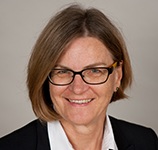
Metal oxides surfaces will be the theme of a plenary talk of the XIV SBPMat Meeting. The speech will be given by Ulrike Diebold, a scientist among the leading experts on the subject in the world. Diebold is engaged in surface science since the time of her doctoral degree, defended in 1990 at the Vienna University of Technology (TU Wien), in Austria. A few years later, during her postdoctoral studies in a surface group at Rutgers University, in New Jersey (USA), she started her researches on titanium dioxide. In 1993, she became a Professor of Tulane University, in the city of New Orleans (USA) and she founded and coordinated a group on surface science. When the group labs were hit by hurricane Katrina in 2005, Diebold was welcomed by several institutions and settled, jointly with some members of the Tulane group, in Rutgers. Finally, she went back to the place where her scientific career had started, TU Wien, as a Professor and coordinator of the surface physics group. With her research groups, Diebold continues to advance in her basic and applied science studies on metal oxides, based, among other techniques, on scanning tunneling microscopy (STM), through which the scientist can investigate these materials at atomic scale.
Ulrike Diebold is the author of more than 180 peer-reviewed articles, which have over 12,000 citations. Her h-index, according to Web of Science, is 52. The scientist has already delivered more than 250 invited talks. Throughout her career, she has received numerous awards and distinctions from several entities such as the Alexander von Humboldt Foundation, American Chemical Society, Austrian Academy of Sciences, Austrian Ministry for Science, Catalysis Society of South Africa, Czech Republic Academy of Sciences, European Academy of Sciences, German National Academy of Sciences Leopoldina, National Science Foundation, among others. She is an associate editor for the Materials Physics Division of the journal Physical Review Letters.
What follows is a mini-interview with this plenary speaker of the XIV SBPMat Meeting
SBPMat newsletter: – In your opinion, what are your most significant contributions in the field of metal oxides surfaces? Please explain them, very briefly, and share references from the resulting articles or books, or comment if these studies have produced patents or products.
Ulrike Diebold: – The field started with the book “The Surface Science of Metal Oxides” by Vic Henrich and P.A. Cox, which was published in 1993 (Cambridge University Press). The book has motivated many people to develop an interest in metal oxide surfaces, and research has progressed tremendously since that time. Some is still valid to this day, e.g., the importance of defects for understanding the properties of oxide surfaces, and how critical it is to master surface preparation. Meaningful investigations can only be conducted on ‘well-characterized’ systems with a known and controlled surface structure. About ten years later, in 2003, I wrote a review that focused only on titanium dioxide, which is a widely-used material both in applications and in fundamental research (Surface Science Reports 48 (2003) 53). This review has received quite a bit of attention. Another decade later a whole issue of Chemical Reviews (vol. 113, 2013) was focused on metal oxide surfaces, which pretty much summarizes the state-of-the art in metal oxide surface research.
SBPMat newsletter: – Comment on the possibilities offered by tunneling microscopy to the study of surfaces, especially metal oxides surfaces.
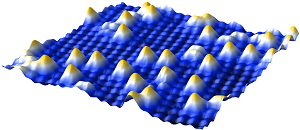
Ulrike Diebold: – Scanning Tunneling Microscopy, which was invented by Heinrich Rohrer and Gerd Binnig in the early 1980s, has revolutionized our understanding of the nanoworld. One can use this technique for imaging the geometric and electronic structure of a surface at the local scale, atom-by-atom. This is particularly important for oxides, where it is often the irregularities in the lattice that are the most interesting entities, i.e., defects such as missing atoms, interstitials, or impurities. Scanning Tunneling Microscopy is the ideal tool to investigate such defects at the atomic level and to literally ‘watch’ defect-mediated chemical reactions.

SBPMat newsletter: – If you wish, leave a message or an invitation to your plenary talk to the readers who will attend the XIV SBPMat Meeting.
Ulrike Diebold: – I think it is simply exciting to observe phenomena such as defects disappearing from a surface and coming back, or single molecules dissociating or diffusing across a surface. If you want to see beautiful pictures and movies of processes that could potentially be relevant to your own research, please come to my talk.
More
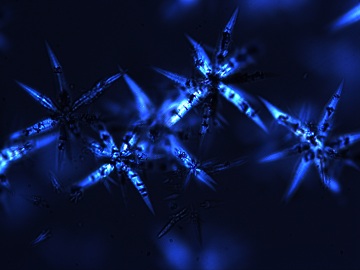
Glass-ceramics, discovered in the decade of 1950, are produced by the catalyzed internal crystallization of certain glasses containing nucleating elements, and submitted to temperatures from 500 to 1,100 °C. They can present many properties which make of them interesting materials for many applications in the fields of medicine, odontology and architecture, among others.
In the XIV SBPMat Meeting, glass-ceramics will be addressed in a lecture entitled “60 years of glass-ceramics R&D: a glorious past and bright future”. The lecturer will be Edgar Dutra Zanotto, full professor of the São Carlos Federal University (UFSCar), in Brazil, and director of the Brazilian Center for Research, Technology and Education in Vitreous Materials (CeRTEV).
Zanotto became fascinated by glass-ceramics in 1977, when he read the book Glass Ceramics by Peter McMillan, from Warwick University (United Kingdom), while he was completing the graduation course of Materials Engineering at UFSCar. From that moment on, these materials and their crystallization process have been the focus of his studies, first in his Master’s Degree in Physics (USP São Carlos, Brazil) then in his PhD in Glass Technology (University of Sheffield, United Kingdom) and, until the moment, in the research and development projects that he develops with his group in the Laboratory of Glass Materials (LaMaV) at UFSCar.
Edgar Zanotto is author of an important production in science and glass technology. There are more than 200 scientific articles, with approximately 3,500 citations in Web of Science and 5,000 in Google Scholar; 20 book chapters; 17 patent orders; 2 books and 4 prefaces of international books. His H index is 34, according to Web of Science, and 39 according to Google Scholar. Zanotto already received 28 prizes or distinctions from diverse entities, as American Ceramic Society, Elsevier Publishing Company, International Commission on Glass, The World Academy of Sciences and CNPq, the Brazilian Federal Research Foundation. He is Commander of the Brazilian National Order of the Scientific Merit. He was chairman of six of the most important international congresses on the glass area. He gave more than 110 invited lectures and a dozen of plenary lectures. He is editor of the Journal of Non-Crystalline Solids.
Here is a mini interview with this lecturer of the XIV Meeting of SBPMat.
SBPMat newsletter: – What are your most significant contributions or the ones with bigger social impact in the subject of glass-ceramics? Explain them very briefly and comment what was generated from them (papers, books, patents, products, etc.).
Edgar Zanotto: – I believe that the most significant contributions of my research group are referred to tests and improvements of models of nucleation, crystal growth and total crystallization of glasses. Moreover we developed and tested, successfully, models that describe the sintering with concurrent glass crystallization, besides several measurement techniques and theories of dynamic processes (viscous flow, structural relaxation, diffusion and crystallization) in glasses. The numbers of papers, patents and books generated from these researches are described above.

SBPMat newsletter: – Please, name some products made with glass ceramics that are in the market and some possible promising applications.
Edgar Zanotto; – Throughout the last 39 years we develop glass ceramics from iron and steel slags and from recycled glasses – for application in civil construction and architecture – and also more sophisticated materials for odontological and medical use. These will be presented in the lecture.
SBPMat newsletter: – If you wish, leave a message or an invitation to your plenary talk to the readers who will attend the XIV SBPMat Meeting.
Edgar Zanotto: – In the lecture I intend to revise the main models of nucleation and crystal growth in glasses and to discuss their applicability to the development of new glass ceramics. Everything will be illustrated with colorful figures of innumerable new products. I hope that the lecture will be interesting and motivating for the students and researchers (experimental and theoreticians) of the areas of materials science and engineering, and condense matter physics and chemistry.
Learn more:
|
||||||||||||||||||||||||||||||||||||||

Between April 6 and 10 of the present year, professor Roberto Mendonça Faria, president of our SBPMat (the Brazil materials research society), was in San Francisco (California, USA), participating in the “2015 MRS Spring Meeting“, one of the two annual meetings of the Materials Research Society (MRS). In such occasion, representing SBPMat, professor Faria held a series of meetings.
The president, vice-president, and the executive officer of MRS, respectively, Oliver Kraft, Kristi S. Anseth, and Tood M. Osman, took part in one of them. In such meeting, the directors of both societies agreed upon the continuity of the contract that makes the MRS’ publications available to SBPMat’s members, and discussed ways of establishing collaborations between the University Chapters programs of both societies. Additionally, SBPMat’s president invited the three directors of MRS to participate in the fourteenth meeting of the Brazilian MRS.
Another meeting congregated professor Robert Chang, general secretary of International Union of Materials Research Societies (IUMRS), and professor José Alberto Giacometti, member of SBPMat Board of Counselors, in addition to professor Faria. The three professors defined that they will be co-organizers of the “Symposium U” at the XIV SBPMat Meeting, intitled “Importance of social implications of nanotechnologies in Science popularization”. The symposium already counts on two invited speakers: Guillermo Foladori, from Universidad Autónoma de Zacatecas (Mexico) and Noela Invernizzi, from Universidade Federal do Paraná (Brazil). In the meeting, professor Chang, who was plenary speaker at the XIII SBPMat Meeting, confirmed his presence in the meeting of this year.
In a third meeting, the president of SBPMat talked to representatives of Institute of Physics (IOP), and both parties manifested the desire of continuing the project of “Science Impact“, publication which, according to professor Faria, has been having an excellent repercussion.
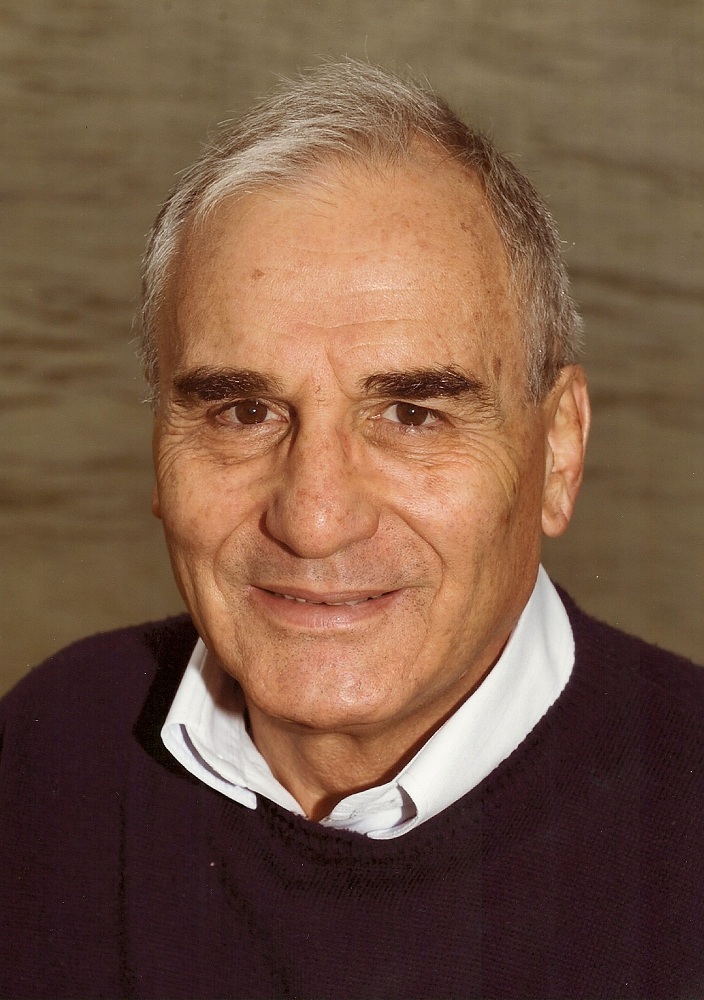 To Fernando Galembeck, Director of the Brazilian Nanotechnology National Laboratory (LNNano) from 2011 to 2015, the interest in research started to appear during his adolescence, when, working in his father’s pharmaceutical lab, he realized the economic importance that new products, resulting from efforts in scientific research, had on the company. Currently aged 72, Fernando Galembeck, looking back at his own scientific path, can tell us several stories in which the knowledge produced by him, jointly with his collaborators, is not only transmitted through scientific papers, theses and books, but has taken form as licensed patents and new or improved products.
Galembeck received his Degree in Chemistry in 1964 from the University of São Paulo (USP). After graduating, he stayed at USP, teaching (1965 – 1980) and, simultaneously, conducting his doctoral studies in Chemistry (1965 – 1970) with a research work on the metal-metal bond dissociation. Once his doctoral studies were completed, he held post-doctoral fellowships in the United States, at the universities of Colorado, in the city of Denver (1972-1973) and California, in the city of Davis (1974), working in the field of Physical Chemistry of biological systems. In 1976, back at USP, he had the chance to create a colloids and surfaces laboratory in its Chemistry Institute. From that moment, Galembeck has been increasingly involved in the development of new materials, especially the polymeric ones, and their manufacturing processes.
In 1980, he started teaching at the University of Campinas (UNICAMP), where he became a Full Professor in 1988, position he held until his retirement in 2011. At Unicamp, he held management positions such as University Vice-Dean, as well as Director of the Institute of Chemistry and Coordinator of its graduate studies program. In July, 2011, he took over the recently created LNNano, at the Brazilian Center for Research in Energy and Materials (CNPEM).
Throughout his career, in Brazil, he held management functions at the Brazilian Academy of Sciences (ABC), Ministry of Science, Technology and Innovation (MCT), National Council for Scientific and Technological Development (CNPq), São Paulo Research Foundation (FAPESP), Brazilian Chemical Society (SBQ), Brazilian Society for the Progress of Science (SBPC) and Brazilian Society for Microscopy and Microanalysis (SBMM), among other entities.
Holder of a 1A-level fellowship for research productivity at CNPq, Galembeck is the author of almost 250 scientific paper published on international peer reviewed journals, which count with over 2,300 citations, as well as 29 deposited patents and over 20 books and chapters in books. He has advised almost 80 Master’s and Doctoral researches.
He has received numerous awards and distinctions, including the 2011 Anísio Teixeira Awards, from CAPES, the Brazilian agency for the improvement of graduate courses; the 2011 Telesio-Galilei Gold Medal, from the Telesio-Galilei Academy of Science (TGAS); the 2006 Almirante Álvaro Alberto Award for Science and Technology, from CNPq and the Conrado Wessel foundation; the 2006 José Pelúcio Ferreira Trophy, from Finep (Brazilian entity for funding of studies and projects); the 2000 Grand Cross of the National Order of Scientific Merit and the 1995 National Commendation of Scientific Merit, both from the President of the Republic of Brazil. He has also received several awards from companies and scientific and business associations, such as CPL, Petrobras, Union Carbide do Brasil, the Brazilian Paint Manufacturers Association, the Brazilian Chemical Industry Association, the Union from the Industry of Chemicals for Industrial Use from the State of Rio de Janeiro, the Brazilian Polymer Association, the Brazilian Chemical Society – which created the Fernando Galembeck Award of Technological Innovation, the Engineers Union from the State of São Paulo and the Electrostatic Society of America.
What follows is an interview with the scientist:
SBPMat Newsletter: – Tell us what led you to become a scientist and work on issues in the field of Materials.
Fernando Galembeck: – My interest in research work started during my adolescence, when I comprehended the importance of new knowledge, of discovery. I found this when I was working, after school, at my father’s pharmaceutical laboratory, as I could see how the newest, latest products, were important. I also saw how costly it was, for the lab, to depend on imported products, which were not produced in Brazil, and that in the country there was no competence to manufacture them. Then I realized the value of new knowledge, as well as the importance and the economic and strategic significance of such breakthroughs.
This feeling was increased when I took my major in Chemistry. I enrolled into the Chemistry course because one of my school teachers had suggested that I should seek a career related to research. He must have seen some inclination, some tendency of mine. So I attended the Chemistry course provided by the Philosophy School, in an environment where the research activity was very vivid. Because of that, I decided to conduct my Doctoral studies at USP. At that time, there were no regular graduate studies in Brazil yet. The advisor with whom I defended my dissertation, Professor Pawel Krumholz, was a great researcher, who also had built a very important career working on a company. He was the industrial director of Orquima, a major company by that time. That boosted my interest in research.
I worked with Chemistry for some years and my interest in materials came from a curious occurring. I was almost graduating, in my last vacations during the undergraduate studies. I was at an apartment, resting after lunch. I remember looking at the walls of this apartment and noticing that, with all I had learned in the Chemistry course, I did not have much to say about the things I could see: the paint, the coverings etc. That was Chemistry, but also Materials, and there was not much interest in Materials in the Chemistry course. Actually, Materials became very important in Chemistry mainly because of plastic and rubber, which, at the time, did not have the importance they have today. I am talking about 1964, approximately.
Well, then I started to work with Physical Chemistry, to later work a little in a field that is more oriented to Biochemistry, that is Biological Physical Chemistry and, in 1976, I received a task from the USP Department, which was to build a colloids and surfaces laboratory. One of our first projects was to modify plastic surfaces, in that case, Teflon. Then I realized that a major part of the colloids and surfaces Chemistry existed due to Materials, because the subject lends itself to create and develop new materials. From that moment on, I was getting increasingly involved with Materials, mainly polymers, a little less with ceramics, and even less with metals.
SBPMat Newsletter: – What are, in your own opinion, your main contributions to the field of Materials? Consider, in your answer, all aspects of your professional activity, including cases of knowledge transfer to the industry.
Fernando Galembeck: – I will tell the story in order, more or less. I think that the first important result in the field of Materials was exactly a technique intended to modify the surface of Teflon, that material in which it is very difficult to stick something. There is even that expression, “Teflon politicians”, the ones for which does not matter what you throw at them, they do not stick to anything. But, in certain situations, we want the Teflon to have adhesion; we want some things to stick. So, by a somewhat complicated path, I managed to see that I already knew how to modify Teflon, but I had never realized that is was important. I knew the phenomenon; I had observed it during my PhD defense. I knew that there was a change happening in Teflon. But it was during a visit to a Unilever laboratory in 1976, when I was talking to a researcher, that I saw that there were people striving to modify the surface of Teflon and achieve adhesion. Then, bringing the problem and the solution together, as soon as I returned to Brazil, I tried to see if I what I had previously observed was really useful, and it worked. That led to the first paper I wrote by myself and my first patent application, at a time when almost nobody talked about patents in Brazil, especially in the university environment. I was very enthusiastic about this: I was approached by companies that were interested in applying what I had done; one the modification in Teflon itself, the other in a different polymer. So I felt great, because I had made a discovery, I had a patent, and there were companies which, at least, would like to know what it was to see if there was a way to use it. One more thing: soon after the paper I wrote was published, I was invited to attend a conference in the United States, which addressed exactly the issue of modifying surfaces. Polymers, plastic and rubber surfaces, a subject with which I was involved for pretty much the rest of my life, up until now.
I will mention a second fact that did not have the same effects, so far. I discovered a method that enables the characterization and separation of very small particles. That was a very interesting paper. It was released, also produced a patent, but had no practical consequences. Recently, there have been some issues related to nanoparticles, which is a very important subject in Materials now, offering a chance to apply what I did over 30 years ago. The name of the technique is osmosedimentation.
Next there was some work that I did by collaborating in projects with Pirelli Cabos. With all this story of surfaces and polymers, I think I had become more or less known and was approached by Pirelli, which contracted me as a consultant and commissioned projects I had at Unicamp. An outcome of these projects, that I think is the most important, was the development of an insulator for very high voltages. This work was not only mine, but rather of a very large team, in which I took part. There were several people from Pirelli, and several from Unicamp. The result of this project was that the Brazilian Pirelli managed to be hired to provide high voltage cables for the Eurotunnel, back in the ‘80s. I think this was a very important case, as it led to a product and brought substantial economic results. I would like to stress that this was done in Brazil, by a Brazilian team. They were not a Brazilian company, but the team was based here.
Then, there were several projects with nanoparticles, at a time when we did not even call them nanoparticles; we used to call them fine particles, or simply small colloidal particles. The first paper I released on nanoparticles was in 1978. There were other things after that, which, ultimately, led to a paper on aluminum phosphate, which resulted in dissertations and papers, as well as a license by a company named Amorphic Solutions, from the Bunge group, that basically explores aluminum phosphate. The subject started at my lab, stayed there for many years, then a company of the Bunge group here in Brazil got interested, started participating, and we collaborated. That became a major development project. Later, Bunge found it infeasible to carry on with the project in Brazil and today is in the United States. I think it is a shame that they are there, but there were some other issues involved, including a disagreement with Unicamp, who holds the patents. If you check Amorphic Solutions page on the internet you may see many applications of the product. As far as I know, they are currently emphasizing its use as an anti-corrosive material to protect steel.
About the same time, in another project on nanoparticles, clay/natural rubber nanocomposites were developed. This was licensed by a Brazilian company called Orbys, which released a product called Imbrik, a product that the company provides, for example, in order to make rubber rolls for paper manufacturing.
Another case with a product. I had done a project with Oxiteno, which manufactures raw materials for latex, the surfactants. They wanted to get an ideia of how much you can change the latex changing the surfactant. I conducted a project with them that I consider one of the most interesting among those in which I have been involved. In the end, we realized that, by changing the surfactant a bit, we changed the latex a lot. These are used in paints, adhesives, resins. So we realized we had a great variability. This work was published and promoted. It did not result in a patent because it was a comprehension project. So, another company, Indústrias Químicas Taubaté (IQT) approached me to produce cationic latex, but using a new path. Cationic latex in general is made of quaternary ammonium salts, which have some environmental restrictions. The company wanted an alternative that did not have those restrictions. By the end of the project, we produced cationic latex without environmental restrictions, and the IQT put the product on the market.
There was another case that was also very interesting, even though it was canceled. Here in Brazil, there was a large manufacturer of polyethylene terephthalate, PET, which is used for many things, including bottles. They knew about the work I had done with nanocomposites, the one with Orbys I mentioned before, so they approached me wanting to produce PET nanocomposites. We had to find out how to escape from what was already patented abroad and discovered a whole new path. The company was called Rhodia-Ster, and today it is part of another Italian company, called Mossi e Ghisolfi. The company was enthusiastic and ended up patenting it in Brazil, and then later abroad. At a certain point, they decided that they would conduct the work internally, and so they did for some years. One day, my contact within the company called me to tell this: “look, we were working with two technologies; the one held by Unicamp and another one, in another country. Both are working, but the company has reached a point where it has chosen to complete the development of only one”. When coming to the final stage in developing materials, the projects costs are too high. One have to use large amounts of materials, run many tests with customers. So, the company decided to take one project further, and, unfortunately, it was not the one in which I had worked. At the end, it was a little frustrating, but I think that it was interesting, because, during this whole time, the company invested a lot in the path we had started here. Not only that, each project brings resources for the laboratory, brings money to hire people, more jobs etc. So, these projects result in many benefits, even when they are not concluded.
Now, skipping some bits, I will reach the last result, which is fairly recent, happening after I left Unicamp and came to the CNPEM. One of CNPEM’s goals is to explore renewable source materials to produce advanced materials. There is a whole philosophy behind this, based on the depletion of natural resources, sustainability… We have worked hard in order to make new things with materials derived from biomass, and the main focus is cellulose. It is the most abundant polymer in the world, but it is very hard to work with it. You cannot process cellulose as you process polyethylene, for example. One of our goals has been to find ways to laminate cellulose, i.e., work it as closely as possible to the way we use to work synthetic polymers. A recent outcome, built upon this idea, is that we managed to produce cellulose adhesives having it as the only polymer, which is new. A patent application was entered in the beginning of the year, and we are submitting a paper on it, while aiming to work with companies that are interested in the subject. We are already discussing a project for a specific application of this modified cellulose with a company.
This is the latest case. In the middle of the way, many other projects were conducted with companies, for issues of their interest. Coating something, gluing another, modifying a polymer to achieve a certain result. But these were answers to demands from companies, instead of researches started at the laboratory.
SBPMat Newsletter: – Leave a message for our readers who are starting their careers as scientists.
Fernando Galembeck: – First of all, in any chosen career, there must be a dose of passion. It does not matter if you are going to work in the Stock Market, Healthcare or whatever you may do; above all, your taste must decide. If a person chooses a career because it will give them money or status… I think it is a bad choice. If you do things with pleasure, with interest, the money, prestige and status will come from other paths. The goal is to do what makes you happy, what makes you feel good when you do it, what makes you feel accomplished. It is true not only for the scientific career, but also to any other career. In science, it is crucial.
Another point is that you must be prepared to work hard. There is no easy way. I know some young people who are constantly seeking the great idea that will bring them success with relatively little work. Well, I’d better not count on it. It may even happen, but waiting for it is almost the same as wait to win the Lottery and get rich.
I’m over 70, therefore I have met many people and seen many things happen. Something that strikes me is how young people who seemed very promising end up not working very well. Frankly, I think it is bad for youngsters to achieve success too early, because I have the impression they get used to this idea that things will always work out fine. And the problem is that there isn’t anything, anyone, any company that will always work. There will always be the moment of failure, the moment of frustration. If the person is prepared for that, when the times come, he or she will overcome it, while others are crushed – they cannot move one. That is why we must be careful not to be deceived by our success and think that, because it worked once, it will always work. You must be prepared to fight.
When I was in college, thinking about doing research seemed a very strange thing to do, crazy talk. People did not know very well what it was, or why would someone choose to do it. Some people said that research was something like priesthood. I have always worked with research, associated with teaching, consulting and, without having ever sought to become rich, I managed to have an economic status that I deem very comfortable. But I insist, my goal was to enable the development, to produce material, not the money I would receive. Money came, as it does. So, I suggest you to focus on your work, on the results and the contribution that said work may give to other people, to the environment, to the community, to the country, to knowledge. The rest comes as a bonus.
In short, my message is: work seriously, earnestly and passionately.
Finally, I would like to point out that I think the research work, the development work, really helps you to grow as a person. It will depart you from ideas that are not very fruitful and guide you towards attitudes that are really important and helpful. A student asked Galileo once: “Master, what is the method?”, and Galileo’s answer was: “The method is the doubt”. I think it is very important in the research activity, which, for Materials in particular, is especially interesting because the final product is something you can hold in your hands. In the research activity you have to always wonder, “I’m thinking like this, but is this right?”, or “This guy wrote this, but what are his bases to write it?”. This attitude is very different from the dogmatic one, which is common in the realms of politics and religion, and very different from the attitude of someone who has to deceive, as the lawyer who works for a mobster or drug dealer. The researchers have to commit themselves to the truth. Of course there are also people who call themselves researchers and spread disinformation. Some years ago, people were talking about something called “Bush science”, an expression referring to President Bush. This Bush science was the arguments fabricated by people who gained money as scientists, but who produced arguments to sustain Bush’s policies. In other words, the problem exists in science as well, but then we get back to what I said earlier. You cannot enter this field because of money, or to achieve prestige, or to be invited to have dinner with the president; you must enter this field because of your interest in the subject itself.
Paper: Mechanisms of optical losses inthe 5D4 and 5D3 levels in Tb3+ doped low silica calcium aluminosilicate glasses. J. F. M. dos Santos, I. A. A. Terra, N. G. C. Astrath, F. B. Guimarães, M. L. Baesso, L. A. O. Nunes and T. Catunda. J. Appl. Phys. 117, 053102 (2015). DOI: 10.1063/1.4906781.
A team of scientists from Brazilian institutions has expanded the comprehension of the mechanisms that restrict the light emission efficiency in materials doped with trivalent terbium ion (Tb³+). This ion, found in the rare earth group, subgroup of lanthanides, displays luminescent emissions from ultraviolet to infrared. Its intense green emission, with approximately 545 nm of wave length, is particularly interesting for technological purposes.
Some years ago, for instance, Japanese researchers produced laser emissions with Tb3+ doped optical fibers. However, their device displayed low efficiency, due to the saturation of its optical gain, even at low excitation levels.

Taking up this technological issue, the team of Brazilian scientists has conducted a thorough study on the processes that cause the saturation of the green emission. For that, they used Tb3+ to dope a material which, thanks to its properties, ensures high efficiency to the emission, mainly in infrared: the low silica calcium aluminosilicate glass, also known as LSCAS.
The study involved two research groups that have been collaborating for approximately two decades, the group of spectroscopy of solids from the São Carlos Institute of Physics at the São Paulo University (USP), and the photothermics group from State University of Maringá (UEM). The results were reported in a paper that appeared recently on the Journal of Applied Physics.
Firstly, glass samples with different dopant concentrations were prepared by the UEM group.

At IFSC-USP, the samples were excited using a laser at two different wavelengths, 488 nm (visible) and 325 nm (ultraviolet), and their absorption, emission and excitation spectra were obtained. Analyzing them, the scientists from the group of spectroscopy of solids observed certain particularities in the behavior of some luminescent emissions, such as a strong saturation in a green emission, similar to the one found in the laser presented by the Japanese scientists. In other wavelengths, they noted, for example, a decrease in luminescence occurring at lower excitation levels than expected. Thus, the researchers managed to conclude that the mechanism associated in the literature to the emissions from Tb3+ doped materials, also known as cross relaxation, was not enough to completely explain the behavior of the emissions or even the saturation of the green emissions, and proposed the additional action of other processes.
“Additional loss mechanisms, such as emissions by defects in the matrix, energy upconversion processes, to name a few, have a significant influence in the system we have studied”, explains Tomaz Catunda, professor at USP and corresponding author of the article. “These decay paths, previously ignored by the literature, are very important in the manufacturing of optical devices with Tb3+ doped materials”, he adds.
The study of Tb³+ doped glasses by the Brazilian team started during the Doctoral dissertation of Idelma Terra, defended in 2013 at USP, which aimed to develop materials in order to increase the efficiency of solar cells. Her work was granted the 2014 “Vale-Capes Science and Sustainability Award”. The study of these materials continued in Giselly Bianchi’s Doctoral dissertation, performed at UEM, and in the Master’s thesis of Jéssica Fabiana Mariano dos Santos, defended in 2014 at EESC-USP.
The article published on the Journal of Applied Physics has joined dozens of papers born from the collaboration between the groups of spectroscopy of solids and photothermics, in some cases also involving other scientists from Brazil and abroad, focused on the optical spectroscopy of calcium aluminate glasses doped with rare earth ions and their applications in light-emitting devices.