
|
|||||||||||||||||||||||||||
|
|||||||||||||||||||||||||||
|
|
|||||||||||||||||||||||||||
|
|||||||||||||||||||||||||||
|
 Brazil, besides having one of the world’s largest reserves of ores with lanthanide elements, also occupies a prominent place in the research of these elements and their compounds, which have significant applicability in strategic areas such as energy, health and catalysis, as well as in many other areas.
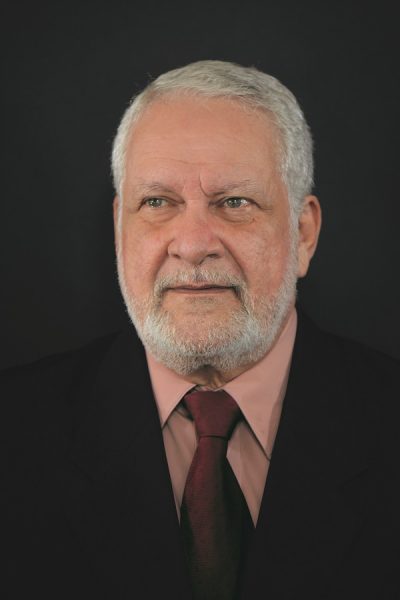
One of the most prominent Brazilian scientists in this research field is Oscar Manoel Loureiro Malta, born in the city of Recife (state of Pernambuco) 63 years ago. Malta is Professor at the Department of Fundamental Chemistry of the Federal University of Pernambuco (UFPE). Over the course of four decades, he has made important contributions to the research on lanthanides, both in the fundamental and applied fields.
Malta defined his interest in science during his high school years. In 1974, he started the Chemical Engineering course at UFPE and the Physics course at the Catholic University of Pernambuco. After completing his degree in Physics, he left the Chemistry course to join the Master’s degree in Physics at UFPE. There he carried out research work on spectroscopy of lanthanide compounds, mentored by Professor Gilberto Fernandes de Sá. In December of 1977, he obtained the master’s degree. He continued his studies on lanthanide spectroscopy in his doctorate at the University of Paris VI (France), also known as Pierre et Marie Curie Université, guided by Professor Yves Jeannin. He obtained his doctorate in March 1981. He then returned to Recife, where that same year he became professor at UFPE. In 1986, he returned to France for one year as a visiting researcher in the group of Paul Caro, a world-renowned scientist in the lanthanide area, linked to the French National Center for Scientific Research (CNRS).
Oscar Malta was visiting professor in several international institutions: University of Wroclaw (Poland) in 2015; University of Aveiro (Portugal) in 2005; Industrial University of Santander (Colombia) in 2000; University of São Paulo, USP, in 1995, 1996 and 1999, and Paulista State University Júlio de Mesquita Neto, UNESP, in 1994-95 and 1998.
At UFPE, he participated in the creation and consolidation of the Department of Fundamental Chemistry, where he served as department head (1987-89) and postgraduate coordinator (1991-93 and 1999-2001). He was also the coordinator of two national research networks: the National Network of Molecular Nanotechnology and Interfaces, RENAMI (2001 – 2009), and the National Institute of Science and Technology for Integrated Markers, INAMI (2009-2015).
Malta has received a number of acknowledgments for his scientific trajectory. On November 15, 2017, he received an honorary doctorate from the University of Wroctaw, an important institution in Poland where nine Nobel laureates have emerged. In 2016, a special edition of the Journal of Luminescence (publisher Elsevier) on lanthanide spectroscopy was dedicated to this researcher from Pernambuco (https://doi.org/10.1016/j.jlumin.2015.11.024). In 2015, Malta received the Ricardo Ferreira Award for Scientific Merit, recently created by the Foundation for Science and Technology of Pernambuco, Facepe. In 2014, he received the Professor Paulo José Duarte Medal from the Brazilian Chemistry Association. In 2003, he became a full member of the Brazilian Academy of Sciences, ABC.
In this year, Malta was chairman of the International Conference on Luminescence (ICL), which, after seventeen editions in the northern hemisphere, was held in the Brazilian city of João Pessoa.
With a productivity research grant 1A of CNPq, Oscar Malta is the author of approximately 180 papers published in international journals, with about 7,000 citations in the Web of Science. The scientist has a 42 H index.
Here is our interview with Oscar Manoel Loureiro Malta.
SBPMat newsletter: What do you believe are your main contributions to the Materials area and why do you consider them more relevant?
Oscar Malta: Since my master’s degree, which I started in 1977, my work has been in the areas of theoretical chemistry, binding field theory, 4f-4f spectral intensities, non-radioactive energy transfer, in particular intramolecular energy transfer in coordination compounds with lanthanide ions whose theory I developed between 1996 and 1998 and which until today I continue working on, as well as several groups in Brazil and abroad. Over the last three decades, in a work that involves great and extraordinary synergy between theory and experiment, we have been able to construct a very successful scheme for the modeling of highly functional luminescent lanthanide ion coordination compounds with the potential for diverse applications such as luminescent markers in bioassays. Many of these results were obtained during the time I coordinated two national nanotechnology networks. The first, National Network of Molecular Nanotechnology and Interfaces (RENAMI), was in force from 2001 to 2009, the second, the National Institute of Science and Technology for Integrated Markers (inct-INAMI), was in force from 2009 to 2015. Coupled to these results two important themes were also developed: the effect of metal nanoparticle plasmas on the luminescence of compounds with lanthanide ions, a subject that is currently linked to the so-called plasmon, and the concept of polarizability of the coating region in the chemical bond as a way to quantify covalence, which I introduced between 2002 and 2005 in order to better understand the chemical bond involving 4f orbitals. This concept was subsequently generalized to any chemical bonding, from single molecules to complex materials. In all these results it is important to emphasize the students’ participation, from scientific initiation to the doctorate.
SBPMat Bulletin: You started researching in the field of lanthanide ion compounds spectroscopy in your master’s degree, 40 years ago, and you’re still working in the area. What most appeals to you in this research topic? Is it still a promising area? What has changed in the research in this area in Brazil since the 1970s so far?
Oscar Malta: Lanthanides and their compounds are fascinating. They took me into the world of theoretical chemistry, in the world of angular momentum algebra, in the world of the interaction of radiation with matter, and into the world of spectroscopy. When I finished my master’s degree, everything was in place for me to go on to do a doctorate in England to work in atomic physics. At that time he was in Recife, at the invitation of Gilberto Sá and Ricardo Ferreira, Paul Caro, one of the most renowned researchers in lanthanide spectroscopy. He presented a seminar that really impressed me. I gave up on going to England and went to work for Paul Caro’s group at CNRS in Meudon-Bellevue in France. At first the plan was to develop an experimental thesis. However, I wanted to work on the theory. Paul Caro accepted this without problems, and a very fruitful theory/experiment interaction emerged that extended to other groups and continues to this day, always with much to do from a fundamental point of view and from the point of view of applications. Brazil is one of the world leaders in this field, with extremely active and internationally recognized research groups in the country. In fact there is again a discussion about the production of lanthanides since Brazil is a country rich with the minerals of these elements, so important for today’s technology and undoubtedly for the future. We cannot overlook this.
SBPMat Bulletin: Now we invite you to leave a message for the readers who are starting their scientific careers.
Oscar Malta: There is now a strong tendency of young researchers (I am referring to the scientific area under consideration here) to exacerbate the value of applied science in a short-sighted manner. As a result they forget the theoretical foundations and they often do not know the history of the subject, even the experimental history, that they work with or intend to work with. It is exhausting (a fact) to notice this in scientific meetings and I usually am amazed. This is like a linear inflationary process in which money is thrown into the market without having a stabilizer. Sooner or later it ends up in trouble, problems whose creative solutions (an assumption that must accompany a scientist) could be found if greater investment had been deposited in the theoretical foundation and greater attention given to the history of the situation at hand. Therefore, with respect to this question, my message is: do not neglect good theoretical formation and the knowledge of the origin of the subject with which you intend to work. Countries that are now developing and exporting good technology realize how important this is.
SBPMat Bulletin: Feel free to share other comments with our community.
Oscar Malta: Science and technology are more than ever a social activity that requires creativity (as always), training, and therefore education, dedication and strong interdisciplinary cooperation. And it requires investments. Without these ingredients, coupled with sound and sensible ethics committees, we will not be able to create intelligent and reliable science and technology policies that will ensure the continuation of human civilization. The great astronomer Carl Sagan said that not taking these ingredients seriously and the notion that five billion years from now our solar system will have been burned (by our red giant), we will have no chance of getting out of here. This sounds like science fiction, but it’s not. Hopefully the next generations, especially our leaders, will realize this. But I am optimistic in this regard, like a great neuroscientist (Miguel Nicolelis) who wrote “Beyond Boundaries”, which I recommend to my colleagues in Materials Science – especially with respect to emerging properties.
 A team led by researchers from Brazil was able to unveil details of the distribution of electrons in materials based on actinide elements (the 15 chemical radioactive elements, with atomic numbers ranging from 89 to 103).
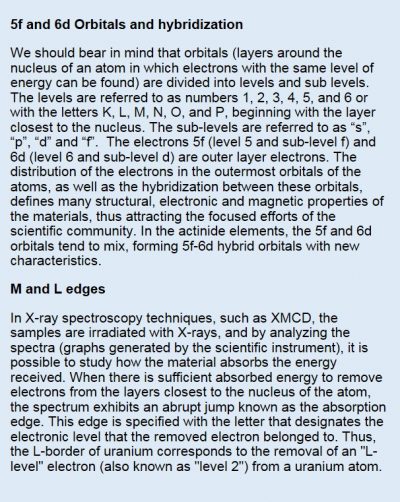
The group of scientists developed an experimental method that allowed a unique probing of the 5f and 6d orbitals and their hybridization in materials based on uranium (one of the most abundant actinide elements in the earth’s crust). This allowed the team to demonstrate, for example, that 5f-6d hybridization determines the magnetic properties of the studied materials. The work left as a legacy an experimental system for research on various magnetic materials (3d metals, rare earths, actinides and others), available to be used by the international scientific community at the Brazilian Synchrotron Light Laboratory (LNLS).
The study was reported in a paper that was recently published in Nature Communications (Impact Factor 12,124). “In this paper, we demonstrate the use of magnetic circular dichroism (XMCD) on the L-border of uranium to directly probe the 6d and 5f orbitals and also their degree of hybridization, rather than just probing the 5f orbitals as for instance the actinides M absorption edges,” details the corresponding author of the paper, Narcizo Marques de Souza Neto, professor at UNICAMP and researcher at LNLS.
In order to probe the orbitals of the uranium compounds, especially UCu2Si2 and UMn2Si2, the scientists had to overcome the difficulties of manipulating the materials due to their toxicity. They also had to make a series of adjustments in the high-energy XMCD technique to improve its sensitivity (to extend its detection limits).
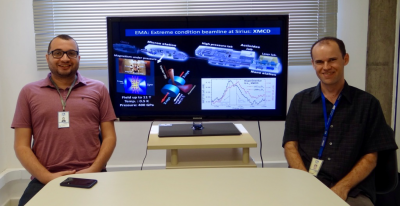
These developments were initially performed at the LNLS DXAS line, dedicated to X-ray absorption techniques. Currently, the XMCD instrumentation is part of the XDS line of LNLS which is dedicated to X-ray diffraction and spectroscopy, where it is being used and improved. In the future the technique will be available in Sirius (the latest generation of synchrotron light source which is being built in Campinas), more precisely in the EMA line, which will be dedicated to X-ray techniques under extreme conditions of pressure and temperature. According to Souza-Neto, who coordinates both the XDS line and the EMA project, the conditions for studying actinides and similar materials by XMCD will be unparalleled in Sirius.
In addition to advancing the knowledge on actinides, the research demonstrated the potential of the XMCD technique improved by the Brazilian team to continue unveiling the characteristics of these still experimentally understudied elements. A deeper understanding of actinides, says Souza-Neto, is necessary to propose new uses for these elements, and also to be able to use them more efficiently in existing applications, such as, for example, power generation, diagnosis and treatment of diseases and the production of special glasses.
The history behind this work
The origin of this work dates back to 2009, when Souza-Neto was studying rare earth electronic structure and magnetism during his postdoctoral fellowship at the Argonne National Laboratory in the United States. “I had the idea of expanding the study of rare earths to actinide compounds (Souza-Neto et al., Phys. Rev. Lett., 102, 057206 (2009)) using XMCD to probe a charge transfer in the 4f and 5d orbitals”, the researcher reports. Looking for materials with similar characteristics, he came across uranium compounds. “We first tried to start this study in Argonne, but the conditions there to carry this out were not as we had hoped,” he adds. He returned to Brazil in 2010 as a researcher of CNPEM, with the desire to continue this initiative. Thus, in 2011, Souza-Neto began to guide the doctoral research of Ricardo Donizeth dos Reis on this subject together with the co-supervisor Flávio César Guimarães Gandra, a professor at Unicamp, with whom he had previously collaborated.
Samples of uranium compounds were prepared and characterized in the Laboratory of Metals and Alloys of Unicamp, coordinated by Professor Gandra, where there was already research experience on actinide and rare earth materials. The X-ray absorption spectroscopy experiments were performed at Argonne’s Advanced Photon Source and at LNLS. “All experiments on the L edges of uranium, which make up the main innovative contribution of this work, were carried out at LNLS,” Souza-Neto details. “At Argonne the experiments were carried out on the M edge of uranium to probe the contribution of the 5f orbitals separately and corroborate our interpretation of the results,” he adds. Furthermore, the Brazilian group had the participation of a researcher from France in the theoretical simulations performed for interpreting the data.
The research was carried out with financial resources from the São Paulo Research Foundation; from the Brazilian federal agency Capes; from the Ministry of Science, Technology and Innovation of Brazil, and from the Office of Science of the United States Department of Energy.
Scientific paper:
“Unraveling 5f-6dhybridization in uraniumcompounds via spin-resolved L-edge spectroscopy”. R. D. dos Reis, L. S. I. Veiga, C. A. Escanhoela Jr., J. C. Lang, Y. Joly, F. G. Gandra, D. Haskel & N. M. Souza-Neto. Nature Communications 8:1203 (2017). DOI: 10.1038/s41467-017-01524-1. Link: https://www.nature.com/articles/s41467-017-01524-1
The university will hire 20 visiting researchers in several graduate programs, such as the Academic Master on Materials Science.
More information: https://visiting.ufms.br/
The Graduate Program in Physics of Federal University of Santa Catarina – PPGFSC/UFSC, Florianópolis, announces the vacancy of 1 (one) postdoctoral scholarship from the Programa Nacional de Pós-doutorado da Coordenação de Aperfeiçoamento de Pessoal de Nível Superior – PNPD/CAPES, to the period of 2 (two) years, it can be renewed annually at a maximum of 60 months.
The monthly amount of the scholarship is R$ 4.100.00 (four thousand one hundred reais) beyond the values destined to assets.
The candidate has to act in THEORETICAL or EXPERIMENTAL research lines at one of the following areas of research: Astrophysics, Atomic and Molecular Physics, Condensed Matter Physics and Statistical Mechanics, Mathematical Physics and Quantum Field Theory and Nuclear Physics and Hadrons.
The complete regulation of the Graduate Program (Programa Nacional de Pós-Doutorado – PNPD) is described at: Portaria nº 086, de 03 de julho de 2013.
Applications here.
Deadline for applications close at November 27, 2017 until 5:00 pm.
Participating of the Admission Process the master candidate must take one of two last editions of EUF (Exame Unificado das Pós-Graduações em Física) and the PhD candidate must take some of last five editions.
The complete notice and other information are available at: http://ppgfsc.posgrad.ufsc.br/processo-seletivo-mestrado-e-doutorado/