
Sorry, this entry is only available in Brazilian Portuguese.
Author: Verónica Savignano
(Português) Pós-doutorado no IFSC/USP.
(Português) Vaga para pós-doutorado no LNNano/CNPEM.
XVII B-MRS Meeting: Abstract submission deadline extended to April 30.
Instructions for authors: https://www.sbpmat.org.br/17encontro/authors/
Call for the scholarship PNPD/CAPES with PPGFSC/UFSC – 2018/1.
The Graduate Program in Physics of Federal University of Santa Catarina – PPGFSC/UFSC, Florianópolis, announces the vacancy of 2 (two) postdoctoral scholarships from the (Programa Nacional de Pós-doutorado da Coordenação de Aperfeiçoamento de Pessoal de Nível Superior – PNPD/CAPES), to the period of 2 (two) years, it can be renewed annually at a maximum of 60 months.
The monthly amount of the scholarship is R$ 4.100.00 (four thousand one hundred reais) beyond the values destined to assets.
The candidate has to act in THEORETICAL or EXPERIMENTAL research lines at one of the following areas of research: Astrophysics, Atomic and Molecular Physics, Condensed Matter Physics and Statistical Mechanics, Mathematical Physics and Quantum Field Theory and Nuclear Physics and Hadrons.
The complete regulation of the Graduate Program (Programa Nacional de Pós-Doutorado – PNPD) is described at:Portaria nº 086, de 03 de julho de 2013.
To make your application: click here
Director and former president of B-MRS are chosen as coordinators of the areas of Materials and Astronomy/Physics at CAPES.
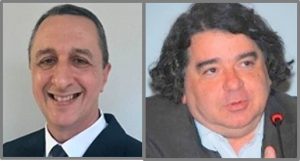
Two participating B-MRS members are listed among the new area coordinators (mandate 2018-2022) of CAPES, the Brazilian federal agency for the improvement of higher education, mainly graduate programs.
Professor Antonio Eduardo Martinelli (Department of Materials Engineering of the Federal University of Rio Grande do Norte, UFRN) was reappointed as coordinator of the Materials Area of CAPES. Currently, Martinelli is a B-MRS Scientific Director and chairman of the XVII B-MRS Meeting. He was also director of the society in 2008-2009 and 2016-2017.
Professor Fernando Lázaro Freire Jr (Department of Physics of the Pontifical Catholic University of Rio de Janeiro, PUC-Rio) was chosen coordinator of the Area of Astronomy/Physics of CAPES. Member of the founding board of B-MRS, Freire Jr, served two terms as president of the society (2006-2007 and 2008-2009) and two as director (2004-2005 and 2012-2013). He coordinated the Physics and Astronomy Area of the Rio de Janeiro State Research Foundation (FAPERJ) from 2008 to 2012. He was director of the Brazilian Center for Research in Physics (CBPF) from 2011 to 2015 and director of the Department of Physics of PUC-Rio from 2003 to 2008.
According to CAPES, the area coordinators are consultants designated to coordinate, plan and execute the activities of their areas, including those related to the evaluation of graduate programs. The process of choosing the coordinators involves all the Brazilian graduate programs of the area in question, as well as the boards and authorities of CAPES.
(Português) Pós-doutorado em Polímeros no Centro de Tecnologia em Nanomateriais (CTNano).
B-MRS Newsletter. Year 5, issue 3.
|
|||||||||||||||||||||||||||||||||||||||||
|
|||||||||||||||||||||||||||||||||||||||||
|
History of Materials Research: 30 years of LIEC – UFSCar.
The Interdisciplinary Laboratory of Electrochemistry and Ceramics (LIEC) of the Federal University of São Carlos (UFSCar) is completing 30 years of scientific research, development of innovative products and processes, training of scientists and extension activities.
The idea of creating an interdisciplinary laboratory emerged in 1988, from discussions of three research professors, two from UFSCar and the third from UNESP – Araraquara, with education background in chemistry, physics and physical chemistry. These professors were Elson Longo da Silva, Luís Otávio de Sousa Bulhões and José Arana Varela (deceased in 2016). “The idea came about because we had obtained equipment from funding agencies, but there was not enough space in our respective departments to allocate them,” recounted Elson Longo, now professor emeritus of UFSCar, during the commemoration of the anniversary of LIEC, on March 23.
The idea was materialized thanks to a partnership with Companhia Brasileira de Metais e Metalurgia (CBMM) to finance the construction of the building that would house the equipment. The company, Longo said, was interested in the future laboratory developing some products. “Fortunately, we secured their support for the construction of the building at UFSCar,” explained Longo
Soon after, the laboratory began to receive students interested in participating in the research. The first ones, recalls Longo, were Edson Roberto Leite (now professor at UFSCar), Carlos Alberto Paskocimas (currently at UFRN) Ernesto Chaves Pereira (UFSCar) and Maria Aparecida Zaghete (UNESP). “It can be said that over the past 30 years there have been hundreds of students who have completed their studies at LIEC,” said Longo. In addition to students from various UFSCar courses, LIEC has received young people from other institutions in Brazil and abroad for classes, courses and research at all levels of education.
Partnerships with the industrial sector have marked the history of LIEC in the following years. “The various research themes have been developed, and also changing, from theoretical reflections and from contacts with various companies,” declares Longo. “I emphasize that it was not the production of reflexive knowledge of business needs; on the contrary, such needs have given rise to new interpretive models and dialogues with other theories,” he clarifies.
One of the longest-standing industrial partners is Companhia Siderúrgica Nacional (CSN), with which the laboratory continues to work. Initially, LIEC helped the company eliminate the corrosion that the ceramic burner experienced. “The solution to this problem put the team to research and solve problems related to blast furnace, race channel, torpedo car, converter etc.,” Longo recalled.
Another example cited by Longo is the partnership with 3M of Brazil. LIEC collaborated with the company in the implementation of a varistor plant in Ribeirão Preto, some 100 km from São Carlos. “This collaboration allowed us to open another research sub-area, whereby we produced the first tin oxide varistor,” added the professor emeritus.
Parallel to the projects with companies, LIEC carried out, from the beginning, research in structural ceramics based on zirconia oxide stabilized with rare earths and alkaline earth metals. Thus began the collaboration of the laboratory with the theoretical chemist Juan Andrés, professor of the Universitat Jaume I (Spain) – a cooperation that has lasted for 29 years.
As for the extension activities, LIEC also has successful examples, such as the project through which it brought technical knowledge to artistic ceramics artisans from 9 Brazilian states.
In the 21st century, from multidisciplinary laboratory to materials development center
The year 2000 was a turning point in the scientific trajectory of LIEC. The laboratory was approved in the call for FAPESP CEPID projects, and denominated as Multidisciplinary Center for the Development of Ceramic Materials (CMDMC), and with the guarantee of continuous financing for 11 years. Consequently, the area of diffusion of knowledge was created, international collaborations multiplied (covering more than a dozen countries), and support was given to creating spin-off companies. From this environment came Nanox, specialized in bactericidal nanoparticles, and CosmoScience, dedicated to the characterization of cosmetics.
“This is when LIEC initiated comprehensive modifications in the research of ceramic semiconductors using the Pechini method,” Longo said. “There has been significant expansion in the research on piezoelectric materials, sensors, nanometric particles and thin films for non-volatile memory applications,” affirmed LIEC’s founder.
In 2013, LIEC was again contemplated with the FAPESP CEPID project, now denominated the Center for the Development of Functional Materials (CDMF). In this phase, which continues to this day, the diffusion of knowledge has grown remarkably through the use of social networks and the creation of videos, educational games and radio and television programs. In addition, LIEC researchers have established two spinoffs, NChemi Nanomaterials, of nanomaterials, and Katléia, which specializes in capillary diagnostics. In the scientific research activities, the laboratory has concentrated efforts in obtaining semiconductor nanoparticles with controlled reaction kinetics and morphology.
During the event of the 23rd, Professor Longo thanked everyone who built and still builds the history of LIEC, as well as UFSCar and the funding agencies CAPES, CNPq, FAPESP and FINEP. Finally, Longo addressed a few words to the new generations of researchers who will continue the work. The emeritus professor recommended that they plant new seeds for other crops, and that they create their own models and reinvent themselves.
The emeritus professor’s speech ended with this message: “In these moments of moral and ethical crisis that our country experiences, allied to a silent project of dismantling research and public education at all levels, it is imperative that we gather energies for many present and future confrontations”.
Featured scientist: interview with Carlos Graeff.
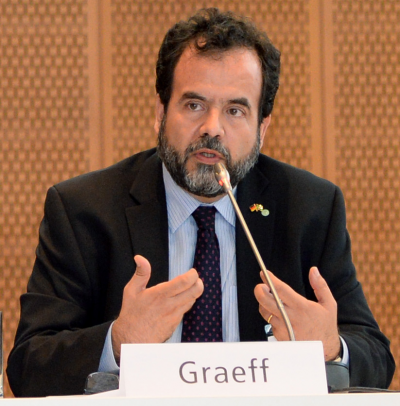
Fascinated by science since he was a child, with a representative at his home (his father, a renowned neuroscientist), Carlos Frederico Oliveira Graeff, born at Ribeirao Preto (state of São Paulo), chose the area of Physics as his university studies. He obtained his bachelor’s (1989), master (1991) and doctor (1994) degrees in Physics from the University of Campinas (Unicamp). During his master’s and doctorate program, supervised by professor Ivan Chambouleyron, he took his first steps as a researcher in the Materials area with studies on materials based on germanium and silicon. During his doctorate he participated in a research internship at the Max Plank Institut für Festkörperforschung in Germany.
He returned to Germany in 1994 until 1996 for a postdoctoral period to work on electronic magnetic resonance, semiconductors and electronic devices at the Walter Schottky Institute of the Technische Universität München (TUM), with a grant from the German foundation Alexander Von Humboldt.
Upon returning to Brazil, he became a professor at the Department of Physics and Mathematics of the University of São Paulo (USP), where he remained for 10 years. In 2006, he joined the Faculty of Sciences of Bauru at the State University of São Paulo (UNESP) as a full professor, where he is still teaching and researching. Throughout his academic career, Graeff has been visiting professor or researcher at several institutions in France, China and Switzerland.
From 2007 to 2009, Graeff was coordinator of the Post-Graduate Program in Materials Science and Technology (POSMAT) at UNESP – Bauru campus. Between 2009 and 2014, he was the coordinator of the newly created Materials Area of CAPES, responsible for the evaluation of Brazilian post-graduate programs in Materials, among other functions. From 2011 to 2013, Graeff was president of the Humboldt Club of Brazil and in 2012 and 2013 he was scientific director of B-MRS. The scientist also fulfilled or performs management or advisory functions at Brazilian agencies FAPESP and CAPES, and at IUPAC (International Union of Pure and Applied Chemistry).
In 2017, after having participated in the editorial board of several international journals, he was appointed associate editor in the photovoltaic area of the journal Solar Energy (impact factor 4,018), of Elsevier publishing house. Also in 2017, he became Dean of Research at UNESP, a post he holds until now.
With an h index of 28, Graeff is the author of about 200 indexed papers that have more than 2,500 citations, according to Google Scholar. In three decades of scientific work, together with his team at the Laboratory of New Materials and Devices at UNESP and his numerous national and international collaborators, Graeff has contributed to the field of materials research with multiple subjects. Among his most cited articles there are studies on synthetic diamond, silicon and germanium heterostructures, conjugated polymers, latex and melanin (biological material with semiconductor properties that are promising for the development of bioelectronic devices).
The researcher has also worked in the area of photovoltaic energy (direct conversion of solar radiation into electricity), with numerous contributions to the development of solar cells based on different materials (dyes, perovskites and organic semiconductors). On this subject of photovoltaic energy, Carlos Graeff will offer a plenary lecture at the XVII B-MRS Meeting, to be held in Natal (RN) from September 16 to 20.
The following is an interview with this outstanding researcher of our community.
B-MRS Newsletter: How or why did you become a scientist? Did you always want to be a scientist? Also, briefly tell us what led you to work in the field of materials.
Carlos Graeff: My father, Frederico Graeff, is a well-known researcher and perhaps one of the most important influences in my decision. My aunts were also teachers and researchers, so from an early age I had access to the world of science from my home, which has always fascinated me. The decision to study physics was largely due to the various books I read and from the television Cosmos series presented by Carl Sagan. The decision to work in the Materials area came later on during my baccalaureate in physics after the first courses in condensed matter physics and semiconductors. From the beginning of the graduate studies I worked in materials, and soon I was attracted by the interfaces of physics with chemistry and biology in very different subjects of materials science and engineering.
B-MRS Newsletter: What do you believe are your main contributions to the Materials area? Please consider all aspects of scientific activity.
Carlos Graeff: It is always difficult to choose key contributions. In my case in particular it is easy to see, reading my CV, a very eclectic trajectory in terms of studied materials and applications. Using originality as a preference, I will dwell on three themes; the first is the production of CoS (cobalt sulfide) the basis of ecological paints for the production of electrodes for solar cells. We have achieved a simple, industrial and ecological method to replace platinum in dye-based solar cells. In the second theme, we have proposed several alternative methods for the synthesis of melanin, the material involved in tanning, and with this we have been able to produce biocompatible materials with very special characteristics with regard to, for example, solubility. We are identifying a very important defect for this material using, as a main tool, computational simulations combined with spectroscopic techniques. We are sure this material will be important in the emerging area of bioelectronics. In the third theme, we describe in detail the whole degradation process of organic semiconductors, identifying routes for the production of high sensitivity dosimeters for applications in hospitals and clinics that use, for example, gamma rays for cancer treatments and diagnosis. We also have had very unique contributions in the physics of electrically detected magnetic resonance, increasing the sensitivity and the general understanding of the physical phenomena involved. In addition to these fundamental contributions, I was responsible, proudly and with satisfaction, for the implementation of the materials area at CAPES. Another source of satisfaction regards the good students I was fortunate enough to mentor, many of them brilliant scientists. I helped and coordinated the assemblage of several laboratories both here in Brazil and abroad, most recently I helped set up a magnetic resonance laboratory in China.
B-MRS Newsletter: Now we invite you to leave a message for our readers who are starting their scientific careers.
Carlos Graeff: I started my master’s degree in 1989, a time that was perhaps as troubled as the current one, do not get discouraged! With focus and a bit of luck it is always possible to create new ideas, build a solid career and contribute to our beautiful country. We are going through a great revolution, with the emergence of new technologies that will profoundly transform society. Intelligence will increasingly play a decisive role in the direction of our society, be prepared to work in this new world of great opportunities. Always seek out dialogue with specialists from the most different areas of knowledge and from various countries. Quite possibly, in the coming years we will unravel the mysteries of how the brain works, we will master limitless forms of energy and ecological production, generate artificial intelligence. Open up to what is new, be bold, Brazil needs your citizen and entrepreneurial spirit.
B-MRS Newsletter: You will deliver a plenary lecture at the XVII B-MRS Meeting. Leave an invitation to our community.
Carlos Graeff: Photovoltaic energy is reaching its commercial maturity, we are living an unprecedented energy revolution. In the lecture I will show some updated data on the perspectives of using photovoltaic cells in Brazil and in the world; its principles of operation; the challenges for scientists and material engineers in this relentless race for increasingly efficient, durable and environmentally friendly materials, processes and devices. I will present our group’s latest results on this topic.