Category: News
CeRTEV endeavors a great effort towards glass education and networking.
The São Paulo Advanced School on Glasses and Glass-ceramics, organized by the Center for Research, Technology and Education for Vitreous Materials (CeRTEV) of the Federal University of São Carlos (UFSCar) was held during August 1-9, 2015, in São Carlos, SP, Brazil. It counted on generous financial support from the São Paulo Research Foundation (FAPESP), the Department of Materials Engineering (DEMa-UFSCar), the Institute of Physics (IFSC)-USP, Brazil, and Owens-Illinois, USA.
The School was widely advertised during 2 months at CeRTEV´s email list of glass researchers, at Klaus Bange´s email list, and on key web sites related to glass research: American Ceramic Society, Society of Glass Technology, International Comission on Glass, Linkedin (glass research and technology groups), Brazilian Ceramic Society, Brazilian Physical Society, FAPESP, SBPMat (Brazil-MRS), as well as in some journals: Nature, ACerS Ceramic Bulletin, and Glass International.
The participants were selected among hundreds of applicants from around the globe. The selection criteria included a thorough analysis of their CVs, recommendation letters, and the scientific standing of their current research group. The large number of applications and the outstanding quality of many of them made this process quite difficult. In the end, approximately 100 highly qualified students from 19 countries were accepted. Among the international participants were 12 from the US, 8 from France, 7 from Germany, 6 from India, 3 from Italy, 3 from Colombia, 3 from Russia, 3 from China, 2 from Canada, 2 from Argentina, 2 from Turkey, 2 from the Czech Republic, and one each from Spain, Finland, Korea, Japan, UK, Portugal and Tunisia, plus about 40 students from Brazil. Twenty extra guest students and professors were allowed to attend the classes. The organizers covered the travel, meals and accommodation expenses of most of the selected PhD students and instructors.
The school program covered several key, state-of-the-art, topics on glass and glass-ceramics, ranging from structural characterization to relaxation, thermodynamics, crystallization, and properties. The program comprised 11 lectures of 2 hours each, and 3 tutorials about the powerful SciGlass database/software – with a free user license for all the attendees during the School days.
The first day started with an overview of the school objectives and the overall plan (delivered by Prof. Edgar D. Zanotto). The second day started with a “fire” session, where the students had a 1 minute to “sell” the highlights of their PhD research work and poster. In the next day, the school was opened with Professor Hellmut Eckert´s lecture on “Glass structure by NMR techniques”, followed by a lecture by Prof. P.S. Pizzani entitled “Glass structure by Raman spectroscopy”. In the afternoon, the students were assembled into groups of five and a challenge was proposed: to develop – under the guidance of an assigned tutor – an original proposal for a postdoctoral research project on a topic related to glass or glass-ceramics, to be presented at the end of the school, as a requirement for their final “diploma”. This day ended with a practical tutorial of SciGlass, coordinated by Dr. Alex Priven. On the fourth day, the school started with Professor Prabhat Gupta´s lecture on “Structural and stress relaxation in glasses”, followed by Prof. J.P. Rino´s lecture on “Dynamic processes in glass by MD simulation”. After lunch, Prof. Zanotto presented the lecture “Nucleation, growth and crystallization of glasses”, which was followed by another SciGlass tutorial session. The fifth day started with a lecture on “Optical properties of vitreous materials” delivered by Prof. Ballato followed by Prof. A. S. S. de Camargo´s lecture “Spectroscopic techniques applied to glasses and glass-ceramics”. In the afternoon the students had a guided visit to several laboratories of the Physics and Materials Engineering Departments of UFSCar. Lectures on “Mechanical properties of glasses” (Prof. V. Sglavo, Italy) and “Mechanical properties of glass-ceramics” (Prof. F. Serbena, Brazil) were presented on the sixth day of the school. After lunch, the students attended the final tutorial class on SciGlass and presented the main results of their PhD work in a 2-hour poster session. On Friday, the 7th day, Prof. A. Ghosh delivered his lecture on “Electrical properties of vitreous materials”. After this lecture, the students were invited to visit the laboratories of the Physics Institute of the University of São Paulo (USP). The afternoon was dedicated to the final discussions about the postdoctoral projects. The 8th day started with the presentations of Prof. Peitl, Marina Trevelin, Clever Chinaglia (all from CeRTEV (Brazil) and Murilo Crovace on “Bioactive glasses and glass-ceramics”. After this presentation, Prof. Osvaldo N. Oliveira Junior gave an overview of FAPESP`s funding opportunities for young researchers’ projects. Profs. Zanotto´s and Eckert´s talks on research opportunities at CeRTEV finished the morning talks. The remainder of the day was dedicated to working on the students´ research proposals, which were then defended during the final day of the conference. All the 18 presentations were of very high quality and very interesting research ideas were proposed. Many professors and attendees commented that they will likely build on some of these ideas in their own future research! The school ended with Prof. Zanotto´s and Eckert´s farewell speeches and acknowledgements. The lectures and other information can be downloaded from http://www.certev.ufscar.br/g-cc-brasil.
The vast majority of received feedback indicates that the school was a great success and should be repeated. This was likely one of the largest short courses focusing on glass education worldwide. We are confident that the attendees have benefitted greatly from the information and perspectives presented at this school and that they will return home to their on-going research projects with inspiration and new ideas. We hope to remain in touch with these future leaders in academic and industrial glass research, to develop collaborations and joint research projects with them and their advisors in the future.
M. R. B. Andreeta, A. C. M. Rodrigues, E. D. Zanotto and H. Eckert
CeRTEV (www.certev.ufscar.br), São Carlos, SP, Brazil
Event: Polymers and Self- Assembly – From Biology to Nanomaterials
Polymers and Self- Assembly: From Biology to Nanomaterials
October 25-30, 2015
Windsor Excelsior Hotel
Rio de Janeiro, Brazil
Many proteins assemble into polymers, both naturally (as in actin and tubulin) and pathologically (as in amyloid). The study of the structure and function of these biological polymers has been an important area of research by biophysicists. A large and growing community of chemists, chemical engineers, physicists, and materials scientists have been investigating the self-assembly of peptides for many purposes, from creating new bionanomaterials to forming assemblies for drug delivery. The aim of this meeting is to bring together these multidisciplinary areas to share techniques and innovations, advancing our understanding of these complex systems.
SBPMat newsletter. English edition. Year 2, issue 7.
|
||||||||||||||||||||||||||||||||||||||
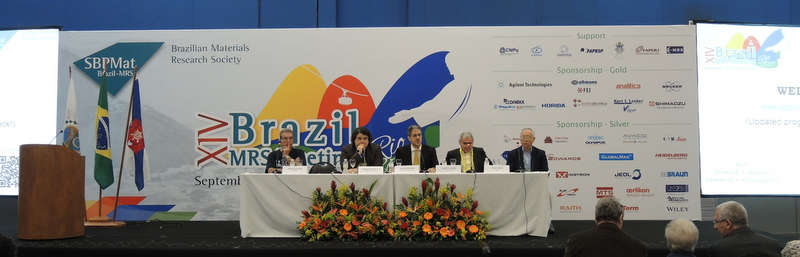
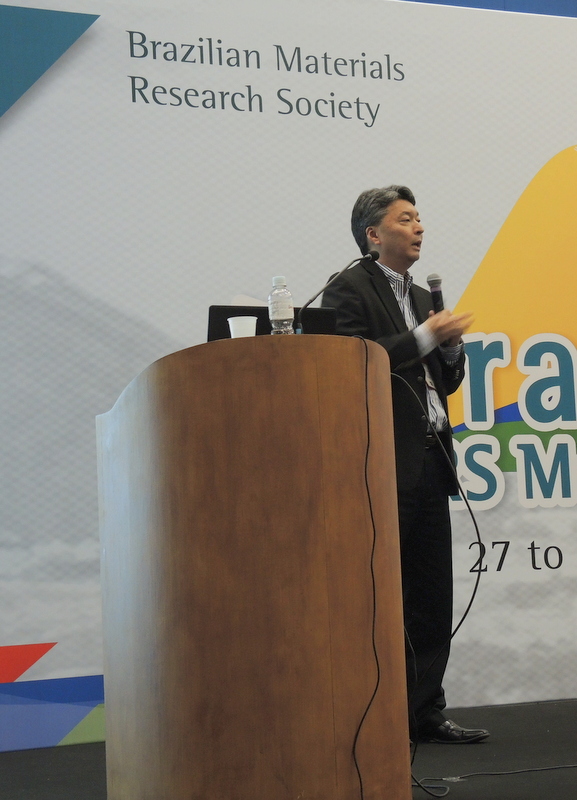
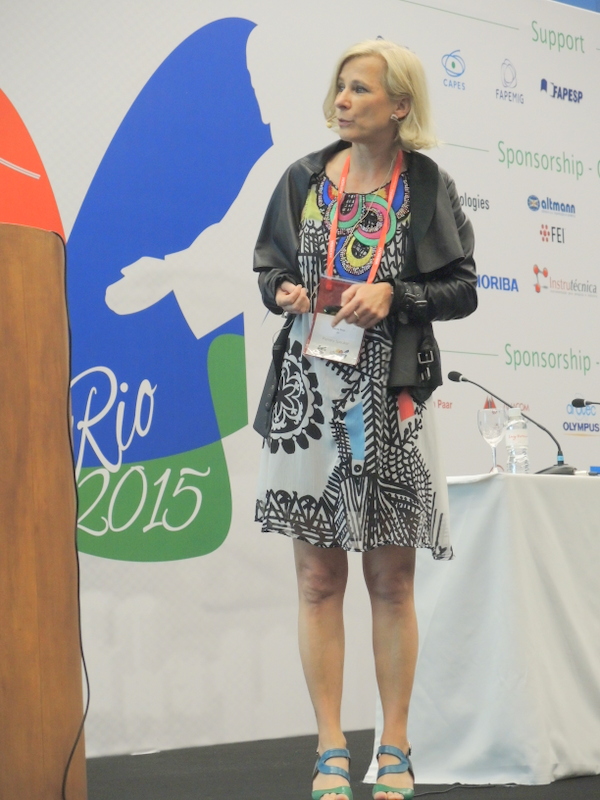
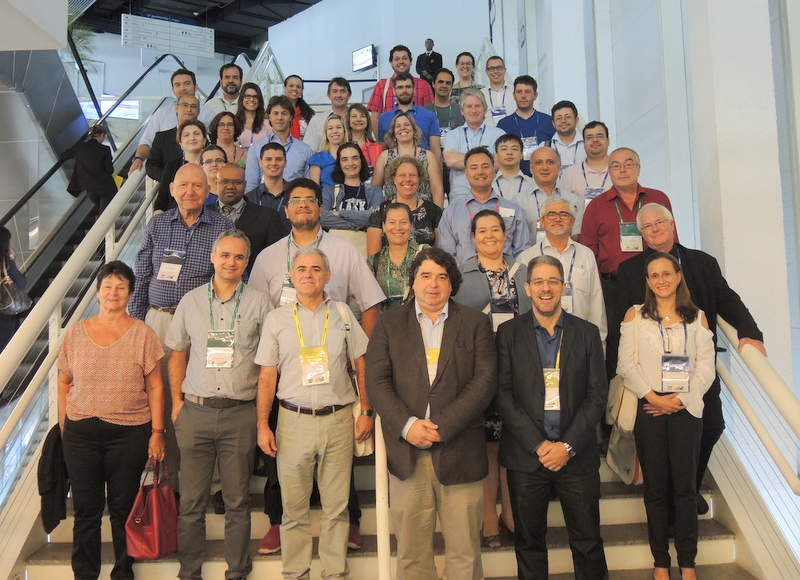
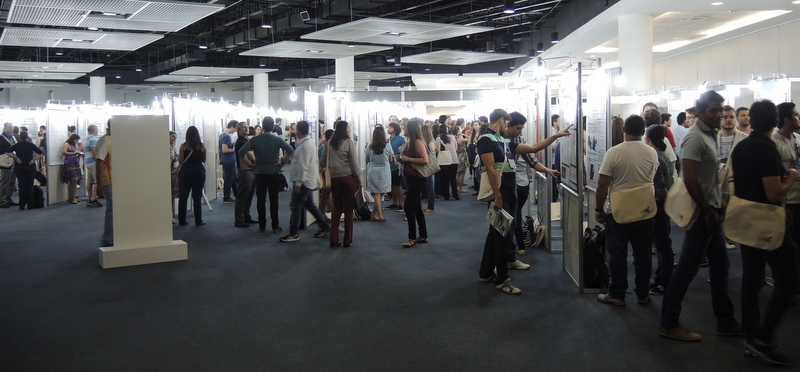
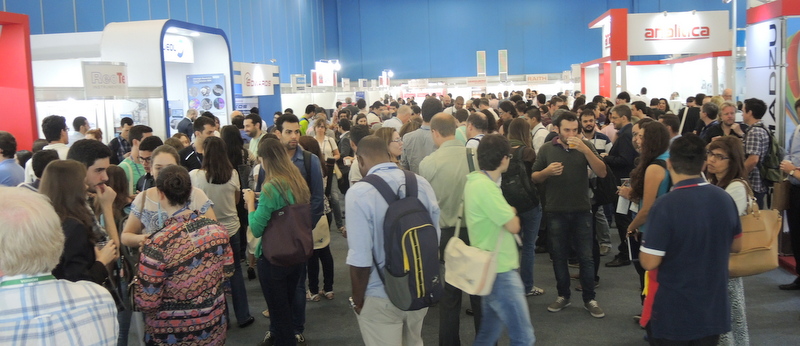
XIV SBPMat Meeting: 2,325 works were accepted for presentation.
2,325 works are accepted for oral presentation or poster in the XIV SBPMat Meeting (Rio De Janeiro, September 27th to October 1st). The number is the greatest in the history of the meetings of the society.The amount of submitted works was 2,444.
This year the meeting has 26 thematic symposia, 2 workshops (on nanomanufacturing and organic electronics in the industry) and 1 symposium organized by students who belong to the SBPMat university chapters (UCs).The symposia with more accepted works (more than 200 accepted abstracts) are symposium C, on characterization and applications of nanomateriais, with 272 works, and symposium S, on materials for sustainable development, with 253 works.
Among the accepted works, those submitted by authors who are undergraduate or graduate students will be able to compete for the Bernhard Gross Award, who will distinguish the best works from each symposium (1 oral and 1 poster).To participate of the award, the authors have to submit an extended abstract, according to the instructions and the model that appears in the website of the event, until August 21.
About the event
The SBPMat annual meeting is a traditional, international forum, dedicated to recent advances and perspectives on Materials Science and Technology. In the last editions, the event has gathered approximately 1,500 attendees, from the five regions of Brazil and dozens of others countries, for presenting and discussing scientific and technological studies in the field of Materials. The event also counts with plenary lectures, offered by internationally renowned researchers, and an exhibition of interest for the Materials community.
SBPMat´s community people: interview with Marcelo Knobel.

Scientific research, magnetic materials, scientific dissemination and higher education would be perhaps the biggest expressions in a cloud of tags to represent Professor Marcelo Knobel.
Born in Buenos Aires (Argentina) in 1968, Marcelo Knobel came to live in Brazil, more specifically in Campinas (SP), by the age of 8 years-old, following his parents, the psychologist Clara Freud de Knobel and the psychiatrist Maurício Knobel. The family was escaping from the coup d’etat that had just established in Argentina a military dictatorship that fired Maurício from the University of Buenos Aires (UBA). In Brazil, which was also governed by a military dictatorship, Maurício had been contracted for the State University of Campinas (Unicamp).
Ten years after the arrival in Campinas, Marcelo Knobel joined Unicamp to a graduation in Physics. In parallel to the studies, he started to do research on magnetic properties of materials. After he obtained the bachelor´s degree, Knobel remained in Unicamp for the doctorate in the same area, receiving the diploma of doctor in Physics when he defended his dissertation on magnetism and structure of nanocrystalline materials in 1992. After that, he went to Europe, where he conducted two postdoctoral internships; one at Istituto Elettrotecnico Nazionale Galileo Ferraris, Italy, and the other at the Instituto de Magnetismo Aplicado, Spain.
Returning to Brazil and to Unicamp, in 1995, Marcelo Knobel started his career of professor and researcher of the Institute of Physics Gleb Wataghin (IFGW). From 1999 to 2009 he was the coordinator of the Laboratory of Materials and Low Temperatures, where he acts as researcher until the present moment, always investigating magnetism and magnetic materials. Together with his collaborators of the laboratory, Knobel have carried pioneering works in the study of the giant magnetoresistance and magnetoimpedance in certain materials – two different concepts that are related to the opposition that a material offers to the passage of the electricity in consequence of the application of an external magnetic field. In 2008, Knobel became Full Professor of the Department of Condensed Matter Physics at IFGW.
In the area of scientific dissemination, Marcelo Knobel started in the year 2000 to perform education and research activities at the Laboratory of Advanced Studies in Journalism (LABJOR) of Unicamp. Moreover, Knobel was one of the creators of NanoAventura, an interactive and itinerary exposition on nanotechnology that started in 2005 and was visited by more than 50 thousand people, mainly children, until now. NanoAventura received honorable mentions at Scientific Cine and Video Festival of Mercosur (2006) and at Mercosur Science and Technology Award (2015), as well as an award in 2009, from the Latin American and Caribbean Network for the Popularization of Science and Technology (RedPOP). From 2006 to 2008, Knobel was the first director of the Exploratory Museum of Science, linked to Unicamp. In 2008, he became editor in chief of the magazine Ciência & Cultura of the Brazilian Society for the Progress of Science (SBPC), position that he occupies until now. In the publishing field, Knobel coordinates a collection of science dissemination books of the Unicamp Publisher, called Meio de Cultura, released in 2008.
In 2007 Marcelo Knobel received the Young Scientist Prize from the TWAS-ROLAC (office of Latin America and the Caribbean of the The World Academy of Sciences for the advancement of science in developing countries), an awars for young scientists of the region. In the same year, he was selected, together with about 50 people of different professional areas and several countries of the world, to participate of the program Eisenhower Fellowships, which aims to strengthen the leadership potential of its fellows. The group travelled for the United States during 7 weeks complying with a schedule of meetings and seminars. In 2009, he was chosen as a fellow of John Simon Guggenheim Memorial Foundation, receiving resources for research.
From 2009 to 2013, he was Vice-President for Undergraduate Programs of Unicamp. In this position, he was responsible for the implantation of the Interdisciplinary Program of Higher Education (ProFIS). ProFIS is a higher education course of 4 semesters that provides a general, multidisciplinary and critical formation, and makes possible to its alumni (former students of public schools chosen by their good grades in the Brazilian National Exam of the Secondary School (ENEM) that they enter graduation courses at Unicamp without passing for Brazilian admission university exam). The program was distinguished in 2013 with the Prize Péter Murányi – Education, destined to actions that increase well-being of populations of the south hemisphere.
In 2010, with 42 years-old, Knobel was honored with the title of Commendatore of the Order of the Scientific Merit by the Brazilian Presidency of the Republic.
Holder of a productivity scholarship 1A (the highest) at CNPq, Marcelo Knobel has published about 300 scientific articles in peer-review international journals and 15 chapters of books on magnetic materials and properties, popularization of science, public perception of science and higher education. Also he is the author of articles about science and education published in diverse medias. He has 6.370 citations, according to Google Scholar.
Marcelo Knobel had just assumed, in August 3rd, the position of director of the Brazilian National Laboratory of Nanotechnology (LNNano), of the National Center of Research in Energy and Materiais (CNPEM).
Here follows a brief interview with the scientist.
SBPMat newsletter: – Tell us what made you become a researcher and work in the field of Materials.
Marcelo Knobel: – I chose the area of Physics because of the curiosity, without knowing exactly what this meant. But already in the first semester I realized that it was what I wanted for my life, to try to understand the nature. Early in the beginning of the graduation, I had a laboratory class with professor Reiko Sato, who later invited me to do scientific initiation in her laboratory. She worked with magnetic properties of amorphous metals, and that was the subject of my research. Later, I went to the doctorate also with her, already working with nanocrystals, and later I followed the postdoctoral in the same area.
SBPMat newsletter: – Which are, in your own evaluation, your main contributions to the field of Materials?
Marcelo Knobel: – I am acting in nanoscopic magnetic systems, mainly investigating dipole interactions in magnetic nanosystems, using several experimental techniques, theoretical models and computational simulations. These systems, beyond the interest in basic research, have many possible applications, mainly in systems of magnetic record and nanomedicine. The research group that I helped to consolidate develops new nanocrystalline materials and carries studies through the development of new magnetic, structural and transport techniques. In the scope of these researches, we were pioneer in the study of giant magnetoresistance in granular systems and in the research of giant magnetoimpedance in amorphous and nanocrystalline wires and ribbons. But I have also been dedicating myself to scientific dissemination, being one of the responsible for the creation of the Exploratory Museum of Sciences of Unicamp. I was the coordinator of NanoAventura project, which is an interactive and itinerary exhibit on nanoscience and nanotechnology for children and adolescents. I still work in research in the area of public perception of science, I coordinate the series “Meio de Cultura” of Unicamp Publisher and I act as an editor in chief of the magazine Ciência & Cultura, of SBPC. Recently, I was Vice-President for Undergraduate Programs of Unicamp, where I highlight the implantation of the Interdisciplinary Program of Higher Education (ProFIS). Currently, I am initiating a new challenge, as Director of the National Laboratory of Nanotechnology (LNNano).
SBPMat newsletter: – You have an especially strong performance in dissemination of science and scientific culture. Comment with our readers, students and researchers, which is, for you, the importance to carry through this type of activity.
Marcelo Knobel: – I became a scientist after reading books and magazines of dissemination and visiting museums of sciences. I believe that we must stimulate the new generations to think critically, to have curiosity, to search to unmask the mysteries that surround them. For Brazil it is basic to stimulate young talents for science. Without them we will not have a future… Moreover, it is our obligation to give account to the society, which is the financer of the scientific research in public universities and research institutes. It is important to show the science that is done in our country, and the importance to follow investing, more and more, in science and technology.
SBPMat newsletter: – If you want, you can leave a message for the readers that are initiating their scientific careers.
Marcelo Knobel: – I do not have doubts that it is the passion that must guide the careers of everybody, and mainly of the scientists. But beyond the passion, a solid formation is necessary, not only in the specific content, but also in personal abilities, as work in team, communication (including Portuguese and English, scientific writing) and general knowledge. The scientific activity demands effort and devotion, but we are rewarded, I guess, with a life full of new challenges and opportunities.
Featured paper: Promising composite biomaterial for regeneration of bone tissue.
[Paper: Assisted deposition of nano-hydroxyapatite onto exfoliated carbon nanotube oxide scaffolds. Hudson Zanin, Cintia M. R. Rosa, Noam Eliaz, Paul W. May, Fernanda Roberta Marciano and Anderson O. Lobo. Nanoscale, v. 7, p. 10218-10232, 2015. DOI: 10.1039/C4NR07317G]
In a study conducted by the Laboratory of Biomedical Nanotechnology (NANOBIO) from the Brazilian University of Vale do Paraíba (UniVap), in a partnership with scientists from the Brazilian National Institute for Space Research (INPE) and universities from Israel and the UK, a biomaterial was produced that advanced the understanding of some stages on the generation of bone tissue in vitro (out of the real biological context). The low cost material has the potential to be used to accelerate the regeneration of bone tissue in vivo – which may be useful in case of bone fractures, for example. The results of the study were recently published on the scientific journal Nanoscale, from the Royal Society of Chemistry.
In broad terms, the natural generation of bone tissue occurs when cells called osteoblasts produce the organic part of bones to later cover it with the inorganic part, the hydroxyapatite – chemical formula Ca5(PO4)3(OH). The natural deposition of hydroxyapatite is a biomineralization process (production of minerals by living organisms). The biomineralization is not yet fully understood, but its comprehension is of great importance for the development of applications aiming to create bone tissue or firm implants into bones.
“The paper contributes to the understanding of the precipitation process of carbonated hydroxyapatite in vitro, for short amounts of time, over three-dimensional surfaces based on nanohydroxyapatite, vertically aligned carbon nanotubes and graphene”, says Professor Anderson de Oliveira Lobo, Biomedical Engineer with master’s and doctoral degrees in Materials Physics and Chemistry, who signs the paper as its corresponding author.
In association with the Diamonds and Related Materials (DIMARE) group from INPE, represented by researcher Evaldo José Corat, the NANOBIO team, coordinated by Professors Anderson de Oliveira Lobo and Fernanda Roberta Marciano, produced scaffolds with vertically aligned carbon nanotubes. The nanotubes underwent a process of surface oxidation by the plasma etching technique, which exfoliated their tips, produced graphene oxide and thus created a more favorable environment for the formation of nanohydroxyapatite nuclei in the following production stage of the material, the electrodeposition. This deposition technique was chosen because, among the known methods, it produces the artificial apatite most similar to the biological one, in terms of microstructure and dimensions. In order to set the electrodeposition parameters by means of electrochemical studies, the researchers from Brazil requested the collaboration of a specialist on the subject at a global level, scientist Noam Eliaz, from the University of TelAviv. After the electrodeposition, the team obtained a composite material which retained the biological properties of hydroxyapatite, with the advantage that the presence of the carbon nanotubes reinforced the hardness and resistance of the material.
Afterwards, the scientists submerged the material in simulated body fluid (a liquid that simulates the conditions of blood plasma and is commonly used in biomaterials studies). Under these conditions, the composite material, which is bioactive in this kind of liquid, spontaneously formed a layer of carbonated hydroxyapatite, which, jointly with the nanotubes scaffold and hydroxyapatite films, produced a new composite material.
The researchers were able to observe and study the whole process of biomineralization within periods of up to 7 days, and, in the paper, they propose models to explain several stages. At that moment, more precisely in the discussion on the chemical modelling of how the biomineralization of the composite occurs, it was important to count with the participation of researcher Paul May, from the University of Bristol, jointly with Hudson Zanin, researcher from the Laboratory of Energy Supply and Distribution from UniVap, who was conducting postdoctoral studies in the British university.

The research went beyond bringing advances to the understanding of biomineralization in vitro. “The comprehension of this in vitro process may be associated to the process of in vivo regeneration of these materials”, says Professor Anderson Lobo. “In vitro studies with human osteoblastic cells and in vivo assays using animals are being carried out by graduate students and postdoctoral fellows at UniVap’s NANOBIO”, he adds.
The origins of the study is found in Lobo’s doctoral research, carried out at the Brazilian Technological Institute of Aeronautics (ITA) and defended in 2011, in which he managed, for the first time, to synthesize composites with vertically aligned carbon nanorods and nanohydroxyapatite. The research counted or counts with the financial support of Brazilian research funding agencies FAPESP, CNPq, FINEP and CAPES.
Interviews with plenary speakers of the XIV SBPMat Meeting: George Malliaras.
Advances in understanding brain activity and in the diagnosis and treatment of neurological diseases such as epilepsy and Parkinson’s may arise with the help of Materials Science and Engineering. More precisely, of organic electronics. In fact, organic materials with electronic properties are great interfaces between the signals sent by the brain and the outside, whether to study the brain or to interact with it.
The subject will be addressed in a plenary talk during the XIV SBPMat Meeting, given by Professor George Malliaras, head of the Department of Bioelectronics at the Ecole Nationale Supérieure des Mines de Saint-Étienne, where physicists, material engineers, electronic engineers, biologists and neuroscientists work together.
Malliaras graduated in Physics in 1991 from Aristotle University (Greece). After that, he entered the doctoral program in Mathematics and Physical Sciences at the University of Groningen, in the Netherlands. His thesis on photorefractivity in polymers earned him a distinction in the university (cum laude). After receiving his Doctoral degree, defended in 1995, he moved away to the United States. For two years, he held a postdoctoral fellowship at the IBM Almaden Research Center, to then become a Professor of the Department of Materials Science and Engineering at Cornell University, in New York. From 2006 to 2009, he worked as head of a national laboratory linked to the university, the Cornell NanoScale Science & Technology Facility. In 2009, he founded the company Orthogonal, which operates in the field of organic electronics. In the same year, he returned to Europe as Professor of the Ecole Nationale Supérieure des Mines de Saint-Étienne, where he remains to this day.
Malliaras, whose h-index is 64, according to Google Scholar, has authored over 200 scientific papers, with more than 13,000 citations. His work with organic electronics and bioelectronics has received awards from the New York Academy of Sciences, U.S. National Science Foundation and the company DuPont, to name a few entities. He has given over 230 invited lectures and organized several events, for instance, the 2015 MRS Fall Meeting, in which he served as Meeting Chair.
He is a member of scientific boards in research centers in Germany, Ireland and Sweden. He is also an associate editor of Science Advances, an open access, peer-reviewed journal, released this year by the AAAS, which also publishes Science.
In his plenary talk at the XIV SBPMat Meeting, the scientist will address devices based on organic materials with electronic properties, bringing examples and opportunities.
What follows is a mini-interview with this plenary speaker of the XIV SBPMat Meeting.

SBPMat newsletter: – In your opinion, what are your most significant contributions in the field of organic electronics/bioelectronics? Please explain them, very briefly, and share references from the resulting articles or books, or comment if these studies have produced patents, products, spin-off companies etc.
George Malliaras: – In the field of organic electronics it would be the co-development, together with Chris Ober at Cornell University, of orthogonal lithography. This is a set of processes that allows the microscale patterning of organic films using photolithography, the golden standard in microelectronics. Orthogonal lithography relies on the use of fluorinated photoresists that do not damage organic films. It allows the microfabrication of devices, including high resolution displays, using standard equipment that already exists in industry. There is a company (Orthogonal, Inc.,www.orthogonalinc.com) that has commercialized the photoresists and is pursuing commercialization of this technology. In bioelectronics, the work is too recent and I would have to wait for the benefit of hindsight. A trend that was emerging when I joined the field involved a transition from the use of organic coatings to the use of organic devices. The latter undoubtedly offer more capabilities to the interface with biology. My group is contributing to this trend by demonstrating that organic electrochemical transistors bring several benefits as transducers of biological phenomena, such as large amplification which enables high quality recordings of brain activity.
References:
- J. Rivnay, R.M. Owens, and G.G. Malliaras, “The rise of organic bioelectronics”, Chem. Mater. 26, 679 (2014).
- D. Khodagholy, T. Doublet, P. Quilichini, M. Gurfinkel, P. Leleux, A. Ghestem, E. Ismailova, T. Herve, S. Sanaur, C. Bernard, and G.G. Malliaras, “In vivo recordings of brain activity using organic transistors” Nature Comm. 4, 1575 (2013).
- J. Rivnay, P. Leleux, M. Ferro, M. Sessolo, A. Williamson, D.A. Koutsouras, D. Khodagholy, M. Ramuz, X. Strakosas, R.M. Owens, C. Benar, J.-M. Badier, C. Bernard, and G.G. Malliaras, “High Performance Transistors for Bioelectronics Through Tuning of Channel Thickness”, Sci. Adv. 1, e1400251 (2015).

SBPMat newsletter: – Which are, in your opinion, the main challenges for materials scientists and engineers about organic electronics interfacing with the brain?
George Malliaras: – To find the right collaborator who helps them formulate the right questions. I believe that embarking on an interdisciplinary field alone is a recipe for producing low impact work. The key to high impact work in this field is to formulate questions that are interesting to both neuroscientists and to us materials scientists and engineers. From our end, we need to be able to elaborate what are the advantages that organics offer and then figure out how to best employ them to address specific problems neuroscientists face. In my experience, it is often a combination of advantages (mixed conductivity, biocompatibility, “soft” mechanical properties) rather than a single one that gives the advantage to organics.
SBPMat newsletter: – If you wish, leave a message or an invitation to your plenary talk to the readers who will attend the XIV SBPMat Meeting.
George Malliaras: – I often quote a statement by Tadahiro Sekimoto, former president of Nippon Electric Corporation: “those who dominate materials, dominate technology”. It highlights the importance of materials research in our world and shows the dangers of moving to a “service” economy.
More
Prof. George Malliaras´ bio and abstract of his plenary lecture.
SBPMat newsletter. English edition. Year 2, issue 6.
|
||||||||||||||||||||||||||||||||||||
Interviews with plenary speakers of the XIV SBPMat Meeting: Paul Ducheyne.
They are present in devices used in widely practiced medical procedures with the aim of treating or diagnosing health problems. They become part of the human body, temporarily or permanently, and interact, in a more or less active manner, with the biological system in which they are inserted. Obviously, we are talking about biomaterials. Examples of devices made of biomaterials are quite numerous. We can mention, among many others, stents that release drugs to achieve best results in the opening of arteries that are becoming blocked, and orthopedic implants that promote the regeneration of the bone tissue they are temporarily replacing.
Biomaterials is the subject of the XIV SBPMat Meeting´s plenary lecture that will be given by Paul Ducheyne. In the talk, Ducheyne will address, in particular, two kinds of biomaterials: bioactive ceramics with in situ functionalization, and sol-gel nanoporous materials that delivery drugs and other molecules.
Ducheyne is a Professor of Bioengineering and of Orthopaedic Surgery Research at the University of Pennsylvania (Penn), United States. He is also Director of the Center for Bioactive Materials and Tissue Engineering, a group of multidisciplinary research that brings together scientists from the Engineering, Dentistry and Medicine Departments at Penn. Besides, Ducheyne is a Special Guest Professor at the University of Leuven (KU Leuven), Belgium, where he obtained his MSc and PhD degrees in Materials Science and Engineering.
Paul Ducheyne is the author or editor of a number of books on biomaterials; in particular, he is editor in chief of “Comprehensive Biomaterials,” a 3,650 paged book divided into six volumes, published in 2011 by Elsevier publisher. Owner of a 58 H index, he has published about 330 scientific papers with more than 10,000 citations – of which some 2,600 belong to his 10 most cited articles. Ducheyne has also authored over 40 patents. In addition, from the 1980s on, he has organized several conferences and symposia in biomaterials.
In 1992, Ducheyne founded the company Orthovita, dedicated to products for treating injured bones and for controlling bleeding, and he was its CEO until 1999. In 2011, the company became part of Stryker Corporation, one of the leaders in the market of technology for medicine.
Paul Ducheyne was Secretary of the European Society for Biomaterials, and President of the US Society for Biomaterials and the International Society for Ceramics in Medicine. Among other awards and distinctions, in 2008 he won the C. William Hall Award of the Society for Biomaterials. Ducheyne was or is still part of the editorial boards of scientific journals in the fields of Biomaterials, Bioceramics, Bioengineering, Tissue Engineering, Orthopedics and Dentistry.
What follows is a mini-interview with this scientist.
SBPMat newsletter: – Could you briefly tell us what led you to devote to research on biomaterials?
Paul Ducheyne: – I was always attracted to medicine. In addition – when I graduated (in the seventies) – I foresaw the decline of the steel industry in the West, and I did not want to be caught into this. Therefore, my radical turning away from the then current materials science.
SBPMat newsletter: – How were you able to merge Materials Science and Biology in your scientific career?
Paul Ducheyne: – It is THE central theme in Biomaterials research.
SBPMat newsletter: – In your opinion, what are your most significant contributions in the field of biomaterials? Please explain them, very briefly, and share references from the resulting articles or books, or comment if these studies have produced patents, products, spin-off companies etc.
Paul Ducheyne: – Most people will know my mechanistic explanation for how synthetic materials (ceramics) stimulate cell function and lead to tissue formation. More recently, my using sol gel processed ceramics for controlled relase of a plethora of drugs and growth factors is also highly regarded. Lastly, I have published papers on a number of subjects (such as bone tissue ingrowth in porous materials, bone cement mechanical behavior, and titanium biocompatibility) which are highly cited.
More
- Prof. Paul Ducheyne bio: http://sbpmat.org.br/14encontro/plenary-speakers/Bio-Ducheyne.pdf
- Abstract of the plenary talk: http://sbpmat.org.br/14encontro/plenary-speakers/Abstract-Ducheyne.pdf