Papers from Brazilian or foreign researchers and students will be accepted in any field of the 19 symposia of the event, which cover various themes regarding materials research and its applications. The symposia were selected by the event’s organizing committee, based on the proposals received for a call for symposia released in last October, directed to the whole scientific community.
The best papers in each symposium (at most, a poster and an oral presentation) presented by undergraduate or graduate students will receive the Bernhard Gross Award by the end of the event. The winning papers may be published in a special issue of the open access journal “IOP Conference Series: Materials Science and Engineering”, dedicated to the best papers of the XIII SBPMat Meeting.
About the SBPMat Meetings
The annual SBPMat meeting is a traditional international forum devoted to the recent advances and perspectives in Materials science and technology. In its last editions, the event has gathered about 1,500 participants, coming from the five regions in Brazil, and dozens of others countries, to present and discuss scientific and technological research results in the Materials field. The event also counts with plenary lectures given by internationally renowned researchers, as well as exhibitors concerned by the Materials community.
Divulgação dos Editais para Concursos de Professor Doutor junto ao IFGW/UNICAMP, que foram publicados no DOE de 04/04/14.
01) Dispositivos nano-estruturados – É desejável que o candidato tenha o seguinte perfil: Experimental nas sub-áreas: Dispositivos integrados, optomecânica, transporte, sensores avançados.
02) Informação Quântica Experimental – É desejável que o candidato tenha o seguinte perfil: Jovem pesquisador com característica de liderança para montar novo laboratório de pesquisa na área.
03) Física Experimental de Materiais Avançados – É desejável que o candidato tenha o seguinte perfil: Experimental nas sub-áreas de Materiais orgânicos; materiais emergentes (à base de carbono, grafeno, bucky-balls, nanotubos); magnéticos não usuais; isolantes topológicos; materiais vítreos, spintrônica; propriedades ópticas de materiais nano-estruturados.
The UC program from SBPMat was launched. Students may form organized groups linked to the society to organize lectures and other activities related to Science and Technology, attend events, enter in exchange programs etc, counting with an annual budget and financial support. The application form is already available. See it.
Featured paper with Brazilian participation
This month, we highlight a communication published by Nanoscale and prepared by research groups in Brazil with partners from Spain and France. The scientists assembled sensors based on nanorods of silver tungstate and assessed their performance to detect ozone – a gas that, above certain amounts, is harmful to health. Silver tungstate has proved to be a great material to be used in ozone sensors. Read the story.
(To suggest papers with Materials focus with Brazilian participation published in high impact journals for this section of our newsletter contact comunicacao@sbpmat.org.br)
SBPMat’s community people
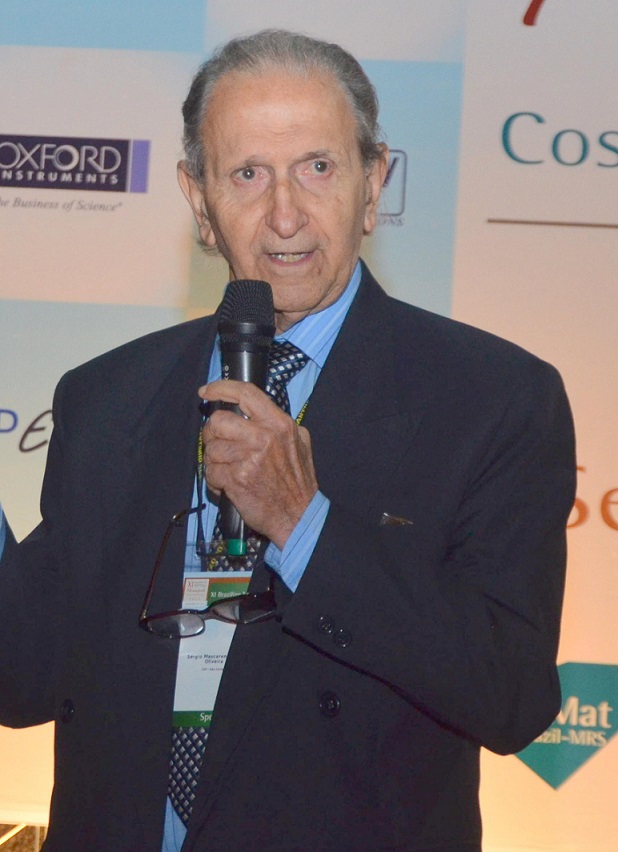
We spoked with scientist Sergio Mascarenhas, known in our community for creating, in 1970, the first course of Materials Engineering of Latin America. Mascarenhas has provided important contributions to the field of Materials, as his studies with ionic crystals, used in optical memories. He also went further, though, and guided by the idea of fulfilling the social role of the scientist, accomplished achievements permeating fields as Biology, Medicine and Farming. The 85 year old scientist is currently concerned with encouraging the youth to develop some frontier subjects he considers very important for human kind, complex systems and biomimetics.
We started a series of interviews with former SBPMat presidents on the work of the successive directory boards of our Society. In the interview with Guillermo Solórzano, read which were the main actions, challenges and pending issues of the founding board (2001-2003), the highlights of the first SBPMat meetings and more. Here.
Reading recommendations
Science journalism stories based on papers published in journals with high impact factor.
Nanoparticles of platinum and nickel, eroded on the inside, form a nanoframe with optimized design for electrocatalysis (based on paper from Science). Here.
Graphene membranes desalinize water in subnanometric scale (based on paper from Science). Here.
In addition to produce electricity from the sun, perovskite-based material emit light of various colors (based on paper from Nature Materials). Here.
New technique to produce graphene membranes for monolayer and multilayer filters (based on paper from Nano Letters). Here.
New biomaterial: gel contracts when subject to the temperature of the human body and lead steam cells to start the formation of teeth (based on paper from Advanced Materials). Here.
Drug delivery system for patients with glaucoma: nanodiamonds in contact lenses (based on paper from ACS Nano). Here.
Bacteria in liquid crystal interact and form new material applicable in Biomedicine. View text and video (based on article from Proceedings of the National Academy of Sciences). Here.
Books, presentations, multimedia material, etc.
Review of book on nanomaterials and Tissue Engineering. Here.
Materials news from the Brazilian National Institutes of Science and Technology (INCTs).
Metallic compounds developed in INCT Redoxoma display potential anti-tumor and anti-parasitic action. Here.
Opportunities.
Postdoc in the United States on perovskite or organic semiconductors via Science Without Borders program. Here.
Postdoc in multiferroic materials and functional devices in Universidade Estadual de Maringá (Brazil). Here.
Postdoc in materials for Photonics in Universidade Estadual de Maringá (Brazil). Here.
Upcoming events in the area.
VI Curso do Método Rietveld de Refinamento de Estrutura. Here.
CONCURSO PÚBLICO DE PROVAS E TÍTULOS PARA PROFESSOR ADJUNTO (40h DE) DO GQI- 2014
Área: Química Inorgânica
Estão abertas, no período de 17 de março a 15 de abril de 2014, as inscrições para o Concurso Público de Provas e Títulos para o provimento de 01 (uma) vaga para o cargo de PROFESSOR ADJUNTO-A, com Dedicação Exclusiva, do Departamento de Química Inorgânica (GQI), do Instituto de Química, da Universidade Federal Fluminense.
O concurso constará de: 1) Prova Escrita; 2) Prova Prática; 3) Prova Didática e 4) Análise de Currículo . (Anexo I – item 6 do Edital 80/14)
Edital nº 80/2014, publicado no D.O.U nº 48, de 12/03/2014 – seção 3
Taxa de inscrição: R$ 230,00 (item 2.5 do Edital 80/14)
As inscrições deverão ser feitas através do sítio https://sistemas.uff.br/cpd/, mediante cadastro no sistema e pagamento da GRU, além do fornecimento de cópias digitalizadas de documentos (ítens 2.1, 2.2 e seus subítens do Edital 80/14).
Sergio Mascarenhas on September 23, 2012, lecturing at the XI SBPMat meeting, in Florianópolis city (Brazil).
Along his path as a scientist, Sergio Mascarenhas Oliveira, currently 85, has provided some important contributions to the improvement of the scientific research, mainly in Brazil, and for the Materials field in particular. Starting from Solid-state physics, pillar of the Materials Science, he covered several domains of knowledge, such as Molecular Biophysics and Medical Physics, to name a few. Impelled by the idea of fulfilling the social role of the scientist, which is related to social development, Mascarenhas promoted advances in science and technology with a significant impact on areas as farming, health and education.
An example that illustrates the work of Professor Mascarenhas is the recent development of a system to measure the intracranial pressure that is minimally invasive. The motivation for this came when the Professor was diagnosed with hydrocephaly in 2005 and, during treatment, had to be subject to skull drilling operations in order to measure his pressure. From this moment on, jointly with students and companies, as well as supported by several entities, he conducted a series of studies, which lead to a cheaper and minimally invasive system, applicable to a large range of patients.
Mascarenhas was born in Rio de Janeiro. From 1947 to 1951, he studied Physics at the Federal University of Rio de Janeiro State (UNIRIO) and Chemistry at the Federal University of Rio de Janeiro (UFRJ). After some time as a researcher for universities in the US, he decided to return to Brazil. In the country, he played a major role in the establishment and coordination of some institutions as, among others, the Physics and Chemistry Institute of São Carlos from São Paulo University (USP), the Federal University of São Carlos (UFSCar) and its Materials Engineering course (the first one to be offered in Latin America), as well as the instrumentation unit of the Brazilian Agricultural Research Corporation (Embrapa) and USP’s Institute of Advanced Studies of São Carlos and its International Studies and Projects Program for Latin America, which he still coordinates until this day.
Sérgio Mascarenhas is a Full Professor, now retired, at USP. He was also a visiting professor in the US at the Universities of Princeton and Harvard, and at MIT; at the National Autonomous University of Mexico, the Institute of Physical and Chemical Research in Japan, the London University (UK), and, in Italy, at the Abdus Salam International Centre for Theoretical Physics and at the University of Rome.
He has advised about 50 theses for master’s degrees and doctorates, and published approximately 200 articles and books. Among many awards and honors, it is worth mentioning the Grand Cross of the National Order of Scientific Merit (given in Brazil, by the President of the Republic); the Guggenheim Award and Fulbright Award (United States); the Yamada Foundation Award (Japan); the Brazilian award from Conrado Wessel Foundation in 2006 in the General Science category, and titles of Emeritus Professor and Honorary Doctorate degrees from several universities in Brazil and abroad. In 2012, it was time for the SBPMat to grant Professor Mascaranhas an award, the memorial lecture Joaquim Costa Ribeiro. Mascarenhas is a member of the Brazilian Academy of Sciences and the American Physical Society, and a founding member of the Latin American Academy of Science, and of the Academy of Science of the São Paulo State.
Below, there is a transcription of the interview Professor Mascarenhas gave us at 08:30 PM on March 26, once a work meeting was closed. The scientist told us a little about his background, the social role of the scientist, and his message to our younger readers.
Main contributions to science, technology and innovation, particularly in the Materials field in Brazil.
As I started doing sciences in Brazil in a moment when there was virtually no Materials, I was lucky enough to introduce this kind of research, both in applied and basic forms. So, I would say that, from the institutional perspective, an important contribution was the creation of the Condensed Matter Physics Group in the Physics Institute at USP São Carlos, in the 1960s. Thanks to a very intense exchange between USP São Carlos and the universities of Princeton and Carnegie Mellon in the United States, as well as groups from England and Germany, mainly from Stuttgart, we managed to establish a very strong researchers training program, which still exists today.
After that, I had the chance to be the first president of the Federal University of São Carlos (UFSCar), and then, I proposed the creation of the Materials Engineering Course. It was the first course of studies in Materials Engineering in Latin America, and was a great success, both on the academic and the business sides. So, these were two institutional contributions that led to the establishment of an actual School of Materials Science and Engineering in Brazil.
From the point of view of the research, there are contributions that I managed to do with the collaboration of many young and senior professors. First, the researches related to the defects in crystals, such as ionic crystals with color centers, through radiation or crystal growth with impurities. These ionic crystals displaying color centers were used later for optical memories. This was the result from a very strong collaboration between our group from São Carlos with the RCA laboratories in Princeton and Bell Labs, in the United States.
Another field we were pleased to see how it developed was the electrets, dielectric materials that can retain an electrical polarization for a very long time, up to 100 years, as we see in teflon. These electrets, then, were studied mainly by the group advised by professor Bernard Gross, who I was happy to bring to São Carlos. He worked with groups from MIT and Bell Labs and they developed the famous electrets microphone, which was used in all cell phones, telephones and many other applications. This was an application that gained a global status, coming from a product that was practically born in São Carlos.
Later, my extension of this concept of electrets to biological materials led to the concept of bioelectrets, which are biological materials also capable to retain an electrical polarization for a very long time. The concept of bioelectrets, I think, was one of the contributions that I was fortunate to do, and today is globally used. There is a book on electrets published by Springer publishing house [MASCARENHAS, S. 1979. Bioelectrets: electrets in biomaterials and biopolymers. Electrets – Topics in Applied Physics., Springer-Verlag, vol. 33 , p. 341 – 346] in which, in one of the chapters, I discuss this notion of biolectrets. The concept applies to proteins, DNA, polysaccharides. I think this concept is very important for being significant in Biology and Medicine.
Finally, we started working with concepts of Materials also in the field of Molecular Biophysics and Medical Physics. It happed due to the fact that I was invited by Nobel laureate Abdus Salam to conduct, in Trieste (Italy), a series of courses, for twelve years, in these two areas. These contributions were capable to spread the idea and the career in Medical Physics in many developing countries in Africa, Asia and Latin America. So, this was one of the contributions that please me the most.
But it all depends on people, especially young people. I always say that professors are only good when they have students that are even better than them. I had the joy of counting with students that were better than me, who went further and continued with the school of Condensed Matter Physics, such as in the case of professor Roberto Faria, who, nowadays, it the president of SBPMat and works in the frontier of conductive polymers – a revolution in the field of electronics, energy, pharmacology etc.
Current occupations and new frontiers of knowledge.
Lately, I have been concerned with examining phenomena under the point of view of complex phenomena, in which there is a great amount of variables and non-linear phenomena. For example, there is the brain, the Internet, the origins of life. So, the engineering of complex systems for Materials results in a number of very important effects, which are going to be gradually explored. This issue of complex systems permeates Engineering, Biology, Education, Agribusiness, which is one of the most important areas for humanity in the production of food, the issue of biomass, which is a very important problem for the production of energy, and the comprehension of the brain.
So, I think my function now it to draw the attention of the youth and of the research centers in developing countries to the importance of studying complex systems, which requires a lot of computer modeling, the understanding of what is artificial intelligence, Game Theory, chaotic systems, fractals… And the research on complex materials holds a crucial importance.
Another area that I think is going to progress more, and is an announced revolution, is the biomimetics field. You look to biological nature, which has worked for millions of years to produce materials as shells, bone, hair, organs, and learn how the evolution of the properties of these materials occurred. It is as we could open the large biological treasure of knowledge.
The social role of the scientist.
I think the social role of the scientist is essential for two reasons. First, if you look at the human history, all great evolutionary leaps in human thought came from basic science, which turned into technology. It is important for the scientist to provide, not only a voice to society, but some kind of self-awareness of the society, which is consolidated in science, technology and education policies. I think one of the best examples for that is looking at the convergence between science and technology. When Faraday’s electric motor was invented, it took about 40 years for it to be fully used. Nowadays, you cannot even think what would happen to society if there were no electric motors. When nuclear energy was discovered, in 10 to 15 years it already had some applications. And in the same year laser was invented, it was applied. Then, the convergence between science and technology is huge. It means that scientists and research are important to produce economic development, which leads to social development, which leads to cultural development, which leads to what Charles Percy Snow said was the third culture. In his book, “The two cultures”, he showed that, by the time of World War II, there was a very long distance from humanism to science and technology, even a lack of respect between these two players of the human development. But said distance has to converge into a third culture, in which it is possible to find a much more holistic view, not only of men, but also of the universe, as in the example of the Gaia theory of James Lovelock.
So, for the social development, research is the only weapon that men can hold to bring humanity to a stage of respect for nature, humanity itself and its role in the cosmos. I think, if we didn’t have universities producing researches and extension, and then taking their researches out, we wouldn’t see the formation of the virtuous cycle, which transforms knowledge into quality of life and new possibilities for men, for this homo sapiens sapiens that came out of caves and went to space.
A message to our younger readers, starting their careers.
I think this career, in Materials Science, Materials Engineering, Biomaterials, Complex Materials, is a huge world that is at dispose for the future of mankind, but this future depends on today’s youth, who can face its challenges and experience the great pleasure of building a more virtuous humanity through the research with Materials. If you start to think what Materials mean to human life, even in a more straightforward perspective, focused on happiness and wellbeing, our lives depend on materials. Our nutrition depends on materials, as well as communication, health, the manufacturing of equipment, machines, robots, ships and satellites. Thereby, materials really are a great source for innovation and wealth. The young people choosing this career are actually choosing to work for the future of science and technology.
Ivan Guillermo Solorzano-Naranjo chaired the first board of the Brazilian Materials Research Society (SBPMat), also composed by directors Fernando Lázaro Freire Júnior, José Arana Varela, Roberto Cerrini Villas Bôas, Elisa Maria Baggio Saitovich and Moni Behar.
This founding board was established during the General Assembly for the Constitution of SBPMat, on June 26, 2001, at the auditorium of RioDatacentro at the Pontifical Catholic University of Rio de Janeiro (PUC-Rio). They held office until 2003.
Born in Ecuador, Solórzano studied and developed his scientific career in many places all over the world. He studied Mechanical Engineering at Escuela Politecnica Nacional in Quito, Ecuador, Metallurgical Engineering at Université Catholique de Louvain, Belgium, and got a degree from PUC-Rio in Brazil. He held his MSc in Metallurgical and Materials Engineering, also at PUC-Rio, and his PhD in Materials Science at McMaster University, in Canada. Developed postdoctoral research at Max-Planck Institute – Sttutgart campus, in Germany, and was a visiting professor at Institut National Polytechnique of Grenoble -France, Massachusetts Institute of Technology (MIT) and Stanford University (USA). He is a professor in the Department of Materials Engineering at PUC-Rio.
Along with Edgar Zanotto, he led the foundation of SBPMat. He also acted as president of the Inter American Committee of Societies for Electron Microscopy (CIASEM) and of the Brazilian Society of Microscopy and Microanalysis (SBMM), as well as chairman of the International Committee of the Materials Research Society (MRS). Member of several international executive committees, such as the International Federation of Societies for Microscopy (IFSM), as well as editorial boards of international journals, such as Materials Characterization (Elsevier), Journal of Materials Science (Springer), and Microscopy and Microanalysis (Cambridge University Press).
You can read below an interview with the former president of SBPMat, on the performance of the first board of our society.
1.List the main actions carried out over your time as president of SBPMat.
– Carried out successfully the inaugural congress (First SBPMat Meeting), as well as the II SBPMat meeting, the following year.
– Established a standard format for the annual event – based on symposia and unprecedented in the country –, which remains until now.
– Officially registered SBPMat.
– Arranged that SBPMat joined the International Union of Materials Research Societies (IUMRS).
– From the first meeting on, we gave start to collaboration with Materials Research Society (MRS), from the United States, and with E-MRS, from Europe, which has been growing steadier and stronger over time.
– Established the title of “founding members”, with more than 350 members who have received their certificates. We also started a membership campaign for SBPMat, for both professional and student members, reaching over 600 regular members in the second year. In the third meeting, under the chairmanship of Professor Elson Longo, in Foz do Iguaçu, there was a boom in the number of participants of the SBPMat Meeting, with over a thousand researchers and students.
– At the IUMRS meeting, we postulated SBPMat to host the forecoming International Congress on Advanced Materials (ICAM) in Rio de Janeiro. ICAM 2009 was successfully held in Rio de Janeiro, under my coordination.
– We left the society with funds summing up to about BRL 80,000.
2. List the main challenges you faced while directing SBPMat.
– Consolidating SBPMat was a challenge due to the lack of resources and infrastructure; I could rely only on my “part-time” secretary to help me with communication and administrative tasks as they arose, counting also with the help of my students (one of them made the first SBPMat website). However, it was also a time of great enthusiasm, in which I received full support from the Brazilian research community; we were all very driven to secure this endeavor. The funding agencies, CNPq, CAPES, FAPERJ, FAPESP, acknowledged the importance of the initiative and lent their support since the first meeting. I have nothing to complain about, and consider it a privilege to have had this experience of founding a national and interdisciplinary scientific society in Brazil…
3. What do you wish you have done, but could not get to it?
One of my proposals that never went beyond the project phase was the formation of executive committees for specific important activities for the consolidation and growth of the society, such as academic affairs committee; relationship with the industry committee; publications committee; international affairs committee; distinctions and awards committee… Each committee should have a director or coordinator (chairman), who would manage it for a certain time, reporting regularly (usually on the occasion of the meeting of SBPMat), and so on. Moreover, with Brazil being such a huge country, it would be necessary to have regional SBPMat sections with boards duly established and regulated by the statutes of SBPMat. The role of such branch offices would be basically to promote the general goals of SBPMat, but in a regional manner, always aligned with the guidelines of the society (through the Board and Council), thus contributing to strengthening its impact over the scientific community and Brazilian society.
All these ideas would grant more flexibility to the society, and also increase the participation of members of our community. It is important to increase the effective participation of members, particularly young people. We have a great generation of young talented people willing to take part, and they should be invited to do so.
4. What would you highlight about the two SBPMat meetings organized and held over your administration?
– The first SBPMat Meeting had the participation of the American and European MRS, and also of the International Union of Materials Societies (IUMRS). All the presidents of these bodies came to the meeting, which had about 400 participants and five symposia, counting with the presence of national authorities. From an international perspective, it had great representation and visibility.
– We established English as the official language in SBPMat Meetings. This has been increasing the participation of researchers from abroad.
– We reinforced the interdisciplinary nature of the society, reflected in the symposia, where each symposium would have co-chairs from different knowledge areas (i.e., Physics, Engineering, Chemistry, etc.), encouraging the presence of colleagues from abroad. We also established an organizing committee involving scientists from the academic sector, research centers and industry. This structure has been working successfully ever since.
– Both the first and second SBPMat meetings had distinguished international scientists as co-chairs of symposia, such as the President of MRS (Alex King, by that time) and the President of E-MRS (Giovanni Marletta, back then).
5. Would you like to leave a message for the readers about the election process in SBPMat? (importance of participating in elections, be it as voters or candidates, and so on)
I find it of importance, to establish and spread a clear process or program for president election at SBPMat, with two excellent candidates with a history of participation in SBPMat, identified by a search committee, to ensure that the community really takes part in the choice, in the election. The same goes for directors. We should not have only a single candidate for president, nor a single candidate group for the directory board, let alone the possibility of reelection, for these elements undermine the participation of the community. Regard the example given by MRS, where the term of office is of one year, with no reelection.
It should be established an election schedule that makes it possible to know the results of the voting for President, Board and Counselors by the occasion of the SBPMat meeting. This way, the participation of the already elected president at the meeting should facilitate the transition to the new board.
The scientific paper by members of the Brazilian community on Materials research featured this month is:
Luís F. da Silva, Ariadne C. Catto, Waldir Avansi, Laécio S. Cavalcante, Juan Andrés, Khalifa Aguir, Valmor R. Mastelaro and Elson Longo. A novel ozone gas sensor based on one-dimensional (1D) α-Ag2WO4 nanostructures. Nanoscale (Print), 2014, v. 1, p. 1-2. DOI: 10.1039/C3NR05837A
New ozone sensor based on nanorods of silver tungstate
A study carried out by a research group from Brazil, with collaboration from French and Spanish scientists, has reported, for the first time, gas detection properties in nanorods of silver tungstate in its alpha phase (α-Ag2WO4).The study showed that this material can be applied as a resistive sensor, displaying great performance when detecting ozone (O3). The work was and coordinated by Elson Longo, Professor at the São Paulo State University “Júlio de Mesquita Filho” (UNESP).
Resistive gas sensors are basically built from a material capable of changing its electrical properties when molecules of a certain gas are adsorbed in its surface. In the specific case of the silver tungstate, when it is submitted to an oxidant gas such as ozone, there is an increase in its electrical resistance that is proportional to the presence and concentration of the gas.
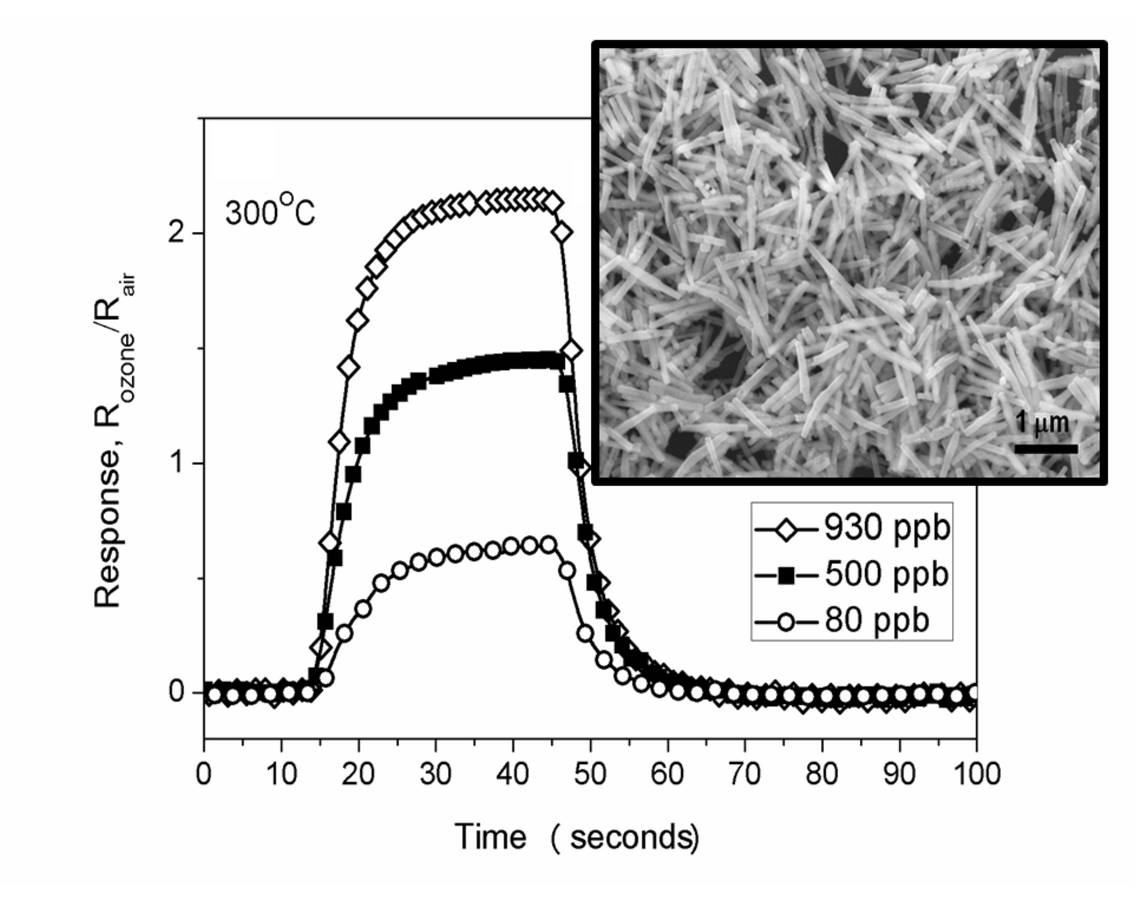
SEM image of the nanorods inside a diagram showing the sensor performance.
In this work, the Brazilian scientists synthesized nanorods of silver tungstate and assembled a sensor based on such nanoparticles. They had put the sensor in a temperature controlled test chamber, exposed it to different concentrations of ozone gas, from 80 to 930 parts per billion (ppb), and evaluated its capacity to detect the ozone.
Present in high atmospheric layers, the ozone plays an important role protecting living beings by absorbing the solar ultraviolet radiation. The ozone is also used by people in several applications, such as, for example, cleaning water. However, the exposition to the gas in certain concentrations may lead to health issues as headache, burning and irritation in the eyes, and respiratory system problems. The World Health Organization (WHO) recommends avoiding the exposure to ozone gas above 120 ppb.
“Subjecting the compound to low amounts of ozone, we observed a fast response, as well as a very short recovering time, making its properties comparable or even better than traditional sensors as tin dioxide (SnO2), tungsten trioxide (WO3), and indium oxide (In2O3),” says Luís Fernando da Silva, first author of the article and postdoctoral fellow of the São Paulo Research Foundation (Fapesp) at UNESP’s Chemistry Institute of Araraquara.
The results were published online in the peer reviewed journal Nanoscale in the end of January this year.
Background of the paper
The studies with silver tungstate started in the postdoctoral research of Laécio Cavalcante, currently a Professor at Piauí State University (UESPI). Cavalcante synthesized nanorods of silver tungstate using microwave-assisted hydrothermal technique (process that was also used in the synthesis of nanorods from the paper published by Nanoscale). Performing electronic microscopic analysis with the microscope of the Chemistry Institute of Araraquara, the group of scientists coordinated by Professor Longo noticed that the interaction of the electron beam with the material was stimulating the growth of metallic silver particles on the surface of the nanorods. The result of this paper led to an article published in April last year by Scientific Reports (DOI: 10.1038/srep01676).
“Since then, Professor Elson Longo has researched and encouraged the investigation of the potentiality of the α-Ag2WO4 compound”, comments Luís Fernando da Silva. Longo, his team and partners have already observed that the material holds bactericidal (J. Phys. Chem. A, 2014; Doi:10.1021/jp410564p), photoluminescent (J. Phys. Chem. C, 2014, DOI: 10.1021/jp408167v), and photocatalytic properties, with a series of possible applications.
“Based on these potential applications”, Luís Fernando da Silva adds, “I, Professor Waltir Avansi Junior from the Physics Department of the Federal University of São Carlos (UFSCar), jointly with Professor Valmor Mastelaro from the São Carlos Physics Institute of São Paulo University (USP) and his PhD student, Ariadne Catto, started investigating about the detection properties of the non-irradiated α-Ag2WO4 compound (without nanoparticles of metallic silver)”. During the experiments, Silva says, the team noticed that the material was sensitive to detect ethanol and acetone steam and, ultimately, ozone gas, even in low amounts. Assisted by Professors Khalifa Aguir from Université Aix-Marseille (Marseille, France), and Juan Andrés, from Universitat Jaume I (Castelló, Spain), they prepared the communication published by Nanoscale, a renowned journal in the nanotechnology field.
The studies concerning silver tungstate performed by the team of Professor Longo might not end there. According to Luís Fernando da Silva, the team will assess the capacities of the material to detect other gases. In addition to that, returning to the silver tungstate nanorods with nanoparticles of metallic silver, the scientists are going to study the effects of electron irradiation on the gas detection capacity of the material.
“This paper contributes to the discovering of new materials applied as gas sensors”, states the postdoctoral fellow. “However, complementary examinations are necessary in order to achieve a deeper comprehension of the mechanisms involved in the detection, adsorption and desorption processes of the gas(es)”, he concludes.
O pós-doutorando deve atuar em linhas de pesquisa TEÓRICAS ou EXPERIMENTAIS em uma das seguintes áreas: Astrofísica, Física Atômica e Molecular, Física da Matéria Condensada e Mecânica Estatística, Física Nuclear e de Hádrons, Física de Partículas e Campos.
O candidato deverá enviar e-mail para , com os seguintes documentos*:
1) Curriculum Vitae Lattes atualizado;
2) Descrição de interesses científicos, incluindo projeto de pesquisa para o período (abril/2014 a janeiro/2015) com no máximo 10 páginas;
3) Nome e e-mail de duas pessoas para eventuais cartas de recomendação.
*Toda documentação deve ser enviada em um único e-mail. Os documentos 1 e 2 devem ser anexados ao e-mail, ambos em formato pdf.
Período de inscrições: 14/03/2014 a 28/03/2014
Divulgação do Resultado: até o dia 03 de abril de 2014.
Critérios para seleção:
Os candidatos terão sua documentação avaliada pelos seguintes quesitos:
– Potencial e domínio do candidato em sua área de pesquisa;
– Diversidade de sua formação;
– Qualidade e quantidade de sua produção intelectual;
– Autonomia e maturidade científica;
– Potencialidade de interação efetiva com os grupos de pesquisa do Programa.
Requisitos do candidato à bolsa (item 4.4 do Edital da CAPES)
O candidato indicado para recebimento da bolsa do PNPD deverá atender aos seguintes requisitos:
a) ser brasileiro ou possuir visto permanente no País. No caso de candidato estrangeiro, este deverá estar, no momento da implementação da bolsa, em situação regular no País;
b) estar em dia com as obrigações eleitorais;
c) possuir em seu currículo Lattes qualificações que demonstrem capacitação suficiente para desenvolver o projeto;
d) não ser beneficiário de outra bolsa de qualquer natureza;
e) dedicar-se integralmente e exclusivamente às atividades do projeto;
f) não ter vínculo empregatício (celetista ou estatutário);
g) não ser aposentado ou encontrar-se em situação equiparada;
h) estar apto a iniciar as atividades relativas ao projeto tão logo seja aprovada a sua candidatura pela respectiva agência;
i) ter obtido o título de doutor há, no máximo, 5 (cinco) anos,quando da implementação da bolsa, estando de posse do seu diploma. Em caso de diploma obtido em instituição estrangeira, este deverá possuir o reconhecimento de validação, conforme dispositivo legal;
j) ter seu currículo atualizado e disponível na Plataforma Lattes.
The National Renewable Energy Laboratory (NREL), located at the foothills of the Rocky Mountains in Golden, Colorado is the U.S. primary laboratory for research and development of renewable energy and energy efficiency technologies.
The Science without Borders is a large scale nationwide scholarship program primarily funded by the Brazilian federal government. The program seeks to strengthen and expand the initiatives of science and technology, innovation and competitiveness through international mobility of undergraduate and graduate students and researchers.
We would like to offer the opportunity for outstanding Postdoctoral Researchers to come to NREL through the Brazil-US Consortium for Innovation in Energy Materials (CINEMA) initiative under the Brazilian Science Without Borders program to develop research activities within NREL’s Chemical Sciences and Nanoscience Division in the area of Perovskites and Organic semiconductors.
1) Our current research activities on perovskite-based PVs focuses on (a) solution processing of halide perovskites, (b) fabrication of planar and mesostructured perovskite cells, and (c) fundamental understanding of charge transport and recombination. Our objective is to understand material effects on the basic physical and chemical processes that are important to device operations. The insight learned from the basic studies will be used as guide to control material properties and to develop more effective device architectures. Examples of our recent publications on perovskites include [1] J. Phys. Chem. Lett., 5, 490–494 (2014); [2] Chem. Commun., 50, 1605–1607 (2014); [3] J. Phys. Chem. Lett., 4, 2880–2884 (2013).
2) Fundamental research topics of particular interest for organic semiconductors include the structural characterization of organic materials in the solid state by X-ray or Neutron scattering methods, transient photoconductivity for the study of photoinduced charge generation and decay dynamics in novel donor:acceptor materials and device-based methods for charge mobility and recombination studies. As to more applied device level research, we are also interested in developing novel electrical contact architectures for upscaling OPV devices. Some of our relevant publications in organic semiconductors and devices include [1] ChemPhysChem (2014), accepted. DOI: 10.1002/cphc.201301022; [2] Adv. Funct. Mater., 22 (2012) 4115; [3] Macromolecules 46 (2013) 1350; [4] Organic Electronics 12 (2011) 108.
Postdoctoral candidates from Brazil willing to develop research activities in areas relevant to the projects above are strongly encouraged to apply. Candidates will be expected to communicate their results through journal publications and conference presentations. In general, to be considered, candidates should have a demonstrated track record of success in addressing fundamental science questions and devising solutions to challenging problems, a Ph.D degree in related field and a strong record of publications/presentations will be a plus.
Send inquires to alexandre.nardes@nrel.gov and to apply, please, send CV along with a list of publications, and the names of at least three professional references to the same e-mail address (subject: “PostDoc Brazil”). Note deadlines for applications at http://www.cienciasemfronteiras.gov.br
There was ceremony to empower the new board of directors and counselors, as well as the first meeting of the team. Learn more.
Get to know the new members and their roles. Here.
Featured paper with Brazilian participation
A team of three scientists managed to identify defects of atomic dimensions which exist in thin films of zinc oxide, through an interesting experiment, using the luminescence capability of this material. Initially, they prepared films with various quantities and types of defects and, systematically, they excited the samples, measured luminescence and related these data with the defects that had been introduced. The experiment was conceived and performed by a Brazilian researcher, using photon-scanning tunneling microscopy in Germany. The results have been published in The Journal of Physical Chemistry Letters. More.
(To suggest papers with Materials focus with Brazilian participation published in high impact journals for this section of our newsletter contact comunicacao@sbpmat.org.br)
History of Materials research in Brazil
We present the second part of the history of CAPES Materials Area, followed by an interview with Professor Carlos Graeff (coordinator of the area from 2009 to 2014) about the evolution of postgraduate courses in Materials in Brazil, the evaluation criteria of their scientific production and challenges for the next years, among other subjects. Here.
SBPMat’s community people
Interviewed due to Bridge Building Award of American Ceramic Society, Professor José Arana Varela has told us how he got to science of Materials and which are his most important contributions to the area of ceramic materials and his main collaborators. Arana Varela also left a message for our readers who are initiating their career. Here.
Reading recommendations
Science journalism stories based on papers published in journals with high impact factor.
Scientists use nanoparticle solutions as adhesive to glue gels and biological tissues (based on paper from Nature) Here.
Graphene bread sandwich: new technique to prepare biomolecules for electronic microscopy (based on paper from Advanced Materials) Here.
Organic Electronics: fastest polymeric transistor is developed. It is transparent and benzothiophene-based (based on paper from Nature Communications) Here.
For the first time, nanomotors travel inside living cells (see texts, images and videos) (based on paper from Angewandte Chemie International) Here.
Books, presentations, multimedia material, etc.
Review of the book “Fundamental Principles of Polymeric Materials” – for beginners in polymers science and technology. Here.
Materials news from the Brazilian National Institutes of Science and Technology (INCTs).
Thermal nanoimprint lithography developed at Namitec with potential application to photovoltaic panels. Here.
From the INCT for Nanotechnology Materials: silver tungstate as ozone gas sensor. Here.
Very sensitive hydrogen sensor developed in Namitec is ready to be used. Here.
Upcoming events in the area.
VI Curso do Método Rietveld de Refinamento de Estrutura. Here.

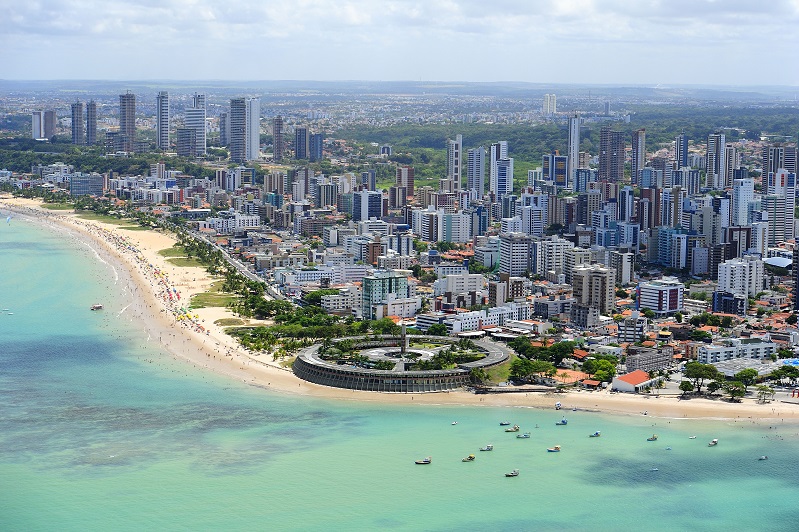 Abstract submission for the XIII Meeting of the Brazilian Materials Research Society (SBPMat) is open until May 23rd. The event will be held from September 28th to October 02nd, in João Pessoa, at the city’s brand new Convention Center.