
|
||||||||||||||||||||||||||||||||||||||
Author: Verónica Savignano
SBPMat´s community people: an interview with Professor Fernando Zawislak.
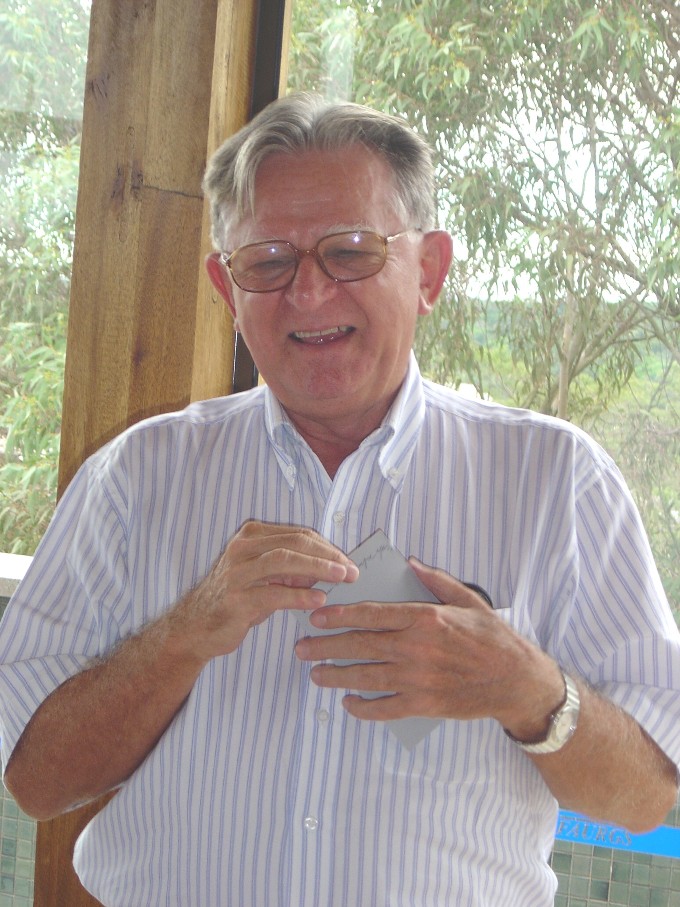
Fernando Claudio Zawislak was born in 1935, in the city of Santa Rosa, state of Rio Grande do Sul (RS), in a family with Polish origins, which lived in the rural area. In decade of 1940, his parents sent him to Porto Alegre, the capital of Rio Grande do Sul, with one of his siblings, so they could study in a boarding school. In 1952, the whole family moved to the city, proceeding with the decision to prioritize the education of the children.
In 1958, Fernando Zawislak graduated in Physics in the Federal University of Rio Grande do Sul (UFRGS). From 1960 to 1961, he took a research internship in the Van de Graff Laboratory of the University of São Paulo (USP) with Professors Oscar Sala and Ernst Hamburguer. There, he had the first contacts with research. Then, he returned to the Physics Institute of UFRGS, started and coordinated an experimental research group in the field of Nuclear Physics. In said field, advised by Professor John D. Rogers, he was granted the PhD degree, for which he was approved “with honors” in 1967, becoming the first PhD in Physics graduated by UFRGS. From 1968 to 1970, he attended his postdoctoral studies in the California Institute of Technology (Caltech), in the United States.
In 1979, he started working in the field of ion implantation and use of ion beam techniques to modify and analyze materials. With this goal, he worked as a visiting researcher for a year in the Ion Implantation Laboratory of Orsay, in the University of Paris (France). In 1981, he founded the UFRGS’ Ion Implantation Laboratory, upon acquiring a 400 kV accelerator. In 1996, he managed to buy a 3 MV accelerator, which allowed to expand the activities of the laboratory to new fields, as semiconductors, polymers, metals and alloys, to name a few. He coordinated the Ion Implantation Laboratory since its foundation up to 2009. Today, the Laboratory is the largest of its kind in Latin America, counting, among its results, with more than 60 graduated doctors, approximately 1,000 papers, and studies developed jointly with groups from Argentina, Australia, Brazil, Denmark, France, Germany, New Zealand, South Korea, Spain and United States. During the decade of 1990, Zawislak took part in the planning and raising of funds of UFRGS’ Electron Microscopy Center and the creation of the UFRGS’ Graduate Studies Program in Materials Science (PGCIMAT).
Professor Zawislak retired from UFRGS in 2005. He is an Emeritus Professor of the institution, a level 1A (the highest one) researcher of the Brazilian Council for Scientific and Technological Development (CNPq), sitting member of the Brazilian Academy of Sciences, as well as Commander with the Grand Cross of the Brazilian National Order of Scientific Merit. During his career, he graduated 14 doctors and 16 masters, authored or co-authored more than 160 scientific articles in indexed international journals, and was the chairman of, among others, two of the most important international conferences in the field of ion implantation, the Ion Beam Modification of Materials (in the city of Canela, RS, 2000) and the Radiation Effects in Insulators (in the city of Gramado, RS, 2003), both held for the first time in a Latin American country.
Following there is a brief interview with the researcher.
SBPMat Newsletter: – In your own point of view, what are your main contributions to Materials Science and Engineering? Tell us what led you to achieve them, as well.
Fernando Zawislak: – I started my scientific career working in the field of Experimental Nuclear Physics. I even completed my Doctorate in this field. In 1968, I went to California to attend my postdoctoral studies in the California Institute of Technology. There, in this institute, the field of Materials Science was getting started, and, more specifically, the field of ion implantation and analysis of ion beams. The United States had decided to invest heavily in the field of interdisciplinarity, mainly in Materials Sciences. There, in Caltech, I didn’t work with Materials, but followed the studies. Then I thought, “If I have the opportunity, I am going to start this field of ion implantation and materials studies with ion beams in Brazil.”
California was one of the three or four places in the world where the field of ion implantation and materials analysis was being established. And I used to attend the seminars, despite working in other field. Then, I returned to Brazil in 1970, but only in 1982 I managed to install the Ion Implantation Laboratory. It was a radical change in my life, but I think this is important: all researchers should, if possible, change their fields once or twice along their careers, in order to always move to a more modern one. I was working in an old field, in which it was hard to publish, while ion implantation was just beginning, and until now is very important.
In this field of Materials Science, which I started in 1982, when I changed mine, I acquired the first implanter, and graduated, in this twenty-something years, up to my retirement, many doctors and masters, authored more than one hundred published papers and developed studies, basically, in the field of materials nanostructures and modification of materials with ion beams.
Actually, I was interested in interdisciplinarity, and the field of Materials Science is clearly interdisciplinary. Such interdisciplinarity is absolutely necessary, as the United States discovered, founding, around that time, twenty interdisciplinary centers. So, in Brazil, once I returned, I started to struggle for this interdisciplinarity. Everyone was in favor, really, but neither the university, nor the funding agencies supported the interdisciplinary fields. There was domination of the classic subjects. Each department focused its own field, and, when new ones were on the rise, people didn’t want to share, didn’t want lose students, scholarships… Well, but we struggled quite a lot, and I was one of those who fought for the creation of the Graduate Program in Materials Sciences in UFRGS, jointly with colleagues from Physics, Chemistry, Engineering. And we managed to do it.
Then, the results of my activity with Materials were, on one hand, the Laboratory of Ion Implantation, and, on the other, the creation of the Graduate Studies in Materials Science. I also acted very intensely, trying to convince people, during scientific meetings, that it was absolutely crucial to enter in the interdisciplinary field, because all great advancements in research and innovation are interdisciplinary.
Up to this day, the Ion Implantation Laboratory is the largest in Latin America, and is similar in efficiency and equipment to many good labs around the world. Our laboratory has 25 doctors, considering that there are always 21 or 22 permanent ones, and 3 or 4 postdoctoral fellows. It counts with 30 graduate students, half a dozen of technicians, plus the undergratuate students… We have a total of more than 50 people in the lab. I headed it until 2010, when I was replaced by my colleague, a young man, Pedro Grande.
The Graduate Studies course in Materials Science, I think, is also doing very well, but there are hardships yet. I supervised students of the course, but now I am retired.
SBPMat Newsletter: – In your opinions, what are the main current challenges in the field of ion implantation, regarding Materials Science and Engineering?
Fernando Zawislak: – I think the key point about ion implantation is that it comprises several fields of research, starting with Physics, Chemistry, many types of Engineering, Biology, Genetics, Geology, which are all fields where the ion implantation and, mainly, the analysis of materials in the accelerator, are important. We managed to measure very small amounts of impurities, for example. For the last five years, we introduced microbeams, beams focused to the size of a micron. Such beams have conditions to analyze microstructures from Geology or Microelectronics. Now, we have two accelerators in the lab, a smaller one, which was the first, and another, with 3 MV, acquired in the end of the decade of 1990. The techniques, such as RBS, MEIS etc, even measure the shapes and sizes of the nanoparticles. We implant a impurity in a matrix, and, depending on the energy of the implantation, and the temperature, we can produce nanoparticles from 2 or 3 nm to 100 nm. So, I think that the future and the challenges are both great, and the technique has a lot of potential in many fields. For example, we are analyzing the wine made in Rio Grande do Sul. I think that the lab is doing very well. I retired but, thank God, I was well replaced. Now, it is doing even better than when I was the coordinator.
SBPMat Newsletter: – Tell us which are your main current occupations, and your projects for the future.
Fernando Zawislak: – Well, I am not really thinking that much about the future. I have been retired for ten years, I’m an Emeritus Professor. I still receive CNPq’s sponsorship, as I continue to produce papers, but now my productivity, strictly in research, is decreasing. I’m using my time to help younger colleagues, attending some societies, some councils… In short, activities for someone who is already retired. My last student, a doctor, graduated last year, and I’m not accepting students anymore, but I still help, if they ask me for something.
SBPMat Newsletter: – Would you like to leave a message to our readers who are starting their careers as scientists?
I think that what is important for researchers is choosing a career in a field that they like. As a Professor, many students asked me “Which career my children should follow”? , and I used to answer “Any one, as long as they like it. All are good”.
I also think that young people, now, shouldn’t narrow their undergraduate studies in just one field, that much. I think they should be open-minded to interdisciplinarity, collaborate with other colleagues, and eventually attend subjects in other fields. To me, it is very important, because focusing too much in one field has a very restricted specter: they may end up teaching at a university. And I think that the expectation in Brazil is for young people to move on from college and create industries, innovation, etc.
Penultimate advice: choose an advisor that works in a modern field of work.
And the last one is: you must have an entrepreneurial spirit. That is lacking. In Brazil, this issue of the interaction between the industry and university is frequently discussed, but there is no way, it is not possible to transform an “old” industrial that became rich making screws, and convince him that he must hire doctors and build a research lab. The young people are the ones who must initiate this. In the results of our universities, some successes in technological innovation were achieved by students that complete their doctorate and even their undergraduate studies. So, how do we produce young entrepreneurs? They must look for internships, in the industry, if possible, and go to a country where there is such entrepreneurial culture, as, for example, the United States, Germany, Korea or Japan, Here in Brazil, chemists generally display more of an entrepreneurial spirit than physicists, some fields of engineering too, but it is still lacking, and it is extremely important. It would be important to make youth aware that they can leave college and go to a new field, to make technonogical innovation happens.
Professor Victor Pandolfelli elected for the advisory board of the World Academy of Ceramics.
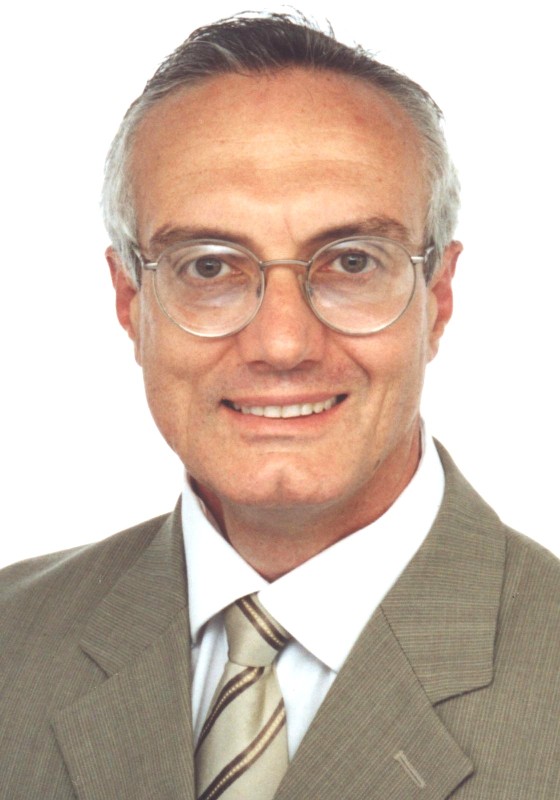 The Materials field researcher Victor C. Pandolfelli, Professor of the Materials Engineering Department at the Federal University of São Carlos (UFSCar), was elected as a member of the advisory board of the World Academy of Ceramics – WAC, for the term from 2014 to 2018. He will be, jointly with a researcher from the United States, the representative of the Americas in this entity.
The World Academy of Ceramics was founded in 1987. Its purpose is to enhance science and technology, and accredit the researchers who develop their studies in this field of work. It is an non-profit organization, whose members pass through a strict selective process, comprising being nominated by two sitting members, the evaluation of these nominations by pairs selected by the Academy, and the final approval of, at least, ten of fifteen members of the advisory board. As the main activities of the researchers elected in such committee, there are 1) reviewing the WAC admission rules, 2) defining the members that will take part in the new nominees selective processes, 3) defining the speakers for the technical presentation and award in the scientific forum for members of the Academy.
The investiture of Pandolfelli and the first meeting of the committee will be held next June, in Montecatini Termi, Italy.
Professor Edgar Zanotto (UFSCar) is honored for his actions for the development of the city of São Carlos.
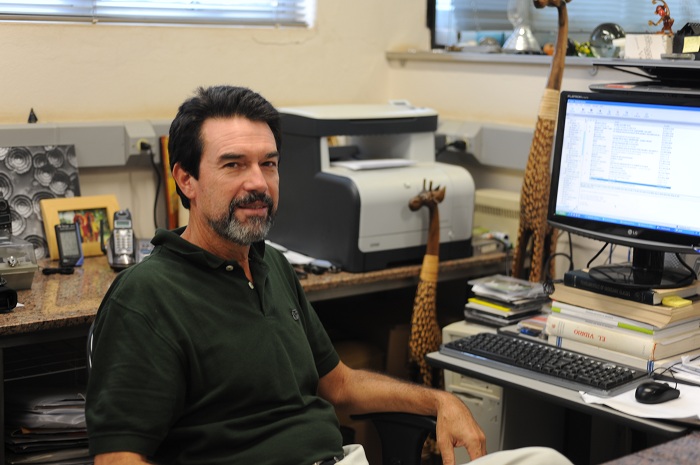
On April 25th, the Materials field researcher Edgar Dutra Zanotto, one of the main founders of our Brazilian Materials Research Society (SBPMat), received the title of Technology Pawn from the São Carlos city Science Park Foundation (ParqTec). Created in 1993, the title is granted to people who contributed substantially, by means of technological innovation, to enhance production, quality and competitively for products, processes and services in companies. The ceremony, held in the São Carlos Science Park, was attended by researchers and entrepreneurs, as well as local and regional authorities. In the same ceremony, Professor José Guilherme Sabe also received the title.
According to the chairman of the ParqTec board, Irineu Gualtieri, the award was granted to the Professors due their actions for the development of the city. “With their pioneering spirit and innovation, the laureates have been contributing in a substantial way for the construction of the Brazilian Technology Capital [São Carlos], developing researches, implanting projects and encouraging the rise of new companies” Gualtieri said. “The laureates have all features of a Technology Pawn. They are dynamic, strategic, innovative, active, transparent and human”, concluded the president of ParqTec, Sylvio Goulart Rosa Jr.
About Professor Edgar Dutra Zanotto
Professor Edgar Dutra Zanotto is a Materials Engineer by UFSCar, Master in Physics by IFSC – USP, and PhD in Glass Technology by the University of Sheffield, in England. He worked as a Visiting Professor in the department of Materials Science and Engineering of the University of Arizona in 1987, and in the College of Optics and Photonics of the University of Central Florida in 2005, both in the USA.
The researcher, full Professor in the Materials Engineering Department at the Federal University of São Carlos (UFSCar), and member of ParqTec Curators Council, received in 2012 the Almirante Álvaro Alberto national science and technology award. Zanotto was granted with more 25 awards, which include three of the most important in glass sciences (Zachariasen Award, granted by the Journal of Non-Crystalline Solids, Vittorio Gottardi Prize by International Commission on Glass, and G. W. Morey Award by the American Ceramic Society).
The research activities of the Professor and his collaborators focus mainly on the theme of crystallization and properties of glass. They have published more than 200 papers and executed more than twenty projects jointly with companies. Zanotto also has 12 registered patents, two of which received awards from the Brazilian Ministry of Education and IBM, as well as the national contest State Governor Award for Brazilian inventions, in 1996.
Zanotto is level 1A (the highest one) CNPq researcher, member of the United Kingdom Society of Glass Technology, the Brazilian Academy of Sciences (ABC), the Academy of Sciences of the State of São Paulo (ACIESP), the World Academy of Ceramics (WAC), and The World Academy of Science (TWAS) for the advancement of science in developing countries.
Professor Zanotto also worked as deputy coordinator in the scientific division of São Paulo Research Foundation (FAPESP), from 1995 to 2005, taking an active part in the conception and implantation of several projects for the development of research and scientific dissemination. Currently, he accumulates the following managing and consulting functions: director of CeRTEV – Center for Research, Technology and Education in Vitreous Materials, supervisor of the Vitreous Materials Laboratory (LaMaV) at UFSCar, chief editor of the Journal of Non-Crystalline Solids, secretary of the glass and optical materials division of ACerS (EUA), vice-chair of the technical committee on glass crystallization of the International Commission on Glass; member of the councils of International Materials Institute (USA), ACIESP and IMPA; director of the Brazilian Ceramics Association, and Curator of Parqtec, since 1984.
(Text based on the press released provided by ParqTec)
Featured paper: ultrasmall crystals with modulated shell thickness.
The scientific paper by members of the Brazilian community on Materials research featured this month is:
Anielle Christine A. Silva, Sebastião W. da Silva, Paulo C. Morais, and Noelio O. Dantas. Shell thickness modulation in ultrasmall CdSe/CdS(x)Se(1-x)/CdS core/shell quantum dots via 1-thioglycerol. ACS Nano, 2014 Feb 25; 8(2):1913-22. DOI: 10.1021/nn406478f.
Ultrasmall crystals with modulated shell thickness.
When Professor Noelio Oliveira Dantas, at the Brazilian Federal University of Uberlândia (UFU), had the idea of a new chemical method for the synthesis of quantum dots (semiconductor crystals with only a few nanometers of size), he was studying ways to synthesize the tiny crystals aiming to biotechnological applications.
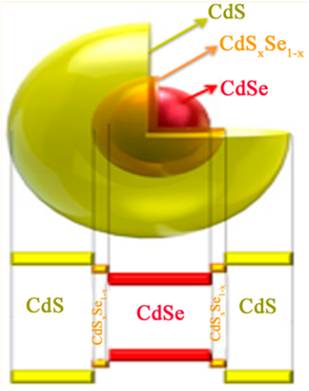
However, the results exceeded the initial expectations. In addition to produce ultrasmall quantum dots, composed, basically, of a cadmium selenide (CdSe) core and a cadmium sulfide (CdS) shell, the new method, which is cheap and highly reproducible, was a surprise because of its capacity to modulate the quantum dots’ shell thickness, an innovation compared to other known routes.
The study was developed during the PhD research that Anielle Christine Almeida Silva develops at the Physics Institute at UFU, under Professor Dantas supervision. Some results of the research were published this year by the journal ACS Nano, in an article signed by the PhD student and her advisor, jointly with two collaborators from University of Brasília, who contributed with the characterization of the quantum dots using Raman spectroscopy, and took part discussing the results.
The paper
“The main scientific contribution of this article is the proposal of a new synthesis route, via an aqueous solution, which allowed the modulation of the CdS shells’ thickness in CdSe ultrasmall quantum dots, depending on the concentration of 1-thioglycerol”, summarized Anielle. More precisely, the researchers discovered that, while smaller concentrations of 1-thioglycerol limit the growth of the cores of the quantum dots, larger amounts of the compound promote the modulated growth of their shells.
The produced ultrasmall crystals had less than 2 nm in the core, and from 0.50 to 1.25 nm in the shell. In order to calculate these dimensions from Raman spectra, the authors of the article used a model of phonon confinement with modifications proposed by themselves and another author in an article published in 2013 (Anielle Christine Almeida Silva; Ernesto Soares de Freitas Neto; Sebastião William da Silva; Paulo Cesar de Morais; Noelio Oliveira Dantas. Modified Phonon Confinement Model and its Application to CdSe/CdS Core-Shell Magic-Sized Quantum Dots Synthesized in Aqueous Solution by a New Route. Journal of Physical Chemistry. C, v. 117, p. 1904-1914, 2013.).
Regarding the biotechnological application initially expected, the authors explain that such quantum dots obtained with the new route are promising due their capacity to be easily dispersed in aqueous environments. According to the scientists, the structure of the produced ultrasmall crystals, which is similar to a sandwich with two slices of bread and a fine filling, may contribute to a higher quantum efficiency and stability in biological environments.
Concurso para professor do Departamento de Física da UFSC.
Concurso Prof. Adjunto, Departamento de Física – UFSC
EDITAL Nº 175/DDP/2014
Site: https://php.coperve.ufsc.br/
1 vaga Física Experimental. Requisitos para provimento no cargo: Graduação em Física e Doutorado ou PhD em: Física ou Ciências ou Astromia ou Química ou Doutorado proveniente de programas de Pós Graduação vinculados a Capes nas áreas das Engenharias.
1 vaga Física Computacional. Requisitos para provimento no cargo: Graduação em Física e Doutorado ou PhD em: Física ou Ciências ou Matemática ou Computação ou Físico-Química ou Doutorado proveniente de Programas de Pós Graduação vinculados a Capes nas áreas das Engenharias.
OBS: inscrições até 29 de abril 2014.
Concurso para professor do IFGW – Unicamp em Física Biológica Experimental.
Edital para Concurso de Professor Doutor junto ao IFGW/UNICAMP, que foi publicado no DOE de 17/04/14.
Área de Física Biológica Experimental – É desejável que o candidato tenha o seguinte perfil: Experimental em óptica não linear,
pulsos ultracurtos e microscopias fotônicas aplicadas às ciências da vida.
As inscrições serão recebidas na Secretaria do IFGW, no período de 22/04/2014 a 21/05/2014.
XIII SBPMat Meeting: abstract submission and Bernhard Gross Award.
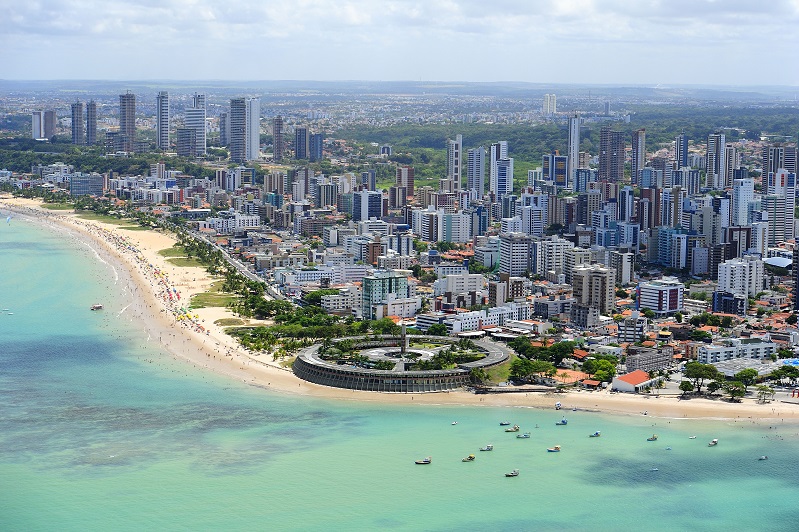 Abstract submission for the XIII Meeting of the Brazilian Materials Research Society (SBPMat) is open until May 23rd. The event will be held from September 28th to October 02nd, in João Pessoa, at the city’s brand new Convention Center.
Papers from Brazilian or foreign researchers and students will be accepted in any field of the 19 symposia of the event, which cover various themes regarding materials research and its applications. The symposia were selected by the event’s organizing committee, based on the proposals received for a call for symposia released in last October, directed to the whole scientific community.
The best papers in each symposium (at most, a poster and an oral presentation) presented by undergraduate or graduate students will receive the Bernhard Gross Award by the end of the event. The winning papers may be published in a special issue of the open access journal “IOP Conference Series: Materials Science and Engineering”, dedicated to the best papers of the XIII SBPMat Meeting.
About the SBPMat Meetings
The annual SBPMat meeting is a traditional international forum devoted to the recent advances and perspectives in Materials science and technology. In its last editions, the event has gathered about 1,500 participants, coming from the five regions in Brazil, and dozens of others countries, to present and discuss scientific and technological research results in the Materials field. The event also counts with plenary lectures given by internationally renowned researchers, as well as exhibitors concerned by the Materials community.
Instructions for submitting abstracts and participating in the Bernhard Gross Award: http://sbpmat.org.br/13encontro/authors/?lang=en
Concursos para professor no IFGW/Unicamp.
Divulgação dos Editais para Concursos de Professor Doutor junto ao IFGW/UNICAMP, que foram publicados no DOE de 04/04/14.
01) Dispositivos nano-estruturados – É desejável que o candidato tenha o seguinte perfil: Experimental nas sub-áreas: Dispositivos integrados, optomecânica, transporte, sensores avançados.
02) Informação Quântica Experimental – É desejável que o candidato tenha o seguinte perfil: Jovem pesquisador com característica de liderança para montar novo laboratório de pesquisa na área.
03) Física Experimental de Materiais Avançados – É desejável que o candidato tenha o seguinte perfil: Experimental nas sub-áreas de Materiais orgânicos; materiais emergentes (à base de carbono, grafeno, bucky-balls, nanotubos); magnéticos não usuais; isolantes topológicos; materiais vítreos, spintrônica; propriedades ópticas de materiais nano-estruturados.
04) Cosmologia Observacional
As inscrições serão recebidas na Secretaria do IFGW, no período de 07/04/2014 a 09/05/2014, no horário das 09 às 12 e das 14 às 17 horas.
SBPMat e-newsletter – year 1 – issue 3
|
||||||||||||||||||||||||||||||||||||||||||