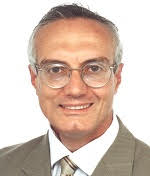
Interviews with plenary speakers of the XV Brazil-MRS Meeting: Ifor Samuel (University of S. Andrews, UK).

ifor samuelOrganic semiconductors are materials that combine useful properties of plastics (easy shaping, flexibility, low weight, low-cost processing) with the possibility of conducting electricity and emitting light. At the University of St Andrews, which lies since 1413 in a beautiful seaside location in Scotland (UK), Prof. Ifor Samuel converts his fascination for organic semiconductors into new materials, devices and applications.

Ifor Samuel received his MA and PhD diplomas from the University of Cambridge (England, UK), after working on optical spectroscopy of organic semiconductors. After his PhD, Samuel moved to Paris for two years to perform postdoctoral work at CNET-France Telecom, investigating the non-linear optical properties of organic materials. Back to England, he carried out research at Cambridge for a year, as research fellow at Christ’s College.  After that, he set his own research group on light-emitting polymers at the University of Durham where he also held a Royal Society University Research Fellowship. In 2000 he joined the University of St Andrews, where he founded, in 2001, the Organic Semiconductor Centre, dedicated to interdisciplinary research on understanding and improving organic semiconductors and exploring their applications in the semiconductor, electronics and optoelectronics industries. In 2004 he founded the company Ambicare Health Ltd that produces wearable light sources for healthcare applications.

Ifor Samuel holds an H-index of 58. He has published more than 400 journal papers. His publications have more than 12,000 citations. He is a Fellow of the Royal Society of Edinburgh, the Institute of Physics, the International Society for Optics and Photonics (SPIE) and the Royal Society of Chemistry. Among other prizes, he won the Chemical Dynamics Award for 2016 of the Royal Society of Chemistry for his contributions to understanding light emission and fundamental photophysical processes in organic semiconductors.

At the University of St Andrews, Ifor Samuel is Professor of Physics, Director of the Organic Semiconductor Centre and head of the Organic Semiconductor Optoelectronics group. He is a member of the editorial board of the Journal of Photonics for Energy, and Editor-in-Chief of Synthetic Metals, a journal of electronic polymers and electronic molecular metals.

Here follows a short interview with Professor Ifor Samuel, who will be in Campinas (Brazil) at the end of September to talk about Organic Semiconductor Optoelectronics in a plenary lecture of the XV Brazil-MRS Meeting.

SBPMat newsletter: – In your opinion, what are your most significant scientific contributions to the organic semiconductors field?  Explain them very briefly and, if possible, share references of resulting publications.

Fluorescence of some organic semiconductors.

Ifor Samuel: – There have been two main themes to my research.  One is understanding organic semiconductors with the aim of using that understanding to improve them.  In this direction, I have studied the light emission process in conjugated polymers which is very important for organic light-emitting diodes (OLEDs) [1,2], developed as a new class of OLED material (with P.L. Burn) [3], and measured exciton diffusion which is very important in polymer solar cells [4].

The other major theme has been pushing the boundaries of devices and applications.  Here, instead of developing new materials, I have been exploring what new things can be done with existing materials.  For example, whilst nearly everybody was working on OLEDs for displays, I had a very interesting discussion with James Ferguson, head of dermatology at Ninewells Hospital in Dundee, leading to the development of wearable light sources for treatment of non-melanoma skin cancer [5].  More recently my team developed a wearable organic optoelectronic sensor for muscle contraction [6].  We have also been working with the Belgian Royal Military Academy on using conjugated polymer fluorescence and lasing for explosive detection for humanitarian demining.  Recently we demonstrated (as part of a large project with collaborators in Edinburgh, Strathclyde and Oxford) the use of organic semiconductors for visible light communication, achieving record data rates for white visible light communication [7].

  1. Measurement of Absolute Photoluminescence Quantum Efficiencies in Conjugated Polymers. N.C. Greenham, I.D.W. Samuel, G.R. Hayes, R.T. Phillips, Y.A.R.R. Kessener, S.C. Moratti, and A.B. Holmes. Chem. Phys. Lett241, 89 (1995).
  1. Fluorescent receiver for visible light communications.
    Fluorescent receiver for visible light communications.

    Efficient interchain photoluminescence in a high-electron-affinity conjugated polymer. I.D.W. Samuel, G. Rumbles and C.J. Collison. Physical Review B. 52, 11573 (1995).

  1. A green phosphorescent dendrimer for light-emitting diodes. S.C. Lo, N.A.H. Male, J.P.J. Markham, S.W. Magennis, P.L. Burn, O.V. Salata and I.D.W. Samuel. Adv. Mater. 14, 975 (2002).
  1. Determining the optimum morphology in high-performance polymer-fullerene organic photovoltaic cells. G.J. Hedley, A.J. Ward, A. Alekseev, C.T. Howells, E.R. Martins, L.A. Serrano, G. Cooke, A. Ruseckas and I.D.W. Samuel. Nature Comm. 4, 2867 (2013).
  1. An open pilot study of ambulatory photodynamic therapy using a wearable low-irradiance organic light-emitting diode light source in the treatment of nonmelanoma skin cancer. S.K. Attili, A. Lesar, A. McNeill, M. Camacho-Lopez, H. Moseley, S. Ibbotson, I.D.W. Samuel and J. Ferguson. Brit. J. Derm161, 170 (2009).
  1. Conjugated polymer laser.
    Conjugated polymer laser.

    Wearable organic optoelectronic sensors for medicine. A.K. Bansal, S.B. Hou, O. Kulyk, E.M. Bowman and I.D.W. Samuel. Adv. Mater. 27, 7638 (2015).

  1. Visible light communication using a blue GaN µLED and fluorescent polymer color converter. Chun, P.P. Manousiadis, S. Rajbhandari, D.A. Vithanage, G. Faulkner, D. Tsonev, J.J.D. McKendry, S. Videv, E.Y. Xie, E.D. Gu, M.D. Dawson, H. Haas, G.A. Turnbull, I.D.W. Samuel and D.C. O’Brien. IEEE Photonics Technology Letters 26, 2035 (2014).

SBPMat newsletter: – You have authored many patents. Are there products in the market based on our inventions?

Ifor Samuel: – The majority of my patents are licensed to companies that are developing them. There are several patents relating to light-emitting dendrimers as highly efficient solution-processed OLED materials. These were initially licensed to Opsys Ltd in Oxford, who were later acquired by Cambridge Display Technology, who in turn are now wholly owned by Sumitomo Chemical and incorporate aspects of the technology in their products.  For the skin cancer treatment, the patents were licensed to the spin-out company Ambicare Health Ltd.  Ambicare have brought two related products to market – one is a wearable red light source for skin cancer treatment, and the other is a wearable blue light source for acne treatment.

SBPMat newsletter: – The properties of organic semiconductors are different from those of inorganic semiconductors, leading to creation of novel devices. Could you give some examples of existing and not-yet invented devices based on organic semiconductors?

Ifor Samuel: – The advantages of organic semiconductors come from how they combine novel semiconducting optoelectronic properties with simple fabrication and the scope to tune properties by changing their structure. An existing organic semiconductor device is an OLED mobile phone display or television. They give very vivid images, together with outstanding contrast and viewing angle. However, in contrast to inorganic semiconductors which are rigid and brittle, organic semiconductors can be used to make flexible devices – such as light-emitting bandages for medicine. The flexibility has not yet been fully exploited, but also simplifies manufacture which could be by simple roll to roll processes.  This would be an excellent way to make solar cells in Brazil. The laser explosive sensors are completely different from inorganic lasers because the explosive vapour binds to the gain medium and modifies its light emission.

SBPMat newsletter: – If you desire, leave an invitation for our readers to go to your plenary lecture at the XV Brazil-MRS Meeting.

Ifor Samuel: – I have really enjoyed my previous visits to the Brazil MRS meeting and look forward to visiting Campinas. Do come to my lecture to hear about the remarkable world of organic semiconductors and their applications.

Link to the abstract of Ifor Samuel´s plenary lecture at the XV Brazil-MRS Meeting: http://sbpmat.org.br/15encontro/speakers/abstracts/6.pdf

New journal: npj 2D Materials and Applications.

Aiming to create a top-tier interdisciplinary platform for scientists to share and promote 2D materials research and applications, npj 2D Materials and Applications is a new online-only, open access journal.

2D Materials and Applications is part of the Nature Partner Journals (npj) series, launched by Springer Nature as part of the Nature Research portfolio of journals, and published in partnership with the Faculdade de Ciências e Tecnologia da Universidade Nova de Lisboa (FCT Nova) with the support of the European Materials Research Society (E-MRS).

npj 2D Materials and Applications will publish original papers, review articles and short communications to reflect the latest breakthrough and developments taking place in all aspects of 2D materials, including allotropes (different structures of the same element) and compounds, ultralight composite materials, their properties (including mechanical properties), and their isolation, synthesis and manufacturing.

The journal will also publish research relating to the use of 2D materials in applications such as photovoltaics, optoelectronics and photonics, semiconductors, sensors, electrodes, water purification/filtration/distillation, and energy storage.

Led by Editor-in-Chief Professor Andras Kis, the journal is now open for submissions.

Visit the journal website to find out more: http://www.nature.com/npj2dmaterials/

See flyer here.

SBPMat newsletter. English edition. Year 3, issue 6.


Brazilian Materials Research Society (SBPMat) newsletter
News update from Brazil for the Materials community

English edition. Year 3, issue 6. 

XV Brazil-MRS (SBPMat) Meeting - Campinas (SP), Sept 25-29, 2016 

The XV SBPMat Meeting received approximately 2,000 abstracts.

Registration: Registration for the event is now open. Early registration discount deadline is 31 August. Here.

Program: Two tutorials will be offered on the afternoon of September 25 to those registered for the event at no extra cost. One is on computer simulations on atomic systems using Reactive Force Fields (theory and practice). The second, organized by Professor Valtencir Zucolotto, will address capabilities required to make high-impact science, including scientific writing. Reserve your place during registration. 

Authors: Acceptance notifications will be sent to the authors by July 10. 

Awards: Those interested in participating in the event’s student prize competition, the Bernhard Gross Award, which selects one oral and one poster presentation in each symposium, must submit an extended abstract by August 22. Know more in the instructions to authors.  

Publication of contributions: The papers presented at the XV Brazil-MRS Meeting may be submitted by their authors for peer review for publication in IOP scientific journals. More info.

Exhibitors: More than 30 companies have already got places in our exhibition. Companies interested in participating in the event with stands and other forms of dissemination should contact Alexandre, via the e-mail comercial@sbpmat.org.br.

Plenary sessions:  View the abstracts of the plenary lectures and the memorial lecture of our event and bios of the scientists presenting them. Here.

Accommodation and tickets: See the list of the travel agency “Follow Up” with hotels, hostels, guesthouses and the forms to book flights. Here. 

Vacation packages: The Follow Up website also suggests tour packages for before and after the event. Here.

Venue: See video of the city of Campinas and folder about the Expo Dom Pedro convention center. 

Organizers: This edition of the event is coordinated by Prof. Ana Flávia Nogueira (Unicamp, Institute of Chemistry) and Prof. Mônica Alonso Cotta (Unicamp, “Gleb Wataghin” Institute of Physics). See who are the members of the local committee and view the photos of the organizers. Here.

Featured paper 

A nanomedicine study performed at the Brazilian Federal University of Goias shows that magnetic nanoparticles smaller than 10 nm and composed of more than one material have optimum nano-heating properties for the treatment of cancer by hyperthermia. The two authors of the study reached these conclusions based on diverse evidence, including in vivo studies and results obtained through an innovative theoretical method that they developed. This work was reported in a paper published in Nanoscale. See our story about the study.

People in the Materials community 

We interviewed professor Sidney Ribeiro (UNESP), a full member of the Brazilian Academy of Sciences since May. Ribeiro is a recognized author of impacting studies on materials containing rare earth ions with applications in photonics and biomedicine. He is also active in mentoring and training researchers (having supervised over one hundred studies) and transforming research into products. In his message to younger scientists he spoke about the love of science, which is natural in children and must be preserved by the educational system, and which transforms the researcher’s work into a favorite occupation. See our interview.

Professor Fernando Lázaro Freire Junior, former president of SBPMat, became the director of the Physics Department of PUC-Rio. Here.
Interviews with plenary speakers of the XV Brazil-MRS Meeting
Plants and animals are important sources of knowledge and inspiration for Professor Lei Jiang and his group. In their laboratories at the Technical Institute of Physics and Chemistry in Beijing (China), they develop smart materials, e.g., interfaces that switch between superhydrophilicity and superhydrophobicity. The findings of professor Lei Jiang, in addition to generating publications that received tens of thousands of citations, yielded products which are already widely used. Learn more about this Chinese scientist, his way of doing science, his discoveries and his scientific and also philosophical concept of binary cooperative complementary materials. Here.
Special: Kavli Prize for AFM inventors
Gerd Binnig (IBM Zurich Research Laboratory, Switzerland), Christoph Gerber (University of Basel, Switzerland) and Calvin Quate (Stanford University, USA) received the 2016 Kavli Prize in Nanoscience in recognition of their development of the Atomic Force Microscope (AFM). Since its creation, the AFM advances nanoscience and nanotechnology due to the possibilities it offers to study and modify surfaces with atomic resolution and precision. More. 
Reading tips
  • First stable magnet of only 1 atom provides possibilities to store and process information at the atomic scale (based on paper in Science). Here.
  • Biomineralization: Scientists shed light on the origin of hardness in biominerals as calcite, associated to the incorporation of impurities (based on paper in Nature Materials). Here. 
  • Thomson Reuters released its annual report of scientific journal impact factors. Here are some highlights of materials journals selected by the websites Materials Today (Elsevier) and Materials Views (Wiley)
Events
  • XXV International Conference on Raman Spectroscopy (ICORS2016). Fortaleza, CE (Brazil). August, 14 to 19, 2016. Site.
  • 26th LNLS Annual Users´ Meeting (RAU). Campinas, SP (Brazil). August, 24 to 25, 2016. Site.
  • XV Brazil-MRS Meeting (XV Encontro da SBPMat). Campinas, SP (Brazil). September, 25 to 29, 2016. Site.
  • Aerospace Technology 2016. Stockholm (Sweden). October, 11 to 12, 2016. Site.


To unsubscribe, click here


People in SBPMat community: interview with Sidney Ribeiro.

Sidney José Lima Ribeiro was born in Sao Paulo (Brazil) in 1959. In high school he signed up for a technical course in Chemistry in the seaside city of Santos. He later moved to Araraquara also in the state of São Paulo where he graduated with a bachelor`s (1982), master`s (1987) and then a doctorate degree (1992) in Chemistry at the University of the State of São Paulo Júlio de Mesquita Filho (UNESP). He began his teaching career in the Chemistry Institute – UNESP in 1986. From 2001 to 2003 he was the head of the General and Inorganic Chemistry Department. In 2008, he became a full professor. His postdoctoral fellowship was in France, at the École Centrale Paris (1994) and at the Centre National d’ Etudes des Telecomunications, CNET (1995).

Professor Sidney Ribeiro is a member of the editorial board of the Journal of Sol-Gel Science and Technology (Springer) and the Journal of Non-Crystalline Solids (Elsevier) and editor of the Eclectic Chemistry journal (Chemistry Institute of UNESP).

He is the author of over 300 peer reviewed articles published in international journals, 7 books or book chapters and 19 patent applications. His scientific production has approximately 5,000 citations. He has mentored or supervised a hundred research works, including doctoral theses, master`s dissertations, postdoctoral research and scientific initiation projects.

He was a visiting researcher at the National Institute for Research in Inorganic Materials (Japan) and visiting professor at the University of Trento (Italy), at the Universities of Angers and Toulouse (France), the University of Aveiro (Portugal) and the Federal University of Juiz de Fora (Brazil).

He has been a member of the São Paulo State Academy of Sciences since 2012 and full member of the Brazilian Academy of Sciences (ABC) since 2015.

Here is a brief interview with the researcher.

SBPMat newsletter: – Tell us what led you to become a scientist and work in the Materials area.

Sidney Ribeiro: – I am a chemist. I studied a technical Chemistry course at the Carmelite High School in Santos. Afterward, by now truly enjoying chemistry, I got my Bachelor`s Degree in Chemistry here in Araraquara. I graduated in 1982. I completed my Master`s in Spectroscopy of Lanthanide here at UNESP under the guidance of Professor Ana Maria G. Massabni which included a national doctoral “sandwich” program, with a part of the work done here in Araraquara and another part at the Federal University of Pernambuco under the guidance of Prof. Gilberto Sá. In my doctoral research I started to work in the interface between Chemistry – Physics – Materials Science, in which we participate until today. My post-doctoral research was at the École Centrale Paris and CNET France Telecom from 1994-95.

SBPMat newsletter: – In your opinion, what are your main contributions to the Materials area, considering all aspects of scientific activity?

Sidney Ribeiro: – We have worked with materials containing rare earth ions with applications in photonics and biomedicine. We have two very well-cited review papers that can serve as an example for those interested in learning more about our work:

1-Carlos, LD et al, Lanthanide-Containing light-emitting organic-inorganic hybrids: a bet on the future, Advanced Materials (2009) 21(5) 509-534.

2-Correia SFH et al, Luminescent solar concentrators: challenges for lanthanide-based organic-inorganic hybrid materials, J. of Materials Chemistry A (2014) 2 (16) 5580-5596.

Our postgraduate program is classified by Capes as level 7 (the highest) and our undergraduate courses are among the best in Latin America. This basic science work has resulted in the training of skilled labor (27 master’s degrees, 20 doctoral degrees and 23 postdoctoral supervisions and dozens of undergraduate students), the deposit of 19 patent applications, and spin-offs or cooperation with a dozen small businesses that now manufacture products developed in our laboratories. The trinomial research-education-extension is definitely well explored at IQ-UNESP.

SBPMat newsletter: – Please leave a message to the readers who are beginning their scientific careers.

Sidney Ribeiro: – We are all born liking science. Who, as a child, in a moment of scientific inspiration, didn’t mix our mother’s perfume with insecticide and some olive oil just to “see what came out of it”? This taste for science has to be preserved in our educational system.  And for those who are starting out I say: go ahead. The country needs you. Someone said that when you do what you love you will never “have to work”. Work becomes your pastime and it’s really awesome.

Interviews with plenary speakers of the XV Brazil-MRS Meeting: Lei Jiang (Chinese Academy of Science, China).

By studying spider webs, fish scales, lotus leaves and cactus, the Chinese scientist Lei Jiang (Technical Institute of Physics and Chemistry – Chinese Academy of Science) and his group have developed artificial systems that can be extremely useful for human being. For example, surfaces that exhibit superphobic or superphilic properties concerning water, oil and air. Professor Jiang´s surfaces and interfaces can also be intelligent and switch from superhydrophilicity to superhydrophobicity.

Prof. Jiang will come to Brazil at the end of September to present all these discoveries, and also the concept of “binary cooperative complementary nanomaterials” (BCCNMs), in a plenary lecture of the XV Brazil-MRS Meeting.

Lei Jiang obtained a B.S. in solid-state physics in 1987 and a M.S. in physical chemistry in 1990 from Jilin University of China. Then, he embraced doctoral studies in the same university. After a period in the University of Tokyo (Japan), he obtained his Ph.D. diploma in physical chemistry from Jilin University of China. From 1994 to 1996, he was postdoctoral fellow in the Akira Fujishima‘s group at Tokyo University of Science. Then, he remained in Japan as a researcher of Kanagawa Academy of Sciences and Technology. In 1999, he joined, as a Professor, the Institute of Chemistry at CAS. From 2004 to 2006, he also served as Chief Scientist of the National Center for Nanoscience and Technology of China.

Prof. Jiang (H index=92) is author of two books, 8 review papers and book chapters, and over 500 papers including articles in Nature, Nature Nanotechnology, Nature Materials, among many other high-impact journals. He holds dozens of granted patents and patent applications. His publications have been cited more than 38,000 times.

Lei Jiang is academician of CAS since 2009, foreign member of the US National Academy of Engineering since 2016, fellow of the Royal Society of Chemistry since 2010, and fellow of The World Academy of Sciences (TWAS) since 2012. Jiang acts in the boards of scientific journals Small, Advanced Functional Materials, Advanced Materials Interfaces, NPG Asia Materials, Journal of Inorganic Biochemistry and Materials Research Innovations. He has received many awards and honors granted by Chinese entities. His contributions have also been recognized with the TWAS Chemistry Award in 2011 and the MRS Mid-Career Researcher Award in 2014.

Here follows an interview with Professor Jiang.

SBPMat newsletter: – Explain in a few words your approach to learning from nature.

Lei Jiang: – We learn from nature mainly focusing on biological interfaces with superwettability, and then we investigated the correlation between the multiscale structures and superwettability. After that we design target molecules to prepare bioinspired functional materials with promising applications, such as self-cleaning coatings, water/oil separation, water collection, and energy conversion. Finally, by combining two complementary properties and achieving reversible switching between them, we were able to develop bioinspired smart interfacial materials with superwettability.

SBPMat newsletter: – Do you and your group perform nature observation by yourselves?

Lei Jiang: – Yes, we perform nature observation by ourselves.

SBPMat newsletter: – Do you search for specific plants or animals having in mind specific applications?

Lei Jiang: – Yes, we mainly focus on specific plants or animals with superwettability.

SBPMat newsletter: – Do you work in collaboration with biologists and materials engineers from other groups to understand nature and produce the artificial materials systems?

Lei Jiang: – Yes, we always work in collaboration with other groups, who are focused on materials, mechanics, biology etc., to understand nature and produce the artificial materials systems.

SBPMat newsletter: – Are there products in the market, or almost there, based on your discoveries? How were they created (through patent licensing, spinoff companies, joint development)?

Lei Jiang: – We have transferred several research findings in the laboratory to practical products in the market. Until now, we have cofounded 3 technology companies.  As one of the very first commercially available bioinspired material produced in large scale, our superhydrophilic coatings have been applied to landmark buildings such as the China National Grand Theatre, and the Beijing International Airport. Our oil/water separation system has also been applied to more than 630 ships travelling around the world. Based on the materials with special wettability, a bioinspired green printing technology is also currently being used to print newspapers by many publishers.

SBPMat newsletter: – To those readers who may be very curious about your concept of “binary cooperative complementary nanomaterials”, please say a couple of words about it. Is there a philosophical idea behind that concept?

Lei Jiang: – Binary cooperative complementary materials, consisting of two components with entirely opposite physiochemical properties at the nanoscale, are presented as a novel principle for the design and construct of functional materials. By summarizing recent achievement in materials science, it can be found that the cooperative interaction distance between the pair of complementary properties must be comparable with the scale of related physical or chemical parameter. When the binary components are in the cooperative distance, the cooperation between these building blocks becomes dominant and endows the macroscopic materials with unique properties and advanced functionalities that cannot be achieved by either of building blocks. The law of unity and interpenetration of opposites was proposed in “Dialectics of Nature,” an unfinished 1883 work by Friedrich Engels. He stated “Everywhere we look in nature, we see the dynamic co-existence of opposing tendencies. This creative tension is what gives life and motion.” Dialectic was derived from the works of philosophers G. W. F. Hegel (1831) and Heraclitus (500 BC), who thought that everything was constantly changing and that all things consisted of two opposite elements that could change into each other. Ancient Chinese philosophers also utilized “Yin” and “Yang” as two basic polarities of the universe to interpret the binary cooperative complementary phenomenon in nature and the universe. However, Engels simply thought the idea of “Yin” and “Yang” was just an embryo of dialectics in ancient China. However, Chinese philosophers had already studied the evolution process and unity of two opposite elements quantitatively. For example, “I Ching” (1000–750 BC), an ancient Chinese book of changes, stated that 64 Yin-Yang combinations known as “64-gua” are possible with hexagrams (patterns of 6 broken and unbroken lines).

Please find the details about “binary cooperative complementary materials” in ” Science China Materials, 2016, 59, 239–246, http://link.springer.com/article/10.1007/s40843-016-5051-6 ”

——————-

Link to the abstract of the XV Brazil-MRS Meeting plenary talk “Smart Interfacial Materials from Super-Wettability to Binary Cooperative Complementary Systems”: http://sbpmat.org.br/15encontro/speakers/abstracts/5.pdf

2016 Kavli Prize 2016 – nanoscience awarded to the inventors of the atomic force microscope.

Gerd Binnig © Definiens AG

In the 2016 edition, the Kavli Prize – nanoscience was awarded to the three scientists who invented the atomic force microscope (AFM): Gerd Binnig (IBM Zurich Research Laboratory, Switzerland), Christoph Gerber (University of Basel, Switzerland) and Calvin Quate (Stanford University, USA). The Kavli Prize has been awarded since 2008 in the fields of Astrophysics, Nanoscience and Neuroscience by the Kavli Foundation, the Norwegian Academy of Science and Letters and the Norwegian Ministry of Education and Research.

The atomic force microscope (AFM), created in the mid-1980s, was the first instrument that made possible viewing details of different kinds of materials with a resolution of less than a nanometer (on the order of angstroms).  More recently, this instrument has also been used to manipulate surfaces with atomic precision, in which atoms can be pushed, pulled or slid on a surface, one by one, with the tip of the microscope.

Christoph Gerber © Swiss Nanoscience Institute (SNI)

According to the Kavli Prize website, the history of the atomic force microscope goes back to 1981 when the German physicist Gerd Binnig, along with Heinrich Rohrer and collaborators invented the scanning tunneling microscope (STM) in the IBM labs in Zürich (Switzerland). That was the first instrument that showed the composition of materials on the nanoscale, with a resolution of a few nanometers. The STM, however, had a serious limitation: it could only be used to image conductive materials. So Binnig thought about the changes he could make on the microscope that would overcome this obstacle.

In 1985 he filed the patent application of the AFM, which could produce images of samples of all kinds. He then summoned two scientists he had worked with in the development of the STM (Gerber and Quate). Together they set up the first AFM and conducted the first experiments, whose results were published in the journal Physical Review Letters in March 1986.

Calvin Quate © Linda A. Cicero

After three decades developing the technique and the instrument, the atomic force microscopy has now several new modes to use it, new spin-off instruments and new fields of application (including the Life Sciences).

More information on the AFM and its inventors is available in the Kavli Prize website: http://www.kavliprize.org/prizes-and-laureates/prizes/2016-kavli-prize-nanoscience

Featured paper: Best nanoheaters for cancer treatment.

[Paper: Mean-field and linear regime approach to magnetic hyperthermia of core-shell nanoparticles: can tiny nanostructures fight cancer? Marcus S. Carrião, Andris F. Bakuzis. Nanoscale, 2016,8, 8363-8377. DOI: 10.1039/C5NR09093H]

The authors of the paper published in Nanoscale: Professor Andris Bakuzis (left) and doctoral student Marcus Carrião dos Santos (right).

Hyperthermia, for cancer treatment, is induced by increasing the temperature to activate tumor cell death. This high temperature can be created by introducing nanoparticles into the tumor that function as heaters, and after their function is completed they are eliminated by the body. Magnetic nanoparticles may be used in these treatments because they have the ability to generate heat when subjected to alternating magnetic fields of specific intensity and frequency.

A work on nanomedicine (nanotechnology used in medicine) fully conducted at the Brazilian Federal University of Goiás (UFG) suggests a new strategy using hyperthermia for cancer treatment: using smaller magnetic nanoparticles than those normally used and composed of more than one material, which could provide several advantages to the patient. To reach this conclusion, the researchers developed an innovative theoretical method that paves the way for manufacturing magnetic nanoparticles optimized for hyperthermia. The study was reported in a paper published in the prestigious Nanoscale journal, signed by the doctoral student Marcus Carrião dos Santos and his supervisor Andris Figueiroa Bakuzis, professor at the Physics Institute of UFG.

Hyperthermia cancer treatment generally uses nanoparticles that are relatively large (20 nm size range) and homogeneous (from a single material), which are considered as the most effective to generate heat according to theoretical studies based on traditional methods. However, these “large” nanoparticles accumulate quickly in the liver and it may take several months or years for these particles to leave the body of the patient being treated. On the other hand, nanoparticles smaller than 10 nm are rapidly eliminated in the urine, reducing the possibilities of intoxication and thereby increasing the selection of materials that can be used to manufacture them.

The relationship between particle size and excretion route (liver or kidney) was a conclusion reached by Bakuzis and colleagues from evidence reported in the scientific literature and pre-clinical studies (in vivo) carried out within a multidisciplinary research network, coordinated by Bakuzis, and aimed at solving problems associated with the use of magnetic nanoparticles for cancer treatment.

In addition, smaller nanoparticles have better distribution and penetration in tumors, among other advantages in the context of cancer treatment.

Aware of these characteristics, Bakuzis and dos Santos investigated the possibility of manufacturing nanoparticles of less than 10 nm that could efficiently generate heat. An important insight came from an article published in 2011 in the Nature Nanotechnology journal (Nat. Nanotech. 6, 418 (2011)). Professor Bakuzis says that “in this article, the researchers concluded experimentally that certain heterogeneous (from different materials) core-shell structures of spinel ferrites warmed more efficiently than homogeneous particles”.

The scheme, provided by the authors, sums up the hyperthermia process of magnetic nanoparticles and compares the conventional nanoparticles with the proposal of the UFG researchers, showing the key advantages for its application in the treatment of cancer using hyperthermia.

The pair of scientists then decided to theoretically investigate whether nanoparticles less than 10 nm formed by one material core and a shell of another material could efficiently generate heat and how to optimize them for this function. However, the conventional methods available for this modeling were not adequate. In fact, they considered the nanoparticle as a homogeneous entity, ignoring the fact that the surface atoms and the core atoms respond differently to the application of a magnetic field. This oversight became more significant in the study of particularly heterogeneous particles such as those they intended to study, the reason why the researchers from Goiás decided to develop a more suitable model for the study object.  Bakuzis explains that “in the paper we presented the first analytical hyperthermia model of core-shell nanoparticles within the linear response and mean-field theory, and from these calculations we pointed out important materials properties to achieve efficient heat generation.”

The results obtained by the physicists and published in the paper may have a significant impact in a health issue that concerns humanity, cancer cure. “Our studies indicate that it is possible to develop small particles for cancer treatment that can be quickly eliminated from the body via the kidneys. In particular, by combining different materials in the nanostructure”, summarizes Bakuzis.

To work with impact on this interface theme, Bakuzis is always in contact with a pool of knowledge of various areas. In addition to leading the multidisciplinary nanomedicine network that includes researchers with backgrounds in tumor biology, genetics, physiology, pharmacy, veterinary medicine, biophysics, physics, medical physics and chemistry, the professor and his group actively participate in scientific events that bring together many different professionals, including doctors with various specializations already using hyperthermia in humans for cancer treatment. “These scientific contacts are fundamental in interface areas such as the one our group works with,” concludes Bakuzis.

The research that led to the paper in the Nanoscale journal received funding from the Brazilian National Scientific and Technological Development Council (CNPq) and from the Research Foundation of the State of Goiás (FAPEG) and was carried out as part of the doctoral work of Marcus Carrião dos Santos.

Professor Fernando Lázaro Freire Junior, former president of SBPMat, became the director of the Physics Department of PUC-Rio.

Prof. Fernando Lázaro Freire Júnior.

Professor Fernando Lázaro Freire Junior, a participatory member of SBPMat since its creation, took over as director of the Physics Department at the Pontifical Catholic University of Rio de Janeiro (PUC-Rio) in an inauguration ceremony held on May 31 of this year.

With an undergraduate degree, a master’s and doctorate in Physics from PUC-Rio, Freire Junior began teaching at that university in 1979. In 1985, he became an assistant professor and, in 2012, a full professor. From 2003 to 2008 he was director of the Physics Department of the university, a post he occupies again this year. Between 2011 and 2015, he served as director of the Brazilian Center for Research in Physics (CBPF).

In SBPMat, Fernando Lázaro Freire Junior was a member of the founding board (2001), scientific director from 2004 to 2005, president for two consecutive terms from 2006 to 2009 and financial director from 2012 to 2013, among other activities.

See the news story about Professor Freire Junior appointed as the director of the Physics Department in the website of PUC-Rio: http://jornaldapuc.vrc.puc-rio.br/cgi/cgilua.exe/sys/start.htm?infoid=4584&sid=29#.V2RKkrsrKBa.

Publication of contributed manuscripts of the XV Brazil-MRS Meeting.

The Brazilian Materials Research Society (SBPMat) and the Institute of Physics (IOP) have extended the collaboration from previous years. In 2016, authors of contributions presented at the XV Brazil-MRS Meeting will be able to submit manuscripts to peer review evaluation in a longer list of IOP scientific journals, which now includes nine titles.

After undergoing the standard IOP review process, papers accepted for publication will be posted in an online compilation dedicated to SBPMat. Today 13 papers presented at the XIV B-MRS meeting, in 2015, have been published and feature now in this collection. More information on the submissions will be announced soon on the website of the XV Brazil-MRS Meeting and SBPMat newsletter.

List of IOP journals included in 2016:

·        2D Materials

·        Biomedical Materials

·        Biomedical Physics and Engineering Express

·        Journals of Physics: Condensed Matter

·        Journals of Physics D: Applied Physics

·        Materials Research Express

·        Nanotechnology

·        Semiconductor Science and Technology

·        Modelling and Simulation in Materials Science and Engineering