SBPMat newsletter. English edition. Year 3, issue 5.


Brazilian Materials Research Society (SBPMat) newsletter
News update from Brazil for the Materials community

English edition. Year 3, issue 5. 

XV Brazil-MRS Meeting - Campinas (SP), Sept 25-29, 2016 

Authors: The abstract submission deadline has been extended to June 15. Acceptance notifications will be sent to the authors by July 10. Authors should read the submission guidelines. Here.

Registration: Registration for the event is now open. Early registration discount deadline is 31 August. Here.

Symposia: See the list of 22 approved symposia, to which the abstracts can be submitted.  Here.

Awards: Those interested in participating in the event’s student prize competition, the Bernhard Gross Award, which selects one oral and one poster presentation in each symposium, must submit an extended abstract by August 22. Know more in the instructions to authors. 

Exhibitors: Companies interested in participating in the event with stands and other forms of dissemination should contact Alexandre, via the e-mail comercial@sbpmat.org.br.

Plenary sessions:  View the abstracts of the plenary lectures and the memorial lecture of our event and bios of the scientists presenting them. Here.

Accommodation and tickets: See the list of the travel agency “Follow Up” with hotels, hostels, guesthouses and the forms to book flights. Here. 

Vacation packages: The Follow Up website also suggests tour packages for before and after the event. Here.

Venue: See video of the city of Campinas and folder about the Expo Dom Pedro convention center. 

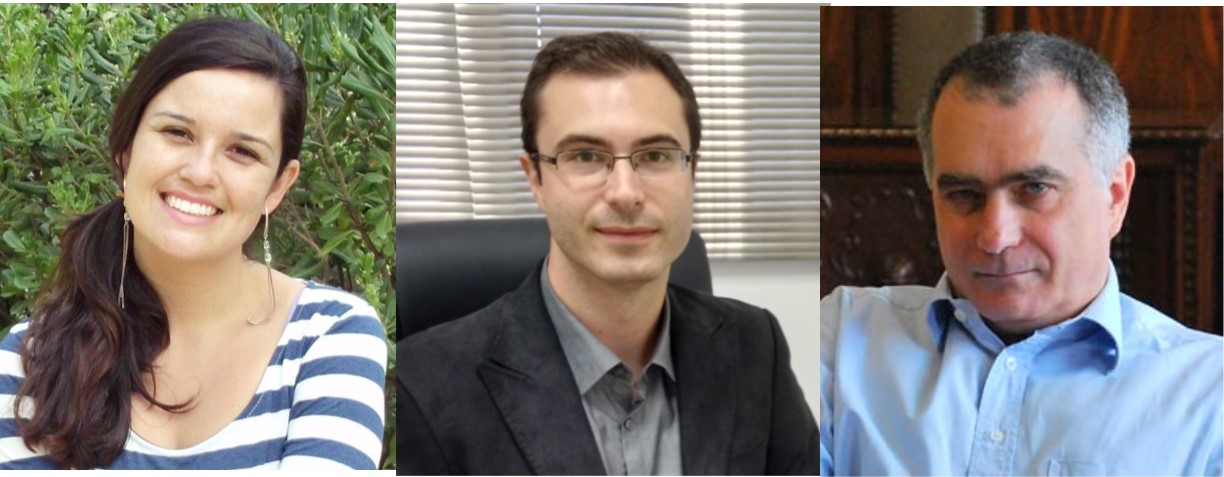
Organizers: This edition of the event is coordinated by Prof. Ana Flávia Nogueira (Unicamp, Institute of Chemistry) and Prof. Mônica Alonso Cotta (Unicamp, “Gleb Wataghin” Institute of Physics). See who are the members of the local committee and view the photos of the organizers. Here.

SBPMat news
  • Public note of SBPMat. The directory and the board of the Brazilian Materials Research Society (SBPMat) express their unease in light of the lack of prospects for science, technology and innovation (STI) in Brazil. Here.
  • Collection of works of the XIV SBPMat Meeting published in IOP journals. A page in the website of the Institute of Physics (IOP) compiles and highlights 13 scientific papers assembled from papers presented at the XIV SBPMat Meeting (Rio de Janeiro, September 27 to October 1, 2015) and published in IOP journals after conventional peer-review process. Here.
Featured paper 

The cover of the April issue of the Nano Letters journal highlights a study by an international team of researchers, of which four are scientists from Brazilian institutions. The article reports on the formation of defect-free carbon nanotube coils, considered an ideal format to use nanotubes as inductors. The article also presents the coil-formation mechanism from simulations carried out by scientists from Unicamp and the Federal University of Roraima. See our story about the study: “Nanotubes that coil to the sound of tango or chorinho”.

People in the Materials Community
  • Note of condolences on the passing of Prof. José Arana Varela, president of SBPMat in 2010-2011. Here.
  • SBPMat counselor Carlos Roberto Grandini and three other researchers from Brazil became fellows of the International Union of Biomaterials Societies. Here.
Interviews with plenary speakers of the XV Brazil-MRS Meeting 

Paper and metal oxides are some of the materials that the Portuguese scientist Elvira Fortunato uses to develop electronic devices, which besides producing low environmental impact, promise to make our many everyday objects become electronic, revolutionizing our lives. Learn more about these innovations and the trajectory of its inventor, who will deliver a plenary lecture on green electronics in the XV SBPMat Meeting. See our interview.

Reading tips
  • New carbon films manufacturing process produces promising supercapacitors for wearable electronics (based on paper in Science). Here.
  • A study carried out in Brazil is the cover of Langmuir journal: silica nanoparticles coated with folate for non water-soluble drug delivery, killing 70% of tumor cells and reaching only 10% of the healthy ones in in vitro tests. Here.
  • Nanoparticles injected into mice change in the body to release chemotherapeutic drug inside tumor (based on paper in PNAS). Here.
Events
  • 40th WOCSDICE ‐ Workshop on Compound Semiconductor Devices and Integrated Circuits held in Europe & 13th EXMATEC ‐ Expert Evaluation and Control of Compound Semiconductor Materials and Technologies. Aveiro (Portugal). June, 6 to 10, 2016. Site.
  • Photonic Colloidal Nanostructures: Synthesis, Properties, and Applications (PCNSPA Conference 2016). Saint – Petersburg (Russia). June, 27 to July, 1, 2016.  Site.
  • 1st International Symposium on Advanced Photonic Materials. Saint – Petersburg (Russia). June, 27 to July, 1,  2016. Site.
  • XXV International Conference on Raman Spectroscopy (ICORS2016). Fortaleza, CE (Brazil). August, 14 to 19, 2016. Site.
  • 26th LNLS Annual Users´ Meeting (RAU). Campinas, SP (Brazil). August, 24 to 25, 2016. Site.
  • XV Brazil-MRS Meeting (XV Encontro da SBPMat). Campinas, SP (Brazil). September, 25 to 29, 2016. Site.
  • Aerospace Technology 2016. Stockholm (Sweden). October, 11 to 12, 2016. Site.


Featured paper. Nanotubes that coil to the sound of music: tango or chorinho.

[Paper: Defect-Free Carbon Nanotube Coils. Nitzan Shadmi, Anna Kremen, Yiftach Frenkel, Zachary J. Lapin, Leonardo D. Machado, Sergio B. Legoas, Ora Bitton, Katya Rechav, Ronit Popovitz-Biro, Douglas S. Galvão, Ado Jorio, Lukas Novotny, Beena Kalisky, and Ernesto Joselevich. Nano Lett., 2016, 16 (4), pp 2152–2158. DOI: 10.1021/acs.nanolett.5b03417]

Nanotubes that coil to the sound of music: tango or chorinho

Among the many applications foreseen for carbon nanotubes, there are some nanoelectronic devices that make use of the excellent ability to conduct electricity, through the tiny graphene tubes. For the good performance of nanotubes in some of these applications, the most suitable are the coil configurations, formed by a single nanotube with its two ends free to make contact with other components within a device. Additionally, to not lose conductivity, the nanotube coil should have relatively low density of structural defects.

In practice however, it is not easy for a human being to achieve 1 nm diameter tubes to twist into spiral loops without generating imperfections and leaving their tips separate from the bundle.

Cover of Nano Letters. Representation of a coil formed by a single coiled carbon nanotube. Top right, the insert highlights, through a scanning electron microscopy image, the cross section of a real coil obtained by the team of scientists.

In an article published in the prestigious Nano Letters journal, highlighted in the cover of the April issue of this year, a team of 14 scientists reported the formation of defect-free nanotube coils with free ends, from a spontaneous coiling mechanism of single-wall carbon nanotubes. The study was led by researchers from the Weizmann Institute of Science (Israel) with the participation of four scientists from Brazilian universities (State University of Campinas, Unicamp; Federal University of Minas Gerais, UFMG, and Federal University of Roraima), from ETH Zürich (Switzerland) and from the Bar-Ilan University (Israel).

The team placed iron nanoparticles on silicon dioxide substrates and added a carbon-containing gas – a combination known to promote the growth of long single-wall nanotubes, which can reach more than 100 microns in height. The nanotubes grow perpendicular to the substrate like a forest of trees.

Under these conditions, the scientists created several carbon nanotubes samples, and some were spontaneously coil shaped. The authors analyzed the nanotube coils using SEM, TEM and AFM, obtaining information such as diameter, height and number of coil turns. Using the Raman spectroscopy technique, the authors continued investigating the nanotube coils and found a very low concentration of structural defects and also found that the diameter and chirality of the nanotubes were the same throughout the coil. The Raman spectroscopy analyses were partially carried out at the UFMG by Brazilian Professor Ado Jorio.

To understand the coil formation mechanism, the team used atomistic molecular dynamics simulations, used to depict the physical movements of atoms and molecules. These simulations were headed by Professor Douglas Soares Galvão (Institute of Physics Gleb Wataghin – Unicamp) and carried out by the postdoctoral researcher Leonardo Dantas Machado, former student of Galvão, and by Professor Sergio Benites Legoas (Federal University of Roraima), ex-postdoctoral grant holder in Galvão’s group. At IFGW – Unicamp, Prof. Galvão heads a research group specialized in simulation and computer modeling of nanostructured materials, particularly involving nanowires and nanotubes, and often collaborating with experimental groups from different countries. Through the simulations, the group is able to study, understand and predict phenomena that are sometimes not directly viewed or accessed experimentally in the time scale in which they occur.

Generally speaking, the simulations showed that after growing vertically, the nanotubes that had formed coils began to deposit on the substrate from the bottom up, forming the first turn as a result of their interaction with the carbon gas flow and with the substrate. After this first step, the nanotubes continued to spontaneously and steadily be deposited in a coil-like shape, completing up to 74 turns.

The team also investigated the performance of the coils as inductors (coiled devices that generate magnetic fields when an electrical current passes through, also known as electromagnetic coils) – a nanotube application that had not been studied until now. In the Nano Letters article the nanotube coils showed that despite being highly conductive, they are not yet ready to be used as efficient inductors. However, in the article the analysis of its electrical and magnetic behavior presented new and valuable information which can be used to develop inductive devices from nanotubes.

Cover of Physical Review Letters highlighted in 2013 another article of the international team of scientists, led by Galvão, on carbon nanotube coils.

According to Professor Galvão, the paper published in Nano Letters is a continuation of a previous project on carbon nanotube serpentines that involved his group, the group of Israel, led by Ernesto Joselevich, and Professor Ado Jorio (UFMG). This first study also produced an article featured on the cover of a prestigious journal, the Physical Review Letters (Dynamics of the Formation of Carbon Nanotube Serpentines, L. D. Machado, S. B. Legoas, J. S. Soares, N. Shadmi, A. Jorio, E. Joselevich, and D. S. Galvão, Phys. Rev. Lett. 110, 105502 – Published 8 March 2013).

Galvão recounts that the collaboration between the Brazilians and the Israel group began at a conference in Spain, where he attended a presentation by Joselevich on serpentine-shaped carbon nanotubes. “I believed it was a very interesting problem”, says Galvão. Coincidentally, the two scientists met again in a Brazilian event of condensed matter physics and had lunch together with Ado Jorio. That is when their collaboration began. “From the point of view of simulation, it was a very challenging and difficult project (in addition to specifically developing new protocols for the problem, the simulations involve millions of atoms), but Leonardo and Legoas were able to solve this”, says Galvão.

In addition to being consistent from the scientific point of view, the simulations were interesting from an aesthetic point of view. In this regard, Professor Galvão shares an anecdote. “Joselevich, who is Argentine by birth, knows Brazil and the Brazilian culture quite well. The first time he saw the serpentine simulations, he remembered the melody of “Brasileirinho” (a famous piece of chorinho music). We prepared some video versions incorporating the Brasileirinho as the soundtrack in his honor, jesting with the Brazil-Argentina rivalry, and others with tangos. The Brasileirinho wins, of course”, says the professor jokingly.

Two videos of nanotube dancing and forming coils can be accessed free of charge in the supporting info published with the paper in Nano Letters: http://pubs.acs.org/doi/abs/10.1021/acs.nanolett.5b03417

Interviews with plenary speakers of the XV Brazil-MRS Meeting: Elvira Fortunato (New University of Lisbon, Portugal).

Elvira Fortunato

July 2008 was perhaps one of the most rewarding months in the professional career of the Portuguese scientist Elvira Fortunato, and also one of the busiest in media interviews. In fact, it was in July she learned she had won the competition of the European Research Council (ERC), winning EUR 2.25 million, the “Advanced Grant”, to conduct a project on transparent electronics. Titled “Invisible”, the project proposed the development of transparent transistors manufactured using metal oxides as semiconductor components, instead of the traditional silicon semiconductors. In addition to being transparent, these materials have an economic and ecological advantage, and improve the transistors performance.

July 2008 was also the month of extensive divulgation on the internet of a worldwide innovation developed under Elvira Fortunato’s leadership in the laboratory of Materials Research Center (CENIMAT), at the New University of Lisbon, located on the Caparica campus: the paper transistor. Fortunato and her team inserted the conductor and semiconductor components of the transistor on both sides of plain paper sheets (vegetable cellulose), using simple environmentally friendly manufacturing processes and carried out at ambient temperature. In addition to using paper as support, the Portuguese team broke new ground by giving this material an active role: to act as insulating component of the transistor. Different from traditional silicon based transistors, the paper based transistor of the Portuguese team is flexible, recyclable, made from renewable material and much cheaper. These features open up numerous application possibilities of “paper electronics” (a concept coined by Fortunato and registered by Paper-e®), from biosensors to smart packaging.

Transparent electronics.

Elvira Fortunato’s attraction to science began in her childhood when she saw an onion cell under an optical microscope. Her passion for scientific research occurred in 1987 when Elvira, in her last year of the Engineering Physics and Materials course at the New University of Lisbon (UNL), had the opportunity to be part of the team at a microelectronic laboratory.  Continuing her scientific training at UNL, Fortunato carried out research on amorphous silicon and obtained her master’s degree in semiconductor materials (1991) and a PhD in Materials Science specializing in microelectronics and optoelectronics (1995). In 1991 she began her teaching career at UNL. In 1998 she took over the directory of CENIMAT, a position she holds to this day. In 2012, she became Full Professor of the Department of Materials Science, Faculty of Science and Technology of the University. Since the end of 2015, together with six other European scientists from different fields, she is part of the first group of scientific advisors dedicated to strengthening the EU policies for scientific issues, the High Level Group of Scientific Advice Mechanism.

In nearly three decades of research, the materials scientist, whose H index is 54 according to Google Scholar, has about 500 published articles and more than 50 patents filed. Her scientific production includes more than 14,000 citations.

Paper electronics.

Elvira Fortunato has received dozens of awards from various entities; among them the “Grand Officer” of the Order of Infante D. Henrique, awarded by the President of the Republic of Portugal (2010). As for this year, the scientist has been honored with two major awards. Together with her husband, the scientist Rodrigo Martins, they are among the finalists for the European Inventor Award 2016, the European Patent Office, for the invention of the paper transistor. Moreover, the researcher was awarded by the European Academy of Sciences (EURASC) with the Blaise Pascal Medal for Materials Science 2016, which also makes her a fellow of this academy.

At the end of September, Elvira Fortunato will be in Brazil, in the city of Campinas (SP), giving a plenary lecture at the XV Brazil-MRS Meeting. The theme will be “green electronics”, a concept that covers the development of components and devices via environmentally friendly manufacturing processes, using materials such as cellulose produced by bacteria in addition to metal oxides, plain paper and nanostructured paper. Through a process of ingenuity, the speaker will show some of the many potential applications of these green devices.

Here is a brief interview with the Portuguese scientist.

SBPMat Newsletter: – In your opinion, what are the main research results of the work undertaken by you and your group in the field of invisible electronics and paper electronics? Are there any products or prototypes in the market? Any patents licensed? Are there advances in the manufacturing techniques? Could you to share with our readers references of articles or patents?

Elvira Fortunato: – In the area of transparent electronics the most immediate applications are in the area of flat-panel displays. The new generation of displays will switch to OLED technology over LCD and thin film transistors made of metal oxides have better performance to those used, the reason why they will replace the current amorphous silicon-based ones. There are prototypes in the market now, especially in the leading companies in this area, such as Samsung and LG.

In the electronic paper area, a more disruptive area, there are no products on the market as of now, but we believe that within the short/medium term it will be quite visible in the area of smart packaging and the internet of things. In terms of packaging, there are some prototypes, especially in the Nordic countries, such as in packaging for medicines.

We have several patents, and others in partnership with companies, in the field of electronic paper and transparent electronics.

You can get more information on transparent electronics and electronic paper:

  • E. Fortunato, P. Barquinha, and R. Martins, “Oxide Semiconductor Thin-Film Transistors: A Review of Recent Advances,” Advanced Materials, vol. 24, pp. 2945-2986, Jun 2012.
  • R. F. P. Martins, A. Ahnood, N. Correia, L. Pereira, R. Barros, P. Barquinha, et al., “Recyclable, Flexible, Low-Power Oxide Electronics,” Advanced Functional Materials, vol. 23, pp. 2153-2161, May 2013.

SBPMat Newsletter: – In your opinion, what are the next steps or challenges to reach a widespread green electronics?

Elvira Fortunato: – Scientific research associated with recent technological developments are increasingly moving toward a strong awareness of the environment and of the adverse effects of which we are now the victims, and which concerns the scientific community. I also believe that in this area the recent cop21 conference in Paris made great strides, in particular the “Paris Agreement”, a historic commitment signed by 195 countries for the Sustainable Development in 2030.

SBPMat Newsletter: – Please leave an invitation or message about your plenary speech to the readers who will participate in the XV Brazil-MRS Meeting.

Elvira Fortunato: – If you are interested in seeing how you can make dreams come true, come see the lecture “Green electronics: a technology for a sustainable future”.

——————

Link to the abstract of Elvira Fortunato´s plenary talk: http://sbpmat.org.br/15encontro/speakers/abstracts/4.pdf

Public note of the the Brazilian Materials Research Society (SBPMat).

The directory and the board of the Brazilian Materials Research Society (SBPMat) express their unease in light of the lack of prospects for science, technology and innovation (STI) in Brazil. The sector has experienced deep budget cuts in recent years, cuts that threaten to derail programs and research projects and crucial advancements for the Nation. The government has shown no signs of repealing these cuts, hence ensuring a budget that can minimally maintain Brazil in the upward trajectory of recent decades.

Even more worrying is the absence of a strategic plan for STI, a key requirement to help Brazil overcome the severe crisis we are experiencing. The unification of the Ministry of Science, Technology and Innovation with the Ministry of Communications, for example, does not seem to adhere to any logic that allows us to envisage the formulation of public policies to boost Brazil’s economic and social development.

In the very short term, our suggestion is that the government should reinstate the budgets and provide the means for the ongoing initiatives of the funding agencies such as CAPES, CNPq and Finep, because the interruption or reduction of STI programs – even for short periods of time –may cause irreparable damage to Brazil.

The area that most concerns our Scientific Society is with regard to the fact that Brazil is a major producer of raw materials and lacks sufficient investment in STI to add value to products, provide high-tech companies and create jobs. It is relevant to point out that the knowledge generated in the STI activities is an essential element to build an egalitarian and developed society, which is what we aspire for our country.

SBPMat

People in SBPMat community: SBPMat council member Carlos Roberto Grandini and three other researchers from Brazil integrate the international college of fellows of the International Union of Biomaterials Societies.

Brazilian researchers were awarded the status of “Fellow, Biomaterials Science and Engineering” (FBSE) by the International Union of Biomaterials Science (World’s Biomaterials Societies). The honorary title is a recognition of excellence in professional performance and the achievements made in the field of Biomaterials Science and Engineering. The new fellows now are part of an international college, joining 300 researchers who are committed to strengthening and divulging the field of Biomaterials. The honor was awarded in a ceremony at the opening of the 10th World Biomaterials Congress, held in Montréal (Canada) in May.

One of the new FBSE of Brazil is Professor Carlos Roberto Grandini (from the State University of São Paulo, UNESP, campus Bauru), counselor of SBPMat and 1st Vice President of the Latin American Society of Biomaterials and Artificial Organs (SLABO). Grandini received the honorary title for his contributions in the field of metallic biomaterials and for his leadership in the Latin American scientific community. Besides Grandini, the other new fellows are the Brazilian researchers Aron Jose Pazin de Andrade (Instituto Dante Pazzanese de Cardiologia), Luís Alberto Loureiro dos Santos (Federal University of Rio Grande do Sul, UFRGS) and Marivalda de Magalhaes Pereira (Federal University of Minas Gerais, UFMG).

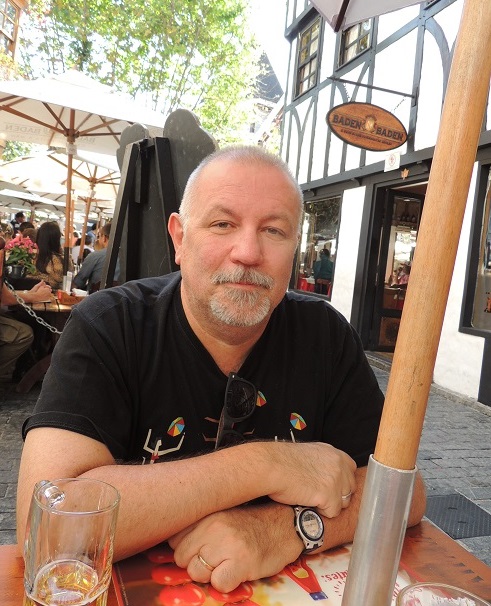
Professor Grandini receiving the title of “Fellow, Biomaterials Science and Engineering”.

José Arana Varela: Note of Condolences.

It is with deep regret that SBPMat announces the passing of Prof. José Arana Varela of the Chemistry Institute of Unesp, Araraquara, on 05/17/2016. Professor Varela was one of the founders of SBPMat, and its president from 2010 to 2011.

SBPMat sympathizes with the family of Professor Varela, in a sad day when Brazilian science loses one its exponents.