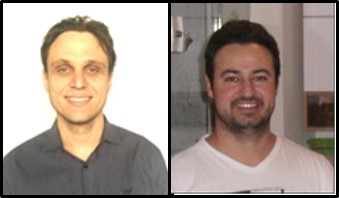
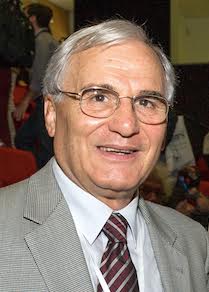
Highlighted scientist: interview with Fernando Galembeck, who will deliver the memorial lecture at the XVII B-MRS Meeting (updated reprint of the interview of May 2015).

Fernando Galembeck
Fernando Galembeck

Fernando Galembeck’s interest in research began in adolescence, when he realized the economic value of scientific knowledge while working in his father’s company in the pharmaceutical segment. Today, at age 75, Fernando Galembeck can look back at his own scientific trajectory and tell many stories about the generation and application of knowledge.

A founding member of B-MRS, Galembeck was chosen this year to deliver the Memorial Lecture “Joaquim da Costa Ribeiro” – a distinction awarded annually by B-MRS to the trajectory of a distinguished researcher in the Materials area. The honor is also a tribute to Joaquim da Costa Ribeiro, pioneer of experimental research in Materials in Brazil. The lecture, titled “Materials for a better future,” will take place at the opening of the XVII B-MRS Meeting on September 16 of this year, and will address issues such as needs, shortages and promises in the Materials area.

Galembeck graduated in Chemistry in 1964 from the University of São Paulo (USP). After getting his degree, he remained at USP working as an instructor (1965-1980) while doing his Ph.D. in Chemistry (1965-1970), in which he developed research on dissociation of a metal-metal bond. After his Ph.D., he completed post-doctoral internships in the United States, at the universities of Colorado, in the city of Denver (1972-1973) and California, in the city of Davis (1974), working in the field of Physical-Chemistry of biological systems. In 1976, back at USP, he had the opportunity to create a laboratory of colloids and surfaces at the Institute of Chemistry, in an agreement that involved the Institute, Unilever, the Brazilian Academy of Sciences and the Royal Society. From that moment on, Galembeck became more and more involved with the development of new materials, especially polymeric materials, and their manufacturing processes.

In 1980, he joined the State University of Campinas (Unicamp), after which he became a full professor in 1988, where he remained until his retirement in 2011. Since then, he has been a contributing professor at the institution. At Unicamp, he held management positions, notably vice-rector of the university, as well as director of the Institute of Chemistry and coordinator of its post-graduate program. In July 2011, he took over the newly created Brazilian National Nanotechnology Laboratory (LNNano), at the National Center for Energy and Materials Research (CNPEM), remaining in this post until 2015.

Throughout his career, he has held direction or coordination positions at the Brazilian Academy of Sciences (ABC), the Ministry of Science, Technology and Innovation (MCT), the National Council for Scientific and Technological Development (CNPq), Sao Paulo Research Foundation (FAPESP), Brazilian Chemical Society, (SBQ), Brazilian Society for the Advancement of Science (SBPC) and the Brazilian Society of Microscopy and Microanalysis (SBMM), among other entities.

Prof. Galembeck is the author of roughly 279 scientific papers published in peer-reviewed journals, with over 3,700 citations, 35 patents and more than 20 books and book chapters. He has supervised nearly 80 master’s and doctoral degrees.

Fernando Galembeck received numerous awards and distinctions, among them the Anísio Teixeira Award, from CAPES, in 2011; the Telesio-Galilei Gold Metal 2011, from the Telesio-Galilei Academy of Science (TGAS), the Almirante Álvaro Alberto Award for Science and Technology 2006, from CNPq and the Conrado Wessel Foundation; the José Pelúcio Ferreira Trophy, from Finep, in 2006; the Grand Cross of the National Order of Scientific Merit, in 2000, and the National Commendation of Scientific Merit, in 1995, both from the Presidency of the Republic of Brazil. He also received a series of acknowledgments from companies and associations, such as CPFL, Petrobrás, Union Carbide do Brasil, the Brazilian Association of Paint Manufacturers, the Brazilian Chemical Industry Association, the Union of Chemical Industry for Industrial Purposes of the State of Rio de Janeiro, Brazilian Polymer Association, Brazilian Chemical Society (which created the Fernando Galembeck Technological Innovation Award), the Union of Engineers in the State of São Paulo and the Electrostatic Society of America.

This scientist has been a fellow of TWAS (The World Academy of Sciences) since 2010 and from the Royal Society of Chemistry since 2014.

In this interview, you will be able to know a little more about this Brazilian researcher and his work.

SBPMat Newsletter: – Tell us what led you to become a scientist and work on issues in the field of Materials.

Fernando Galembeck: – My interest in research work started during my adolescence, when I comprehended the importance of new knowledge, of discovery. I found this when I was working, after school, at my father’s pharmaceutical laboratory, as I could see how the newest, latest products, were important. I also saw how costly it was, for the lab, to depend on imported raw materials, which were not produced in Brazil, and that in the country there was no competence to manufacture them.  Then I realized the value of new knowledge, as well as the importance and the economic and strategic significance of such breakthroughs.

This feeling was increased when I took my major in Chemistry. I enrolled into the Chemistry course because one of my school teachers had suggested that I should seek a career related to research. He must have seen some inclination, some tendency of mine. So I attended the Chemistry course provided by the Philosophy School, in an environment where the research activity was very vivid. Because of that, I decided to conduct my Doctoral studies at USP. At that time, there were no regular graduate studies in Brazil yet. The advisor with whom I defended my dissertation, Professor Pawel Krumholz, was a great researcher, who also had built a very important career working on a company. He was the industrial director of Orquima, a major company by that time. That boosted my interest in research.

I worked with Chemistry for some years and my interest in materials came from a curious occurring. I was almost graduating, in my last vacations during the undergraduate studies.  I was at an apartment, resting after lunch. I remember looking at the walls of this apartment and noticing that, with all I had learned in the Chemistry course, I did not have much to say about the things I could see: the paint, the coverings etc. That was Chemistry, but also Materials, and there was not much interest in Materials in the Chemistry course. Actually, Materials became very important in Chemistry mainly because of plastic and rubber, which, at the time, did not have the importance they have today. I’m talking about 1964, when petrochemicals were practically non-existent, in Brazil.

Well, then I started to work with Physical Chemistry, to later work a little in a field that is more oriented to Biochemistry, that is Biological Physical Chemistry and, in 1976, I received a task from the USP Department, which was to build a colloids and surfaces laboratory.  One of our first projects was to modify plastic surfaces, in that case, Teflon. Then I realized that a major part of the colloids and surfaces Chemistry existed due to Materials, because the subject lends itself to create and develop new materials. From that moment on, I was getting increasingly involved with Materials, mainly polymers, a little less with ceramics, and even less with metals.

SBPMat Newsletter: – What are, in your own opinion, your main contributions to the field of Materials? Consider, in your answer, all aspects of your professional activity, including cases of knowledge transfer to the industry.

Fernando Galembeck: – I will tell the story in order, more or less. I think that the first important result in the field of Materials was exactly a technique intended to modify the surface of Teflon, that material in which it is very difficult to stick something. There is even that expression, “Teflon politicians”, the ones for which does not matter what you throw at them, they do not stick to anything. But, in certain situations, we want the Teflon to have adhesion. So, by a somewhat complicated path, I managed to see that I already knew how to modify Teflon, but I had never realized that is was important. I knew the phenomenon; I had observed it during my PhD defense. I knew that there was a change happening in Teflon. But it was during a visit to a Unilever laboratory in 1976, when I was talking to a researcher, that I saw that there were people striving to modify the surface of Teflon and achieve adhesion. Then, bringing the problem and the solution together, as soon as I returned to Brazil, I tried to see if I what I had previously observed was really useful, and it worked. That led to the first paper I wrote by myself and my first patent application, at a time when almost nobody talked about patents in Brazil, especially in the university environment. I was very enthusiastic about this: I was approached by companies that were interested in applying what I had done; one the modification in Teflon itself, the other in a different polymer. So I felt great, because I had made a discovery, I had a patent, and there were companies which, at least, would like to know what it was to see if there was a way to use it. One more thing:  soon after the paper I wrote was published, I was invited to attend a conference in the United States, which addressed exactly the issue of modifying surfaces. Polymers, plastic and rubber surfaces, a subject with which I was involved for pretty much the rest of my life, up until now.

I will mention a second fact that did not have the same effects, so far.  I discovered a method that enables the characterization and separation of very small particles. That was a very interesting paper. It was released, also produced a patent, but had no practical consequences. Recently, there have been some issues related to nanoparticles, which is a very important subject in Materials now, offering a chance to apply what I did over 30 years ago. The name of the technique is osmosedimentation.

Next there was some work that I did by collaborating in projects with Pirelli Cabos. With all this story of surfaces and polymers, I think I had become more or less known and was approached by Pirelli, which contracted me as a consultant and commissioned projects I had at Unicamp. An outcome of these projects, that I think is the most important, was the development of an insulator for very high voltages. This work was not only mine, but rather of a very large team, in which I took part. There were several people from Pirelli, and several from Unicamp. The result of this project was that the Brazilian Pirelli managed to be hired to provide high voltage cables for the Eurotunnel, back in the ‘80s. I think this was a very important case, as it led to a product and brought substantial economic results. I would like to stress that this was done in Brazil, by a Brazilian team. They were not a Brazilian company, but the team was based here.

Then I worked on several studies with nanoparticles, at a time when we did not even call them nanoparticles; we called them fine particles or simply small colloidal particles. The first work I published on nanoparticles was in 1978. There were other things I did next, which ultimately turned into a work on aluminum phosphate, which gave rise to several theses carried out in the laboratory and publications, and was also licensed by a company of the Bunge group, which basically exploits phosphates. The subject started in my laboratory, stayed in the laboratory for several years, then a company from the Bunge group here in Brazil became interested, started to participate, we collaborated. This became a rather large development project. Bunge later found the project unfeasible in Brazil and today it is the United States. I think it’s a pity that it is there, but there were other issues involved, including disagreements with Unicamp, which owns the patents. Recently, the company of the group that worked with these phosphates was Amorphic Solutions, which offered the product on the Internet, for various applications. From what I understand, they are currently emphasizing its use as an anticorrosive material for steel protection. I have recent information that Bunge has negotiated the rights to these products with a large chemical company, but I do not know the details.

About the same time, in another project on nanoparticles, clay/natural rubber nanocomposites were developed. This was licensed by a Brazilian company called Orbys, which released a product called Imbrik, that showed to be good for rubber rolls for paper manufacturing.

Another case with a product. I had done a project with Oxiteno, which manufactures raw materials for latex, the surfactants. They wanted to get an ideia of how much you can change the latex changing the surfactant. I conducted a project with them that I consider one of the most interesting among those in which I have been involved. In the end, we realized that, by changing the surfactant a bit, we changed the latex a lot. These are used in paints, adhesives, resins. So we realized we had a great versatility. This work was published and promoted. It did not result in a patent because it was a comprehension project. So, another company, Indústrias Químicas Taubaté (IQT) approached me to produce cationic latex, but using a new path. Cationic latex in general is made of quaternary ammonium salts, which have some environmental restrictions. The company wanted an alternative that did not have those restrictions. By the end of the project, we produced cationic latex without environmental restrictions, and the IQT put the product on the market.

My participation in a Navy project of developing carbon fibers was a great challenge that gave me big satisfaction. My group participated by synthesizing copolymers of acrylonitrile, up to the scale of ten liters. The results were transferred to a company that produced pilot scale production at the old Rhodia-Ster and Radicci plant in São José dos Campos. The selected copolymer was spun and then pyrolyzed, at the Technological Center of Marinha, in São Paulo. It resulted in a high performance carbon fiber, which was used in the manufacture of a centrifuge, used in Aramar. The challenge was to find the copolymer that showed good performance in the later stages of fiber production, which was achieved.

There was another case that was also very interesting, even though it was canceled. Here in Brazil, there was a large manufacturer of polyethylene terephthalate, PET, which is used for many things, including bottles. They knew about the work I had done with nanocomposites, the one with Orbys I mentioned before, so they approached me wanting to produce PET nanocomposites. We had to find out how to escape from what was already patented abroad and discovered a whole new path. The company was called Rhodia-Ster, and today it is part of another Italian company, called Mossi e Ghisolfi. The company was enthusiastic and ended up patenting it in Brazil, and then later abroad. At a certain point, they decided that they would conduct the work internally, and so they did for some years. One day, my contact within the company called me to tell this: “look, we were working with two technologies; the one held by Unicamp and another one, in another country. Both are working, but the company has reached a point where it has chosen to complete the development of only one”.  When coming to the final stage in developing materials, the projects costs are too high. One have to use large amounts of materials, run many tests with customers. So, the company decided to take one project further, and, unfortunately, it was not the one in which I had worked. At the end, it was a little frustrating, but I think that it was interesting, because, during this whole time, the company invested a lot in the path we had started here. Not only that, each project brings resources for the laboratory, jobs at the university and the company etc. So, these projects result in many benefits, even when they are not concluded.

Now, fast forwarding, I will arrive at a more recent result of my work at CNPEM, where I was until 2015. A goal of CNPEM is the use of renewable source materials to make advanced materials. It has a whole philosophy behind it, related to the depletion of natural resources, to sustainability… The goal was to do new things with materials derived from biomass, and the main interest is in cellulose. It is the most abundant polymer in the world, but it is a very difficult polymer to work with. You cannot process pulp as you process polyethylene, for example. One of the goals is to plasticize cellulose; that is, to work the cellulose as closely as possible to the one we use to work with synthetic polymers. An initial result within this idea was the creation of cellulose adhesives in which the only polymer is cellulose itself. Then, by then no longer at CNPEM, we obtained graphite exfoliation, which generated a family of paints, pastes and conductive adhesives, which are the object of a PIPE project recently approved by Fapesp.

This is the latest case. In the middle of the way, many other projects were conducted with companies, for issues of their interest. Coating something, gluing another, modifying a polymer to achieve a certain result. But these were answers to demands from companies, instead of researches started at the laboratory.

SBPMat Newsletter: – Leave a message for our readers who are starting their careers as scientists.

Fernando Galembeck: – First of all, in any chosen career, there must be a dose of passion. It does not matter if you are going to work in the Stock Market, Healthcare or whatever you may do; above all, your taste must decide. If a person chooses a career because it will give them money or status… I think it is a bad choice. If you do things with pleasure, with interest, the money, prestige and status will come from other paths. The goal is to do what makes you happy, what makes you feel good when you do it, what makes you feel accomplished. It is true not only for the scientific career, but also to any other career. In science, it is crucial.

Another point is that you must be prepared to work hard. There is no easy way. I know some young people who are constantly seeking the great idea that will bring them success with relatively little work. Well, I’d better not count on it. It may even happen, but waiting for it is almost the same as wait to win the Lottery and get rich.

I’m over 75, therefore I have met many people and seen many things happen. Something that strikes me is how young people who seemed very promising end up not working very well.  Frankly, I think it is bad for youngsters to achieve success too early, because I have the impression they get used to this idea that things will always work out fine. And the problem is that there isn’t anything, anyone, any company that will always work. There will always be the moment of failure, the moment of frustration. If the person is prepared for that, when the times come, he or she will overcome it, while others are crushed – they cannot move one. That is why we must be careful not to be deceived by our success and think that, because it worked once, it will always work. You must be prepared to fight.

When I was in college, thinking about doing research seemed a very strange thing to do, crazy talk. People did not know very well what it was, or why would someone choose to do it. Some people said that research was something like priesthood. I have always worked with research, associated with teaching, consulting and, without having ever sought to become rich, I managed to have an economic status that I deem very comfortable. But I insist, my goal was to enable the development, to produce material, not the money I would receive. Money came, as it does. So, I suggest you to focus on your work, on the results and the contribution that said work may give to other people, to the environment, to the community, to the country, to knowledge. The rest comes as a bonus.

In short, my message is: work seriously, earnestly and passionately.

Finally, I would like to point out that I think the research work, the development work, really helps you to grow as a person. It will depart you from ideas that are not very fruitful and guide you towards attitudes that are really important and helpful. A student asked Galileo once: “Master, what is the method?”, and Galileo’s answer was: “The method is the doubt”. I think it is very important in the research activity, which, for Materials in particular, is especially interesting because the final product is something you can hold in your hands. In the research activity you have to always wonder, “I’m thinking like this, but is this right?”, or “This guy wrote this, but what are his bases to write it?”. This attitude is very different from the dogmatic one, which is common in the realms of politics and religion, and very different from the attitude of someone who has to deceive, as the lawyer who works for a corrupt or drug dealer. The researchers have to commit themselves to the truth. Of course there are also people who call themselves researchers and spread disinformation.  Some years ago, people were talking about something called “Bush science”, an expression referring to President Bush. This Bush science was the arguments fabricated by people who gained money as scientists, but who produced arguments to sustain Bush’s policies. In other words, the problem exists in science as well, but then we get back to what I said earlier. You cannot become a scientist because of money, or to achieve prestige, or to be invited to have dinner with the president; you must enter this field because of your interest in the subject itself.


Brief interviews with scientists: Christian Polak (Vacuumschmelze GmbH & Co. KG, Germany).

Christian Polak
Christian Polak

Christian Polak first interacted with Vacuumschmelze GmbH & Co when his PhD thesis on amorphous materials, defended in the Technical University of Vienna (TU Wien), aroused the company´s interest. In 1993, he began working in the research and development area of the company, where he remains.

Vacuumschmelze started its activities about 100 years ago with the development of the first vacuum melting furnace (as suggested by its name in German) in the city of Hanau (Germany). Today, the company is a manufacturer of advanced magnetic materials and related products with more than 4,000 employees located in dozens of countries. These materials are present in the daily lives of millions of people, being part of cars, airplanes, elevators, solar and wind energy systems, transformers and more.

Rapid solidification technology.

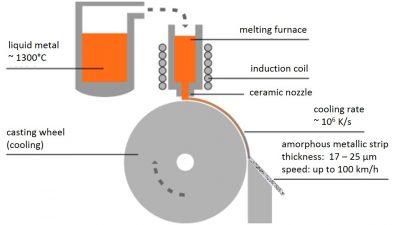
Currently, Dr Christian Polak heads the company’s Department for Rapid Solidification Technology. This process makes it possible to produce micrometric thick metal strips with superior magnetic properties by processing molten metal in only one step. Further processes can transform these amorphous materials into nanocrystalline alloys, whose grains are nanometric.

At the XVII B-MRS Meeting, Dr Polak will offer a plenary lecture on nanocrystalline magnetic materials and their applications, especially in the segment of miniaturized electronic devices.

See some information that Dr Polak provided related to the subject of his plenary lecture.

Nanocrystalline Magnetic Materials.

More than twenty years ago, Yoshizawa, Oguma and Yamauchi introduced a new class of iron-based alloys exhibiting superior soft magnetic behavior. The properties were a unique combination of the low losses, high permeability and near zero magnetostriction achieved by permalloys and Co-based amorphous alloys, but with a saturation magnetization up to 1.2 Tesla – much higher than either of these materials can conventionally offer. The particular about the new material is its ultrafine microstructure of b.c.c. Fe–Si with grain sizes of 10–15 nm from which their soft properties lastly derive. Based on this, this new class of alloys was named “nanocrystalline”. The material id compounded by crystallization of an amorphous Fe–Si–B alloy with small additions of Cu and Nb. This composition is the key for an ultrafine grain structure and the associated soft magnetic properties.

Nanocrystalline structure of VITROPERM material.

It is well known that the microstructure, noticeably the grain size, essentially determines the hysteresis loop of a ferromagnetic material. Nevertheless, we had to build up a deeper understanding of the coercivity (Hc) in the whole range of structural correlation lengths starting from atomic distances in amorphous alloys over grain sizes (D) in the nanometer regime up to macroscopic grain sizes. The 1/D-dependence of coercivity for large grain sizes reflects the conventional rule that good soft magnetic properties require very large grains (D>100μm). Thus, the reduction of particle size to the regime of the domain wall width increases the coercivity Hc. On the other hand lowest coercivities are again found for smallest structural correlation lengths like in amorphous alloys and in nanocrystalline alloys for grain sizes D<20nm. The new nanocrystalline material fills in the gap between amorphous metals and conventional poly-crystalline alloys. The combination of small grain size and soft magnetic properties is surprising and fascinating from the classical point of view in magnetic engineering.

Role of Nanocrystalline Soft Magnetic Materials in electronic devices and other applications.

The strip shaped soft magnetic amorphous and nanocrystalline material is used to produce so-called tape wound cores (=magnetic cores). Adding copper windings lead to well-known inductive components for electronic industry.

VACCUMSCHMELZE is the market and technology leader in many applications with years of experience in the international market. The company’s expertise covers the entire development process from knowledge of the characteristics of the alloy to fabrication technology and low cost manufacturing sites.

VAC produces inductive components based on nanocrystalline material for the installation, the automotive and the industrial market.

Examples for the installation market: Total current converters for earth fault current protection switches and current converters for electronic energy meters.

Examples for the automotive market: Chokes and transformers for the power management, flexible antennas for Keyless-Entry-Systems, for hybrid and electric vehicles: Recuperation-Systems, Start-Stop-Systems and DC/DC converters.

Examples for the industrial market: Chokes, transformers and power sensors for power supplies and rectifiers. Common mode chokes and nanocrystalline cores pave the way for compact innovative filter designs with highest efficiency for superior electrical motor drives according to newest international regulations. Gate drive transformers provide highest safety, excellent reliability and long lifetime for specialty (high voltage) applications combining efficiently energy- and signal- transmission in one component resulting in lower total costs. Current sensors offer maximum accuracy.

Newer Developments: High Frequency Applications (size reduction).

Tape wound cores: a nanocrystalline material application.

Vacuumschmelze is traditionally a supplier for inductive components. Conventional inductive components, like magnetic cores, inductive components, chokes and transformers, as well as flexible antennas are big and placed on top of PCB’s. All these established products are generally used in the lower frequency range, e.g. at 50Hz or up to some kHz.

Responding to future challenges for electronic circuits we have been faced with new requirements – especially there was a trend to use higher frequencies and consequently the trend for miniaturisation. This enables the use of embedded components where caps, semiconductors, resistors and inductances find a place inside of the PCB, respectively on one layer of a multilayer PCB.

To do first steps in this direction we take part in a joint research project called VISA, which was founded by the German Federal Ministry of Education and Research. Where we had to improve our amorphous or nanocrystalline soft magnetic materials in order to make them ready for high frequencies and embedding. Such inductive components should be flat, the maximum height should not exceed 1mm, the iron losses should be as low as possible and a high quality factor at switching frequency up to the MHz range was requested. For application, we were focused to DC/DC converters for the small power range. In addition, we expected applications for cores, planar inductors, shielding materials and sensors for automotive industry e.g. e-drive systems, for power LED technology or photovoltaic chargers or for shielding applications, like wireless charging systems.

Newer Developments: High Saturation Materials (size reduction).

Nanocrystalline Fe-Cu-Nb-Si-B alloys are well known to exhibit excellent soft magnetic properties (low coercivity flield Hand high permeability µ) combined with low magnetostriction (ls) and high saturation polarization around Js ~ 1.2T. They are meanwhile widely used in magnetic applications.

Since their discovery, a major driving force for further alloy development has been to increase the saturation polarization in order to receive a higher effective flux change after reversing the magnetic excitation. Thus, a higher inductance level could be achieved at simultaneously smaller volume. The most recent development are Fe-Si-B-P-Cu alloys which are reported to show high saturation polarization around J~ 1.8 T as well as reasonably low coercivity (Hc<10 A m).

One problem associated with these new alloys is that they are located near the glass-forming boundary, leading to serious production issues. Newer compositions investigated in the last years have been recently shown to exhibit sufficient glass forming ability for large-scale production. However, the saturation magnetostriction of nanocrystalline Fe-Si-B-P-Cu alloys is still relatively high (ls≈14 ppm). Low magnetostriction, however, is important for good soft magnetic properties and stress insensitivity of the hysteresis loop. The objective of current development is to investigate application capability of such alloy systems and to provide the so far missing behavior of magnetic properties, particularly in the nanocrystalline state.

Brief interviews with scientists: Pietro Matricardi (Sapienza University of Rome, Italy).

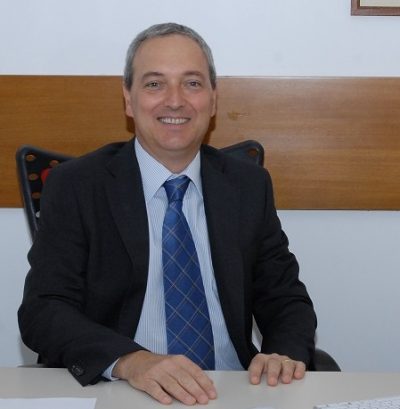
Pietro Matricardi
Pietro Matricardi

In his laboratory at the Sapienza University of Rome (Italy), Professor Pietro Matricardi and his group develop new materials based on polysaccharides.

These natural polymers that belong to the carbohydrate family, are long chains of simple sugars, the monosaccharides, and are abundantly present in plants and animals. With them, Professor Matricardi elaborates several types of hydrogels (gels with high water content) that can be introduced into the human body without affecting its normal functions. Among the main applications of these materials are drug delivery systems, in which a particular drug is stored in the hydrogel and released in a controlled manner within the patient’s body.

At the XVII B-MRS Meeting, Professor Matricardi will deliver a plenary lecture about this diversity of polysaccharides hydrogels, their preparation and their pharmaceutical applications.

A graduate of the Sapienza University of Rome, where he obtained his MSc (1989) and PhD (1993), Pietro Matricardi returned to his alma mater in 2004, as Assistant Professor at the Department of Drug Chemistry and Technologies, after some professional experience in companies, including in the pharmaceutical segment. At present he is Associate Professor at Sapienza.

Matricardi is the author of more than 80 articles in peer-reviewed international journals, editor of a book on polysaccharide hydrogels and author of some book chapters. His scientific production counts more than 2,700 citations. He is also president of the Italian chapter of the Controlled Release Society.

See our mini-interview with this Italian scientist.

B-MRS Newsletter: – We would like to know a little more about polysaccharide hydrogel drug delivery systems. What are the characteristics of these drug carriers? Which are the advantages of them over other systems made with other materials? What kind of control do the polysaccharide hydrogels make possible on the release of the drug? Please comment very briefly on these topics.

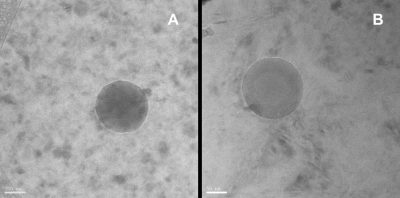
Cryo-TEM images of a nanohydrogel. Taken from: European Journal of Pharmaceutics and Biopharmaceutics. (2018) 127, 244-249. DOI: 10.1016/j.ejpb.2018.02.015

Pietro Matricardi: – The main features of polysaccharide hydrogels are their general biocompatibility, due to the natural origin of the polymer matrices, and their high water content. The mechanical properties stemming from the combination of the polymer architecture and the water environment, lead to matrices that are highly tolerated by the human body. Moreover, the wide range of polymers available and the great number of tunable parameters to adjust the properties of the matrices, is another very important aspect in tailoring the hydrogels functions. Finally, embedding drugs within these hydrogels leads to drug delivery systems that can be exploited in many pharmaceutical and biomedical applications, already present on the market from a long time, ranging from topical to the internal ones. Just to mention, from hydrogels for wound healing or dermatitis treatment or hyaluronic acid for joints visco-supplementation, aesthetic surgery or tissue regeneration. More recently, polysaccharide nanohydrogels, i.e. hydrogels in the nanoscale, are gaining a great attention for their properties as “intelligent carrier” and some products are almost ready for the market; but these drug delivery systems are just at the beginning of their life.

B-MRS Newsletter: – We want to know more about your work. Please choose two articles / patents / products of your own (your favorites) and describe them briefly.

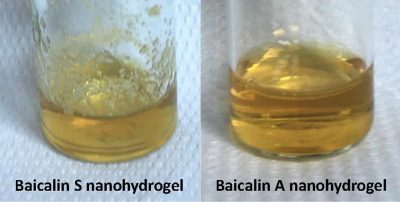
Macroscopic appearance of baicalin sonicated (S) and autoclaved (A) nanohydrogels. European Journal of Pharmaceutics and Biopharmaceutics. (2018) 127, 244-249. DOI: 10.1016/j.ejpb.2018.02.015
Macroscopic appearance of baicalin sonicated (S) and autoclaved (A) nanohydrogels. Taken from: European Journal of Pharmaceutics and Biopharmaceutics. (2018) 127, 244-249. DOI: 10.1016/j.ejpb.2018.02.015

Pietro Matricardi: – Our group focused the research on polysaccharide nanohydrogels since few years. One of the main result is condensed in two patents in which we describe how it is possible to obtain polysaccharide nanohydrogels, ready for a pharmaceutical formulation, by using a standard autoclaving cycle. In such a way, starting from the drug and the polymer both suspended in water, it is possible to obtain, in one shot, sterile nanohydrogels with the drug embedded inside.

  • WO2014199318 (A2) ― 2014-12-18 MC De Rugeriis, E. Montanari, C. Di Meo, P. Matricardi – METHOD FOR PREPARING NANOHYDROGELS.
  • WO2014199319 (A2) 2014-12-18 G. D’Arrigo, C. Cencetti, C. Di Meo, P. Matricardi – METHOD FOR THE TREATMENT OF NANOHYDROGELS.

Another important work was developed in collaboration with Prof. Torchlin of the Northeastern University, Boston, MA, USA. In that work we explored the possibility to use the nanohydrogels for a dual drug delivery. Specifically, we embedded an anticancer drug (paclitaxel) in a gellan-anti-inflammatory (prednisolone) nanohydrogels, obtaining a synergistic effect of the two drugs in killing cancer cells. This work received the “Best paper award in EJPB 2014”.

  • Giorgia D’Arrigo, Gemma Navarro, Chiara Di Meo, Pietro Matricardi, Vladimir Torchilin. “Gellan gum nanohydrogel containing anti-inflammatory and anti-cancer drugs: a multi-drug delivery system for a combination therapy in cancer treatment”. European Journal of Pharmaceutics and Biopharmaceutics, (2014) 87 (1) 208-216. Doi: 0.1016/j.ejpb.2013.11.001.

Scientific director of B-MRS is the new associate editor of ACS Applied Nano Materials.

Prof. Mônica Cotta.
Prof. Mônica Cotta.

Professor Mônica Alonso Cotta (Gleb Wataghin Institute of Physics, UNICAMP) has undertaken the position of associate editor of ACS Applied Nano Materials, a scientific journal of the American Chemical Society publishing house (ACS Publications), which was launched in early 2018. The journal is interdisciplinary and covers topics related to nanomaterial applications.

Professor Cotta, who holds her second term as scientific director of B-MRS and was chair of the XV B-MRS Meeting, joined in July of this year the team of associate editors of the journal, formed by four other scientists from the United States, South Korea, China and Singapore.

Aerospace Materials and Manufacturing for the Next Century (new activity in the XVII B-MRS Meeting).

Dear SBPMatians,

A new exciting activity will be held in this conference edition:

The “Aerospace Materials and Manufacturing for the Next Century” challenge.

The challenge is open to all participants registered as student, but attention: Only fifty students will be accepted for participation, and students interested must physically register for a lottery at the Boeing Booth prior to 17:00 on Monday (17/09). Students selected for participation will receive a notification email by 19:00 on Monday (17/09).

The challenge will begin at Tuesday (18/09) at 12:20pm, during a mandatory one and a half hour session from 12:20 – 13:50. All participants must be present. At that time, the Technical Challenge(s) will be revealed.

Teams will then have 24 hours to address technical challenges, and provide creative solutions.

On Wednesday, (19/09), at 12:00pm, the Challenge will close, and teams will divulge creative solutions.

Lunchboxes will be distributed to participants on both days.

Winning team(s) will be announced during the closing ceremony (Sept. 20).

PREPARE TO TAKE PART OF THE AEROSPACE MATERIALS AND MANUFACTURING FOR THE NEXT CENTURY CHALLENGE!! See you at the Boeing Booth for Registration, prior to Monday (17/09) at 17:00.

One assistant professor permanent position in the field of materials at the nanoscale.

Edital IF-13/2018 – (English Version)

The Institute of Physics, University of São Paulo, Brazil, invites highly-motivated candidates to apply for one assistant permanent position in the field of Materials at the Nanoscale.

For more details, including instructions regarding the application procedure, please contact Antonio Domingues dos Santos at adsantos@if.usp.br. The application deadline is September 12, 2018.

Application process

Applicants with a strong research record in Materials at the Nanoscale are encouraged to begin the application process early, by following the two-step process outlined below.

1) The first step in the application process is obtaining a certification of your Ph.D. from USP

2) The second step is the submission of your full application, with a CV and statement of research interests.

Step 1 (only needed for those with a Ph.D. diplomma obtained outside of Brazil)

E-mail the following documents to the address: cpgusp@if.usp.br, with copy to adsantos@if.usp.br, with the subject line: Pedido de equivalencia,

Ref. Concurso Materiais em Escala Nanometrica

Required documents:

(a) the filled, dated and signed form which can be found on this link.

(b) a scanned copy (PDF) of your passport or ID document

(c) a copy (PDF) of your Ph.D. thesis

(d) a copy (PDF) of your Ph.D. diploma

(e) a copy (PDF) of your graduate transcript*

[* If your Ph.D. institution does not require graduate courses, please attach a letter stating that.]

Step 2

After Step 1 has been completed, and you have received the certification by USP (or, alternatively, if you already have a diploma valid in Brazil), submit your full application by early August to the e-mail: adsantos@if.usp.br, with the subject line: INSCRICAO PARA CONCURSO DE MATERIAIS EM ESCALA NANOMETRICA.

[Se você for brasileiro(a), essa fase deve ser feita diretamente pelo site oficial dos concursos da USP.]

Required documents (all in PDF format):

(a) the Ph.D. certification (see Step 1 above)

(b) a research proposal or statement of research interests

(c) a document entitled Memorial, with a narrative about of your reasearch experience from graduate school on and a description of your research interests, followed by your CV (it must contain a complete list of your publications with appropriate referencing)

(d) this filled form.

[Letters of recommendation are not required at this point, but if you wish, you may send them to your local contact or to adsantos@if.usp.br (Head of DFMT).]

The two-stage examination will consist of the following exams:

1st stage (eliminative):

a written exam on one of the topics described in this link – weight 3.

2nd stage:

  1. i) Analysis and Public examination of the Curriculum Vitae (Memorial) – weight 4.
  2. ii) Teaching exam (public lecture on one of the topics described inthis link– weight 3.

Further information and relevant rules for the examination are available at this link.

If you have any question, please feel free to contact the Head of DFMT, Antonio Domingues dos Santos (adsantos@if.usp.br).

B-MRS Newsletter. Year 5, issue 7.


logo header 400

Newsletter of the
Brazilian Materials
Research Society

Year 5, issue 7. August 7, 2018.
Featured Paper

A scientific team at UNESP developed a clay-hydrogel nanocomposite with controlled drug release properties. In this new material, clay lamellae form a physical barrier that determines a controllable rate for the release of the anti-inflammatory sodium diclofenac. The work was reported in the scientific journal ACS Applied Materials & Interfaces. Know more.

imagem hidrogel

From idea to innovation

In the second part of the article on the history of fiber optics, we show the work done in some laboratories of developed countries in the 1960s and 1970s. The report includes the studies by Charles Kao (Nobel Prize in Physics 2009) that showed the way for fiber optics to be a major player in telecommunications, and the work of the three Corning researchers who developed the first low attenuation optical fiber. Know more.

fibra optica 2

B-MRS News

The Annals of the Brazilian Academy of Sciences (AABC) in partnership with the Brazilian Materials Research Society (B-MRS) will launch the special volume “Materials Sciences for a Better Future”. Know more.

aabc-sbpmat

XVII B-MRS Meeting
(Natal, Brazil, September 16 – 20, 2018)

logo-natal_560px

Join us, by the beach, and be part of this great gathering, where science and technology will meet nature to form the ideal learning and exchanging experience!

Registration. Early fee registration was extended until August 10! Know more.

Program. The program is online. See date and time of all oral, poster and invited presentations of every simposium. Here.

Poster printing service. You can e-mail the file and, during the event, take the printed poster at the convention center. Know more.

Tutorial. Those enrolled in the event can participate in the tutorial on scientific writing and editorial process at no additional cost. Free registration in the meeting’s general registration form. Know more.

Conference party. The party will be held on the night of September 19, at the Imirá Plaza Hotel & Convention, and will be sponsored by ACS Publications scientific journals. Know more.

Lodging, transfer and tours. See options of the event’s official tourist agency, Harabello, here.

Plenary lectures. Find out who are the 8 internationally renowned scientists who will deliver the plenary sessions and which are the themes of the lectures, here.

Memorial lecture. The Memorial Lecture “Joaquim da Costa Ribeiro” will be delivered at the opening session by Professor Fernando Galembeck.

Exhibitors and sponsors. 20 companies have already reserved their places in the exhibition and 18 other entities take part in the event throught other kinds of publicity and support.

Organizers. The meeting chair is Professor Antonio E. Martinelli (Brazilian Federal University of Rio Grande do Norte, UFRN). Meet the organization committee.

Venue. The event will be held in the convention center of Hotel Praiamar, located a few meters from the famous beach of Ponta Negra. Know more.

City. A well-known destination for international tourists, Natal also offers a pleasant environment to discuss, interact and learn. Its nice weather (dry with an average temperature of around 25 °C in September), the welcoming people and very refined seafood and local gastronomy create an atmosphere of well-being that goes beyond the natural beauty of the city’s coastline. Watch this short video about Natal.

natal_careca

Reading tips

  • Scientists develop new matrix of collagen and silk for artificial skin growth (Biomaterials). Know more.

  • Biogenic materials: Using genetically modified bacteria coated with nanoparticles, scientists create photovoltaic cells that work even with low light (Small). Know more.
  • Using a natural compound-based gel, scientists create a method to crystallize active drug substances and thus improve medication performance. The material is also promising as a drug delivery system (Small). Know more.

Events

  • International Conference on Electronic Materials 2018 (IUMRS-ICEM). Daejeon (South Korea). August 19 – 24, 2018. Site.
  • Symposium “Nano-engineered coatings, surfaces and interfaces” no “XXVII International Materials Research Congress”. Cancun (Mexico). August 19 – 24, 2018. Site.

  • 8th International Conference on Optical, Optoelectronic and Photonic Materials and Applications (ICOOPMA2018). Maresias, SP (Brazil). August 26 – 31, 2018. Site.

  • 16th International Conference on Molecule-based Magnets (ICMM2018). Rio de Janeiro, RJ (Brazil). September 1 – 5, 2018. Site.

  • XVII Encontro da SBPMat/ B-MRS Meeting. Natal, RN (Brazil). September 16 – 20, 2018. Site.

  • XXXIX Congresso Brasileiro de Aplicações de Vácuo na Indústria e na Ciência (CBrAVIC). Joinville, SC (Brazil). October 8 a-11, 2018. Site.

  • 6ª Edição do Workshop de Pesquisa e Tecnologia em Ciência dos Materiais. Sorocaba, SP (Brazil). October 15 – 17, 2018. Site.

  • São Paulo School of Advanced Science on Colloids (SPSAS Colloids). Campinas, SP (Brazil). October 28 – November 7, 2018. Site.

  • XIII Simpósio de Lasers e Suas Aplicações (XIII SLSA). Recife, PE (Brazil). October 30 -November 2, 2018. Site.

  • International Conference of Young Researchers on Advanced Materials (ICYRAM 2018). Adelaide (Australia). November 4 – 8, 2018. Site.

  • 6th Meeting on Self Assembly Structures In Solution and at Interfaces. São Pedro, SP (Brazil). November 7 – 9, 2018. Site.

  • 3rd International Brazilian Conference on Tribology (TriboBR 2018). Florianópolis, SC (Brazil). December 3 – 5, 2018. Site.

  • II Simpósio Nacional de Nanobiotecnologia (IISNNB). São Bernardo do Campo, SP (Brazil). December 6 – 7, 2018. Site.

Follow us on social media

You can suggest news, opportunities, events or reading tips in the Materials field to be covered by B-MRS Newsletter. Write to comunicacao@sbpmat.org.br.


From idea to innovation: The glass wire that connected the world (part 2).

And now we are back to the history of optical fibers. [See the first part of our story]

In the late 1950s, short optical fibers were already industrially produced and used in certain segments, especially in medicine to inspect the interior of the human body using endoscopes.

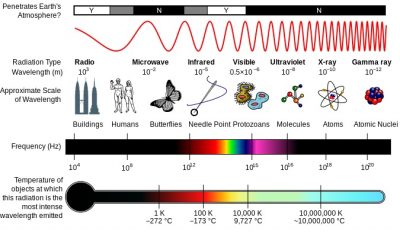
In this figure on the electromagnetic spectrum, we can compare the different types of electromagnetic radiation. Source: https://en.wikipedia.org/wiki/Electromagnetic_spectrum#/media/File:EM_Spectrum_Properties_edit.svg

In telecommunications, the transmission of information through copper wires and radio waves was established and continued to advance. The first transatlantic copper wire cable was installed in 1956, and the first telecommunications satellite, which used radio waves, was launched two years later. However, the increasing use of the telephone and television was creating an urgent demand to increase the capacity to transmit information.

Telecommunication companies in Europe and the United States began to seek solutions in their research labs. Most of the research focused primarily on the use of microwaves and short-wave radio waves, but did not consider the waves of the so-called “optical region,” which is mainly made up of visible light. Yet it was in the waves of visible light where the greatest potential for communications could be found. To give you an idea, for example, these waves can carry tens of thousands of times more information than radio waves.

The emergence of the laser somewhat changed the story of optical telecommunications. Invented in 1960 at a research center of an aerospace company of the United States, the laser began to gain new and better versions throughout the decade. With its ability to emit light in the form of very narrow beams that are preserved over large distances, the laser could be a great partner to fiber optics.                                                                                                                                                 

However, the optical fiber was left out because of its enormous attenuation – a reduction in the intensity of the light signal between two points, which is measured in decibels lost per kilometer (dB/km). In fact, using the available optical fibers at that time, only 1% of the light injected into the fiber remained within it 20 meters ahead. Faced with this very low efficiency, other ways of guiding light began to be proposed and tested by some groups, while other researchers continued to invest efforts and resources into radio or microwave waveguides.

The few groups that opted for fiber optics or similar optical waveguides (thin films, for example) in the early 1960s were located at STL (research center of the British telecommunications company STC); at CSF (a strong French business group active in areas such as telecommunications, defense, materials and electronics); at the Bell Labs (US industrial research laboratory then connected to the AT&T telecommunications company), and at the Japanese university of Tohuku.

Charles Kao, probably in 1966. Source https://www.youtube.com/watch?v=2-5sScP_fiw

In the STL group, there was a man called Charles Kao, who would go on to win the Nobel Prize for Physics in 2009 in recognition of his work with fiber optics. Born in Shanghai, China, Kao attended high school at a British college in Hong Kong and moved to England to pursue university studies in electronics and communications, which he loved. He graduated in Electrical Engineering from the University of London in 1957, and soon began working for STC, until he received and accepted a proposal to do a business doctorate in the company’s research arm, STL. There he helped the researcher Antoni E. Karbowiak in his studies on various waveguides until Karbowiak left STL to take up a professorship. At that time, Kao dedicated himself to a project at STL which he believed in, the development of fibers composed of core and coating to be used in telecommunications as guides of visible light waves.

Kao then relied on the help of his colleague, the young engineer George Hockham, to develop his studies on fiber optics. Together they set out to understand the causes of light loss in the fiber to assess whether they could be eliminated or diminished, or whether, on the contrary, trying to lower the attenuation meant facing a losing battle. While Hockham studied the imperfections in the shape or size of the fibers, Kao concentrated on the characteristics of the material, in particular its structure and the impurities and defects. The results of their studies were published in June 1966 in the IEEE Proceedings [K.C. Kao and G.A. Hockham, “Dielectric-Fibre Surface Waveguides for optical frequencies”. Proc. IEE, 113, 1151 (1996)].

This paper can be considered a milestone in the history of fiber optics, since it is the first to report the causes of light loss in fiber optics and it has shown the way forward and the goal to be reached in order to achieve suitable for use in telecommunications.

Based on the characteristics of existing light emitters (laser) and detectors, Kao and his co-author argued that in order to use the fibers in optical telecommunications, it was necessary to lower their attenuation to 20 dB/km. The goal was very challenging, because in the fibers then available the light attenuated 20 dB… every 20 meters! At its best. However, by showing that the main causes of light loss in optical fibers were related to the presence of impurities in the material, which absorbed or scattered light and diverted it from its path, the paper pointed out a way to reduce the attenuation: the use of purest glasses.

Representation of the frontal cut of an optical fiber (in which proportions were not considered) with the two main parts of the fiber: the core, with n1 refraction index, and the coating, with lower refractive index (n2). Source https://pt.wikipedia.org/wiki/Fibra_%C3%B3ptica#/media/File:Optical_fiber.svg.

The article concluded that cylindrical fibers composed of a core and a coating, both made of vitreous materials with slightly different refractive indices (higher in the nucleus), could be a much better means for transmitting information than those existing at the time, in addition to being inexpensive.

In these fibers, the information would travel encoded in light signals that would run through the core, while the coating would ensure that the light remained in the nucleus, even in the curves.                                                     

After that, Charles Kao continued to focus on fiber optics, investing his time not only in research but also in dissemination. In fact, he lectured on his studies and on the potential of fiber optics in several laboratories and companies around the world. In addition, STL released a press release highlighting the possibilities of fiber optics in the field of telecommunications, with little impact on the press.

In parallel, along with new collaborators, Kao performed a series of experiments with various glasses and other materials and showed, among other results, that in fused silica glass, the attenuation could reach only 5 dB/km. The result was encouraging, but turning that material made of pure silicon dioxide (SiO2) into an optical fiber was another story. Due to its purity, this glass could only be melted at very high temperatures, above 1,500 °C. In addition, after melting, its viscosity made it difficult to transform into any product. Finally, the refractive index of the fused silica was extremely low. Thus, using it to make the fiber core, if on the one hand it would be advantageous in terms of purity, on the other hand it would be very complicated, not only because of the difficulty of processing the material, but also because of the impossibility of finding a material with a lower refraction index for the coating.

At that time, some laboratories from companies in Germany, the United States, France, the United Kingdom and Japan decided to face the challenge of developing low-attenuation fiber optics. Faced with the difficulty of dealing with the fused silica, most of them gave up on this material and tried to make optical fibers with other glasses, removing the impurities. Other groups, on the other hand, gave up making low attenuation optical fibers upon hearing from glass experts who claimed that it would be impossible to remove the impurities that were so problematic.

Only one of these groups made different choices, the Corning company in the United States. Founded in 1851, the company always worked with glasses, but far from stagnating in the production of low value-added products, it led the development of many innovations, starting with the glass globe of Thomas Edison’s incandescent lamp. In the early 1930s, it was at Corning that the chemist Franklin Hyde created the flame hydrolysis method that enabled the manufacture and processing of fused silica. This method, instead of fusing silicon dioxide crystals, is based on a silicon-based liquid compound which when heated on top of a flame, generates a powder that can be deposited forming layers of silica.

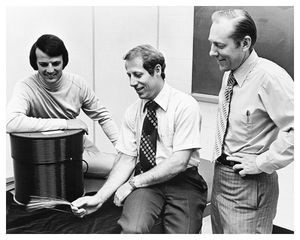
Peter Schultz, Donald Keck and Robert Maurer, and optical fiber. Source http://ethw.org/File:Corning_Fiber-optic_Inventors_3.jpg

In 1966, Corning commissioned physicist Robert Maurer to research and develop fiber optics of less than 20 dB km attenuation for use in optical communications. In 1968, two more scientists had joined Maurer in this project: Peter Schultz, PhD in Glass Science, and Donald Keck, PhD in Physics.

The trio firmly worked on ideas that were opposite to those that the other groups in the world were following. When choosing the material, Corning’s group opted to use the purest glass and added impurities when necessary, instead of removing impurities from less noble glass until it reached the desired attenuation. The Corning scientists then used pure fused silica to coat the optical fiber, which required a material with a lower refractive index, and silica with very small amounts of titanium in the core, in order to increase the refractive index only as necessary and to reduce purity as little as possible.

For the fiber manufacturing method, the Corning group also followed its own path, based on the method Hyde had developed more than thirty years ago. The trio made a tube of pure silica and deposited the doped silica into it. With this fiber, about four years after the start of the low attenuation fiber optic development project, the Corning group obtained the first attenuation measure of less than 20 dB / km. The first low attenuation optical fiber was developed!

In May 1970, the team filed two patents disclosing, respectively, the composition and manufacturing method of this fiber and, thereafter, began to disclose the results.

In 1971, Corning decided that the project could move from the research phase to the development phase, in which engineers worked to make the manufacturing process adequate to make the fiber stronger (the first fiber was more fragile than desirable) and to finalize the development with companies that were interested in buying the fiber. In the mean time, the research team continued to explore, with good results, new possibilities for better optical fibers. Subsequently, Maurer, Schultz, and Keck were forced to devote much of their time to litigation related to the fiber optic patents granted to Corning in 1972 and 1973.

In the early 1970s, fiber optics was not yet commercially available. In fact, it took more than 10 years for insertion of this technology in the market to take place. That part of the story, also interesting, will not be addressed here, but we can cite some landmarks. In 1975, in the United Kingdom, the first non-experimental optical fibers were installed. In 1976, Corning inaugurated its first industrial fiber optic plant. In 1983, in the United States, the first national fiber-optic telephone network was installed. In 1988, the first transatlantic fiber optic cable was installed.

Today, with billions of kilometers of fiber optics installed, telecommunications on planet Earth, mainly via the Internet, relies heavily on these fine glass or plastic wires. With regard to other technologies, fiber optics maintains first place in speed of data transmission, with immense amounts of information that can be transmitted in 1 second between distant points in the planet. With respect to the radio waves that prevailed in optical communications 60 years ago, this capacity increased by no less than a million times. All the effort of everyone involved in the history was worth it, wasn´t it?


To learn more

Featured paper: Clay Labyrinth in Hydrogel Matrix for Controlled Drug Release.

[Paper: Highly Controlled Diffusion Drug Release from Ureasil–Poly(ethylene oxide)–Na+–Montmorillonite Hybrid Hydrogel Nanocomposites. ACS Appl. Mater. Interfaces, 2018, 10 (22), pp 19059–19068. DOI: 10.1021/acsami.8b04559]

Clay Labyrinth in Hydrogel Matrix for Controlled Drug Release

By combining a clay and a polymer gel at the nanoscale, a brazilian scientific team with members of the São Paulo State University (UNESP) and the University of Franca (UNIFRAN) developed a new material that can carry drugs and release them in a gradual and controlled manner.

The team tested in vitro – that is, in the laboratory, in containers that simulate the biological conditions – the performance of the material in the release of sodium diclofenac. This drug is an anti-inflammatory, given orally or by injection, widely used to relieve swelling and pain from, for example, arthritis, rheumatism, muscle injuries, surgeries or gout.

The material developed is a nanocomposite that includes polymeric hydrogel, clay and the drug. The hydrogel (gel that absorbs water amounts higher than normal without dissolving) is composed of an organic-inorganic hybrid material known as siloxane-polyether or ureasil. The clay is known as montmorillonite, and is present in the nanocomposite in the form of nanometric lamellae homogeneously dispersed in the hydrogel. The diclofenac sodium, which appears encapsulated within the nanocomposite, is incorporated into the material during its preparation, as if it were another “ingredient”.

The nanocomposite was obtained by the São Paulo team through the sol-gel process. This preparation method is based on a series of chemical reactions with the transformation of a “sol” (liquid with nanometric particles in suspension) into a gel (rigid three-dimensional network with interstices in which the liquid remains immobilized).

In this nanocomposite the main function of the hydrogel, which is hydrophilic, is absorbing water from the external environment and storing it in its interstices. In this aqueous environment, the drug molecules disperse due to the physical diffusion process until they cross the pores of the hydrogel and exit into the external environment, in this case the human body if the material were being used to release drugs into real patients.

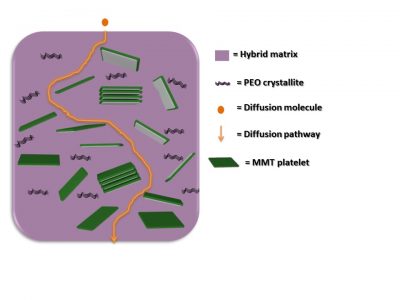
clay hydrogelThe main novelty of the material is the use of clay, which is impermeable, to control how the drug is released. In fact, in the material developed by the São Paulo team, the nanometric clay lamellae acted as a physical barrier to the passage of the molecules of water and drug.

As shown in the image below, the lamella set formed a real labyrinth that slowed the movement of these molecules, determining a specific rhythm to water absorption and the release of diclofenac sodium.

“The main contribution of this work was to develop a barrier system based on an organic-inorganic hybrid material containing polymer-clay for the fine control of the diclofenac sodium release,” says Eduardo Ferreira Molina, corresponding author of an article on the subject, recently published in the journal ACS Applied Materials & Interfaces. Molina is currently a professor at the University of Franca (SP).

In the work reported in this journal, the authors prepared a series of samples of the nanocomposite using different proportions of montmorillonite clay, as well as samples of the clayless hydrogel. The scientists used different characterization techniques to analyze the structure of the nanocomposites and their phases (hydrogel and clay) and also to study water absorption and release of the drug in the material. The team was able thus to verify that the presence of the clay was essential to control the way the drug was released. By adjusting the clay percentage used in nanocomposite preparation, the researchers were able to prevent the early release of a large dose of sodium diclofenac (a common problem in drug delivery systems). They also succeeded in releasing it slowly and at a steady and predictable rate.

The results of this work may constitute a first step towards the use of this nanocomposite as a drug release system for prolonged treatments of arthritis, migraine, postoperative pain and etc. With a system like this, medication could be released gradually at the most appropriate doses and rates, keeping the ideal concentration of the drug in the bloodstream.

Celso R. N. Jesus (left), first author of the paper and Eduardo F. Molina, corresponding author.

The work, which received funding from the Brazilian federal agencies CAPES and CNPq and the São Paulo State agency FAPESP, was carried out at the Chemistry Institute of UNESP, in the city of Araraquara, with the exception of small-angle X-ray scattering (SAXS) measurements, performed at the Brazilian Synchrotron Light Laboratory (LNLS), in the city of Campinas.

The research was developed between 2010 and 2014 in the doctorate in Chemistry of Celso Ricardo Nogueira Jesus, under the supervision of Professor Celso Valentim Santilli (UNESP) and Professor Sandra Helena Pulcinelli (UNESP). The idea, previously unpublished, of developing these nanocomposites to function as barriers to controlled drug release arose at the beginning of the doctoral research of Nogueira Jesus. The theme brought together themes developed in two other postgraduate works. On the one hand, Eduardo Molina’s doctoral research, guided by Professor Santilli, on siloxane-polyether for controlled release of drugs. In 2010, this work was in the final phase. And on the other hand, Márcia Hikosaka’s master’s work, guided by Professor Pulcinelli and completed a few years ago, on the preparation of nanocomposites with polymers and montmorillonite clay.