SBPMat newsletter. English edition. Year 2, issue 11.

Brazilian Materials Research Society (SBPMat) newsletter

News update from Brazil for the Materials community

English edition. Year 2, issue 11. 

SBPMat news

SBPMat elections: The voting period for the election of the next Executive Board and five counselors runs until December 12. All SBPMat members in good standing may vote by accesing the members area with their e-mail and password. Go.

XIV SBPMat Meeting: Find on the site of the event the proceedings of the meeting with the abstracts of papers approved for presentation (ISBN is 978-85-63273-29-1). Here.
XIII SBPMat Meeting: Papers bestowed with the Bernhard Gross Award at the XIII SBPMat Meeting (João Pessoa, 2014) were published in open access by IOP Publishing. More.
Featured paper 
A team of scientists from Brazil developed “nanomanipulations” in samples prepared in Israel, composed of serpentine-shaped carbon nanotubes over crystalline quartz. Through experimental and theoretical analyzes, the scientists were able to measure the strain suffered as a result of nanomanipulations and to understand phenomena related to the adhesion of nanostructures over materials such as quartz. Researchers condensed the study’s findings in a mathematical equation applicable to various materials. The results of the study were recently published in Nano Letters. See our story about the paper.
People in the Materials community 
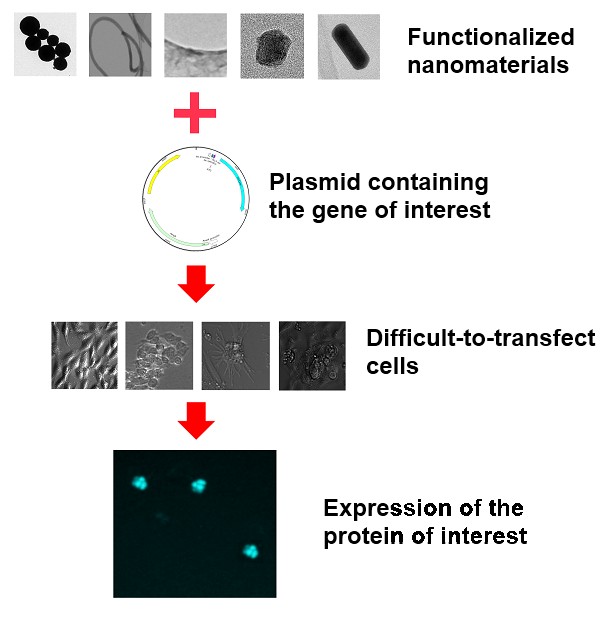
We interviewed the winner of the Capes Doctoral Dissertation Award in the Materials area, Edroaldo Lummertz da Rocha, PhD in Materials Science and Engineering from the Brazilian Federal University of Santa Catarina (UFSC). Edroaldo became interested in science because it would enable him to help people somehow.  In his doctoral research, he worked on the interface among Materials Science, Computer Science and Biology to study the interaction between biological cells and nanomaterials. He generated knowledge that can lead to the development of new drug delivery systems. In addition to this satisfaction, his PhD gave him the gratification of seeing two articles he co-authored on high-impact journal covers. See our interview with Eldroaldo and data about other dissertations related to Materials area which also were awarded by CAPES this year.
2015 “Alfred W. Allen Award” of the American Ceramic Society, to the work of authors from academia and industry – among them, Brazilian Victor Carlos Pandolfelli (UFSCar professor) and Mariana Braulio (Alcoa Aluminio). More.
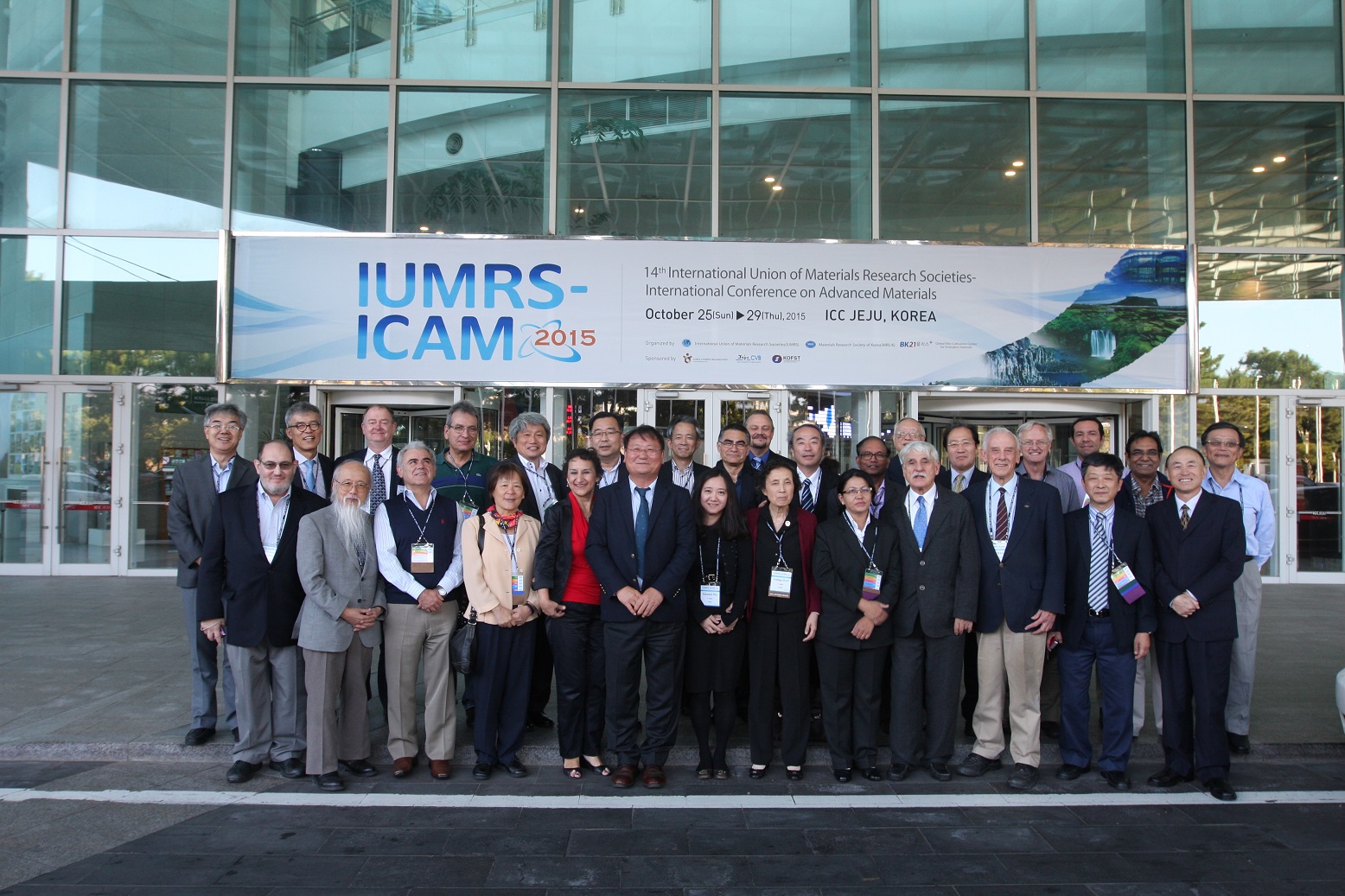
Work done in Brazil and presented by Mirella Boery (doctoral student at UNICAMP) received the Best Poster Award at IUMRS-ICAM, held in Korea in October this year. More.
Reading tips
Scientific journalism stories based on highlighted papers.

  • Self-organized nanostructures of crumpled graphene (3D) with gold nanoparticles can be excellent substrates for SERS analysis (based on paper from Nano Letters). Here.
  • New family of 2D semiconductor material is made of perovskite (based on paper from Science). Here.

News from Brazilian National Institutes of Science and Technology (INCTs) and Research, Innovation and Dissemination Centers (CEPIDs).

  • Research on YAB nanocrystals doped with Nd3 + opens possibilities of new random laser (INCT of Photonics). Here.
  • The innovation center of CDMF was opened at UFSCar and includes a spin-off on functional nanomaterials. Here.
  • Award given in event in Japan to a Brazilian paper on hard and low-density transparent glass-ceramic (CEPID Certev). Here.
Events
  • XIX Encontro Jacques Danon de Espectroscopia Mössbauer. Diamantina, MG (Brazil). December, 14 to 16, 2015. Here.
  • 6th Transmission Electron Microscopy (TEM) Summer School. Campinas, SP (Brazil). January, 11 to 29, 2016. Here.
  • 5th International Conference on Surface Metrology. Póznan (Poland). April, 4 to 7, 2016.  Here.
  • 43rd International Conference on Metallurgical Coatings and Thin Films (ICMCTF). San Diego (USA). April, 25 to 29, 2016. Here.
  • Photonic Colloidal Nanostructures: Synthesis, Properties, and Applications (PCNSPA Conference 2016). Saint Petersburg (Russia). June, 27 to July, 1, 2016.  Here.
  • XXV International Conference on Raman Spectroscopy (ICORS2016). Fortaleza, CE (Brazil). August, 14 to 19, 2016.  Here.

Cannot see this message? Click here.

To unsubscribe, click here

IUMRS-ICAM Best Poster Award to Brazilian work.

Among the nearly 1,300 papers accepted for presentation at the International Conference on Advanced Materials, IUMRS-ICAM 2015, held on the beautiful island of Jeju (Korea) in late October, eight studies were conducted in Brazil and one of them was awarded by the organization with the Best Poster Award.

The work, entitled “Flame Aerosol nanostructured titanium dioxide for coating: the control of crystallite size and phase by oxy-hydrogen flame” was presented as a poster by Mirella Nagib de Oliveira Boery, professor at the Federal Institute of Education, Science and Technology of Bahia (IFBA). Mirella developed the research along with collaborators of the Federal University of Bahia (UFBA) and the State University of Campinas (Unicamp). “The idea of developing this research emerged during my master’s degree at Unicamp, in light of my concerns regarding the widespread use of TiO2, from paint to sunscreen,” she said. Mirella is currently continuing her studies at Unicamp, in the doctoral course of Mechanical Engineering.

Mirella at the conference, and the certificate of the award.

Capes Doctoral Dissertation Award 2015: Interview with the author of the award-winning work in Materials area.

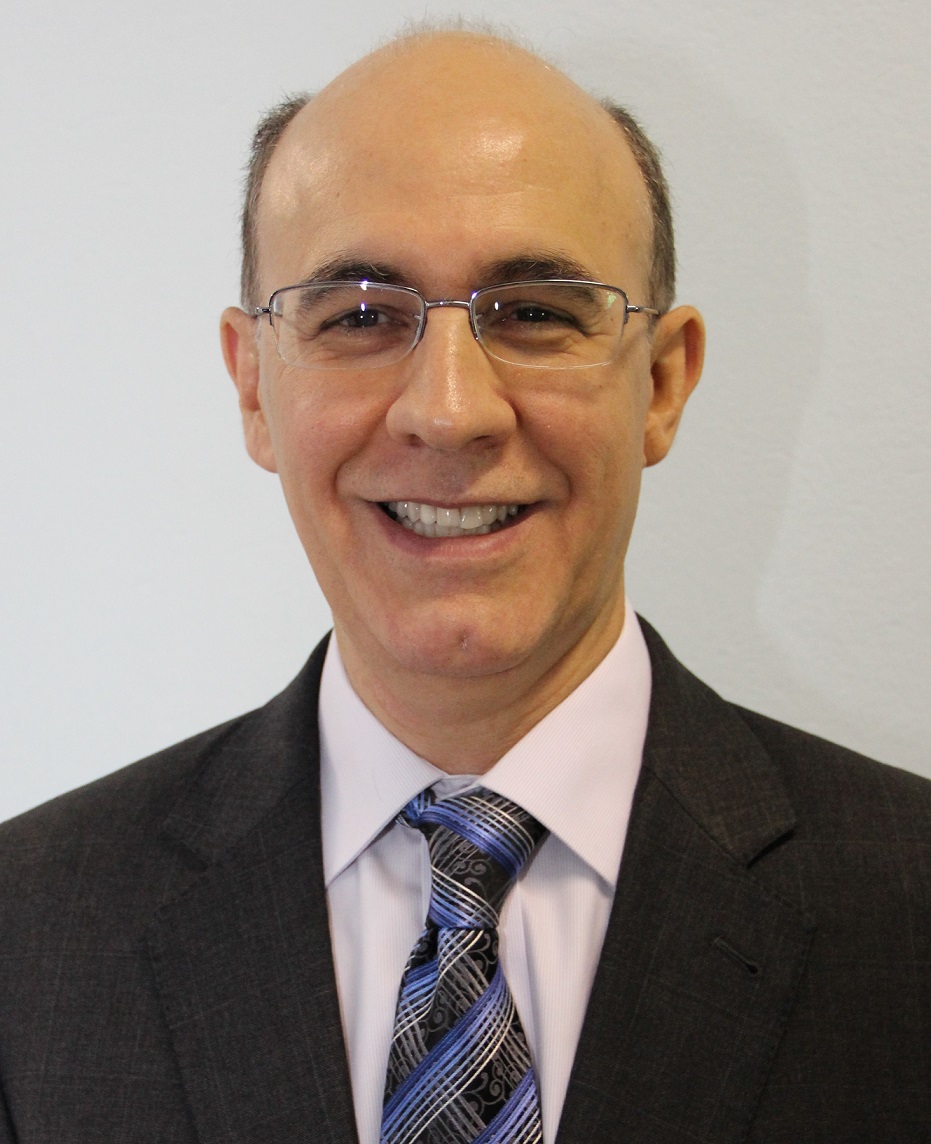
Edroaldo Lummertz da Rocha, winner of the Capes Dissertation Award in Materials field.

The scientific career of Edroaldo Lummertz da Rocha is permeated by two features of the area of Materials science and technology: interdisciplinarity and impact on people’s lives.

After graduating in Computer Science from Universidade do Extremo Sul Catarinense (UNESC), in the south of Brazil, Edroaldo got his master’s degree in Electrical Engineering at the Federal University of Santa Catarina (UFSC), with a study on the transport of phonons in fractal geometry. In 2010, he began a doctoratal program in Materials Science and Engineering, also at UFSC. With the advised of Professor Carlos Renato Rambo and Professor Luismar Marques Porto, Edroaldo worked on the interface among Materials Science, Computer Science and Biology to study the interaction between biological cells and bio and nanomaterials. In 2012, Edroaldo submitted, as first author, a scientific paper on simulations of interactions between nanoparticles and cell membranes. His paper was published in the journal Physical Chemistry Chemical Physics (DOI: 10.1039 / C2CP44035K) in 2013 and was featured on the front cover.

From January to December 2013, Edroaldo remained in the United States developing a part of his doctoral research at Harvard University (United States), more precisely in the Wyss Institute for Biologically Inspired Engineering, a multidisciplinary and multiinstitutional entity dedicated to the development of materials and devices inspired in nature, aimed at transforming medicine and building a more sustainable world. There he was advised by Professor Donald E. Ingber, founder and director of Wyss.

Two papers signed by Edroaldo became covers of prestigious journals.

A second journal cover (DOI:10.1016/j.cell.2014.07 .020) increased Edroaldo´s curriculum in 2014 as a result of his participation, along with researchers at Harvard University and other institutions in the United States, in a Cell Engineering field study.This time the distinction was in Cell, the prestigious journal of Life Sciences, whose impact factor is 32.242.

In September 2014, Edroaldo obtained his PhD degree by defending his dissertation entitled “Nanoparticle-cell interactions and biomaterial-cells induce global changes in gene expression programs“. A year latter, the work was distinguished as the best  dissertation defended in Brazil in 2014 by Capes, the government agency linked to the Brazilian Ministry of Education in charge of promoting high standards for post-graduate courses in Brazil. Edroaldo received the news of the award in the city of Rochester, in the United States, where he works in scientific activities as a postdoctoral fellow of the Mayo Clinic, an institution in the field of Medicine dedicated to research, education and patients´ care.

Interview with Edroaldo.

SBPMat Newsletter: – Could you tell us very briefly how did you become interested in science and in the Materials area, and what were the most important moments in your academic career so far?

Edroaldo Lummertz da Rocha: – My interest in science arose from the possibility of doing something important and helping people somehow. My interest in the Materials area arose due to the existence of a special class of materials, called nanomaterials, which can be used for the development of new therapies for a variety of diseases such as cancer, vascular and neurodegenerative diseases. However, the understanding of how nanomaterials interact with cells and biological tissues is extremely important for the development of safe and effective therapies.

The first most important event of my academic career was when Professor Carlos Renato Rambo, of the Federal University of Santa Catarina, agreed to be my advisor during my doctoral period. That’s where it all began. The second most important moment was when I had the opportunity to conduct part of my doctorate studies at the Wyss Institute at Harvard University, which significantly contributed to the development of my academic career.

Gene regulatory network made of data of gene expression from 16 kinds of human cells and tissues.

SBPMat Newsletter: – What, in your opinion, is the main contribution of your award-winning thesis?

Edroaldo Lummertz da Rocha: – The main contribution of my thesis was the development of computational approaches to systematically understand how cells interact with nanomaterials and respond to external stimuli. This can serve as a basis for future studies in the field of development of new drug delivery systems and lead to a better understanding of how gene expression programs change when nanomaterials interact with cells.

SBPMat Newsletter: – Which criteria guided you to make a quality research highlighted at national level (the award-winning thesis)? To what factors do you attribute this achievement?

Edroaldo Lummertz da Rocha:  – Dedication, discipline, creativity and a good team and co-workers are essential to progress in any area. Family support is essential, above all. From the point of view of the thesis, under the guidance of Professor Carlos Renato Rambo, I had the opportunity to work in a variety of projects and this contributed to the multidisciplinary nature of my thesis.

SBPMat Newsletter: – We invite you to leave a message for our readers who are conducting scientific research in the Materials area.

Edroaldo Lummertz da Rocha: – It is a long road, so you might as well enjoy the way. Being a scientist is something really rewarding, with new challenges and opportunities every day. The hope of discovering something important and providing a significant contribution is the driving force that guides my research. The effort is never in vain and there is always hope where there is perseverance.


More award-winners in the Materials field.

Several other works related to Materials Science and Engineering were awarded this year with the Capes Thesis Award, which was awarded to the best doctoral theses in 2014 in each of the 48 areas of knowledge recognized by Capes in postgraduate courses. The announcement of the winners was made on August 31 and the awards event will take place on December 10 in Brasilia city, the capital of Brazil. Here follow some examples related to Materials area:

Honorable Mention in the Materials area. Thiers Massami Uehara. Study of the interaction of nanomaterials with models of cell membranes and neural stem cells. Advisor: Valtencir Zucolotto. Postgraduate Program in Science and Engineering of Materials – USP/SC. Dissertation file: http://www.teses.usp.br/teses/disponiveis/18/18158/tde-27102014-134646/pt-br.php

Capes Award in Chemistry.  Rodrigo Villegas Salvatierra. Thin Films of Conjugated Polymer and Carbon Nanostructures obtained in Liquid-Liquid Interfaces: Synthesis, characterization and application in photovoltaic devices. Advisor: Aldo José Gorgatti Zarbin. Postgraduate Program in Chemistry – UFPR. Dissertation file:   http://dspace.c3sl.ufpr.br:8080/dspace/handle/1884/37915

Honorable mention in Chemistry.  Anderson dos Reis Albuquerque. Quantum-Chemical Study of the Ti(1-x)CexO2-δ in the Anatase Phase. Advisors: Ieda Maria Garcia dos Santos (DQ-UFPB) and Júlio Ricardo Sambrano (DM-UNESP Bauru). Postgraduate Program in Chemistry – UFPB. Thesis file: http://tede.biblioteca.ufpb.br/handle/tede/7154?locale=pt_BR. Report on CDMF website: http://www.nanotecnologia.com.br/trabalho-orientado-por-professor-do-cdmf-recebe-mencao-honrosa-no-premio-capes-2015/

Featured paper: Vibrations of manipulated nanotubes.

[Paper: Strain Discontinuity, Avalanche, and Memory in Carbon Nanotube Serpentine Systems. Muessnich, Lucas C. P. A. M.; Chacham, Helio; Soares, Jaqueline S.; Neto, Newton M.; Shadmi, Nitzan; Joselevich, Ernesto; Cancado, Luiz Gustavo; Jorio, Ado. Nano Lett. 2015, 15 (9), pp 5899–5904. DOI: 10.1021/acs.nanolett.5b01982]

Vibrations of manipulated nanotubes.

Scientists from Brazilian institutions, in collaboration with researchers from Israel, “manipulated” carbon nanotubes of 1 nm diameter deposited on quartz surfaces and analyzed strain and displacements produced by this nanointervention. The team identified some behavior patterns in the nanotubes – quartz system and formulated a mathematical model applicable to systems formed by one- and two-dimensional materials over various substrates. The results of the study were recently published in Nano Letters.

To perform the experiments, the Brazilian investigators used samples idealized and produced in the Weizmann Institute of Science (Israel), in which the nanotubes are serpentine-shaped (composed of parallel segments connected together by U-shaped curves).These samples offered a desirable complexity, fostered by both the nanotubes format and the anisotropic character of quartz, which makes adhesion of nanotubes to the substrate not the same at all points.

In order to “manipulate” the system, the researchers used the tip of an atomic force microscope (AFM) built in the laboratory, which allows to change the position of nanometric particles and even of atoms, and to measure in situ the optical spectrum of nanostructures. In each sample, the tip touched a point of the quartz substrate and pushed toward the nanotube, and then proceeded to the optical analysis.

Before and after nanomanipulation, the scientists analyzed a number of points in the nanotube using the technique of Raman spectroscopy, which provides information about the frequency in which the atoms vibrate in the area being studied. More specifically, researchers focused on the frequency of the “G band”, which is used to infer the strain measurements of a considered point, since changes in the frequency of the “G band” are proportional to changes in strain.

Thus, scientists were able to identify and analyze different behavior of the nanotubes after nanomanipulation; for example, the detachment of the substrate and the intense displacement of a full stretch of the nanotube that had received two manipulations at the same point.

In addition to performing the experimental work, the authors of the article in Nano Letters managed to condense the complexity of behaviors they observed in a mathematical model (an equation) capable of explaining them theoretically and predicting these phenomena in similar systems. “The paper proposes a relatively simple model to describe complex effects of nanostructures adhesion in support media,” says Ado Jório, professor in the Department of Physics of the Federal University of Minas Gerais (UFMG) signing the letter as corresponding author.

The research that led to the Nano Letters article was developed within the master’s, doctoral and postdoctoral work of three authors of the letter, in the context of the Brazilian Network for Research and Instrumentation in Optical Nano-Spectroscopy, a project funded by the National Council for Scientific and Technological Development (CNPq) and coordinated by Ado Jório. “This is the result of a broad scientific instrumentation project, which aims at reaching the level of manipulating nanostructures and measuring, accurately, the effect of this process at the nanoscale,” says Jório.

The figure shows one of the 34 serpentine-shaped nanotubes on crystalline quartz substrate studied by the authors of the article. To the left of the reader is the nanotube before manipulation. To the right, following the sequence, the same nanotube after the intervention, with the consequent evident strain. The central segment of the nanotube, where the nanomanipulation occurred, was colorized, the gray scale indicating the frequency of the G band in that place. Finally, farther to the right, the chart displays the frequency of G band measured by Raman spectroscopy in successive points of this nanotube (graphical representation of gray hues): the black circles refer to non-manipulated nanotube and the gray colored circles, to the manipulated ones.

Papers that received the Bernhard Gross Award at the XIII SBPMat Meeting (João Pessoa, 2014) were published in open access by IOP Publishing.

The special issue of IOP Conference Series dedicated to winners of the Bernhard Gross Award 2014 is already published on the web, with free and open access.

Through the Bernhard Gross Award, a prize for undergraduate and graduate students, the Brazilian Society for Research in Materials (SBPMat) annually distinguishes the best papers (one oral presentation and one poster, at the most) of each of the symposia of the society annual meetings. In 2014, the award highlighted twenty papers presented during the XIII SBPMat Meeting, which took place in the city of João Pessoa (PB) from September 28 to October 02, 2014.

The award-winning authors were invited by SBPMat to submit  to peer review their works in the form of scientific articles, aiming at publishing them in the IOP Conference Series, dedicated to the publication of papers presented at scientific meetings. Among the articles submitted, 8 were accepted for publication and comprise this special issue.

See the volume dedicated to the Bernhard Gross Award 2014: IOP Conference Series: Materials Science and Engineering, Volume 97, conference 1.

SBPMat newsletter. English edition. Year 2, issue 10. Special issue on the XIV SBPMat Meeting.


Brazilian Materials Research Society (SBPMat) newsletter

News update from Brazil for the Materials community

Special issue: XIV SBPMat Meeting 

Summary

The 14th edition of the annual meeting of the Brazilian materials research society (SBPMat), held in Rio de Janeiro (Brazil) from September 27 to October 1, 2015, featured internationality, interdisciplinarity and a massive and active participation of students. Internationality for its more than 300 attendants, speakers, exhibitors and organizers who came from 40 American, European and Asian countries. Interdisciplinarity in the broad spectrum of topics that were addressed within the technical sessions, invited speeches and plenary lectures, in which materials science and engineering met diverse other fields, such as neurosciences, electronics, medicine and computer science, among many others. Concerning the participation of students, not only they represented almost 50% of the attendants, but also they organized a symposium by themselves and exhibited enthusiasm and capability in scientific presentations and discussions. Another highlight of the meeting were the plenary lectures. The organization of the meeting brought seven world leader scientists on diverse research areas who captivated the public with issues on the frontier of human knowledge. Moreover, the XIV SBPMat Meeting set a new record on the number of participants (2,000) and symposia (26 symposia and 2 workshops). According to the organizers and attendants that we were able to hear, the meeting was a success! 

In numbers

2,000 attendees (20% more than the previous meeting): 950 undergraduate, master and doctoral students, and 1,050 Professors and other professionals.

85 % from Brazil, 15 % from abroad.

40 countries.

985 institutions.

– More than 2,300 works presented: about 1,800 posters, 350 oral presentations and 180 invited speeches.

7,613 authors.

26 symposia and 2 workshops.

7 plenary lectures.

17 rooms for simultaneous oral sessions.

32 stands in the exhibition.

35 prizes bestowed.

Reports

– Photoreport of the meeting on a Picasa web album. See here.

– Multimedia report of the meeting with some pictures, a video and embedded files of the plenary talks (on our site). See here. 

Awards

– 35 prizes were bestowed to participants of the meeting, mainly students, by SBPMat, E-MRS, IUMRS and Horiba. The awards distinguished the best posters and oral presentations presented at the meeting. See the list.

Statements

– Video: participants, organizers and exhibitors of the XIV SBPMat Meeting shared with us their impressions of the event. See the videos.

Cannot see this message? Click here.

To unsubscribe, click here

Video: participants and organizers of the XIV SBPMat Meeting shared with us their impressions of the event.

Rodrigo Martins (Portugal, E-MRS immediate past president and IUMRS officer). He highlights the talent of the chairs to bring the right persons to discuss the most advanced topics in materials science and technology. He says this is the best meeting ever organized in Brazil.

Marco Cremona and Fernando Lázaro Freire Junior (Brazil, meeting chairs). They emphasize the broad spectrum of material science topics that was covered in the plenary lectures. They highlight the big number of students in the event and the active scientific discussion of the poster sessions. Besides, they compare the total attendance of this year´s meeting (2,000 people) with the first edition of the event (300 participants), also held in Rio de Janeiro in 2002.

Ahmet Hikmet Ucisik (Turkey, researcher at Atilim University). In Brazil for the 4th time, being the first one in 2007, he has noticed progresses of the country in materials science and engineering and the enthusiasm of young people.

Beth Mayes and Susan Curtis (USA and UK, Institute of Physics – IOP). They feature the way that the poster sessions were designed and the good attendance of the sessions.

Daniel Bahro (Germany, KIT), winner of Horiba and Bernhard Gross prizes. Electrical engineer. PhD student. Attending a conference for the first time. He presented his research results on organic tandem solar cells and won the prize for the best oral presentation of the meeting. So many young and enthusiastic people in the SBPMat meeting impressed him.

Victor R. Jauja Cana (Peru, Universidad Nacional de Ingeniería), Bernhard Gross prize winner. He has just finished a graduation course in Chemistry. He searched on the web for a conference to attend to present his development of an electrochemical sensor, decided to come to the SBPMat meeting, got financial support, had an oral presentation and, eventually, won a Bernhard Gross prize.

Lucas Pintol Nishikawa (Brazil, USP), recipient of a Bernhard Gross prize.He is starting a master course in Materials Engineering. In the SBPMat Meeting, his first conference, he won a prize for the oral presentation of a research work on heat treatment in steels. He expresses his surprise over the size and internationality of the SBPMat meeting.

And the last words, with Prof. Roberto Mendonça Faria (Brazil, SBPMat president), who says he was very happy to see, in the event, SBPMat growing and young people participating. He also stresses the high quality of several works he saw.

List of the 35 winners of the 4 awards of the XIV SBPMat Meeting.

HORIBA AWARD

For the best oral presentation and the best poster of the meeting.

  • Poster: Lucas Kling e Silva. “Magnetic characterization of steels AISI A 366, AISI S 235 and AISI 304 using Bitter tecnic ( Ferrofluid)”.
  • Oral: Daniel Bahro. “Understanding The External Quantum Efficiency of Organic Homo-Tandem Solar Cells Utilizing a Three-Terminal Device Architecture”.

———————————————————————————————————

IUMRS AWARD

For the 3 best posters of the meeting.

  • Gold prize: Leandro Merces (Laboratório Nacional de Nanotecnologia). “Fabrication and characterization of CuPc molecular junctions: investigation of the contact configuration”.
  • Silver prize: Edna Regina Spada (Instituto de Física de São Carlos). “Understanding light emission and reflection in spherical submicron mirrors arrays by confocal microscopy”.
  • Bronze prize: Nagyla Alves de Oliveira (Instituto de Química – UNESP). “Low-temperature down-conversion luminescence behavior of nanosized phosphors with potential application in optical devices”.

——————————————————————————————————

BERNHARD GROSS AWARD

A recognition of SBPMat to the best oral and poster contributions of each symposium presented at the annual meeting of the society. The choice is made by a committee selected by the coordinators of each symposium. Bernhard Gross was one of the pioneers of Materials research in Brazil.

Symposium A.

  • Oral: Guilherme Monteiro Torelly. “Probing the deposition of ultra-thin InAs layers on GaAs and their evolution towards the nucleation of 3D InAs islands”.
  • Poster: Raquel da Silva Brito. “Application of Natural Dyes of Brazilian Cerrado in the assembling Dye-sensitized solar cell”.

Symposium B.

  • Poster: Caio José Perecin. “Magnetite Nanoparticles Encapsulated with PCL and Poloxamer by Nano Spray Drying technique”.

Symposium C.

  • Poster: Aline Marques de Oliveira. “A Comparison Study on Nanomembranes for Oil Spill Clean-up Devices – The Tea-bag Like Configuration Case”.

Symposium D.

  • Oral: Victor Raúl Jauja Cana. “Development of electrochemical sensor of glassy carbon electrode modified with Hap-MWCNT composite by electrophoretic deposition for detection of trace cadmium”.
  • Poster: Rebecca Faggion Albers. “Synthesis and characterization of graphene and graphene/nanoparticles composites obtained from graphene oxide reduction direct by the modified polyol process”.

Symposium F.

  • Oral: Eloísa Berbel Manaia. “ZnO/ZnS mixed structures obtained by sol-gel process”.
  • Poster: Rodrigo Morais Menezes dos Santos. “XAS/WAXS in situ study of LDH thermal decomposition and recovery”.

Symposium G.

  • Poster: Ramón Raudel Peña Garcia. “Thickness effects in the properties of hexagonal array of nanosized Ni hollow-spheres”.

Symposium K.

  • Oral: Bruno M. Serafim. “Electrospinning activation of highly porous PMMA microfibers for diagnostic applications”.
  • Poster: Fernanda Guerra Lima Medeiros Borsagli. “Effect of sugarcane bagasse composition in an array of pet in thermal morfology and mechanical evaluation for subsequent application as an insulator”.

Symposium M.

  • Oral: Lucas Pintol Nishikawa. “Quenching and Intercritical Tempering of Microalloyed Pipeline Steel”.
  • Poster: Lucas Kling e Silva. “Magnetic characterization of steels AISI A 366, AISI S 235 and AISI 304 using Bitter technic (Ferrofluid)”.

Symposium N.

  • Oral: Elaine Cavalcanti Rodrigues Vaz. “Spectroscopic Characterization of Functionalized CNT as Nano-antennas in Light Conversion Nanostructured Devices”.
  • Poster: Airton G. B. Junior. “Structural and optical properties optimization of Ba2SiO4:Eu3+(5%) red nanophosphor obtained via sol-gel route for white LED application”.

Symposium O.

  • Oral: Rafael dos Santos Carvalho. “Influence of intramolecular spin-orbit coupling on organic magnetoresistance effect”.
  • Poster: Bruno Rostirolla. “P3HT:PCBM based metal-insulator -semiconductor capacitors under visible light stimulation”.

Symposium Q.

  • Poster: Osmando Ferreira Lopes. “Controlled Synthesis of BiVO4 Photocatalysts: Evidence of the Role of Heterojunctions on their Photocatalytic Activity driven by Visible-Light”.

Symposium S.

  • Oral: Daniel Muniz Oliveira. “Obtainment and characterization of a new polymer formulation based on sodium alginate and fish scales suitable for extended release of herbicides”.
  • Poster: Marco Antonio Voinarovicz. “Chemical Solution for Recycling of Long Life Packaging”.

Symposium V.

  • Oral: Ronaldo José Farias Corrêa do Amaral. “Platelet-rich plasma modulates mesenchymal stromal cells chondrogenesis in collagen-hyaluronic acid scaffolds according to concentration”.
  • Poster: Andrei Sakai. “Tumorigenic cell membrane characterization trough nanostructured thin films: influence of the lipid composition upon biochemical signaling”.

Symposium W.

  • Poster: Isadora S. Deschamps. “Bioabsorbable scaffolds based on β-TCP and polymer used in oral implantology”.

Symposium X.

  • Oral: Maiara Emer. “Nanoparticle-bacteria interaction study based on surface functionalization of nanometric structures”.
  • Poster: Geovânia Cordeiro Assis. “Polystyrene Nano-foams impregnated with SnO2 nanoparticles by TIPS: Application in heterogeneous photocatalysis”.

Symposium Y.

  • Poster: Natália Noronha Ferreira. “pH-responsive alginate-based hydrogel for bevacizumab delivery system: rheological study”.

Workshop 1.

  • Poster: Bruno Santos de Oliveira. “Enhancing Manufacturing Process of Template-Stripped Gold Pyramids for Near-Field Optical Microscopy”.

————————————————————————————————

E-MRS AWARD 

For the best oral presentation and 2 best posters of symposium C.

Best oral presentation: Monique Gomes Teixeira (Universidade Federal de São João Del Rei). “Synthesis, characterization and photocatalytic application of ZnS nanocrystals”.

Best Poster, 1st position: José Antonio Souza (Universidade Federal do ABC). “ZnO microtubes decorated with nanowires”.

Best Poster, 2nd Position: Italo Odone Mazali (Universidade Estadual de Campinas). “Relation between the composition and the catalytic activity of the bimetallic noble metal nanoparticles with tunable compositions supported on organofunctionalized mesoporous silica”.

———————————————————————————————————