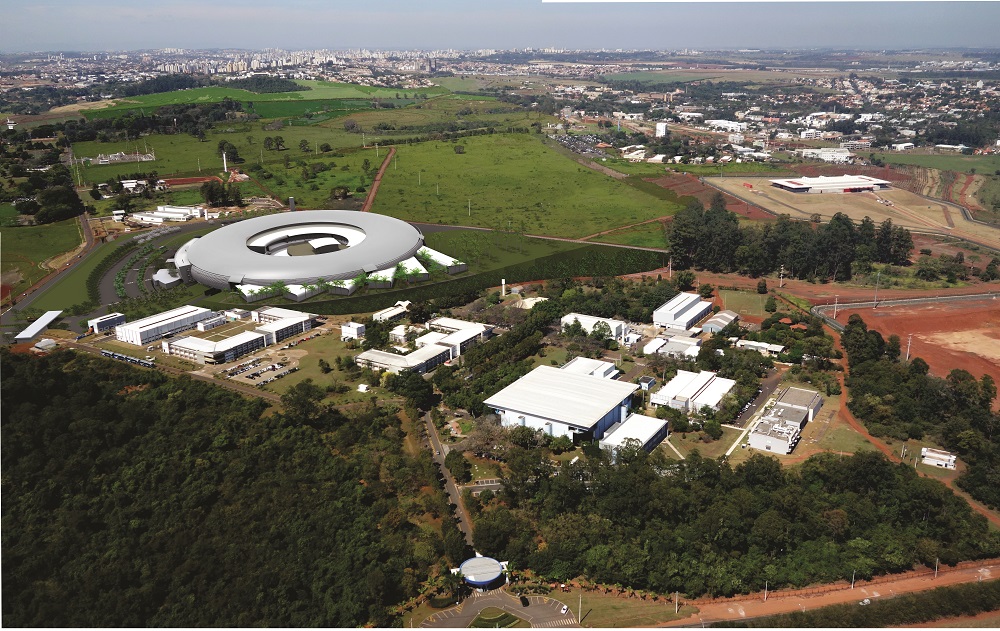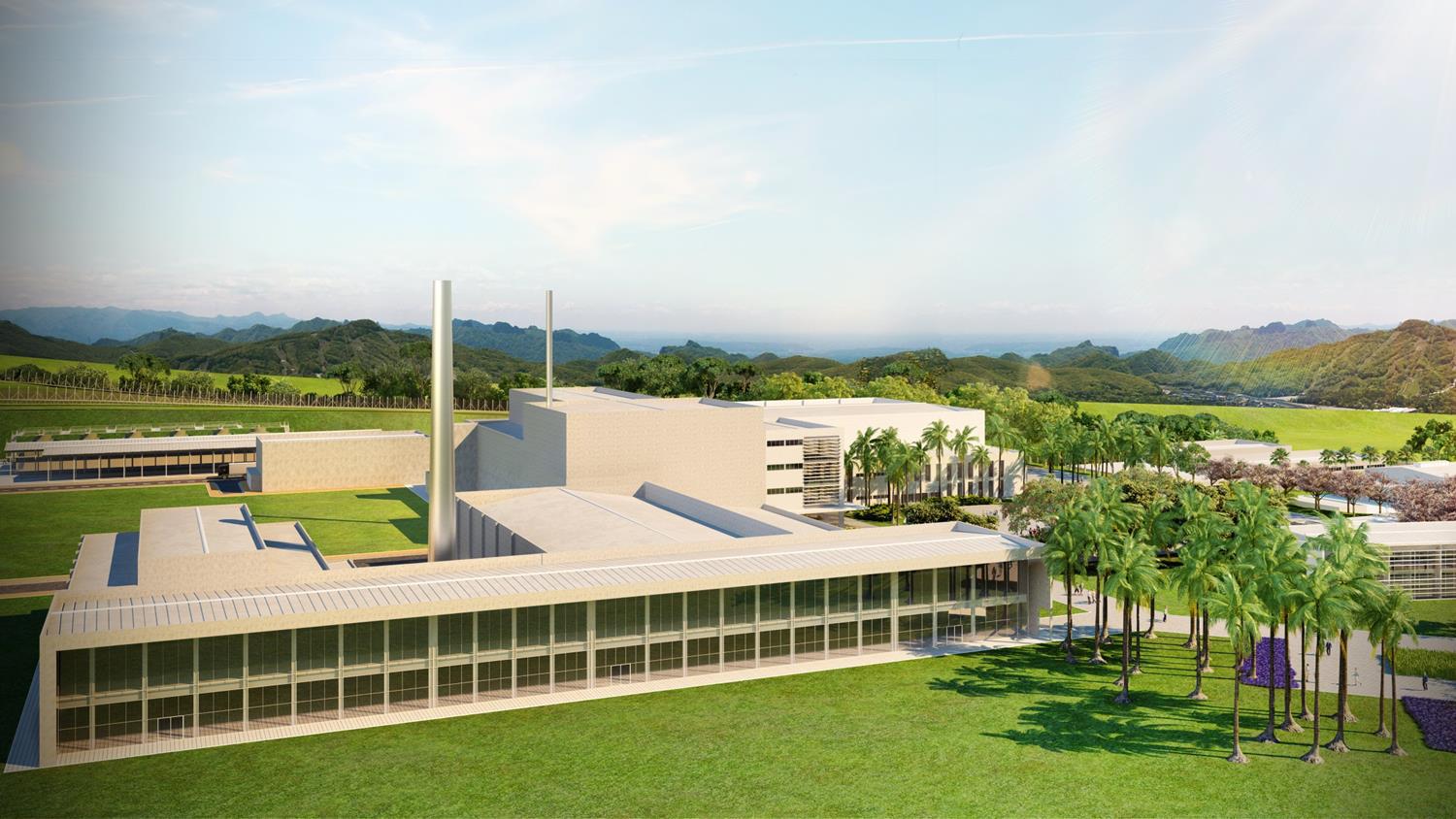

 Before the end of this decade, the Brazilian Synchrotron Light Laboratory (LNLS), located in Campinas (SP), will be receiving researchers from Brazil and from the rest of the world to use the Sirius, the fourth generation Brazilian synchrotron that will replace or supplement the UVX – the current second generation Brazilian synchrotron, which has been operating since 1997 and is the only synchrotron in Latin America.
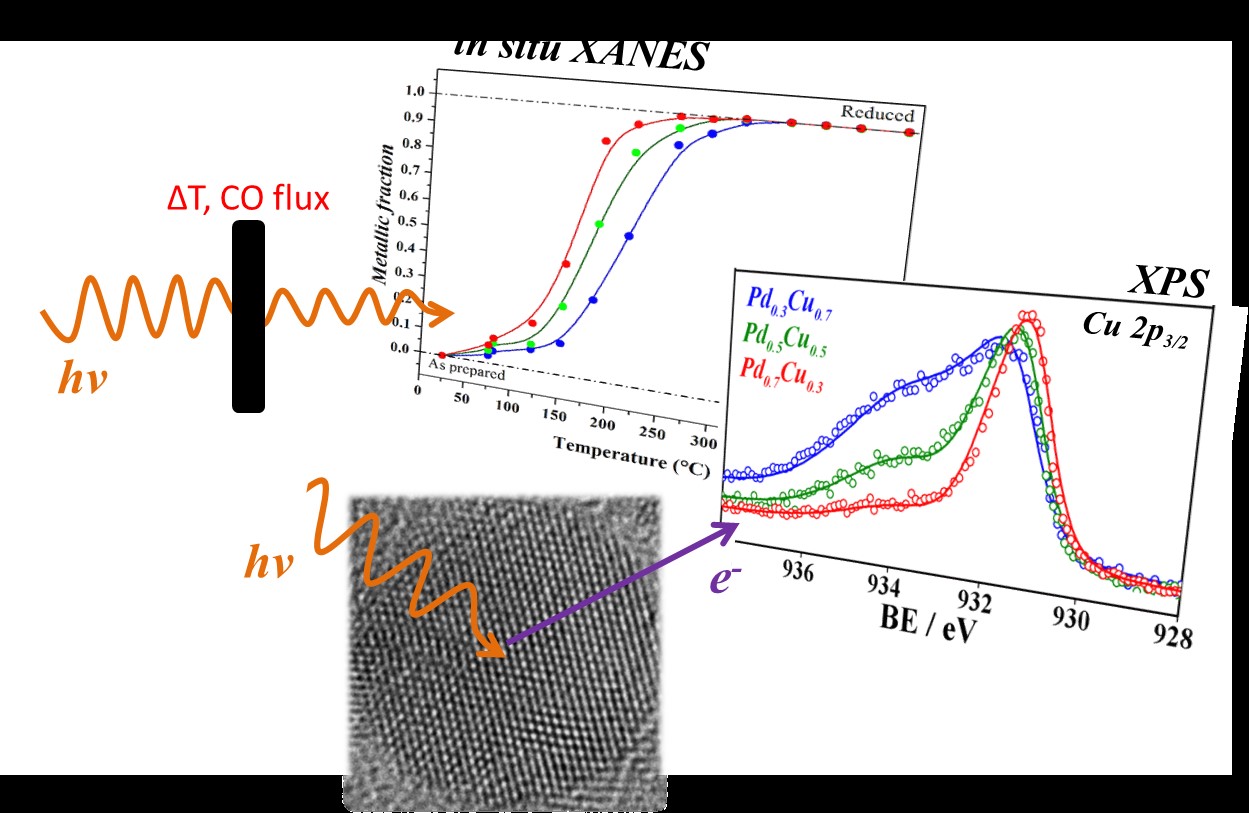
Highly appreciated by the scientific community of Materials Science, and by many other areas, synchrotrons are the best sources of beams of X-rays and ultraviolet light, two very useful types of radiation in the study of matter. The process of producing radiation is achieved by the acceleration of electrons moving near the speed of light and subjected to deviations in its path. When diverted, the electrons lose some of their energy in the form of synchrotron light, which is filtered by monochromators that will release radiation by selectively passing the desired wavelength. Therefore, the X-ray beams or ultraviolet light are carried to the experimental stations or light lines, around the accelerator, which have various scientific instruments. The users of the synchrotron make use of the radiation to analyze its interaction with matter through the scientific instruments to obtain information about the structure and properties of the materials at micro and nanoscale.
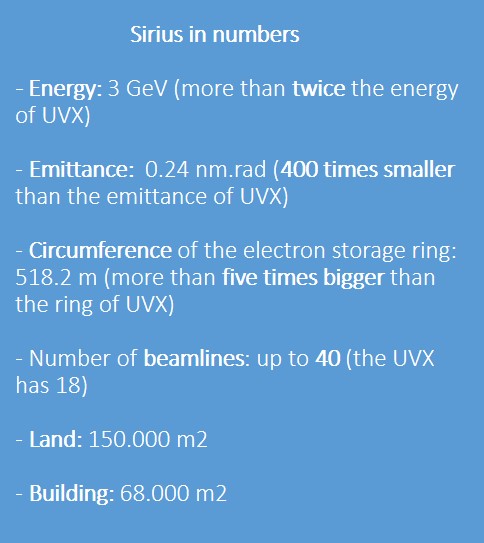
Sirius, as its name suggests the brightest star in the night sky, will be able to generate extremely bright light beams (up to a billion times higher than the brightness of UVX) – a very important feature that will allow to perform more and better experiments.
This high-brightness radiation, together with advanced scientific instruments and powerful computers to quickly process large amounts of data, will allow performing a wide range of experiments that will generate scientific and technological results in sectors such as Agriculture, Biology, Geology, Energy and Health, and of course in the Materials Science area.
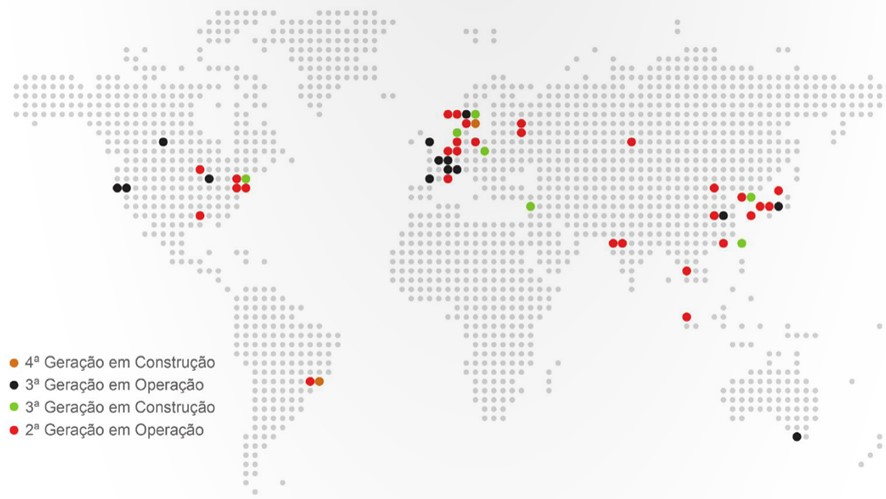
About 300 people are currently working on the project and construction of Sirius, a large-scale and complex project that involves many challenges. One is the development of the synchrotron light source. As a matter of fact, Sirius is one of the first fourth generation light sources in the world (there is only one more currently under construction in Sweden, but neither one operating). There are many challenges, such as developing a system for the monitoring, diagnosis and correction so that the sensitive electron beam trajectory remains stable. Even the construction of the building itself must meet very specific conditions, in order to ensure an almost complete absence of vibration, however small.
This large-scale Brazilian undertaking, whose value is estimated at 1.3 billion reais, is being conducted by LNLS, which developed the UVX and has taken care of its operation, maintenance and upgrades for 19 years. The general management and direction of the team is under the responsibility of the current director of LNLS, Antonio José Roque da Silva. Full Professor of the University of São Paulo (USP), Roque da Silva has an undergraduate and master’s degree in Physics from Unicamp, and a doctorate (PhD), also in Physics, from the University of California, Berkeley. He is the author of over 120 scientific papers published in indexed journals, many of them related to materials science studies. According to Google Scholar, his publications have over 4,400 citations.
The SBPMat Newsletter interviewed Roque da Silva on the technical characteristics of Sirius, the possibilities it offers to the materials science community, the progress of the project and the future of UVX, among other issues.
SBPMat: Newsletter – Sirius will be a high brightness synchrotron light source. What is the importance of brightness for research in Materials Science and Technology?
Antonio José Roque da Silva: – For a given frequency of radiation, its brightness is directly proportional to the flux (number of photons per unit time) and inversely proportional to the product of the beam size times the beam divergence angle). The latter quantity is the beam emittance. Therefore, the lower the emittance, the higher the brightness.
The high-brightness affects the analysis of the materials in different ways:
a. The higher the brightness of the light produced by the synchrotron, the higher the number of samples that can be analyzed within a time period; This allows performing experiments with temporal resolution, which allows to monitor the progress of reactions or processes, e.g., as a function of time.
b. Higher brightness means a better signal-to-noise ratio of different analysis techniques.
c. Low emittance, hence higher brightness, allows probing smaller spatial scales by analytical techniques. This opens study opportunities using nanometer-sized beams, important in areas such as nanotechnology, and other areas.
d. Higher brightness allows the emergence of new techniques or to explore them more effectively. This occurs, for example, with the Coherent Diffraction Imaging technique. Higher brightness will greatly benefit imaging techniques, tomography and microscopy.
SBPMat Newsletter: – What are the limitations of UVX synchrotron that will be overcome by Sirius? For example, will there be characterization techniques of materials in the experimental stations of Sirius that cannot be installed in UVX?
Antonio José Roque da Silva: – The major difference between the two machines is the energy range in which they operate. The electrons in the storage ring of Sirius will be accelerated up to the energy of 3 GeV, more than double the energy of UVX. This results in producing higher energy X-rays and enables more in depth studies of materials such as steel, concrete and rock due to the penetration of X-rays up to a few centimeters, against some micrometers of the UVX.
Also because of the energy difference, the number of chemicals that may be studied by soft X-ray spectroscopic absorption is also different. In the UVX less than half of the chemicals can be studied, while almost all elements of the Periodic Table can be studied in the Sirius.
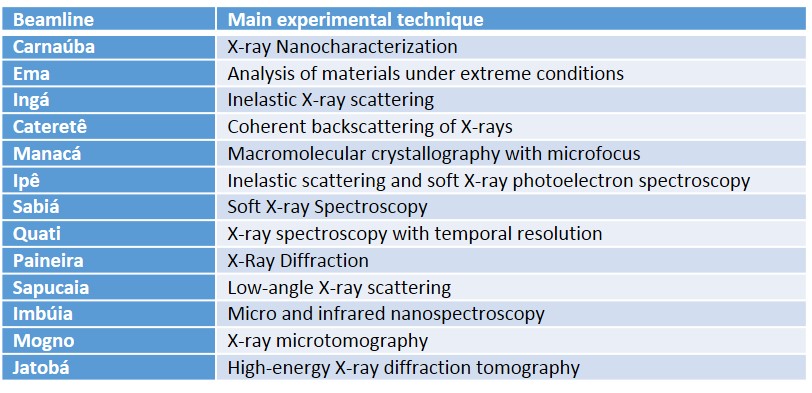
The low brightness and high emittance of UVX greatly limits the most modern synchrotron techniques available to the scientific community of the country. Nanotomography, coherent diffraction imaging, fluorescence nanomicroscopy, nanocrystals analysis, materials research under extreme conditions (high pressures and high temperatures), inelastic scattering, temporal monitoring of various processes, together with nanometer spatial resolution and chemical resolution (for example, important for catalytic processes), among many other techniques, cannot be performed in UVX or are carried out with great limitations, however they can all be carried out, with high standard, in the Sirius.
SBPMat Newsletter: – What will happen to the UVX? Will it be dismantled?
Antonio José Roque da Silva: – It should be emphasized that everything that the UVX does today can be done much better in Sirius. In addition to the large number of new experiments that cannot be performed in the UVX, as mentioned earlier. The LNLS has decided that during the commissioning period of the Sirius beamlines, the UVX will be kept operational to ensure that the community is not affected by any discontinuity. However, it is not known if after Sirius becomes fully operational the current machine will be preserved or disabled. We know that the scientific instrument available today in some experimental stations of UVX will be transferred to Sirius. Additionally, the cost and feasibility of maintaining the simultaneous operation of two synchrotron light sources must be assessed, as well as the staff (engineers, technicians, researchers and etc.) needed to operate both sources. It is also necessary to assess the users’ level of demand for the experimental stations of UVX once Sirius is fully operating.
SBPMat Newsletter: – Will the expertise of professionals (scientists, engineers, technicians) and Brazilian companies developed during the construction of UVX be used in Sirius? If yes, in what way?
Antonio José Roque da Silva: – The Sirius project would not be possible without the expertise and skills of the professionals formed by LNLS over the years, particularly during the construction of UVX. This high-capacity and specialized professional body (scientists, engineers, technicians) formed over the past 30 years, is crucial to the success of Sirius. The amalgamation of experienced professionals that originated with the construction of UVX, including the young people, is a key strategy of the LNLS – for Sirius and for the future of the laboratory. From a technical point of view, the knowledge accumulated by our engineers and technicians during the construction and operation of UVX is what allowed to design a state of the art synchrotron such as Sirius. This experience will also be crucial to the operation of the new synchrotron. And the same goes for the scientists. The involvement with the construction and operation of the beamlines and the experimental stations of UVX is an important factor for the projects of the sophisticated beamlines of Sirius. The ongoing involvement of these researchers in training the new users, which is regularly performed by LNLS, is also fundamental, and which dates back to the beginning of the construction of UVX. We highlight that all of this knowledge acquired over the years also depends on a strong interaction with the international community of synchrotrons. The LNLS is strongly inserted in this community.
From a perspective of companies, the number of companies involved in the construction of the UVX was small. The UVX was not only designed by the LNLS but also mostly built within the LNLS. However, some companies which were important partners of UVX, as for instance Termomecânica, are also participating in the construction of Sirius. But LNLS successfully structured specific programs to involve Brazilian companies in the development and construction of various components for Sirius. These programs are in partnership with research funding agencies like FAPESP and FINEP. The development of partnerships with Brazilian companies will also be important for the future. Finally, the knowledge created by the Brazilian companies that cooperated (and that will continue to cooperate) with the project is extremely important and exceeds the limits of the project itself. This is why we consider Sirius to be a “structuring” project, whose developments will be reflected in new technologies, new products and processes that will bring benefits to the Brazilian high-technology supply chain.
SBPMat Newsletter: – Because it is a very complex, high standard and pioneer engineering project, (there is no other operating 4th generation synchrotron in the world), the construction of Sirius has unprecedented challenges, right? As project director, how do you address these challenges?
Antonio José Roque da Silva: – We rely largely on the experience, knowledge and audacity of the team of scientists, engineers and technicians of the LNLS. The courage of this team to face such challenges is among the greatest legacies dating back to the construction of the UVX. The compelling story of the construction of UVX has already been addressed in other SBPMat newsletters [Newsletter Note: see here the first and second part of this story). The culture of “yes, we can do it”, which comes from the beginning of LNLS, it crucial to overcome the challenges. One strategy is to increase the professional personnel, fundamental given the size of Sirius, mixing young people with the more experienced professionals, ensuring to preserve the existing in-house culture and knowledge. In addition to this experience, competence and courage, the continuous interaction with other laboratories is a key factor. We invested heavily in this area, sending LNLS professionals abroad and bringing experts from abroad to visit the laboratory. In this respect, also important is the assessment of our solutions by leading international experts. This is done through evaluation committees that regularly come to LNLS, and through the presentation of our results in conferences and specialized workshops. Also important is the investment made in cutting-edge infrastructure in both manufacturing and metrology. Finally, an important part is in regard to management and coordination of the activities and staff, thereby ensuring the efficient implementation of the necessary processes.
SBPMat Newsletter: – Tell us about the participation of national and international external companies and institutions in CNPEM regarding the development of Sirius.
Antonio José Roque da Silva: – One of the goals of the Sirius project is to stimulate the development of the Brazilian industry, by promoting demands related to technological developments, services, raw materials, processes and equipment. The goal is to apply between 65% and 70% of the project’s funds in the country. We should bear in mind that the project is 100% Brazilian.
Among the already established partnerships, we mention as an example the partnership created with the company Termomecânica of São Paulo, which developed the process to manufacture the raw material for the vacuum chambers of the storage ring and also the hollow copper wires for the electromagnets that allow cooling the water circulating through the pipes (this development dates back to UVX). Another example is the company WEG Indústrias (SC), a traditional electric motors manufacturer, which will manufacture over 1350 electromagnets for Sirius, designed by the technical staff of LNL. This is an exceptional partnership related to the sophisticated development of production processes and which has been extremely successful.
There are also examples of partnerships with smaller companies, such as FCA Brasil (Campinas, SP), for the manufacture of booster vacuum chambers, and with the Company EXA-M Instrumentação do Nordeste (BA), for the development and manufacturing of the devices for heating the vacuum chamber of the storage ring, and with Engecer of São Carlos for the manufacture of special ceramic vacuum chambers.
To increase the participation of national companies in the Sirius project, other systematic initiatives were undertaken. In 2014, negotiations with FINEP and FAPESP culminated in the launching of the first public call to select São Paulo-based companies for the development of 20 technological demands of the Sirius project, with resources of R$ 40 million. These funds were made available under the PIPE/PAPPE grant program, so that each proposal could request up to R$ 1.5 million for its development. Eight companies were selected to develop 13 research projects to carry out the challenges proposed in the bidding process.
In 2015 a second public call for proposals was launched for the development of 13 new technological challenges, with resources amounting to R$ 20 million under the same program. February was the deadline for the submission of bids by the companies, which are currently under analysis by FAPESP. For the second half of 2016 we expect that at least thirteen other companies are approved to develop the challenges of the second FAPESP/Finep call to support the Sirius project.
From an international point of view, as already mentioned, the continuous interaction with several laboratories has been vital to the project. An interesting detail is that today, as we are at the frontier and with several innovative solutions, needless to say there are international groups interested in interacting with the LNLS. That is, Sirius is obviously an important international vector.
SBPMat Newsletter: – What are the funding sources of the project.
Antonio José Roque da Silva: – The project is mainly funded by the Federal Government, through the Ministry of Science, Technology and Innovation, MCTI. It should also be mentioned that the Sirius project was recently included in the Growth Acceleration Program, better known as PAC, and is listed as one of the first MCTI projects to be part of the program.
Other important resources were provided by the State Government of São Paulo. For example, the land area of 150,000 square meters where Sirius will be installed was acquired by the State Government and granted to CNPEM.
Moreover, FAPESP has been an important partner in the interaction programs with companies and in supporting events and in the acquisition of scientific instruments that will be installed in the experimental stations (beamlines) of Sirius.
SBPMat Newsletter: – At what stage is the project now? What is the forecasted inauguration date of the light source and the first experimental stations?
Antonio José Roque da Silva: – The construction work of the Sirius building is about 20% complete. Part of the superstructure of the main building and part of the metal structure of the cover of the main building has already been built. An important milestone is making the tunnel available to begin assembling the accelerators at the end of 2017.
Several components of the accelerator are in the production phase. All quadrupoles and correctors of the booster have already been manufactured (by WEG) and delivered. Last week the pilot-batch of sextupoles was delivered, and the manufacture of the sextupoles will begin in two weeks. The prototypes of the booster dipoles will be delivered by the end of March, and its production should begin in early May. The Linac linear accelerator is ready and undergoing tests at the Shanghai Institute of Physics. Additionally, other components have concluded the development stage and are awaiting approval to start production, such as the vacuum chambers of the booster and part of the vacuum chamber of the storage ring. The RF booster cavities have been ordered, and the RF cavities of the storage ring will be ordered. Several other subsystems are in the final prototyping or in the initial production phase.
With regard to the experimental stations (beamlines), their projects are entering the technical detailing and construction phase and/or components acquisition. The projects of the Ipê, Carnaúba, Ema and Cateretê lines are now entering a detailed components phase of the experimental stations, technical designs and construction/custom component orders, such as inverters and mirrors which have a delivery time of up to two and a half years. Basically all the important beamline prototypes will be completed by the end of 2016. Overall, the chronogram of Sirius is on schedule, and the first beam and initial commissioning phase is expected in 2018, that way in 2019 the machine can receive the first researchers.
SBPMat Newsletter: – Would you like to add any comments or information?
Antonio José Roque da Silva: – It should be highlighted that Sirius is a result of the evolution of both the internal capacity of the laboratory as well as the maturing of the scientific community in Brazil. The concept of an Open National Laboratory, which is the goal of LNLS to provide an extremely sophisticated and unique equipment to the ST&I community is at the heart of the culture in the laboratory. Its high performance operation requires constant investment to train this highly specialized human resources (scientists, engineers, technicians), for the maintenance of cutting-edge equipment and infrastructure (accelerators, beamlines, experimental stations, support groups, metrology, manufacturing techniques, etc.), for user training, for developing new technologies, excellence in communication and management. The synchrotron project in Brazil, from UVX to Sirius, is something that all Brazilians can and should be proud of, bearing in mind it began from “square one” and in thirty years has placed Brazil in the state of the art, with a significant effect on the formation of human resources, high-level science, innovation, high-technology development and internationalization.