
|
|||||||||||||||||||||||||||||||||||
|
|||||||||||||||||||||||||||||||||||
[Paper: From ionic liquid-modified cellulose nanowhiskers to highly active metal-free nanostructured carbon catalysts for the hydrazine oxidation reaction. Elizângela H. Fragal, Vanessa H. Fragal, Xiaoxi Huang, Alessandro C. Martins, Thelma Sley P. Cellet, Guilherme M. Pereira, Eliška Mikmeková, Adley F. Rubira, Rafael Silva* and Tewodros Asefa*. J. Mater. Chem. A, 2017,5, 1066-1077. DOI: 10.1039/C6TA09821E.]
Better catalysts for hydrazine fuel cells
Fuel cells are devices that using oxidation processes can directly convert the chemical energy of fuels, which can be renewable, into electrical energy. Fuel cells operate with high energy efficiency and low environmental impact, and can be used in a wide range of applications. The use of these cells is still limited and many research challenges remain, such as developing catalysts to obtain efficient energy conversion processes.
An international scientific team has taken a significant step in this direction by developing a material that has proven to be very efficient for catalyzing oxidation of hydrazine (N2H4) – a liquid fuel suitable to be used in fuel cells. Different from most efficient catalysts, there are no noble metals in the composition of this new catalyst, but there are abundant, cheap and renewable materials. The study was reported in a recently published paper in the Journal of Materials Chemistry A. Materials for energy and sustainability (8,262 impact factor), by researchers from institutions in Brazil, the United States and the Czech Republic.
“In this work we highlight the synthesis of nanostructured carbon materials using nanoparticles of crystalline cellulose modified with ionic liquid as precursor,” says Rafael da Silva, professor at the Brazilian State University of Maringá (UEM) and one of the corresponding authors of the article. “The material obtained in this process was used as a catalyst for the hydrazine oxidation process,” he adds.
As cooks testing the best combination of ingredients to make a particular dish, the researchers made a series of carbon materials with small differences between them, in order to compare them and determine which would better perform as a catalyst in the oxidation of hydrazine.
To do this, the team carefully prepared the carbon materials precursors (compounds that participate in a chemical reaction to form a new compound): ionic liquid-modified cellulose nanoparticles. Commercial cotton sold in pharmacies was chosen as raw material for preparing the cellulose nanoparticles. Cellulose is an abundant natural polymer on earth with the formula (C6H10O5)n, produced by plants and bacteria. The nanoparticles were functionalized in two groups: while some received the addition of the SO3 functional group, the others received the addition of the CO2 group. In later stages, some nanoparticle groups were subjected to surface modification processes.
With the different precursors (nanoparticles) obtained, scientists were able to prepare various types of carbon materials. Both the precursors and the materials obtained therefrom were characterized using several techniques. Finally, the team investigated the catalytic activity against the hydrazine oxidation in each of the prepared carbon materials. The scientists were able to conclude that the material with the best performance in this application had been prepared with SO3 functionalized cellulose nanoparticles, subsequently modified with an ionic liquid of the formula ([C4mim][CH3SO3]) and with no metallic trace elements in its composition.
“ We used simple precursors and we were able to obtain a catalyst that is among the best reported for the hydrazine oxidation reaction,” says Professor Silva. “In fact, our material, which is based only on abundant chemical elements, is more active than noble metal catalysts,” he adds.
The authors of the article justified the good performance of the material by the synergy of cellulose and the ionic liquid, as the latter is adsorbed on the surface and also penetrates the structure of the cellulose nanoparticles, promoting the insertion of impurities and defects – phenomena that favor the catalytic activity.
The project was carried out at Rutgers University (New Jersey, USA), by the Chemistry doctoral student of UEM Elizângela Hafemann Fragal, mentored by professors Adley Rubira and Rafael da Silva. The work was developed at the beginning of Elizângela’s doctorate in 2015, during a “sandwich” stage in the group of Professor Tewodros Asefa at Rutgers. Elizângela’s “sandwich” stage took place during the same period and in the same group as her older sister Vanessa Hafemann Fragal, both authors of the article of the Journal of Materials Chemistry A. At this time, Vanessa was also a PhD student in the same group at UEM.

The cooperation between UEM and Rutgers University, as well as the genesis of the work published in this featured paper, dates back to 2010, when Silva went to Rutgers as a Ph.D. student with a Fulbright/Capes grant, after graduating with a BS and master’s degree from UEM. Then, Silva returned to UEM, where he became a professor in 2015, and six members of the group from the Brazilian institution went to work in Professor Asefa’s group (three doctoral students in “sandwich” stages and three postdocs). Moreover, Asefa is a visiting professor at UEM, with a grant from CNPq.
In the doctorate, Silva participated in the first work that demonstrated that a catalyst for electrochemical oxidation of hydrazine can be made without the use of metals. “In 2012, we published an article [SILVA, Rafael ; Al-Sharab, Jafar ; Asefa, Tewodros . Edge-Plane-Rich Nitrogen-Doped Carbon Nanoneedles and Efficient Metal-Free Electrocatalysts. Angewandte Chemie (International ed. Print), v. 51, p. 7171-7175, 2012], in which we disclosed the synthesis of a new carbon structure that we call carbon nanoneedles, which was active in relation to the oxidation of hydrazine, with activity similar to that of the best catalysts at that time,” reports Silva, who has more than 2,700 citations to his articles, according to Google Scholar, obtained in only 10 years of research.
Since the paper of 2012, new advances on the subject have been published by several groups. “The facts learned over the years have led us to build a system that is much more active than the material published in 2012. For this we used cellulose and its specific interaction with ionic liquid, which introduces doping agents to the final carbon structure,” concludes Silva. With the published paper the team showed that it is possible to efficiently recover energy stored in hydrazine molecules. “Today we dominate the synthesizing process of the best possible catalysts for the hydrazine reaction,” says Silva.
The work was carried out with resources from the Brazilian agencies CAPES, CNPq and Fundação Araucária, as well as resources from Rutgers University and the National Science Foundation (USA).
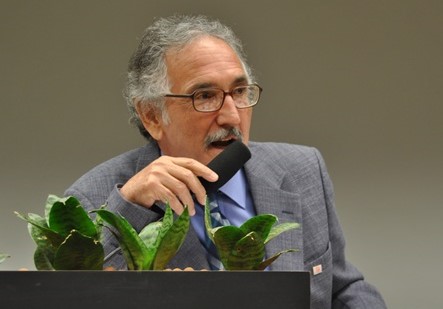
Angelo Fernando Padilha was born on August 30, 1951 in Novo Horizonte, a small city in the state of São Paulo, Brazil. He attended primary school and the first years of high school in his native city, and when he was 16 years old he moved to São Carlos, some 170 km from Novo Horizonte, to enroll in a “scientific course” that covered the last three years of secondary education and that provided the student a more in depth education than the “classical course” in Mathematics, Physics, Chemistry and Biology.
In 1970, he enrolled in the just created undergraduate course in Materials Engineering at the Federal University of São Carlos (UFSCar). He graduated in 1974. The following year he participated in a specialization in Nuclear Science and Technology of the Brazilian National Nuclear Energy Commission (CNEN), offered at the Institute of Atomic Energy (IEA), currently the Nuclear and Energy Research Institute (IPEN), in the city of Sao Paulo. That same year he began working at IEA with research and development of materials for nuclear reactors. Also in 1975, Padilha began his master’s degree in Metallurgical Engineering at the University of São Paulo (USP), which he concluded in 1977 with the approval of his dissertation on recovery and recrystallization in aluminum alloy.
In 1978, still with the IEA, he began his PhD in Mechanical Engineering at the Universität Karlsruhe, now Karlsruher Institut für Technologie (KIT), Germany, obtaining a Doktor-Ingenieur diploma in 1981 after defending his thesis on precipitation in stainless steel, used in the fuel element of the German fast breeder reactor SNR-300. The following year, at the Max Planck Institut für Metallforschung in Stuttgart, Germany, Padilha participated in a three-month specialization in Materials Science in which he studied phase diagrams involving refractory metals.
From 1984 to 1986, in addition to his research activities at IPEN, he was professor in the undergraduate course in Metallurgical Engineering at the Mackenzie Presbyterian University, also in São Paulo.
From 1987 to 1988, he was a postdoctoral researcher at Ruhr Universität Bochum (RUB) in Germany.
In 1988, after 13 years working at IPEN, Angelo Padilha became a lecturer at the Department of Metallurgical and Materials Engineering at the Polytechnic School of the University of São Paulo (EPUSP). At the Polytechnic he became Adjunct Professor in 1989, and in 1993 he was approved as a Full Professor.
In 1993, he returned to RUB, Germany, for a specialization in duplex stainless steels. In 1998, he held a second postdoctoral fellowship at the University of Wales Swansea, now Swansea University, UK.
From July 2011 to November 2015, USP granted him a leave of absence to hold management positions in agencies linked to the Ministry of Science, Technology and Innovation (MCTI), currently Science, Technology, Innovations and Communications (MCTIC). During this period he was president of CNEN and of its deliberative commission, president of the National Fusion Network – RNF (created in 2006 to coordinate and expand nuclear fusion research in Brazil) and president of the board of directors of two nuclear companies linked to the MCTI , Nuclebras Heavy Equipment (NUCLEP) and Nuclear Industries of Brazil (INB). He was also a member of the sector funds coordination committee and from 2012 to 2014 he was a member of the technical-scientific council of the Brazilian Center for Research on Physics (CBPF).
He is the author of more than 100 papers published in indexed scientific journals and about twenty books and book chapters, such as the well-known in Brazil textbook “Materiais de Engenharia.” His academic work has approximately 2,800 citations, according to Google Scholar. He has supervised 25 master’s dissertations and 24 doctoral theses.
Throughout his professional career, Padilha received several awards from the Presidency of the Republic, the Brazilian Navy and the Brazilian Association of Metallurgy and Materials (ABM), among other entities.
Currently, Angelo Padilha is a full professor at EPUSP where he teaches undergraduate and graduate courses and carries out research on metals. He has been a full member of the Academy of Sciences of the State of São Paulo since 2012 and a senior level CNPq productivity grant holder (level awarded to active scientists in research and teaching of human resources who have been 1 A or B level for a minimum of 15 years). His h index is 27, according to Google Scholar.
Our interview with the researcher.
SBPMat Bulletin: Tell us what led you to study materials engineering in the first group of Materials Engineering in Latin America (UFSCar, 1970-1974) and then become a researcher in the field.
Angelo F. Padilha: I had already decided to be an engineer while in high school, but I was not sure about which engineering modality I would choose. After completing high school in my hometown (Novo Horizonte, SP), I went to São Carlos to begin the scientific course. São Carlos was fundamental for my academic background. The city offered everything a 16-year-old boy could wish for! In the student environment there was plenty of culture, debate and rebelliousness. I’m talking about the beginning of 1967. The worst period of the military regime that had started in 1964 was yet to come.
My aunt told me about the creation of a materials engineering course in São Carlos after reading an article or an interview by Professor Sérgio Mascarenhas in the city newspaper, which made an impression. It was the first time I had heard of this Engineering modality. The entrance examination aroused my curiosity as it was very different from the exams of that time. I did very well and later I enrolled. The first group of materials engineering at UFSCar consisted of 50 students: 2 girls and 48 boys. The university had been installed on a farm of more than 200 acres, not far from the city, and the initial facilities were adapted. It was a calm and warm environment. Today, I can better evaluate what that meant and I am convinced that the course as a whole was excellent. The course offered us a consistent and modern scientific basis. The experimental classes were of the highest quality I know of for an engineering course. Thanks to the scientific and technological base acquired during my five years at UFSCar, I was able to take full advantage of the master’s degree in metallurgical engineering at the Polytechnic School and then the PhD at the Faculty of Mechanical Engineering at the University of Karlsruhe. Many students in our class carried out postgraduate studies at top universities in Brazil and abroad.
SBPMat Bulletin: From your perspective, what are your main contributions to the materials field? Please give us a brief description of the contributions you believe had the greatest or most outstanding impacts considering all aspects of your scientific activity.
Angelo F. Padilha: The materials area did a lot more for me than I did for it. I have never worked on the frontier of knowledge, nor have I sought scientific niches. I use modern scientific concepts and advanced experimental techniques to study, understand and perfect traditional and widely used materials such as steels and aluminum alloys. For example, my most read and cited paper (in co-authorship with Paulo Rangel Rios) is a review paper published in 2002, which discusses the microstructure of austenitic stainless steels; a material discovered in 1911 which is still widely used.
I consider writing technical books in Portuguese as a gratifying commitment. I published my first book on techniques of microstructural analysis, in co-authorship with Francisco Ambrózio Filho, in 1985. I am very grateful to see my books distributed throughout several libraries in the country. Although they are all very simple, they are read as well as cited.
I truly enjoy teaching, I have had hundreds, maybe thousands of students and have supervised dozens of students. To this day I am pleased to mentor students and to teach first-year materials science classes at Poli as well as more specific subjects in the final years of undergraduate and graduate studies. I believe the interaction with the industry is fundamental for a professor and researcher in the area of engineering. More than half of the work I did was in cooperation with the industry.
SBPMat Bulletin: Your trajectory in research and management in institutions of the nuclear energy segment is significant. From your perspective, what are the research materials challenges for the nuclear area?
Angelo F. Padilha: My first job as an engineer was in the nuclear area, in the Coordination of Materials Science and Technology (CCTM) of the Institute of Atomic Energy (IEA), now IPEN-CNEN. The group was created and headed by Professor Shigueo Watanabe. It consisted of about 50 people, nearly all solid-state physicists. My interaction with them was an important school for me.
The applications of nuclear technology include not only nuclear power generation, but also numerous applications in industry, medicine, agriculture, in addition to nuclear propulsion. For example, the number of people who have already benefited from the radioactive drugs produced at IPEN is comparable to the number of people who benefit from the electricity generated by the reactors installed in Angra dos Reis.
Almost all materials used in the construction of a nuclear reactor, a nuclear powered submarine, or a centrifuge for enriching uranium isotopes are materials that were not developed for these applications. In the 1950s, when Americans built the first nuclear-power generating reactor and the first nuclear-powered submarine, in terms of materials, they had to primarily develop uranium and zirconium technology. Hundreds of other materials crucial for the aforementioned applications were already available or only needed some adaptation.
On the other hand, nuclear technologies have some particular characteristics: i) they are dominated by few countries; ii) many of them cannot be purchased on the market; iii) there is little international cooperation, especially in sensitive nuclear technologies; iv) they are complex technologies and require a great deal of human and economic resources to be developed; v) they are generally mature technologies, mastered and perfected over decades. By mastering a mature technology a country can quickly turn it into geopolitical or economic advantage.
Over the last sixty years Brazil has built a nuclear program that can be classified as one of the ten or twelve most important on the planet. Additionally, we have large uranium reserves. From a materials point of view, we still depend on imports, which often encounter enormous obstacles. I believe the biggest challenges and opportunities in the area of materials for nuclear applications lie in national production, in adaptations and in improvements. Future innovations are more likely to be incremental than radical.
SBPMat Bulletin: Leave a message for our readers who are initiating their scientific careers.
Angelo F. Padilha: Go after a consistent scientific education, the rest will be a consequence. A researcher with a deep understanding of the fundamental disciplines such as thermodynamics, crystallography and phase transformation will always be welcome in any research group. Do not be discouraged when facing our gargantuan and tangled bureaucracy.
SBPMat Bulletin: Your name appears in the “interdisciplinary materials commission,” created at the end of 2000 to make possible the foundation of SBPMat. Could you share some recollections or comments about your participation in the creation this society?
Angelo F. Padilha: I believe SBPMat was created at the right time and with the right profile. I consider this to be the main reason for its enduring success. Overall, the “Interdisciplinary Materials Commission” contributed in some way; some more than others. I am certainly among the least contributors. I think the articulating ability of Guillermo Solórzano and the scientific leadership of Edgar Zanotto were decisive. I am proud to have participated in the creation of SBPMat.
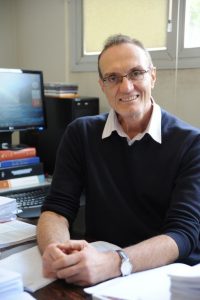
Since the 1980s, The American Ceramic Society (ACerS) has selected and awarded publications on high temperature ceramics that have most contributed knowledge to the field and has honored them with the Alfred Allen Award.
There is no submission for this award, since the choice is based on queries in the journals indexed in the Web of Science, which are analyzed by a team of experts.
This year, in its 18th edition, the award was bestowed to an article published in the journal Ceramics International, authored by three researchers from the Brazilian Federal University of São Carlos (UFSCar), Professor Victor Carlos Pandolfelli and the researchers Ana Paula da Luz and Mariana Braulio, besides Analía Tomba Martinez, a researcher from the Research Institute of Materials Science and Technology (INTEMA), in Argentina. Victor C. Pandolfelli and Mariana Braulio had already received this award in two previous editions, and thus far they have been the only researchers to have been honored three times with the ACERS Alfred Allen Award since it has been created.
The award was received by the authors during the 53rd Annual Symposium on Ceramic Refractories, held in late March in St Louis (United States).
On this occasion, Professor Pandolfelli presented an invited lecture on high temperature ceramics inspired by nature.
|
|||||||||||||||||||||||||||||||||||
[Paper: One-step electrodeposited 3D-ternary composite of zirconia nanoparticles, rGO and polypyrrole with enhanced supercapacitor performance. Alves, Ana Paula P.; Koizumi, Ryota; Samanta, Atanu; Machado, Leonardo D.; Singh, Abhisek K.; Galvao, Douglas S.; Silva, Glaura G.; Tiwary, Chandra S.; Ajayan, Pulickel M. NANO ENERGY, volume 31, January 2017, 225–232. DOI: 10.1016/j.nanoen.2016.11.018.]
Advanced material for ultra-capacity supercapacitors.
Supercapacitors are electrical storage devices with a particular feature of releasing large amounts of energy in a short time interval. They are already used, for example, in electric or hybrid vehicles, camera flashes and elevators, but they can still be improved – largely with the contribution of Materials Science and Technology – for current and potential applications. Putting it simply, a supercapacitor consists of two electrodes, positive and negative, separated by a substance containing positive and negative ions (the electrolyte).
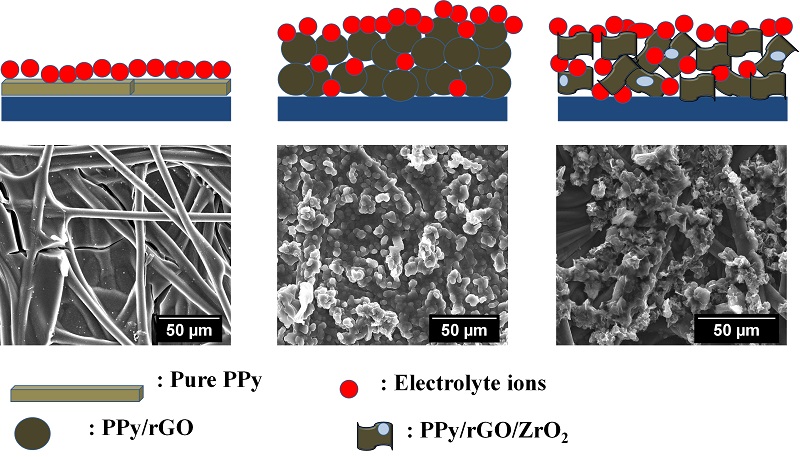
An article recently published in the scientific journal Nano Energy (Impact Factor 11,553) reports on a contribution from an international and interdisciplinary scientific team to develop materials that improve the performance of supercapacitors. Using a simple and easily scalable process, the team of researchers from Brazil, the United States and India produced electrodes made of a composite material composed of polypyrrole (PPi), reduced graphene oxide (rGO) and zirconium oxide (ZrO2) nanoparticles. By combining the three materials, the scientists were able to generate a large surface area and high porosity electrode – basic characteristics to promote the interaction of the electrolyte ions with the surface of the electrodes and therefore enhance the performance of the supercapacitor.
“Our unique contribution was the synthesis, in a single and simple stage of electrodeposition, of a hybrid containing graphene, zirconium oxide and polypyrrole, and the experimental demonstration of considerable gains in electrochemical properties, parallel to the theoretical modeling in order to understand the role of the components of the material”, states Glaura Goulart Silva, professor in the Department of Chemistry at the Federal University of Minas Gerais (UFMG) and a corresponding author of the paper.
In addition to preparing samples of the ternary (i.e., composed of three elements) composite PPi/rGO/ZrO2, using the same method for comparison purposes, the team prepared samples of the PPi/rGO binary composite, and pure polypyrrole samples. The three materials were analyzed using XPS (spectroscopy of X-ray excited photoelectrons), SEM (Scanning Electron Microscopy), Raman spectroscopy and transmission electron microscopy to determine their composition, structure and morphology.
As seen in the SEM images of the figure below, the scientists noted that the addition of graphene oxide and zirconia nanoparticles significantly changed the morphology of the material. While the pure polypyrrole had formed a cracked, wire-like film, the graphene composite had a granular morphology, with no cracks, and the zirconium oxide material had a leaf-like appearance.
At the end of the experimental stage of the study, the scientists performed a series of tests to measure the performance of the three materials as supercapacitors. The results showed that the capacity to store electrical charges (capacitance) had increased up to 100% in the ternary composite with respect to the polypyrrole. Moreover, instead of decreasing this performance due to the use of the electrode, it increased by 5% after 1,000 recharges in the binary and ternary composites.
This was the first paper that presented the introduction of zirconium oxide nanoparticles in polypyrrole and graphene electrodes for supercapacitors. Therefore, the team performed computational modeling to analyze the role of zirconium oxide in the performance of the composite. The simulations confirmed the beneficial effects of the nanoparticles on the stability of the material, directly related to extending the life of the electrodes.
“There is great potential in the application of these new composites in supercapacitors due to the need to increase the energy density provided by the device, in parallel with its miniaturization,”declares Professor Goulart Silva. “The alternative developed in the work in question allows better performance in terms of cycling stability with gains in the safety of the supercapacitor. The use of supercapacitors and batteries in electric and hybrid cars is one of the technological fronts where these materials can be applied,” she adds.
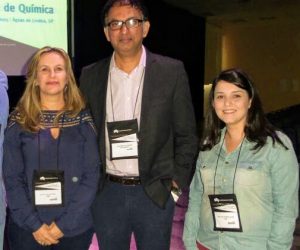
The work is part of the doctorate in Chemistry of Ana Paula Pereira Alves, conducted with the guidance of Professor Goulart Silva and defended in February of this year at UFMG with a thesis about synthesis and characterization of advanced materials for supercapacitors. During her doctoral work at the University of Minas Gerais, Pereira Alves carried out intensive training in synthesis techniques and physical-chemical analysis of conjugated polymers and graphene and in the characterization of supercapacitors. In 2015, she went to the United States for a one-year “sandwich” internship, with the support of the National Council for Scientific and Technological Development (CNPq), in the Department of Materials Science and Nanoengineering at Rice University, in the research group of Professor Pulickel Ajayan (researcher with h=139 index according to Google Scholar), who has collaborated with Professor Goulart Silva’s group since 2010. “Professor Ajayan has systematically proposed radical innovations in synthesis and design of batteries and supercapacitors, with significant international impact in the area,” she adds.
The experimental work reported in the paper was carried out at Rice University, with the presence of all authors, including those from Brazil and India, and also Professor Goulart Silva, who was there in February 2016, with the support of Minas Gerais Research Foundation (Fapemig). “The highly interdisciplinary environment of the Department of Materials Science and NanoEngineering at Rice made possible for the engineers, physicists, and chemists to come together to work on a current major problem.”, says Goulart Silva.
The computational modeling was carried out by Brazilian researchers from the State University of Campinas (Unicamp) and the Federal University of Rio Grande do Norte (UFRN) –among them Professor Douglas Galvão (Unicamp), who has maintained a scientific collaboration with Professor Ajayan since before the beginning of this research.
“I consider this work to be an excellent example of success, where the competence of the Brazilian groups joined that of a highly productive and impactful group in the international scenario and complement each other,” declares Goulart Silva. “The stability and increase of investments in research and development in Brazil are essential for endeavors as this to be widespread. Research is an investment that needs to be done over the long term, without setbacks, to enable a high rate of return in terms of materials, technologies and highly qualified people. Ana Paula Alves is now a young doctor in search of the opportunity to put together her research group and hence train new students and hence contribute to face the challenges of our country,” reaffirms Goulart Silva.
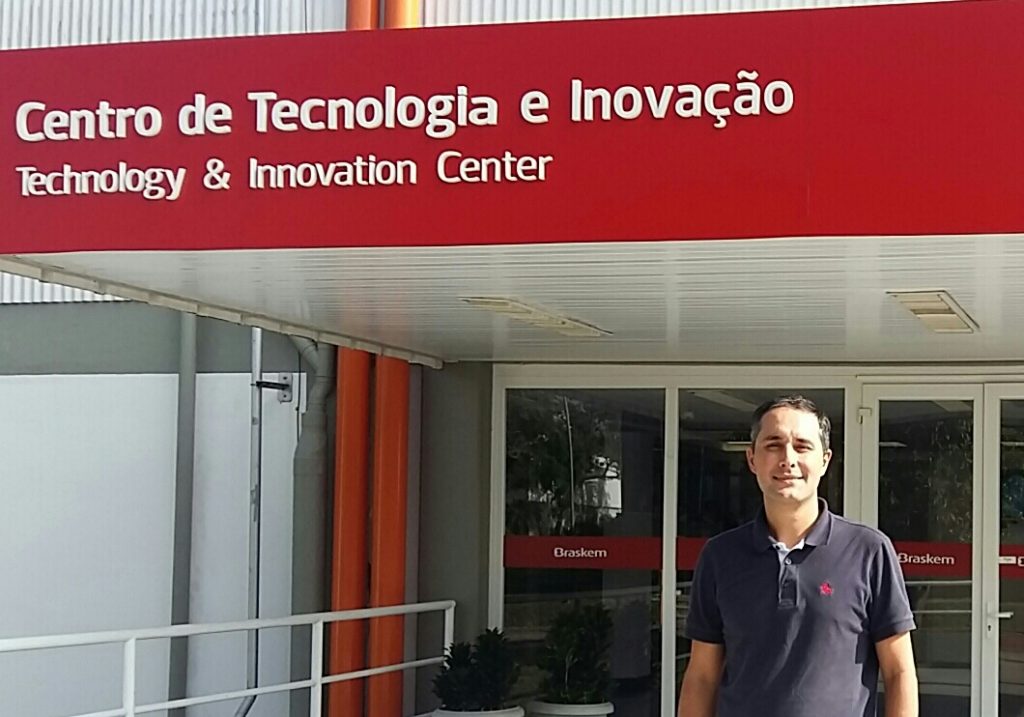 Only 8.5% of those who received their doctorates in Brazil work in companies, according to CGEE study data released last year. Vinícius Galhard Grassi, from Santa Maria, Rio Grande do Sul, belongs to this minority group. At 38 years of age, Grassi has accumulated 16 years of research and development (R&D) experience in the business environment, always in the field of polymers, working in all phases of the innovation process, from product design to its marketplace consolidation.
Vinícius Grassi graduated in Industrial Chemistry from the Federal University of Santa Maria (UFSM) in 1999. In 2000 he started his master’s degree in Materials Science at the Federal University of Rio Grande do Sul (UFRGS). In 2001 he was hired by Innova to work as a polymer chemist at the unit located in the petrochemical complex of Triunfo (Rio Grande do Sul state). In 2002, he received a master’s degree from UFRGS with his dissertation defense on the chemical resistance of high-impact polystyrene, a work that originated many new products for Innova. Between 2010 and 2013, still working in the company, he concluded his doctorate in Chemistry, which started at UFRGS and finished at the Max Planck Institute for Polymers Research (Germany). In the doctorate, he developed research work related to obtaining and characterizing a polymeric material that mixes polymers made with renewable raw materials and fossils.
In early 2014, after having worked for 13 years at Innova, mainly with styrene polymers, Grassi joined Braskem (the largest producer of thermoplastic resins in the Americas) as R&D project coordinator. In November of 2015, he lead a group of researchers committed to the advanced characterization of materials in the company. Since May 2016, he has been the leader of polymer research at Braskem in Brazil, working with polypropylene (PP), polyethylene (PE) and ethylene vinyl acetate (EVA).
In addition to developing, with his collaborators, a series of products for Innova and Braskem (see interview), Vinícius Grassi is the author of 8 articles published in indexed journals and has 9 patent applications (one deposited in the United States). Two of these patents received awards by Petrobras and the Brazilian Chemical Industry Association (Abiquim).
The researcher was interviewed by SBPMat, as follows.
SBPMat Bulletin: Tell us what led you to study Chemistry and Materials and to work in R&D in the business world.
Vinícius Galhard Grassi: It was my interest and pleasure in studying chemistry, certainly brought about by good teachers in high school. Ever since my university years I was interested in polymers, but I graduated from an university (UFSM) that offered only one discipline in polymers, an elective course. I decided to pursue a Master’s degree in Materials Engineering at UFRGS to deepen my understanding of polymers, and since the beginning I wanted to focus on a topic of interest in the industry. It is a challenge to conduct R&D in the business environment to put science into practice in order to generate a better life for people and for society as a whole, while generating profits for companies. It also allows developing some skills that are representative of the business environment and which are reflected in our own personal life.
SBPMat Bulletin: You did your doctorate while working at Innova. Did you develop any work of interest for the company? If so, did it turn into an innovation?
Vinícius Galhard Grassi: Yes, I started and concluded it while working at Innova, it was a topic of interest for the company but with high scientific content. The doctorate (started at UFRGS and completed at Max Planck for Polymer Research in Germany) generated a patent that has not yet been commercially exploited, as it needs continued scale up efforts.
SBPMat Bulletin: What do you believe to be your most important R&D achievements in Materials? We would like you to go beyond listing the results and briefly describe those works, telling us if they became innovations, as well as how they impacted the market.
Vinícius Galhard Grassi: The master’s work generated a new family of products for Innova, which represents the company’s highly significant turnover, which is protected by a patent already granted. These products are particularly present in refrigerators produced in Brazil. At Braskem I lead the Polymer Research area in Brazil, and the team’s main recent results were the launching of proprietary technology related to produce PP foam grids, launched at the K-Fair in 2016 in Germany (the largest plastics fair in the world), which are already being marketed in Brazil and in the USA. The products fulfill applications from leading automobile manufacturers, as well as other industrial applications. This team also developed the EVA Rubber technology, which is now used in various types of footwear, providing lightness, durability and comfort, bringing competitiveness to the Brazilian industry, as well as a production process of soles with low energy consumption and waste generation. That is, sustainability gains for the supply chain.
SBPMat Bulletin: What were the main challenges or difficulties you encountered in your R&D work in companies?
Vinícius Galhard Grassi: There are several critical moments during a R&D project. 1) Select the best ideas in terms of market potential, and that are patentable (for instance research projects). It is of no use putting resources into bad ideas. 2) Generate consistent results in a flexible manner, with scientifically well-grounded basis, allocating the right resources and competencies. If it is to fail, let it be quick, but obviously be persistent when you really believe in the project. 3) Scaling up: I believe this is the critical step, many projects fail during the scaling up process because small details become significant when the scale is larger. This step is only justified when a client is really interested in the project, since resource and investment allocations are usually considerable.
SBPMat Bulletin: You are coauthor/author of articles and patents. Tell us what the articles and patents mean to you in the context of working in companies.
Vinícius Galhard Grassi: The articles strengthen the scientific vein and represent the individual contribution to the progress of science by sharing knowledge. And patents are valuable assets the researcher creates for the company. It empowers the company to own a technology and strengthens its technology strategy.
SBPMat Bulletin: Leave a message to the young audience in the Materials community who wish to work with R&D in the business environment.
Vinícius Galhard Grassi: As with everything in life, there are advantages and disadvantages to working with R&D in the business world. There is constant pressure for deadlines and results, it is part of everyday life. But this creates a sense of urgency and focus on what is a priority and therefore creates value. The pleasure of seeing a technology being scaled up and reaching the market is incredible and justifies all the effort. And one gets to know and interact with many competent people, who teach you and make you grow as a professional, which reflects back on your personal life. In particular at Braskem, it is a unique opportunity for growth. The environment there is very fertile, if the seed is good and well treated, it really grows!
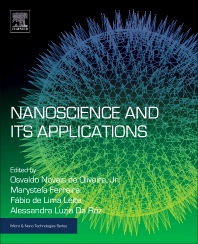
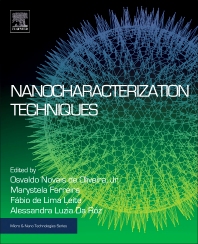
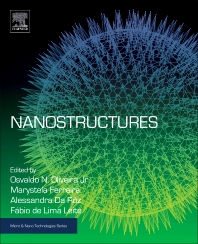
“Nanoscience and Nanotechnology: Principles and Applications” is a work distributed in 3 volumes, with a total of 22 chapters written by distinguished experts and scientists from different regions of Brazil. Volume 1 presents topics related to nanostructures; Volume 2, nanocharacterization techniques, and volume 3, examples of applications.
The book was organized by PhDs Alessandra da Róz (IFSP), Fábio de Lima Leite (UFSCar/CCTS), Marystela Ferreira (UFSCar/CCTS) and Osvaldo Novais Oliveira Jr (USP/IFSC). “We noticed that there were few books in Portuguese on Nanoscience and Nanotechnology and we got together to organize the series,” says Marystela Ferreira.
The work was released in 2015 by Elsevier’s Campus publishing house. “The series launched in 2015 was so successful that Elsevier invited us to edit this series in English,” adds Ferreira. The new challenge was accepted and is being carried out by the organizers, with help from the authors and the publisher. The first two volumes in English were released in 2016, and Volume 3 is scheduled to be released in June 2017. In the English language edition, new chapters have been added in order to cover as much material and techniques as possible. “In volume 1 carbon structures was added, and volume 3 presents the SPR technique (surface plasmon resonance),” clarifies Ferreira.
According to Ferreira, the book addresses the basic concepts and fundamental principles of Nanoscience and Nanotechnology, as well as topics such as nanosensors, nanostructured films and nanocharacterization techniques (this was included bearing in mind undergraduate and graduate students conducting experimental research). The series also includes topics on quantum mechanics and computer simulation – topics that have not yet been addressed in Brazilian Nanoscience books – written in simple and direct language, which include applications and illustrations, asserts Ferreira. New lines of research, such as Nanomedicine, Nanoelectronics and Nanoneurobiophysics were also covered in the series. “This work brings together topics in areas such as Biology, Biotechnology, Materials Physics, Medicine, Chemistry and related areas,” emphasizes Ferreira.
The volumes are available on Science Direct (Elsevier’s website for articles and books) and are sold in the form of e-book and printed book on Elsevier’s website.
Links to English edition:
 Abstract submission for the XVI B-MRS/ SBPMat Meeting is open until May 5. This edition of the annual event of the Brazilian Materials Research Society will be held from September 10 to 14, 2017, in the city of Gramado (Rio Grande do Sul state, Brazil), at the FAURGS event center.
This interdisciplinary and international event is dedicated to the presentation and discussion, in English language, of scientific and technological advances achieved in the field of materials. In recent editions, the meeting has gathered around 2,000 participants from various points of Brazil and dozens of other countries.
This edition of the event comprises 23 thematic symposia, in which researchers and students from Brazil and abroad can submit abstracts for oral or poster presentation. The symposia cover a wide range of research topics in Materials, from the study, synthesis and modification of various materials (polymers, metals, composites, hydrogels, nanomaterials, biomaterials) to their use in the fields of energy, aeronautics, health, electronics, bioelectronics, photonics, plasmonics, photocatalysis and other. The environmental impact and safe use of some materials will also be addressed in the symposia.
The best contributions from each symposium presented by undergraduate or graduate students will be highlighted at the end of the event through the Bernhard Gross Award from B-MRS, which honors one of the pioneers of materials research in Brazil.
The symposia coordinators of this edition of the event are researchers from all Brazilian regions and from Argentina, Canada, Portugal, Spain, UK, and USA. The chair of the event is Professor Daniel Eduardo Weibel, from the Institute of Chemistry of the Federal University of Rio Grande do Sul (UFRGS).
In addition to technical sessions and invited lectures, the event will feature a series of plenary lectures with internationally renowned scientists, as well as an industrial exhibition.
Information about the XVI B-MRS Meeting and instructions for authors can be found at the event’s website: http://sbpmat.org.br/16confronts/home/