Featured paper: Nanorods to develop new anti-inflammatory drugs.

[Paper: Characterization of the structural, optical, photocatalytic and in vitro and in vivo anti-inflammatory properties of Mn2+ doped Zn2GeO4 nanorods. Suzuki, V. Y.; Amorin, L. H. C; Lima, N. M; Machado, E. G; Carvalho, P. E.; Castro, S. B. R.; Souza Alves, C. C.; Carli, A. P.; Li, Maximo Siu; Longo, Elson; Felipe La Porta. J. Mater. Chem. C, 2019, 7, 8216. DOI: 10.1039/c9tc01189g]

nanobastoesA team of researchers from Brazilian universities found, in cylindrical nanostructures known as nanorods, an anti-inflammatory effect equivalent to that achieved by commercial drugs. Researchers have also demonstrated the effectiveness of these nanorods as catalysts (accelerators) in the degradation of a pollutant. These applications are even more relevant considering that the scientific team was able to produce large quantities of the material through a simple and fast process. The work carried out shows the potential of these nanorods for the development of new medicines and for the treatment of effluents.

The work originated about three years ago when Professor Felipe de Almeida La Porta, who had recently joined the faculty of the Federal Technological University of Paraná (UTFPR), Londrina campus, was implementing a research group on nanotechnology and computational chemistry at this university. “Our laboratory was investigating some classes of emerging materials, with the perspective of aligning theory and practice, thus driving new discoveries and applications,” says La Porta. One of the materials studied by the group was zinc germanate (Zn2GeO4), a versatile semiconductor with well-known applications in sensors, catalysts, batteries and other devices.

Together with undergraduate researcher Victor Yuudi Suzuki, the professor started a project in which he synthesized pure Zn2GeO4 nanorods at the UTFPR laboratory with very small percentages of manganese ions. To produce this series of nanorods, they used “microwave assisted hydrothermal synthesis.” The method consists, in broad lines, of mixing aqueous solutions containing certain compounds, heating the final solution in a microwave oven and allowing the compounds to react for a certain period of time at controlled pressure and temperature. In this study, the manganese ion-doped Zn2GeO4 was prepared, and the reactions were performed at 140 °C for 10 minutes. The resulting material from these reactions was collected at room temperature, then washed and dried, which generate the nanorods.

Professor La Porta and his research group were able to optimize one of the process steps, the crystallization of materials, thus reducing the synthesis time from hours to a few minutes, but maintaining the quality of the material and the possibility to control its shape.

After preparing the samples, they traveled from Londrina (state of Paraná) to São Carlos (São Paulo state) to characterize the materials at the Center for Functional Materials Development (CDMF) at the Federal University of São Carlos (UFSCar) and at the Institute of Physics at the University of São Paulo (USP). Together with the local researchers, they were able to analyze the shape, structure and luminescence of the four types of nanorod compositions produced: manganese-free and with 1, 2 and 4% of this element incorporated into the structure of Zn2GeO4.

Finally, knowing that compounds containing zinc, germanium or manganese exhibit considerable effects on living things, the team contacted some collaborators to investigate these properties in the nanorods. Thus, several experiments were performed at the Departments of Chemistry and Pharmacy of the Federal University of Juiz de Fora and at the Federal University of Vales do Jequitinhonha and Mucuri, both in the state of Minas Gerais.

The authors of the paper. From the left: Victor Suzuki, Luís Amorin, Felipe La Porta, Maximo Si Li, Elson Longo, Sandra de Castro, Paloma de Carvalho, Alessandra Carli, Emanuelle Machado, Caio Alvez, Nerilson Lima.

To study the anti-inflammatory action, the team performed in vitro tests (in contact with cells in laboratory containers) and also in vivo tests (using rats with paw edema, within the norms of the Brazilian code for laboratory animal use). Both types of experiments revealed that nanorods with about 4% manganese were the most effective in controlling inflammation. The in vitro tests showed these nanostructures were able to modulate molecules that regulate inflammation without causing cell death (without cytotoxicity). In the in vivo experiments, the nanorods reduced the induced rat paw edema with results similar to that of the application of dexamethasone, a well-known drug of the corticoid group.

“At first, we thought that combining these elements to form a ternary oxide could somehow potentiate these effects. But we had no idea the results would be so significant. Given that the drugs currently available in therapy are proving to be less effective every day, these results may encourage the use of these nanorods, for example in the production of a new pharmaceutical formulation, especially for cases of inflammation,” says Felipe La Porta, who is the corresponding author of the paper that was recently published by the research team in the Journal of Materials Chemistry C (impact factor 6,641).

In addition to proving the potential of the material for this application in the health area, the authors of the paper have experimentally verified the ability of nanorods to degrade a chemical dye widely found in industrial effluents, known as methylene blue. For this application, 2% manganese nanostructures were the most efficient, completely decomposing the dye in 10 minutes. “Due to the manufacture simplicity of this system, coupled with its excellent properties, this material is also promising for cleaning various environmental pollutants, and can be easily recovered at the end of this process,” adds Prof La Porta.

In the center, a cluster of 4% manganese zinc germanate nanorods. Clockwise: photoluminescence measurements of the samples; representation of the structure of manganese-doped zinc germanate; pollutant degradation mechanism and methylene blue degradation measures; anti-inflammatory action of nanorods and other treatments in induced-edema rat paw.

The superior properties that the Brazilian scientific team found in the nanorods with manganese can be related to the structural defects observed in these samples. In fact, the three-dimensional network of atoms that forms zinc germanate is crystalline, that is, organized in regular patterns. The introduction of manganese generates irregularities, and new properties emerge.

The scientific paper that reports this work was selected to be part of the Materials and Nano Research in Brazil collection, prepared by the Royal Society of Chemistry in celebration of the 18th B-MRS Meeting, and can therefore be accessed free of charge until October 15 of this year, here.

The work was carried out with funding from Brazilian research support agencies: the federal CNPq and Capes, and the state Araucaria Foundation, Fapesp and Fapemig.

Royal Society of Chemistry put together a collection of paper of Brazilian authors in honour of XVIII B-MRS Meeting.

RSC_collectionThe Royal Society of Chemistry (RSC) has prepared an online collection of articles by Brazilian authors in celebration of the XVIII B-MRS Meeting (Balneário Camboriú, September 22-26, 2019). The Royal Society of Chemistry is a supporter of this edition of B-MRS’s annual event.

Titled Materials and Nano Research in Brazil, the collection brings together 55 articles published in RSC journals between 2017 and 2019. All selected articles are open access until October 15, 2019.

The collection is available at www.rsc.li/brazil-mrs-2019

Postdoctoral fellowship opportunity in Brazil (Sao Paulo).

Abstract

The Institute of Chemistry of São Carlos (IQSC) of University of São Paulo (USP) is offering a postdoctoral fellowship linked to the Project “Study and application of electrochemical technology for the analysis and degradation of endocrine interferents: materials, sensors, processes and scientific dissemination” coordinated by Prof. Dr. Marcos Lanza (Grant 2017/10118-0).

The project aims at the production of new materials with electrocatalytic activity and their application in electrochemical analysis sensors and in advanced effluent treatment processes. In addition to the publication of the scientific knowledge through scientific articles, the dissemination of results will also occur through scientific popularization. Through the production of didactical material to improve the teaching of physicochemistry in Basic Education and the realization of interactive expositions open to students and the general population, it is hoped to arouse interest in science, especially among school-age youth.

Requirements

The candidate will work on the development and application of new carbon matrix (electrocatalytic) materials for the electrogeneration of H2O2 in situ, from the oxygen reduction reaction, to be applied to cells and reactors electrochemical processes aimed at the degradation of organic compounds with endocrine interference activity.

The desirable requirements for the candidate are: (1) knowledge of morphological-structural analysis techniques and electrochemical techniques for the analysis of electrocatalysts; (2) knowledge of advanced oxidative electrochemical processes (PEOA) of degradation of organic compounds, as well as the notion of instrumental techniques of chemical analysis.

The candidate must have immediate availability to reside in São Carlos / SP / Brazil and have completed his doctorate for less than 7 years.

If selected, the candidate will have a FAPESP postdoctoral fellowship (www.fapesp.br/270) in the monthly amount of R $ 7,373.10 (approximately US$ 1,800.00/month) for up to 24 months, with the possibility of financial assistance for the displacement and installation. It is noteworthy that there is no income tax levied on the scholarship amount and it corresponds to the amount with legal discounts of a newly hired lecturer of public university from the State of Sao Paulo. As a reference, the minimum salary in Brazil is US$ 250.00.

São Paulo Research Foundation – FAPESP – is an independent public foundation with the mission to foster research and the scientific and technological development of the State of São Paulo (Brazil).


More information on FAPESP postdoctoral fellowships:

http://www.fapesp.br/en/postdoc


The inscriptions should be made through the email marcoslanza@usp.br to the supervisor Prof. Dr. Marcos Lanza until September 10, 2019. The following documents must be attached to the e-mail:


1) Curriculum Vitae containing the academic training and publications (maximum of 4 pages). Experience in the areas of Materials Chemistry (and related areas) and Electrochemistry must be proven through publications in international scientific journals.

2) Letter of the candidate justifying the interest on the vacancy (maximum of 200 words).

3) Two (2) letters of recommendation.

4) Work plan with its own title describing one (1) research proposal involving the following topic: Production and characterization of new electrocatalyst materials supported in carbon for the electrogeneration of H2O2, from the oxygen reduction reaction, aiming the application in Electrochemical Advanced Oxidative Processes (EAOP) of degradation of organic compounds with endocrine interference activity.

The proposal should include a brief introduction and a description of the strategies for obtaining results, bibliographical references and international journals of interest for submission (maximum of 10 pages).


B-MRS Newsletter. Year 6, issue 7.


logo header 400

Newsletter of the
Brazilian Materials
Research Society

Year 6, issue 7. August 7, 2019.

B-MRS Public Notice

The directory and board of the Brazilian Materials Research Society (B-MRS) are in solidarity with the Director of INPE, Prof. Ricardo Magnus Osório Galvão, with regard to the unsubstantiated claims by President Jair Bolsonaro (…)

Access here the full public notice.

B-MRS News

– XIX B-MRS Meeting + IUMRS-ICEM 2020 (Iguassu Falls, Brazil, August 30 to September 3, 2020). The Brazilian Materials Research Society (B-MRS) and the International Union of Materials Research Societies (IUMRS) invite the international scientific community to submit symposium proposals for the joint event that will include B-MRS annual event and the IUMRS International Electronic Materials Conference. The symposium call is open until October 31, 2019. Learn more, here.

Elections at B-MRS. The electoral commission has already approved the nominations. Get to know the candidates on the ticket for the Executive Board and the list of members who showed interest in being elected members of the Deliberative Council, here. Voting time will be from September 22 to October 4, 2019. Members with paid membership annuity will be able to vote online in their member areas on the B-MRS website or in person during the XVIII B-MRS Meeting, at the venue.

Featured Paper

A multidisciplinary scientific team developed in Brazilian laboratories a nanomaterial with interesting magnetic, luminescent and biochemical properties, and found its low toxicity in in vivo tests performed with zebrafish embryos. This nanomaterial can act as a nanoplatform for the development of healthcare, biotechnology and environmental applications. A paper about the work was recently published and featured on cover of ACS Applied Nano Materials. Know more.

artigo news

Featured Scientist

We interviewed Professor Julia Greer of the California Institute of Technology (USA). Author of seminal contributions to nanomechanics, the scientist, who is also a pianist, currently develops innovative three-dimensional structures based on nanomaterials, and studies on how their superior properties arise from the interaction between atomic, nano and micro scales. At the XVIII B-MRS Meeting, she will give a talk about these interesting metamaterials. See our interview.

julia greer

From Idea to Innovation

Innoma intends to spread innovation in the Brazilian industry. The startup develops technologies to produce high-efficiency nanoactives that can be used as raw materials by companies in various segments. The first product, an antimicrobial silver nanoactive, is already being marketed. Know more about Innoma here.

logo innoma

News from B-MRS Members

– Paper of B-MRS member Oswaldo Luiz Alves (IQ – Unicamp) is selected for collection of the Royal Society of Chemistry. Know more.

banner evento

XVIII B-MRS Meeting
(Balneário Camboriú, Brazil, September 22 – 26, 2019)

Website: www.sbpmat.org.br/18encontro/

Registration. Early registration (with special fees) was extended to August 9. Know more, here.

Program. The program of the event “at a glance” is online, showing technical and social activities and the distribution of oral and poster sessions. See here.

Posters printing service. The poster file can be sent by email and later pick up the impression at the event location. Know more, here.

Venue. The meeting will be held in the delightful Balneário Camboriú at the Hotel Sibara Flat & Conventions, located in the center of the city, close to many hotels, restaurants and shops, and only 100 meters from the sea. More information, here.

Opening ceremony venue. The opening ceremony, the memorial lecture and the welcome cocktail will be held on September 22 (Sunday) at the Cristo Luz complex, one of the main tourist attractions in the city. There will be transportation to the venue, leaving the Hotel Sibara from 17:00 on. Know more about this place, here.

Memorial Lecture. The traditional Memorial Lecture Joaquim da Costa Ribeiro will be given by Professor Yvonne Primerano Mascarenhas (IFSC – USP). Know more about the speaker, here.

Event party. The party will be held in the lounge of the Green Valley, a prominent nightclub. Learn more about Green Valley, here. The party will feature the striking Brothers band. Watch the Brothers, here.

Host city. Balneário Camboriú (SC) is an important tourist destination that offers urban and wild beaches, ecotourism and adventure sports, boat trips, bicycles and cable cars – all within a unique landscape that combines mountains, sea and skyscrapers. The visitor has access to many options of gastronomy, lodging and shopping, as well as the bustling nightlife that stands out in the Brazilian scenario.

Lodging, tickets, transfers etc. Check the hotel options and the official travel agency of the event, here.

Plenary lectures. Leading scientists from institutions in Germany, Italy, Spain and the United States will deliver plenary talks on cutting-edge issues at the event. There will also be a plenary session by the Brazilian scientist Antônio José Roque da Silva, director of CNPEM and the Sirius project (new Synchrotron Light Lab). Learn more about the plenary sessions, here.

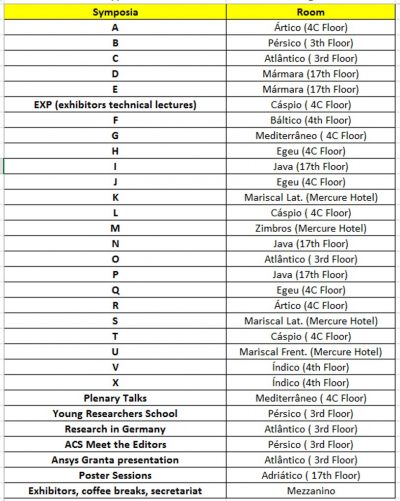
Symposia. 23 symposia proposed by the international scientific community compose this edition of the event. See the symposia list, here.

Organization. The chair of the event is Professor Ivan Helmuth Bechtold (Physics Department of UFSC) and the co-chair is Professor Hugo Gallardo (Department of Chemistry of UFSC). The program committee is formed by professors Iêda dos Santos (UFPB), José Antônio Eiras (UFSCar), Marta Rosso Dotto (UFSC) and Mônica Cotta (Unicamp). Get to know all the organizers, here.

Exhibitors and sponsors. 41 companies have already confirmed their participation in the event. Those interested in sponsoring/support can contact Alexandre at the e-mail comercial@sbpmat.org.br.

Reading Tips

– 2018 Impact factors: results from ACS Publications journals. Know more.

– Optical computing: metamaterial solves equation by processing optical signals (Science paper). Know more.

– Scientists from Brazil develop tumor cell membrane nanocapsules that carry drugs across the body and release them into tumors to fight cancer by combining hyperthermia and chemotherapy (paper from Applied Bio Materials). Know more.

Events

20th International Sol-Gel Conference. Saint Petersburg (Russia). August 25 – 30, 2019. Site.

2nd CINE-M2P workshop. São Paulo, SP (Brazil). August 26 – 27, 2019. Site.

V Reunião Anual sobre Argilas Aplicadas. Franca, SP (Brazil). August 28 – 30, 2019. Site.

21st Materials Research Society of Serbia Annual Conference (YUCOMAT 2019) and 11th IISS World Round Table Conference on Sintering (WRTCS 2019). Herceg Novi (Montenegro). September 2 – 6, 2019. Site.

R2B Research to Business Itália-Rio de Janeiro. Rio de Janeiro, RJ (Brazil). September 19, 2019. Site.

XVIII B-MRS Meeting. Balneário Camboriú, SC (Brazil). September 22 – 26, 2019. Site.

XL CBRAVIC (Brazilian Congress on Vacuum Applications in Industry and Science). October, 7 – 11, 2019. Site.

XII Brazilian Symposium on Glass and Related Materials. Lavras, MG (Brazil). October 22 – 25, 2019. Site.

19th Brazilian Workshop on Semiconductor Physics. Fortaleza, CE (Brazil). November 18 – 22, 2019. Site.

XIX B-MRS Meeting e 2020 IUMRS ICEM (International Conference on Electronic Materials). Foz do Iguaçu, PR (Brazil). August 30 -September 3, 2020. Site.

Follow us on social media

You can suggest news, opportunities, events or reading tips in the materials field to be covered by B-MRS Newsletter. Write to comunicacao@sbpmat.org.br.


Featured paper: Low toxicity magneto-luminescent nanoplatform.

Cover of ACS Applied Nano Materials features the paper.

In research carried out in a number of Brazilian laboratories, a multidisciplinary scientific team developed a magnetic, luminescent nanomaterial capable of chemically binding to molecules of interest, such as drugs or proteins. This nanomaterial also showed low toxicity in tests with living organisms. With this set of characteristics, the new material can be seen as a multifunctional nanoplatform that is promising for the development of various applications, especially in the areas of biotechnology, health and environment. The study was reported in an article published in ACS Applied Nano Materials (American Chemical Society journal released in 2018), and featured on the cover of the June issue of the journal.

The properties of this nanoplatform derive from the presence of several compounds and elements with distinct properties: iron oxide (Fe3O4, known as magnetite) nanoparticles responsible for magnetism; lanthanide element ions (Gd3 +, Ce3 + and Tb3 +, known as rare earths) responsible for luminescence or light emission, and chitosan (biopolymer obtained from the crustacean exoskeleton), essential for providing chemical bonds of the nanoplatform surface to the external molecules of interest.

The nanoplatform was developed at the Brazilian National Nanotechnology Laboratory of the National Center for Energy and Materials Research (LNNano – CNPEM). The process used for its synthesis comprises a series of steps. Initially, the iron oxide nanoparticles that form the core of the nanoplatforms are synthesized and coated with silicon dioxide (SiO2). Then the luminescent elements and chitosan are incorporated into the nanoparticles forming an outer layer. The result is nanoplatforms of approximately 170 nm in diameter (on average), called Fe3O4@SiO2/GdOF:xCe3+,yTb3+.

On the left, a schematic illustration of one of the nanoplatforms, showing its core. On the right, a solution with nanoplatforms under the effect of a magnetic field (concentrated near the magnets) and irradiated with UV light (generating the emission of green light).

To study the magnetic and luminescent properties of the nanoplatform and to characterize its structure and morphology, research groups from the State University of Campinas (Unicamp) and the University of São Paulo (USP) participated in the study.

In addition, the main authors of the paper decided to evaluate the toxicity of nanoplatforms with relation to living organisms – a key step when thinking about health or environmental applications, and they decided to conduct a well-established in vivo test, in which zebrafish embryos (scientific name Danio rerio) are exposed to the material whose toxicity is to be evaluated. These freshwater fish, in fact, has a high genetic similarity to humans (about 70%) and at the same time is cheaper and easier to study than mice or rats, among other advantages.

In the toxicity test, a few dozen freshly fertilized zebrafish eggs were placed in aqueous medium containing the nanoplatforms at various concentrations. The embryos were examined at different development stages using an optical microscope to check for mortality, malformation, edema or changes in size. Tests included embryos with and without chorion (membrane that protects the embryo in the early stages of development). The test results carried out at LNNano showed that nanoplatforms, even at high concentrations (100 mg/L), have low toxicity for all embryo groups.

Zebrafish embryos used in nanotoxicity tests. (A) 24-hour embryos in the presence and absence of the chorion, where arrows indicate the chorion (membrane that protects embryos in the early stages of development). (B) Embryos after 96 hours of development.

“This work brings an unprecedented contribution that involves evaluating the toxicity of hybrid nanomaterials using the zebrafish model, a promising alternative method in nanotoxicology, and the influence of the chorion,” says Diego Stéfani Teodoro Martinez, CNPEM researcher at LNNano and one of the corresponding authors of the article.

The embryos were also analyzed at the Brazilian National Synchrotron Light Laboratory (LNLS – CNPEM) to verify the distribution and concentration of nanoplatforms in the organism of the embryos. To do this, the scientists used the synchrotron light X-ray fluorescence microscopy (SXRF) technique, which can accurately map certain chemical elements in biological systems. This technique is available at one of the LNLS experimental stations, coordinated by the researcher Carlos Alberto Pérez, who is one of the corresponding authors of the article.

X-ray fluorescence microscopy analysis with synchrotron light (SXRF) of two zebrafish embryos after exposure to the nanoplatform for 72 hours. (A) Optical microscopy image of the embryos; (B) SXRF image of embryos demonstrating nanoplatform accumulation in the intestinal tract; and (C) X-ray fluorescence intensity along the white line indicated in (B), demonstrating the spatial co-location of Fe and Gd elements in the intestinal tract of zebrafish embryos.

SXRF analysis showed that nanoplatforms had accumulated in the embryos as a function of exposure time, with higher concentrations in the gastrointestinal tract in the case of already developed mouth embryos – a result that may be significant, for example in the context of healthcare applications involving oral nanoplatform ingestion.

The study was carried out in the context of a postdoctoral project by fellow Latif Ullah Khan, also corresponding author of the article. The completion of the project, says Martinez, was made possible by the availability of skills and facilities at CNPEM’s multi-user laboratories. However, partnerships with other laboratories were also crucial, adds the CNPEM researcher. Professor Marcelo Knobel’s group performed the magnetometry studies at Unicamp. The groups of professors Hermi Felinto Brito and Magnus Gidlund carried out the luminescence and functionalization studies at USP. Finally, Professor Diego Muraca (Unicamp) and researcher Jefferson Bettini (CNPEM) contributed to the structural and morphological characterization using transmission electron microscopy techniques.

“This article was the result of integrating the experience of different Brazilian groups; an interdisciplinary study on the frontier of knowledge in nanobiotechnology and nanotoxicology,” says Martinez, adding that one of the main challenges of the work was integrating knowledge and techniques from different areas, such as Materials, Biology and Toxicology, a task that was coordinated by Martinez and Pérez.

The main authors of the paper. From the left: Latif Khan, Carlos Pérez and Diego Stéfani Martinez.

The study received financial support from Brazilian agencies CAPES (including through the CAPES-CNPEM agreement), FAPESP and CNPq (including through INCT-Inomat); from the Brazilian Ministry of Science, Technology, Innovations and Communications (MCTIC) through SisNANO, and The World Academy of Sciences for advancement of science in developing countries (TWAS). The study also received financial support from the Brazil-China Nanotechnology Research and Innovation Center (CBC-Nano).

Applications: biotechnology, health and the environment

According to Martínez, the nanoplatform developed opens perspectives for applications in biotechnology, health and the environment, such as biological tissue and cell imaging systems, medical diagnostic kits, and environmental systems for pollutant detection and remediation

The applications would take advantage of the interesting set of nanoplatform properties. Because they are magnetic, using an external magnet, nanoplatforms could be directed and retained in a particular biological tissue or isolated from, for example, contaminated blood or water. In addition, the luminescence of the nanomaterial would allow visualizing the nanoplatforms within the biological tissues and cells of interest. Finally, the presence of chitosan would enable the chemical binding of drugs and other molecules that would serve for the diagnosis and/or treatment of diseases. “However, much study is still needed for real applications and commercialization of this nanoplatform, as it is a new material and needs to be tested on different models in the future,” says Martinez Martinez.


[Paper: Fe3O4@SiO2 Nanoparticles Concurrently Coated with Chitosan and GdOF:Ce3+,Tb3+ Luminophore for Bioimaging: Toxicity Evaluation in the Zebrafish Model. Latif U. Khan, Gabriela H. da Silva, Aline M. Z. de Medeiros, Zahid U. Khan, Magnus Gidlund, Hermi F. Brito, Oscar Moscoso-Londoño, Diego Muraca, Marcelo Knobel, Carlos A. Pérez, Diego Stéfani T. Martinez. ACS Appl. Nano Mater. 2019, 2,6, 3414-3425. https://doi.org/10.1021/acsanm.9b00339.]

Featured scientist: Prof. Julia Greer (California Institute of Technology, USA).

Prof Julia Greer
Prof Julia Greer

As if she were an architect of the nanoscale, Prof. Julia R. Greer, together with her research group at Caltech (California Institute of Technology) creates three-dimensional structures based on innovatively engineered nanomaterials. The result are metamaterials (artificial materials in which properties depend not only on chemical composition but also on the specific arrangements of nano-sized components into an architected structure) with superior properties. For example, structures with simultaneous extreme lightness and strength or thermal conductivity. Professor Greer and her group develop methods to create such 3D nano-architected materials using an approach called additive manufacturing, and to understand how these properties are generated as a result of multi-scale interactions: atomic, nano and micro scales.

Julia Rosolovsky Greer was born in Moscow (Russia). She began her musical education at the age of 6 and started attending the renowned Gnessin School of Music in Moscow in 5th grade; concurrently in 7th grade she transferred to a Math high school, which in a way served as a foreshadow of her “double-career” as a scientist and a pianist. At 16, she moved with her family to the United States, where she studied and works in three of the top five universities in the world according to the rankings available. For her undergraduate studies she attended the Massachusetts Institute of Technology (MIT), where she obtained in 1997 her major in Chemical Engineering and a minor in Advanced Music Performance. After that, Greer was accepted at Stanford University to undertake graduate studies in Materials Science and Engineering. In 2000, she obtained a M.S. degree, but was discouraged by her at-the-time-supervisor to follow a scientific career. After working for a few years at Intel, Greer decided to return to Stanford to get a Ph.D. Working under the guidance of materials scientist Prof. William D. Nix, who she considers an incredible mentor, Julia made a seminal contribution to nanomechanics and obtained her Ph.D. degree in 2005. After that, she was a postdoctoral fellow at PARC until she joined the faculty of Caltech in 2007, where she is currently a Ruben F. and Donna Mettler Professor of Materials Science, Mechanics, and Medical Engineering.

Professor Greer has an h-index of 56 and over 13,000 citations, according to Google Scholar. She has received a couple of dozen distinctions from scientific institutions, journals and media, and has given more than 100 invited lectures, including named lectures, at scientific events, universities, World Economic Forums and TEDx events. Greer serves as an associate editor for Nano Letters and Extreme Mechanics Letters.

This scientist and concert pianist will be in September in Balneário Camboriú (Brazil), giving a plenary lecture at the XVIII B-MRS Meeting.

See our mini interview with Professor Julia Greer.

B-MRS Newsletter: – In your PhD research, you developed an innovative method to measure mechanical properties of materials at the nanoscale and with it you have made an amazing discovery, right? We would like you to tell us, as briefly as possible, the history of this work, its results and its impact.

When I first arrived at Stanford to start my Ph.D. research with the amazing mentor, Professor W.D. Nix, he vaguely suggested that I should learn how to make small things to test mechanically and see if I could figured out how to use the new-at-the-time instrument, the Focused Ion Beam (FIB). Having worked at Intel for a couple of years, I had learned to do what the Boss tells you to do, so I had learned a very new at the time technique that carves nano-sized shapes by etching the parent material with Ga+ ions. Soon, I had become quite proficient at making nano-cylinders, whose diameters ranged from 1/10,000th of your hair diameter to something like half a thickness of a sheet of paper. I then figured out how to compress them using an instrument called nanoindenter to assess their strength and modulus, and we discovered that as we made those pillars smaller, i.e. reducing the diameter from several microns to a few hundred nanometers, resulted in much higher stresses, i.e. they were able to exhibit much greater strengths. I spent the rest of my 3-year Ph.D. trying to figure out how and why that happened. Together with Prof. Nix, we stumbled upon a pretty impactful finding that smaller was, in fact, stronger, because of the specific behavior and interactions of defects called dislocations within very small, nano- and micro-sized volumes. We did all this work on single crystals of gold, i.e. a relatively malleable metal at the macroscale, whose properties are well understood. When its dimensions were reduced to ~200 nm, it became as strong as steel, exhibiting compressive (and we showed later, tensile, too) stresses close to 800 MPa or even higher; for comparison, the bulk strength of gold is roughly 25 MPa, so it’s 50 times higher! Since then many other research groups have confirmed this type of size effect in many different metals, using different experimental and computational techniques and materials, so it had turned out to be not only a reproducible but seemingly ubiquitous size effect in many different material systems. It has significant implications for how to properly understand material behavior at the nano- and microscale.

B-MRS Newsletter: – In your plenary talk at the B-MRS Meeting, you will talk about three-dimensional nano-architected meta-materials. Could you please choose one of your favorite metamaterials, briefly describe how it is made and mention its (possible) applications?

Well, our meta-materials are like children, I don’t really have a favorite one. What I will do is describe how we usually make these materials, what are their solid constituents – they are all so different: metals, semiconductors, polymers, carbon, ceramics, etc. – and what kind of properties they exhibit. I will describe quite a bit of chemical synthesis, mechanical properties, and show (hopefully 😉 ) interesting visual examples of their response to various stimuli. I am looking forward to the conference!

For more information on this speaker and the plenary talk she will deliver at the XVIII B-MRS Meeting, click on the speaker’s photo and the title of the lecture here https://www.sbpmat.org.br/18encontro/#lectures.

From idea to innovation: nanotechnology-based raw materials spreading innovation.

logo innomaIn July 2019, Innoma is about to make the first sale of its first product, a nanotechnological input with antimicrobial properties that can enable innovations in the cosmetics, textile, paint, packaging and many other industries.

The origin of the startup dates back to 2015. At that time, Tiago Hilário Ferreira was a postdoctoral fellow who had accumulated more than 10 years of academic life in Minas Gerais state (Brazil), as well as an entrepreneurial experience of three years as a pizzeria owner. After studying Pharmacy, he had undertaken a master’s and a doctorate in materials science, during which he had researched the production and properties of nanometer-diameter cylinders composed of nitrogen and boron atoms, the boron nitride nanotubes. Finally, as a postdoctoral fellow he used this material to develop a system that could find tumors in the body and fight them efficiently.

In 2015, that postdoctoral work was selected within a program of Minas Gerais  government to be presented at an exhibition aimed at communicating to society in general the relationship between science “made in Minas Gerais” and the life of citizens.  “At this time, I began to understand the need to bring scientific knowledge closer to society,” says Tiago. “I could really identify with this and based on that first contact I started to look for initiatives in this direction.” A little over a year later, in early 2017, Tiago created Innoma with materials engineer Diego Santos de Oliveira, who was pursuing his master’s degree with research on nanomaterials for health applications.

The initial impulse to create the startup, says Tiago, was the possibility of participating in two programs supporting the emergence and development of startups. Innoma was selected by both programs in 2017 for initial training called pre-acceleration. Initially, the partners’ idea was to produce, on an industrial scale, boron nitride nanoparticles for scientific research and for use in cancer therapies.

However, at the end of the pre-acceleration, the partners realized that they should prioritize projects with greater commercial viability, and opted for silver nanoparticles. These high-efficiency antimicrobials, which can be incorporated into many products, currently have the largest market in the world among nanomaterials, according to data reported by Innoma.

To develop the most suitable technology for nanoactive production, the partners relied on the knowledge acquired during their academic training and entered into a partnership with an university to use physical chemistry laboratories. The generated product was an aqueous dispersion of silver nanoparticles that, according to Tiago, stands out for its great stability and high concentration of the active.

After protecting the chemical route through filed patents, the startup outsourced the industrial production of the product. Thus, Innoma, which until now has been working with its own capital and with an internal team consisting only of the two founding partners, guarantees low operating costs and high production capacity. “We have partnered with a major chemical industry that has all the required certificates and registrations, as well as operational and technological structures capable of meeting the most stringent quality standards,” explains Tiago.

Currently, while marketing its first product, Innoma is working on upcoming releases: copper, zinc and gold based products that promise to benefit diverse segments of the Brazilian industry.

See our interview with Tiago Hilário Ferreira, the executive director at Innoma.

Innoma founding partners: Diego Santos de Oliveira (left) and Tiago Hilário Ferreira (right).

B-MRS Newsletter: What were the most important factors that enabled the creation and development of the startup?

Tiago Hilário: The learning acquired during the pre-acceleration process was very important for the beginning of the business model. Validations with potential customers have driven our efforts. The initial operation with the lowest possible fixed cost enabled our company to remain active during this pre-billing period.

B-MRS Newsletter: What were the main difficulties the startup has faced thus far?

Tiago Hilário:  When starting a business from scratch, the difficulties are on a daily basis, the famous “kill one lion a day”. To date, the product development process and market suitability have been the most complicated steps.

B-MRS Newsletter: What do you think is the main contribution of the startup to society?

Tiago Hilário: We work to supply high efficiency nanocompounds to the domestic market, making it possible to use these materials in new products that until then had no commercial viability.

By doing this, and in accordance with the Brazilian government guidelines, we expect to promote increased human performance, its processes and products, quality of life and social justice.

B-MRS Newsletter: What is your goal/dream for the startup?

Tiago Hilário: The goal is for Innoma to establish itself as a company later this year, so that the partners can dedicate fully to the startup. Our dream is to be a national reference in this market.

B-MRS Newsletter: Leave a message for our newsletter readers and social media followers who are considering creating a startup.

Tiago Hilário: I have three tips for those who want to create a startup:

–The process is slow. It usually takes longer than expected and you need to be prepared for it.

– Too much money as well as too little money gets in the way. With a lot of resources, partners tend to run over validations and make wrong investments. With too little, the project becomes unachievable.

– The team is the most important. We tend to believe that the idea is the main thing, but a strong and motivated team is the factor that makes the biggest difference in the success of a startup.

B-MRS Public Notice.

The directory and board of the Brazilian Materials Research Society (B-MRS) are in solidarity with the Director of the Brazilian National Institute for Space Research (INPE), Prof. Ricardo Magnus Osório Galvão, with regard to the unsubstantiated claims by President Jair Bolsonaro. Had the President been careful to verify INPE’s work and Professor Ricardo Galvão contributions, he would not have made such an unfounded accusation.

Public agencies and their officials must serve the people and the Nation and are therefore subject to criticism and evaluation. However, it is inadmissible for a President of the Republic to make public accusations without the bare minimum of verification. It’s not just Professor Ricardo Galvão and INPE that the President offends, but all who work in favor of Brazil for knowledge generation.