SBPMat was part of the organization of the E-MRS (European Materials Research Society) Spring Meeting, held from May 26th to 30th, in Lille, France. SBPMat’s President, Roberto Mendonça Faria, full professor at the Institute of Physics of the University of São Paulo (USP) was among the Conference Chairs, jointly with four European scientists.
In addition to that, SBPMat has supported one of the event’s 30 symposia, the DD “Functional materials and devices for organic electronics”, which was also assisted by the Brazilian National Institute of Science and Technology in Organic Electronics (INEO). The symposium displayed substantial Brazilian attendance. It was organized by SBPMat’s Financial Director, Professor Marco Cremona (Pontifical Catholic University of Rio de Janeiro, PUC-Rio), by SBPMat´s current Scientific Director Rodrigo Bianchi (Federal University of Ouro Preto, UFOP), and Carlos Graeff (São Paulo State University,UNESP), SBPMat´s former Scientific Director, as well as by a German and an Italian scientists.
“The symposium was a success, both regarding the researchers invited – all highly qualified and leaders in their field of expertise – as to the level of results presented in the technical sessions and the subjects approached, all current concerns in the field of organic electronics”, summarized Professor Cremona. “Not only that, but the symposium has contributed to improve the image of Brazil in this field, and to start new collaborations, while still strengthening the ones that already exist”, he adds.
Dedicated to the subject of organic electronics, the symposium comprised oral presentations, posters and 23 invited lectures in sessions on organic light-emitting devices, organic transistors, flexible devices, sensors, organic solar cells, bioelectronic devices, graphene and other transparent conductive films. Other sessions approached the relation between nanostructure and function in advanced organic devices, and the modeling, simulation, characterization methods and new horizons for materials and organic devices. “The topics were well balanced among basic and applied researches in the field of organic electronics, including electronic devices and biosensors”, as Professor Bianchi comments.
During the four days of the symposium, over 140 studies were presented, by researchers from European Union member countries, Korea, Japan, Brazil, the United States, Russia, Australia, among others. “The presentations in the Symposium DD brought high-impact lectures to E-MRS, with great participation of Brazilian researchers, proving that the country and SBPMat have been working in fields with scientific impact, and in the knowledge frontier”, Bianchi adds. Indeed, Brazil contributed to the symposium with approximately 20 papers, and two invited lectures.
Award
The symposium also featured awards for the best three posters and two papers presented in oral form:
Oral presentations:
Jean Nicolas Tisserant, ETH Zürich, D-AGRL Food and Soft Materials (Zürich, Switzerland). “Growth and Alignment of Thin Film Organic Single Crystals from Dewetting Patterns”, Empa.
Daniele Sette, CEA, LETI, DCOS (Grenoble, France). “Influence of the Annealing Temperature on the Properties of Inkjet Printed Porous Silver Layers”.
Posters:
Anshuma Pathak, TU Munich, Molecular electronics (Munich, Germany),
“Structural and Electrical Study of Organophosphonate SAMs on AlOx/Al”.
Jung-Hung Chang, National Taiwan University, Graduate Institute of Photonics and Optoelectronics (Tapiei, Taiwan), “All–solution processed transparent organic light emitting diodes with graphene as top cathodes”.
Lidiya Leshanskaya, Institute for Problems of Chemical Physics, Kinetics and Catalysis, Academician Semenov (Moscow, Russia), “Origin of the advanced charge transport properties of indigo thin films: influence of the dielectric on the crystal structure of the semiconductor”.
We have interviewed Professor Alberto Salleo, from Stanford University, who is going to give a plenary lecture on organic electronic devices in the XIII SBPMat Meeting. Young, yet holding a career that stands out internationally, Salleo told us about the work conducted by his group, which has been developing a deeper understanding on the role provided by the defects in charge transport in organic semiconductors. He also shared with us his main papers, published in Nature Materials. Finally, Salleo discussed the next challenges and applications on organic electronics, and anticipated what he is going to address in the plenary lecture, which promises to be very informative while mild enough for a wider audience. Read our interview with Alberto Salleo.
SBPMat’s community people
Upon his inauguration as a full member of the Brazilian Academy of Sciences (ABC), we talked to Professor Fernando Lázaro FreireJunior, SBPMat’s former president, financial director and scientific director. Throughout his scientific path, Professor Fernando Lázaro has been specially committed to researching carbon-based materials: DLC films, nanotubes and graphene. The researcher told us how he became a scientist, and commented on his most highlighted contributions to the field of Materials. Having a great portion of his career developed in the Pontifical Catholic University of Rio de Janeiro (PUC-Rio), the Professor emphasized, in his message to younger readers: it is possible to do research with an international impact in Brazil. Read our interview with Fernando Lázaro Freire Junior.
History of SBPMat
We talked again to Professor Fernando Lázaro Freire Junior, President of the society during two turns in a roll, from 2006 to 2009. During such time, SBPMat held, in addition to the 4 annual meetings, with an increasing number of attendees, the International Conference on Advanced Materials (ICAM 2009). It was also in those years that the society organized its office. Professor Fernando Lázaro presented a brief overview on his administration, regretted some pending issues (proximity with members and the interaction with the industry) and, to conclude, said that young people should be more involved in SBPMat’s decisions. Read it here.
Featured papers with Brazilian participation
– Our “featured paper” (release about a scientific paper made in Brazil) about ultra-small crystals with modulated shell thickness was posted at the webpage of Materials Today. Read it.
– “A new ozone sensor“, another SBPMat “featured paper”, is among the 10 most read in the month of April at the webpage of Materials Today. Read it.
Reading recommendations
Science journalism stories based on papers published in journals with high impact factor.
– Breakthroughs on molybdenum disulfide lead to new technique and advance the applications of this two-dimensional material (Science). Read it.
– In a blender, scientists create graphene production route in large scale for composites and coatings (Nature Materials). Read it.
– Biomaterials: silk microstructures are produced with photolithography and guide cell adhesion (Advanced Materials). Read it.
– Biomimetics: new discoveries on the anatomy of the gecko inspired a high-performance adhering material, developed without nanotechnology (Advanced Materials). Read it. Materials news from the Brazilian National Institutes of Science and Technology (INCTs).
– In order to monitor air pollution rates, project from university-industry partnership develops low-cost sensors, without batteries. Read it. Another news.
– New Brazilian laboratory for the development of low-weight, high-resistance structures, components and parts. Read it.
– In the United Kingdom, £ 3 million project on nanoparticles for diagnosing and treating cardiovascular diseases. Read it.
Opportunities
– Postdoctoral fellowship on micro-nanomaterials, monitoring and processing for industrial application in the Brazilian Federal University of Rio Grande do Sul. Here.
– Selection of the new director for the Brazilian Center for Research in Energy and Materials (CNPEM). Here.
– Call for collaborative projects São Paulo State – Finland on some Materials topics. Here.
– L´Oréal-Unesco-ABC Award “For women in Science” for research projects conducted by young female Doctors. Here.
Upcoming events in the area
– 13th International Conference on Modern Materials and Technologies (CIMTEC 2014). Here.
– 1st International Conference on Polyol Mediated Synthesis. Here.
– 2º Workshop Adesão Microbiana e Superfícies. Here.
– 13th European Vacuum Conference + 7th European Topical Conference on Hard Coatings + 9th Iberian Vacuum Meeting. Here.
– 19th International Conference on Ion Beam Modification of Materials. Here.
An active participant of the creation process of SBPMat and member of its founding board, Fernando Lázaro Freire Junior was elected the president of our society for two consecutive terms, chairing SBPMat’s board from 2006 to 2007, and from 2008 to 2009. During the whole time, Professor Fernando Lázaro counted with Professor Osvaldo Novais de Oliveira Júnior as managing director. The financial office was held by Glória Dulce de Almeira Soares in the first tenure, then by Sérgio de Souza Camargo Júnior in the second one. Aldo Felix Craievich and Paulo Fernando Papaleo Fichtner were the scientific directors for both terms, being joined in the latter by Antonio Eduardo Martinelli and Margareth Spangler Andrade.
It can be said that Professor Fernando Lázaro is a physicist from the Pontifical Catholic Universityof Rio de Janeiro (PUC-Rio),as it was there that he earned his Bachelor’s degree in Physics, in 1978, his Master’s in 1981 and Doctorate in 1985. In 1979, he started teaching in the same university and, in 2012, became a Full Professor. He was the Director of PUC-Rio’s Physics Department from 2003 to 2008. In Europhysics Letters (a journal from the European Physical Society), Professor Lázaro worked as coeditor between 2006 and 2010, and advisory editor from 2010 to 2013. In the Research Foundation of the State of Rio de Janeiro (FAPERJ),he was the coordinator of the Physics and Astronomy field, from 2008 to 2012, and currently is a member of the Higher Board.
Since 2011, Professor Fernando Lázaro is the director of the Brazilian Center for Research in Physics (CBPF).In December 2013 he was elected full member of the Brazilian Academy of Sciences (ABC).Author of over 170 scientific articles, with more than 2.500 citations, he is a Level 1A researcher in the Brazilian National Research Foundation, CNPq.
Which follows is an interview with this SBPMat’s former president on his two terms:
1. List the main actions performed during your terms as SBPMat’s president.
In addition to organizing the annual meetings, which had an ever increasing audience in that time, we held the International Conference on Advanced Materials (ICAM) in Rio de Janeiro, structured the SBPMat office, as well as established the cooperation with the sister institutions MRS and E-MRS, the American and European Materials societies, but also with the International Union of Materials Research Society (IUMRS), when SBPMat attended the Second World Materials Summit on Advanced Materials in Energy Applications and Sustainable Society Development, in Lisbon. From a financial perspective, the coffer of the society had funds when we leave. By the way, such practice started in the administration of Professor Longo, leaving the presidency free of financial or labor problems for the next one, and it has still been followed in the administrations that succeed mine.
2. List the main difficulties faced during your terms as SBPMat’s president.
Initially, there was the lack of an administrative structure in the society, which, up to that point, depended entirely on the work of its directors and of the researchers organizing the annual meetings. I had more luck than the previous administration, and with the funds available, we could hire a secretary and interns to run the society. Later, we hired a second secretary and the management became more professional. Another issue was organizing the ICAM. An events agency was hired, but it could not deliver, which caused a great stress, due to the hardship to organize an international meeting with more than 1600 researchers.
3. What could have been done, but was still pending?
Take the Society closer to its members. This was very poorly attempted with SBPMAt’s electronic panel, which used to spread news of the interest of its associates. Nowadays, our newsletter is orders of magnitude better. Such process requires time; we can’t compare a society like ours, with little more than 10 years, to others, holding over 40, 50 years of existence. It was still lacking a major interaction with the productive sector, which is still far from occurring in a level that truly represents the importance held by the Materials research in several fields of our economy.
4. What would you highlight about the SBPMat meetings that were organized and held in your administration?
First, there was the increasing participation of students and researchers, proving that the SBPMat’s Annual Meeting came to fill a gap in the Brazilian scenario. In addition to that, there is the itinerant nature of the meeting. In those four years, we held meetings in Natal and Florianópolis, as well as Rio de Janeiro and Guarujá. As the meeting counts with the substantial attendance of foreign researchers, this aspect is important as it brings the possibility of gaining access to scientific events to new students in all regions of the country. Another important point is the good scientific level of the contributions which have been presented and the interdisciplinary nature of the symposia, making the SBPMat Annual Meeting the most important event in the field of Materials, in Brazil.
5. Would you like to leave a message to our readers, concerning the election process of our SBPMat?
The participation rate is still very low, and I think the effective involvement of its associates is crucial to strengthen SBPMat. The current board and its council represent an important renewal when compared to previous ones, and that is good, it is good for the younger people to take part in the society, its decisions and management.
On May 6th, at the Naval School of Rio de Janeiro, the Brazilian Academy of Sciences (ABC)held the tenure ceremony of its new members, elected in a process of nomination and evaluation by their peers, performed throughout 2013. In the event, 24 scientists were assigned as full members of ABC. Among those, in the field of Physical Sciences, there was Professor Fernando Lázaro de Freire Junior, Materials researcher and former president of SBPMat.
Contemplating the ideia of being a researcher, Fernando Lázaro chose to graduate with a Bachelor’s degree in Physics by the Pontifical Catholic University of Rio de Janeiro (PUC-RIO),earning it in 1978. In 1979, he started teaching in the same university, while attending his Master’s (1979-1981) and Doctorate (1981-1985) courses in Physics there. During his graduate studies, Fernando Lázaro made his first scientific interventions in the field of Materials by means of an ion accelerator, initially used by him for works in Atomic Physics. In 1998, he went to Università degli Studi di Padova (in Italy) for his Postdoctoral studies, working with materials surfaces and interfaces.
From 2003 to 2008, he was the Director of PUC-Rio’s Physics Department. From 2008 to 2012, he coordinated the field of Physics and Astronomy in the Research Foundation of the State of Rio de Janeiro (FAPERJ). In Europhysics Letters (a journal from the European Physical Society), Professor Lázaro worked as coeditor between 2006 and 2010, and advisory editor from 2010 to 2013. In SBPMat, he served two consecutive terms as president, two as scientific director and one as financial director.
Currently, Fernando Lázaro is a Full Professor in PUC-Rio and director of Centro the Brazilian Center for Research in Physics (CBPF), in addition to being a member of the FAPERJ’s Higher Board and coordinator of the National Institute of Surface Engineering. Author of over 170 scientific articles, with more than 2500 citations, he is a level 1A researcher in the Brazilian National Research Foundation, CNPq. Among his most relevant papers, there are several studies on carbon-based materials: DLC (diamond-like carbon) films, nanotubes and, more recently, graphene.
Following there is a brief interview with the researcher.
SBPMat newsletter: – Tell us a little about your history: what led you to become a scientist and work in the field of Materials?
Fernando Lázaro: – I always enjoyed Physics and Mathematics during high school, but in 1974 I had no ideia, when I applied for college entrance exams, that it was possible to do research in Brazil. Because of this, I took the exam to major in Electrical Engineering in PUC-Rio, and only there I realized that it was possible to perform researches in the field of Physics, in Brazil. Then, I transferred myself to the Bachelor’s in Physics, which was easier, as in 1975 PUC-Rio already had a common Basic Cycle for the whole of its Scientific and Technical Center. So, I didn’t waste any time. I was in my second year in the undergraduate studies. My graduate studies, then, still in PUC-Rio, were in Atomic Physics, using an ion accelerator as a working tool. As such accelerator was also a great tool to analyze materials, it was through this path that I entered into the field of Materials.
SBPMat newsletter- What do you consider as your main contributions to the field of Materials?
Fernando Lázaro: – My research has always been conducted in collaboration with several colleagues and students, and I think we made an important contribution to the study of nanostructured carbon films (diamond-like carbon films, DLC), as attested by the papers with a high number of citations and all the invitations to be invited lecturer in many international congresses. It is evident that supervising students has been important too, as well the management positions in PUC-Rio, CBPF and SBPMat.
SBPMat newsletter: – Choose some of your more highlighted papers, and comment on them, if possible.
Fernando Lázaro: – My most cited paper is an article in Applied Physics Letters, published in 1992, coauthored by Carlos Achete, from COPPE/UFRJ, and Dante Franceschini, currently at UFF, on the nitrogen incorporation in DLC films [Franceschini, D. F. ; Achete, C. A. ; Freire Junior, F. L. Internal Stress Reduction By Nitrogen Incorporation In Hard a-C:H Thin Films. Applied Physics Letters, New York, v. 60, p. 3229-3231, 1992]. It was released at the right time, and offered a relevant result for the issue of the applications of such materials, namely, the decrease of the internal tension of the film (an important factor in the debonding of films from the substrates), without a significant change in its hardness.
SBPMat newsletter: – In your opinion, what are the main challenges in your current research field for Materials Science and Engineering?
Fernando Lázaro: – I have been working with graphene and carbon nanotubes. For both, the production of good quality samples, in a controlled and profitable form, still represents a great obstacle for the use of those materials in a broader way than the one that has been verified up to this point.
SBPMat newsletter: – Send a message to our readers who are starting their careers as scientists.
Fernando Lázaro – An encouraging message. The material working conditions nowadays are much better than when I started, three decades ago; the same can be said about the wages in academia. So, things have improved and tend to keep getting better, and I think it is feasible to conduct good quality researches, with an international impact, in Brazil.
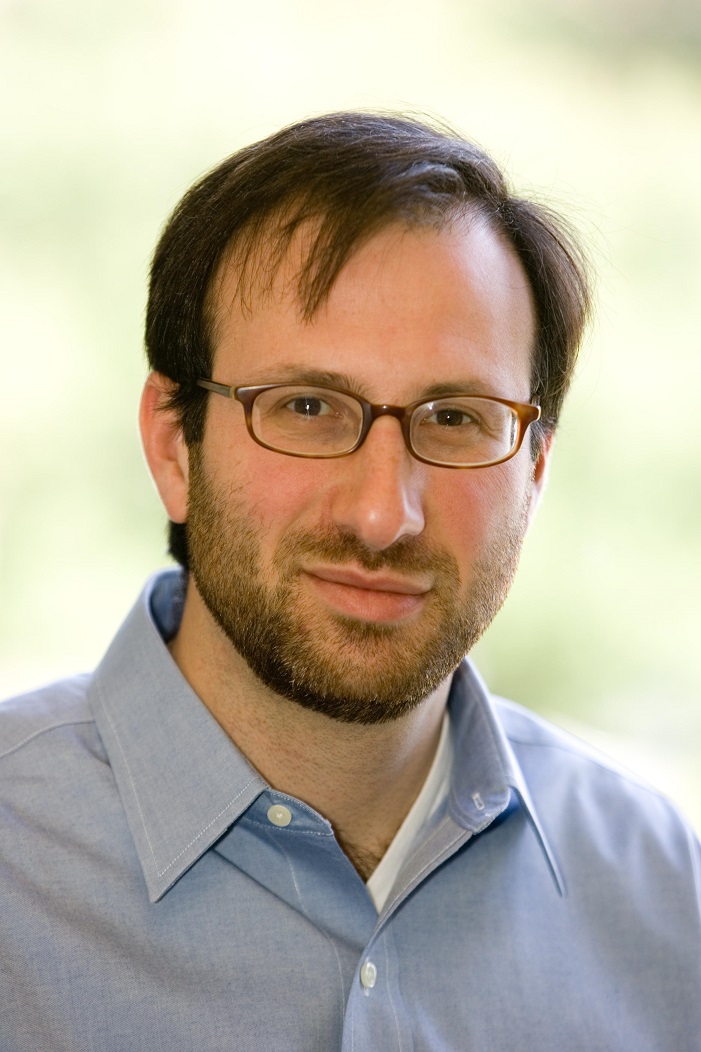
“Organic electronic devices” is the subject of the plenary talk that will be given by Professor Alberto Salleo at the XIII SBPMat Meeting. Professor Salleo is the head of a research group at Stanford University (USA), working on novel materials and processing techniques for large-area and flexible electronic/photonic devices. Salleo received his Laurea degree in Chemistry in 1994 from the University of Rome La Sapienza (Italy) and his M.S. (1998) and Ph.D. (2001) in Materials Science from UC Berkeley (USA) investigating optical breakdown in fused silica. He spent 4 years at the Palo Alto Research Center (USA) before joining the Department of Materials Science and Engineering at Stanford University in December 2005. Salleo is Principal Editor of MRS Communications, Associate Editor of the Journal of Electronic Materials, and member of the Advisory Board of the Journal of Organic Electronics. Salleo was awarded the Early Career Achievement Award from SPIE, the International Society for Optics and Photonics and the 3M Untenured Faculty Award, among other honors. He has (co)/authored over 140 papers in peer-reviewed journals and 6 book chapters and has co-authored a book on flexible electronics.
Read our interview with the lecturer.
SBPMat newsletter: – Please choose some of your main publications on organic electronics to share them with our public.
Alberto Salleo: – My group has long been interested in the role defects play in transport in organic semiconductors. We combine materials characterization to correlate structure to properties and really get deep in the “Materials Science” of organic semiconductors. In 2009 we looked at the role of grain-boundary structure in charge transport in crystalline organic semiconductors [J. Rivnay, L. Jimison, J. Northrup, M. Toney, R. Noriega, T. Marks, A. Facchetti, A. Salleo, “Large Modulation of Carrier Transport by Grain Boundary Molecular Packing and Microstructure in Organic Semiconductor Thin Films. Implications for Organic Transistor Performance”, Nature Materials 8, 952-958 (2009)]. Later, we extended this work to understanding how the microstructure of semicrystalline polymers affects carrier mobility and we outlined some basic design rules for materials [R. Noriega, J. Rivnay, K. Vandewal, F.P.V. Koch, N. Stingelin, P. Smith, M.F. Toney, A. Salleo, “A general relationship between disorder, aggregation and charge transport in conjugated polymers”, Nature Materials, 12, 1037-1043 (2013)].
In the last few years we have been interested in the fundamental processes of charge generation in organic photovoltaics. In collaboration with other groups we discovered the fundamental intermediate of the charge generation process, which is the thermalized charge-transfer state [K. Vandewal, S. Albrecht, E.T. Hoke, K.R. Graham, J. Widmer, J.D. Douglas, M. Schubert, W.R. Mateker, J.T. Bloking, G.F. Burkhard, A. Sellinger, J.M.J. Frechet, A. Amassian, M.K. Riede, M.D. McGehee, D. Neher, A. Salleo, “Efficient charge generation by relaxed charge-transfer states at organic interfaces,” Nature Materials 13, 63-68 (2014)].
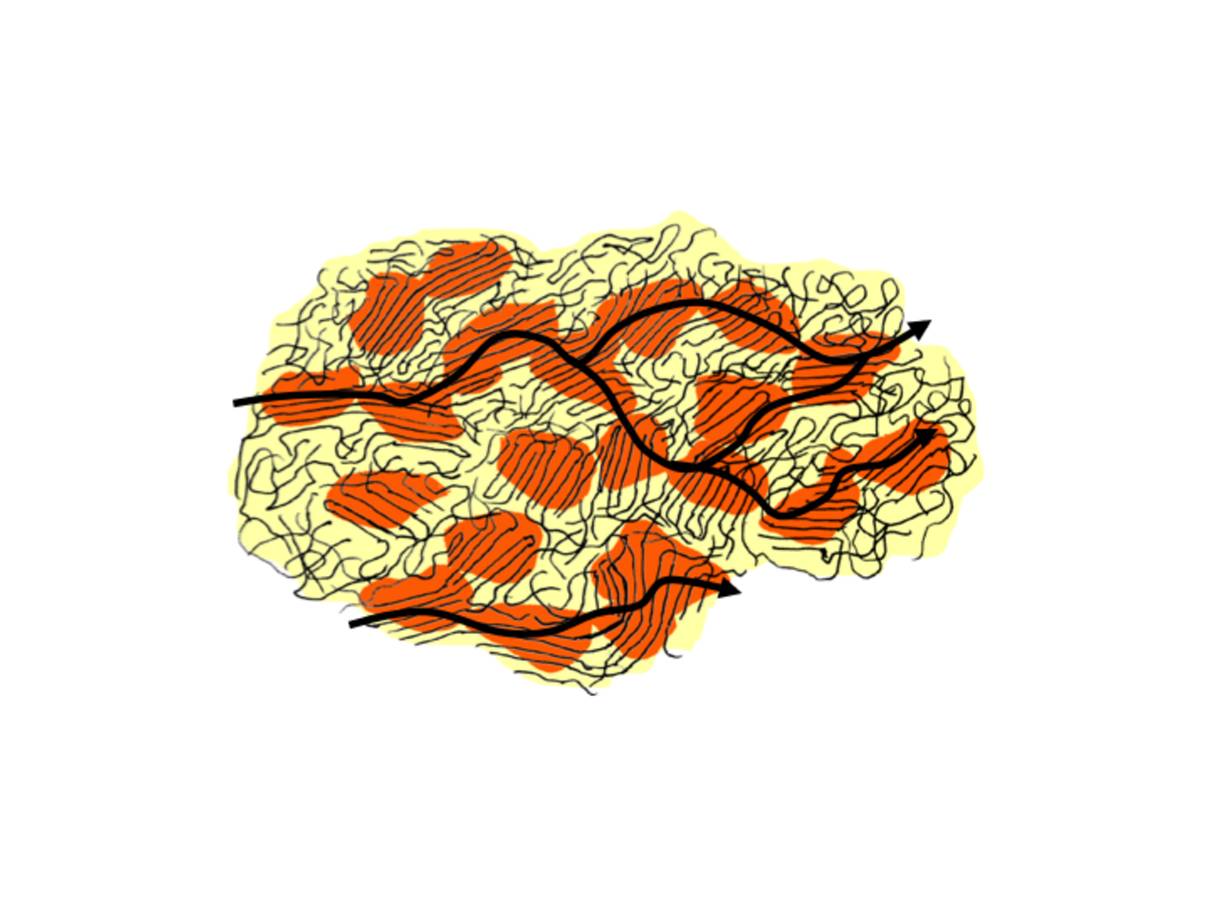
Charge transport in heterogeneous polymeric microstructures is dominated by percolation through ordered regions.
SBPMat newsletter: – In your opinion, which are the organic electronics´main challenges for Materials Science and Engineering? And the main applications of organic semiconductors we´ll see in everyday life in the next decades?
Alberto Salleo: – Because these materials are bound by weak van der Waals bonds, their microstructure is very process-dependent. This is a great property for fundamental studies as it allows to generate a zoo of structures relatively easily. On the other hand, most applications require that many (sometimes thousands) of devices be integrated, which puts stringent requirements on the reproducibility of the electrical characteristics. Reaching the level of reproducibility needed to build somewhat complex circuits is still challenging.
As far as applications, it is important to think of a space that is well-matched to the unique properties of organic semiconductors. OLED displays are already commercial but maybe in the future they can be driven by organic transistors to further push flexibility and fabrication sustainability. OLEDs are also exciting as low-power, low-cost lighting sources. Of course, there is continuing progress in photovoltaics and the possibility of organics being part of tandem cells is becoming ever more realistic, while fundamental breakthroughs may also make them competitive as single junctions in specific applications where their low weight and flexibility add value. Finally, there are plenty of applications that don’t require great speed but that take advantage of the mechanical properties of organics. I am thinking of bio-electronics and wearable electronics, which are experiencing a significant growth lately. Organic devices have been used to monitor brain signals and to deliver drugs locally, as well as to measure heartbeat or oxygen content in blood.
SBPMat newsletter: – Tell us a little about the plenary lecture on organic electronic devices you are going to give at the XIII SBPMat Meeting.
Alberto Salleo – My interest is in understanding how microstructure and defects play a role in materials properties. In the end, these relationships are important for all devices, therefore I view our work as quite fundamental, regardless of applications. My goal for the lecture is to pick a device (I have a few months to decide which one!) and show exactly how the structure of the material at all length-scales affects the device behavior. This type of studies provides a nexus between scientists who make materials, those who process materials and those who design devices.
Brazilian Materials Research Society (SBPMat) newsletter
News update from Brazil for the Materials community
English edition. Year 1, issue 4.
Greetings, .
SBPMat’s news
XIII SBPMat meeting:
João Pessoa, September 28th, to October 2nd.
– Until May 23rd, the submission of abstracts is open for the SBPMAT symposia, which cover 19 different fields. The best papers presented by students in each symposium will be granted with the Bernhard Gross Award, and may be published in a special issue of IOP’s open access journal. More.
– Do you wish to help promoting the XIII SBPMat Meeting? On the website of the event, you may find and print its poster and folder.
Other SBPMat news
– Materials Today published our “featured paper” of March. Read.
– Our Facebook profile already has more than 1,000 followers. Don’t you know it yet? Like our Facebook and follow the Brazilian and international news on Materials research.
Featured paper with Brazilian participation
A team of researchers from Brazilian universities (Federal University of Uberlândia and University of Brasília) have developed a new method to synthesize quantum dots. In addition to be cheap, reproducible and efficient to produce the minuscule semiconductor crystals, the method comes with a bonus: the modulation of the thickness of the quantum dots’ shells. Promising for biotechnological applications, the results of the paper were published on ACS Nano. Read the story.
(To suggest papers with Materials focus with Brazilian participation published in high impact journals for this section of our newsletter contact comunicacao@sbpmat.org.br)
SBPMat’s community people
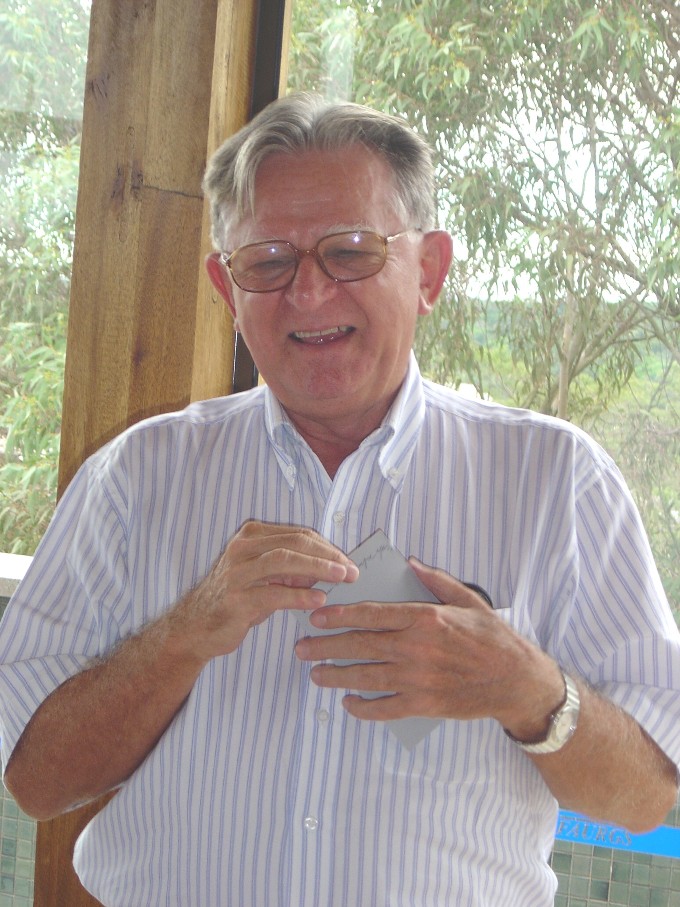
We talked with researcher Fernando Zawislak, the introducer of the field of ion implantation in Brazil. More than 30 years ago, Zawislak founded the Ion Implantation Laboratory at the Federal University of Rio Grande do Sul (UFRGS) – still the largest in Latin America, to this day – which approaches numerous fields of knowledge by means of the creation of nanostructures and the analysis of materials with ion beams. The scientist also was one the founders of the Graduate Studies Program in Materials Sciences in UFRGS. In our interview, the Emeritus Professor talked about such contributions and what led him to achieve them. He also left a message to younger researchers, advising them to choose a field they like, an advisor in a modern research field, and to have an entrepreneurial spirit and an open mind to multidisciplinarity.
Professor Edgar Zanotto honored for his actions for the development of the city of São Carlos, the “Brazilian Capital of Technology“. Here.
Professor Victor Pandolfelli elected for the advisory board of the World Academy of Ceramics. Here.
Reading recommendations
Science journalism stories based on papers published in journals with high impact factor.
– Biomimetic materials: inspired by the structure of nacre, new ceramics achieves tenacity, resistance and hardness (based on paper from Nature Materials). Read it here.
– As it was reinforced concrete, graphene is reinforced with carbon nanotubes, with potential use in flexible screens (based on paper from ACS Nano). Read it here.
– Nanobionic plants:carbon nanotubes enhance the photosynthesis and introduce non-natural functions to plants (based on paper from Nature Materials). Read it here.
– Acoustic cloak: 3D device turns a region of space “invisible to sound” (based on paper from Nature Materials). Read it here. Materials news from the Brazilian National Institutes of Science and Technology (INCTs).
– INCT on Functional Complex Materials: Triboelectrification is an important element of friction. Read it here.
– Nanotoxicity of graphene and graphene oxide: paper of Brazilian researchers on the cover of ACS journal. Read it here.
– Sensor developed in INCT Namitec is used in floriculture. Read it here.
– Namitec develops sensor for ionizing radiation, which may prevent interferences in devices for satellites, airplanes etc. Read it here.
Fernando Claudio Zawislak was born in 1935, in the city of Santa Rosa, state of Rio Grande do Sul (RS), in a family with Polish origins, which lived in the rural area. In decade of 1940, his parents sent him to Porto Alegre, the capital of Rio Grande do Sul, with one of his siblings, so they could study in a boarding school. In 1952, the whole family moved to the city, proceeding with the decision to prioritize the education of the children.
In 1958, Fernando Zawislak graduated in Physics in the Federal University of Rio Grande do Sul (UFRGS). From 1960 to 1961, he took a research internship in the Van de Graff Laboratory of the University of São Paulo (USP) with Professors Oscar Sala and Ernst Hamburguer. There, he had the first contacts with research. Then, he returned to the Physics Institute of UFRGS, started and coordinated an experimental research group in the field of Nuclear Physics. In said field, advised by Professor John D. Rogers, he was granted the PhD degree, for which he was approved “with honors” in 1967, becoming the first PhD in Physics graduated by UFRGS. From 1968 to 1970, he attended his postdoctoral studies in the California Institute of Technology (Caltech), in the United States.
In 1979, he started working in the field of ion implantation and use of ion beam techniques to modify and analyze materials. With this goal, he worked as a visiting researcher for a year in the Ion Implantation Laboratory of Orsay, in the University of Paris (France). In 1981, he founded the UFRGS’ Ion Implantation Laboratory, upon acquiring a 400 kV accelerator. In 1996, he managed to buy a 3 MV accelerator, which allowed to expand the activities of the laboratory to new fields, as semiconductors, polymers, metals and alloys, to name a few. He coordinated the Ion Implantation Laboratory since its foundation up to 2009. Today, the Laboratory is the largest of its kind in Latin America, counting, among its results, with more than 60 graduated doctors, approximately 1,000 papers, and studies developed jointly with groups from Argentina, Australia, Brazil, Denmark, France, Germany, New Zealand, South Korea, Spain and United States. During the decade of 1990, Zawislak took part in the planning and raising of funds of UFRGS’ Electron Microscopy Center and the creation of the UFRGS’ Graduate Studies Program in Materials Science (PGCIMAT).
Professor Zawislak retired from UFRGS in 2005. He is an Emeritus Professor of the institution, a level 1A (the highest one) researcher of the BrazilianCouncil for Scientific and Technological Development (CNPq), sitting member of the Brazilian Academy of Sciences, as well as Commander with the Grand Cross of the Brazilian National Order of Scientific Merit. During his career, he graduated 14 doctors and 16 masters, authored or co-authored more than 160 scientific articles in indexed international journals, and was the chairman of, among others, two of the most important international conferences in the field of ion implantation, the Ion Beam Modification of Materials (in the city of Canela, RS, 2000) and the Radiation Effects in Insulators (in the city of Gramado, RS, 2003), both held for the first time in a Latin American country.
Following there is a brief interview with the researcher.
SBPMat Newsletter: – In your own point of view, what are your main contributions to Materials Science and Engineering? Tell us what led you to achieve them, as well.
Fernando Zawislak: – I started my scientific career working in the field of Experimental Nuclear Physics. I even completed my Doctorate in this field. In 1968, I went to California to attend my postdoctoral studies in the California Institute of Technology. There, in this institute, the field of Materials Science was getting started, and, more specifically, the field of ion implantation and analysis of ion beams. The United States had decided to invest heavily in the field of interdisciplinarity, mainly in Materials Sciences. There, in Caltech, I didn’t work with Materials, but followed the studies. Then I thought, “If I have the opportunity, I am going to start this field of ion implantation and materials studies with ion beams in Brazil.”
California was one of the three or four places in the world where the field of ion implantation and materials analysis was being established. And I used to attend the seminars, despite working in other field. Then, I returned to Brazil in 1970, but only in 1982 I managed to install the Ion Implantation Laboratory. It was a radical change in my life, but I think this is important: all researchers should, if possible, change their fields once or twice along their careers, in order to always move to a more modern one. I was working in an old field, in which it was hard to publish, while ion implantation was just beginning, and until now is very important.
In this field of Materials Science, which I started in 1982, when I changed mine, I acquired the first implanter, and graduated, in this twenty-something years, up to my retirement, many doctors and masters, authored more than one hundred published papers and developed studies, basically, in the field of materials nanostructures and modification of materials with ion beams.
Actually, I was interested in interdisciplinarity, and the field of Materials Science is clearly interdisciplinary. Such interdisciplinarity is absolutely necessary, as the United States discovered, founding, around that time, twenty interdisciplinary centers. So, in Brazil, once I returned, I started to struggle for this interdisciplinarity. Everyone was in favor, really, but neither the university, nor the funding agencies supported the interdisciplinary fields. There was domination of the classic subjects. Each department focused its own field, and, when new ones were on the rise, people didn’t want to share, didn’t want lose students, scholarships… Well, but we struggled quite a lot, and I was one of those who fought for the creation of the Graduate Program in Materials Sciences in UFRGS, jointly with colleagues from Physics, Chemistry, Engineering. And we managed to do it.
Then, the results of my activity with Materials were, on one hand, the Laboratory of Ion Implantation, and, on the other, the creation of the Graduate Studies in Materials Science. I also acted very intensely, trying to convince people, during scientific meetings, that it was absolutely crucial to enter in the interdisciplinary field, because all great advancements in research and innovation are interdisciplinary.
Up to this day, the Ion Implantation Laboratory is the largest in Latin America, and is similar in efficiency and equipment to many good labs around the world. Our laboratory has 25 doctors, considering that there are always 21 or 22 permanent ones, and 3 or 4 postdoctoral fellows. It counts with 30 graduate students, half a dozen of technicians, plus the undergratuate students… We have a total of more than 50 people in the lab. I headed it until 2010, when I was replaced by my colleague, a young man, Pedro Grande.
The Graduate Studies course in Materials Science, I think, is also doing very well, but there are hardships yet. I supervised students of the course, but now I am retired.
SBPMat Newsletter: – In your opinions, what are the main current challenges in the field of ion implantation, regarding Materials Science and Engineering?
Fernando Zawislak: – I think the key point about ion implantation is that it comprises several fields of research, starting with Physics, Chemistry, many types of Engineering, Biology, Genetics, Geology, which are all fields where the ion implantation and, mainly, the analysis of materials in the accelerator, are important. We managed to measure very small amounts of impurities, for example. For the last five years, we introduced microbeams, beams focused to the size of a micron. Such beams have conditions to analyze microstructures from Geology or Microelectronics. Now, we have two accelerators in the lab, a smaller one, which was the first, and another, with 3 MV, acquired in the end of the decade of 1990. The techniques, such as RBS, MEIS etc, even measure the shapes and sizes of the nanoparticles. We implant a impurity in a matrix, and, depending on the energy of the implantation, and the temperature, we can produce nanoparticles from 2 or 3 nm to 100 nm. So, I think that the future and the challenges are both great, and the technique has a lot of potential in many fields. For example, we are analyzing the wine made in Rio Grande do Sul. I think that the lab is doing very well. I retired but, thank God, I was well replaced. Now, it is doing even better than when I was the coordinator.
SBPMat Newsletter: – Tell us which are your main current occupations, and your projects for the future.
Fernando Zawislak: – Well, I am not really thinking that much about the future. I have been retired for ten years, I’m an Emeritus Professor. I still receive CNPq’s sponsorship, as I continue to produce papers, but now my productivity, strictly in research, is decreasing. I’m using my time to help younger colleagues, attending some societies, some councils… In short, activities for someone who is already retired. My last student, a doctor, graduated last year, and I’m not accepting students anymore, but I still help, if they ask me for something.
SBPMat Newsletter: – Would you like to leave a message to our readers who are starting their careers as scientists?
I think that what is important for researchers is choosing a career in a field that they like. As a Professor, many students asked me “Which career my children should follow”? , and I used to answer “Any one, as long as they like it. All are good”.
I also think that young people, now, shouldn’t narrow their undergraduate studies in just one field, that much. I think they should be open-minded to interdisciplinarity, collaborate with other colleagues, and eventually attend subjects in other fields. To me, it is very important, because focusing too much in one field has a very restricted specter: they may end up teaching at a university. And I think that the expectation in Brazil is for young people to move on from college and create industries, innovation, etc.
Penultimate advice: choose an advisor that works in a modern field of work.
And the last one is: you must have an entrepreneurial spirit. That is lacking. In Brazil, this issue of the interaction between the industry and university is frequently discussed, but there is no way, it is not possible to transform an “old” industrial that became rich making screws, and convince him that he must hire doctors and build a research lab. The young people are the ones who must initiate this. In the results of our universities, some successes in technological innovation were achieved by students that complete their doctorate and even their undergraduate studies. So, how do we produce young entrepreneurs? They must look for internships, in the industry, if possible, and go to a country where there is such entrepreneurial culture, as, for example, the United States, Germany, Korea or Japan, Here in Brazil, chemists generally display more of an entrepreneurial spirit than physicists, some fields of engineering too, but it is still lacking, and it is extremely important. It would be important to make youth aware that they can leave college and go to a new field, to make technonogical innovation happens.
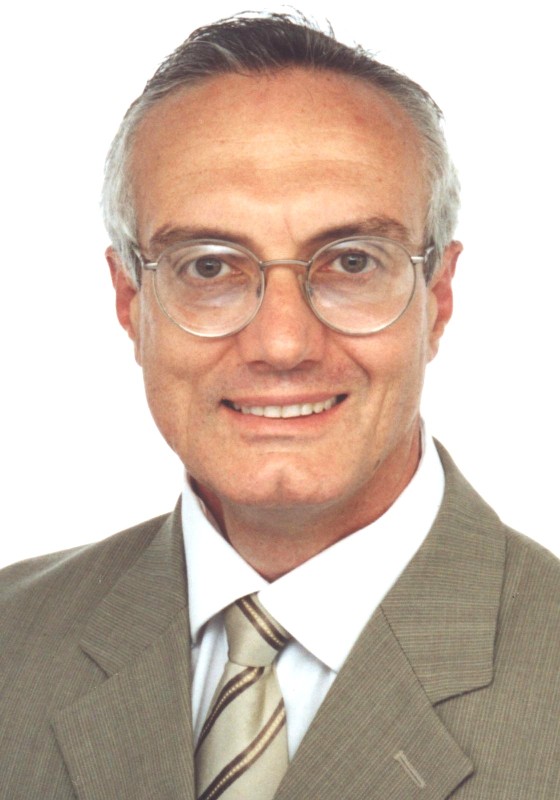
The Materials field researcher Victor C. Pandolfelli, Professor of the Materials Engineering Department at the Federal University of São Carlos (UFSCar), was elected as a member of the advisory board of the World Academy of Ceramics – WAC, for the term from 2014 to 2018. He will be, jointly with a researcher from the United States, the representative of the Americas in this entity.
The World Academy of Ceramics was founded in 1987. Its purpose is to enhance science and technology, and accredit the researchers who develop their studies in this field of work. It is an non-profit organization, whose members pass through a strict selective process, comprising being nominated by two sitting members, the evaluation of these nominations by pairs selected by the Academy, and the final approval of, at least, ten of fifteen members of the advisory board. As the main activities of the researchers elected in such committee, there are 1) reviewing the WAC admission rules, 2) defining the members that will take part in the new nominees selective processes, 3) defining the speakers for the technical presentation and award in the scientific forum for members of the Academy.
The investiture of Pandolfelli and the first meeting of the committee will be held next June, in Montecatini Termi, Italy.
Professor Edgar Dutra Zanotto. Photo: Enzo Kuratomi/ UFSCar.
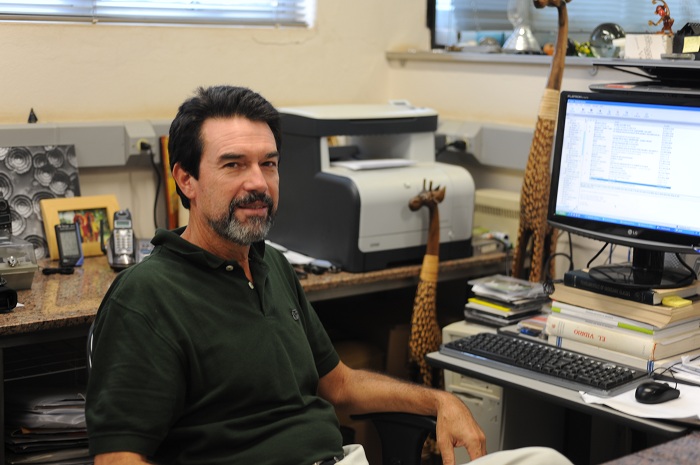
On April 25th, the Materials field researcher Edgar Dutra Zanotto, one of the main founders of our Brazilian Materials Research Society (SBPMat), received the title of Technology Pawn from the São Carlos city Science Park Foundation (ParqTec). Created in 1993, the title is granted to people who contributed substantially, by means of technological innovation, to enhance production, quality and competitively for products, processes and services in companies. The ceremony, held in the São Carlos Science Park, was attended by researchers and entrepreneurs, as well as local and regional authorities. In the same ceremony, Professor José Guilherme Sabe also received the title.
According to the chairman of the ParqTec board, Irineu Gualtieri, the award was granted to the Professors due their actions for the development of the city. “With their pioneering spirit and innovation, the laureates have been contributing in a substantial way for the construction of the Brazilian Technology Capital [São Carlos], developing researches, implanting projects and encouraging the rise of new companies” Gualtieri said. “The laureates have all features of a Technology Pawn. They are dynamic, strategic, innovative, active, transparent and human”, concluded the president of ParqTec, Sylvio Goulart Rosa Jr.
About Professor Edgar Dutra Zanotto
Professor Edgar Dutra Zanotto is a Materials Engineer by UFSCar, Master in Physics by IFSC – USP, and PhD in Glass Technology by the University of Sheffield, in England. He worked as a Visiting Professor in the department of Materials Science and Engineering of the University of Arizona in 1987, and in the College of Optics and Photonics of the University of Central Florida in 2005, both in the USA.
The researcher, full Professor in the Materials Engineering Department at the Federal University of São Carlos (UFSCar), and member of ParqTec Curators Council, received in 2012 the Almirante Álvaro Alberto national science and technology award. Zanotto was granted with more 25 awards, which include three of the most important in glass sciences (Zachariasen Award,granted by the Journal of Non-Crystalline Solids, Vittorio Gottardi Prize by International Commission on Glass, and G. W. Morey Award by the American Ceramic Society).
The research activities of the Professor and his collaborators focus mainly on the theme of crystallization and properties of glass. They have published more than 200 papers and executed more than twenty projects jointly with companies. Zanotto also has 12 registered patents, two of which received awards from the Brazilian Ministry of Education and IBM, as well as the national contest State Governor Award for Brazilian inventions, in 1996.
Zanotto is level 1A (the highest one) CNPq researcher, member of the United Kingdom Society of Glass Technology, the Brazilian Academy of Sciences (ABC), the Academy of Sciences of the State of São Paulo (ACIESP), the World Academy of Ceramics (WAC), and The World Academy of Science (TWAS) for the advancement of science in developing countries.
Professor Zanotto also worked as deputy coordinator in the scientific division of São Paulo Research Foundation (FAPESP), from 1995 to 2005, taking an active part in the conception and implantation of several projects for the development of research and scientific dissemination. Currently, he accumulates the following managing and consulting functions: director of CeRTEV – Center for Research, Technology and Education in Vitreous Materials, supervisor of the Vitreous Materials Laboratory (LaMaV) at UFSCar, chief editor of the Journal of Non-Crystalline Solids, secretary of the glass and optical materials division of ACerS (EUA), vice-chair of the technical committee on glass crystallization of the International Commission on Glass; member of the councils of International Materials Institute (USA), ACIESP and IMPA; director of the Brazilian Ceramics Association, and Curator of Parqtec, since 1984.
(Text based on the press released provided by ParqTec)
The scientific paper by members of the Brazilian community on Materials research featured this month is:
Anielle Christine A. Silva, Sebastião W. da Silva, Paulo C. Morais, and Noelio O. Dantas. Shell thickness modulation in ultrasmall CdSe/CdS(x)Se(1-x)/CdS core/shell quantum dots via 1-thioglycerol. ACS Nano, 2014 Feb 25; 8(2):1913-22. DOI: 10.1021/nn406478f.
Ultrasmall crystals with modulated shell thickness.
When Professor Noelio Oliveira Dantas, at the Brazilian Federal University of Uberlândia (UFU), had the idea of a new chemical method for the synthesis of quantum dots (semiconductor crystals with only a few nanometers of size), he was studying ways to synthesize the tiny crystals aiming to biotechnological applications.
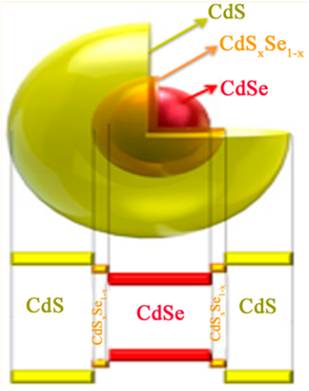
Representation of a quantum dot obtained with new method reported in the article.
However, the results exceeded the initial expectations. In addition to produce ultrasmall quantum dots, composed, basically, of a cadmium selenide (CdSe) core and a cadmium sulfide (CdS) shell, the new method, which is cheap and highly reproducible, was a surprise because of its capacity to modulate the quantum dots’ shell thickness, an innovation compared to other known routes.
The study was developed during the PhD research that Anielle Christine Almeida Silva develops at the Physics Institute at UFU, under Professor Dantas supervision. Some results of the research were published this year by the journal ACS Nano, in an article signed by the PhD student and her advisor, jointly with two collaborators from University of Brasília, who contributed with the characterization of the quantum dots using Raman spectroscopy, and took part discussing the results.
The paper
“The main scientific contribution of this article is the proposal of a new synthesis route, via an aqueous solution, which allowed the modulation of the CdS shells’ thickness in CdSe ultrasmall quantum dots, depending on the concentration of 1-thioglycerol”, summarized Anielle. More precisely, the researchers discovered that, while smaller concentrations of 1-thioglycerol limit the growth of the cores of the quantum dots, larger amounts of the compound promote the modulated growth of their shells.
The produced ultrasmall crystals had less than 2 nm in the core, and from 0.50 to 1.25 nm in the shell. In order to calculate these dimensions from Raman spectra, the authors of the article used a model of phonon confinement with modifications proposed by themselves and another author in an article published in 2013 (Anielle Christine Almeida Silva; Ernesto Soares de Freitas Neto; Sebastião William da Silva; Paulo Cesar de Morais; Noelio Oliveira Dantas. Modified Phonon Confinement Model and its Application to CdSe/CdS Core-Shell Magic-Sized Quantum Dots Synthesized in Aqueous Solution by a New Route. Journal of Physical Chemistry. C, v. 117, p. 1904-1914, 2013.).
Regarding the biotechnological application initially expected, the authors explain that such quantum dots obtained with the new route are promising due their capacity to be easily dispersed in aqueous environments. According to the scientists, the structure of the produced ultrasmall crystals, which is similar to a sandwich with two slices of bread and a fine filling, may contribute to a higher quantum efficiency and stability in biological environments.