
Author: Verónica Savignano
(Português) Concurso para professor no Instituto de Física da UFG (Goiânia, GO).
SBPMat newsletter. English edition. Year 1, issue 7.
|
||||||||||||||||||||||||||||||||
Interviews with plenary lecturers of the XIII SBPMat Meeting: Roberto Dovesi (Universita’ degli Studi di Torino, Italy).
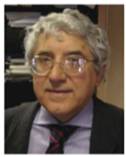 The Italian chemist Roberto Dovesi, full professor at Universita´degli Studi di Torino, where he heads the Theorical Chemistry Group, will be one of the plenary speakers in our XIII SBPMat Meeting. Dovesi will talk about theoretical calculations applied to materials.
His scientific activity focuses on the use of a quantum-mechanical approach to solid state chemistry, physics, materials science and surface science. In particular, his primary activityis the implementation of ab initio computer programs for the study of the electronic structure of periodic compounds.
Dovesi is one of the creators of CRYSTAL, a computational tool for the characterization of crystalline solids.The CRYSTAL project started in 1976, and involved (and still involves) a large number of collaborators from many countries. The first version of the software was released in 1988, and then new versions have followed. CRYSTAL is today a licenced program used in more than 350 laboratories in the world. In the last five years, more than 30 PhD students and post-docs from European countries visited the Torino Theoretical Chemistry Group in order to be introduced to the formal aspects and use of the CRYSTAL code.
Every year Dovesi’s group organizes international schools on the quantum-mechanical simulation of solids. One of them was held in 2012 in Brasil. This year four such schools are organized in Perth (Australia), Jahnsi (India), Regensburg (Germany), London (UK) (see at the EVENTS entry in the CRYSTAL web site) .
Roberto Dovesi is the author of more than 250 papers published in international journals and of one book (with Cesare Pisani and Carla Roetti) published by Springer in 1989. Since 1985, he received more than 7.000 citations with h-index=51.
Read our interview with the lecturer.
SBPMat newsletter: – Share with us, very briefly, the story of the developement of CRYSTAL since the first idea up to commercialization.
Roberto Dovesi: – In 1970 Cesare Pisani, Carla Roetti and myself decided to explore the possibilities of simulation as a complement to experiment in the study of crystalline solids.
We started to develop small codes on the basis of the analogy with the codes that were appearing in the litterature as produced mainly by USA universities. In 1976 we started to implement an ab initio quantum mechanical code for solids, using tools and methodologies that were common to the Theoretical Chemistry community (as opposed to the Solid State community). It took 4 years of very hard study and coding to have a first, preliminary result, the band structure of graphite, and its total energy. Eight years later, in 1988, CRYSTAL was ripe enough to be publicly distributed by QCPE (Quantum Chemistry Program Exchange). CRYSTAL has been the first periodic code distributed publicly to the scientific community.
In the meantime many new collaborators where joining the group from many countries (I want to mention at least one of them, Vic Saunders, fron the Daresbury Laboratory, U.K). In the following years many new public releases have been distributed (1992, 95, 98, 2003, 2006, 2009, 2014), each one corresponding to generalizations and extensions of the code in many directions. The last release (CRY14) has been distributed in more than 200 laboratories in less than one year.
SBPMat newsletter: – Please explain to our broad audience what can be done with CRYSTAL in the field of Materials Science and Engineering.
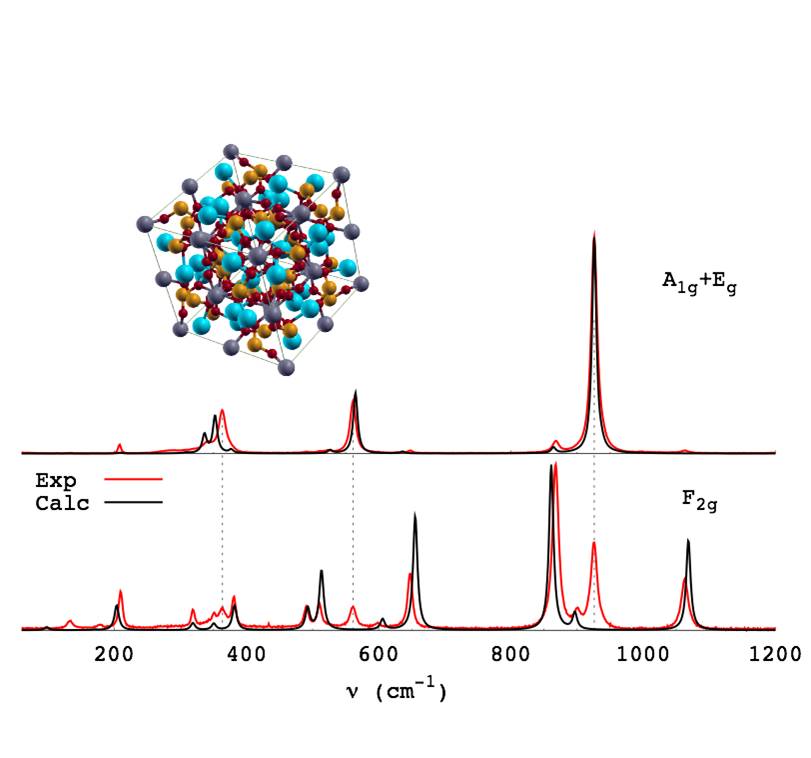
Roberto Dovesi:- CRYSTAL can be used for studying many ground state properties of systems periodic in 1 (nanotubes, polymers), 2 (monolayers, slabs) and 3 (crystals) dimensions; solid solutions, molecules and clusters can be investigated too. Hartree-Fock and DFT of various flavours are the available hamiltonians. A very large set of properties can be studied, the list can be found at www.crystal.unito.it. A short list includes the elastic, piezo-electric, photo-elastic, dielectric, polarizability and hyperpolarizability tensors, the IR and RAMAN spectra, the electron and phonon band structure.
SBPMat newsletter: – Please choose some of your main publications (about 3 or 4) to share them with our public.
Roberto Dovesi: –
1. Raman Spectrum of Pyrope Garnet. A Quantum Mechanical Simulation of Frequencies, Intensities, and Isotope Shifts. Lorenzo Maschio, Bernard Kirtman, Simone Salustro, Claudio M. Zicovich-Wilson, Roberto Orlando and Roberto Dovesi. J. Phys. Chem. A, 2013, 117 (45), pp 11464–11471.
2. Structural, electronic and energetic properties of giant icosahedral fullerenes up to C6000: insights from an ab initiohybrid DFT study. Yves Noel, Marco De La Pierre, Claudio Marcelo Zicovich Wilson, Roberto Orlando, Roberto Dovesi. Phys Chem Chem Phys. 2014, Jun 11; 16(26):13390-401.
3. Symmetry and random sampling of symmetry independent configurations for the simulation of disordered solids. Philippe D’Arco, Sami Mustapha, Matteo Ferrabone, Yves Noël, Marco De La Pierre, Roberto Dovesi. J Phys Condens Matter. 2013 Sep 4; 25(35): 355401.
SBPMat newsletter: – Tell us what do you intend to broach in your plenary talk at SBPMat meeting.
Roberto Dovesi: – I will try to show that nowadays quantum mechanical simulation can be an useful complementary tool to experiment. The decreasing cost of the harware, and the availability of powerful, accurate and general computer codes permits to perform simulations also to non experts. I will show that the number of available properties makes simulation very interesting.
Featured paper: Graphene sheets engraved with helium ions.
The scientific paper by members of the Brazilian community on Materials research featured this month is:
Archanjo, B.S.; Fragneaud, B.; Cancado, L.G.; Winston, D.; Miao, F.; Achete, C.A.; Medeiros-Ribeiro, G. Graphene nanoribbon superlattices fabricated via He ion lithography. Appl. Phys. Lett. 104, 193114 (2014); http://dx.doi.org/10.1063/1.4878407.
Graphene sheets engraved with helium ions
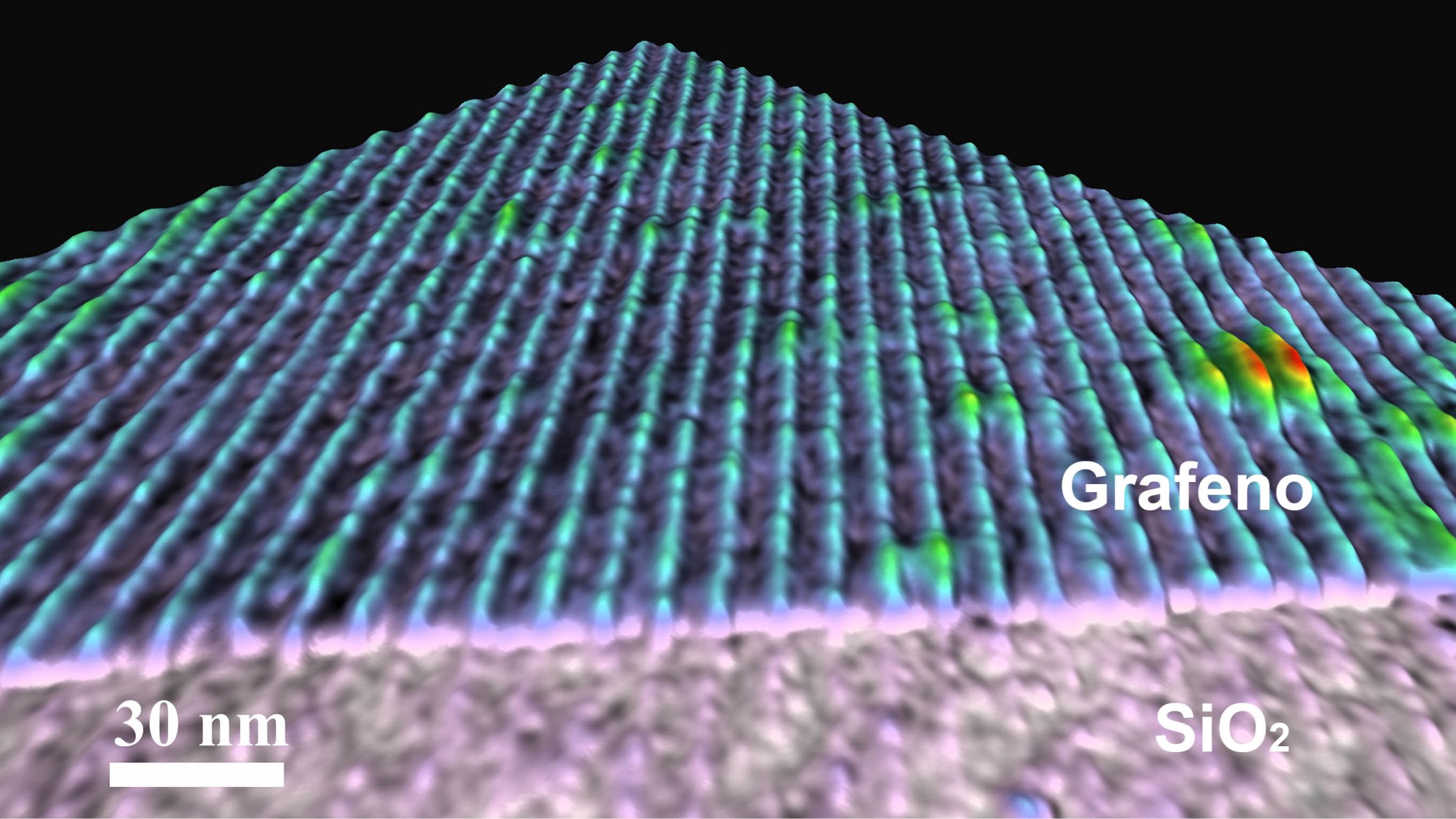
In a study led by researchers from Brazil and recently published in Applied Physics Letters (APL), scientists have engraved, on graphene sheets, nanosized periodic patterns, using a new method for that application, the helium hion beam lithography.
The team of scientists used a helium ion microscope (HIM) in order to bombard graphene with these ions and, thus, engrave parallel lines of length 1mm and width of only 5 nm, defining, among them, 20 nm-width ribbons (nanoribbons).
In addition to being quick and simple, the method has proven to be very accurate: it generated point defects smaller than other similar techniques and significantly preserved the atomic structure of the nanoribbons.
The new method extends the application possibilities of graphene, which, it is worth highlighting, is a flat material (it is only one atom tall) composed of densely packed carbon atoms, and which stands out because it can be used in nanoscale and for its high mechanical resistance, great electricity and heat conduction, transparency, and flexibility, among other properties.
“Direct writing in graphene using the focused beams of helium ions allows the fast manufacturing of different devices”, says Braulio Archanjo, researcher at the Brazilian National Institute of Metrology, Quality, and Technology (Inmetro) and lead author of the APL’s article. As an example, Archanjo mentions the possibility of manufacturing, in a near future, in pure graphene, the so-called “PN junctions”, essencial structures in semiconductor devices such as diodes and transistors, widely used in the production of electronics. Today, these structures are basically made in silicon.
The story of the work
In the context of studies on graphene metrology performed in the recent years at Inmetro, reports Archanjo, emerged the idea of manufacturing, in a controlled manner, periodic “defect” patterns, such as the parallel lines of the APL work. In 2012, an Inmetro team, in collaboration with researchers of the Federal University of Minas Gerais (UFMG), published a paper on periodic patterns engraved on graphene using a beam of gallium ions through FIB (focused ion beam) equipment.
Later, in a meeting of Archanjo with professors Carlos Achete, from the Federal University of Rio de Janeiro (UFRJ) and from Inmetro, and Gilberto Medeiros, from UFMG and from the research and development laboratory of Hewlett-Packard (HP Labs), a second work was planned, which would use, instead of FIB equipment, a HIM equipment, which resolution is up to ten times higher, but which is still not available in Brazilian territory.
So Archanjo spent three weeks in Silicon Valley, in the United States, using the HIM of HP Labs to make lithography in graphene samples manufactured at Inmetro. “We brought together the expertise we have here regarding graphene defects with the expertise of the HP Labs researchers regarding using a microscope of focused beams of helium ions”, summarizes the Inmetro researcher.
When he went back to Brazil with several graphene samples with engraved periodic patterns, the team began, at Inmetro, the study of such samples through atomic force microscopy and Raman spectroscopy. “This stage of the work was performed together with professors Benjamin Fragneaud, from the Federal University of Juiz de Fora (UFJF) and Luiz Gustavo Cançado, from UFMG”, tells Archanjo.
HIM: soon in Brazil
In the first semester of 2015, announces Archanjo, Brazil should have its first helium ion microscope. “The experience we gained performing the study at HP Labs will allow us to install it and use it”, says the researcher. The equipment will be available at Inmetro.
Made in Brazil: incorporating silver nanostructures into oral hygiene products eliminates 99% of bacteria and fungi.
 A research on the incorporation of silver with antibacterial properties on surfaces, conducted by the Center for the Development of Functional Materials (CDMF in Portuguese), one of the Research, Innovation and Dissemination Centers of the São Paulo Research Foundation (FAPESP) is being applied to toothbrushes.
OralGift, a company with 12 years of experience in the oral hygiene business, in association with CDMF and NANOX Tecnologia, released a new line of products coated with the NanoxClean technology. Produced with silver nanostructures incorporated into the raw materials, the surface of the product is protected against microorganisms and bacteria.
The researchers responsible for this work explain that damp environments, mainly bathrooms, display a large amount of bacteria and fungi. When toothbrushes are left exposed, there is a high possibility of contamination.
The technology incorporating silver nanostructures eliminates 99% of the bacteria and fungi accumulated on toothbrush and the cases used to keep them, as well as tongue cleaners.
The CDMF Director, Professor Eldon Longo, clarifies the importance of the association between the research developed at the university and the industrial-scale innovation made in companies: “Nanox is a first world company in innovation, with high technology. It develops products based on nanotechnology, mainly to healthcare. This innovation, released on the market, is another example of creativity in transforming knowledge into wealth for the country”.
About CDMF
The Center for the Development of Functional Materials (CDMF) is one of the Research, Innovation and Dissemination Centers (CEPID in Portuguese) supported by FAPESP (São Paulo Research Foundation), and the National Institute of Science and Technology of Materials in Nanotechnology, and counts with the collaboration of São Paulo State University (Unesp), Federal University of São Carlos (UFSCar), University of São Paulo, (USP) and the Nuclear and Energy Research Institute (Ipen).
Facebook profile: https://www.facebook.com/INCTMNCMDMC
NANOX
NANOX Tecnologia is located in São Carlos city (Brazil), and was created from a project developed by three young UFSCar students, which they improved during their graduate studies in the Chemistry Institute of Unesp at the Araraquara campus.
The company was among the first ones engaged in the field of nanotechnology in Brazil, and is currently considered the largest in its business in the country, being the first national company to export nanotechnology.
(From Fernanda Vilela – CDMF)
Interviews with plenary lecturers of the XIII SBPMat Meeting: Jean-Marie Dubois (Institut Jean-Lamour, França).
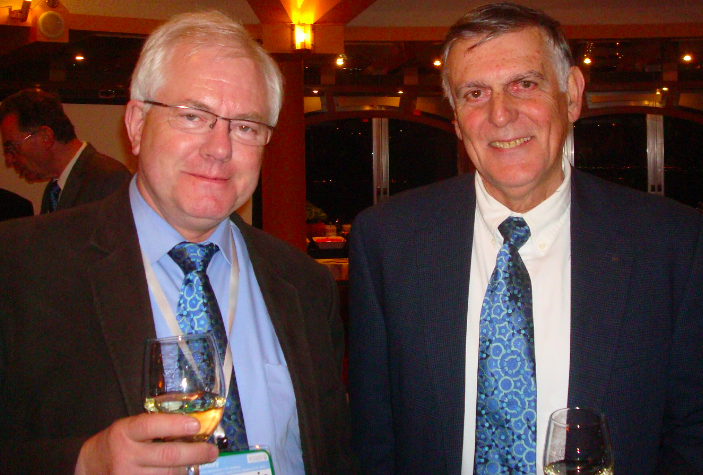
The French scientist Jean-Marie Dubois, PhD in Physics from National Polytechnic Institute of Lorraine (France) is a Distinguished Director of Research at the French National Center for Scientific Research, CNRS (France), where he chairs a committee dedicated to materials chemistry, nanomaterials and processing. He is the former director of Institut Jean Lamour in Nancy (France), a major research institute in field of materials.
His curriculum shows an international scientific trajectory. Dubois holds Honorary Doctorates (Dr Hon. Causa) from Iowa State University (USA) and Federal University of Paraïba (Brazil), is a former “overseas fellow” of Churchill College at University of Cambridge (U.K.) and a permanent visiting professor at Dalian University of Technology (China). He was recently elected as Honorary Member of Jožef Stefan Institute in Ljubljana (Slovenia). He is a member of Lorraine Academy of Sciences (France).
He is the author of more than 250 scientific articles in refereed journals, 14 international patents, and 7 books. His papers were cited more than 5400 times (H index = 39).
Read our interview with the lecturer.
SBPMat newsletter: – Under your viewpoint, which are your main contributions to the field of Materials Science and Engineering? And your scientific/technological contributions with more social impact (patents, products)?

Jean-Marie Dubois: – My first contribution that was aimed at a social impact was the discovery of Al-based metallic glasses, which could be good candidates for light-weight alloys useful for the aeronautic industry. I patented them in 1982, listing a number of favorable examples, and as is the rule for a patent, also counter examples. One such composition was in fact a stable quasicrystal, which was unraveled in Japan few years later. Based on this discovery, I was the first to patent few application niches of quasicrystals that are Al-based intermetallics showing no periodic order as do conventional crystals. The discovery of quasicrystals dates back to 1982, but was published in literature only in 1984, whereas my first patent on these materials was filed in 1988. From that on, I dedicated quite some efforts to discover, patent, and produce new research, about different areas of the physics of quasicrystals including thermal conductivity, adhesion and friction, corrosion resistance, etc. My leadership in this area of materials science is recognized by the international community through the “International Jean-Marie Dubois Award” that is offered every three year “to recognize important, sustained research on any aspect of quasicrystals within the 10-year period preceding the award”. Altogether, I own 14 international patents, with more than 35 extensions. I was responsaible for few tens of collaboration contracts with the industry, including a good dozen of contracts financed by the European Commissions with on average half a dozen of industrial partners and the same number of academic partners. The last one was a so-called Network of Excellence that started the field of Complex Metallic Alloys in Europe, with 20 partner institutions from 12 European countries and some 400 scientists on board.
SBPMat newsletter: – Please choose some of your main publications (about 3 or 4) to share them with our public.
Jean-Marie Dubois:
1) Useful Quasicrystals; J.M. DUBOIS, World Scientific, Singapour (2005), 470 pages.
2) Complex Metallic Alloys, Fundamentals and Applications; Eds. J.M. DUBOIS and E. BELIN-FERRÉ, Wiley (Weinheim, 2010), 409 p.
3) Topological instabilities in metallic lattices and glass formation; J.M. DUBOIS, J. Less Common Metals 145 (1988), 309-326.
4) The applied physics of quasicrystals; J.M. DUBOIS, Scripta Physica, T49 (1993) 17-23.
5) Properties- and applications of complex metallic alloys, J.M. DUBOIS, Chem. Soc. Rev., 41 (2012) 6760-6777.
SBPMat newsletter: – Please give us a short teaser about your plenary talk at SBPMat meeting. What do you intend to broach?
Jean-Marie Dubois: – My talk will be a laudation to the discoverer of quasicrystals who was awarded a Nobel Prize in Chemistry in 2011 for his discovery that forced the scientific community to revise its understanding of ordered condensed matter. Members of the MRS Brazil are used to know what is a crystal, a periodically ordered solid. I wish to introduce them to another type of order in solid, that is not periodic, and leads to unprecedented properties. Alloys that exhibit such a type of order are specific and I call them push-pull alloys. Then, I wish to show that this type of order is not restricted to metallic alloys, but may also be encountered in soft matter like polymers, oxides, artificial nanostructures, and even artistic drawings from ancient Islamic tilings. The talk will therefore be a review for the non-expert in quasicrystals and complex intermetallics
Faculty position opening: University of São Paulo, Institute of Physics, Department of Mechanics and Materials Physics.
Rank: Assistant Professor (Tenure track)
Application deadline: September 10th, 2014 (23:59, Brasília local time)
The Department of Materials Physics and Mechanics (DFMT) invites highly-motivated candidates to apply for a faculty position in the general areas of “Strongly Correlated Electron Systems” or “Molecular Magnetism” or “Interaction of the Electromagnetic Radiation with Matter”. The opening is for an experimental physicist at the tenure-track Assistant Professor level, and is part of an initiative for further significant growth in these areas of knowledge.
The University of São Paulo has been consistently ranked among the top research institutions in Latin America. DFMT has proven academic excellence, and its faculty members are extremely active in many different topics such as New Materials, Nanoscience, Quantum Devices, Semiconductors, Biomolecular Physics, Organic Semiconductors, Complex Systems, Low-Temperatures Physics, and Magnetism.
New faculty members are expected to teach undergraduate and graduate courses, show research productivity commensurate with their experience, and a capacity to develop and sustain a research program that will result in peer-reviewed publications. They are also expected to advise students, provide service to the university, and sustain international collaborations. Both the application and the selection process can be done in Portuguese or entirely in English if the candidate does not speak Portuguese. We strongly encourage candidates from Brazil as well as from other countries to apply. The application form and a description of the documentation necessary to apply can be found in the link Rules and Documentation. We expect the presential interviews to take place late in the second semester of 2014 in order to start the appointment by March 2015.
More information about DFMT, its research activitied and facilities can be found at
http://portal.if.usp.br/fmt/
If you have any questions, please feel free to contact us:
(Head of DFMT): Prof. Euzi C. F. da Silva (euzicfs@if.usp.br),
(Strongly Correlated Electron Systems): Prof. Renato Jardim (rjardim@if.usp.br)
(Molecular Magnetism): Prof. Rafael Freitas (freitas@if.usp.br)
(Electromagnetic Radiation Interaction with Matter):
Prof. Antonio Domingues dos Santos (adsantos@if.usp.br)
Prof. Alain André Quivy (aquivy@if.usp.br)
SBPMat newsletter. English edition. Year 1, issue 6.
|
||||||||||||||||||||||||||||||||||||||
XIII SBPMat Meeting: record of submissions with over 2,100 abstracts.
 The XIII SBPMat Meeting, to be held in João Pessoa from September 28 to October 02nd has registered more than 2,100 submitted papers – a record in the history of the Society’s annual meetings.
Among the 19 symposia of the event this year, the ones which received more submissions, holding over 200, were the symposium N, dedicated to Surface Engineering; M, on nanomaterials for nanomedicine, and B, about ceramic and metallic materials obtained through chemical methods.
The term for submitting abstracts ended on June 13. Until July 15, the authors of the submitted papers will be notified about their approval, necessary modifications or rejection.
Bernhard Gross Award
Among the accepted papers, the ones submitted by undergraduate or graduate students may compete for the Bernard Gross Award. With this award, the committee of the XIII SBPMat Meeting will distinguish the best papers presented by students in each symposium (one poster and one oral presentation, at most). The winning papers may be published in a special issue of the open access journal “IOP Conference Series: Materials Science and Engineering” dedicated to the XIII SBPMat Meeting, with no cost for the authors. To take part in the contest, the authors, once they are notified of the approval, must send an extended abstract, in compliance with the instructions and the model offered at the site of the event.
About the event
The SBPMat annual meeting is a traditional, international forum, dedicated to recent advances and perspectives on Materials Science and Technology. In the last editions, the event has gathered approximately 1,500 attendees, from the five regions of Brazil and dozens of others countries, for presenting and discussing scientific and technological studies in the field of Materials. The event also counts with plenary lectures, offered by internationally renowned researchers, and an exhibition of interest for the Materials community.
Schedule
- Resubmission of papers after being notified about necessary changes: up to July 10.
- Notification of the accepted abstracts: up to July 15.
- Submission of extended abstracts for the Bernhard Gross award: from July 15 to August 08.