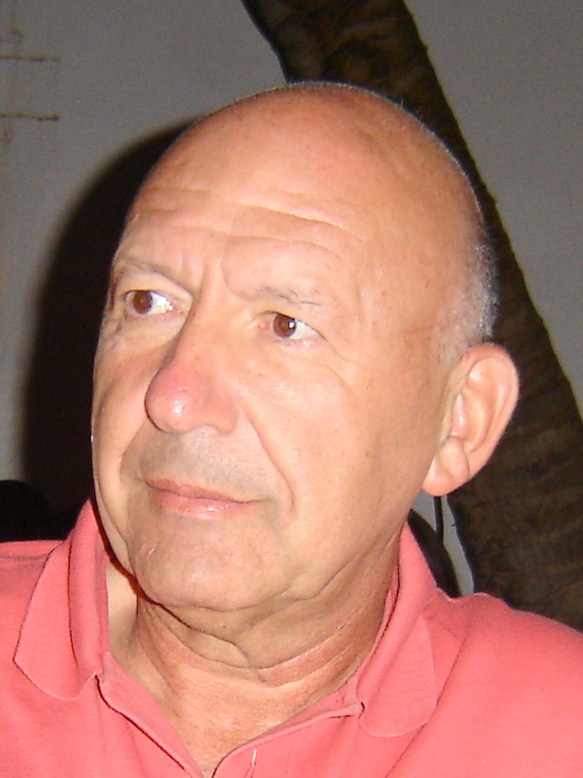
 Along half a century devoted to research in Condensed Matter Physics, scientist Aldo Felix Craievich made important contributions to the study of structures and structural transformations in solids, by doing research in glasses (topic in which he pioneered scientific research in Brazil), paraffins, materials obtained by sol-gel and various nanomaterials. These studies resulted in more than 200 articles published in international journals with peer review, which have more than 3,600 citations.
However, the legacy of Craievich’s work for the Materials community goes beyond his scientific production. For 17 years, the scientist was one of the protagonists of the successive steps in the history of creation of the Brazilian Synchrotron Light National Laboratory (LNLS), whose research resources have impacted the Materials community, not only in Brazil but also in other countries, especially in Latin America. Craievich also focused intensely on the training of users of synchrotron light in courses offered in several Latin American countries and in ten schools he directed and in which he participated as a lecturer at the International Center for Theoretical Physics (ICTP) in Trieste, Italy.
Born in the inlands of the province of Santa Fe, Argentina, Craievich graduated at undergraduate and PhD level in Physics from the prestigious Balseiro Institute, located in the Argentine city of Bariloche, having developed his doctoral research work in France at the Laboratoire de Physique des Solides of the Université Paris-Sud, under the supervision of André Guinier, one of the greatest exponents of crystallography and characterization techniques by X-ray of the twentieth century.
Craievich began working in Brazil in 1973, year when he took over teaching and research functions at the São Carlos Institute of Physics and Chemistry (IFQSC) at University of São Paulo (USP), at the invitation of Yvonne Mascarenhas. In 1976 he returned to Laboratoire de Physique des Solides to take a one-year post-doctoral internship, returning to IFQSC afterwards. In 1980 he moved to Rio de Janeiro to work as a researcher at the Brazilian Center for Research in Physics (CBPF), a position in which he remained until 1986. In 1981 he took a second postdoctoral internship in France, this time at the National Center of Synchrotron Light LURE – laboratory he frequently attended for shorter periods thereafter. Thus, when he took over the coordination of the executive committee of the project aiming to create a synchrotron light laboratory in Brazil, Aldo Craievich was one of the rare scientists (there would be two nationwide) who had experience in using such light source.
In 1987, he returned to the state of São Paulo. Until 1997, he led planning, design and construction of the first seven LNLS beamlines in the city of Campinas and has developed a comprehensive training program for new users. Simultaneously, from 1987 on, Craievich taught at the Institute of Physics at USP, in the city of São Paulo and, in 1997, he devoted himself full time to his position as a Professor at that institution, where he was head of the department of Applied Physics between 2002 and 2006.
Aldo Craievich also participated in the creation of our SBPMat (Brazilian MRS) from the first meetings and electronic message exchanges, which occurred in 2000. In addition, his name is among the scientists who made up the “interdisciplinary committee of Materials”, responsible for preparing the statutes of SBPMat.
Among other distinctions, Craievich received honors granted by the LNLS user community and team (1997 and 2010), by the Brazilian Society of Crystallography (2000), by the Balseiro Institute (2011) and by the Asociación Argentina de Crystallography (2014). He received the Mercosur Award for Science and Technology both in 2004 and in 2010, for his part in research on topics “Energy for Mercosur” and “Nanotechnology for Mercosur”, respectively. He has been a member of the São Paulo State Academy of Sciences (ACIESP) since 1980. In December 2014, he was elected member of the Brazilian Academy of Sciences (ABC).
Currently at 75 years of age and already retired, Aldo Craievich continues to conduct research activities in IFUSP while a senior professor and 1A researcher at CNPq, the Brazilian National Council for Scientific and Technological Development. He is also member of the Support Nucleus for Research in Nanotechnology and Nanoscience (NAP-NN) at USP and member of the editorial board of several scientific journals; among which the Journal of Synchrotron Radiation (IUCr, Chester, UK), in which he acts as a co-editor.
Below you will find an interview with the researcher.
SBPMat Newsletter: – When did you become interested in science?
Aldo Craievich: – I started my university studies at National University of Cordoba, Argentina, in March 1959, making my way into the aeronautical engineering career. During my first years at the university, I had to split my time between study and my work in the State Aeronautical and Mechanical Industries (IAME). My choice in Aeronautical Engineering was due to the relationship between the career and the area of my work at IAME, where I wished to continue my activities after my graduation. However, limitations to my availability, due to my work activities, made me realize that the quality and the pace of progress of my university studies were unsatisfactory.
After completing two years of aeronautical engineering in March 1961, I accidentally read a poster that mentioned the opening of an entry exam for a course offered by the Institute of Physics of São Carlos de Bariloche in Argentina (today Balseiro Institute). One of the requirements for entry, which I met, was to be approved in sophomore year of studies in Physics or Engineering. I was particularly interested in this possibility, mainly because of the Balseiro Institute, which, in addition to offering education of excellent quality, granted full scholarships for all its undergraduate students. Without thinking much about it, I took the entry exam and was approved. Thus, from August 1961 until December 1964 I completed my bachelor’s degree in physics at the Balseiro Institute. In this Institute I had, in fact, the possibility to devote myself exclusively to study in an appropriate environment and without dividing my attention to other concerns.
My real interest in science arose shortly after I joined the Balseiro Institute. During the basic part of my studies in this Institute, I had several professors of singular quality, including José Balseiro (founder and dean of the Institute), Enrique Gaviola (Argentine experimental physicist of international prestige) and Guido Beck (Austrian renowned theoretical physicist). Balseiro had a selfless, enthusiastic and efficient performance as a dean and professor, and exerted a strong influence on his colleagues and students, as well as on subsequent generations of the Institute. In spite of the fact that the period of my interaction with Balseiro was brief (he died in March 1962), it was enough for me to realize the importance of Physics. Today I think that my interaction with exemplary professors I had during my early years in the Balseiro Institute, was what sparked my interest in science, which continues today.
SBPMat Newsletter: – What led you to become a scientist and work in the Materials area, more precisely in Condensed Matter Physics?
Aldo Craievich: – During the final phase of my studies in physics in Balseiro Institute, I began to reflect on the kind of specific research area towards which I should guide my professional future. At this time of doubt I took the advice of Conrado Varotto, later founder of company INVAP (spin-off of the Balseiro Institute) and now executive director of the Argentine National Commission on Space Activities (CONAE), who told me to make my final graduation work on structural and electronic properties of metal alloys. Soon after graduating from Balseiro Institute, I joined the Institute of Mathematics, Astronomy and Physics (IMAF after FaMAF) of the National University of Cordoba, Argentina, as a teaching assistant, in March 1965. My initial intention was to work in an experimental subject of Condensed Matter Physics, without yet having decided the specific area. Knowing of my interest, the IMAF director, Alberto Maiztegui, suggested I deployed an X-ray laboratory for materials research using a previously purchased diffractometer. At that time I received the support of Alberto Bonfiglioli, a researcher at the National Atomic Energy Committee of Buenos Aires. Bonfiglioli suggested I initially completed my basic training in the area, doing my doctoral thesis at Laboratoire de Physique des Solides of Université Paris Sud, in Orsay, France, under the supervision of the eminent Professor André Guinier. Guinier was one of the creators and director of that laboratory and author of pioneering research on the link between the structure of imperfect solids and characteristics of the diffuse scattering of X-rays. He was also a pioneer in applying the technique of spreading X-rays at small angle (SAXS) to the study of materials, one of the discoverers of the known Guinier-Preston zones in aluminum alloys and author of many classic books in this research area.
In short, my interest in research in the area of materials, specifically for studies of the structure and transformations in condensed matter, first appeared during my final graduation paper at Balseiro Institute supervised by C. Varotto, and increased with my first activities in IMAF in collaboration with A. Bonfiglioli and consolidated during my doctoral thesis in France under the guidance of A. Guinier.
SBPMat Newsletter: – And why did you come to Brazil?
Aldo Craievich: – In 1969, after my return from France and recent PhD, I started the implementation of the X-Ray Laboratory at IMAF in Cordoba, Argentina, in order to apply the techniques of X-ray diffraction and SAXS in studies on glassy materials. After several years of work and having already obtained some results, I realized that the development of the laboratory occurred more slowly than I expected. The reasons were many, including, financial difficulties to acquire equipment and excessive involvement in administrative activities, which significantly reduced my time for research. So, at the end of 1971 I decided to do a post-doctoral internship abroad to be able to focus for a while on my research.
At the same time, at a meeting of the Chilean Physics Society held in Valdivia, Chile, in January 1972, I had my first contact with Yvonne Mascarenhas, a professor at the São Carlos Institute of Physics and Chemistry (IFQSC/USP today IFSC/USP), in the city of São Carlos, who invited me to undergo a one-year internship in her Crystallography Laboratory. I accepted the invitation and, in March 1973, I began my research and teaching tasks in IFQSC. The Crystallography Laboratory had, at that time, an X-ray diffractometer operating for polycrystals studies and a SAXS equipment, which had been recently acquired. What was expected of me, in addition to performing teaching tasks, was to install the new SAXS apparatus and start lines of research in topics of my own interest and in collaboration with other local scientists.
After starting my internship in Brazil, the general political situation in Argentina and particularly the conditions for teaching and research in universities were deteriorating, which induced me to extend my temporary stage at IFQSC several times. Later, in my several visits to Argentina during the late 1970s, I realized a further decline and also a disturbing political and social situation. These findings and, on the other hand, the interesting new challenges presented in IFQSC and the strong support received from the local community and development agencies (FAPESP and CNPq), led me to decide to turn my temporary stage into a permanent transfer. I realized then that I had found the necessary and promising basic conditions in Brazil in order for me to do a good job in research.
SBPMat Newsletter: – What, in your consideration, are your main contributions to the Materials area? Consider all aspects of your work.
Aldo Craievich: The main research I developed from 1965 until today can be classified into five major lines I describe below (I mention some relevant references associated with each line of work).
(i) Nanophase separation in glassy solids
After my transfer to Brazil in 1973 I began experimental studies through the SAXS technique to determine the mechanisms responsible for the early stages of the isothermal process of nanophase separation in B2O3-PbO-Al2O3 glass. Thus, I continued the line of research I had started in IMAF in Argentina. In order to interpret the results I used a thermodynamic model proposed by John Cahn, called spinodal decomposition, for systems corresponding to the core of the gap of miscibility, and the classical model of nucleation and growth for compositions and temperatures close to the binodal border. I observed, in particular, the existence of a systematic deviation between the experimental SAXS results with respect to predictions of the Cahn model, which assigns a relaxation effect of initial stresses in the glass matrix produced by the primary process of quenching. As a result of this research, I wrote the first two articles published in indexed journals related to research on glassy materials held in Brazil [Craievich, Phys.Chem.Glasses 16, 133 (1975); Craievich, Phys.Stat.Sol. 28, 09 (1975)].
I also noticed that the model of spinodal decomposition does not adequately describe the stages of nanophase separation in glass system B2O3-PbO-Al2O3. Then a comparison was made of the results of SAXS experiments I conducted in IFQSC in 1973/74, related to advanced stages of the process, with the predictions of the new statistical theory developed by Joel Lebowitz et al. at the end of the 1970s. The results led to an article I’ve written in collaboration with Juan M. Sanchez (former student of IMAF and today vice president for research at Texas University) in which we demonstrated, for the first time, quantitatively for glassy materials, the time evolution of the experimental structure function shows the properties of dynamic range predicted by the theory [Craievich and Sanchez, Phys.Rev.Lett. 47, 1308 (1981)].
(ii) Structure and phase transitions in molecular crystals
Back to IFQSC of São Carlos in 1977 after completing a postdoctoral internship in France, I worked in collaboration with Jean Doucet of the Laboratoire de Physique des Solides,in Orsay, France, and a doctoral student in systematic studies of structures and of phase transition from a set of wax crystals composed of linear molecules CnH2n+2.All studied paraffins show a structure formed by stacking layers of molecules CnH2n+2, with their major axes parallel and lateral compact packaging. We associated the characteristics of thermal expansion and the phase transitions of these solids to variations of amplitude of linear molecule release around its main axis. As a result of this research, we published, in a few years, more than 10 articles, all of which received a high number of citations. In particular, one on the “rotary” phase studies observed in three paraffins with n = 17, 19, 21, which received 209 citations so far [Doucet et al, J. Chem.Phys. 75, 1523 (1981)].
(iii) Nanomaterial formation processes by the sol-gel method
During the 1980s I did a lot of research in situ on structural changes through the use of SAXS line associated with the French synchrotron light source (LURE). I am particularly interested in structural changes that occur during the new process, called the sol-gel, to obtain nanostructured materials. This complex process consists of a sequence of steps, which starts from a precursor in the colloidal form of liquid solution, continues with the aggregation of colloidal particles and subsequent sol-gel transition to be possibly completed by drying and sintering the resultant nanoporous material.
I conducted the first studies on this line in collaboration with research groups led by Jerzy Zarzycki (Laboratoire de Verres du CNRS, Université de Montpellier, France) and André Aegerter (IFQSC-São Carlos). Most of these experimental studies aimed to examine the process kinetics analysis and were done using the SAXS technique in situ [Lours et al J.Non-Cryst.Solids 100, 207 (1988)]. This was achieved by using a SAXS line associated with a synchrotron light source of high intensity, allowing measurements with high temporal resolution. In several cases, we use new concepts of fractal geometry to achieve the accurate characterization of the structures, which allowed us to clearly identify the mechanisms of aggregation.
During the 1990s, I continued my studies of the structures of various nanomaterials and sol-gel type processes with the participation of Luis Esquivias and colleagues (University of Cadiz, Spain), and with the researchers of the group led by Celso Santilli (UNESP-Araraquara). With the group of Luis Esquivias we worked on various topics, with emphasis on research of the influence of the controlled use of ultrasound on the structural characteristics of final sonogels. With Celso Santilli and his group, we researched a number of nanomaterials, through studies of SAXS in situ, which contributed in particular to a better understanding of the structure, mechanisms of formation and relations with the properties of various types of organic-inorganic hybrid nanocomposites [Dahmouche et al, J.Phys.Chem. B 103, 4937 (1999)].
(iv) Proteins in solution
I have participated, since the 1980s, in numerous collaborations on structural studies of proteins in solution. Particularly, I collaborated on a study of the tertiary structure of albumin, which turned out to be the first published research with experimental results obtained exclusively at LNLS [Castelletto et al, J. Chem.Phys. 109, 2825 (1998)]. Later, we published a paper on the variation of the average density of proteins with molecular mass, which, in the literature, was being considered invariant [Fischer et al, Protein Sci. 13, 2825 (2004)]. This article had for a decade more than 200 citations in literature. More recently, we have developed a new method of determining the molecular mass of proteins in solution using exclusively SAXS experiment results on relative scale [Fischer et al, J.Appl.Cryst. 43, 101 (2010)].
(v) Structure and stability of phases of metal nanoparticles and solid solutions of nanostructured oxides
During the last decade I participated in a number of studies on the structure, mechanisms of formation and stability of phases of several nanomaterials, in collaboration with several research groups.
With Guinther Kellerman, one of my thesis students and now a professor at UFPR, we published several pioneering papers on the mechanisms of formation of Bi and Ag nanoparticles on glassy matrix and the relationship between the size of Bi nanoparticles and their melting and crystallization temperatures. The experimental results were also quantitatively compared with corresponding theoretical predictions [Kellermann and Craievich, Phys.Rev. B 78, 054106 (2008)].
In collaboration with Felix Requejo and his group from Universidad Nacional de La Plata, Argentina, we researched various structural features of noble metal nanoparticles supported on porous matrices [Giovanetti et al, Small 8, 468 (2012)] and, more recently, arrangements of nanoplates of CoSi2 buried and consistent within a monocrystalline Si substrate.
With Diego Lamas of the Universidad Nacional de San Martín, Argentina, and members of his group, we conducted a series of studies of solid solutions of nanostructured oxides. In the particular case of zirconia-escandia nanostructured system, we demonstrated that it is possible to maintain ambient temperature, phases of the tetragonal and cubic structure with interesting properties, which are stable only at high temperature in these materials when composed of micro or macroscopic crystals [Abdallah et al , RSC Adv. 2, 5205 (2012)].
b. Participation in the creation and management of a research institution
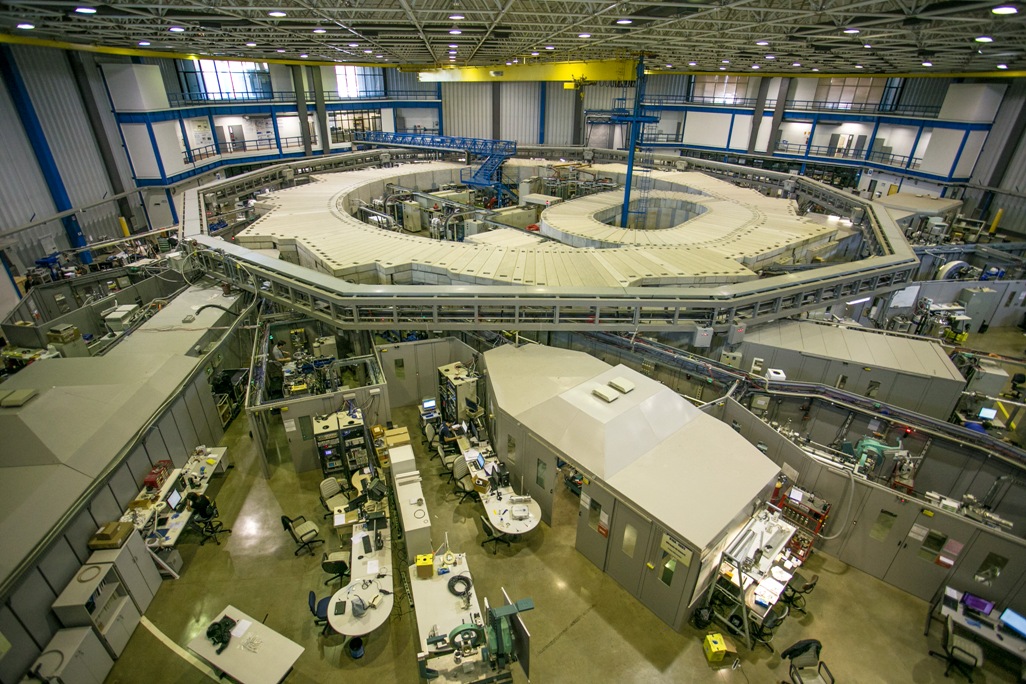
In late 1986 I was appointed deputy dean and head of the scientific department of the Brazilian Synchrotron Light National Laboratory (LNLS) in Campinas. At that time the dean and the head of the LNLS project were Cylon Gonçalves da Silva and Ricardo Rodríguez, respectively. In 1987 the building of a synchrotron light source began in LNLS, comprised of a linear accelerator 120 MeV electrons, an electron storage ring (UVX) of 1.37 GeV and a set of beamlines.
During my tenure at LNLS I was responsible for the design of the first seven beamlines of the LNLS, which were developed in parallel with the construction of the linear accelerator and storage ring. I also made a persistent effort to promote the training of future users of LNLS, organizing numerous events (short courses, workshops etc.) in which several specialists (mainly foreign researchers) gave talks and/or participated in training sessions.
In addition to the administrative and technical tasks associated with my duties as deputy dean, I continued conducting experimental research for periods of one to two weeks a year in the LURE synchrotron light laboratory, in France. The first-hand knowledge acquired in these internships abroad was useful for my work related to the planning and construction of the first LNLS beamlines.
The construction phase of the UVX source and the first set of beamlines ended during the first half of 1997 [Rodrigues et al, J.Synchr.Rad. 5, 1157 (1998)] and were then opened for use by the scientific community.
When the synchrotron light source was completed in July 1997, I felt that the time had come for me to resign from my job of deputy dean of the LNLS and continue my work with exclusive dedication in the Institute of Physics, from 1998 on. I considered that this way I could continue my activities as a user researcher of the light source and also contribute more directly to the education of students and the growth of the LNLS user community.
c. Participation in the creation of research groups and laboratories
During my 50 years of teaching and research activities, I worked successively in five institutions: IMAF/UNC in Argentina (1965-1972), IFQSC/USP in São Carlos (1973-1980), CBPF in Rio de Janeiro (1981-1986), LNLS in Campinas (1987-1997) and IF/USP in São Paulo (1998 -…). My contributions to the creation and development groups and lines of research in these institutions are succinctly set out below.
(i) IMAF (Cordoba, Argentina): I created and organized at IMAF its first x-ray laboratory, started a new line of research on phase separation of glassy solids and contributed to the education of young students in the Materials Science area. I published in 1973 the first article in collaboration on the structure of a glassy material associated with research conducted in IMAF.
(ii) IFQSC/USP (São Carlos): I implemented in IFQSC, in 1973, the first SAXS laboratory operating in Brazil. That same year I started a line of research on glassy materials that was strongly developed later on by the main action of Edgar Zanotto (now head of LaMaV at UFSCar, São Carlos), who I advised in his master’s thesis. Finally, in collaboration with Yvonne Mascarenhas and a graduate student, we completed, in 1984, pioneering structural studies of proteins in solution made by using SAXS.
(iii) CBPF (Rio de Janeiro): I implemented the first X-ray laboratory at CBPF comprised of a diffractometer of polycrystalline and a SAXS chamber. My main activity in CBPF during the period 1981-86 was participating in feasibility studies, diffusion activities and discussion sessions that led to the creation, in 1986, of the Brazilian Synchrotron Light National Laboratory.
(iv) LNLS (Campinas): During my work at LNLS, in addition to carrying out the activities associated with the construction of the synchrotron light source described above, I promoted and coordinated one of the projects of the first series approved in 1996 by the Support Program for Nuclei of Excellence (PRONEX) of CNPq. In this project on “Research and structural and magnetic characterization of materials”, 22 researchers/professors of LNLS, IF/USP, IF/UNICAMP, IQ/UNESP and DF/UFPR participated.
(v) IFUSP (São Paulo): I contributed to the consolidation of the Crystallography Laboratory of IFUSP, primarily through my participation in the project planning and in the incorporation of a new state-of-the-art SAXS apparatus with a spot section beam. This apparatus allows studies of SAXS and GISAXS at room temperature and at high temperatures with automated data collection. This was the first modern equipment in operation in Brazil and probably also in Latin America.
d. Contribution in science policy
After performing a sabbatical internship in the LURE synchrotron light laboratory, in Orsay, France, back to CBPF in 1982, I participated in meetings of a small group of researchers who discussed the possible feasibility of building a source of synchrotron light in Brazil. That same year, the president of CNPq after expressing hid support for the initiative, decided to create Project Synchrotron Radiation (PRS/CNPq) coordinated by the director of the CBPF, Roberto Lobo. In the context of this project I worked as coordinator of the Executive Committee and member of the Technical Scientific Council (CTC). In my role of coordinator of the Executive Committee, I organized meetings, lectures and visits of foreign experts. I also collaborated in the development of a first conceptual project of a source of synchrotron radiation and participated in the drafting of a proposed master plan for its implementation. Details of the work performed were exposed in the article “Proposta preliminar de estudo de viabilidade de um Laboratório Nacional de Radiação Síncrotron” [Lobo et al, CBPF / PRS 1 (1983)] and in report “PRS: Atividades e Perspectivas” [Craievich, CBPF / PRS 14 (1984)]. I also coordinated a CNPq scholarship program that allowed young Brazilians to access for the first time sources of synchrotron light abroad and, thus, gain experience in their use.
In the period 1983-1985, I presented in Argentina the project of the Brazilian synchrotron, at the Balseiro Institute of Bariloche, in the CNEA of Constituyentes, at a meeting of the Argentina Physics Association (AFA) in La Plata and at the Latin American Symposium of Physics on Solid State (SLAFES ) in Mar del Plata.
On the other hand, I participated in the phase of foundation of two new scientific organizations: the Brazilian Society for Materials Research (SBPMat) in 2000, which, so far, held thirteen annual meetings, and the Latin American network Materia, which promoted, since 1995, twelve scientific meetings in eight different countries in Latin America.
e. Training of new scientists
From 1965 to 2009 I taught several undergraduate and graduate courses in the various institutions of Argentina and Brazil where I worked. On the other hand, from 1982 to today, I participated in short courses, schools and training workshops for synchrotron light users in several cities of Brazil, Argentina, Chile, Uruguay, Peru, Colombia, Venezuela, Cuba and Mexico. I also contributed to the education of synchrotron light users outside Latin America, acting as coordinator and professor of a number of schools on applications of synchrotron radiation organized by the International Centre for Theoretical Physics (ICTP) in Trieste, Italy. This activity in the ICTP lasted for almost 20 years, in a total of ten successive schools, four weeks each, held biannually from 1991 to 2008.
On the other hand, I advised 18 post-graduate students (nine masters´ and nine doctoral students). Most of my former advisees continued acting as researchers and professors in various universities in the states of São Paulo, Bahia and Paraná, and research centers in Rio de Janeiro and São Paulo. One of them works in an industrial company in the state of São Paulo and the other, of French origin, who I co-advised along with a researcher at Université Paris V, works in an industrial research laboratory in Belgium. I still maintain collaborations with two of my former advisees in research of structural properties and nanomaterials phase transitions and studies by SAXS proteins and other macromolecules in solution.
SBPMat Newsletter: – What led you to take part in the history of the Brazilian Synchrotron Light National Laboratory (LNLS)?
Aldo Craievich: – In 1981, having already joined the CBPF (the Brazilian Center for Research in Physics), in Rio de Janeiro, I decided to spend a sabbatical year in the LURE (Laboratory for the Use of Electromagnetic Radiation) synchrotron light laboratory, in Orsay, France. What interested me about this scholarship was the chance to have access to a new kind of experimental instrumentation, which allowed me to conduct researches of my own interest, impossible in classical laboratories, such as in situ kinetic studies on rapid structural variations in glass materials at high temperatures.
Once I completed my sabbatical year at LURE and had already returned to CBPF, in September 1982 I was invited by the CBPF Director to participate in formal activities aiming the future construction of the synchrotron light source in Brazil. What led me to take part in the preliminary work of this project at CBPF, then in the LNLS, during the construction stages of the light source, was a conjunction of reasons. I took into account that (i) the eventual future local availability of a synchrotron light source would be greatly relevant for the scientific development of Brazil, (ii) having a synchrotron available in Brazil would be particularly useful for the advance of the research lines I had in progress, and (iii) I had already acquired, back in 1982, the capacity and expertise required to actively participate in the proposed tasks.
SBPMat Newsletter: – Leave a message for our readers who are starting their careers as scientists.
Aldo Craievich: I believe that a necessary and important condition for being a good scientist in the area in which I work is to have a strong interest in understanding and trying to explain the essential nature and the relevant properties of matter around us. So my first message is to encourage young students who have this kind of interest to pursue scientific careers.
Studies that transform a young student in a good scientist depend less on the nature of specific topics and more on how new knowledge is acquired and presented. The student and the teacher should consider each new subject of study a challenge to be faced. On the other hand, the student should value the hard work of teachers who present each new theme aiming at deep understanding, preventing easy paths. In this sense my second message to young students is to, as far as possible, seek the teachings, advice and guidance of teachers not only those outstanding, but also demanding.
The personal contributions of every researcher to the progress of science should be considered by them in general as relatively modest. My third message is related to an important quality, which, in my opinion, every new researcher and also those with greater experience should have: a permanent attitude of respect for other people’s work. A very clear message on this subject was mentioned by Balseiro, dean of the Physics Institute where I did my undergraduate studies, in his speech to the graduate students in the first class of this institute in 1958. He said “I do not think there is a more pathetic index of lack of culture, except violence, than the lack of respect for other people’s work. This lack of respect is a form of destruction and who destroys other people’s work can be described as savage, that is, the lack of culture in its most pristine form” [http://www.ib.edu.ar/index.php/historia-del-ib/primera-graduacion.html].
To learn more about Professor Aldo Craievich: “Un físico del Mercosur” published by “Ciencia e Investigación.Reseñas”, tomo 1, no 3, available at: http://aargentinapciencias.org/images/stories/R-tomo1-3/RevRes-1-3xArt/7a24Craievich-ceiRes-1-3.pdf (in Spanish).


 During his childhood and adolescence in Belo Horizonte, in the 1960s and 1970s, Helio Chacham had many incentives to become interested in science. After that, in higher education phase, Chacham first started Electrical Engineering but ended up choosing Physics. And that was the field he chose for his undergraduate, masters and doctoral degrees at the Federal University of Minas Gerais (UFMG).