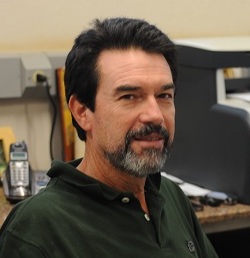
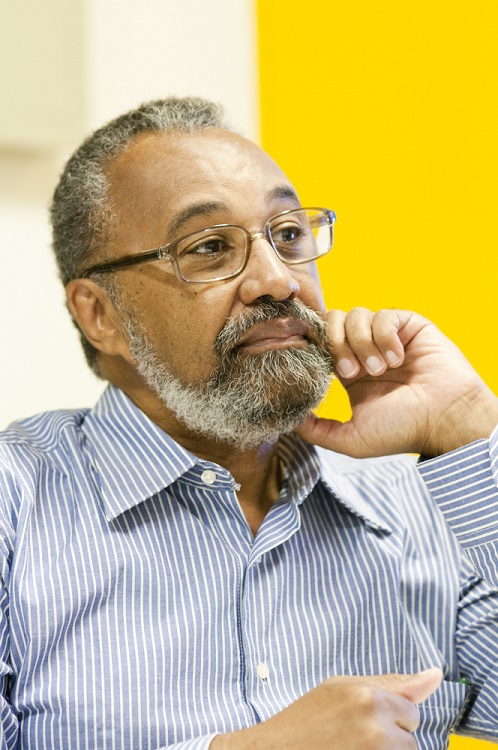
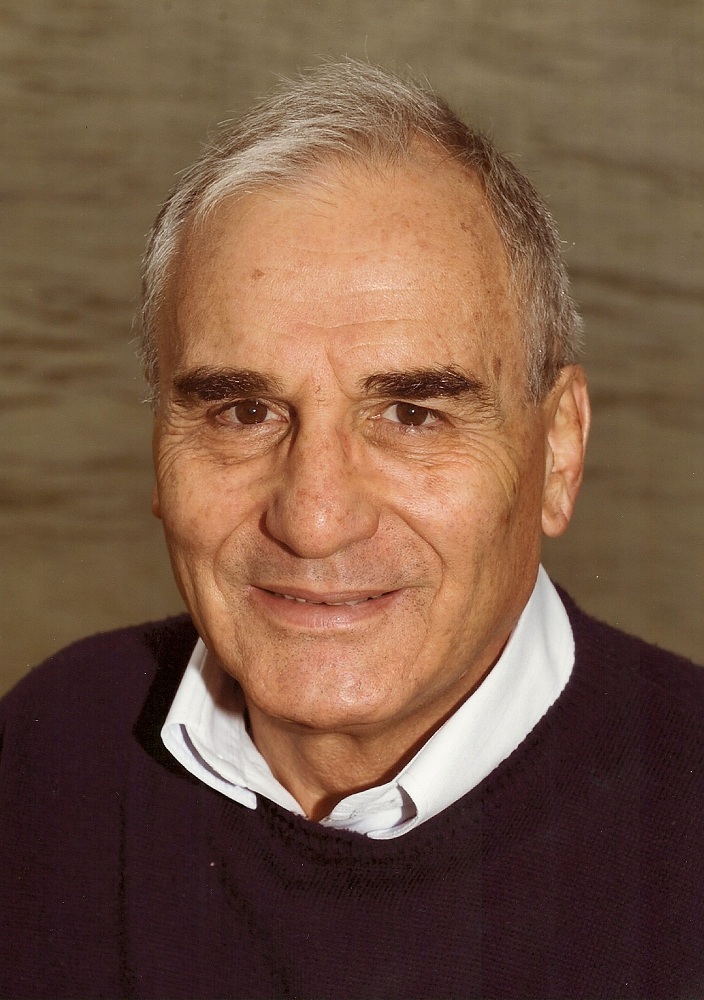
 To Fernando Galembeck, Director of the Brazilian Nanotechnology National Laboratory (LNNano) from 2011 to 2015, the interest in research started to appear during his adolescence, when, working in his father’s pharmaceutical lab, he realized the economic importance that new products, resulting from efforts in scientific research, had on the company. Currently aged 72, Fernando Galembeck, looking back at his own scientific path, can tell us several stories in which the knowledge produced by him, jointly with his collaborators, is not only transmitted through scientific papers, theses and books, but has taken form as licensed patents and new or improved products.
Galembeck received his Degree in Chemistry in 1964 from the University of São Paulo (USP). After graduating, he stayed at USP, teaching (1965 – 1980) and, simultaneously, conducting his doctoral studies in Chemistry (1965 – 1970) with a research work on the metal-metal bond dissociation. Once his doctoral studies were completed, he held post-doctoral fellowships in the United States, at the universities of Colorado, in the city of Denver (1972-1973) and California, in the city of Davis (1974), working in the field of Physical Chemistry of biological systems. In 1976, back at USP, he had the chance to create a colloids and surfaces laboratory in its Chemistry Institute. From that moment, Galembeck has been increasingly involved in the development of new materials, especially the polymeric ones, and their manufacturing processes.
In 1980, he started teaching at the University of Campinas (UNICAMP), where he became a Full Professor in 1988, position he held until his retirement in 2011. At Unicamp, he held management positions such as University Vice-Dean, as well as Director of the Institute of Chemistry and Coordinator of its graduate studies program. In July, 2011, he took over the recently created LNNano, at the Brazilian Center for Research in Energy and Materials (CNPEM).
Throughout his career, in Brazil, he held management functions at the Brazilian Academy of Sciences (ABC), Ministry of Science, Technology and Innovation (MCT), National Council for Scientific and Technological Development (CNPq), São Paulo Research Foundation (FAPESP), Brazilian Chemical Society (SBQ), Brazilian Society for the Progress of Science (SBPC) and Brazilian Society for Microscopy and Microanalysis (SBMM), among other entities.
Holder of a 1A-level fellowship for research productivity at CNPq, Galembeck is the author of almost 250 scientific paper published on international peer reviewed journals, which count with over 2,300 citations, as well as 29 deposited patents and over 20 books and chapters in books. He has advised almost 80 Master’s and Doctoral researches.
He has received numerous awards and distinctions, including the 2011 Anísio Teixeira Awards, from CAPES, the Brazilian agency for the improvement of graduate courses; the 2011 Telesio-Galilei Gold Medal, from the Telesio-Galilei Academy of Science (TGAS); the 2006 Almirante Álvaro Alberto Award for Science and Technology, from CNPq and the Conrado Wessel foundation; the 2006 José Pelúcio Ferreira Trophy, from Finep (Brazilian entity for funding of studies and projects); the 2000 Grand Cross of the National Order of Scientific Merit and the 1995 National Commendation of Scientific Merit, both from the President of the Republic of Brazil. He has also received several awards from companies and scientific and business associations, such as CPL, Petrobras, Union Carbide do Brasil, the Brazilian Paint Manufacturers Association, the Brazilian Chemical Industry Association, the Union from the Industry of Chemicals for Industrial Use from the State of Rio de Janeiro, the Brazilian Polymer Association, the Brazilian Chemical Society – which created the Fernando Galembeck Award of Technological Innovation, the Engineers Union from the State of São Paulo and the Electrostatic Society of America.
What follows is an interview with the scientist:
SBPMat Newsletter: – Tell us what led you to become a scientist and work on issues in the field of Materials.
Fernando Galembeck: – My interest in research work started during my adolescence, when I comprehended the importance of new knowledge, of discovery. I found this when I was working, after school, at my father’s pharmaceutical laboratory, as I could see how the newest, latest products, were important. I also saw how costly it was, for the lab, to depend on imported products, which were not produced in Brazil, and that in the country there was no competence to manufacture them. Then I realized the value of new knowledge, as well as the importance and the economic and strategic significance of such breakthroughs.
This feeling was increased when I took my major in Chemistry. I enrolled into the Chemistry course because one of my school teachers had suggested that I should seek a career related to research. He must have seen some inclination, some tendency of mine. So I attended the Chemistry course provided by the Philosophy School, in an environment where the research activity was very vivid. Because of that, I decided to conduct my Doctoral studies at USP. At that time, there were no regular graduate studies in Brazil yet. The advisor with whom I defended my dissertation, Professor Pawel Krumholz, was a great researcher, who also had built a very important career working on a company. He was the industrial director of Orquima, a major company by that time. That boosted my interest in research.
I worked with Chemistry for some years and my interest in materials came from a curious occurring. I was almost graduating, in my last vacations during the undergraduate studies. I was at an apartment, resting after lunch. I remember looking at the walls of this apartment and noticing that, with all I had learned in the Chemistry course, I did not have much to say about the things I could see: the paint, the coverings etc. That was Chemistry, but also Materials, and there was not much interest in Materials in the Chemistry course. Actually, Materials became very important in Chemistry mainly because of plastic and rubber, which, at the time, did not have the importance they have today. I am talking about 1964, approximately.
Well, then I started to work with Physical Chemistry, to later work a little in a field that is more oriented to Biochemistry, that is Biological Physical Chemistry and, in 1976, I received a task from the USP Department, which was to build a colloids and surfaces laboratory. One of our first projects was to modify plastic surfaces, in that case, Teflon. Then I realized that a major part of the colloids and surfaces Chemistry existed due to Materials, because the subject lends itself to create and develop new materials. From that moment on, I was getting increasingly involved with Materials, mainly polymers, a little less with ceramics, and even less with metals.
SBPMat Newsletter: – What are, in your own opinion, your main contributions to the field of Materials? Consider, in your answer, all aspects of your professional activity, including cases of knowledge transfer to the industry.
Fernando Galembeck: – I will tell the story in order, more or less. I think that the first important result in the field of Materials was exactly a technique intended to modify the surface of Teflon, that material in which it is very difficult to stick something. There is even that expression, “Teflon politicians”, the ones for which does not matter what you throw at them, they do not stick to anything. But, in certain situations, we want the Teflon to have adhesion; we want some things to stick. So, by a somewhat complicated path, I managed to see that I already knew how to modify Teflon, but I had never realized that is was important. I knew the phenomenon; I had observed it during my PhD defense. I knew that there was a change happening in Teflon. But it was during a visit to a Unilever laboratory in 1976, when I was talking to a researcher, that I saw that there were people striving to modify the surface of Teflon and achieve adhesion. Then, bringing the problem and the solution together, as soon as I returned to Brazil, I tried to see if I what I had previously observed was really useful, and it worked. That led to the first paper I wrote by myself and my first patent application, at a time when almost nobody talked about patents in Brazil, especially in the university environment. I was very enthusiastic about this: I was approached by companies that were interested in applying what I had done; one the modification in Teflon itself, the other in a different polymer. So I felt great, because I had made a discovery, I had a patent, and there were companies which, at least, would like to know what it was to see if there was a way to use it. One more thing: soon after the paper I wrote was published, I was invited to attend a conference in the United States, which addressed exactly the issue of modifying surfaces. Polymers, plastic and rubber surfaces, a subject with which I was involved for pretty much the rest of my life, up until now.
I will mention a second fact that did not have the same effects, so far. I discovered a method that enables the characterization and separation of very small particles. That was a very interesting paper. It was released, also produced a patent, but had no practical consequences. Recently, there have been some issues related to nanoparticles, which is a very important subject in Materials now, offering a chance to apply what I did over 30 years ago. The name of the technique is osmosedimentation.
Next there was some work that I did by collaborating in projects with Pirelli Cabos. With all this story of surfaces and polymers, I think I had become more or less known and was approached by Pirelli, which contracted me as a consultant and commissioned projects I had at Unicamp. An outcome of these projects, that I think is the most important, was the development of an insulator for very high voltages. This work was not only mine, but rather of a very large team, in which I took part. There were several people from Pirelli, and several from Unicamp. The result of this project was that the Brazilian Pirelli managed to be hired to provide high voltage cables for the Eurotunnel, back in the ‘80s. I think this was a very important case, as it led to a product and brought substantial economic results. I would like to stress that this was done in Brazil, by a Brazilian team. They were not a Brazilian company, but the team was based here.
Then, there were several projects with nanoparticles, at a time when we did not even call them nanoparticles; we used to call them fine particles, or simply small colloidal particles. The first paper I released on nanoparticles was in 1978. There were other things after that, which, ultimately, led to a paper on aluminum phosphate, which resulted in dissertations and papers, as well as a license by a company named Amorphic Solutions, from the Bunge group, that basically explores aluminum phosphate. The subject started at my lab, stayed there for many years, then a company of the Bunge group here in Brazil got interested, started participating, and we collaborated. That became a major development project. Later, Bunge found it infeasible to carry on with the project in Brazil and today is in the United States. I think it is a shame that they are there, but there were some other issues involved, including a disagreement with Unicamp, who holds the patents. If you check Amorphic Solutions page on the internet you may see many applications of the product. As far as I know, they are currently emphasizing its use as an anti-corrosive material to protect steel.
About the same time, in another project on nanoparticles, clay/natural rubber nanocomposites were developed. This was licensed by a Brazilian company called Orbys, which released a product called Imbrik, a product that the company provides, for example, in order to make rubber rolls for paper manufacturing.
Another case with a product. I had done a project with Oxiteno, which manufactures raw materials for latex, the surfactants. They wanted to get an ideia of how much you can change the latex changing the surfactant. I conducted a project with them that I consider one of the most interesting among those in which I have been involved. In the end, we realized that, by changing the surfactant a bit, we changed the latex a lot. These are used in paints, adhesives, resins. So we realized we had a great variability. This work was published and promoted. It did not result in a patent because it was a comprehension project. So, another company, Indústrias Químicas Taubaté (IQT) approached me to produce cationic latex, but using a new path. Cationic latex in general is made of quaternary ammonium salts, which have some environmental restrictions. The company wanted an alternative that did not have those restrictions. By the end of the project, we produced cationic latex without environmental restrictions, and the IQT put the product on the market.
There was another case that was also very interesting, even though it was canceled. Here in Brazil, there was a large manufacturer of polyethylene terephthalate, PET, which is used for many things, including bottles. They knew about the work I had done with nanocomposites, the one with Orbys I mentioned before, so they approached me wanting to produce PET nanocomposites. We had to find out how to escape from what was already patented abroad and discovered a whole new path. The company was called Rhodia-Ster, and today it is part of another Italian company, called Mossi e Ghisolfi. The company was enthusiastic and ended up patenting it in Brazil, and then later abroad. At a certain point, they decided that they would conduct the work internally, and so they did for some years. One day, my contact within the company called me to tell this: “look, we were working with two technologies; the one held by Unicamp and another one, in another country. Both are working, but the company has reached a point where it has chosen to complete the development of only one”. When coming to the final stage in developing materials, the projects costs are too high. One have to use large amounts of materials, run many tests with customers. So, the company decided to take one project further, and, unfortunately, it was not the one in which I had worked. At the end, it was a little frustrating, but I think that it was interesting, because, during this whole time, the company invested a lot in the path we had started here. Not only that, each project brings resources for the laboratory, brings money to hire people, more jobs etc. So, these projects result in many benefits, even when they are not concluded.
Now, skipping some bits, I will reach the last result, which is fairly recent, happening after I left Unicamp and came to the CNPEM. One of CNPEM’s goals is to explore renewable source materials to produce advanced materials. There is a whole philosophy behind this, based on the depletion of natural resources, sustainability… We have worked hard in order to make new things with materials derived from biomass, and the main focus is cellulose. It is the most abundant polymer in the world, but it is very hard to work with it. You cannot process cellulose as you process polyethylene, for example. One of our goals has been to find ways to laminate cellulose, i.e., work it as closely as possible to the way we use to work synthetic polymers. A recent outcome, built upon this idea, is that we managed to produce cellulose adhesives having it as the only polymer, which is new. A patent application was entered in the beginning of the year, and we are submitting a paper on it, while aiming to work with companies that are interested in the subject. We are already discussing a project for a specific application of this modified cellulose with a company.
This is the latest case. In the middle of the way, many other projects were conducted with companies, for issues of their interest. Coating something, gluing another, modifying a polymer to achieve a certain result. But these were answers to demands from companies, instead of researches started at the laboratory.
SBPMat Newsletter: – Leave a message for our readers who are starting their careers as scientists.
Fernando Galembeck: – First of all, in any chosen career, there must be a dose of passion. It does not matter if you are going to work in the Stock Market, Healthcare or whatever you may do; above all, your taste must decide. If a person chooses a career because it will give them money or status… I think it is a bad choice. If you do things with pleasure, with interest, the money, prestige and status will come from other paths. The goal is to do what makes you happy, what makes you feel good when you do it, what makes you feel accomplished. It is true not only for the scientific career, but also to any other career. In science, it is crucial.
Another point is that you must be prepared to work hard. There is no easy way. I know some young people who are constantly seeking the great idea that will bring them success with relatively little work. Well, I’d better not count on it. It may even happen, but waiting for it is almost the same as wait to win the Lottery and get rich.
I’m over 70, therefore I have met many people and seen many things happen. Something that strikes me is how young people who seemed very promising end up not working very well. Frankly, I think it is bad for youngsters to achieve success too early, because I have the impression they get used to this idea that things will always work out fine. And the problem is that there isn’t anything, anyone, any company that will always work. There will always be the moment of failure, the moment of frustration. If the person is prepared for that, when the times come, he or she will overcome it, while others are crushed – they cannot move one. That is why we must be careful not to be deceived by our success and think that, because it worked once, it will always work. You must be prepared to fight.
When I was in college, thinking about doing research seemed a very strange thing to do, crazy talk. People did not know very well what it was, or why would someone choose to do it. Some people said that research was something like priesthood. I have always worked with research, associated with teaching, consulting and, without having ever sought to become rich, I managed to have an economic status that I deem very comfortable. But I insist, my goal was to enable the development, to produce material, not the money I would receive. Money came, as it does. So, I suggest you to focus on your work, on the results and the contribution that said work may give to other people, to the environment, to the community, to the country, to knowledge. The rest comes as a bonus.
In short, my message is: work seriously, earnestly and passionately.
Finally, I would like to point out that I think the research work, the development work, really helps you to grow as a person. It will depart you from ideas that are not very fruitful and guide you towards attitudes that are really important and helpful. A student asked Galileo once: “Master, what is the method?”, and Galileo’s answer was: “The method is the doubt”. I think it is very important in the research activity, which, for Materials in particular, is especially interesting because the final product is something you can hold in your hands. In the research activity you have to always wonder, “I’m thinking like this, but is this right?”, or “This guy wrote this, but what are his bases to write it?”. This attitude is very different from the dogmatic one, which is common in the realms of politics and religion, and very different from the attitude of someone who has to deceive, as the lawyer who works for a mobster or drug dealer. The researchers have to commit themselves to the truth. Of course there are also people who call themselves researchers and spread disinformation. Some years ago, people were talking about something called “Bush science”, an expression referring to President Bush. This Bush science was the arguments fabricated by people who gained money as scientists, but who produced arguments to sustain Bush’s policies. In other words, the problem exists in science as well, but then we get back to what I said earlier. You cannot enter this field because of money, or to achieve prestige, or to be invited to have dinner with the president; you must enter this field because of your interest in the subject itself.