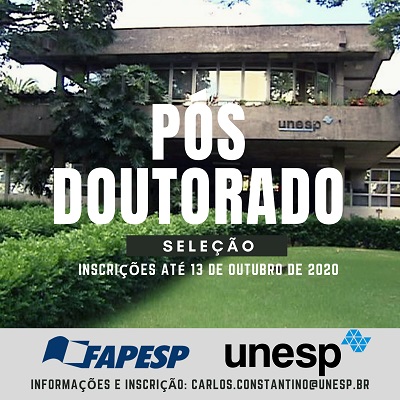
*Opportunity: the Laboratory of Nanostructured Materials for Environmental and Biological Analyses invites applications for a post-doctoral research fellowship funded by São Paulo Research Foundation (FAPESP: https://www.fapesp.br/en). This fellowship is linked to the Thematic Project “Toward a convergence of technologies: from sensing and biosensing to information visualization and machine learning for data analysis in clinical diagnosis” (FAPESP process number: 2018/22214-6).
*Supervisor: Carlos José Leopoldo Constantino (full professor).
*Institution: Department of Physics, São Paulo State University (UNESP), campus in the city of Presidente Prudente, São Paulo State, Brazil (https://www.international.unesp.br/).
*Fellowship components: it includes a monthly stipend (R$ 7,373.10) and research contingency funds (15 per cent of the annual value of the fellowship for using in activities developed by the Fellowship holder, strictly related to the fellowship research project).
*Duration of the post-doctoral fellowship: up to 48 months (starting: December/01/2020 or as soon as possible; ending: up to February/28/2025).
*Candidate requirements: she or he should have concluded the Ph.D. less than seven years before the beginning of the post-doctoral fellowship. Applicants must have a Ph.D. in physics, chemistry, materials science or related fields. The successful candidate must have excellent communication skills and excel in a highly collaborative research environment. In addition to the timely publication of research results in peer-reviewed journals, the responsibilities of the post-doctoral include drafting progress reports. The successful candidate will conduct research on: Detection of pesticides using surface-enhanced Raman scattering (SERS) spectroscopy. Therefore, this research includes experimental activities using techniques such as:
(i) Synthesis of colloid of metallic nanoparticles applied as “SERS substrate”.
(ii) Characterizations of the “SERS substrates” through microscopy, UV-Vis extinction spectroscopy, zeta potential, and dynamic light scattering (DLS).
(iii) Micro-Raman and surface-enhanced Raman scattering (SERS) spectroscopies.
(iv) Computational methods for data analysis.
*Deadline for application: October/13/2020.
*Application: interested individuals should send to carlos.constantino@unesp.br the following documents:
(i) CV with the list of publications.
(ii) Two letters of recommendation.
(iii) Work plan: 4-pages maximum with title, justification, objectives, and methodology.
Newsletter of the
Brazilian Materials
Research Society
Year 7, issue 8. September 8, 2020.
Featured Paper
A study carried out at UFPR revealed important details of the charge generation mechanism in organic solar cells and elaborated a mathematical model that helps choosing the most suitable materials for solar-to electrical conversion efficiency in these devices. The study was recently reported in Journal of Materials Chemistry C. Learn more.
Special: Unpaid Researchers
We are gathering statistical data and personal stories from PhDs who are without income and have had no opportunities to continue their scientific career in Brazil – a negative situation for these people and their families, for the research groups in the country and for society that would benefit from the fruits of research. See our first article here.
B-MRS Lives & Webinars
Five more technical webinars were held in August (last month of the Lives & Webinars 2020 program). Learn more and access the recordings of the webinars, here.
XIX B-MRS Meeting
The submission of symposium proposals for the XIX B-MRS Meeting + IUMRS ICEM is open until November 2. The event will be held from August 29 to September 2, 2021 in Foz do Iguaçu. The organizing committee invites the community to submit proposals. Go to the website.
B-MRS Advocacy
PL 529/2020. B-MRS sent a letter to all the members of the Legislative Assembly of São Paulo state, rejecting the bill that would allow withdraw resources from state universities and research foundation (FAPESP) .Know more.
News from B-MRS Members
– Professor Ana Flávia Nogueira (UNICAMP), B-MRS member, joined this year the advisory boards of two renowned journals in the field of Materials, both from the Royal Society of Chemistry (RSC). Know more.
Reading Tips
– For the first time, scientists manage to perform an interaction between two “time crystals” – crystalline structures experimentally proven a few years ago, whose structure is repeated not only in space, but also in time. Discovery opens up possibilities in the development of quantum devices (Nature Materials). Know more.
– Document gathers research carried out by Brazilian public universities and institutes with important results in combating the Covid-19 pandemic. The material was prepared by scientists from the materials community, B-MRS member Oswaldo Alves (Unicamp) and Antonio Gomes Souza Filho (UFC). See here.
– ONLINE. First Global Symposium on Janus Particles. October1 – 2, 2020. Site.
– 5th International Conference of Surfaces, Coatings and NanoStructured Materials – Americas (NANOSMAT-Americas). Foz do Iguaçu, PR (Brazil). October 7 – 10, 2020. Site.
– ONLINE. Meeting on natural polymers. October 21 – 23, 2020. Site.
– ONLINE. International Conference on Defects in Insulating Materials (ICDIM 2020). November 23 – 27, 2020. Organization: UFS. Site.
– 4th Workshop on Coated Tools & Multifunctional Thin Films. Campinas, SP (Brazil). July 20 – 23, 2021. Site.
– XIX B-MRS Meeting + IUMRS ICEM (International Conference on Electronic Materials). Foz do Iguaçu, PR (Brasil). August 29 – September 2, 2021. Site.
– 7th Meeting on Self Assembly Structures in Solution and at Interfaces. Bento Gonçalves, RS (Brasil). November, 3 – 5, 2021.Site.
Follow us on social media
You can suggest news, opportunities, events or reading tips in the materials field to be covered by B-MRS Newsletter. Write to comunicacao@sbpmat.org.br.
Post-doc researcher: essential professional for an efficient research group
In the Covid-19 pandemic the world is now experiencing, the importance of science and technology has become more evident to many people, with examples ranging from diagnostic tests and vaccines to the electronic devices that allow us to do almost everything remotely.
However, few know in detail how scientific and technological knowledge is produced in universities, which are the main scientific knowledge “factories” in Brazil. For each advance reported in a scientific article or patent, or transformed into a product or process, there are months or years of reading, laboratory experiments, computer simulations, discussions, analysis, writing.
Furthermore, there is the administrative work necessary in all research, which includes, among other tasks, project preparations to compete for financing, the recruitment of human resources and the purchase of inputs and equipment – often involving bureaucratic imports.
Far from the image of a scientist working alone in the laboratory, the reality is that to accomplish all of this, each scientific project must have a team of collaborators. Ideally, these teams are made up of people with different degrees of qualification and experience: undergraduate and graduate students (human resources in training process), postdoctoral fellows (junior science professionals) and professors, devoted to teaching, research and mentoring students (group leaders).
In addition to working on their research projects, “post-docs” assist in the intermediation between the group leader and the students, and gain experience in research management, as they more actively participate in administrative activities. Unlike the professor, the post-doc has no obligation to teach, nor does he need to hold an administrative position at the university. “The postdoctoral student can dedicate his/her efforts entirely to research projects, ensuring efficiency,” says Osvaldo Novais de Oliveira Junior, professor at the São Carlos Institute of Physics at USP.
Everyone benefits in this structure. Scholarship students receive more attention in their training, the post-doc gains experience as scientist in the profession and the group becomes more productive. “In a group, the post-doc leverages research and allows for more complex work,” says Professor Mônica Cotta, leader of the Laboratory of Nano and Biosystems at UNICAMP.
Postdoctoral fellowships are shrinking
An apparently large number of trained PhDs are currently in an unsuccessful search for opportunities to exercise scientific activity in Brazil. This situation is related to the decrease in the number of scholarships offered by federal agencies that deal with research grants: CNPq and Capes. In fact, after reaching maximum values between 2014 and 2015, the number of postdoctoral fellowships has decreased significantly, as shown in these graphs.
Number of total scholarships (left) and by federal agency (right) for PhDs (postdoctoral scholarships, technological development, etc.) over the years. Scholarships for senior doctors or professors and scholarships for activities abroad were excluded. Data extracted from CAPES and CNPq.
Without remuneration, these highly trained and specialized professionals, whose training takes, on average, a decade, look for positions abroad, adding to the “brain drain” that occurs in times of little appreciation of science in the country. Or worse, they abandon science to ensure their financial survival.
Unlike other groups that are suffering from a decrease or lack of income during the pandemic, the group of unpaid PhDs is not visible in society, nor has it been addressed by any government aid program.
Faced with this scenario, B-MRS is gathering stories of PhDs who have not found opportunities to remain active in research, in order to sensitize society and the government to the difficulties these people and their families are going through and understand the negative impacts of this situation for the country. B-MRS also request the restoration of the number of postdoctoral scholarships, in addition to a policy aimed at valuing and encouraging the placement of PhDs in development and innovation activities in our society.
Tales: PhD in Chemistry, freelancer and volunteer researcher
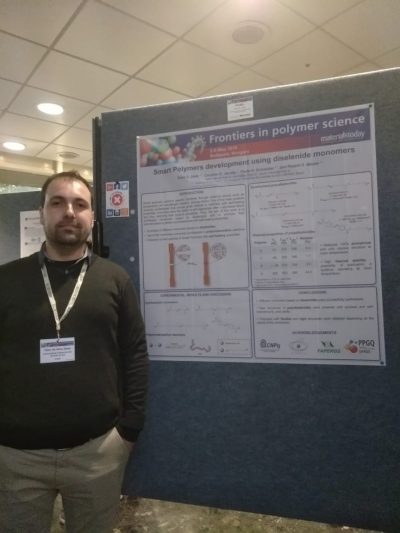
Tales da Silva Daitx presenting his doctoral research during a conference in Hungria em 2019.
To be a professor in some Brazilian university, performing research, teaching and mentoring. That is what Tales da Silva Daitx chose to do as a profession. He has liked science since he was a child, but it was at the university that he found the passion to discover new things and to transmit knowledge to others through research and teaching. Tales then went through the required path to properly train and be able to compete in a public or private teaching and research institution.
After graduating in Chemistry from the Federal University of Rio Grande do Sul (UFRGS), he entered the Chemistry graduate program at this university – a program of excellence and with the highest score in the evaluation of Capes (entity in charge of expansion and consolidation of graduate studies in Brazil). He spent six years there working on his master’s and doctorate, both focused on research in the field of intelligent materials.
In mid-March of this year, a few days after the World Health Organization (WHO) declared the Covid-19 pandemic, Tales defended his thesis, the final stage of every doctorate, at the Chemistry Institute of UFRGS. It was one of the last in-person defenses at the institute, together with his wife, who completed her doctorate at the same time. Since then, the couple, who live in Porto Alegre, are trying to earn an income to pay their bills and, at the same time, remain active and productive in research, two objectives that have not been possible to conciliate.
After his doctorate, Tales intended to move on to the next stage of his scientific career, a postdoctoral fellowship (popularly called “post-doc”). Thus, he contacted a research group from the Federal University of Santa Catarina (UFSC), where he could apply the knowledge acquired in graduate school in a project to develop smart nanoparticles for biodegradable packaging.
Thus, after defending his doctorate, already in the middle of a pandemic, Tales participated in two calls for proposals from CNPq, the main federal research funding agency, to try to obtain a post-doc grant, of around 4 thousand reais. Trained to carry out the project and with a competitive curriculum, with eleven scientific articles published in international journals and two patents (one filed and one already granted), Tales obtained a score close to the maximum in the first call. However, he was informed he would not be awarded a grant due to the resources available. The second notice, that would have the result in August, was suspended due to the pandemic.
Currently, while looking for other opportunities, Tales works as a voluntary postdoc (without a grant or any other type of remuneration) in the research group where he completed his doctorate. He participates in meetings, does bibliographic searches, and writes projects. However, he is unable to dedicate his efforts to these activities full time, since, to meet the couple’s basic financial needs, Tales became a freelancer. This 30-year-old professional, highly trained and specialized in an area of knowledge, is currently spending much of his time performing services, such as data entry in computer systems, which do not require such qualification.
“I think this situation in Brazil is a shame, the lack of opportunities for PhDs. In the past there was investment in science and technology, and it had good results. The country was well positioned in research around the world. But the investment did not continue, and that will bring it back to square one,” says Tales. “In addition, the pandemic has affected the research system. Public S&T policies should be revised,” he adds.
In August, the last 2020 technical webinars of the B-MRS Lives & Webinars program were held. Five online lectures on scientific instrumentation and material characterization were given by professionals from instrumentation companies, from Brazil and abroad. Between 30 and 160 participants attended each of the lectures, held on B-MRS’s Zoom and Facebook.
The Lives & Webinars program is a B-MRS learning and training initiative during the period of social distancing due to the Covid-19 pandemic, carried out in partnership with instrumentation companies.
Watch the webinars held in August, whose recording was authorized by the speakers:
How Vacuum Innovation Drives Instrumentation (Agilent). See here.
Instrumented Indentation Techniques on Polymers (Nanovea e Altmann). See here.
Caracterização Elétrica de Materiais (Keysight). See here.
Not just for experts – PDF analysis in the home laboratory (Bruker). See here.
Soluções de vácuo para pesquisa em materiais (Edwards Vacuum). See here.
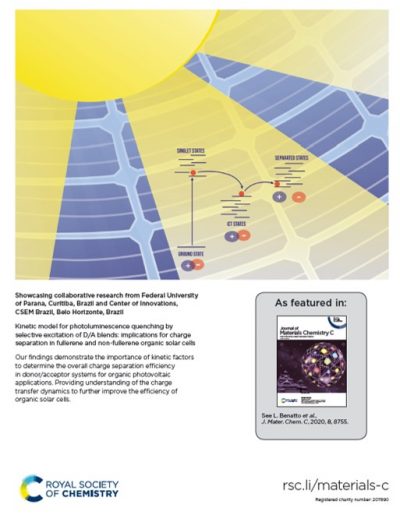
Back cover of the J. Mater. Chem. C highlights the paper of the Brazilian team.
Unlike other solar cells that have dominated the market for a long time, such as silicon cells, the organic ones are thin, light, flexible and semi-transparent. With these characteristics, they become very attractive for specific segments. In Brazil, for example, which has national production, some of the largest installed surfaces in the world can be seen in business buildings, as well as some installations in shopping centers, trucks and bus stops.
Although the organic version of solar cells also offer advantages in large-scale production (simpler industrial processes with lower carbon footprint, such as the roll-to-roll), conquering big markets largely depends on an ongoing efficiency improvement to convert sunlight into electricity. To overcome this challenge, it is essential to develop materials with suitable properties and to combine different materials within the device.
A scientific team from the Brazilian Federal University of Paraná (UFPR) studied in detail, using experimental and theoretical tools, the charge generation mechanism in organic solar cells – a complex process that is not yet fully understood. In practice, the results of this work help choosing which materials should be used and how they should be synthesized, so that their properties enhance the efficiency in converting light into electricity. The research paper was reported in the Journal of Materials Chemistry C (impact factor 7.059), where it was highlighted on the back cover.
Unraveling the exciton dissociation
In the sandwich of layers that forms solar cells, the active layer (responsible for absorbing light and generating electric charges) is composed of semiconductor materials that, for organic devices, are polymers or other carbon-based molecules. When excited by light, these materials do not generate free electric charges, as is the case with inorganic semiconductors. They generate excitons, which are electron–hole pairs connected by forces of attraction between the negative charge of the first and the positive charge of the second.
In order to generate free charges, which form the electric current, it is necessary to break this connection, in a phenomenon called exciton dissociation. One way to achieve this is to create, in the active layer, an interface between an electron donating material and an electron acceptor. “Depending on the combination of these two materials, exciton dissociation processes can occur at a very low time scale, resulting in a more efficient charge generation,” explains Leandro Benatto, corresponding author of the paper. “However, this process is still not well understood,” he adds.
In their work, Leandro and the other authors focused specifically on trying to understand the exciton dissociation and the generation of free charges at the interface between the donor and acceptor material. The team carried out photoluminescence experiments, which are generally used to measure the efficiency in generating free charges in systems of this type, and developed a mathematical model that simulates the process. The experimental and theoretical results were very similar, proving the model’s accuracy. “We developed a model that simulates the kinetics of the process, including the several stages of exciton dissociation and considering the main characteristics of the interface,” he says. “Based on the kinetic model, it was possible to reproduce the experimental results in a comprehensible manner and more clearly observe the main factors that influence the efficiency of the free charge generation process in donor/acceptor interfaces,” he adds.
Fullerenes vs. Non Fullerenes
The study that produced the article was coordinated by two professors from the Physics Department of UFPR, Marlus Koehler and Lucimara Stolz Roman, who have a longstanding partnership in the theoretical and experimental study of organic solar cells. “The theoretical part began to be developed in 2019, at the end of my PhD in Physics at UFPR under the guidance of Professor Marlus, and continued in my postdoctoral work at the Nanostructured Devices Laboratory (DINE) under the coordination of Professor Lucimara,” says Leandro. Also participating in the research were Maiara de Jesus Bassi, PhD student in Physics in the group of Professor Lucimara, and Luana Cristina Wouk, PhD in Physics who was also under the supervision of Professor Lucimara Roman, and currently working at CSEM Brazil, a private applied research center, which helped contextualize the problem in the large-scale development scenario.
The initial idea of the work was to understand the difference between two types of electron acceptor molecules: those derived from fullerene (a carbon allotrope), which have excellent performance in the collection and transport of electrons but have a limited spectrum of light absorption, and compounds not derived from fullerenes, which in recent years have optimized the collection and transport properties. “This is a very interesting topic since, recently, the efficiency of organic solar cells based on non-fullerenes surpassed the efficiency of those based on fullerenes, although, a few years ago, it could not be imagined that fullerenes would be surpassed,” reports Leandro. “Currently, laboratory produced organic solar cells based on non-fullerenes have reached 18% efficiency,” he adds.
This research received funding from Brazilian agencies Capes, CNPq and FAPEMIG, INCT–Nanocarbono and COPEL (Companhia Paranaense de Energia).
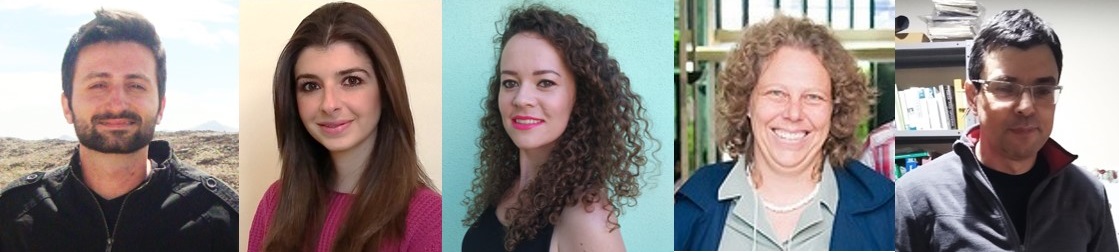
The authors of the paper, from the left: Leandro Benatto, Maiara de Jesus Bassi, Luana Cristina Wouk, Lucimara Stolz Roman and Marlus Koehler.
[Paper: Kinetic model for photoluminescence quenching by selective excitation of D/A blends: implications for charge separation in fullerene and non-fullerene organic solar cells. L. Benatto, M. de Jesus Bassi, L. C. Wouk de Menezes, L. S. Roman and M. Koehler. J. Mater. Chem. C, 2020,8, 8755-8769].
Professor Ana Flávia Nogueira (UNICAMP), B-MRS member, joined this year the advisory boards of two renowned journals in the field of Materials, both from the Royal Society of Chemistry (RSC). These are the Journal of Materials Chemistry A(impact factor = 11.301), where the Brazilian scientist is the only representative from Latin America, and Journal of Materials Chemistry C (impact factor = 7.059), where Professor Ana Flávia and Professor Carlos Graeff, also a B-MRS member, are the only scientists from Latin American institutions.
We are organising a special issue for Journal of Chemical Technology and Biotechnology (JCTB) (published by Wiley, Impact Factor = 2.75, https://onlinelibrary.wiley.com/journal/10974660). We would like to invite authors to submit contributions.
The theme of this special issue is Latest Development of Nanotechnology in Latin America. We would particularly encourage new academics for contribution as we aim to promote research works in nanotechnology with new ideas. Initially, we have set several key areas for the issue:
– Nanotechnology applied to sensors and biosensors
– Nanoparticles and its interactions with plants
– Risk assessment of nanomaterials
– Drug delivery systems
– Development of new functional organic, inorganic and hybrid materials
– Nanotechnology applied to gene transfer
– Molecular simulations in nanotechnology
– Bio-based nanomaterials aiming agriculture and environmental applications
– Magnetic nanomaterials and its applications
– Nanoparticles aiming topical applications
– Biomimetic silica nanoparticles
– Hybrid biofilms aiming for food applications.
We aim to set the deadline for December 31st and to publish the special issue online in 2021. JCTB does not impose publication charges but it provides open access options with a fee.
Once the invitation is accepted, please inform one of the Guest Editors prior to manuscript submission.
Submissions should follow the general guidelines for submitting an article to a Special Issue in JCTB:
Authors should consult the author guidelines for details relating to formatting and article types. These can be found at:
Authors should submit their papers using the manuscript submission system at: http://mc.manuscriptcentral.com/jctb-wiley and should mention the Special Issue in the cover letter.
Authors must ensure they select “YES” when asked if their paper has been invited for a Special Issue during the submission process. They should also enter the name of the Special Issue in the field provided.
Authors should suggest at least two referees for each paper with email contact information.
Authors should submit their papers in the given time frame. Please contact the guest editor if you encounter any problems with meeting the submission due date.
All papers will be subject to the journals usual, rigorous, peer review process and papers will be handled by an editor from the journal.
If you would like your images to be considered for the cover, please email your suggestions to covers@wiley.com once your article has been accepted for publication.
If you have any further enquiry, please contact us.
Best Regards
Guest Editors:
Dr. Renata de Lima (University of Sorocaba, Brazil)
Dr. Leonardo F. Fraceto (UNESP, Brazil)
Dr. Humphrey H. P. Yiu (Heriot-Watt University, UK)

 *Opportunity: the Laboratory of Nanostructured Materials for Environmental and Biological Analyses invites applications for a post-doctoral research fellowship funded by São Paulo Research Foundation (FAPESP: https://www.fapesp.br/en). This fellowship is linked to the Thematic Project “Toward a convergence of technologies: from sensing and biosensing to information visualization and machine learning for data analysis in clinical diagnosis” (FAPESP process number: 2018/22214-6).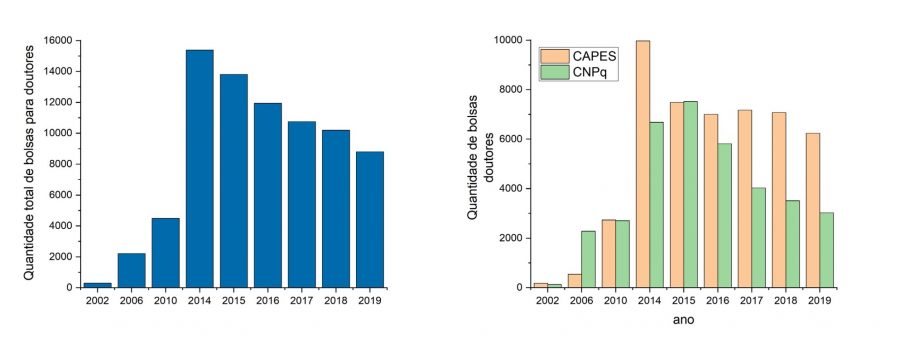
 In August, the last 2020 technical webinars of the