
|
|||||||||||||||||||||||||
|
|||||||||||||||||||||||||
|
|
|||||||||||||||||||||||||
|
|||||||||||||||||||||||||
|
A Sociedade Brasileira de Pesquisa em Materiais (SBPMat/ B-MRS) e a União Internacional de Sociedades de Pesquisa em Materiais (IUMRS) convidam a comunidade científica internacional a enviar propostas de simpósio.
 Está aberta, até
 31 de outubro 18 DE NOVEMBRO de 2019, a chamada de propostas de simpósio para o evento que reunirá o XIX B-MRS Meeting (o evento anual da SBPMat/B-MRS) e o IUMRS – ICEM 2020 (décima sétima edição da conferência internacional sobre materiais eletrônicos organizada bienalmente pela IUMRS). O evento será realizado de 30 de agosto a 3 de setembro de 2020 em Foz do Iguaçu (Brasil), cidade turística próxima à fronteira com a Argentina e o Paraguai, que serve de base para as visitas às deslumbrantes Cataratas do Iguaçu e para os outros atrativos dos entornos.
As propostas de simpósio podem ser submetidas por grupos de pesquisadores, de preferência de composição internacional, que desejem organizar um simpósio temático dentro do evento. O evento terá um foco especial em materiais eletrônicos devido à realização do IUMRS-ICEM. Entretanto, como ocorre em todas as edições do B-MRS Meeting, o evento abrangerá um amplo leque de temas de Ciência e Tecnologia de Materiais. São bem-vindas, portanto, propostas de simpósios em temas relativos a todos os tipos de materiais, da síntese às aplicações.
Para submeter uma proposta de simpósio, basta preencher, em idioma inglês, o formulário online disponível em http://sbpmat.org.br/proposed_symposium/.
Os simpósios constituirão o eixo principal do evento junto às palestras plenárias, as quais contarão com cientistas internacionalmente destacados, tais como Alex Zunger (University of Colorado Boulder, USA), Edson Leite (LNNano, Brazil), John Rogers (Northwestern University, USA), Luisa Torsi (Università degli Studi di Bari “A. Moro”, Italy) e Tao Deng (Shanghai Jiaotong University, China).
As propostas de simpósio serão avaliadas pelo comitê do evento, e, até o final de 2019, será divulgada a lista dos simpósios aprovados. Em fevereiro de 2020, será aberta a chamada de trabalhos, os quais deverão ser submetidos dentro dos simpósios temáticos. Os organizadores dos simpósios serão responsáveis pela avaliação dos resumos submetidos e pela programação do simpósio.
O evento conjunto XIX B-MRS Meeting + IUMRS – ICEM 2020 é coordenado pelos professores Gustavo Martini Dalpian (UFABC) na coordenação geral, Carlos Cesar Bof Bufon (LNNANO) na coordenação de programa e Flavio Leandro de Souza (UFABC) como secretário geral. No comitê internacional, o evento conta com cientistas da América, Ásia, Europa e Oceania.
As últimas edições do B-MRS Meeting reuniram entre 1.100 e 2.000 participantes de vários países do mundo, que apresentaram seus trabalhos dentro dos simpósios.
Veja o site do evento: https://www.sbpmat.org.br/19encontro/ .

A faixa de areia de cerca de 7 km fazendo uma curva suave. Acompanhando a curva, na orla, a sequência de prédios altos, inclusive alguns dos maiores arranha-céus do Brasil. O encontro das águas do rio Camboriú e do Oceano Atlântico. O verde intenso da Mata Atlântica nas ladeiras dos morros, contornando a “selva de concreto” e, mais longe, a serra. Essa mistura única compõe a paisagem de Balneário Camboriú, destino turístico do litoral catarinense que sediou a décima oitava edição do B-MRS Meeting, o evento anual da Sociedade Brasileira de Pesquisa em Materiais (SBPMat).

É claro: para apreciar essa paisagem, uma certa altitude se faz necessária. E foi em um dos pontos mais altos da cidade, no Complexo Cristo Luz, que cerca de 1.200 pessoas da comunidade de pesquisa em Materiais, provenientes de dezenas de cidades do Brasil e do mundo, se reuniram para participar da abertura do XVIII B-MRS Meeting no início da noite de 22 de setembro de 2019.
O Cristo Luz é uma daquelas visitas “obrigatórias” do turista em Balneário Camboriú, com as suas vistas inesquecíveis da cidade e do mar e seu monumento de um Cristo de 33 metros de altura segurando uma potente fonte de luz, que emula um sol, responsável pelo espetáculo de luz colorida que ocorre todas as noites no céu da cidade.
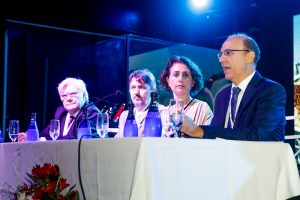
“Este evento faz parte da história de muitos pesquisadores e da pesquisa em Materiais no Brasil”, disse o coordenador (chairman) do XVIII B-MRS Meeting, Ivan Helmuth Bechtold, professor do Departamento de Física da Universidade Federal de Santa Catarina (UFSC), abrindo as falas de abertura no palco. Bechtold contou então a sua própria história dentro do B-MRS Meeting, desde a primeira participação, em 2004, para apresentar os resultados de sua pesquisa de doutorado, até o papel de chairman na edição de 2019, passando pela atuação como organizador de simpósios em três edições do evento. Com isso, o professor Bechtold estimulou os estudantes e jovens pesquisadores presentes a também fazerem parte desta história.
Depois de destacar a grande participação de instituições brasileiras no evento (mais de 400) e o recorde histórico na quantidade de trabalhos submetidos (mais de 2.500), o chairman agradeceu a presença de todos em um momento muito especial do país, no qual a ciência, a tecnologia e o ensino superior público estão sob ataque. “A comunidade científica aqui presente demonstra que o desenvolvimento tecnológico aliado à educação de alto nível qualificam as novas gerações, o que é essencial para promover um futuro melhor ao nosso País”, disse Bechtold, que finalizou agradecendo os patrocínios e apoios financeiros recebidos para realização do evento.
Na sequência, fizeram uso da palavra o vice coordenador do evento, Hugo Gallardo (professor do Departamento de Química da UFSC) e a professora Cristiane Derani, enquanto pró-reitora de Pós-Graduação da UFSC. Ambos abordaram a importância da pesquisa e da pós-graduação. “O Brasil precisa dobrar o número de doutores formados para atingir o dos países desenvolvidos”, lembrou Gallardo, enquanto Derani afirmou que a pesquisa transforma vidas pessoais e profissionais, e resulta em um mundo mais sustentável, justo e pacífico.
Encerrando as falas da mesa de abertura, o presidente da SBPMat, Osvaldo Novais de Oliveira Junior, professor do Instituto de Física de São Carlos da Universidade de São Paulo (IFSC-USP), expressou que a participação em um evento científico como o XVIII B-MRS Meeting é uma forma de resistência aos cortes de recursos e ataques que universidades e agências de fomento à pesquisa brasileiras têm sofrido. “Precisamos resistir; não podemos perder a esperança”, proclamou.
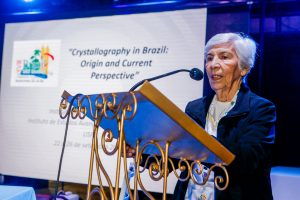
Na sequência, deu-se início à Palestra Memorial Joaquim da Costa Ribeiro, uma honraria que a SBPMat outorga anualmente a um pesquisador com destacada trajetória no Brasil. Neste caso, a homenagem foi para a cientista Yvonne Primerano Mascarenhas, professora aposentada da USP de 87 anos de idade, que ocupou vários cargos de liderança ao longo de sua carreira, e permanece muito ativa até hoje nas atividades de pesquisa e extensão. A partir do início da década de 1960, Yvonne liderou a introdução e desenvolvimento no Brasil da cristalografia de raios X, hoje amplamente usada em pesquisa, desenvolvimento e inovação no país. A técnica permite conhecer, de forma completa, como estão dispostos no espaço os átomos e moléculas que compõem a organizada estrutura de materiais cristalinos e moléculas biológicas.
Saiba mais sobre a professora Yvonne Primerano Mascarenhas: https://www.sbpmat.org.br/pt/cientista-em-destaque-yvonne-primerano-mascarenhas/
Como é de se esperar, na palestra memorial, a pioneira falou sobre cristalografia. Inicialmente, ela contextualizou o desenvolvimento dessa técnica dentro da sucessão de avanços conseguidos pela ciência a partir do século XVII com o objetivo de ver o invisível. “Ver é crer!”, disse a cientista. Na segunda parte da palestra, ela contou um pouco da história da cristalografia de raios X no Brasil, uma área que gerou conhecimento no país em grande quantidade e com muito impacto, sendo apenas um exemplo recente a determinação da estrutura do vírus Zika. Para finalizar, a professora Yvonne destacou as possibilidades oferecidas à área de cristalografia de raios X pelas fontes de luz sincrotron, notadamente o Sirius, a próxima fonte brasileira, que será de última geração. “Aproveitem o Sirius!”, desejou a cientista.
Veja o arquivo da palestra memorial da professora Yvonne Primerano Mascarenhas https://www.slideshare.net/SBPMat/crystallography-in-brazil-origin-and-current-perspective.
Depois da apresentação, o presidente da SBPMat entregou uma placa à homenageada, e todos os presentes foram convidados a participar do coquetel de boas-vindas, um tradicional momento de reencontros nos eventos anuais da SBPMat, desta vez marcado pelas vistas noturnas de Balneário Camboriú, as fotos dos grupos ao pé do Cristo e um baile surgido de forma espontânea ao som da banda que animava o coquetel.
Veja o álbum fotográfico da abertura: https://photos.app.goo.gl/qb2uAFGXBwqUkbAF6
Oito palestras plenárias de uma hora de duração proferidas por cientistas destacados no cenário internacional ocorreram ao longo do evento, sempre na sala principal do Hotel Sibara, localizado a 300 metros da praia, em pleno centro comercial de Balneário Camboriú.
Os plenaristas mostraram resultados impactantes, baseados em avanços em técnicas experimentais e computacionais, abordagens multidisciplinares e novas formas de enxergar velhos problemas. A importância de se compreender e controlar os materiais na escala nano apareceu em todas as palestras. Outra constante foi a relação direta entre o conhecimento gerado e demandas da sociedade tão diversas como uma alimentação mais saudável, dispositivos eletrônicos mais eficientes, melhores enxertos ósseos, carros e aviões mais leves, baterias que duram mais, fontes de energia mais sustentáveis e a cura de lesões da medula espinhal.
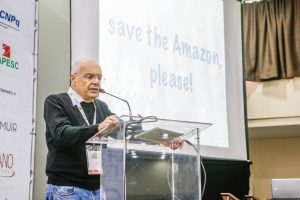
A primeira plenária, que inaugurou a programação técnica do evento, foi proferida no início da manhã do dia 23 (segunda-feira) pelo professor Stefano Baroni, cientista teórico italiano, mundialmente conhecido por ter desenvolvido ferramentas computacionais para o estudo de materiais na nanoescala. Baroni é professor da Scuola Internazionale Superiore di Studi Avanzati (SISSA), localizada em Trieste (Itália). Na sua palestra, metaforicamente intitulada “Olhando flores através de óculos de silício”, o cientista mostrou que métodos computacionais (os “óculos de silício”) baseados em mecânica quântica lhe permitiram avançar na compreensão de como ocorre a expressão das cores em pigmentos naturais – um problema de ciência fundamental que tem gerado grande interesse na indústria dos alimentos. Surpreendendo a plateia, Baroni encerrou sua plenária com um “save the Amazon, please” no último slide.
Veja o arquivo da palestra plenária de Stefano Baroni: https://www.slideshare.net/SBPMat/watching-flowers-through-a-silicon-glass
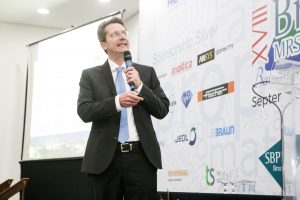
A plenária da tarde do dia 23 foi proferida pelo cientista Norbert Koch, professor da Humboldt-Universität zu Berlin e líder de um grupo de pesquisa no Helmholtz-Zentrum Berlin (Alemanha), autor de impactantes descobertas sobre os mecanismos fundamentais que governam o desempenho dos dispositivos optoeletrônicos. Koch dividiu com a plateia seu amplo conhecimento sobre optoeletrônica, uma área que deve se desenvolver cada vez mais para atender a demanda social que virá nas próximas décadas por dispositivos de processamento e exibição de informação, conversão de energia e emissão de luz. O cientista mostrou que, para melhorar o desempenho dos dispositivos atuais e desenvolver novas funções, é necessário combinar diferentes materiais de modo a maximizar os benefícios de cada um e minimizar suas limitações. Contudo, para fazer isso com sucesso, provou o cientista, é preciso compreender em detalhe as interfaces entre os materiais.
Veja o arquivo da palestra plenária de Norbert Koch: https://www.slideshare.net/SBPMat/hybrid-inorganicorganic-semiconductor-structures-for-optoelectronics
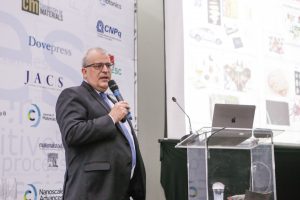
No dia 24, a programação abriu com uma palestra sobre o Sirius, a nova fonte de luz sincrotron brasileira de quarta geração (uma das primeiríssimas no mundo desse tipo) desenvolvida com tecnologia e produção majoritariamente nacional, que vai, em breve, aumentar exponencialmente as possibilidades de pesquisa e desenvolvimento na área de materiais, e também em muitas outras. A plenária foi proferida pelo professor Antônio José Roque da Silva, diretor geral do Centro Nacional de Pesquisa em Energia e Materiais (CNPEM), onde também lidera, desde o início, o projeto Sirius. As características técnicas da fonte (alto brilho e coerência), agregadas à moderna instrumentação das estações experimentais, os cuidados tomados na construção do prédio a e a capacidade de processamento de dados, disse o plenarista, farão do Sirius uma ferramenta à disposição da comunidade internacional capaz de fazer a diferença na investigação da matéria em diferentes escalas de dimensão e tempo, sempre com alta resolução e velocidade. Não à toa, o diretor do CNPEM abriu e fechou a sua apresentação citando destacados cientistas que afirmaram que novas verdades se evidenciam quando novas ferramentas surgem.
Veja o arquivo da plenária de Antônio José Roque da Silva: https://www.slideshare.net/SBPMat/sirius-the-new-brazilian-synchrotron-light-source
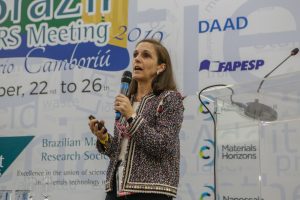
A plenária da tarde foi proferida por Maria-Pau Ginebra, professora da Universitat Politècnica de Catalunya (Espanha). Cientista com ampla produção de artigos e patentes sobre biomateriais, Ginebra também encarou o desafio de transformar o conhecimento em produtos. Assim, junto a outros membros de seu grupo de pesquisa, ela fundou uma empresa dedicada a prover soluções inspiradas na natureza que ajudem o organismo a realizar o processo de regeneração óssea, necessário em diversas situações, tais como implantes dentários, fraturas, malformações e tumores nos ossos. Na palestra, a cientista e empresária apresentou uma nova geração de biomateriais para enxertos ósseos que reúne as vantagens dos enxertos naturais e dos artificiais. Além disso, a professora Ginebra discutiu as possibilidades e potencialidades de se personalizar a fabricação de enxertos usando técnicas de impressão 3D.
Veja o arquivo da plenária de Maria-Pau Ginebra: https://www.slideshare.net/SBPMat/bioinspired-strategies-for-bone-regeneration
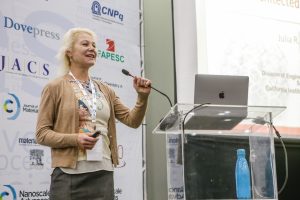
A programação do dia 25 iniciou com toda a energia da cientista, professora, pianista e mãe Julia Greer. E com toda a força dos metamateriais que ela desenvolve, caracteriza e testa junto a seu grupo no do California Institute of Technology, Caltech (EUA). De fato, na plenária, a plateia se surpreendeu ao assistir aos vídeos de nanoestruturas muito leves resistindo a esforços de compressão e tensão muito além do esperado. Para conseguir esses resultados, que prometem interessantíssimas aplicações, é essencial, disse a palestrante, desenvolver o material pensando na sua estrutura no nível atômico, nas propriedades que se manifestam na escala nano e na arquitetura final. É necessário ir além da composição dos materiais, usar a nanoengenharia para desenvolver materiais inovadores e, com eles, arquitetar estruturas tridimensionais inteligentes. Sem se esquecer de avaliar o impacto dos defeitos, os quais tornam os materiais, assim como as pessoas, mais interessantes, expressou Greer.
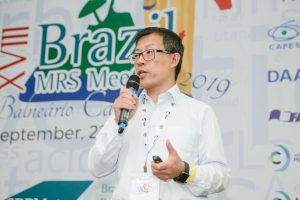
A plenária da tarde foi proferida por Mingzhong Wu, professor da Colorado State University (EUA), especialista na difícil tarefa de fazer experimentos com isolantes topológicos – materiais isolantes no interior, mas condutores na superfície, cuja existência foi comprovada há pouco mais de uma década. Depois de uma didática explicação sobre isolantes topológicos, o cientista mostrou que uma estrutura de finas camadas de isolantes magnéticos e topológicos interagindo entre si pode ser usada como plataforma para estudar as propriedades do isolante topológico e para controlar o magnetismo do isolante magnético. Os estudos do professor Wu devem encontrar aplicações num futuro próximo no desenvolvimento da computação quântica e da spintrônica.
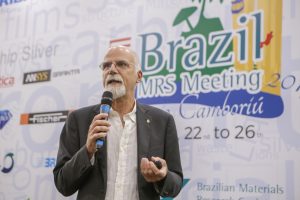
Na manhã do dia 26, foi difícil para muitos acordar cedo depois do sucesso da festa do evento, realizada na noite anterior. Contudo, aqueles que criaram coragem e chegaram à sala principal do Hotel Sibara às 8:15 foram recompensados ao ver que nanotubos de carbono podem ajudar a curar lesões da medula espinhal, responsáveis por perda de movimentos e sensibilidade e, até mesmo, por graves paralisias. De fato, nanotubos de carbono com superfícies devidamente modificadas não apenas promovem o crescimento de tecido nervoso como também geram neurônios mais ativos, mostraram experimentos in vitro, in vivo e ex vivo apresentados na plenária. A palestra foi proferida por Maurizio Prato, professor da Università degli Studi di Trieste (Itália), um especialista em adicionar moléculas orgânicas à superfície de nanomateriais de carbono, dono de uma produção científica de altíssimo impacto (número H 119). Na plenária, Prato mostrou mais uma apaixonante aplicação de seus nanotubos modificados superficialmente, os quais, combinados com nanocatalisadores, podem viabilizar a fotossíntese artificial, um processo que gera combustível a partir de dióxido de carbono.
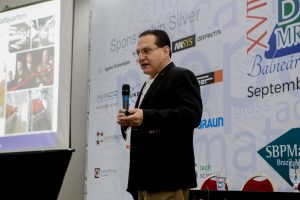
Na mesma manhã, às 11:30, Alan Taub iniciou a última plenária do XVIII B-MRS Meeting. Taub tornou-se professor da University of Michigan (EUA) em 2012, depois de desenvolver uma carreira de 30 anos na Ford, General Electric e General Motors, a qual culminou como vice-presidente mundial de pesquisa e desenvolvimento da GM. Atualmente, o cientista também é conselheiro tecnológico do Lightweight Innovations for Tomorrow (LIFT), um instituto estadunidense que trabalha na interface entre a indústria e uma rede de universidades e laboratórios nacionais, com o objetivo de reduzir o peso dos meios de transporte de amanhã, desde carros até naves espaciais, para assim reduzir seu consumo de combustível. O principal desafio, revelou Taub, é diminuir o custo final dos materiais ultraleves, objetivo para o qual as simulações computacionais têm contribuído significativamente ao fornecer informações sobre as propriedades e desempenho de materiais de modo mais rápido e econômico que as técnicas experimentais.
Veja o arquivo da plenária de Alan Taub: https://www.slideshare.net/SBPMat/challenges-in-processing-of-materials-to-reduce-weight-of-structural-components
Veja o álbum com fotos das palestras plenárias: https://photos.app.goo.gl/4eUA5e3YcdfW9Ta69
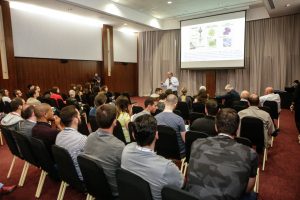
Dentro dos 23 simpósios temáticos que compuseram esta edição do evento da SBPMat/B-MRS, cerca de 1.700 estudantes e pesquisadores apresentaram e discutiram seus trabalhos com pessoas que desenvolvem pesquisas em temas similares. Além disso, os participantes dos simpósios puderam acompanhar e debater os avanços apresentados por seus pares. Nessa atmosfera de intercâmbio de conhecimento, que é vital para a atividade científica, estudantes e pesquisadores tiveram a oportunidade de pensar novas ideias e estabelecer colaborações para dar continuidade a seus trabalhos.
Dessa maneira, em quatro manhãs e três tardes, mais de 2.000 trabalhos de pesquisa científica foram divulgados e discutidos no XVIII B-MRS Meeting. As sete sessões de pôsteres, realizadas no 17º andar do Hotel Sibara, contaram com cerca de 1.500 trabalhos. Nas sessões orais, que ocorreram de forma simultânea em onze salas do Hotel Sibara e três salas do Hotel Mercure, localizados a menos de 300 metros um do outro, cerca de 400 contribuições foram apresentadas, sem contar as cerca de 100 palestras convidadas que foram proferidas.
Enquanto alguns simpósios se estenderam ao longo dos quatro dias de programação técnica, outros duraram um, dois ou três dias, conforme a quantidade de trabalhos aceitos para apresentação, que variou de pouco mais de 20 a cerca de 350 segundo o simpósio.
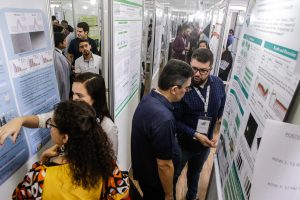
O conjunto dos simpósios abrangeu pesquisas sobre uma ampla gama de materiais: nanomateriais de carbono, vitrocerâmicas, novas ligas metálicas, biopolímeros, nanofibras, peneiras moleculares e materiais magnéticos e supercondutores, entre outros. Os trabalhos mostraram não apenas novos materiais, novas propriedades e novas aplicações, mas também avanços em métodos e processos experimentais e teóricos usados em todas as fases da “vida” dos materiais: design, síntese, processamento, modificação, caracterização, fabricação e reciclagem. Quanto às aplicações abordadas nos trabalhos, a lista também é vasta, incluindo a medicina, odontologia, remediação ambiental, eletrônica, geração e armazenamento de energia, iluminação, aeronáutica e indústria têxtil, entre muitos outros segmentos.
Além da troca de conhecimento técnico, os simpósios propiciaram trocas afetivas nos reencontros de colegas e amigos e na lembrança dos ausentes. Nesse sentido, o simpósio F, dedicado à eletrônica orgânica, teve um momento muito especial na abertura, no dia 23, quando o professor Marco Cremona (PUC-Rio) fez um tributo ao colega da área Ivo Alexander Hümmelgen (UFPR), falecido, de forma prematura e inesperada, no início deste ano.
Veja os slides do tributo ao professor Ivo Alexander Hümmelgen: https://www.slideshare.net/SBPMat/tribute-to-prof-ivo-alexander-hmmelgen-26-march-1963-1-march-2019
Os simpósios do XVIII B-MRS Meeting foram organizados por mais de cem pesquisadores, que trabalharam em equipes, provenientes do Brasil, Canadá, Estados Unidos, França, Itália, Reino Unido, Rússia, Suécia e Suíça.
Veja os destaques de alguns dos simpósios, enviados por seus organizadores: https://www.sbpmat.org.br/pt/xvii-b-mrs-meeting-some-highlights-of-the-symposia/
Veja o álbum com fotografias de sessões orais e de pôster dos simpósios, e as fotos coletivas dos organizadores de simpósio: https://photos.app.goo.gl/mWuHZoihAiRikGsdA
Fora da grade horária do programa técnico, os participantes do XVIII B-MRS Meeting puderam aproveitar, sem custo extra, uma série de atividades realizadas no Hotel Sibara. Na tarde do domingo 22, o professor Valtencir Zucolotto (IFSC – USP) ministrou, para uma sala lotada com cerca de 130 pessoas, um tutorial sobre como fazer pesquisa de alto impacto, com foco na elaboração e publicação de artigos científicos, o “Young Researchers School”.
Na terça e quarta, três atividades aconteceram no horário do almoço, todas com lunch box incluído. No dia 24, o programa do governo alemão “Research in Germany” ofereceu uma sessão de apresentações e perguntas e respostas sobre possibilidades de pesquisa na Alemanha e colaborações Brasil-Alemanha. Cerca de 160 pessoas participaram da atividade.
No dia 25, a ACS Publications, editora da American Chemical Society (ACS), promoveu o painel de discussão “Mastering the Art of Scientific Publication”, que reuniu os editores Osvaldo N. Oliveira Jr. (Brasil) da ACS Applied Materials & Interfaces, Julia Greer (EUA) da Nano Letters e Monica Cotta (Brasil) da ACS Applied Nano Materials. Os painelistas deram dicas sobre o processo de produção e publicação de artigos, em respostas às perguntas da plateia e aos assuntos colocados pelo moderador da sessão, Carlos Toro, também editor na ACS Publications. Mais de 130 pessoas participaram da atividade.
Simultaneamente, em outra sala, profissionais da ANSYS Granta fizeram uma demonstração do software desenvolvido pela empresa para ensino em materiais (CES EduPack) e para pesquisa na área (CES Selector), em uma sala quase cheia, com cerca de 80 pessoas.
Veja o álbum com as fotografias das atividades extra: https://photos.app.goo.gl/FkyRWM8aPNdX4snR6
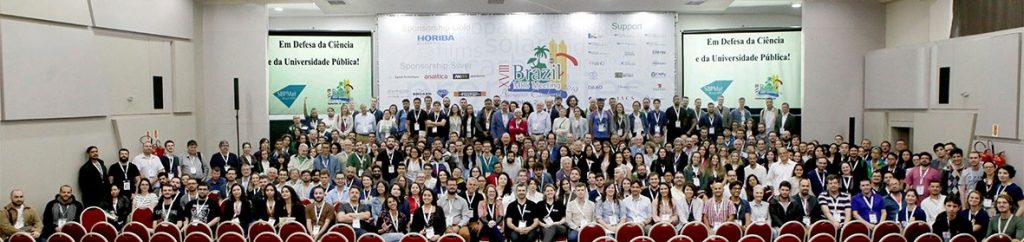
Dois manifestos coletivos em defesa da pesquisa e da educação no Brasil foram realizados no XVIII B-MRS Meeting. No dia 25, a pedido de membros da comunidade, a equipe da SBPMat organizou um manifesto fotográfico e, por meio das redes sociais, convidou os participantes do evento a fazer parte.
O ato ocorreu logo depois de finalizada a palestra plenária da tarde. Algumas centenas de participantes de todas as idades, incluindo alguns estrangeiros, se deslocaram da plateia ao palco e se organizaram entre os telões que projetavam um slide com a frase “Em Defesa da Ciência e da Universidade Pública”. O resultado foi uma foto que foi amplamente divulgada nas redes sociais com a hashtag #todospelaciência.
Veja o álbum com os registros do manifesto fotográfico https://photos.app.goo.gl/EaamwGQPXVzuJTo46
Além disso, a Diretoria Executiva e o Conselho Deliberativo da SBPMat prepararam durante o evento a Carta de Camboriú, um documento escrito no qual manifestam publicamente sua preocupação com os cortes e contingenciamentos de verbas para a educação e pesquisa no Brasil. A Carta de Camboriú também foi divulgada nas redes sociais, no site da SBPMat e no Jornal da Ciência, entre outros veículos.
Veja aqui a íntegra da Carta de Camboriú https://www.sbpmat.org.br/pt/carta-de-camboriu/
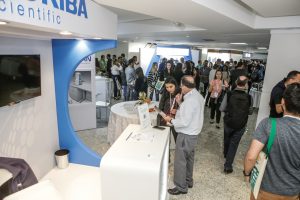
Dezessete empresas do ramo de instrumentação, insumos e software para pesquisa foram patrocinadoras e expositoras do XVIII B-MRS Meeting. Dividindo um amplo espaço com as mesas do coffee break e com a secretaria, e também no hall da sala das plenárias, as empresas receberam as visitas dos participantes do evento em seus estandes, com informações, brindes e atividades especiais.
Além disso, ao longo do dia 23, os participantes interessados puderam saber mais sobre diversas técnicas de caracterização e fabricação de materiais em treze palestras técnicas proferidas por profissionais das empresas expositoras.
Destacou-se também, nesta edição do evento, a presença maciça de revistas científicas da área como apoiadoras do evento, entre as quais podia-se encontrar renomados títulos das editoras ACS, RSC (Royal Society of Chemistry) e Elsevier.
Veja o álbum com fotos dos estandes e palestras técnicas: https://photos.app.goo.gl/pvgYHHeV5493QLap7
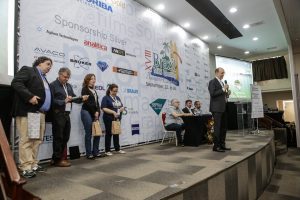
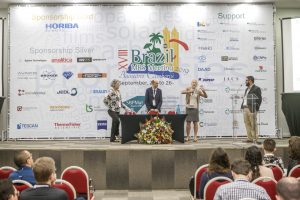
A plateia da sala das plenárias ficou quase cheia na sessão de encerramento. No palco, à mesa de encerramento, estavam o coordenador e o vice coordenador do evento que estava finalizando, o presidente da SBPMat e o coordenador do próximo B-MRS Meeting, professor Gustavo Dalpian (Universidade Federal do ABC).
Em uma breve apresentação, o professor Ivan Bechtold compartilhou os principais dados do XVIII B-MRS Meeting e fez público seu agradecimento a todos que viabilizaram sua realização: plenaristas, palestrantes convidados, organizadores e participantes dos simpósios, equipe SBPMat (secretaria, comunicação, logística e software), comitê de programa, comitês local e nacional, equipe de estudantes voluntários, patrocinadores e apoiadores. Nas últimas palavras, o chair retomou as mensagens motivacionais da mesa de abertura em defesa da ciência e das universidades públicas, pedindo para resistir, não desistir e não perder a esperança.
Veja o arquivo da apresentação de encerramento do professor Ivan Bechtold: https://www.slideshare.net/SBPMat/xviii-bmrs-meeting-closing-ceremony-presentation
A palavra passou então para o professor Osvaldo Novais de Oliveira Junior, que concluirá no final deste ano seu segundo mandato como presidente da SBPMat. Ele expressou seu orgulho de ter presidido a Sociedade e agradeceu a todos que trabalharam com ele ao longo da sua gestão. Particularmente, o presidente prestou homenagem mediante uma entrega de placas a dois sócios que têm realizado um trabalho voluntário como editores científicos do Boletim da SBPMat: André Avelino Pasa (professor da UFSC) e Fernando Lázaro Freire Junior (professor da PUC-Rio).
Saiba mais sobre esta homenagem e sobre os sócios homenageados: https://www.sbpmat.org.br/pt/homenagem-da-sbpmat-a-dois-socios-por-suas-contribuicoes-a-sociedade/.
Na sequência, o presidente da SBPMat surpreendeu a equipe de profissionais que trabalha de forma constante ao longo do ano para a sociedade, com um reconhecimento público e uma entrega de presentes. Dessa maneira, foram chamados ao palco Verónica Savignano (jornalismo e disseminação), Marcia Bicalho (secretaria executiva), Alexandre Alves (coordenação do evento) e Leandro D´Agostino Amaral (software).
Nesse momento, os papeis se inverteram, e foi o professor Osvaldo quem recebeu um agradecimento da SBPMat, representada pelo chair do evento, pela inestimável contribuição realizada ao exercer a presidência durante quatro anos – função que, vale frisar, não é remunerada.
Finalmente, o professor Dalpian tomou a palavra para convidar os presentes a participarem com propostas de simpósio e, posteriormente, envio de trabalhos, do XIX B-MRS Meeting, que será realizado em conjunto com o IUMRS-ICEM, conferência internacional de materiais eletrônicos, de 30 de agosto a 3 de setembro de 2020 em Foz do Iguaçu. “Estaremos em um dos lugares mais incríveis do mundo”, disse o chair, referindo-se às Cataratas do Iguaçu.
Veja o arquivo da apresentação do professor Gustavo Dalpian sobre o XIX B-MRS Meeting: https://www.slideshare.net/SBPMat/xix-bmrs-meeting-iumrs-icem-2020
Veja o álbum fotográfico da sessão de encerramento: https://photos.app.goo.gl/aakmQtSW4u46c6ZJ9
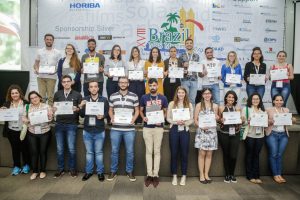
O evento finalizou com a tradicional cerimônia de entrega dos prêmios aos melhores trabalhos apresentados por estudantes, que nesta edição do evento contou com três prêmios diferentes. O “Bernhard Gross Award”, outorgado pela SBPMat ao melhor oral e melhor pôster de cada simpósio, distinguiu 34 estudantes de graduação e pós-graduação, ligados a diversas instituições de todas as regiões do Brasil, além da França, Reino Unido e Suíça. Dentre esses vencedores, quatorze trabalhos foram escolhidos por suas notas de avaliação como as melhores contribuições de todo o evento para receber os prêmios em dinheiro. Dessa maneira, dez estudantes receberam os “ACS Publications Prizes”, patrocinados por um grupo de periódicos da editora da American Chemical Society, e mais quatro estudantes ganharam os “RSC Prizes”, patrocinados por periódicos da Royal Society of Chemistry.
Veja a lista de vencedores dos prêmios para estudantes: https://www.sbpmat.org.br/pt/english-xviii-b-mrs-meeting-students-awards-and-prizes/
Veja o álbum fotográfico da premiação: https://photos.app.goo.gl/M5FHLP812NEyp5XZA
Symposium K: i-Caloric Materials and Applications.
The general impression from participants and organizers is that the symposium was very successful. The number of abstracts, although not as high as other symposia, was higher than we expected. All the speakers, invited or not, attended. The works presented, both the seminars and the posters, were of excellent quality.
Alexandre Magnus Gomes Carvalho (CNPEM)
Symposium S: Computational Design for Development of Functional Materials – Synergy between Theoreticians and Experimentalists
The symposium had a high level of presentations, with the participation of national and international researchers. The questions and discussions were intense. We highlight the participation of researchers Elson Longo, and Stefano Baroni, São Carlos, Brazil and, Trieste, Italia, respectively. Both presented the state of the art in applications and correlations between theoretical and experimental research. The poster section also had a high level and with the intense participation of young researchers, demonstrating that the future of theoretical research applied to materials is promising.
Julio Ricardo Sambrano (Unesp)
Symposium T: Nanofibers, Applications and Related Technology.
The symposium T was organized by Profa. Dra Claudia Merlini (UFSC), Prof. Dr. Cicero R. Cena (UFMS), Prof. Dr. Deuber L. S. Agostini (UNESP) and Profa. Dra Roselena Faez (UFSCar). We received 75 abstracts, 6 oral presentations and 5 invited speakers. Interesting and highly quality works were presented in two days of the symposium by authors from different regions of Brazil and international institutions of different countries. The invited speakers were Prof. Dr. Enzo Menna (Università degli Studi di Padova – Italy), Dr. Gilberto Siqueira (Swiss Federal Laboratories for Materials Science and Technology (EMPA), Switzerland), Profa. Dra. Ana Paula Immich (Universidade Federal de Santa Catarina (UFSC), Prof. Dr. Hernane da Silva Barud (Universidade de Araraquara (UNIARA), Prof. Dr. Eliton S. Medeiros (Universidade Federal da Paraíba (UFPB). The invited speakers, all experts and distinguished professors in the field, have made important contributions to the scientific community, bringing innovations related to the manufacture, applications and characterizations of natural and synthetic nanofibers. The Symposium was financial supported by FAPESC (Edital PROEVENTOS 2019/2020). This was the second edition of Symposium focused exclusively to Nanofibers and Applications in the B-MRS Meeting, with an expressive numbers of participants.
Claudia Merlini (UFSC)
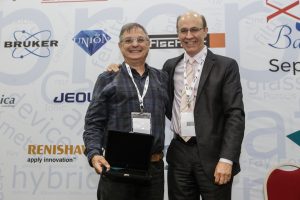
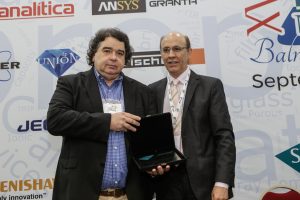
No dia 26 de setembro deste ano, durante o encerramento do XVIII B-MRS Meeting (Balneário Camboriú), os professores Fernando Lázaro Freire Jr. (PUC-Rio) e André Avelino Pasa (UFSC) foram homenageados por suas contribuições à SBPMat, em especial pelo trabalho voluntário que realizam todos os meses como editores científicos do Boletim da SBPMat.
Por ocasião da entrega das placas que acompanharam a homenagem, o presidente da SBPMat, professor Osvaldo Novais de Oliveira Junior, declarou que as contribuições dos professores Fernando Lázaro e André Pasa deixam um legado para a SBPMat e um exemplo a seguir. “Como presidente da SBPMat queria expressar minha gratidão aos meus colegas e amigos Fernando Lázaro e André Pasa por seu trabalho voluntário para a comunicação de nossa sociedade com seus membros e com o público em geral. E por estarem sempre prontos a auxiliar a SBPMat nos desafios que temos enfrentado para fazer de nossa sociedade uma das mais importantes do País”.
O professor Fernando Lázaro Freire Junior, coordenador da área de Astronomia e Física da CAPES, é sócio fundador da SBPMat. Ele foi membro da diretoria fundadora, presidente da Sociedade de 2006 a 2009, diretor científico de 2004 a 2005 e diretor financeiro de 2012 a 2013. Atua no Boletim da SBPMat desde a criação desse veículo eletrônico, em 2012.
O professor André Avelino Pasa foi diretor científico da SBPMat de 2014 a 2015 e atua no boletim desde 2014.
 Participantes
– Cerca de 1.700 participantes.
– Gênero: 56% homens, 44 % mulheres.
– 42 % estudantes de pós-graduação, 35 % profissionais, 23 % estudantes de graduação.
– Países dos inscritos: 27 países da América do Sul, Central e do Norte, da Europa e da Ásia (95% do Brasil).
– Estados dos inscritos do Brasil: 25 estados da federação, cobrindo as 5 regiões do país.
– Instituições representadas: cerca de 400.
– 23 simpósios organizados por mais de 100 organizadores de 9 países.
– Mais de 2.000 trabalhos efetivamente apresentados (aproximadamente 1.500 pôsteres, 400 orais e 100 palestras convidadas).
– 34 trabalhos premiados entre 137 trabalhos inscritos para concorrer aos prêmios.
– 14 salas para apresentações orais simultâneas.
– 8 palestras plenárias e 1 palestra memorial.
– 13 palestras técnicas de patrocinadores.
– 1 tutorial, 2 painéis de discussão e 1 workshop.
– 17 expositores/ patrocinadores.
– 33 apoiadores, principalmente editoras/ revistas científicas e agências brasileiras de fomento.
Está aberto novo processo seletivo do Programa de Pós-Graduação em Ciência dos Materiais (PPGCM) da Unesp de Ilha Solteira, programa com nota 5 na CAPES.
Mais detalhes das linhas de pesquisa podem ser obtido no site do PPGCM (https://www.feis.unesp.br/#!/ppgcm).
Inscrições para a seleção de mestrado e doutorado da Pós-Graduação em tecnologias energéticas e nucleares, PROTEN/UFPE/CNEN já estão abertas para o semestre 2020.1.
O Edital da seleção encontra-se no link: https://www.ufpe.br/
O PROTEN é um programa de pós-graduação stricto sensu, associado entre a Universidade Federal de Pernambuco e a Comissão Nacional de Energia Nuclear, atualmente nota 5 na avaliação da CAPES.
Veja os álbuns com fotos oficiais de vários momentos do XVIII B-MRS Meeting (Balneário Camboriú, 22 a 26 de setembro de 2019).
– Cerimônia de abertura, palestra memorial (Yvonne Mascarenhas) e coquetel de boas-vindas:
https://photos.app.goo.gl/qb2uAFGXBwqUkbAF6
– Palestras plenárias:
https://photos.app.goo.gl/4eUA5e3YcdfW9Ta69
– Simpósios – sessões orais e de pôster:
https://photos.app.goo.gl/mWuHZoihAiRikGsdA
– Atividades extra – Young Researchers School, Materials Bonds (Research in Germany), ACS Publications´Meet the Editors, e ANSYS Granta demo:
https://photos.app.goo.gl/FkyRWM8aPNdX4snR6
– Manifesto em defesa da ciência e da univesidade pública:
https://photos.app.goo.gl/EaamwGQPXVzuJTo46
– Festa do evento:
https://photos.app.goo.gl/m9ScFuEMwsw6mw9J7
– Exposição de estandes e palestras técnicas de expositores:
https://photos.app.goo.gl/pvgYHHeV5493QLap7
– Cerimônia de encerramento:
https://photos.app.goo.gl/aakmQtSW4u46c6ZJ9
– Premiação dos melhores trabalhos de estudantes:
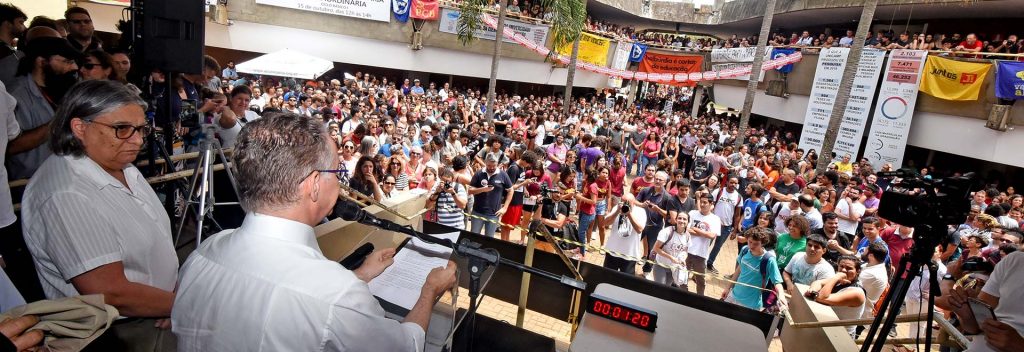
A Diretoria da SBPMat apoia a “Moção da Unicamp à Sociedade”, documento em defesa da universidade pública gratuita, laica, a serviço da sociedade e de qualidade.
A moção foi lida e aprovada nesta terça-feira (dia 15 de outubro) na primeira Assembleia Universitária Extraordinária da Unicamp – uma reunião única na história da Unicamp que congregou cerca de 8 mil pessoas no campus dessa universidade.
O documento foi elaborado pelos representantes da Reitoria, Associação dos Docentes da Unicamp (Adunicamp), Sindicato dos Trabalhadores da Unicamp (STU), Diretório Central dos Estudantes (DCE) e da Associação de Pós-Graduandos da Unicamp (APG).
Leia a íntegra do documento:
Moção da Unicamp à Sociedade
A comunidade acadêmica da Unicamp manifesta sua indignação diante dos reiterados ataques contra a educação e a ciência perpetrados no Brasil nos últimos meses, e conclama a sociedade a unir-se em defesa da universidade pública gratuita, laica, socialmente referenciada e de qualidade.
Neste momento preocupante da história nacional é vital que as universidades públicas reafirmem seu valor e ressaltem a importância da autonomia para o cumprimento de sua missão.
Como se sabe, a missão primordial de universidades como a Unicamp, mantidas com recursos provenientes de impostos, consiste em formar pessoas altamente qualificadas, desenvolver pesquisas de impacto e colocar o conhecimento que produzem à disposição da sociedade por meio de atividades de extensão e assistência.
Ao mesmo tempo, espera-se das universidades públicas que acompanhem as transformações acadêmicas, científicas, tecnológicas, sociais e culturais do mundo contemporâneo, buscando formas de promover a diversidade e a inclusão social em suas comunidades, de ampliar a transparência de seus processos e de atender aos objetivos de desenvolvimento sustentável.
Nada disso é possível sem que se observe o princípio da autonomia, garantido às universidades públicas pelo artigo 207 da Constituição Federal de 1988. Atentar contra a autonomia significa impedi-las de fazer suas próprias escolhas, fundamentais para a criação e manutenção de um ambiente estimulante, desafiador, criativo, dinâmico e, sobretudo, de respeito às pessoas e à diversidade de opiniões.
Os obstáculos que têm sido impostos às universidades públicas – seja por meio de cortes orçamentários diretos, diminuição dos recursos direcionados às agências de fomento ou pressões de natureza econômica, ideológica ou social – colocam em risco a estrutura do sistema nacional de ciência, tecnologia, inovação e ensino, deixando o país sujeito ao retrocesso e ao obscurantismo.
Os argumentos nos quais se baseiam os ataques recentes, fortemente marcados pelo anti-intelectualismo e por um profundo desprezo pelo conhecimento científico, revelam uma visão equivocada da função da educação superior e da ciência. Os recursos de que as universidades públicas necessitam para realizar suas atividades-fim não podem jamais ser encarados como um custo para o Estado, mas sim como um investimento no futuro do país.
No Brasil, assim como em todos os países desenvolvidos, a pesquisa nas universidades é financiada majoritariamente pelo Estado, por meio de suas agências de fomento. Interromper o fluxo de recursos para essas instituições constitui um equívoco que impedirá o país de enfrentar e resolver os grandes desafios sociais e econômicos que se apresentam.
Da mesma forma, as críticas a áreas específicas, como as humanidades e as artes, demonstram uma ignorância absoluta do papel fundamental que a busca por conhecimento exerce no desenvolvimento do pensamento crítico e criativo, bem como na formulação de políticas públicas voltadas ao desenvolvimento social, à redução das desigualdades e ao respeito à diversidade.
Diante de tudo isso, cabe à Unicamp unir-se às demais instituições que buscam reagir às investidas contra as universidades públicas e, por conseguinte, ao violento processo de desmonte dos sistemas nacionais de educação superior e de ciência, tecnologia e inovação.
A comunidade acadêmica da Unicamp reafirma, aqui, o seu compromisso com a defesa das liberdades de cátedra e de livre organização associativa e estudantil. É preciso, neste momento, zelar pelo patrimônio inestimável que as universidades públicas representam para o Brasil. Urge uma consistente mobilização para evitar que os frutos de tantos anos de investimento de toda a sociedade sejam colocados em risco por uma política que ignora tanto o passado, quanto o presente, e ainda ameaça o futuro do país. A isso, é preciso reagir!
Cidade Universitária Zeferino Vaz, 15/10/2019