SBPMat newsletter. English edition. Year 2, issue 12.

Brazilian Materials Research Society (SBPMat) newsletter

News update from Brazil for the Materials community

English edition. Year 2, issue 12. 

SBPMat news

Holiday message from SBPMat. See the message to the associates from the Board and Council that headed our society in 2015. Here.

Elections at SBPMat. Get to know the results of the election of the Executive Office and members of the Council, which voting was performed between December 1st and 12th. Here.

XV SBPMat Meeting. Save the date. The next annual meeting of our society will take place in the city of Campinas (SP), form September 25th to 29th of 2016. Know more. 
Internationalization. Representing SBPMat, Professor Roberto Faria was elected vice-president of IUMRS (International Union of Materials Research Societies) and shall strengthen the entity action in South America. Know more.
Featured paper 

A multidisciplinary team of 13 Brazilian scientists tested the efficiency of several functionalized nanomaterials for delivering genes of interest (gene delivery) to humans and rat cells, protecting the nucleic acid until destiny. The results were published on Nanoscale. See our story about the study.

Having a series of experimental evidences, a team of Brazilian scientists presented, in Applied Physics Letters, the newest member of the photovoltaic materials family: bismuth telluride. The finding opens possibilities for fundamental studies and for applications of the material. See our story.

People in the Materials community 
The doctoral thesis that won the Capes Award for Doctoral Theses in the field of materials science and engineering was also winner of a Grand Capes Award. Know more.

Scientists of the Brazilian materials community, Oswaldo Alves and Marcos Pimenta, were empowered as members of TWAS (The World Academy of Sciences).

Events
  • 6th Transmission Electron Microscopy (TEM) Summer School. Campinas, SP (Brazil). January, 11 to 29, 2016. Site.
  • 5th International Conference on Surface Metrology. Póznan (Poland). April, 4 to 7, 2016.  Site.
  • 43rd International Conference on Metallurgical Coatings and Thin Films (ICMCTF). San Diego (USA). April, 25 to 29, 2016. Site.
  • 40th WOCSDICE ‐ Workshop on Compound Semiconductor Devices and Integrated Circuits held in Europe & 13th EXMATEC ‐ Expert Evaluation and Control of Compound Semiconductor Materials and Technologies. Aveiro (Portugal). June, 6 to 10, 2016. Site.
  • Photonic Colloidal Nanostructures: Synthesis, Properties, and Applications (PCNSPA Conference 2016). Saint Petersburg (Russia). June, 27 to July, 1, 2016.  Site.
  • XXV International Conference on Raman Spectroscopy (ICORS2016). Fortaleza, CE (Brazil). August, 14 to 19, 2016.  Site.
  • XV Encontro da SBPMat. Campinas, SP (Brazil). September, 25 to 29, 2016. Site.
  • Aerospace Technology 2016. Stockholm (Sweden). October, 11 to 12, 2016. Site.

Cannot see this message? Click here.

To unsubscribe, click here

XV SBPMat Meeting will be held in Campinas in September 2016.

Where: Campinas city, São Paulo state.

When: 25 to 29 of September, 2016.

Important dates:

  • Symposium proposal submission: January 2016
  • Abstract submission: until May 30th
  • Notification of the accepted abstracts: July 10th

Chairs:

  • Ana Flávia Nogueira (IQ/UNICAMP)
  • Mônica Alonso Cotta (IFGW/UNICAMP)

Local committee:

  • Antonio Riul Jr (IFGW/UNICAMP)
  • Carlos Cesar Bof Bufon (LNNano/CNPEM)
  • Christoph Deneke (LNNano/CNPEM)
  • Fernando Sigoli (IQ /UNICAMP)
  • Francisco das Chagas Marques (IFGW/UNICAMP)
  • Jillian Nei Freitas (CTI Renato Archer)
  • Luiz Fernando Zagonel (IFGW/UNICAMP)
  • Talita Mazon (CTI Renato Archer)

Site: http://sbpmat.org.br/15encontro/home/


SBPMat newsletter. English edition. Year 2, issue 11.

Brazilian Materials Research Society (SBPMat) newsletter

News update from Brazil for the Materials community

English edition. Year 2, issue 11. 

SBPMat news

SBPMat elections: The voting period for the election of the next Executive Board and five counselors runs until December 12. All SBPMat members in good standing may vote by accesing the members area with their e-mail and password. Go.

XIV SBPMat Meeting: Find on the site of the event the proceedings of the meeting with the abstracts of papers approved for presentation (ISBN is 978-85-63273-29-1). Here.
XIII SBPMat Meeting: Papers bestowed with the Bernhard Gross Award at the XIII SBPMat Meeting (João Pessoa, 2014) were published in open access by IOP Publishing. More.
Featured paper 
A team of scientists from Brazil developed “nanomanipulations” in samples prepared in Israel, composed of serpentine-shaped carbon nanotubes over crystalline quartz. Through experimental and theoretical analyzes, the scientists were able to measure the strain suffered as a result of nanomanipulations and to understand phenomena related to the adhesion of nanostructures over materials such as quartz. Researchers condensed the study’s findings in a mathematical equation applicable to various materials. The results of the study were recently published in Nano Letters. See our story about the paper.
People in the Materials community 
We interviewed the winner of the Capes Doctoral Dissertation Award in the Materials area, Edroaldo Lummertz da Rocha, PhD in Materials Science and Engineering from the Brazilian Federal University of Santa Catarina (UFSC). Edroaldo became interested in science because it would enable him to help people somehow.  In his doctoral research, he worked on the interface among Materials Science, Computer Science and Biology to study the interaction between biological cells and nanomaterials. He generated knowledge that can lead to the development of new drug delivery systems. In addition to this satisfaction, his PhD gave him the gratification of seeing two articles he co-authored on high-impact journal covers. See our interview with Eldroaldo and data about other dissertations related to Materials area which also were awarded by CAPES this year.
2015 “Alfred W. Allen Award” of the American Ceramic Society, to the work of authors from academia and industry – among them, Brazilian Victor Carlos Pandolfelli (UFSCar professor) and Mariana Braulio (Alcoa Aluminio). More.
Work done in Brazil and presented by Mirella Boery (doctoral student at UNICAMP) received the Best Poster Award at IUMRS-ICAM, held in Korea in October this year. More.
Reading tips
Scientific journalism stories based on highlighted papers.

  • Self-organized nanostructures of crumpled graphene (3D) with gold nanoparticles can be excellent substrates for SERS analysis (based on paper from Nano Letters). Here.
  • New family of 2D semiconductor material is made of perovskite (based on paper from Science). Here.

News from Brazilian National Institutes of Science and Technology (INCTs) and Research, Innovation and Dissemination Centers (CEPIDs).

  • Research on YAB nanocrystals doped with Nd3 + opens possibilities of new random laser (INCT of Photonics). Here.
  • The innovation center of CDMF was opened at UFSCar and includes a spin-off on functional nanomaterials. Here.
  • Award given in event in Japan to a Brazilian paper on hard and low-density transparent glass-ceramic (CEPID Certev). Here.
Events
  • XIX Encontro Jacques Danon de Espectroscopia Mössbauer. Diamantina, MG (Brazil). December, 14 to 16, 2015. Here.
  • 6th Transmission Electron Microscopy (TEM) Summer School. Campinas, SP (Brazil). January, 11 to 29, 2016. Here.
  • 5th International Conference on Surface Metrology. Póznan (Poland). April, 4 to 7, 2016.  Here.
  • 43rd International Conference on Metallurgical Coatings and Thin Films (ICMCTF). San Diego (USA). April, 25 to 29, 2016. Here.
  • Photonic Colloidal Nanostructures: Synthesis, Properties, and Applications (PCNSPA Conference 2016). Saint Petersburg (Russia). June, 27 to July, 1, 2016.  Here.
  • XXV International Conference on Raman Spectroscopy (ICORS2016). Fortaleza, CE (Brazil). August, 14 to 19, 2016.  Here.

Cannot see this message? Click here.

To unsubscribe, click here

SBPMat newsletter. English edition. Year 2, issue 7.


Brazilian Materials Research Society (SBPMat) newsletter

News update from Brazil for the Materials community

English edition. Year 2, issue 7. 

SBPMat news: XIV Meeting – Rio de Janeiro, Sept 27 to Oct 1, 2015

About 1,000 people are already registered in the XIV SBPMat Meeting.

Registrations: The deadline for early registration was extended up to August 31. Check the new special fees for graduation and postgraduation students and register. Here.

Program: See here the preliminary program at a glance and here the full program.

Meeting papers publication: authors of works presented in the meeting will have the possibility to submit papers to peer review for publication in IOP Materials journals. The papers of the XIV SBPMat Meeting accepted for publication in any of the 5 IOP journals will be gathered in an online collection dedicated to the event.The submissions are open up to October 15. Know more.

Bernhard Gross award: Up to August 21, authors who are students can submit extended abstracts to compete for the award for best works (one oral and one poster) of each simposium. More info.

IUMRS Award: This year, the IUMRS (International Union of Materials Research Societies) will grant an award to the 3 best posters among the set of the works awarded with Bernhard Gross Award.

Horiba Award: It will be granted to the best oral presentation and best poster of all the event.

E-MRS Award: It will be granted to the best oral presentation and to the 2 best posters of symposium C. Learn more.

Hosting: A list of hotels is available, with special conditions for participants of the XIV SBPMat Meeting. Here.

Sponsors and exhibitors: 28 companies have already booked their place in the XIV SBPMat Meeting. Contact for exhibitors and other sponsors: rose@metallum.com.br.

Go to the event website.

XIV SBPMat Meeting: 2,325 works accepted for presentation
Among the 2,444 abstracts submitted to the 27 symposia and 2 workshops of the XIV SBPMat Meeting, 2325 were accepted for presentation. It is the highest number in the history of the meetings of the society. Some symposia have more than 250 accepted works. Know more.
 

XIV SBPMat Meeting: interviews with plenary speakers

Organic electronics applied to the study of the brain and the diagnosis and treatment of neurological deseases will be addressed in one of the plenary lectures of the SBPMat meeting, in charge of professor George Malliaras, director of the department of Bioelectronics of the École Nationale Supérieure des Mines de Saint-Étienne (France). Examples of these applications are devices based on organic materials used to record and stimulate the cerebral activity. In an interview to our newsletter, Malliaras spoke about the importance of interdisciplinary collaboration to generate research with social impact in his research field. The scientist also mentioned some of his main contributions in organic electronics and bioelectronics. See the interview.

Featured paper

A team of scientists from UniVap (Brazil) coordinated a research that produced a composite biomaterial, promising to be used in the health area, in bone tissue regeneration. The material adds the mechanical properties of carbon nanotubes to the biological properties of the hydroxyapatite. By observing the behavior of the composite in simulated body fluid, the scientists could advance in the understanding of how the biomineralization (a stage of bone tissue generation) occurs. The work, that involved the collaboration of researchers from INPE (Brazil) and Israel and United Kingdom institutions, was recently published in Nanoscale. See our story about the paper.

SBPMat´s community people: interview with Marcelo Knobel

We interviewed Marcelo Knobel, professor of Unicamp and new director of the Brazilian Nanotechnology National Laboratory (LNNano). This physicist have been doing research, since the time of his graduation course, on magnetic properties of materials – field in which he participated in pioneering studies on giant magnetoresistance and magnetoimpedance in certain materials. In addition to being the author of about 300 papers with more than 6,300 citations, he has an important performance in science dissemination, with achievements such as the exhibition NanoAventura, a collection of books, articles in the media etc. In the interview, Marcelo Knobel talks about the importance of science dissemination and about his career as a materials scientist. He also leaves a message for readers beginning their careers, suggesting passion as a guide, accompanied by strong technical background, personal skills and general knowledge. See the interview.

Reading tips
Scientific journalism stories based on highlighted papers

  • Conductor fibers, made of rubber and carbon nanotubes, stretch 1,000% and can be used in electronics, sensors and muscles (based on paper from Science). Here.
  • Using ultrashort pulse laser, Brazilian scientists create diamond-like phase from polycrystalline graphite (based on paper from Scientific Reports). Here.
  • Scientists manage to obtain an ideal material to produce biocompatible and resistant hydrogel in 3D printers (based on paper from Advanced Materials). Here.

News from Brazilian National Institutes of Science and Technology (INCTs) and Research, Innovation and Dissemination Centers (CEPIDs)

  • NAMITEC (INCT) researchers publish papers on piezoelectric graphene and graphene under very high temperature in journals of Nature´s group. Here.
  • Book issued by CDMF (CEPID) brings together more than 200 SEM images chosen and colored with an aesthetic look. Here.
Events
  • Talk “Impactos das novas Tecnologias – Nanopartículas – Riscos Emergentes – O caso da Nanotecnologia”. Rio de Janeiro, RJ (Brazil). August, 13, 2015. Folder.
  • Primeira Conferência de Materiais Celulares (MATCEL 2015). Aveiro (Portugal). September, 7 to 8, 2015. Site.
  • XXII Reunião da Associação Brasileira de Cristalografia (ABCr) and I Reunião da Latin America Crystallographic Association (LACA). São Paulo e Campinas, SP (Brazil). September, 9 to 11, 2015. Site.
  • 2015 IUCr High-Pressure Workshop. Campinas, SP (Brazil). September, 12 to 15, 2015. Site.
  • Workshop em Ciências dos Materiais. São Carlos, SP (Brazil). September, 21 to 25, 2015. Site.
  • XIV SBPMat Meeting. Rio de Janeiro, RJ (Brazil). September 27 to October 1, 2015. Site.
  • 8th International Summit on Organic and Hybrid Solar Cells Stability (ISOS-8). Rio de Janeiro, RJ (Brazil). September 29 to October 1, 2015. Site.
  • 13th International Conference on Plasma Based Ion Implantation & Deposition (PBII&D 2015). Buenos Aires (Argentina). October, 5 to 9, 2015. Site.
  • Nanomercosur 2015. Buenos Aires (Argentina). October, 6 to 8, 2015. Site.
  • 4th EPNOE International Polysaccharide Conference. Warsaw (Poland). October, 18 to 22, 2015. Site.
  • 10th Ibero-American Workshop on Complex Fluids 2015. Florianópolis, SC (Brazil). October, 25 to 29, 2015. Site.
  • 14th International Union of Materials Research Societies – International Conference on Advanced Materials (IUMRS-ICAM 2015). Jeju (Korea). October, 25 to 29, 2015. Site.
  • III Método Rietveld de Refinamento de Estrutura. Belém, PA (Brazil). October, 26 to 30, 2015. Site.
  • 16th International Feofilov Symposium on spectroscopy of crystals doped with rare earth and transition metal ions. St Petersburg (Russia). November, 9 to 13, 2015. Site.
  • 6th Transmission Electron Microscopy (TEM) Summer School. Campinas, SP (Brazil). January, 11 to 29, 2016. Site.
  • 43rd International Conference on Metallurgical Coatings and Thin Films (ICMCTF). San Diego (EUA). April, 25 to 29, 2016. Site.
To suggest news, opportunities, events, papers, interviewees or reading recommendations items for inclusion in our newsletter, write to comunicacao@sbpmat.org.br.

Unsubscribe here.

 
Cannot see this message? Click here.

XIV SBPMat Meeting: 2,325 works were accepted for presentation.

2,325 works are accepted for oral presentation or poster in the XIV SBPMat Meeting (Rio De Janeiro, September 27th to October 1st). The number is the greatest in the history of the meetings of the society.The amount of submitted works was 2,444.

This year the meeting has 26 thematic symposia, 2 workshops (on nanomanufacturing and organic electronics in the industry) and 1 symposium organized by students who belong to the SBPMat university chapters (UCs).The symposia with more accepted works (more than 200 accepted abstracts) are symposium C, on characterization and applications of nanomateriais, with 272 works, and symposium S, on materials for sustainable development, with 253 works.

Among the accepted works, those submitted by authors who are undergraduate or graduate students will be able to compete for the Bernhard Gross Award, who will distinguish the best works from each symposium (1 oral and 1 poster).To participate of the award, the authors have to submit an extended abstract, according to the instructions and the model that appears in the website of the event, until August 21.

About the event

The SBPMat annual meeting is a traditional, international forum, dedicated to recent advances and perspectives on Materials Science and Technology. In the last editions, the event has gathered approximately 1,500 attendees, from the five regions of Brazil and dozens of others countries, for presenting and discussing scientific and technological studies in the field of Materials.  The event also counts with plenary lectures, offered by internationally renowned researchers, and an exhibition of interest for the Materials community.

SBPMat newsletter. English edition. Year 2, issue 3.

Brazilian Materials Research Society (SBPMat) newsletter

News update from Brazil for the Materials community

English edition. Year 2, issue 3. 

SBPMat news: XIV Meeting – Rio de Janeiro, Sept 27 to Oct 1, 2015

Simposia and abstract submission: Abstract submission for the 27 symposia and 2 workshops of the XIV SBPMat Meeting is open until May 30th. Find here the instructions for authors.

Hosting: A list of hotels is available, with special conditions for participants of the XIV SBPMat Meeting. Here.

Sponsors and exhibitors: 24 companies have already booked their place in the XIV SBPMat Meeting. Contact for exhibitors and other sponsors: rose@metallum.com.br.

Go to the event website.

SBPMat news

Our SBPMat, represented by its president, Professor Roberto Mendonça Faria, composes the organizing committee of the 14th International Conference on Advanced Materials of the International Union of Materials Research Societies (IUMRS – ICAM 2015). The event is to be held in Korea, in October of this year. Learn more.


Featured paper

A team of researchers from the University of São Paulo (USP), Brazil, and from a Cuban university managed to increase by over 25 times the current density above which the material Bi-2223 ceases to be a superconductor. For such, they prepared the material by means of spark plasma sintering, followed by thermal treatment. The authors also proposed which mechanisms occur in the microstructure of Bi-2223 for such optimization to take place. The work was recently reported in the Journal of Applied Physics. Learn more.


SBPMat´s community people

Oswaldo Luiz Alves, professor of the Institute of Chemistry at the University of Campinas (Unicamp) for over 40 years, is the author of relevant contributions to materials science and engineering, from the development of vitreous materials for telecommunications, to the study of the interactions between new carbon-based nanomaterials and biosystems. In an interview given to SBPMat e-newsletter, professor Alves spoke about his work to introduce the solid state chemistry in Brazil and the contributions he has made in the materials area, working on research, formation of researchers, popularizarion of science, scientific policies, etc. He also told us about his teenage years in São Paulo, and left a message to younger readers. Take a look at our interview with the scientist.

Victor Carlos Pandolfelli, professor of the Department of Materials Engineering at the Federal University of São Carlos (DEMa-UFSCar), was appointed associate editor of the Journal of the American Ceramic Society – one of the journals with more citations in its area. Learn more.

History of Materials research in Brazil 

Cylon Gonçalves da Silva, first director of the Synchrotron Light Brazilian National Laboratory (LNLS), shared with us some anecdotes about the participation of the Brazilian industry in the construction of the laboratory – more precisely, about the use of Brazilian materials in the manufacturing of the LNLS accelerators. Read professor Silva’s article here.

Reading tips

Special

  • A captivating report of the very interesting story of the discovery of natural quasicrystal – found in Siberia and produced… in outer space. The article won the Physics Journalism Prize, 2015 edition, of the Institute of Physics (IOP) and the Science and Technology Facilities Council (STFC). Here.

International science stories of highlighted papers

  • Polymer-nanoparticles hydrogel, easy to produce, has potential for controlled drug delivery (Nature Communications). Here.
  • Magnetic hyperthermia: flower-shaped nanoparticles generate more heat to destroy cancer cells (Journal of Applied Physics). Here.

News from Brazilian National Institutes of Science and Technology (INCTs) and Research, Innovation and Dissemination Centers (CEPIDs)

  • New bioglass developed within the Center for Research, Technology and Education in Vitreous Materials (CeRTEV) improves the performance of dental and orthopedic titanium implants upon being deposited on the surface. Here.
Opportunities
  • Joint call for proposals by FAPESP (São Paulo) and M-ERA NET (Europe) in Materials Science and Engineering. Here.
Events
  • Simpósio Internacional em Materiais e Biossistemas (SIMBI) 2015. Lavras, MG (Brazil). April, 28 and 29, 2015. Site.
  • 4th School of SAXS Data Analysis. Campinas, SP (Brazil). May, 11 to 15, 2015. Site.
  • VII Método Rietveld. Fortaleza, CE (Brazil). July, 6 to 10, 2015. Site.
  • São Paulo School of Advanced Sciences (ESPCA) on Recent Developments in Synchrotron Radiation. Campinas, SP (Brazil). July, 13 to 24, 2015. Site.
  • Advanced School on Glasses and Glass-Ceramics (G&GC São Carlos). São Carlos, SP (Brazil). August, 1 to 9, 2015. Site.
  • Primeira Conferência de Materiais Celulares (MATCEL 2015). Aveiro (Portugal). September, 7 to 8, 2015. Site.
  • XIV Encontro da SBPMat. Rio de Janeiro (Brazil). September 27 to October 1, 2015. Site.
  • 13th International Conference on Plasma Based Ion Implantation & Deposition (PBII&D 2015). Buenos Aires (Argentina). October, 5 to 9, 2015. Site.
  • 10th Ibero-American Workshop on Complex Fluids 2015. Florianópolis, SC (Brazil). October, 25 to 29, 2015. Site.
  • 14th International Union of Materials Research Societies – International Conference on Advanced Materials (IUMRS-ICAM 2015). Jeju (Korea). October, 25 to 29, 2015. Site.
To suggest news, opportunities, events, papers, interviewees or reading recommendations items for inclusion in our newsletter, write to comunicacao@sbpmat.org.br.

Unsubscribe here.


SBPMat’ s community people: interview with Oswaldo Luiz Alves.

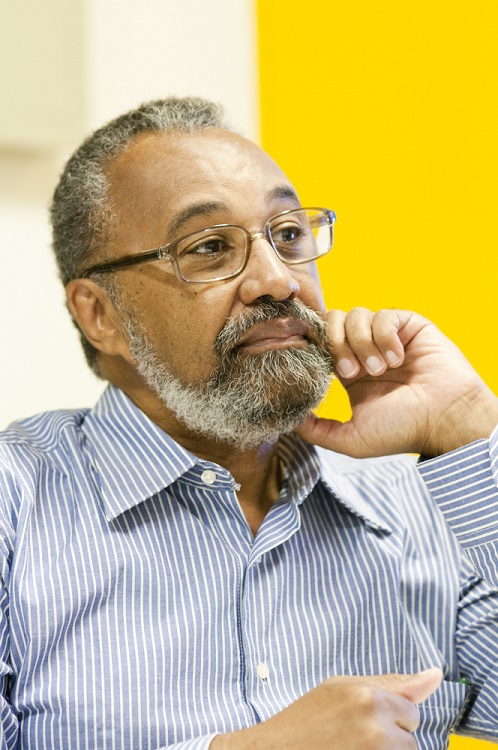
Professor Oswaldo Luiz Alves. (Credits: Gustavo Morita)

It was in the science clubs from the public school and from the neighbourhood, in the city of São Paulo, that Oswaldo Luiz Alves took an interest in sciences during his teenage years, conducting chemistry and biology experiments. At the age of 20, he graduated from one of the first technical courses in Industrial Chemistry in South America, at the Oswaldo Cruz Technical School, relying on a scholarship from the São Paulo State Education Office. During the course, he did an internship at the Biological Institute, ran by the government of the State of São Paulo, where he first got in touch with the infrared spectroscopy technique.

After a one-year experience working in the industry, he was accepted to the undergraduate course in chemistry of the State University of Campinas (Unicamp), and completed it in 1973, obtaining the titles of “bacharel” and “licenciado”. During his undergraduate studies, he acted in teaching and research at the Unicamp´s Institute of  Chemistry. As soon as he graduated, Alves, who was 25 years old at the time, was hired by that institute and, at the same time, started his doctorate, carrying out research on the application of vibrational spectroscopy (both Raman and infrared) in molecular complexes. In 1979, he left for France on a scholarship from the São Paulo State Research Foundation (Fapesp) for a post-doctoral internship, in which he again worked with vibrational spectroscopy. In that opportunity, he could use one of the first Fourier transform infrared spectrometers. Thus, Oswaldo Alves experienced firsthand the beginning of a time in chemistry of fruitful development of new analysis techniques, especially spectroscopic, and their applications. In addition, Alves was also motivated by another movement, which began in the 70s and which occurred mainly in the chemists’ community in Europe: the development and study of new materials within the so-called “solid state chemistry”.

Back in Brazil after almost two years in France, in which he worked as invited professor at the University of Lille, he found a scenario different from the European one. In Brazil, almost no chemist worked in the Solid State area yet. Thus, Alves dedicated himself to introducing the area and, in 1985, he founded the Solid State Chemistry Laboratory (LQES) at Unicamp’s Institute of Chemistry. Since then, the scientist has been making relevant contributions to materials science and technology, in sundry themes such as vitreous materials for telecommunications, two-dimensional materials synthesis techniques, development of integrated chemical systems, purification of carbon nanotubes and interaction between new carbon-based nanomaterials and biosystems.

Currently 67 years old, Oswaldo Alves is a full professor at Unicamp, where he works as a scientific coordinator of the LQES and the Laboratory of Nanostructure Synthesis and Interaction with Biosystems (NanoBioss/SisNano). In his 40 years of teaching, he was advisor to over 50 master’s and doctoral dissertations. He has authored over 200 articles published in scientific journals, which have more than 2,400 citations. He have also authored over 20 patents, 5 of them granted and one licensed, the latter refering to a technology aimed at the remediation of effluents from paper and textile industries. In the scientific dissemination field, he works as scientific editor of two news bulletins, “LQES News” and “Nano em Foco”.

Oswaldo Alves is a member of the Brazilian Academy of Sciences and of the Academy of Sciences of the State of São Paulo, as well as a commander of the Brazilian National Order of Scientific Merit. He is also a fellow of TWAS (The World Academy of Sciences for the advancement of science in developing countries) and of the Royal Society of Chemistry. He has received awards from different entities, such as Unicamp, the Brazilian Association of Chemical Industries (Abiquim) and the Brazilian Society of Chemistry, which he chaired from 1998 to 2000, in addition to being a founder and first director of its materials chemistry division.

See our interview with the scientist.

SBPMat’s Bulletin: – How did you become interested in science? What led you to become a scientist and work in solid state/materials chemistry?

Oswaldo Luiz Alves: – It has been many years. Before I got into University I took part in science clubs of my public school and my neighborhood in the city of São Paulo (Perdizes district). In the neighborhood’s science club we had a small laboratory with materials donated by one of the grandchildren of scientist Vital Brazil, where we conducted several chemistry and biology experiments. Soon after that, I got an internship at the Biological Institute, as a formal requirement of the Industrial Chemistry technical course, where I worked with infrared spectroscopy and polarography (dropping mercury electrode) applied to the determination of pesticides. When I got into Unicamp, in 1969, after a period of experience in the industry (Bayer), it was already clear for me that I would continue studying after graduating, which made me engage in research on rare earth compounds, through a research scholarship from FAPESP, already thinking of becoming a university professor and researcher. I went straight to doctorate, withouth having a master´s degree (that was not very common in the 70s in Brazil), working with Raman-laser and infrared spectroscopies and theoretical calculations of molecular force fields. In 1979, I went to France for my post-doctoral internship at the Laboratoire de Spectrochimie Infrarouge et Raman of the CNRS to work with Raman spectroscopy with spatial resolution, SERS and CARS effect and to commission one of the first infrared spectrometers that operated with Fourier transform. At that time, there was in Europe and especially in France (Bordeaux, Rennes and Orsay) an extremely prolific activity in solid state chemistry, within the materials perspective. I was taken away!

Upon returning to Brazil, I saw the opportunity to found the Solid State Chemistry Laboratory – LQES (1985), with a lot of difficulty, for almost all of the Brazilian chemists worked with solutions. Due to that, I migrated to the Physics community, where I remained for approximately 10 years, even getting to the point of coordinating materials-related activities at the famous meetings of the Brazilian Physics Society (SBF) in the city of Caxambu. Since then, I have always been involved in solid state and materials chemistry, taking part in the Optical Fiber Project (Telebras), where I worked with quantum dot-doped glass for telecommunications, glass for non-linear optics and, in the LQES, on activities connected to two-dimensional (lamellar) materials, nanocomposites involving conductor polymers, integrated chemical systems, glass-ceramics and porous glasses, silicon nanoparticles with complex functionalities, carbon nanotubes, graphene oxide and carbon dots. In the last three themes, my efforts are geared towards the study of the interaction between such new carbons with biosystems, from a viewpoint of assessment of the risks of nanotechnologies (regulation).

SBPMat’s Bulletin: – Which are, in your own assessment, your main contributions to the field of materials?

Oswaldo Luiz Alves: – It is always very hard to make such assessments, but I believe that some points could be listed.

In terms of scientific research, my main contributions have been the research works on quantum dot-doped glass and glass for non-linear optics, the development of synthesis techniques of several two-dimensional materials and their intercalation chemistry, the development of integrated chemical systems (conductor polymer glass, semiconductor glass), purification of carbon nanotubes (effect of oxidized debris) and interaction of new carbons with biosystems (protein “corona” effect and aggregation) and silicon nanoparticles with antagonistic functionality for drug delivery.

I created the Solid State Chemistry Laboratory (LQES), a pioneer in solid state chemistry research in Brazil, where I have worked to this day as scientific coordinator. Another contribution that I believe deserves to be highlighted was my work as coordinator of the “Chemistry Program for Electronic Materials” by FINEP (Funding Authority for Studies and Projects) (late 80s). Several of the more important materials research groups that worked, or still work, in Brazil at a high level, in several states, received funding from this successful program. My participation as founder and first Director of the Materials Chemistry Division of the Brazilian Chemistry Society is worthy of mention. I coordinated the FAPESP project that funded the construction of the first line of EXAFS (XAS) at LNLS (Synchrotron Light Brazilian National Laboratory), and I had direct participation in the user formation programs in a spectroscopic technique that had never been used in Brazil. I am currently working as scientific coordinator of the Laboratory of Nanostructure Synthesis and Interaction with Biosystems (NanoBioss/SisNano).

In 2014 I completed 40 years of teaching at Unicamp’s Institute of Chemistry, where I supervised over 50 students (both for master’s and doctorate degrees), many of whom are, today, leaders in research that stand out in the national and international scenario, and who exercise their activities in several Brazilian states.

I have worked as scientific editor of two news bulletins. The first one is the LQES News, a fortnightly publication that has been running for 14 years, with its editorial line connected to the developments in science and technology (general) and innovation and nanotechnologies. The second one is the “NANO em Foco” bulletin, edited in partnership with the Brazilian Agency of Industrial Development (ABDI), published on a monthly basis and running for 7 years, with an editorial line connected to commercial products, risks and regulation of nanotechnologies. In addition to that, I have published, also in partnership with the ABDI, the “Nanotechnology Guidebook (two editions), aimed at introducing nanotechnologies for the general public.

The several systems and materials studied and developed at the LQES have allowed the filing of 27 patents of process and application, including international ones, and a licensing of an innovative technology for the industry. In addition to that, I have taken part, as a consultant, in two processes related to the Program of Economic Subvention for Companies (Nanotechnology) by FINEP, which led to the development of 8 commercial products.

Along these many years, I participated in several activities connected to the Brazilian scientific policies, out of which we can highlight: coordinator of  councils (Chemistry) at CNPq and Fapesp. Member of the Deliberating Council at CNPq (2 terms of offices) and of the Nanotechnology Council (MCTI/SisNano) in all of its compositions. I have worked, until this time, as consultant for the nanotechnology segment of the Brazilian Agency of Industrial Development and the Management and Strategic Studies Center (CGEE). I have provided consultancy to the State Council for Science and Technology of the Economic Development, Science, Technology and Innovation Office of the State of São Paulo, for the nanotechnology segment. I am part of the scientific council of APAE São Paulo – a non-governmental organization for prevention and inclusion of people with intellectual disabilities.

SBPMat’s Bulletin: – Leave a message for our readers starting their careers in science.

Oswaldo Luiz Alves: – First of all, I would like to say that a scientific career is fascinating, especially in the times we live in, where paradigms are frequently broken. Another aspect, no less fascinating, is living with the intermulti and transdisciplinarities that, at the same time as they expand our knowledge, point out our limitations. In such relations, it is clear that a sound and in-depth knowledge of concepts, techniques and tools is fundamental. It is a process based on an attitude of openness and the acquisition of a “common language” that allows the interaction of different experts and expertises in the solution of problems, very well identified, in science, technology and innovation. Thus, we must, whenever possible, seek a balance between paper-oriented and knowledge-oriented research stances and, particularly, not forget to make a second reading of our research results, therefore seeking to examine their possible connection with the needs of the Brazilian citizens and of the national development.

SBPMat newsletter. English edition. Year 2, issue 2.


Brazilian Materials Research Society (SBPMat) newsletter

News update from Brazil for the Materials community


English edition. Year 2, issue 2. 

SBPMat news: XIV Meeting - Rio de Janeiro, 9/27 a 10/1 de 2015 

Simposia and abstract submission: 27 simposia and 2 workshops (the biggest number in the records of our annual meetings) compose the XIV SBPMat Meeting.

Until May 30th, you may submit abstracts to present your work in the symposia or workshops of the event. 

Know more.

Sponsors and exhibitors: 20 companies have already booked their place in the XIV SBPMat Meeting. Contact for exhibitors and other sponsors: rose@metallum.com.br.

Go to the event website.

SBPMat news: University Chapters

Two more points in the map of the university chapters of SBPMat: at UNESP campus Presidente Prudente and at UNESP campus Ilha Solteira. Eight units have already been created in South, Southeast, Northeast, and North regions of Brazil since the launching of the program in the beginning of 2014. Learn more on the new university chapters.

Featured paper 

A team from federal universities of the Northeast region of Brazil developed a random laser emitting ultraviolet light using zinc oxide powder which particles worked as light scatterers. The scientists proved that the emission was induced by the mechanism of “3 photons absortion”.  The work, which results were recently published on Nanoscale, opens possibilities for applications in several areas, especially medicine. Learn more.

SBPMat' s community people

Over 30 years of scientific work, Helio Chacham made relevant contributions to the area of Materials. Initially, he dedicated to the theoretical investigation of materials under ultra-high pressure. Since middle 1990, frequently cooperating with experimental groups, he has studied nanomaterials, especially 2D materials. In an interview to SBPMat newsletter, Professor Chacham talked about his main contributions in such themes.  In addition, he told a little about his childhood and adolescence in Belo Horizonte, among other subjects. See our interview with this scientist.

History of Materials research in Brazil

We present the second part of the story on the history of the Synchrotron Light Brazilian National Laboratory (LNLS). Between 1986 and 1997, in Campinas city in São Paulo state, a team of scientists and other collaborators designed, constructed, and tested the source of synchrotron light and the instruments of the beamlines of the laboratory. For such, the team worked successively in a room at the university, in a house, and in an industrial hangar, before getting installed in the definitive campus of LNLS. We report a brief chronology of such epic and share statements of some of its leaders. See it.

Reading tips
International science stories on highlighted papers. 

  • New strategy of materials engineering to obtain lighter, safer and more durable lithium-ion batteries (Advanced Functional Materials). Here.
  • Thin films of complex oxides integrated to ferroelectric crystals: potential for information storage (Advanced Functional Materials). Here.
  • Scientists are able to dispose organic molecules within nanotubes and, from such, demonstrate application for a faster Internet (Nature Nanotechnology). Here.
  • New method allows growing molybdenum disulfide flakes with accuracy in specific locations (Nature Communications). Here.

News from Brazilian National Institutes of Science and Technology (INCTs) and Research, Innovation and Dissemination Centers (CEPIDs).

  • In the context of a collaboration between CeRTEV (CEPID in vitreous materials) and the International Materials Institute for New Functionality in Glass, Professor Edgar Zanotto will administer a remote class on vitreous ceramic materials to an international group. Here.
Events
  • 4th School of SAXS Data Analysis. Campinas, SP (Brazil). May, 11 to 15, 2015. Site.
  • São Paulo School of Advanced Sciences (ESPCA) on Recent Developments in Synchrotron Radiation. Campinas, SP (Brazil). July, 13 to 24, 2015. Site.
  • Advanced School on Glasses and Glass-Ceramics (G&GC São Carlos). São Carlos, SP (Brazil). August, 1 to 9, 2015. Site.
  • Primeira Conferência de Materiais Celulares (MATCEL 2015). Aveiro (Portugal). September, 7 to 8, 2015. Site.
  • XIV Encontro da SBPMat. Rio de Janeiro (Brazil). September 27 to October 1, 2015. Site.
  • 13th International Conference on Plasma Based Ion Implantation & Deposition (PBII&D 2015). Buenos Aires (Argentina). October, 5 to 9, 2015. Site.
  • 10th Ibero-American Workshop on Complex Fluids 2015. Florianópolis, SC (Brazil). October, 25 to 29, 2015. Site.
To suggest news, opportunities, events, papers, interviewees or reading recommendations items for inclusion in our newsletter, write to comunicacao@sbpmat.org.br.

Unsubscribe here.

 
Cannot see this message? Click here.