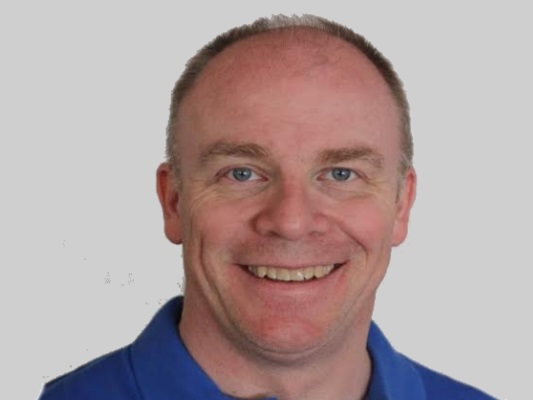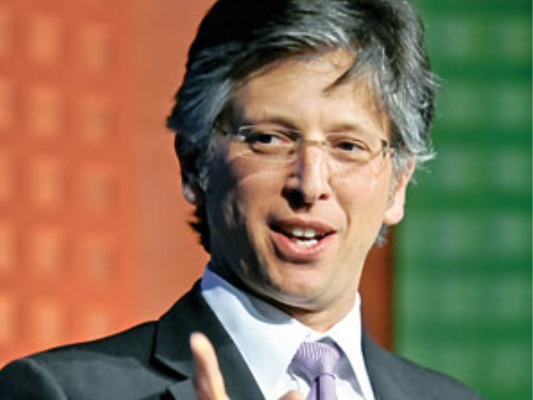
Edgar Zanotto (UFSCar), cofundador da SBPMat, ministra palestra memorial no centenário da Society of Glass Technology.

Edgar Zanotto (esquerda) junto ao pesquisador David Pye, ex-presidente da ACErS (The American Ceramic Society) na celebração dos 100 anos da SGT.
O brasileiro Edgar Zanotto (esquerda) junto ao pesquisador David Pye, ex-presidente da ACErS (The American Ceramic Society) na celebração dos 100 anos da SGT.

Há 100 anos, o pioneiro da tecnologia de vidros Willian Ernest Stephens Turner (1881 – 1963) fundou o Department of Glass Technology na Universidade de Sheffield (Reino Unido) e a Society of Glass Technology (SGT). Esse centenário foi comemorado em Sheffield de 4 a 8 de setembro com um evento internacional denominado SGT100.

Um dos destaques da programação do evento foi a Turner Memorial Lecture, instituída há quase 50 anos pela Universidade de Sheffield, que figura entre as 100 “top universities” em alguns rankings e possui 5 prêmios Nobel entre seus ex-alunos e professores. Dentre os palestrantes anteriores da Turner Memorial Lecture, listam-se Sir Harry Kroto, ex-aluno de Sheffield e Prêmio Nobel de química pela descoberta dos fullerenos; Sir Alastair Pilkinton, inventor do processo float, que é utilizado mundialmente, inclusive no Brasil, na fabricação de vidro plano; Larry L. Hench, inventor dos biovidros; John D. Machenzie, fundador do Journal of Non-Crystalline Solids, entre outros. Neste ano, a Turner Memorial Lecture, em sua 19ª edição, foi proferida pela primeira vez por um brasileiro, o professor Edgar Dutra Zanotto (DEMa-UFSCar), que foi um dos fundadores da SBPMat.

Zanotto foi convidado devido a suas inovadoras pesquisas sobre nucleação e cristalização de vidros. Ele ocupa o topo no ranking mundial da base de dados Scopus com as palavras-chave principais de sua linha de pesquisa: “crystal and nucleation and glass” com cerca de 80 artigos científicos indexados na Scopus nesse tema publicados nos últimos 35 anos.

Em sua aula, intitulada “Glass myths and marvels“, Zanotto discorreu durante 60 minutos para uma eclética plateia de aproximadamente 350 participantes, incluindo autoridades da Universidade de Sheffield e também muitos especialistas em vidros de 28 nacionalidades, participantes do SGT100. Nessa palestra ele abordou questões polêmicas, tais como: o que é o vidro, formas criativas de reciclar o vidro, propriedades inusitadas de vidros, se as vidraças das catedrais medievais estão escorrendo, se é possível trincar um vidro no grito, e o que originou a famosa imagem da Virgem Maria numa janela em Ferraz de Vasconcelos (SP). No final houve uma animada sessão de perguntas e respostas que durou mais 30 minutos.

SBPMat e-newsletter – Special issue: XV B-MRS Meeting.


Sociedade Brasileira de Pesquisa em Materiais (SBPMat)

Brazil – Materials Research Society (B-MRS) 

NEWSLETTER – SPECIAL ISSUE
Getting prepared for the XV B-MRS Meeting!

Meeting overview

International and interdisciplinary, the annual meeting of the B-MRS (SBPMat) is dedicated to the presentation and discussion of scientific and technological advances in the field of materials.

The 15th edition of the meeting will be held in September, 25 to 29, in the city of Campinas (State of São Paulo), at the Expo D. Pedro convention center. 

  • Technical presentations: about 2,000 abstracts have been accepted.
  • Participants: more than 1,500 registrations, from 20 different countries (up to the moment).
  • Exhibition: 43 stands.
  • Technical program: 8 plenary lectures (including memorial lecture) + 20 thematic symposia with oral and poster sessions and invited lectures + 2 workshops + 2 tutorials + 3 discussion panels.
  • Scope: nanomaterials, biomaterials, surfaces, organic electronic materials, electroceramics, advanced metals, nanocellulose, experimental and computational techniques for materials study, materials performance under extreme conditions. Materials applications in the segments of energy, healthcare, transportation, neurosciences, electronics and photonics, among others. Also, RD&I, startup ventures, scientific writing and publishing, international collaboration, ethical issues.

We are looking forward to see you in Campinas! See message from the conference chairladies, Prof. Ana Flávia Nogueira (Unicamp, Institute of Chemistry) and Prof. Mônica Alonso Cotta (Unicamp, “Gleb Wataghin” Institute of Physics), here.

Useful information

Accommodation and tickets. See the list of the travel agency Follow Up with hotels, hostels, guesthouses, flights and travel information. Here.  

Poster printing service. See options to print your poster at the convention center. Here. 

Venue. See video of the city of Campinas and folder about the Expo D. Pedro convention center.  

How to get there. See map. Transfer to the venue will be available for Vitória hotels guests. For public transportation to venue, search bus options, or download the app with real-time info about buses.

Food, parking and services. Expo D. Pedro convention center is adjacent to one of the largest shopping centers in Latin America, which has big range of food, services, shopping and leisure options. The convention center holds some cafés that will be open during the event. Parking at the convention center is available at R$ 8 (12 hours). 

Program. Short program and full program (symposium by symposium) are available on the website. Here.

Vacation packages. The Follow Up website also suggests tour packages for before and after the event. Here.

Publication of contributions: The papers presented at the XV B-MRS Meeting may be submitted by their authors to peer review for publication in IOP scientific journals. More info.

Registration. Registration for the event is still open. Here. 

Special activities: free registration is required

Tutorial “Hands-on tutorial on simulations using Reactive ForceFields: overview and applications”. Sunday (25/09) from 14h00 to 17h00. Free registration in the registration form of the meeting, where activities can be selected. If you have already filled out the meeting registration form, but you have not selected the activity, log in again and modify your registration. Know more about this tutorial.

Tutorial “School of Scientists: Scientific Writing Tutorial”. Sunday (25/09) from 14h00 to 17h00. Free registration in the registration form of the meeting, where activities can be selected. If you have already filled out the meeting registration form, but you have not selected the activity, log in again and modify your registration. Know more about this tutorial.

Discussion panel “Science Lunch: Research in Germany”. Monday (26/09) from 12h00  to 14h00. This session will bring together scientists and funding agencies from Germany to discuss research opportunities in that country. Limited availability. An informal lunch will be offered to participants. Learn more and complete your registration free of charge. Here.

Discussion panel “Meet the Editors”. Tuesday (27/09) from 12h00 to 14h00. This round table will host Ifor Samuel (editor-in-chief of Synthetic Metals), Paul Weiss (editor-in-chief of ACS Nano), Susan Sinnott (editor-in-chief of Computational Materials Science), and Tim Smith (IOP Publishing director) who will discuss scientific publication. Limited availability. Lunch boxes sponsored by IOP will be offered to participants. Free registration in the registration form of the meeting, where activities can be selected. If you have already filled out the meeting registration form, but you have not selected the activity, log in again and modify your registration. 

Discussion panel “Materials Research and Innovation”. Wednesday (28/09) from 12h00 to 14h00. This panel will bring together representatives of companies Mahle and Braskem and innovation agency Inova-Unicamp, who will present cases of university-industry collaboration for R&D in Brazil and discuss the role of materials research in innovation. Limited availability. Lunch boxes sponsored by IOP will be offered to participants. Free registration in the registration form of the meeting, where activities can be selected. If you have already filled out the meeting registration form, but you have not selected the activity, log in again and modify your registration. 

Social Program Highlights

During the Opening Ceremony, starting on Sunday (25/09) at 19h00, B-MRS will homage Prof. José Arana Varela, past president of the society and one its founders. Prof. Varela passed away on May, this year. 

After the Opening Ceremony, by 19h30, B-MRS will bestowed the Memorial Lecture “Joaquim da Costa Ribeiro” on Prof. Aldo Craievich. This recognition is annually granted to researchers with outstanding work in materials science and technology, and it pays homage to Prof. Joaquim da Costa Ribeiro, a pioneer in experimental research in materials in Brazil. Prof. Aldo Craievich will deliver a lecture about advanced characterization of materials.

After the Memorial Lecture, by 20h30, don´t miss the Welcome Cocktail that will feature a very special and sustainable percussion performance.

The Students Awards Ceremony will be held during the Closing Session, on Thursday (29/09) from 12h00 to 14h00. B-MRS will bestow the tradicional “Bernhard Gross Award”, which highlights the best works in each symposium, and honors Bernhard Gross, a pioneer of materials science in Brazil. The American Chemical Society (ACS) and the European Materials Research Society (E-MRS ) will also confer awards. The winners have to be present at the Closing Ceremony in order to receive the prizes.

Plenary Lectures

Paper and metal oxides are some of the materials that Professor Elvira Fortunato (New University of Lisbon, Portugal) uses to develop electronic devices, which, besides producing low environmental impact, promise to make our many everyday objects become electronic, revolutionizing our lives. Learn more about these innovations and the trajectory of its inventor, who will deliver a plenary lecture on green electronics, on Monday (26/09) at 8h30. See interview.


Plants and animals are important sources of knowledge and inspiration for Professor Lei Jiang and his group. In their laboratories at the Technical Institute of Physics and Chemistry in Beijing (China), they develop smart materials, e.g., interfaces that switch between superhydrophilicity and superhydrophobicity. The findings of professor Lei Jiang, in addition to generating publications that received tens of thousands of citations, yielded products which are already widely used. Learn more about this scientist, his way of doing science, his discoveries and his scientific and also philosophical concept of binary cooperative complementary materials, which he will discuss in a plenary lecture on Monday (26/09) at 16h45. See interview.


Imagine yourself inserting in a computer the material properties you desire for a specific application and obtaining the project of the most appropriate material. This is a promise of computational materials science, an issue whose recent advances will be discussed by Professor Susan Sinnott on Tuesday (27/09) at 8h30. Sinnott heads the Department of Materials Science and Engineering at Pennsylvania State University (USA). She is editor-in-chief of the journal Computational Materials Science. Her scientific production includes important contributions to the development of simulation tools for heterogeneous material systems at the atomic scale. See interview. 


On Tuesday (27/09) at 16h45, physicist Ado Jorio de Vasconcelos (Professor at the Brazilian Federal University of Minas Gerais, UFMG) will deliver a plenary lecture on the use of Raman spectroscopy for the study of carbon nanostructures. Jorio is an expert in the application of optics in nanostructure studies. In 2001, he became the first researcher to use an optical technique to study carbon nanotubes individually. He holds an H index of 74, one of the highest in Brazil, and is the author of approximately 200 publications with over 30,000 citations. See interview.


Organic semiconductors do not mystify Professor Ifor Samuel, leader and founder of a research group and a R&D center on this subject at the University of St Andrews (Scotland). In his daily routine, Prof. Samuel not only strives to thoroughly understand these materials, but also to find new applications for them in different fields, from dermatologic medicine to the detection of explosives. In addition to hundreds of articles, he has several patents which have been licensed to companies. On Wednesday (28/09) at 8h30, he will deliver a plenary lecture on optoelectronics based on organic semiconductors. See interview.


By exploring the limits of miniaturization, the nanoscientist Paul Weiss (UCLA , USA) and his team developed innovative instruments and techniques, as well as the ability to manipulate molecules. In this way, they have already set up and operated the smallest motors and switches in the world. On Wednesday (28/09) at 16h45, Professor Weiss, who is founder and editor-in-chief of ACS Nano, will talk about function at the nanoscale. Learn more about some of the major contributions of Paul Weiss to nanoscience and about the secrets of the impact of the journal he leads. See interview.


60 years ago, solar cells were only found in artificial satellites. Today, they are part of the energy matrix of many countries and, in the near future, maybe they will provide electricity to consumer electronics, among other applications. On Thursday (29/09) at 10h45, Professor Anders Hagfeldt (EPFL , Switzerland) will discuss recent scientific advances in two technologies, very promising for solar cells: those based on perovskite and dyes. Know more about solar cells and about Prof. Hagfeldt, who appears in several rankings due to his 47,000 citations and H index of 103. See interview. 


To unsubscribe, click here


XV B-MRS Meeting: message of the chairladies.

Dear readers,

We look forward to your participation at the XV B-MRS meeting, to be held in September, 25-29, in Campinas, São Paulo. This year the meeting congregates more than 1500 participants, with 2142 accepted abstracts. Fifteen years after the first annual meeting of SBPMat, as it was called then, our figures are impressive, both for the large number of participants and abstracts as well as for the high quality of the scientific contributions, divided in oral and poster presentations.  The current edition of the Annual Meeting covers almost all relevant research areas of Materials Science.

The XV B-MRS Annual Meeting is comprised of 20 Symposia, 2 workshops and 2 Tutorials. The program also includes 7 Plenary Lectures from the most prestigious scientists in cutting edge materials science. The Opening Ceremony will be followed by the Memorial Lecture “Joaquim da Costa Ribeiro”; the renowned scientist Aldo Craievich will talk about the relevance and challenges on advanced materials characterization. Furthermore, in this Meeting program, three discussion panels will take place during lunchtime: Research in Germany, Meet the Editors and Materials Research and Innovation. In particular, the latter will discuss research, development and innovation in industry and the role of innovation agencies and startup ventures.

During the Closing Ceremony, the symposium organizers will honor students with the “Bernard Gross Award” for the best poster and best oral presentations of each Symposium. Awards from the European Materials Research Society (E-MRS) and the American Chemical Society (ACS) will be also granted for best posters and oral contributions.

On behalf of Organizing Committee, we would like to thank the Brazil-MRS staff and board, the funding agencies, the symposium organizers and the local committee members, for their commitment and great effort to make this Meeting possible.

We hope we can all enjoy a very hectic Meeting with stimulating exchange of scientific ideas and results, creating new insights and collaborations, to reach even further quality levels in Materials Science research.

Mônica A. Cotta and Ana Flávia Nogueira

Conference Chairs

Interviews with plenary speakers of the XV Brazil-MRS Meeting: Anders Hagfeldt (EPFL, Switzerland).

anders-hagfeldtIn the late 1950s, solar cells where used for the first time in artificial satellites. Today, these devices that produce electricity from sunlight thanks to the property of some materials to release electrons when absorbing photons, are part of the energy matrix of many countries, besides being used in all sort of spacecraft. Several technologies based on different materials have been developed to make this sustainable production of electricity. However, research in the area is still very intense. While silicon solar cells dominate the current market, other technologies can compete with silicon in economic and environmental terms.

In a plenary lecture at the XV Brazil-MRS Meeting, Anders Hagfeldt, Professor at École Polytechnique Fédérale de Lausanne (EPFL), Switzerland, will talk about recent advances on some solar cells technologies that are alternative to the silicon one, in particular those based on perovskite materials and those based on dye sensitized thin films (known as dye-sensitized solar cells, DSSCs). Hagfeldt has been performing research on both types of solar cells, and succeeded in improving their efficiency using different methods and new materials.

Hagfeldt obtained his diploma of Master of Science in Physics and Chemistry from Uppsala University (Sweden) in 1989 and started his doctoral studies in the same university. In 1993, he concluded his PhD with a thesis on microporous and polycrystalline semiconductor electrodes. Then he went to EPFL, in Switzerland, where he was a postdoctoral fellow with Prof. Michael Grätzel, the inventor of the DSSCs.

In 1994 he went back to his alma mater (Uppsala), first as a junior researcher and then as a Professor in Chemical Physics and Physical Chemistry. He was a Visiting Professor at the Royal Institute of Technology (Sweden) from 2005 to 2010, and at the Institute of Materials Research and Engineering (Singapore) from 2008 to 2010. In 2009, he co-founded Dyenamo, a company dedicated to materials and equipment for solar energy applications.

Since 2014, Hagfeldt is a Full Professor of Physical Chemistry at EPFL, where he heads the Laboratory of Photomolecular Science. Besides, he is a Visiting Professor at Uppsala University and Nanyang Technological University (Singapore). He is a member of the European Academy of Sciences, Royal Swedish Academy of Sciences, Royal Society of Sciences in Uppsala, and the Royal Swedish Academy of Engineering Sciences.

Anders Hagfeldt´s was ranked in various international lists of highly cited researchers, such as the Thomson Reuter’s list of the top 1% most cited in Chemistry (2014-2016) and the top-100 material scientists of the past decade by Times Higher Education (2011). In fact, Hagfeldt authored above 400 papers with more than 47.000 citations and has an h-index of 103, according to Google Scholar. Moreover, he is the author of 9 patent applications.

Here follows a short interview with Professor Anders Hagfeldt.

SBPMat newsletter: – Could you state, very briefly, which are the main advantages and disadvantages of the different solar cells technologies, in terms of efficiency, cost and other relevant criteria?

Anders Hagfeldt: – When it comes to different technologies, the very dominant technology has been for long time based on silicon material, the “silicon solar cells”. In terms of market share, I think that around 90% of all solar cells stored in the world are silicon solar cells. They are mainly produced in China. Silicon has always had the advantage of being efficient and very stable, robust, durable. So, you can get, for example, guarantees of lifetime of over 20 years. If you go few years back, it was always said that silicon solar cells were too expensive and that they wouldn´t never be competitive with other energy technologies, such as fossil fuels and so on. However, five years ago, the production volume has increased a lot and the prize has became unexpectedly lower. Actually, silicon solar cells can be considered quite cheap today. Therefore, silicon solar cells are very good. They have good performance at low cost and match the price in kilowatt-hour of other energy technologies such as burning liquid hydrocarbons, for example.

The next class of technology is called “thin-film solar cells”, and it comprises two different materials. One is known as CIGS, that comes from copper indium gallium selenide, which is the material that absorbs sunlight. The other material is cadmium telluride (CdTe). The latter solar cells are manufactured in a big company in the United States called First Solar. Both of these technologies have the promise to be cheaper than silicon technology. They are almost as efficient as silicon: 10% to 15% less efficient. Both materials are disposed in very thin films, so the materials cost is low and, probably, they can be produced cheaper than silicon solar cells. Therefore, the key thing for thin films to be able to compete with silicon is to be a little bit higher in efficiency and scaling up the production.

These are the three main commercially available technologies today. If we go to research activities, the most “hype” at the moment is the perovskite solar cell. It had its breakthrough only four years ago, and during these few four years, it has reached similar efficiencies as thin-film solar cells. That has been the fastest development in solar cells. Perovskite solar cells will probably be cheaper than thin-film solar cells, but they are still in a research stage. The main question mark of perovskite solar cells has been on stability. In that point, we have made some breakthroughs. Two papers of us have been accepted by the Science journal reporting very promising stability data for perovskite solar cells. That is something I will report on the Brazil-MRS Meeting as a key or latest result of perovskite technology. It is very exciting, perovskite solar cells are not fundamentally unstable, they show promising stability. However, there is a lot of work to be done in terms of scaling up and further stability testing and development.

Dye-sensitized solar cells (DSC).

The other technology I will talk about is dye-sensitized solar cells (DSSC), which is also in research or demonstration level. They are lower in efficiency, so, what we look for in that technology today is niche applications. These cells are based on dyes, which means that you can make them in different colors, and use them in windows, buildings and so on. At the moment, DSSC cannot compete with silicon for large scale, but there is interest for buildings, consumer electronics, rechargeable batteries, keyboards and so on.

SBPMat newsletter: – In your opinion, which are the main next challenges in the field of solar cell research and development?

Anders Hagfeldt: – I can divide this answer in two parts.

Firstly, there is still room and it is still important to make solar cells more efficient to lower the cost of the kilowatt-hour produced. There is a kind of dream target I see. This is not really in my expertise, but I listen to more industrial people talking about U.S. dollar cents per kilowatt-hour (how much costs for solar cell to produce a kilowatt-hour). And it seems that now this cost can go down to 4 cents per kilowatt-hour, which is very good, but it could be cheaper. People say that it can go down to 2 cents per kilowatt-hour. The best thing you can do today to lower the cost per kilowatt-hour of solar cells is to try to increase their efficiency. That is where you see the potential of the perovskite solar cells, because they have had such a fast development and they are already at the same level of established technologies. It seems promising that these perovskite solar cells can show even higher efficiencies than the silicon ones. That is a big challenge but I think it is not impossible.

The second thing is that solar cells is intermittent, that means that they only produce electricity when there is sunshine. During nights and evenings, this is a problem. I come from Sweden that is a country where more electricity is needed when there is less sunshine. That means that you also have to find the storage for electricity.

These key challenges are not for solar cell itself, but for the whole picture of solar energy.

More and more solar cells are being used to produce electricity, but that creates problems to the utility grid, because there can be too much electricity when it is sunny day and too little when it is not sunshine. Therefore, we need to work on storage. I think that for small scale, batteries are interesting, but for larger scale, we need to find how to produce fuel from sunlight or from the electricity produced. And that can be hydrogen, that is something people look into a lot, but also for example methanol.

SBPMat newsletter: – Leave an invitation for our readers to attend your plenary lecture “The Versatility of Mesoscopic Solar Cells”.

Anders Hagfeldt: – I am very happy to go to Brazil. I have been around before, some years back, but I am very excited to meet new people to discuss our research at the meeting. Everyone will be very welcome and I will be very happy to discuss all kind of ideas and questions.

———————————–

Link to the abstract of Anders Hagfeldt´s plenary lecture at the XV Brazil-MRS Meeting: http://sbpmat.org.br/15encontro/speakers/abstracts/9.pdf

Edital Capes de apoio a eventos no país.

Atendendo ao pedido da Capes, encaminhamos a divulgação do Edital nº 21/2016, no âmbito do Programa de Apoio a Eventos no País (PAEP), com objetivo de selecionar propostas para apoio financeiro à realização de eventos científicos, tecnológicos e culturais de curta duração no País, com envolvimento de pesquisadores, docentes e discentes dos programas de pós-graduação. Esta chamada atenderá os eventos previstos para o período de 1º de fevereiro de 2017 a 31 de julho de 2017.

As inscrições encerram no próximo dia 21 de setembro e devem ser feitas exclusivamente por meio de sistema eletrônico, em formulário específico disponível na página da Capes. O resultado preliminar está previsto para ser divulgado em novembro deste ano e o resultado final está previsto para janeiro de 2017.

O edital está disponível no site da Capes e informações adicionais podem ser obtidas pelo e-mail paep@capes.gov.br.

Interviews with plenary speakers of the XV Brazil-MRS Meeting: Paul S. Weiss (UCLA, USA).

paul-weissTaking precise measurements of atoms and molecules. Accurately control molecules so that they form specific nanostructures or work together to achieve desired results. The nanoscientist Paul Weiss will address this and much more at the XV Brazil-MRS Meeting. Weiss is Professor at the University of California, Los Angeles (UCLA) and editor-in-chief of ACS Nano journal. At the annual SBPMat event, in addition to delivering the plenary lecture, Weiss will also participate in a roundtable to discuss scientific publication along with the public and editors of other journals.

Paul Weiss received his S.B and S.M degrees in Chemistry from the Massachusetts Institute of Technology in 1980, after conducting research in high-resolution laser spectroscopy. His doctoral research, also in Chemistry at the University of California at Berkeley, was about excited atom reactions in crossed molecular beams.

In 1986, the year he concluded his PhD, his advisor, Yuan T. Lee, was awarded the Nobel Prize in Chemistry for his contribution to the study of the dynamics of chemical elementary processes. Soon after his doctorate, Weiss began working at Bell Laboratories as a post-doc studying the effects of surface chemistry and gas-surface collisions on semiconductor surface electronic properties. In 1988, he worked at IBM Almaden Research Center, where he remained as a visiting scientist until the following year. There his work was on scanning tunneling microscopy (STM) with one of the STM pioneers, Donald Eigler. STM, which lead to a major breakthrough in nanotechnology by enabling the manipulation of individual atoms and molecules, would become one of Weiss’s favorite techniques.

In 1989, Weiss joined the faculty of Pennsylvania State University (PennState), where he continued his work with STM, expanding the technique and studying atoms and molecules. From 2001 to 2002 he was the director of the Center for Molecular Nanofabrication and Devices of PennState. In 2005 he was designated Distinguished Professor of Chemistry and Physics departments at the university.

It was also at PennState that Weiss met the scientist Anne Andrews, with whom he is married to this day. Andrews was responsible for convincing Weiss to apply his expertise and knowledge on nanoscience in the study of the human brain. In this field, and in collaboration with Andrews and other scientists, Weiss has been committed to developing tools to study the interactions between neurons, which take place through electrical and chemical signals in nanometric spaces.

Concomitantly, Paul Weiss participated in the creation of the scientific journal ACS Nano (2015 impact factor of 13,334) and has been editor in chief since the journal’s first edition, published in August 2007. In 2008, the journal received a major distinction, the PROSE Award for Best New Journal in Science, Technology, and Medicine from the Association of American Publishers.

In 2009, he joined the University of California, Los Angeles (UCLA), where he was named Distinguished Professor of Chemistry & Biochemistry. Furthermore, he received, until 2014, the Fred Kavli Chair in Nanosystems Sciences and the directorship of the California NanoSystems Institute, a multidisciplinary institute of research and innovation in nanoscience and nanotechnology. Weiss has also been leading at UCLA a research group that gathers together chemists, physicists, biologists, materials scientists, electrical and mechanical engineers and computer scientists.

Paul Weiss was a visiting professor at the University of Washington (1996 – 1997) and at Kyoto University (1998 and 2000). In 2015, he was Distinguished Visiting Professor at the California Institute of Technology, and Visiting Scholar at Harvard University.

Paul Weiss has published over 300 papers and has approximately 20 patents. According to Google Scholar he has an h-index of 60 and more than 16,000 citations. He has given over 600 invited, plenary, keynote, and named lectures. Weiss has received many awards and distinctions for his research, teaching and scientific publishing. He is an elected senior fellow of IEEE, an elected fellow of the American Chemical Society, the American Physical Society, the American Association for the Advancement of Science, and the American Vacuum Society, and an honorary fellow of the Chinese Chemical Society.

He is currently Distinguished Professor in the Department of Chemistry & Biochemistry and the Department of Materials Science & Engineering at UCLA. He is also Visiting Professor at Nanyang Technological University and continues to work as editor in chief of ACS Nano. Paul S. Weiss also holds a UC Presidential Chair at UCLA.

Here is a brief interview with this speaker of the XV Brazil-MRS Meeting:

SBPMat newsletter: – In your opinion, what are your main contributions on the themes of your plenary lecture? Could you also share with us a couple of references pertaining to publications on these subjects?

Paul Weiss: – In our work, we explore the ultimate limits of miniaturization. We have assembled and operated the smallest switches and motors in the world. To do that, we have put together two sets of capabilities. First, we designed and applied new microscopes and microscopies that can simultaneously measure structure, function, and spectra, with submolecular resolution. In the other, we have developed the ability to place individual molecules into precisely controlled environments. We combine these to understand functional mechanisms and to design new molecules and assemblies to test our ideas.

Try these papers:

Controlling Motion at the Nanoscale: Rise of the Molecular Machines, J. M. Abendroth, O. S. Bushuyev, P. S. Weiss, and C. J. BarrettACS Nano 9, 7746 (2015). (Abstract or Article or PDF)

Molecular Switches and Motors on Surfaces, B. K. Pathem, S. A. Claridge, Y. B. Zheng, and P. S. Weiss, Annual Review of Physical Chemistry 64, 605 (2013). (Abstract or PDF)

From the Bottom Up: Dimensional Control and Characterization in Molecular Monolayers, S. A. Claridge, W.-S. Liao, J. C. Thomas, Y. Zhao, H. Cao, S. Cheunkar, A. C. Serino, A. M. Andrews, and P. S. Weiss, Chemical Society Reviews 42, 2725 (2013). (Abstract or Article or PDF)

SBPMat newsletter: –  You are part of the team that created ACS Nano, launched in 2007, right? Could you tell us which elements you attribute to the success of the journal, reflected in its impact factor and the awards received

Paul Weiss: – Yes, I was the founding editor-in-chief and continue in that role.

We decided to create a forward-looking journal in which we would lay out the challenges and opportunities for the field, in order to guide and to accelerate advances. We felt that while there are many journals that published communications in nanoscience and nanotechnology, there was not a strong journal that published comprehensive work, on which others could build. This situation, we decided, was holding back our field. We set out to find the most diverse set of curious editors from different fields and we set the journal up to be extremely fast and fair to all authors. Only scientists make decisions and it takes at least two scientists to make decisions to decline manuscripts. Our editors have conversations every day on where the field is going and what are true advances. We have made it intellectually stimulating for ourselves and we believe also for our readers. The result is that we can see the real impact on the worlds of science, engineering, medicine, and beyond. We published the technology roadmaps proposing the BRAIN Initiative in the US and beyond and the new Microbiome Initiative. Stay tuned for more!

Nanotools for Neuroscience and Brain Activity Mapping, A. P. Alivisatos, A. M. Andrews, E. S. Boyden, M. Chun, G. M. Church, K. Deisseroth, J. P. Donoghue, S. E. Fraser, J. Lippincott-Schwartz, L. L. Looger, S. Masmanidis, P. L. McEuen, A. V. Nurmikko, H. Park, D. S. Peterka, C. Reid, M. L. Roukes, A. Scherer, T. J. Sejnowski, K. L. Shepard, D. Tsao, G. Turrigiano, P. S. Weiss, C. Xu, R. Yuste, and X. Zhuang, ACS Nano 7, 1850 (2013). (Abstract or Article or PDF)

Tools for the Microbiome: Nano and Beyond, J. S. Biteen, P. C. Blainey, M. Chun, G. M. Church, P. C. Dorrestein, S. E. Fraser, J. A. Gilbert, J. K. Jansson, R. Knight, J. F. Miller, A. Ozcan, K. A. Prather, E. G. Ruby, P. A. Silver, S. Taha, G. van den Engh, P. S. Weiss, G. C. L. Wong, A. T. Wright, and T. D. Young, ACS Nano 10, 6 (2016). (Abstract or Article orPDF)

SBPMat newsletter: –  Please leave an invitation to our readers to attend your plenary lecture “Cooperative Function in Atomically Precise Nanoscale Assemblies” in the XV Brazil-MRS Meeting.

Paul Weiss: – I hope you will join me at the XV Brazil-MRS Meeting for a discussion of how we can explore and understand function at the nanoscale and what it teaches us about the world around us.


Link to the abstract of the XV B-MRS Meeting plenary talk “Cooperative Function in Atomically Precise Nanoscale Assemblies”: http://sbpmat.org.br/15encontro/speakers/abstracts/3.pdf
Nota Pública da Sociedade Brasileira de Pesquisa em Materiais.

Cientistas alertam sobre a necessidade de valorizar investimentos em ciência, tecnologia e inovação para a retomada do crescimento econômico 

A diretoria e o conselho da Sociedade Brasileira de Pesquisa em Materiais (SBPMat) vêm a público exortar o Congresso Nacional a manter, no orçamento de 2017, os investimentos em Ciência, Tecnologia e Inovação (CTI) nos níveis dos últimos anos, antes dos cortes drásticos que ocorreram nos anos de 2015 e 2016. Temos ciência do esforço conjunto da sociedade para o ajuste das contas públicas, mas é inadmissível que os cortes em CTI sejam tão mais vultosos do que têm sido a queda de arrecadação e a queda no produto interno bruto.

São igualmente preocupantes os cortes em educação superior e no Sistema Nacional de Pós-Graduação, evidenciados pela interrupção ou diminuição de programas da CAPES. São estes programas que garantem um processo continuado de formação qualificada, alavancando a necessária massa crítica de capital humano para que o desenvolvimento científico e tecnológico alcançado possa, efetivamente, impactar na inovação industrial, aumentar o valor agregado da produção nacional, e garantir o bem-estar econômico e social das gerações futuras.

Num país como o Brasil, que ainda não alcançou maturidade em ciência e tecnologia para colocá-lo entre as nações desenvolvidas, a contribuição da CTI por vezes passa despercebida. Pode-se não atentar para os imensos ganhos de produção em áreas como agricultura e pecuária, na extração e beneficiamento mineral, os quais garantem superávits em nossa balança comercial. Também pode-se não notar a excelência da medicina e da tecnologia digital, que beneficiam diretamente no dia-a-dia da população.

Nossa área específica, a de pesquisa e novas soluções em materiais, é essencial para o futuro do Brasil como nação soberana e menos susceptível a interesse de outros países. Somos os maiores produtores de quartzo e de nióbio no mundo, e estamos entre os maiores em terras raras e outros minérios estratégicos de imenso valor comercial. Nossa biodiversidade oferece um número incontável de novos materiais orgânicos, que poderão ser aplicados em saúde e em segmentos industriais como os de energia e eletrônica.

Sabemos que os efeitos dos cortes em CTI serão devastadores. Além de frearem o avanço contínuo das últimas décadas, com risco de sucateamento de laboratórios e desperdício do valor já investido, os cortes efetuados inviabilizam a tecnologia nacional e a formação de recursos humanos vitais para promover o desenvolvimento sustentável.

Enganam-se aqueles que avaliam que cortes em CTI e educação de nível superior têm pouco impacto para a vida do cidadão comum. No curto prazo, tais cortes afetam mais visivelmente as comunidades acadêmicas estruturadas nos grandes centros do Brasil. Porém, são os estratos socioeconômicos menos favorecidos que serão os mais afetados no médio e longo prazos. Esses estratos não têm acesso ao material importado, ao tratamento médico e formação no exterior, dos quais somente as elites podem se valer. São estes os que mais padecerão, se o Brasil continuar com uma política de governo tênue e não regular, que pode tornar inviável o sistema de ciência, tecnologia e inovação, construído arduamente nas últimas décadas.

Convite da SBPMat para seguir a IUMRS no Twitter.

Enquanto membro (“adhering body”) da União Internacional de Sociedades de Pesquisa em Materiais (IUMRS), a SBPMat convida sua comunidade a seguir a IUMRS no Twitter, e assim ficar a par de novidades do campo dos Materiais, de relevância e origem global.

Siga IUMRS no Twitter: http://www.twitter.com/Materials_IUMRS.

Atividades especiais do XV Encontro da SBPMat/ XV Brazil-MRS Meeting: reserve sua vaga.

Tutoriais: Dois tutoriais serão oferecidos no dia 25/09 das 14h00 às 17h00 aos inscritos no evento, sem custo adicional. Um deles é sobre simulações computacionais de sistemas de átomos usando Reactive Force Fields (teoria e prática). O segundo, organizado pelo prof. Valtencir Zucolotto, abordará capacidades necessárias para fazer ciência de alto impacto, inclusive escrita científica. Reserve sua vaga no momento da inscrição. Se você já efetuou a inscrição ao evento e deseja participar de um dos tutoriais, clique em “alterar atividades” e selecione o tutorial.

Science Lunch “Research in Germany”, 26/09, das 12h00 às 14h00. Reunirá cientistas e agências de fomento da Alemanha para falar com o público sobre oportunidades de pesquisa desse país. Vagas limitadas. Saiba mais e faça sua inscrição gratuita. 

Meet the Editors, 27/09, das 12h00 às 14h00. A mesa redonda “Meet the editors” reunirá Paul Weiss (editor-chefe da ACS Nano), Susan Sinnott (editora-chefe da Computational Materials Science), Ifor Samuel (editor-chefe da Synthetic Metals) e Tim Smith (diretor na IOP Publishing) para falar com o público sobre publicação científica. Vagas limitadas. Inscrições gratuitas no ato da inscrição ao encontro. Aqueles que já efetuaram a inscrição ao evento e desejam participar desta atividade devem clicar em “alterar atividades” e selecioná-la.

Materials Research and Innovation, 28/09, das 12h00 às 14h00. Este painel reunirá representantes da Mahle, Braskem e Inova-Unicamp, que apresentarão casos de colaboração universidade – empresa para P&D no Brasil e discutirão o papel da pesquisa em materiais na inovação. Vagas limitadas. Inscrições gratuitas no ato da inscrição ao encontro. Aqueles que já efetuaram a inscrição ao evento e desejam participar desta atividade devem clicar em “alterar atividades” e selecioná-la.