More than 2,450 abstracts were submitted to the XVIII B-MRS Meeting (Balneário Camboriú, Brazil, September 22 to 26). This number of abstracts sets a new record in the history of the annual meetings of B-MRS.
On June 10, authors of submitted papers will receive notification of acceptance, rejection, need for modification or transfer to another symposium. Authors will be able to submit corrected abstracts by June 24 and they will receive final notices by June 30.
The approved contributions will be presented in oral and poster sessions, within 23 thematic symposia, which cover a wide range of research topics in materials and their applications in segments such as health, energy, environmental remediation, electronics, photonics, defense , textile, aerospace and automotive, among others.
Words of the chairman (prof Ivan Bechtold)
“It is with great satisfaction that we have received this large number of submissions, showing that despite the financial difficulties and the lack of governmental stimulus, the scientific materials community is active and committed to carry out production of knowledge and training of human resources, which are so important for our country. At the same time, this expressive number of works increases our responsibility to organize an event according to the expectations, especially of students, who account for 63% of the registrations of the event. Our commitment is to make the event an environment conducive to the exchange of experiences and establishment of scientific cooperation. We count on the presence of all !! ”
Students awards
The best works presented by undergraduate or graduate students will receive awards at the end of the event. To apply for the awards, authors must submit an extended abstract in addition to the conventional abstract, by July 14. Prizes will only be awarded if the authors (students) are present at the closing ceremony on September 26.
The Bernhard Gross Award will be awarded to the best oral and best poster of each symposium. To elect the winners, the committee will consider the quality of the extended abstract and presentation, as well as the scientific contribution of the work.
Among the winners of the Bernhard Gross Award, the top five oral and five best posters will receive awards (cash and certificates) from ACS Publications, the renowned scientific publishing house of the American Chemical Society.
Newsletter of the
Brazilian Materials
Research Society
Year 6, issue 4. May 8, 2019.
Public Notice
The council and directory of the Brazilian Materials Research Society (B-MRS) are publicly protesting against the budget cuts announced for the Ministry of Science, Technology, Innovations and Communications, which may render research and technological innovation in Brazil impossible (…)
The elections of the B-MRS Executive Board and Deliberative Council will take place this year. The deadline for submitting the list of candidates to the Board is already open, and also to declare interest in being a member of the Council. Members with currently paid annuity may vote and be voted on. See the complete calendar of the electoral process and other useful information, here.
Featured Paper
A team of researchers from UFMG (Brazil) developed a device capable of recording data in binary form in a two-dimensional material and conserving the data for long periods. With low power consumption and compatibility with flexible platforms, the device points out new possibilities for developing memories for wearable electronics. The work was reported in “2D Materials”. Know more.
Featured Scientist
We interviewed the Italian scientist Maurizio Prato, professor at the University of Trieste (Italy). Prof. Prato, who has an h-index of 119, specializes in adding organic molecules to the surface of carbon nanomaterials, generating materials with high impact in segments such as nanomedicine and energy. He will deliver one of the plenary lectures at the XVIII B-MRS Meeting. Know more.
From Idea to Innovation
Technology and scientific knowledge can be transformed into products by creating startups. Nanogreen is a startup dedicated to the manufacture of nanoparticles by laser techniques, created in 2016 in Joinville (SC). See the profile, history and perspectives of this startup and the vision of its entrepreneurs, here.
News from B-MRS Members
– Former president of B-MRS José Arana Varela, who died in 2016, was honored with a street name in the city of Araraquara (state of São Paulo, Brazil). Know more.
– B-MRS founding member Edgar Zanotto (UFSCar) delivered in New York the Samuel R. Scholes Award Lecture, a yearly award of Alfred University to world-renowned vitreous materials researchers. Know more.
– B-MRS member Victor C. Pandolfelli (UFSCar) is co-author of the 2017-2018 best paper of the Journal of the European Ceramic Society. Know more.
– Former B-MRS president Elson Longo (CDMF-UFSCar) and B-MRS member Camila Cristina de Foggi (Unesp) are co-authors of an article that is among the most read 100 papers of Scientific Reports in 2018 in the area of materials. Know more.
XVIII B-MRS Meeting (Balneário Camboriú, SC, Brazil, September 22 – 26, 2019)
Abstract submission. The submission of abstracts is open until May 10. Approval, modification, or rejection notifications will be sent by May 31. Final notices for abstracts needing modification will be sent by June 21. See instructions for authors, here.
Location of the event opening. The opening ceremony, the memorial lecture and the welcome cocktail will be held on September 22 (Sunday) at the Cristo Luz complex, one of the main tourist attractions in the city. Know the place, here.
Event party. The party will be held in the lounge of the Green Valley, a prominent nightclub. Learn more about Green Valley here. The party will feature the striking Brothers band. Watch the Brothers, here.
Host city. Balneário Camboriú (SC) is an important tourist destination that offers urban and wild beaches, ecotourism and adventure sports, boat trips, bicycles and cable cars – all within a unique landscape that combines mountains, sea and skyscrapers. The visitor has access to many options of gastronomy, lodging and shopping, as well as the bustling nightlife that stands out in the Brazilian scenario.
Symposia. 23 symposia proposed by the international scientific community compose this edition of the event. See the symposia list, here.
Student awards. To participate in the Bernhard Gross Award, authors must submit an extended abstract by July 11 in addition to the conventional abstract. Learn more, aqui.
Registration. Registration is now open. More information, aqui.
Venue. The meeting will be held in the delightful Balneário Camboriú at the Hotel Sibara Flat & Conventions, located in the center of the city, close to many hotels, restaurants and shops, and only 100 meters from the sea. More information, here.
Memorial Lecture. The traditional Memorial Lecture Joaquim da Costa Ribeiro will be given by Professor Yvonne Primerano Mascarenhas (IFSC – USP).Know more about the speaker.
Plenary lectures. Leading scientists from institutions in Germany, Italy, Spain and the United States will deliver plenary talks on cutting-edge issues at the event. There will also be a plenary session by the Brazilian scientist Antônio José Roque da Silva, director of CNPEM and the Sirius project (new Synchrotron Light Lab). Learn more about the plenary sessions, here.
Organization. The chair of the event is Professor Ivan Helmuth Bechtold (Physics Department of UFSC) and the co-chair is Professor Hugo Gallardo (Department of Chemistry of UFSC). The program committee is formed by professors Iêda dos Santos (UFPB), José Antônio Eiras (UFSCar), Marta Rosso Dotto (UFSC) and Mônica Cotta (Unicamp). Get to know all the organizers, here.
Exhibitors and sponsors. 38 companies have already confirmed their participation in the event. Those interested in sponsoring/support can contact Alexandre at the e-mail comercial@sbpmat.org.br.
Opportunities
– Open tenure track assistant professor position at the Physics Department of the Pontifical Catholic University of Rio de Janeiro (PUC-Rio). Know more.
– Admission Process to the Graduate Program in Physics of the Federal University of Santa Catarina (PPGFSC/UFSC). Know more.
Events
I Simpósio de Pesquisa e Inovação em Materiais Funcionais. São Carlos, SP (Brazil). May 23 – 24, 2019. Site.
2019 E-MRS Spring Meeting and IUMRS – ICAM. Nice (France). May 27 – 31, 2019. Site.
20th International Symposium on Intercalation Compounds (ISIC). Campinas, SP (Brazil). June 2 – 6, 2019. Site.
10th International Conference on Materials for Advanced Technologies (ICMAT 2019). Singapore. June 23 – 28, 2019. Site.
X Método Rietveld. Fortaleza, CE (Brazil). July 8 – 12, 2019. Site.
20th International Sol-Gel Conference. Saint Petersburg (Russia). August 25 – 30, 2019. Site.
21st Materials Research Society of Serbia Annual Conference (YUCOMAT 2019) and 11th IISS World Round Table Conference on Sintering (WRTCS 2019). Herceg Novi (Montenegro). September 2 – 6, 2019. Site.
XVIII B-MRS Meeting. Balneário Camboriú, SC (Brazil). September 22 – 26, 2019.Site.
XL CBRAVIC (Brazilian Congress on Vacuum Applications in Industry and Science). October7 – 11, 2019.Site.
XII Brazilian Symposium on Glass and Related Materials. Lavras, MG (Brazil). October 22 – 25, 2019.Site.
19th Brazilian Workshop on Semiconductor Physics. Fortaleza, CE (Brazil). November 18 – 22, 2019.Site.
Follow us on social media
You can suggest news, opportunities, events or reading tips in the materials field to be covered by B-MRS Newsletter. Write to comunicacao@sbpmat.org.br.
Many researchers are reporting problems with the submission system.
Therefore, on behalf of the Organizing Committee, the deadline for abstract submission will be extended until May 10th, 2019.
Don’t miss the opportunity of participating this important international scientific event on Materials Science and submit your Abstract for Oral or Poster Presentation.
[Paper: Gate-tunable non-volatile photomemory effect in MoS2 transistors. Andreij C Gadelha, Alisson R Cadore, Kenji Watanabe, Takashi Taniguchi, Ana M de Paula, Leandro M Malard, Rodrigo G Lacerda and Leonardo C Campos. 2D Materials, Volume 6, Number 2. DOI: 10.1088/2053-1583/ab0af1]
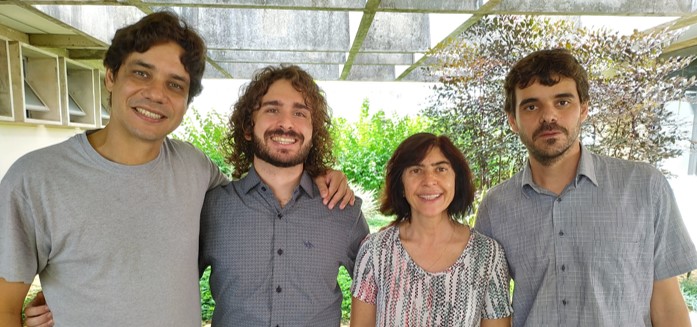
Some of the authors of the study. From the left: Prof. Leonardo Campos, Andreij Gadelha, Prof. Ana Maria de Paula, Prof. Leandro Malard.
A scientific team from the Physics Department of the Brazilian Federal University of Minas Gerais (UFMG) developed a device based on ultrafine nanomaterials capable of recording and reading data, acting as computational memory. This memory, whose data storage mechanism originates based on optical phenomena – which is why it is called photo-memory – has shown to possess several of the characteristics currently desirable for memories: possibility of miniaturization, low power consumption, long data retention and relatively low cost.
The work opens up possibilities for developing efficient memories based on two-dimensional materials (those whose thickness is one or a few atoms) that could be used on lightweight and flexible platforms, such as wearable electronic devices. The research was reported in a recently published article in the scientific journal 2D Materials (impact factor 7,042).
“Our work consists of a scientific investigation with probable technological implications in the area of photo memories,” contextualizes Professor Leonardo Cristiano Campos (UFMG), corresponding author of the paper. “We developed a simple optoelectronic device, in which the simultaneous application of light and electrical charges modifies the electronic properties of molybdenum disulphide (MoS2), which is an ultrafine nanometric material,” he adds.
More authors of the paper: Prof. Rodrigo Gribel Lacerda and Alisson Cadore.
Initially, the doctoral students Andreij de Carvalho Gadelha and Alisson Cadore integrated a series of nanomaterials of few tens of nanometers in thickness, following the architecture of the field effect transistor (FET), which can be used as an electronic component of memories. The FET assembled at UFMG consists in essence of a layer of molybdenum disulfide placed on a flat crystal of hexagonal boron nitride, placed on a fine graphite substrate. Boron nitride was supplied by a research group from Japan, from the National Institute of Materials Science (NIMS).
The team then carried out a series of optoelectronic measures designed by the doctoral students Andreij and his supervisors (Professors Leonardo Campos and Rodrigo Gribel Lacerda), assisted by two opticians, Professors Leandro Malard Moreira and Ana Maria de Paula – all from the Physics Department of UFMG.
In general terms, the team simultaneously applied electrical voltage and laser radiation to FET. This combined action systematically changes the density of the free charges that travel through the molybdenum disulphide (semiconductor material), controlling the electrical conductivity of the material (process called photogating). The change persisted after the laser and tension were removed.
Thus, the scientific team generated in the material what is required to record data in digital electronics: two well-differentiated states that can be quickly detected and translated into the binary code such as zero (0) and one (1). Specifically, these are two states of conductivity of molybdenum disulphide: the one prior to the application of the laser light, called “off” or “0”, and the one subsequent to irradiation, called “on” or “1”, (this one characterized by the presence of the photocurrent).
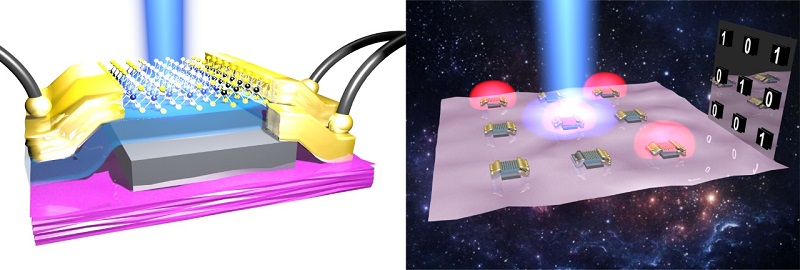
On the left, the FET, element of the photo-memory, whose structure is composed of a stacking of two-dimensional materials. On the right, a schematic representation of how the data writing process to a device composed of various photo-memory elements would be. The recording process is translated into binary forms of “0”s and “1”s, which are the basis of encoding in digital electronics. The elements that have a red light are associated with code “1”, while those that do not have the light are “0”.
In addition to revealing the ability of molybdenum disulphide FET to act as a photo-memory, the experiments and theoretical modeling performed at UFMG unveiled some very desirable characteristics in a memory: low power consumption (related to the ratio of “on” and “off”), and the ability to retain recorded data for long periods (the team estimated that up to 50% of a recorded data would remain saved after a decade).
The photo memory developed at UFMG demonstrated another interesting feature. By controlling the charge applied to FET, it is possible to modulate the conductivity states and generate a series of well-differentiated states (not only two).
“We believe that these memories can be applied in the long term,” says Professor Campos. To do this, says the scientist, it would be necessary to develop the large-scale production of nanomaterials, a challenge he estimates could be solved in a decade. In addition, it would require adapting the memory to the operation under environmental conditions, since the measurements carried out by the UFMG team were made in a vacuum. “We are developing encapsulation techniques that are likely to solve this issue,” says Campos.
The results reported in the 2D Materials article are part of Andreij Gadelha’s doctorate, who will defended his thesis on May 3. However, far from initially being chosen as a doctoral research subject, the molybdenum disulphide photo-memory effect was unveiled to the doctoral student and his advisor unexpectedly, as is often the case in the process of scientific discovery. “As if you’re looking at a specific point, but there’s that insight that turns your attention to the right path and you shout “EUREKA,” elucidates Professor Campos. Specifically, the doctoral student was attempting to annihilate certain effects that were undesirable in the context of the initial research, when he realized that these effects would enable an application in optical memories, and persuaded his advisor to change the focus of the work. “It is interesting to see that the undesirable effect has become our “golden-egg hen” leading to a turnaround in the direction of our research,” comments Campos.
The work was funded by the Brazilian federal agencies Capes, CNPq, the INCT of Nanocarbon and the Minas Gerais state agency Fapemig.
The board and directory of the Brazilian Materials Research Society (B-MRS) are publicly protesting against the budget cuts announced for the Ministry of Science, Technology, Innovations and Communications, which may render research and technological innovation in Brazil impossible. The Brazilian scientific system was developed over decades, based on the scientific community’s significant endeavor and on the support of different governments. The funding cuts of the Ministry in recent years have repeatedly subtracted resources for research and technological innovation, which further aggravates the country’s lack of competitiveness. These cuts pose a serious risk to Brazil’s performance in the coming years and decades. Even more serious is that, unlike other areas, the discontinuation of funding for science, technology and innovation in the country leads to the decline of researchers and disinterest of new generations of students, thus breaking the knowledge-building chain and hindering its resumption, due to the financial crisis.
The recent past has shown evidence that it is only through knowledge that the development and social well-being of a nation is achieved, and that countries have managed to escape economic crises through investment in science and technological innovation. There is no support that justifies cuts due to emergencies and urgencies brought on by a financial crisis. The amount of resources saved is insufficient to solve – or even significantly reduce – the country’s financial problems, given the already low investment in science and technology, lower than the criterion of any developed nations.
In a country with so many needs and so much inequality, as in Brazil, only technological development can improve the lives of our people, as demonstrated in recent decades. The efforts undertaken have led the country to a prominent position on the international scenario, which is now under threat, and to the rapid response of the scientific community to important economic and social issues, such as agribusiness and health. National development is only possible by means of a robust system of science, technology and innovation, with quality higher education and knowledge generation in different areas. In addition to the areas most directly related to technology, it is crucial that Brazil should develop research to identify the origins and propose solutions to our serious social problems.
If the relevance of education and knowledge generation for the country’s development is not recognized, in the long term the future of Brazil will be irreparably compromised.
A little bit of the brief and intense story of the startup Nanogreen (Joinville, SC) and the vision of its entrepreneurs.
Nanogreen is a startup committed to participating in the emerging Brazilian market of nanoparticle production. These particles, measuring less than 100 nanometers in at least one of their dimensions, have unique properties due to their size, and are capable of conferring interesting properties to the materials to which they are incorporated. In addition to being the subject of intense research, nanoparticles are already used to manufacture a wide range of products, from socks to milk containers, in addition to paints and sensors – a market whose size is still difficult to determine but which moves billions of dollars around the world.
At Nanogreen, the main competitive advantage in a national context is the nanoparticle manufacturing method, based on the laser ablation technique. Briefly, it consists of using samples of the material that will compose the nanoparticles (e.g. titanium or gold) as targets of the laser. The samples are submerged in liquid and the laser light beam is placed over them. The radiation removes material from the surface of the target, and finally, the ablated material forms the nanoparticles in the liquid medium.
Innovative in the Brazilian industrial context, this method, which is based on technologies in the public domain (not protected by patents) stands out for its low environmental impact, without the use of toxic substances. In addition, the method can generate nanoparticles from the most diverse materials, including metals, polymers, ceramics and even organic materials (Nanogreen is testing tree barks, for example). Finally, through changes in the process parameters and the production medium (distilled water, alcohol, solvent etc.), it is possible to alter the size and distribution of the nanoparticles, the state of agglomeration, the composition of the final product, and also functionalize the surface of the particles according to the customer’s needs.
Nanogreen currently works with customized development of nanoparticles for the client’s desired application. “We perform a joint development, in order to find the best solution, working in the form of consulting and development. Subsequently, we sell the made-to-order products developed,” says Moisés Teixeira. For the future, the entrepreneurs of Nanogreen plan to have a portfolio of products developed, ready to be manufactured on demand. “This will allow us to focus only on supply, or to maintain both fronts. All of this will depend on how the market and technology behaves, but these are scenes of the next chapters,” he adds. Generating patents from the development work is also a possibility contemplated by the entrepreneurs of Nanogreen.
The startup staff currently consists of three members who gather together academic training and research and development experience in laser and nanoparticle production techniques. For everyone, Nanogreen was the first experience of creating a company. The partner Edson Costa Santos holds a degree from the Brazilian Federal University of Santa Catarina (UFSC) and master’s degree and doctorate from Osaka University, Japan, both in Mechanical Engineering. At Nanogreen, he works in business development and strategic contacts. In addition to being CEO of Nanogreen, Costa Santos is currently senior manager of innovation at Carl Zeiss AG in Germany. The second active partner, Moisés Felipe Teixeira, who holds a degree, a master’s degree and a doctorate degree in Materials Science and Engineering from UFSC, is responsible for the administration of the company. The team also includes the grant holder Lucas Bóries Fachin, chemical engineer from UFSC, who works with product development and research of new materials.
In terms of infrastructure, Nanogreen needs a series of manufacturing and characterization equipment that the startup is not able to acquire. However, these entrepreneurs have overcome this difficulty through partnerships and agreements with research institutions and universities, as well as payment outsourcing of machine hours and analysis. According to the entrepreneurs, the idea is to acquire, as soon as possible, equipment for the manufacture of nanoparticles by means of public funding, external investors or bank loans.
Emergence of the startup
The idea of working with laser ablation came around ten years ago, from the experience of the partner Edson Costa Santos with laser technologies, during his doctorate in Japan. However, the first products were developed in Brazil about three years ago on an experimental basis within SENAI Institute of Innovation, where Costa Santos was director. By having direct contact with that technology, the entrepreneurs saw the business potential. “Since the SENAI Institute’s focus is not on the type of sale and business we are doing today, the creation of the company was the best way to bring this technology to the Brazilian market,” says Costa Santos.
A milestone in the brief history of Nanogreen was the incubation approval at the Technological Innovation Park of Joinville and Region (Inovaparq), in 2016. At that time, the partners incubated “only” an idea, which arose when they saw the lack of suppliers of nanoparticles of some materials, together with the low level of customization that traditional suppliers offered. The entrepreneurs of Nanogreen wanted to bring to Brazil a different way of manufacturing and supplying nanoparticulated products. “We combined the desire to be enterpreneurs this with innovative technology,” recalls Moisés. “With the approval of the incubator, we saw that more people believed in us and that from this point onwards we had a mission that was already greater than ourselves,” he adds.
Initially, the entrepreneurs disbursed their own resources to finance the incubator’s monthly fee, the first materials for production, the accounting and all that was needed. However, soon after the first year the company was set up, in 2018, two Nanogreen projects were approved. In an innovation support program (Innovation Synapse), Nanogreen received R$ 100.000 to invest in the company, develop a project and hire a fellow (Lucas Bóries Fachin). In another program (the Call for Innovation for Industry), Nanogreen received R$ 500.000 to develop a project. “It was here we had the first signs that there were more people believing in our idea,” says Fachin.
Also in 2018, Nanogreen was contemplated by the program InovAtiva Brazil, dedicated to “accelerate” startups. “We were recognized by a team of mentors as one of the featured companies within the program that year,” recalls Lucas. “This award was the peak of the company thus far and achieving this recognition has indicated we are on the right path and that there are many people who perceive in our idea a technological potential able to change the world,” he adds.
According to the entrepreneurs, many discussions, turning points and changes of plans have taken place over the short and intense journey of Nanogreen. 2019 was the year of the first commercial operation of the startup: a research and development agreement with a large textile company to optimize some products. “Additionally, we have some grant projects with partner companies already being developed, but the first invoice will be issued for now,” says Costa Santos.
See our interview with the entrepreneurs.
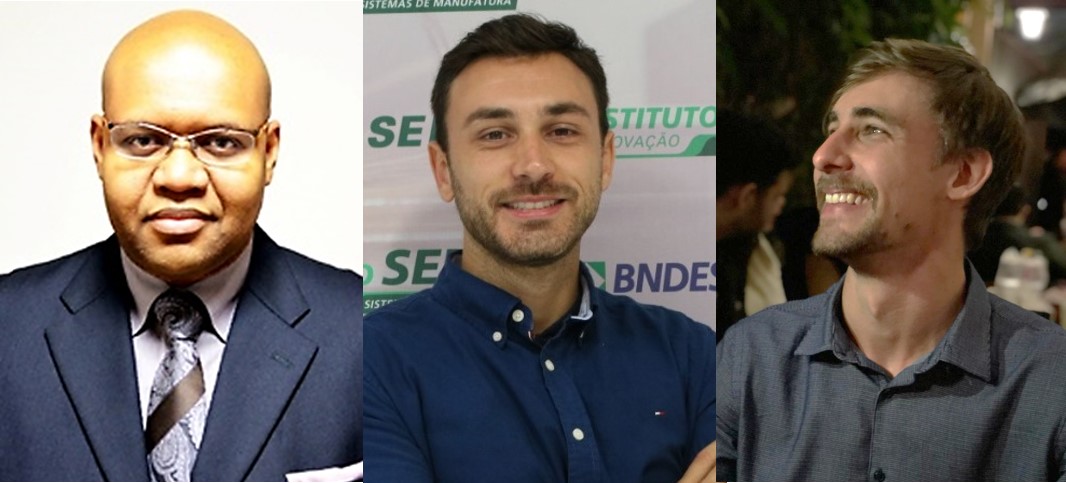
The present Nanogreen team of entrepreneurs. From the left: Edson Costa Santos, Moisés Felipe Teixeira and Lucas Bóries Fachin.
B-MRS Newsletter: What were the most important factors that enabled the creation and development of the startup?
Nanogreen: Due to the highly scientific and specialized nature of Nanogreen, undisputedly the greatest factor in making the company feasible was the partners’ technical knowledge. Due to the fact we work with new and advanced technology, manufacture and application knowledge is what allowed the incubation and approval in the cited programs. In addition to the need for in-depth knowledge about the laser, characterization techniques such as scanning electron microscopy, chemical characterization, concentration measurement techniques and cohesion strength are very important for good quality product development. In addition, the approvals gave way to opportunities to participate in events and mentoring of Synapse of Innovation and InovAtiva Brazil, for example, which help in legal issues, accounting and business matters, which are usually the most complicated for those of us with technical backgrounds.
B-MRS Newsletter: What were the main difficulties faced by the startup thus far?
Nanogreen: The main difficulty at the beginning was the initial investment, where there was a lack of resources for investments in the company and for hiring people. In a highly scientific and research-and-development-intensive business such as nanotechnology, the initial cost is considerable in terms of high first returns, however such an investment is not available without investors or customers seeing the technology validated in business practice, but for such validation we need the first development, which falls into a rather complicated cycle. Therefore, the existence of development notices and subsidy for new technologies is very important. When talking about IT companies and software, investments are lower and returns are faster, which explains the ease of investment and the amount of companies we see in these areas. Industrial and material development is a little behind this.
B-MRS Newsletter: What do you believe is the startup’s main contribution to society?
Nanogreen: To introduce a manufacturer of nanoparticles into the national market, increasing domestic competition and reducing the need for imports. This would reduce time and import fees, lowering costs for some products that need this technology and which can make applications viable. Other than that, we work with green-based technology, which does not use solvents or toxic products in the production of nanoparticles. This ensures that our product is considerably purer than that produced by chemical routes, but also avoids the need for treatment of effluents, risk of river and groundwater spills and so on. Thus, we are helping to further prevent the degradation of the environment.
B-MRS Newsletter: What is your goal/dream for the startup?
Nanogreen: The goal is to be the largest and most innovative manufacturer of non-toxic nanoparticulated products in Brazil, within a short period of time, and in the future to expand that reputation to Latin America. We are also planning the internationalization of Nanogreen, and there are now several Brazilian programs to support such initiatives!
B-MRS Newsletter: Leave a message for people who are thinking about the possibility of creating a startup.
Moisés Teixeira: My message to anyone reading this story and dreaming about beginning a startup is that you are the size of your dream. So dream big, dream big. If you have a good idea and are willing to undertake this and have time to dedicate yourself, dive right in. No one will put your idea into practice, except for you, so trust yourself, strive, work hard and make it happen. Innumerous obstacles will appear along the way, but when you believe, anything is possible. Finally, no one is better suited to handle your business than you, so carpe diem, roll up your sleeves and get on with it. What I can say is that once you enter this world, there is no turning back, undertaking this mission is a passion and is addictive.
Professor Elson Longo (CDMF-UFSCar), founding member and former president of B-MRS, is the corresponding author of an article that appears in the Top 100 2018 ranking of the journal Scientific Reports in the area of Materials Science. The ranking highlights the most read articles in 2018, among those published that year in the journal of the Nature group. The paper was published on January 30, 2018 and received 1,042 views throughout the year.
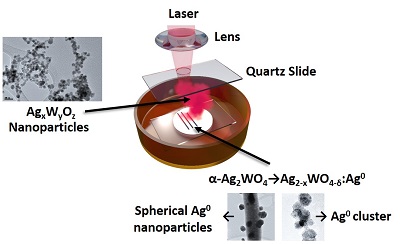
Entitled Towards the scale-up of the formation of nanoparticles on alpha-Ag2WO4 with bactericidal properties by femtosecond laser irradiation, the article is signed by eleven authors, six of them from Brazilian institutions, including the researcher Camila Cristina de Foggi (UNESP), who is also a B-MRS member.
The work proposes a new process to produce bactericidal nanocomposites based on silver nanoparticles and semiconductor materials. The method increases 32 times the bactericidal action of the nanocomposite and, at the same time, generates a new class of spherical nanoparticles.
A specialist in functionalizing carbon nanomaterials, Professor Maurizio Prato has been working on this subject for a quarter of a century. In his research group at the University of Trieste (Italy), he has developed methods to add organic molecules to the surface of fullerenes, carbon nanotubes and graphene. By so doing, Prato contributed to diversify the range of properties and functions of these nanomaterials and, consequently, their applications, especially in the field of nanomedicine.
The work he developed yielded many high-impact publications. According to Google Scholar, the Italian scientist has over 67,700 citations (being more than 3,800 in only one article) and owns a h-index of 119.
From 1983 to 1992, Prato was an Assistant Professor at the University of Padova (Italy). He then joined the University of Trieste as an Associate Professor. He became Full Professor in 2000. Since 2015, he also works at the Center for Cooperative Research in Biomaterials (CICbiomaGUNE), located in San Sebastian (Spain). Professor Prato leads the Carbon Nanotechnology Group in Trieste and the Bionanotechnology Group in San Sebastian. Throughout his career, he spent terms as a visiting researcher/ professor at Yale University and University of California, Santa Barbara (United States), Ecole Normale Superieure (France) and University of Namur (Belgium).
This prominent Italian scientist will be in September in Balneario Camboriu, participating in the XVIII B-MRS Meeting, where he will give a plenary lecture. He will speak about some of his more instigating recent research, such as the use of functionalized carbon nanomaterials for neuron growth and interneuronal communication, and the application of carbon nanotubes to the generation of hydrogen – a source of clean energy.
See our mini interview with Professor Maurizio Prato.
B-MRS Newsletter: – We´d like to know more about your scientific work. Please choose two papers of your own, briefly describe them, and share the references.
Among others, we work on two relevant problems: one is related to the recovery of motility after a spinal cord injury, the second deals with the so-called “artificial photosynthesis”.
Cure of spinal cord injury using carbon nanotubes. In the recent past, our group has demonstrated the incredible potential of carbon nanotubes (CNTs) in the field of artificial neural networks and nerve tissue regeneration. CNTs can provide advanced scaffolds, owing to their known electrifying effect on neurons, possessing the structural and functional fitness to suit the stringent requirements for growing healthy networks of cardiomyocytes and neurons. It is not just a matter of providing an appropriate substrate for cell growth, it has actually emerged that CNTs have an electrifying effect on cells. In other words, specialized cells grown in contact with CNTs appear to be electrically more active. Recently, the ability of CNT substrates to impact on a central nervous system (CNS) tissue has been tested by co-culturing entire slices of spinal cord, used as ex-vivo models. These exciting results show that 3D scaffolds of CNT provide an efficient three-dimensional interface with the biological tissue and its injuries for in vivo insertion and testing.
Ref: S. Usmani, E. R. Aurand, M. Medelin, A. Fabbro, D. Scaini, J. Laishram, F. B. Rosselli, A. Ansuini, D. Zoccolan, M. Scarselli, M. De Crescenzi, S. Bosi, M. Prato, L. Ballerini. 3D meshes of carbon nanotubes guide functional reconnection of segregated spinal explants. Science Advances, 2, e1600087 (2016)
Artificial Photosynthesis: Energy is another field that has enjoyed great benefit from CNTs. These carbon nanostructures have been combined with inorganic catalysts, and especially metal oxides (MOx) and nanoparticles (NP), in a countless number of nanocomposites and hybrids. Energy is an emerging field of research, gaining a strong momentum, in parallel with the general interest in new and efficient processes that promise to set our society free from the unsustainable thirst of fossil fuels. An exciting perspective in energy research is represented by the fascinating possibility to carry out artificial photosynthesis. At the heart of the natural phenomenon lies the energetically very demanding water oxidation process, carried out by a metal-oxygen cluster with four manganese atoms and one calcium atom, Mn4Ca. We used a nanocatalyst based on the combination of a Ru polyoxometalate (Ru4POM) and functionalized CNTs to modify an oxygen evolving anode. More recently, we translated this concept to a self-assembled system, based on perylene bisimide/Ru4POM complex, to fabricate a photoactive framework around the catalytic center to transfer electrons and slow down recombination
Ref: Bonchio, M.; Syrgiannis, Z.; Burian, M.; Marino, N.; Pizzolato, E.; Dirian, K.; Rigodanza, F.; Volpato, G. A.; La Ganga, G.; Demitri, N.; Berardi, S.; Amenitsch, H.; Guldi, D. M.; Caramori, S.; Bignozzi, C. A.; Sartorel, A.; Prato, M., Hierarchical organization of perylene bisimides and polyoxometalates for photo-assisted water oxidation. Nature Chemistry 2019,11 (2), 146-153
B-MRS Newsletter: – Are there any products in the nanomedicine market based on functionalized carbon nanomaterials? If not, what are, in your opinion, the steps that need to be taken to turn the scientific advances in this field into products? In terms of safety, is there a consensus on the possibility of using these nanomaterials without major health risks?
The family of carbon nanomaterials is very broad, the most representative examples being fullerenes, carbon nanotubes and graphene. These materials have opened new scientific horizons, with many exciting discoveries. There are already many commercial items that contain carbon nanostructures, especially graphene. On the other hand, as many other types of nanomaterials, also those based on carbon have raised safety issues. In our group, we have discovered that the functionalization process increases a lot the biocompatibility of these materials, making them more easily dispersible in water and biological media. Therefore, we consider the functionalization process a key step on the way to applications, at least for some of these new materials.
For more information on this speaker and the plenary talk he will deliver at the XVIII B-MRS Meeting, click on the speaker’s photo and the title of the lecture here https://www.sbpmat.org.br/18encontro/#lectures.
Professor Victor C. Pandolfelli (DEMa – UFSCar), a member of B-MRS, is a co-author of the scientific paper chosen for the JECS Best Paper Award, a biennial prize of the Journal of the European Ceramic Society (impact factor 3,794) for the best paper published in this journal.
The article chosen for the period 2017-2018 is “Nacre-like ceramic refractories for high temperature applications” (http://dx.doi.org/10.1016/j.jeurceramsoc.2017.10.042), and is signed by seven authors, four of them Brazilians, including Pandolfelli.
The JECS Best Paper Award will be presented during the 16th Conference and Exhibition of the European Ceramic Society (Turin, Italy, June 16-22, 2019). It will be the first time the prize is given to authors from the American continent.
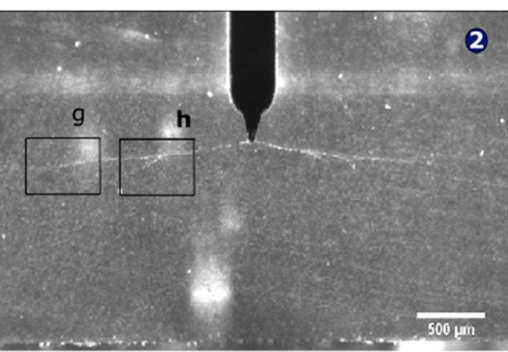
According to Pandolfelli, the work proposes a new advanced ceramic material, of relatively low cost and simple processing, for applications in temperatures of up to 1,400°C. The material exhibits high mechanical strength and high fracture energy. Its microstructure is bioinspired.
Figure shows the propagation of the crack in a plane perpendicular to the mechanical loading, very similar to what would happen when testing, for example, a piece of bamboo.
On behalf of the Organizing Committee, we invite you to participate the XVIII Brazil MRS Conference (XVIII B-MRS), which will be held in the city of Balneário Camboriú-SC, in the period of September 22nd-26th, 2019.
There is a remarkable list of top international plenarists, and 23 symposia in all scientific themes in materials science with high level of confirmed invited speakers. Don’t miss the opportunity of participating this important international scientific event on Materials Science and submit your Abstract for Oral or Poster Presentation. More details: https://www.sbpmat.org.br/18encontro/
The opening ceremony with Memorial Lecture and the welcome cocktail will occur at one of the most beautiful touristic place of Balneário Camboriú, the “Complexo Cristo Luz” https://www.cristoluz.com.br/en/.

 More than 2,450 abstracts were submitted to the XVIII B-MRS Meeting (Balneário Camboriú, Brazil, September 22 to 26). This number of abstracts sets a new record in the history of the annual meetings of B-MRS.