

Author: Verónica Savignano
Brazilian Materials Research Society (SBPMat) invites the scientific community to submit symposia proposals for the XV SBPMat Meeting.
 The call for symposia proposals for the XV SBPMat Meeting is open until February 11th. The event will be held from September 25 to 29, 2016 in the city of Campinas (SP), in the convention center Expo D. Pedro.
Any researcher with doctoral degree, working in educational/research institution or company in Brazil or abroad, may submit a symposium proposal on any issues in the field of Materials Science and Technology.
Proposals must be filled online and must contain the title and scope of the symposium, the list of subjects covered, the contact data of the organizers and the preliminary list of invited speakers.
After submission, proposals will be evaluated by the commission of events at SBPMat and by the organizers of the meeting, and then they will be submitted to the SBPMat board.
The thematic symposia are the main axis in the program of SBPMat annual events. At the meeting held in Rio de Janeiro in 2015, more than 2,300 papers were presented in 26 symposia, covering a wide range of topics, such as carbon nanostructures, biomaterials, materials for sustainable development, materials for electronics and photonics, characterization techniques, computer simulation, safe use of nanomaterials, among others.
Event website: http://sbpmat.org.br/15encontro/home/
Form for symposia proposals submission: http://www.sbpmat.org.br/proposed_symposium/
[Upon finalizing the submission, ‘Symposium proposal successfully sent!’ must show up in your browser]
(Português) Seleção de professor no Departamento de Física da PUC-Rio.
SBPMat newsletter. English edition. Year 2, issue 12.
|
||||||||||||||||||||||||||||||
Cannot see this message? Click here.
(Português) Concurso para professor do Departamento de Química Orgânica do Instituto de Química da Unicamp.
Holiday greeting from IUMRS.

XV SBPMat Meeting will be held in Campinas in September 2016.
Where: Campinas city, São Paulo state.
When: 25 to 29 of September, 2016.
Important dates:
- Symposium proposal submission: January 2016
- Abstract submission: until May 30th
- Notification of the accepted abstracts: July 10th
Chairs:
- Ana Flávia Nogueira (IQ/UNICAMP)
- Mônica Alonso Cotta (IFGW/UNICAMP)
Local committee:
- Antonio Riul Jr (IFGW/UNICAMP)
- Carlos Cesar Bof Bufon (LNNano/CNPEM)
- Christoph Deneke (LNNano/CNPEM)
- Fernando Sigoli (IQ /UNICAMP)
- Francisco das Chagas Marques (IFGW/UNICAMP)
- Jillian Nei Freitas (CTI Renato Archer)
- Luiz Fernando Zagonel (IFGW/UNICAMP)
- Talita Mazon (CTI Renato Archer)
Site: http://sbpmat.org.br/15encontro/home/
Holiday message from SBPMat.
Dear associates of the Brazilian Materials Research Society (SBPMat),
The Executive Office and the members of the Council of SBPMat thank all of its associates and those who have taken part in the society’s activities for their support and the trust in our work throughout 2015. We also wish each and every one of the Brazilian researchers and students a merry Christmas and a year of 2016 full of success and accomplishments.
SBPMat is a young society, but still in its youth it has been confirming its role of well-representing the research in Science and Technology on the several sectors of the great field of Materials. SBPMat’s continuous growth is due to the contribution of the researchers and students coming from the four corners of Brazil, whose work has been effectively contributing to the country’s development. Once again, the annual meeting held in the city of Rio de Janeiro in late September was a success, and confirmed the quality of Brazilian research in the several Materials areas. Over 2,000 works were presented in the 26 symposia, with a large participation by youngsters, and with the presence of 40 countries. The work carried out by Professors Marco Cremona and Fernando Lázaro Freire Jr., by the symposia organizers and the entire support team was excellent. We extend our deepest thanks to them all. We were also very happy to have for the first time a symposium entirely organized by students, belonging to several groups of the “University Chapters” program.
SBPMat’s Bulletin, in Portuguese and English versions, continues to have excellent penetration in Brazil and abroad, proving its excellent quality. All of this progress led SBPMat to be a part of the management of the International Union of Materials Research Societies (IUMRS), an entity that congregates Materials societies, including societies from Americas, Asia, Europe, Africa and Australia.
Once again we wish everyone, and especially the new Executive Office which is to take office soon, great success in 2016.
Featured paper: New member of the family of photovoltaic materials.
[Paper: Photovoltaic effect in Bi2TeO5 photorefractive Crystal. Ivan de Oliveira, Danilo Augusto Capovilla, Jesiel F. Carvalho, Renata Montenegro, Zanine V. Fabris and Jaime Frejlich. Appl. Phys. Lett. 107, 151905 (2015). DOI: 10.1063/1.4933097.]
New member of the family of photovoltaic materials
The photovoltaic effect consists in the generation of direct electrical current in a material, in consequence of its exposure to light, in the absence of an applied electric field.
In an article recently published in Applied Physics Letters, a Brazilian team of scientists presented striking experimental evidences of the presence of photovoltaic effect in bismuth telluride (Bi2TeO5) crystals. Until the publication of the paper, the material was known, for example, for being photorefractive (its reafractive index is altered in consequence of its exposure to light), but there was no evidence of its photovoltaic nature.
“The greatest contribution of this article lays in the fact that we showed for the first time that the Bi2TeO5 crystals exhibit the photovoltaic effect”, highlights Ivan de Oliveira, Professor of Faculty of Technology (FT) at State University of Campinas (UNICAMP) and author of the said article.
The published work was performed at the Optics Laboratory at FT – Unicamp, in the city of Limeira (SP), in collaboration with the Physics of Materials Group of the Federal University of Goiás e with the Optics Laboratory of the Institute of Physics “Gleb Wataghin” at UNICAMP. The collaborators gathered their experience in manufacture and characterization, respectively, of photorefractive crystals.
The study that originated the article is part of the master’s degree research of Danilo Augusto Capovilla, under the guidance of Professor Oliveira, in which some results indicated that the Bi2TeO5 crystals might exhibit photovoltaic effects. “Upon such indications, we performed several experiments and managed, using direct and indirect measures, to show that the Bi2TeO5 crystals in fact present the photovoltaic effect”, says professor Oliveira. “The demonstration of the effect was performed using non-holographic techniques and, mainly, stabilized holographic record techniques”, he completes.
One of the experiments conducted consisted in measuring the photovoltaic current of the non-doped bismuth tellurite sample and, for comparison, of a material in which the photovoltaic effect is already known, the iron-doped lithium niobate.
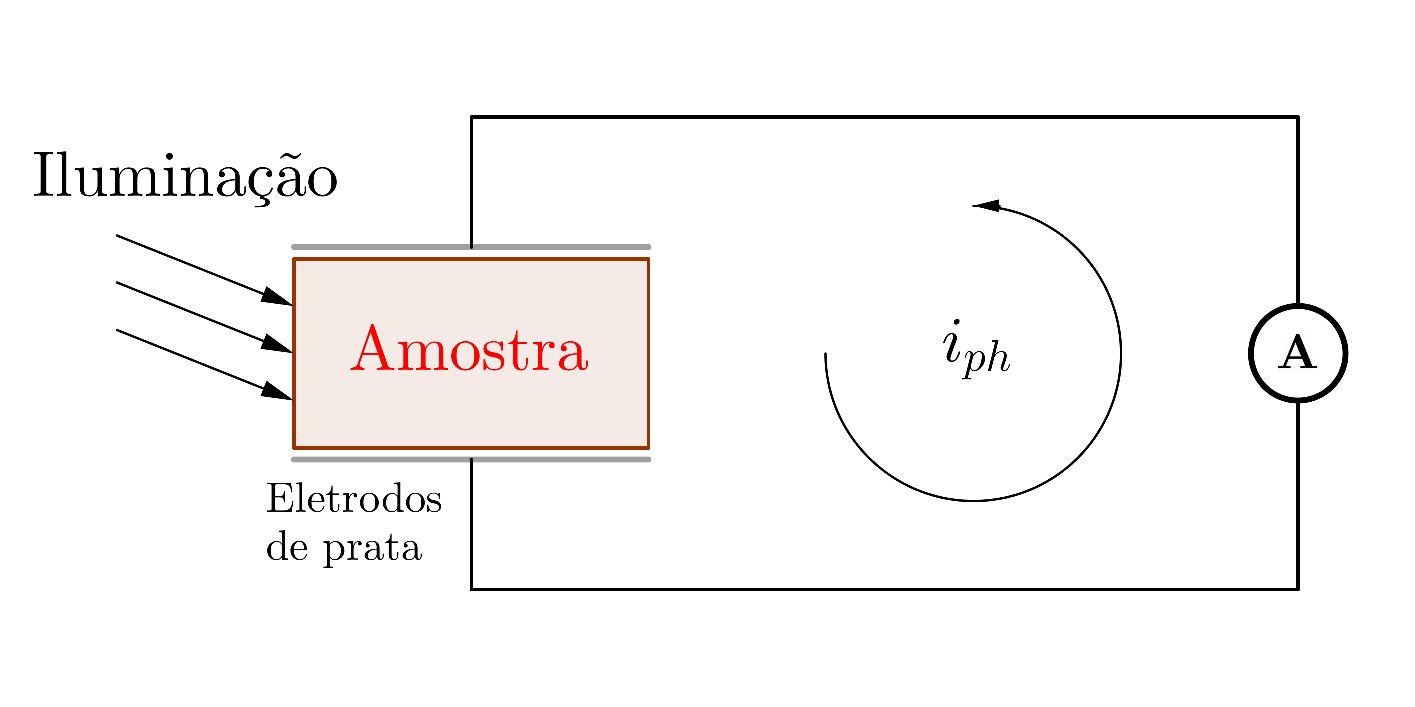
In addition to leave some questions which answers might be searched in new researches, such as the origin of the photovoltaic effect in the studied crystal, the article creates possible applications to bismuth telluride in light conversion into electricity, information storage and manufacture of optical components.

SBPMat in the vice-presidency of IUMRS through Prof. Roberto Faria.
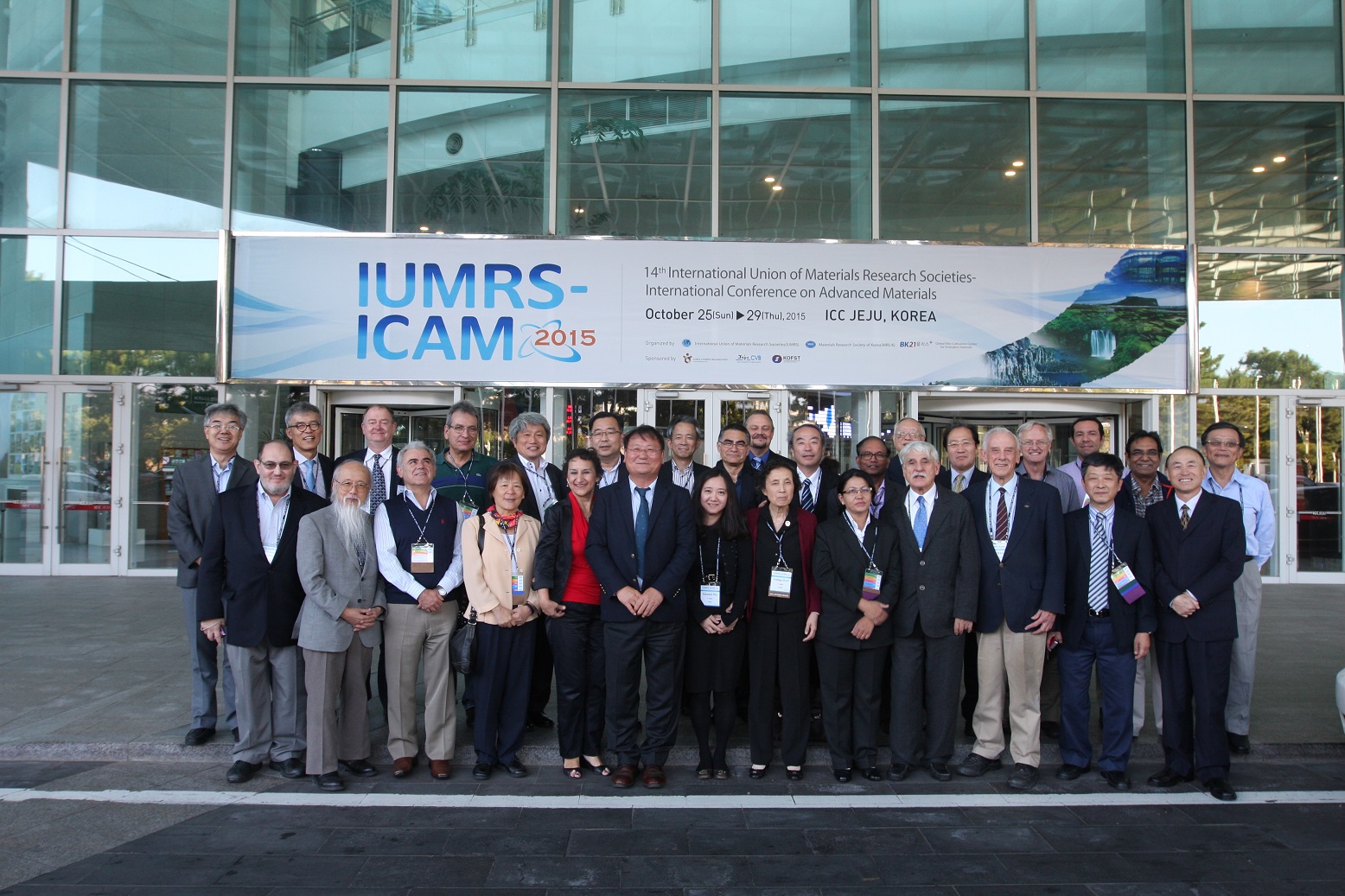 Professor Roberto Mendonça Faria (São Carlos Institute of Physics – University of São Paulo), president of SBPMat since 2012, was elected second vice-president of the International Union of Materials Research Societies (IUMRS), an international association whose members are scientific societies or technical groups interested in promoting interdisciplinary research and education in the Materials field. IUMRS currently congregates the materials research societies of Africa, Australia, Brazil, China, Europe, India, Japan, Korea, Mexico, Russia, Singapore and Taiwan.
The election was made by voting during the IUMRS-ICAM event (Jeju, Korea, October 25 to 29), more precisely at the General Assembly of IUMRS, the annual meeting of the representatives of the adhering bodies. The participants at the meeting voted after hearing the candidates’ action plans. Professor Faria, representing SBPMat, won the voting against researchers from China, Japan and United States. His proposal consisted in a stronger activity in the Latin American countries.
Succeeding a representative of the Chinese materials research society (Chinese – MRS), Prof. Yafang Hane, Faria takes over for two years the second vice-presidency of IUMRS, from January 1st, 2016 onwards.
Professor Robert Chang (Northwestern University), general secretary of IUMRS and one of the founders of the entity, stated that he expects that Professor Faria’s participation in the Executive Board of IUMRS will help expand the entity’s activities in South America.