
The Capes Thesis Award distinguishes, annually, the best doctoral theses of each area, defended during the precedent year within Brazilian graduate programs. On December 12, 2019, 49 awards and 98 honorable mentions were bestowed by Capes to recently graduated doctors, among 1.142 applications.
Capes is the Brazilian federal government agency under the Ministry of Education, responsible for quality of undergraduate and postgraduate courses in Brazil.
Meet some of the winners from the materials research community.
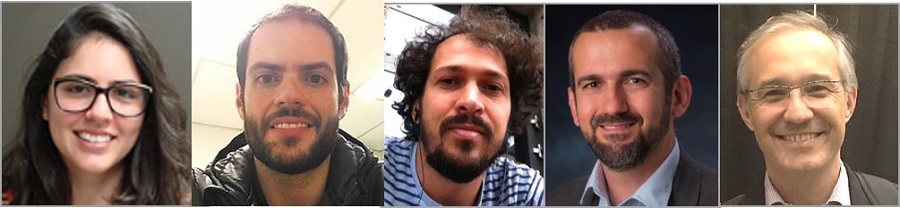
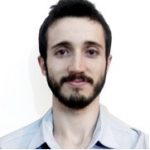
Interview with Miguel Henrique Boratto, winner of the Capes Award in Materials area.
Thesis: Semiconducting and insulating oxides applied to electronic devices. Available at https://repositorio.unesp.br/handle/11449/153215
Author: Miguel Henrique Boratto.
Supervisor: Luis Vicente de Andrade Scalvi (UNESP).
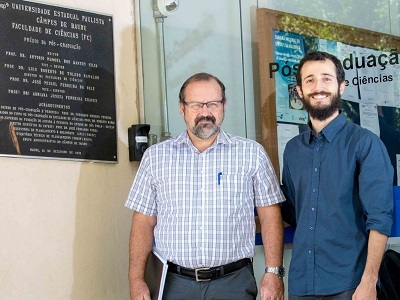
Improving performance and reducing the cost of electronic devices that are part of our daily lives is the desire of almost everyone. However, contributing to this is a not a reality for everyone. Miguel Henrique Boratto, dedicated the four years of his doctorate and the two years of his master’s degree to study some materials from the oxide group, with a view to their possible use in the production of fundamental pieces of electronics.
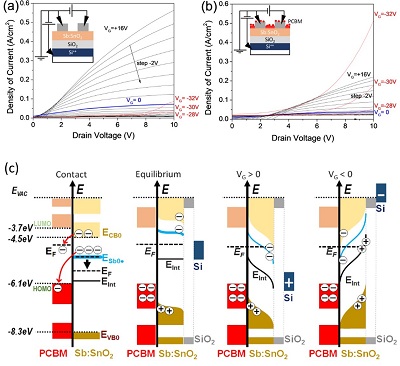
With a degree in Physics and a master’s and doctorate in Materials Science and Technology from UNESP (the São Paulo State University), Miguel first studied this group of materials during his master’s degree, but it was in his doctorate that he managed to manufacture thin films of tin, titanium and zirconium oxides using inexpensive processes, and testing their performance in electronic devices (transistors, capacitors and memristors), always guided by professor Luis Vicente de Andrade Scalvi.
The work that generated the awarded thesis was carried out in laboratories at UNESP in the cities of Bauru and Araraquara, and also at The University of Western Ontario (Canada), where Miguel did a 12-month internship, under the supervision of professors Giovanni Fanchini and Lyudmila Goncharova. During his doctorate, Miguel received fellowships from Brazilian agencies Capes (in Brazil) and CNPq (in Canada).
Five scientific articles directly related to the thesis were published in peer reviewed international journals with good impact factor. In addition, the results presented by Miguel at the 2017 B-MRS Meeting were awarded with two awards for the best oral presentation and best poster of their symposium.
After defending his doctorate, Miguel continued studying materials for electronic applications, as a postdoctoral fellow at UFSC. In addition, in June/July last year, he was selected to be part of a group of 580 young scientists from 89 countries participating in physics discussions with 30 Nobel Prize laureates, the 69th Lindau Nobel Laureate Meeting. Currently, as a post-doc fellow, he researches organic devices for bioelectronic applications at UNESP – Bauru and teaches Modern Physics Laboratory.
See our brief interview with Miguel Boratto, 32 years old, born in São João da Boa Vista (São Paulo).
B-MRS Newsletter: In your view, what is the most relevant contribution (scientific/technological/social) of the awarded thesis?
Miguel Boratto: In and of itself, the thesis presents a good part of the work developed and published, that’s why I think this is the most relevant work I have produced. Among the works presented, scientific relevance is in obtaining, by means of low cost methods, known materials followed by their applications in electronic devices to study their properties and final performance.
B-MRS Newsletter: From your point of view, what are the main factors that allowed you to carry out a prominent research work at the national level?
Miguel Boratto: Aid from the national program “Science without Borders,” with CNPq scholarship for internship abroad, greatly expanded my horizon in relation to the work to be developed and partnerships to be carried out. I also think the partnerships I have made are important, as they are necessary to carry out work with more resources and possibilities.
B-MRS Newsletter: Leave a message for our readers who are undergraduate or graduate students.
Miguel Boratto: The epigraph of my thesis, by Niels Bohr: “An expert is a man who has made all the mistakes which can be made in a very narrow field.”
Interview with Heloísa Pimenta de Macedo, winner of the honorable mention in Materials area.
Thesis: Hybrid Porous Ceramics Derived from Polysiloxanes Containing Ni Nanoparticles for Production of Methane via Hydrogenation of CO2. Available at https://repositorio.ufrn.
Author: Heloísa Pimenta de Macedo.
Supervisor: Dulce Maria de Araújo Melo (UFRN).
Co-supervisor: Michaela Wilhelm (Universität Bremen).
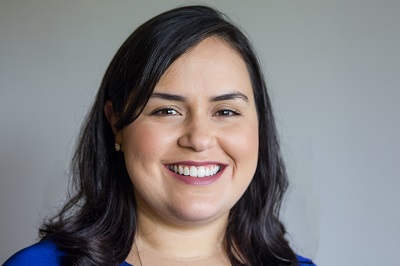
When she started her doctorate in Materials at the Brazilian Federal University of Rio Grande do Norte (UFRN), under the guidance of Professor Dulce Maria de Araújo Melo, Heloísa Pimenta Macedo was already familiar with ceramic materials and their applications in catalysts – themes in which she had worked during her Materials Engineering degree and her Master’s in Materials, always at UFRN. However, it was in her doctorate that she had the opportunity to investigate superior properties to those she already knew, and to contribute to a relatively new research area.
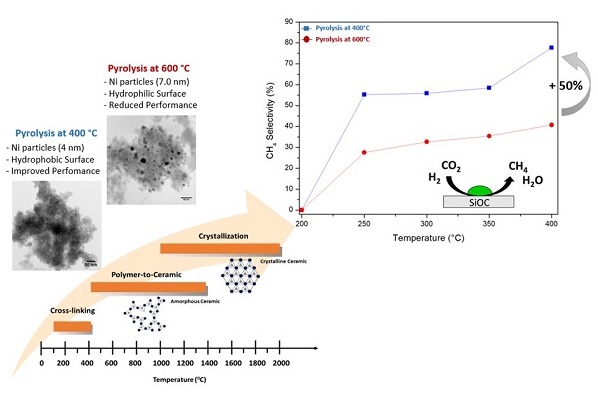
The theme of Heloísa’s doctorate was the development of hybrid ceramics, their characterization and their application as catalysts in a process of converting carbon dioxide (CO2), the great villain of the greenhouse effect, into methane (CH4), a compound with added value that can be used as fuel or raw material.
Hybrid ceramics have the distinctiveness of being obtained through the pyrolysis of polymeric compounds. They are polymers that convert into ceramics after going through high temperatures (400 to 600 °C, in Heloísa’s work). In addition, to work as catalysts, these ceramics can be added with metals (in this case, nickel nanoparticles).
Heloísa completed her doctorate with a Capes scholarship, and it was this same Brazilian agency that awarded her a scholarship to do a one-year internship at Universität Bremen (Germany), in a group with equipment and skills in the subjects she was researching.
The work of Heloísa’s doctorate was reported in an article published in a peer reviewed international journal with good impact factor. In addition, during her doctorate, Heloísa participated in some research projects that resulted in a series of published papers.
See our brief interview with this 30-year-old researcher from Natal (Rio Grande do Norte state), who is currently conducting research as a postdoctoral fellow at the UFRN Environmental Technology Laboratory.
B-MRS newsletter: In your view, what is the most relevant contribution (scientific/technological/social) of the awarded thesis?
Heloísa de Macedo: The development of hybrid ceramics with a wide variety of easily adjustable properties, featuring promising materials for important catalytic reactions, such as the conversion of CO2 into CH4.
B-MRS newsletter: From your point of view, what are the main factors that allowed you to carry out a prominent research work at the national level?
Heloísa de Macedo: To be part of a modern laboratory (Environmental Technology Laboratory) and of an excellent Postgraduate Program (with maximum score according to Capes), offered me all the resources for developing the thesis. In addition, of course, of the opportunity to undertake a doctoral internship at an excellent university in Germany, with renowned professionals in the field of materials, and all the infrastructure and equipment available, which allowed me to do high quality work.
B-MRS newsletter: Leave a message for our readers who are undergraduate or graduate students.
Heloísa de Macedo: I would tell them to persist in their dreams and believe in their potential, as they are the fundamental parts for Brazilian science.
Interview with Bernardo Jordão Moreira Sarruf, winner of a honorable mention in the area of Engineering.
Thesis: Ceria-based anodes with cobalt and copper additions for the direct utilization of methane in solid oxide fuel cells. Available at https://www.researchgate.net/publication/338789167_BernardoSarruf-PhDThesis2018?channel=doi&linkId=5e2a4e8b299bf15216787c23&showFulltext=true
Author: Bernardo Jordão Moreira Sarruf.
Supervisor: Paulo Emílio Valadão de Miranda (UFRJ).
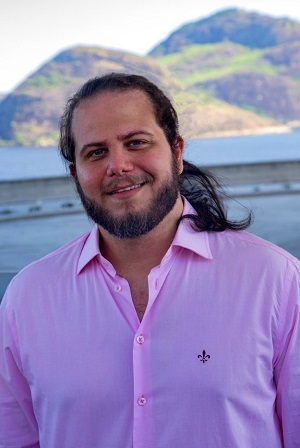
In his doctoral research, Bernardo Jordão Moreira Sarruf made a contribution to the development of fuel cells which is particularly relevant to the Brazilian reality. Fuel cells are devices that generate electricity and which have increased in popularity in recent years due to the emergence of some electric car models based on this technology. In fact, fuel cells are capable of transforming the chemical energy of a compound (the fuel) into electrical energy, through electrochemical reactions of oxidation and reduction. They work similarly to ordinary batteries, with the difference that the compounds that undergo the reactions come from outside the device.
The most common fuel in these batteries is currently hydrogen. However, this element, although it is the most abundant in the universe, is not easily obtained on planet Earth, and even less so in gas stations in Brazil. The good news is that other compounds can be used as fuel for fuel cells. Such is the case of methane (the main component of vehicular natural gas) and ethanol – two fuels widely available in the country.
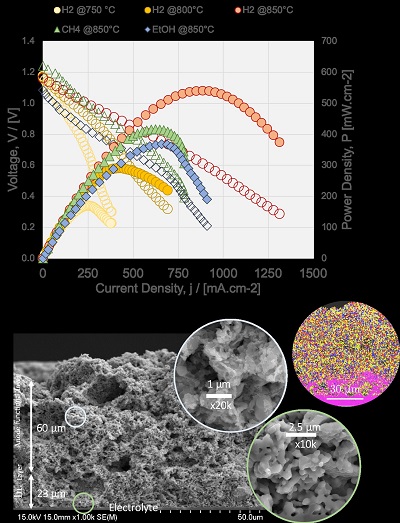
In his doctoral research, Bernardo Sarruf developed a material based on cerium dioxide that performed very well on fuel cells “fueled” with methane, ethanol and hydrogen. The material was used as a battery electrode, that is, as a propellant for the transformation of chemical energy into electrical energy.
Bernardo’s first leap into the subject of fuel cells was in 2008, during his undergraduate degree in Materials Engineering at Brazilian Federal University of Rio de Janeiro (UFRJ), when he performed undergraduate research under the guidance of Professor Paulo Emílio Valadão de Miranda at the Hydrogen Laboratory. Between 2011 and 2013, when carrying out the master’s degree with the same advisor and in the same laboratory, Bernardo went deeper into the microstructural characterization of fuel cell anodes, while developing a software company for characterizing materials that he had just incubated in the university startups incubator.
Then, in 2013, Bernardo started his doctorate, once again under the guidance of Paulo de Miranda. From 2015 to 2016, he undertook an internship at the University of Birmingham (England), under the supervision of Professor Robert Steinberger-Wilckens, in a research center dedicated to fuel cells and their various fuels. In 2018, Bernardo defended the doctoral thesis that earned him the honorable mention in the Capes Thesis Award. The work generated five articles published in peer-reviewed international journals with good impact factor. During his doctorate, Bernardo received a scholarship from Brazilian agencies Capes (in Brazil) and CNPq (in England).
See our brief interview with Bernardo Sarruf, born in Niterói (Rio de Janeiro state), 33 years of age, who continues to work in the area of fuel cells at the Hydrogen Laboratory as a postdoctoral researcher, in addition to being a collaborating professor at the university.
B-MRS newsletter: In your view, what is the most relevant contribution (scientific/technological/social) of the awarded thesis?
Bernardo Sarruf: The fact that the work has demonstrated the development, even if embryonic, of a material that showed excellent results operating as an anode in solid oxide fuel cells for the use of both hydrogen and primary fuels, such as methane and ethanol, paves the way for inserting the fuel cells during the energy transition we are currently undergoing. A fuel cell is a device that combines hydrogen and oxygen from the air to produce electricity, with water as the electrochemical reaction by-product. In our case, instead of using hydrogen (which is still expensive and has an incipient supply infrastructure), we use methane (natural gas) or ethanol, products that already have a well-developed supply chain. As well known, policies to mitigate climate effects will increasingly consist of giving priority to low carbon technologies, which is the case with hydrogen chain technologies. Using ethanol as a fuel in an electrochemical device with almost zero CO2 emissions opens up even more opportunities for Brazil, which is currently the second largest exporter of this product.
B-MRS newsletter: From your point of view, what are the main factors that allowed you to carry out research work that is highlighted at the national level?
Bernardo Sarruf: The support of funding agencies (CAPES and CNPq) is and was fundamental, and we hope that research in Brazil will receive more and more the attention it deserves. The experience of my supervisors in the area was extremely important. I can say that I had a unique opportunity to work with cutting-edge resources and equipment, which were mostly acquired with the support of Hydrogen Laboratory projects over the years.
B-MRS newsletter: Leave a message for our readers who are undergraduate or graduate students.
Bernardo Sarruf: An important message is, perhaps a cliché: there is no magic recipe or shortcuts, if you wake up every day anxious to “get your hands dirty” and go to work, follow the experiment, cheer with the achievements and learn from mistakes, you will surely succeed. Moreover, what I try to do in my day-to-day life as a researcher is seeing beyond what is obvious to me; listening to people outside the professional environment also helps a lot in this task.
Interview with Fábio de Oliveira Braga, winner of a honorable mention in the area of Engineering.
Thesis: Optimized configuration of multilayer ballistic shielding with frontal ceramic and aramid composites or curauá fabric.
Author: Fábio de Oliveira Braga.
Supervisor: Sérgio Neves Monteiro (IME).
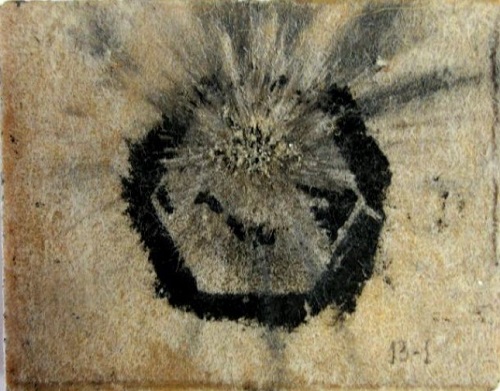
The bulletproof vests that offer highest levels of protection to police and military personnel in Brazil are reinforced with extremely resistant synthetic fabrics, which can be used in the form of thick plates, about 3 cm thick, or combined with ceramic plates. With these reinforcements, ballistic vests are able to protect a person from the firing of a 7.62 mm caliber rifle, for example.
Throughout his master’s and doctorate, conducted at the Brazilian Military Engineering Institute (IME) under the guidance of Professor Sérgio Neves Monteiro and with CNPq fellowships, Fábio de Oliveira Braga investigated whether it was possible to replace these synthetic fabrics with materials based on natural fibers, thus reducing the weight, thickness and cost of the reinforcement plates of the ballistic vests. In particular, Fábio has been dedicated to studying the fibers that are extracted from the leaves of an Amazonian plant belonging to the pineapple family, the curauá. These fibers can withstand high tensions – property that the Indians of the region have long used to make nets, to tie boats, etc.
Fábio’s doctoral research, awarded with the Capes Award, was entirely carried out in Brazil. At IME, Fábio prepared the samples, performed the physical and mechanical tests and applied a statistical method to find the best thickness ratio between ceramics, curauá and a third material (aluminum) in the composition of the vest plates. Thermogravimetric analyses were performed at the Institute of Macromolecules of the Brazilian Federal University of Rio de Janeiro. In addition, he used the facilities of the Army Assessment Center to perform ballistic tests, which showed that plates made with materials based on curauá are capable of absorbing energy from an impact that could be lethal to humans, in addition to retaining the projectile.
Seven scientific articles related to the thesis were published in peer-reviewed international journals with good impact factor.
In addition, the work won an award at the poster competition of a symposium on sustainable materials engineering at the annual meeting of the The Minerals, Metals and Materials Society, held in 2019 in the U.S.A.
See our brief interview with Fábio Braga, born in Resende (Rio de Janeiro state), metallurgical and materials engineer with a specialization in Inspection and Maintenance Engineering in the Petroleum Industry, and a master’s and doctorate in Materials Science.
Currently 30 years old, Fábio is a professor at Universidade Federal Fluminense (UFF) and at Faculdade SENAI Rio, where he coordinates the specialization courses in Welding Engineering and Equipment and Materials Inspection Engineering.
B-MRS newsletter: In your view, what is the most relevant contribution (scientific/technological/social) of the awarded thesis?
Fábio Braga: In the research line I was inserted in, we sought to replace aramid composites (such as Kevlar®) in ballistic vest plates, with lighter, sustainable, inexpensive and widely available composites made with natural lignocellulosic fibers. In my work, a commercial blanket of natural fiber from the Amazon, known as curauá, was used for the first time, integrating these ballistic plates. In order to maximize the performance of the material and minimize its weight, a statistical method of multivariate analysis was used to approach the problem. In the end, we obtained optimized material properties.
B-MRS newsletter: From your point of view, briefly, what are the main factors that allowed you to carry out a prominent research work at the national level?
Fábio Braga: I attribute the success of this work to the quality of the scientific training I had in Engineering and Materials Science, at State University of the North of Rio de Janeiro (UENF) as undergraduate student and at IME (master’s and doctorate). I had the opportunity to receive fellowships for undergraduate research (UENF) for 3 years, master and doctorate, which was fundamental. In addition, I had great emotional and financial support from my family, wife (Bianca) and my advisor, Professor Sergio Neves Monteiro, who was instrumental in my training.
B-MRS newsletter: Leave a message for our readers who are undergraduate or graduate students.
Fábio Braga: Research requires much dedication and study, but it is a very rewarding path. Today I live from teaching and doing research, and I am very grateful to have chosen this path.