
Month: September 2015
(Português) Seleção para mestrado e doutorado no POSMAT-UNESP.
(Português) Concurso para professor de Físico-Química do Instituto de Química da Unicamp.
SBPMat newsletter. English edition. Year 2, issue 9.
|
||||||||||||||||||||||||||||||
XIV SBPMat Meeting: message from the chairmen.
Dear readers,
We hope to see you at the XIV Brazilian Materials Research Society Annual Meeting, that will be held on 27 September to 1 October 2015, in Rio de Janeiro. This year the meeting congregates almost 2,000 participants and has 2,325 accepted abstracts. The XIV Annual Meeting is comprised of 26 symposia, 2 workshops and one symposium organized by the University Chapters. The program also includes 7 plenary lectures.
After 13 years of the first annual meeting of SBPMat today’s figures are impressive. At that meeting, also held in Rio de Janeiro, they were 5 symposia, one workshop and no more than 300 participants.
The present edition of the Annual Meeting covers almost all relevant areas of research in Materials Science. The Opening Ceremony will be followed by the Memorial Lecture “Joaquim da Costa Ribeiro”, about the importance of macromolecular materials, by Professor Eloisa Biasotto Mano. During the Closing Ceremony, the symposium coordinators will honor students with the “Bernard Gross Award” for the best poster and best oral presentation of each symposium, the IUMRS (International Union of Materials Research Societies) Award for the three best posters among the set of the works awarded with Bernhard Gross, and the Horiba Award for the best oral presentation and best poster of the Meeting. Also during the Closing Ceremony, the E-MRS (European Materials Research Society) Award will be granted to the best oral presentation and to the two best posters of symposium C: Nanoscaled Materials: characterization techniques and applications.
On behalf of the Organizing Committee, we would like to thank the Brazil-MRS staff and board, the funding agencies, the symposium coordinators, the local, organizing and scientific committee members, for the commitment and great effort to make this Meeting possible.
We hope that the participants will have a very pleasant Meeting with stimulating exchange of scientific information and establishment of new collaborations.
Marco Cremona and Fernando Lázaro Freire Jr.
Conference Chairs
SBPMat newsletter. English edition. Year 2, issue 8.
|
||||||||||||||||||||||||||||||||||||||||
Featured paper: United atoms, adhered films.
[Paper: Identification of the Chemical Bonding Prompting Adhesion of a-C:H Thin Films on Ferrous Alloy Intermediated by a SiCx:H Buffer Layer. F. Cemin, L. T. Bim, L. M. Leidens, M. Morales, I. J. R. Baumvol, F. Alvarez, and C. A. Figueroa. ACS Appl. Mater. Interfaces, 2015, 7 (29), pp 15909–15917. DOI: 10.1021/acsami.5b03554]
United atoms, adhered films
With an innovative approach on an academic and industrial problem, a study wholly conducted in Brazil has brought significant advances in the understanding of the adhesion of DLC (diamond-like carbon) films on steels. The results of the work, which were recently published in the journal Applied Materials and Interfaces of the American Chemical Society (ACS), can help optimize such adhesion, thus prolonging the life of DLC films and expanding their use in the industry.
The team of scientists was particularly interested in the DLC potential to increase the energy efficiency of internal combustion engines. In fact, if all car engine components were coated with DLC films, the owner of that car would spend 5-10% less fuel and save the environment a good deal of greenhouse gas emissions and other pollutants, among other advantages. The reason for such saving lies in the ultra-low friction of DLC, since friction is the force responsible for wasting fuel while providing resistance to the motion that the parts of the engine make among themselves.
However, DLC has a drawback: it does not adhere to steel, causing quick delamination of the films from the substrate. To work around this problem, both in the laboratory and in industry, it is customary to deposit a layer containing silicon, known as interlayer, over the steel. The DLC film is then deposited on top of it. The result is a “sandwich”, which does not come undone easily.
In the paper published in the ACS journal, the authors experimentally analyzed a “sandwich” consisting of a steel substrate, an interlayer of silicon carbide (SiC) and a DLC film. Both the interlayer and the film were deposited by a quick process that generated thin layers of a few nanometers (up to 10). Mainly, two issues differentiated this study from other similar studies in the scientific literature. Firstly, the team focused in analyzing what happened in two regions corresponding to the interfaces of the interlayer with the film (upper) and with the steel (lower). Secondly, the scientists made a chemical approach on the matter of adhesion.
“This work has identified the chemical structure that generates adhesion in lower (SiCx: H/steel) and upper (a-C:H/SiCx:H) interfaces, which make up the a-C:H/SiCx:H/steel sandwich structure”, said Carlos A. Figueroa, professor at the University of Caxias do Sul (UCS) and corresponding author of the article. “The mechanisms found in the bibliography raised physical or mechanical aspects, but not chemical ones,” said Figueroa, who graduated in chemical sciences from the University of Buenos Aires (UBA) and has a doctorate degree in physics from the State University of Campinas (Unicamp). “However, adhesion is generated by the sum of all individual chemical bonds existing among DLC, the interlayer and steel,” he adds.
Scientists kept a constant film deposition temperature, but varied the interlayer deposition temperature, generating a group of samples deposited at 100° C and another one at over 300° C. After analyzing them by a variety of techniques, especially, X-ray photoelectron spectroscopy (XPS), researchers found that the lower interface of the interlayer, regardless of the deposition temperature, was largely composed of silicon atoms (from the interlayer) bonded to iron atoms (from the substrate). At the upper interface of the interlayer, the team found differences according to the deposition temperature of the interlayer. In the samples deposited at 100° C, oxygen atoms bonded many of the silicon and carbon atoms, preventing the carbon of the film to strongly bond to the silicon of the interlayer, and resulting in a film without good adhesion. In turn, scientists did not find oxygen in the interface of the samples deposited at over 300° C, but bonds between carbon and silicon atoms, which caused the film adhere well to the interlayer.

Besides Figueroa and students of the research group he leads in UCS, also authored the paper researchers from the Institute of Physics at Unicamp, where the XPS measures were made, as well as a scientist from the Federal University of Rio Grande do Sul (UFRGS) that, together with the other authors, participated in the discussion of results.
The work received the support from Brazilian Science funding bodies (Capes, CNPq through INCT National Institute of Surface Engineering, Fapergs), of Petrobras, UCS, the European Commission (Marie Skłodowska – Curie Actions) and Plasmar Tecnologia (a small company that is developing, through a TECNOVA RS project, an industrial equipment to deposit DLC on steel aiming to increase the energy efficiency of car engines).
SBPMat´s community people: interview with Sergio Neves Monteiro.
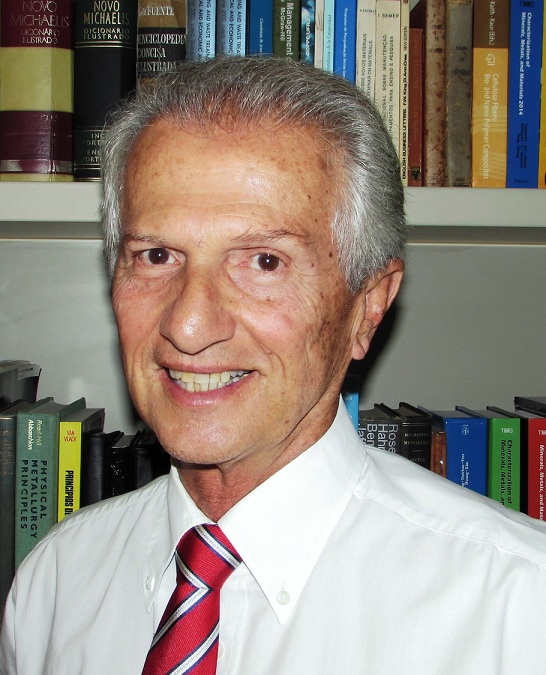 Sergio Neves Monteiro graduated in Metallurgical Engineering from the Federal University of Rio de Janeiro (UFRJ) in 1966. Soon after graduation, he went to the United States to continue his education at the University of Florida (UF), invited by a professor from that university. At UF he developed work on deformation of materials and obtained master’s (1968) and doctorate (1972) degrees, both in Materials Science and Engineering. In 1976 he held a postdoctoral fellowship in Germany, at the University of Stuttgart.
Between his masters and doctorate, he returned in 1968 to UFRJ as a professor and became coordinator of the Metallurgical Engineering course, as well as he participated in the creation of the Metallurgical and Materials Engineering Program in the Institute Alberto Luiz Coimbra for Graduate Studies and Research in Engineering (COPPE). He was full professor of the Metallurgical Engineering department at UFRJ and COPPE until he retired from his post in the university in 1993. Then he started working in the Darcy Ribeiro State University of the North of Rio de Janeiro (UENF), where he took part in the implementation of the university and created the Advanced Materials Laboratory. He was full professor at UENF until 2012. Since 2012, he is a collaborating professor of the Military Institute of Engineering (IME), also in Brazil.
Throughout his career, he held various management positions at UFRJ, UENF, the research foundation of the State of Rio de Janeiro (FAPERJ), the Brazilian Ministry of Education (MEC), the Department of Science and Technology of the State of Rio de Janeiro and the Brazilian Association of Metallurgy and Materials (ABM), among other institutions.
He is holder of a fellowship 1A from the Brazilian national research foundation (CNPq) for scientific productivity. In 47 years of academic life, he advised about 80 masters and doctoral dissertations and has published over 500 articles in national and international journals, as well as 58 book chapters.
He received awards and distinctions from ABM, FAPERJ and Institute of Superhard Materials (Ukraine), among others. He is a fellow of the American Society for Metals.
Here follows an interview with the researcher.
SBPMat Newsletter: – So what led you to become a researcher and work in the Materials area?
Sergio Neves Monteiro: – Since I was a child I have been interested in nature, like animals, rocks, stars, earthquakes, volcanoes and all that surrounds us. So when I was admitted into the School of Engineering at UFRJ, the area I was immediately interested in was Metallurgy and Materials. In my third year at the university, as monitor of professor Hervasio de Carvalho (then president of the National Nuclear Energy Commission, CNEN) I came into contact with research and was motivated to take courses at COPPE, which had recently been implemented at the UFRJ Chemistry School in Praia Vermelha. Invited by Professor Robert Reed-Hill, one of the professors of the course, I traveled to the University of Florida shortly after the completion of my undergraduate course to pursue masters studies, and thus, beginning my career as a researcher.
SBPMat Newsletter: – What, in your consideration, are your main contributions to the Materials area?
Sergio Neves Monteiro: – As a professor at UFRJ, I implemented in 1968, along with professors Walter Mannheimer and Ubirajara Cabral, the Metallurgical and Materials Engineering Program in COPPE. I was part of the education of the first masters and doctors in the area and participated in the organization of the 1st CIBECIMat, coordinated by professor Waldimir Longo from IME. I was Assistant Dean for Graduate Studies and Research at UFRJ, Secretary of Higher Education in MEC in Brasilia, Assistant Secretary of Science and Technology of the State of Rio de Janeiro and President of the Board of FAPERJ. In research, I have been actively and innovatively contributing with the following topics:
· Dynamic aging of metals;
· Properties of composites reinforced with natural fibers;
· Ballistic protection mechanisms associated with new materials;
· Characterization of conventional ceramic with incorporation of industrial waste;
· Processing techniques of diamonds and other metals/superhard alloys.
Details of my accomplishments are available in my curriculum in the Lattes Platform.
SBPMat Newsletter: – Leave a message for our readers who are starting their careers as scientists.
Sergio Monteiro Neves: – I congratulate the young Brazilian scientists for the path they have chosen. I remember that much more than a career with stability and adequate remuneration in teaching and research institutions, being a researcher can bring great personal satisfaction and the certainty of contributing directly to the country’s development. The publication of articles in international journals of high impact is a tremendous achievement with recognition by the community. Research has been one of the main tools for technological advances and quality of life in developed countries.
Postdoctoral Fellowship in Energy Science, Nanotechnology, Materials in the USA (Deadline: 30 Oct 2015).
The Consortium for Innovation on Nanotechology, Energy and Materials (CINEMA) aims to foster collaboration between Brazil and the United States in renewable energy and nanotechnology. Over 50 professors and researchers are looking to mentor and host Brazilian postdocs at US institutions.
A competitive stipend starting at US$ 44,310 will be offered to selected candidates for 1-2 years through Brazil’s Science without Borders program and the State Funding Agencies.
The CINEMA program is administered by the Renewable and Sustainable Energy Institute (RASEI), a joint institute between the National Renewable Energy Laboratory (NREL) and the University of Colorado Boulder. Sponsors include MCTI, CNPq, CNPEM, and CONFAP.
Opportunities for fellowships exist at NREL, MIT, Stanford, the University of Colorado Boulder, Colorado School of Mines, and Colorado State University.
Check the website for details including research areas and how to apply: http://www.colorado.edu/
The next deadline is October 30, 2015 and occurs twice-yearly (February and October).
Memorial Lecture “Joaquim da Costa Ribeiro” for Prof. Eloisa Biasotto Mano.
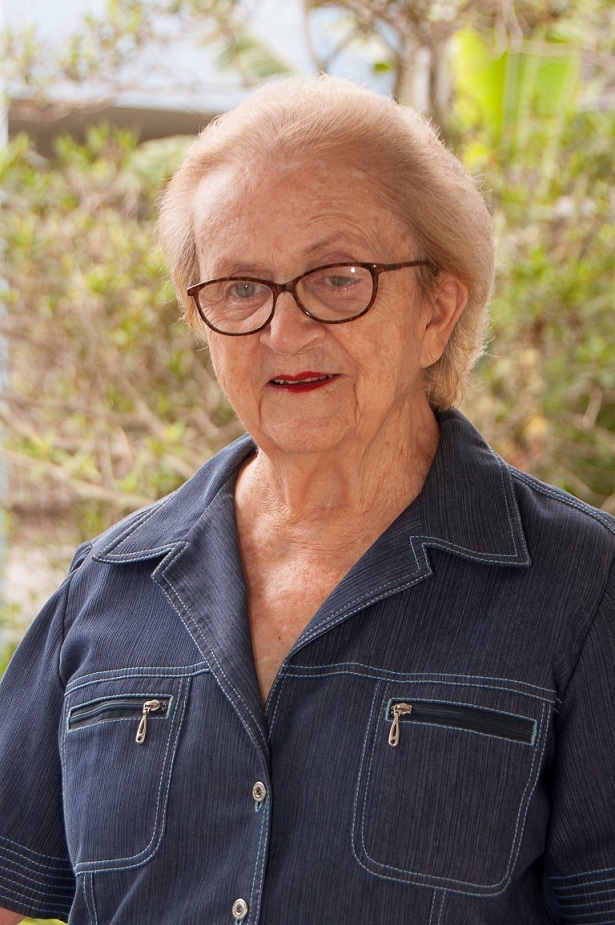 Since 2011, every year, SBPMat (the Brazilian Materials Research Society) has been granting awards to researchers with outstanding work in the field of Materials. Such researchers have the opportunity to make a lecture during the SBPMat annual meeting. The name of the award is Memorial Lecture “Joaquim da Costa Ribeiro”, in honor of Prof. Costa Ribeiro, a pioneer in Materials experimental research in Brazil. In 2015, the SBPMat award will be delivered to Eloisa Biasotto Mano, professor emeritus of the Federal University of Rio de Janeiro (UFRJ), during the opening of the XIV SBPMat Meeting, on September 27 at 19 pm in the SulAmérica Convention Center (Rio de Janeiro). During such event, in addition to receiving the award, Professor Biasotto Mano will speak of the importance of macromolecular materials.
Eloisa Biasotto Mano was born on October 24, 1924 in Rio de Janeiro. By 13 years of age, she did not know what science was, neither did she know what a scientist’s work was about, as these subjects were little present and were inaccessible to the public in Brazil at that time, when there was not even television in the country. However, there were books, and Eloisa had access to many of them in the printing house where her uncle worked as an editor. The girl, who was very serious and responsible, had been assigned to review the proofs of works translated from French. And behold, Eloisa had to read “Madame Curie”, the biography of that scientist woman, born in Poland, who had won two Nobel Prizes, and who had died a few years ago. “I found it great for someone to be so interested in something and have the life she’d had,” recalls Eloisa in an interview in the documentary “Eloisa Mano”. This is how Eloisa discovered the word “chemistry” and began to take an interest in this field of knowledge.
At 20 years of age, Eloisa Mano was admitted into the National School of Chemistry of the University of Brazil (UB), currently UFRJ, to carry out her studies. This occurred in the 1940’s, when less than 40% of women (and less than 50% of men) were literate in the country. Higher education was just beginning; institutions could be counted with the hands´fingers. But Eloisa graduated in Industrial Chemistry in 1947. In 1955 she also obtained the degree of the newly established course of Chemical Engineering. In 1949, she specialized in rubber technology at the National Institute of Technology, also in Rio de Janeiro, one of the few institutions, which, at the time, had infrastructure for experimental research. Given her good performance, she was invited to remain in the institution as a technology chemist, which allowed her to acquire experience in polymer technology.
At that point, Eloisa had higher education degrees, but she felt she could learn more. She thought that there should be a good option abroad and that she could somehow arrange her means to travel, since she could not afford the expenses herself. She then went to the US Embassy and was given great news: there was a scholarship for someone with her profile. Thus, between 1956 and 1957, she was able to study polymer science at the University of Illinois, USA, under the advisory of Professor Carl Shipp Marvel – considered a great scientist and a pioneer in the field of organic chemistry/polymers.
After her experience abroad, Eloisa returned to the National School of Chemistry at UB and worked in Industrial Microbiology for 5 years. In that period, she learned a lot with her mentor, Professor Raymundo Augusto de Castro Moniz de Aragão. Aragão was one of the instigators of the creation of a UB Chemistry Institute, dedicated to research and graduate studies, which happened in 1959. Later, Professor Aragão became the dean of the university and minister of Education and Culture of Brazil.
In 1960, Eloisa Mano obtained her PhD degree from UB with a dissertation in organic chemistry. In 1962, she was admitted into the Chemistry Institute of the UB after a highly competitive selection process, and obtained the chair of organic chemistry. That same year, the Chemistry Institute became one of the first institutions in the country to offer graduate courses and began accepting applications for Masters studies in organic chemistry and biochemistry.
In 1964, Eloisa left Brazil for her second training in polymer science, this time at the University of Birmingham (England), with Professor J.C. Bevington. The following year, Eloisa came back to Brazil and to the university, whose name had changed in 1965 to UFRJ, as it is currently. In 1968, Prof. Eloisa created the first research group in polymers in Brazil, initially composed of 9 master students advised by her, who worked on the UFRJ campus at Praia Vermelha. The Polymer Group gained a good reputation constantly attracting new members, but the physical infrastructure did not grow along with the group.
In 1972, the group managed to obtain financing from government agencies for the construction of a new building at the UFRJ campus at Fundão Island. The group then was named “Macromolecular Center”. Eloisa personally took care of the building’s project, and continued taking great care of her workplace after the building was constructed, in 1978.
In 1976, the center was transformed into the Institute of Macromolecules (IMA), and professor Eloisa became its first director, a position she held until her mandatory retirement in 1994. That year, IMA was renamed to Professor Eloisa Mano Institute of Macromolecules. In 1995 Eloisa was named UFRJ professor emeritus.
Along with her work at IMA, professor Eloisa engaged in international activities that contributed to internationalizing the IMA, generating opportunities abroad for students of the institute. Besides being part of the editorial board of several national and international journals in the field of polymers, Eloisa was a visiting researcher/ professor at universities and research institutes from the Netherlands, Norway and Spain (1972), Germany (1976), Mexico and the United States (1977), Argentina (1978), Japan (1979), Chile (1983), France (1989), among others.
In over half a century dedicated to research, Eloisa Mano advised about 50 masters and doctorate theses, and published 17 books, 4 book chapters and over 200 papers in national and international scientific journals. In these publications, she collaborated with about 250 co-authors.
Her performance was recognized through awards and distinctions by many different entities such as the American Chemical Society (ACS), Society of Plastics Engineers (SPE), Society of Polymer Science, Brazilian Chemical Society (SBQ), Brazilian Association of Chemistry (ABQ), Brazilian Association of Polymers (ABPol), Regional Chemistry Council, Rio de Janeiro Government, Presidency of Brazil and industry federations of Rio de Janeiro.