Bernhard Gross Award
(Established by B-MRS in honor of Bernhard Gross, a pioneer of Brazilian materials research. It distinguishes the best oral and poster contributions presented by students in each symposium)
Symposium A – Poster. Ezequiel Lorenzett. Natural latex and graphite nanocomposites for low-cost flexoelectric sensor and energy harvesting devices.
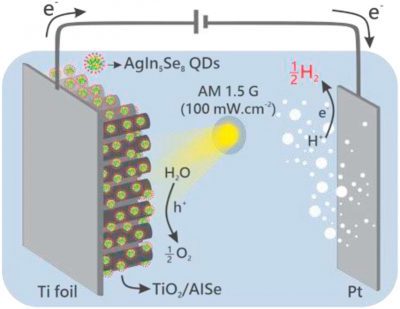
Symposium A – Oral. Lucas Leão Nascimento. Development of Bi2WO6 photoanodes for selective glycerol photoelectroconversion to formic acid.
Symposium D – Poster. Raul Back Campanelli. Superconductivity in Bulk Silicon Crystals.
Symposium D – Oral. Davi Araujo Dalbuquerque Chaves. Influence of heat treatments on microstructural and superconducting properties of YBCO nanowires prepared by Solution Blow Spinning.
Symposium E – Poster. Leonardo Henrique Comini Francisco. Near-infrared emitting Cr3+-doped mixed oxide luminescent materials for optical imaging.
Symposium E – Oral. Antonio Valerio Longo. ZnS:Mn QD-based electroemissive layer for QD-ACTFEL light display.
Symposium F – Poster. Ruan Lucas Sousa Lima. Development of the Stokes spectropolarimetry to investigate emission of conjugated molecules.
Symposium F – Oral. Lucas Scalon. Assessing the donor-acceptor nature and the electrochemical stability of a fluorene-diketopyrrolopyrrole-thiophene based copolymer.
Symposium G – Poster. Victor Buratto Tinti. Giant electrostriction in ceria and the effects of alkaline earth dopants.
Symposium G – Oral. Camila Alves Ribeiro. Cold sintering towards the sustainable manufacturing of barium strontium titanate ceramics.
Symposium H – Oral. Sthefany Zaida Silva do Amparo. Microwave-assisted synthesis of reinforced polyacrylamide preformed particle gels for enhanced oil recovery.
Symposium I – Poster. Camila Raiane Ferreira. PMMA/Fe-Laponite nanocomposites thermal stability: experimental evidence of the diffusion barrier and radical trapping effect.
Symposium I – Oral. Marylyn Setsuko Arai. Development of “turn-on” luminescent sensors based on upconversion nanoparticles.
Symposium K – Oral. Nataly Herrera Reinoza. Atomically precise bottom-up synthesis of h-BNC: graphene doped with h-BN nanoclusters.
Symposium L – Oral. Julia Delatorre Bronzato. Virus Inactivation and Degradation of an Emergent Pollutant by Chiromagnetic Cobalt Oxide Quantum Dots.
Symposium M – Oral. Rapahel F. Moral. Influence of the Vibrational Modes from the Organic Moieties in 2D Lead Halides on Excitonic Recombination and Phase Transition.
Symposium N – Poster. Guilherme B. Strapasson. Microwave assisted green synthesis of silver nanoparticles and its application in photocatalytic hydrogen generation.
Symposium N – Oral. Mariana Monteiro de Lima Forini. Development of lipid nanocarriers labeled with gold nanoparticles and their fate in aquatic plants.
Symposium O – Poster. Bruno Ferrari. Microstructure of Inconel 718 parts produced by casting and additive manufacturing: a comparison.
Symposium O – Oral. Eloisa Pereira Cardozo. Impact of multiple thermal cycles on Nb-Si multilayers.
Symposium P – Poster. Pedro Henrique Fernandes Oliveira. In-situ synchrotron X-ray evaluation on the evolution of dislocation and stacking-fault densities for a Cu-0.7Cr-0.07Zr alloy during cryogenic tensile test.
Symposium P – Oral. Daniel da Silva Costa. In situ study of the formation of NiSi2 nanoplates embedded in a Si(001) wafer.
Symposium Q – Poster. Jailton Romão Viana. A DFT study of the coordination complex of Cu(II) with L-threonine ligand.
Symposium Q – Oral. Julia Aznar. Twist-to-writhe conversion in diamond nanowires: a computational study.
Symposium R – Poster. Giovana Collombaro Cardoso. Development and Microstructural Analysis of novel As-Cast Ti-Mo-Nb Alloys for Biomedical Applications.
Symposium R – Oral. Igor Lebedenco Kitagawa. Titanium-Based Alloy Surface Modification with TiO2 and Poly(Sodium 4-Styrenesulfonate) Multilayers for Dental Implant.
Symposium T – Poster. Lais Pereira Buranello. Characterization of the corona protein formation inthree different manganese ferrite nanoparticles coatings in vitro and its impacts on the circulation time evaluated by AC Biosusceptometry in vivo.
Symposium T – Oral. André Luís Lira. Effects of ultrasmall nanoparticles on blood clotting enzymes.
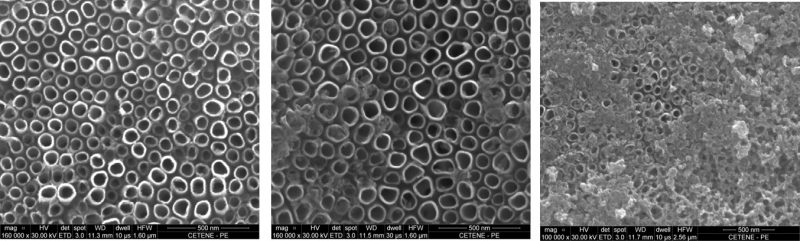
Symposium U – Poster. Gabriel Yuji Hata. Biosilica from diatom microalgae: structural, morphological and photoelectrochemical characterization.
Symposium U – Oral. Oceane Senepart. Axonal growth stimulated by surface modification using physical and chemical processes.
Symposium UC – Oral. Rafael Taveira Andrade. Development and fabrication of non-disposable Personal Protective Equipment and a decontamination device based on UV-C radiation by Additive Manufacturing.
Symposium V – Poster. Anna Fortunato. Synthesis of metal-triggered hydrogels and their applications in water treatment and food spoilage detection.
Symposium V – Oral. Roger Borges. Colloidal hydrogel-based drug delivery systems overcome the limitation of combining bisphosphonates with bioactive glasses in bone cancer treatment.
Symposium X – Poster. Fabio Caixeta Nunes. Effect of strontium ions on the formation of calcium phosphates on the surface of Al2O3/ZrO2 nanocomposite.
Symposium X – Oral. Marcos Antonio Eufrásio Cruz. The role played by matrix vesicles during bone biomineralization: a materials science vision.
ACS Publications Prizes
(Sponsored by journals of ACS Publications, a division of the American Chemical Society. Prizes for the best student contributions of all the event)
ACS Applied Materials & Interfaces family Prize: Symposium A – Poster. Ezequiel Lorenzett. Natural latex and graphite nanocomposites for low-cost flexoelectric sensor and energy harvesting devices.
Accounts of Materials Research Prize: Symposium F – Poster. Ruan Lucas Sousa Lima. Development of the Stokes spectropolarimetry to investigate emission of conjugated molecules.
ACS Omega, ACS Central Science and JACS Au Prize: Symposium O – Poster. Bruno Ferrari. Microstructure of Inconel 718 parts produced by casting and additive manufacturing: a comparison.
Chemistry of Materials and ACS Materials Letters Prize: Symposium R – Poster. Giovana Collombaro Cardoso. Development and Microstructural Analysis of novel As-Cast Ti-Mo-Nb Alloys for Biomedical Applications.
Langmuir Prize: Symposium T – Poster. Lais Pereira Buranello. Characterization of the corona protein formation inthree different manganese ferrite nanoparticles coatings in vitro and its impacts on the circulation time evaluated by AC Biosusceptometry in vivo
ACS Energy Letters and Energy & Fuels Prize: Symposium A – Oral. Lucas Leão Nascimento. Development of Bi2WO6 photoanodes for selective glycerol photoelectroconversion to formic acid.
ACS Materials Au and ACS Nanoscience Au Prize: Symposium F – Oral. Lucas Scalon. Assessing the donor-acceptor nature and the electrochemical stability of a fluorene-diketopyrrolopyrrole-thiophene based copolymer.
ACS Photonics Prize: Symposium N – Oral. Mariana Monteiro de Lima Forini. Development of lipid nanocarriers labeled with gold nanoparticles and their fate in aquatic plants.
ACS Nano and Nano Letters Prize: Symposium O – Oral. Eloisa Pereira Cardozo. Impact of multiple thermal cycles on Nb-Si multilayers.
JACS Prize: Symposium P – Oral. Daniel da Silva Costa. In situ study of the formation of NiSi2 nanoplates embedded in a Si(001) wafer.
RSC Prizes
(Sponsored by journals of the Royal Society of Chemistry. Prizes for the best student contributions of all the event)
Symposium D – Poster. Raul Back Campanelli. Superconductivity in Bulk Silicon Crystals.
Symposium P – Poster. Pedro Henrique Fernandes Oliveira. In-situ synchrotron X-ray evaluation on the evolution of dislocation and stacking-fault densities for a Cu-0.7Cr-0.07Zr alloy during cryogenic tensile test.
Symposium V – Poster. Anna Fortunato. Synthesis of metal-triggered hydrogels and their applications in water treatment and food spoilage detection.
Symposium D – Oral. Davi Araujo Dalbuquerque Chaves. Influence of heat treatments on microstructural and superconducting properties of YBCO nanowires prepared by Solution Blow Spinning.
Symposium R – Oral. Igor Lebedenco Kitagawa. Titanium-Based Alloy Surface Modification with TiO2 and Poly(Sodium 4-Styrenesulfonate) Multilayers for Dental Implant.
Symposium T – Oral. André Luís Lira. Effects of ultrasmall nanoparticles on blood clotting enzymes.

 The call for symposium proposals to compose the XXI B-MRS Meeting is open until December 3rd this year. The event will be held from October 1st to 5th, 2023 in Maceió (Alagoas, Brazil), chaired by Professors Carlos Jacinto da Silva and Mario Roberto Meneghetti, from the Federal University of Alagoas (UFAL).
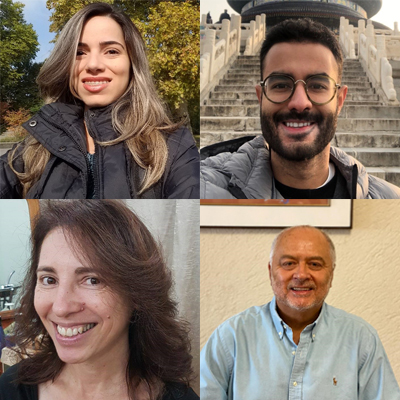
 Two B-MRS members are part of the group of 30 speakers from different countries and sectors (industry, academia, media, museums, art) who will speak at the Opening Ceremony of the International Year of Glass (2022), established by the United Nations (UN).