

Opening ceremony: excitement surrounding the 25th anniversary of B-MRS
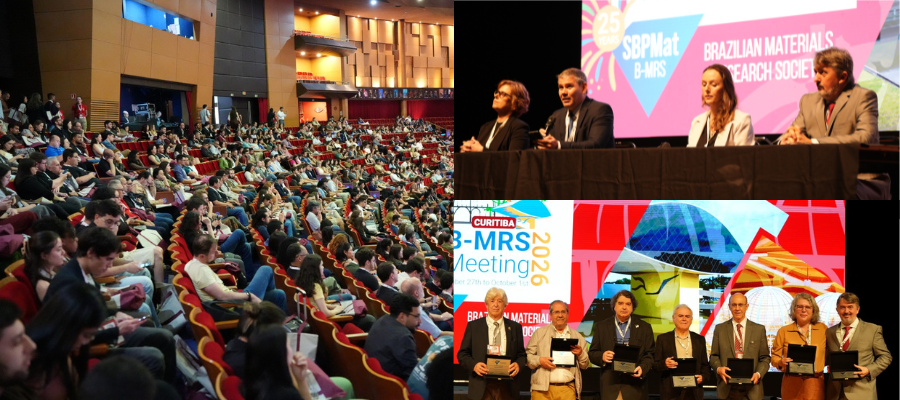
Teatro Positivo, Sunday, September 27, 6:40 PM. More than 1,500 people are seated in the theater—the largest audience ever recorded at an opening ceremony for the B-MRS Meeting.
From the stage, the view is impressive. “This audience is the best gift for B-MRS on its 25th anniversary,” said Professor Gregório Faria (IFSC-USP), who sat at the opening panel table as the event’s general chair. “I feel like a rock star looking out at all these people,” joked Professor Ivan Bechtold (UFSC), President of B-MRS, who was also a member of the panel.
In his opening remarks, the president encouraged participants—especially students—to get involved not only in the event itself but also within the structure of B-MRS. “I attended this event for the first time in 2004, when I was a doctoral student,” Ivan recounted. “Once I became a professor, I began organizing symposia on my own research topics; in 2019, I organized an entire event. And today, I have the honor of serving as the society’s president,” he concluded.
Speaking on behalf of the authorities at UTFPR, Professor Mariana de Souza Sikora noted that the institution is the only one in Brazil officially designated as a technological university. Mariana—who serves as Director of Research within the university’s Office of Research and Graduate Studies and is herself a researcher in the field of materials—shared that UTFPR has been participating in B-MRS events since 2002.
Meanwhile, Professor Paula Cristina Rodrigues (UTFPR), who served as a chair of the event alongside Gregório, expressed particular enthusiasm about hosting the meeting in her hometown. “Curitiba is known for its beautiful parks and green spaces, its cultural diversity, and its tradition of urban planning. It is also a major hub for research and innovation in materials science and technology, which makes it a very special place to host an event like ours,” she added.
Following the remarks from the four members of the panel, Professor Ieda Garcia dos Santos (UFPB), Administrative Director of B-MRS, led the second part of the ceremony. “The Brazilian Materials Research Society turned 25 in June, and we wanted to celebrate this anniversary with the entire community,” she said. “To mark the occasion, we produced a commemorative video about this wonderful journey, based on interviews with the society’s successive presidents, who dedicated so much effort to building this path,” Ieda explained.
In just over seven minutes, the video recounted the origins of B-MRS, the key initiatives undertaken to date, and the growth of the community. Furthermore, the video highlighted the impact that materials science has on the country’s development and on people’s lives, as well as the value of a scientific society that was founded as an interdisciplinary organization with a presence throughout the entire country.
Watch the video celebrating B-MRS 25th anniversary.
Following the video screening, in a highly emotional atmosphere, the past presidents of B-MRS took the stage to be honored. Professors Guillermo Solórzano (PUC-Rio and Harvard University), Elson Longo (UFSCar), Fernando Lázaro Freire Júnior (PUC-Rio), Roberto Mendonça Faria (IFSC-USP), Osvaldo Novais de Oliveira Junior (IFSC-USP), Mônica Alonso Cotta (UNICAMP), and Ivan Helmuth Bechtold (UFSC) received plaques of appreciation amidst a round of applause. Professor José Arana Varela (UNESP)—who passed away in 2026—was represented by Elson Longo.
To conclude this moving session dedicated to the organization’s history, the founding members present in the audience were invited to join the presidents on stage for a photograph.
Short courses: enthusiasm for learning
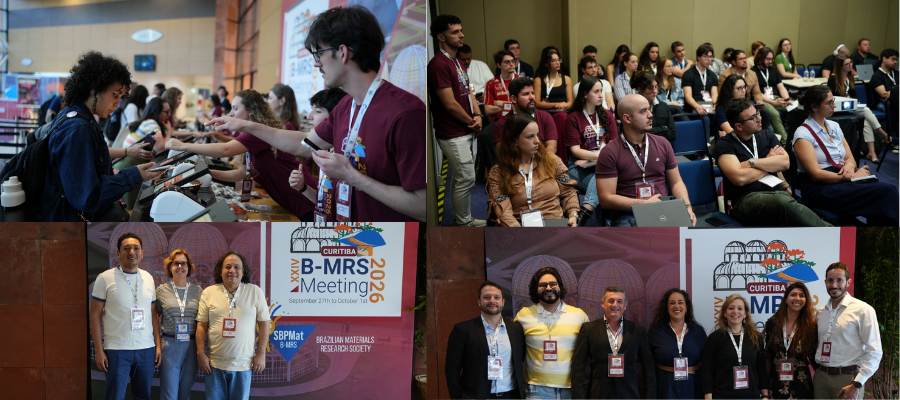
Before the event’s opening ceremony, throughout the morning and afternoon on Sunday, around 400 participants were already moving through the convention center to attend the short courses offered—at no additional cost—to all registered attendees.
This edition featured the highest number of short courses ever offered. There were ten options, prepared and taught by members of the community—experts in the subjects presented—who traveled from various Brazilian states, as well as from Argentina, Portugal, and Uruguay.
“The Young Researchers´School attracted over 60 participants, highlighting a strong interest in developing skills for scientific writing and publishing,” says Professor Valtencir Zucolotto (IFSC-USP), who organized this short course—the first to be offered at B-MRS Meetings, back in 2019.
Lasting between two and six hours, the short courses allowed participants to delve into various techniques for the synthesis, processing, and characterization of materials, among other topics.
“In the course on single-crystal growth and its applications, the students were very actively engaged, asking several interesting questions,” notes Manuel Henrique Lente (Unifesp), the short course organizer. “Beyond imparting technical knowledge, the course also aimed to promote this field of research and development—a sector that has seen a significant decline in our country over the last few years—and to encourage young scientists to pursue it,” he adds.
Thematic symposia: more than 2,200 contributions from the community presented
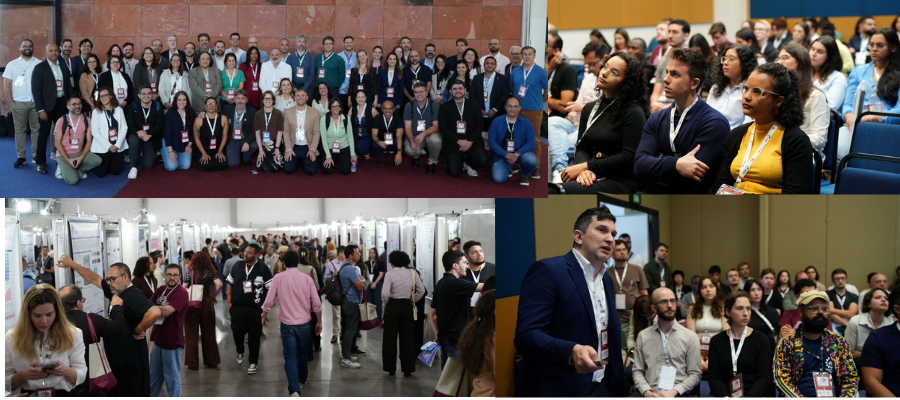
Full rooms and a crowd in the poster area were common scenes at the Cruzeiro do Sul Conecta convention center during the week of the XXIV B-MRS Meeting. In fact, 715 contributions were presented in oral sessions and more than 1,500 in poster sessions.
All this movement took place within the event’s 27 thematic symposiums, which were proposed and organized by around 110 researchers from 14 countries under the coordination of the event chairs, Paula and Gregório.
“Our symposium brought together a large part of the community that works with battery technology in Brazil, even revealing groups whose existence I was unaware of”, says professor Ana Candida Martins Rodrigues (UFSCar), organizer of the symposium M, dedicated to materials for sodium and lithium batteries. “The sessions consistently attracted a good audience; in fact, in one of them, the room was full, with participants having to stand”, he comments.
The set of symposia covered a wide range of materials, from metals and clays to conductive polymers and electronic ceramics, as well as their applications in the sectors of health, energy, agriculture, electronics, photonics, neurosciences and 3D printing, among others.
Within each symposium, participants were able to update themselves on scientific and technological advances in the design, synthesis and characterization of materials, in addition to evaluating their sustainable nature and possible toxicity.
Furthermore, the discussions promoted interactions that are essential in a multidisciplinary area such as Materials Science. “Our symposium attracted many experimental researchers interested in knowing how atomistic simulations can support their work, and their participation sparked stimulating discussions”, says professor Miguel San-Miguel (UNICAMP), organizer of symposium N, dedicated to Computational Surface Science.
With a strong participation of students (almost 60% of participants), the event showed, once again, its importance for the future of research in Materials. “We were particularly pleased with the significant participation of young researchers and students, which highlights the vitality and continuous growth of the community dedicated to high entropy materials”, express Ricardo Floriano (UNICAMP) and Francisco Gil Coury (UFSCAR), organizers of symposium G. “It was inspiring to observe the enthusiasm in the eyes of the undergraduate students as they presented their work during the poster session”, adds Luciana Reyes Pires Kassab (Fatec São Paulo), organizer of symposium D, dedicated to materials photonics.
The presence of women was also particularly large in some symposiums, exceeding the event average, which registered 43.4% of female participants. “Our symposium stood out for its significant participation of women, with 3 out of 4 invited speakers being women, in addition to a ratio of almost 1 to 1 between oral contributions”, says Raphaela de Oliveira (CNPEM), organizer of symposium L, dedicated to clay minerals.
Outreach and interactions with industry: over 60 presentations in the workshops
In addition to the scientific advancements presented within the symposia, more than 60 presentations were delivered as part of two workshops held during the XXIV B-MRS Meeting. This marked the first time the event featured contributions—through both oral and poster sessions—on two topics that cut across the various symposia themes: science outreach and industry-academia interaction.
Regarding science outreach and popularization, initiatives within the event began in 2024 with a panel discussion featuring three external panelists who presented successful projects for disseminating science to society. In 2025, the program continued with a new panel discussion showcasing four initiatives led by members of the community. This year, the workshop included 19 presentations, featuring accounts of various initiatives carried out by community members. Furthermore, in the last two editions of the event, B-MRS has organized a contest of science outreach videos created by participants.
“It is very rewarding to follow the trajectory of these activities within B-MRS,” says Professor Ingrid Weber (UnB), a B-MRS Scientific Director who helped organize all these initiatives. “I hope this agenda is here to stay and that we can continue to grow in the coming years, further cementing science outreach as an increasingly integral part of B-MRS activities,” Ingrid adds.
As for interactions between universities and companies, the history of roundtables and lectures at the B-MRS Meeting goes back even further. However, this year marked the first time that oral and poster presentations were included, with approximately 40 contributions presented.
The workshop brought together researchers and other professionals from startups, large corporations, universities, research institutes, and organizations dedicated to funding and supporting innovation.
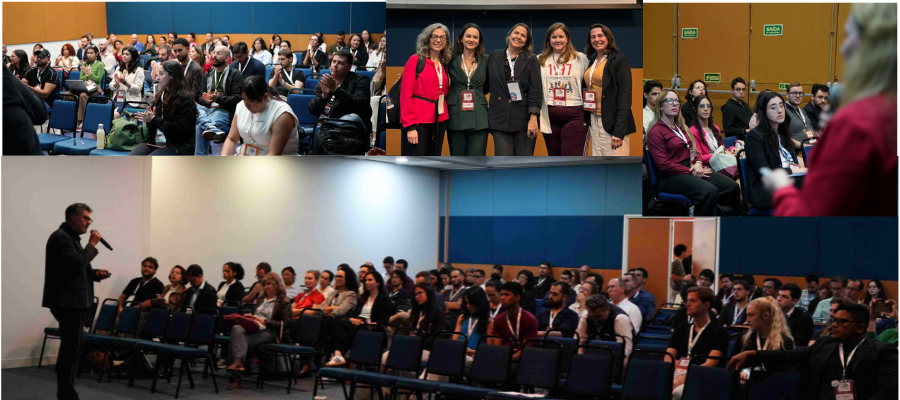
See the organizers’ comments on the symposia, workshops, and short courses.
Science club showcase: another generation of researchers at the event
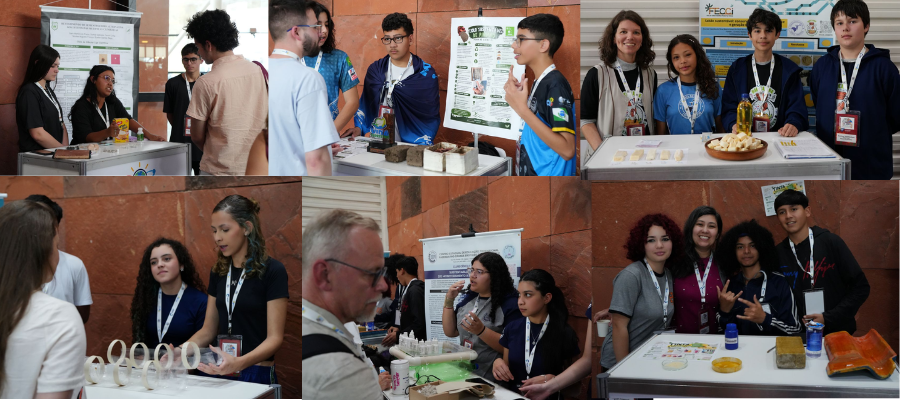
The new addition did not go unnoticed. Across five small booths clustered in the convention center foyer, high school students from state schools in Paraná—accompanied by their teachers—presented work developed through the “Paraná Faz Ciência” (Paraná Does Science) network of clubs on Tuesday and Wednesday afternoons.
This session, dubbed the “Young Scientists Showcase,” was a new feature of the B-MRS Meeting program, enriching the event by bringing in a younger generation with a unique science perspective.
In addition to presenting posters containing all the essential details of their scientific work, the science club groups showcased tangible results from their projects. Visitors to the booths could explore a variety of products—all developed with environmental considerations in mind—such as recycled paper, bricks made from pine nut shells, sustainable soap, natural lipstick, coated seeds, canvas bags, and a soft-drink-style beverage, among others.
“Welcoming students from public school science clubs and witnessing their enthusiasm as they shared their projects with our community was one of the most special moments of the XXIV B-MRS Meeting,” says chair Paula. “For me, this exchange between researchers of different generations highlighted the importance of bringing the scientific community closer to schools, creating opportunities for young people to see themselves as key players in the construction of knowledge, and helping them envision a future in science,” the professor explains.
Special sessions: a different hour within the program
Those who have attended the B-MRS Meeting for a few years know that, on Tuesday afternoon, the thematic symposium schedule is paused for one hour, allowing participants to take advantage of special sessions that cover topics relevant across many different symposia.
In this edition, ten such sessions were offered. Representatives from two publishers of prestigious materials science journals—RSC and ACS—shared tips on scientific publishing. Additionally, experts from five scientific instrumentation companies (Anton Paar, Horiba, JEOL, Tennessine, and Tescan) delivered technical talks on materials characterization techniques.
The program also featured a presentation on the development of “deep tech” ventures, led by Rodney Marcelo do Nascimento—who holds a PhD in Materials Science and Technology and founded a company focused on building businesses based on scientific discoveries. He presented a method for identifying the obstacles that hinder promising technologies from reaching the market.
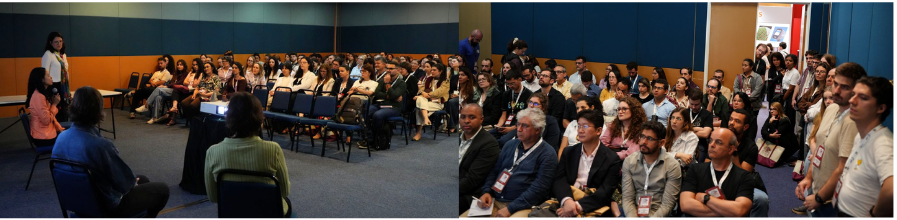
The special sessions also included two panel discussions. The panel on women in science—now in its third edition—brought together three researchers at different stages of their scientific careers: Ieda Garcia dos Santos (B-MRS Director and professor at UFPB), Professor Juliana Zarpellon (UFPR), and postdoctoral researcher Paula Fabíola Pantoja Pinheiro (UFPA). The discussion was moderated by Professor Ana Sofia Clímaco Monteiro D’Oliveira (UFPR), Scientific Director of B-MRS. During the session, the scientists shared the challenges they have faced as women in the field. At the end of the panel, women in the audience participated actively, sharing their own personal accounts of the difficulties they have encountered.
The second roundtable discussion focused on the topic of sustainability. Professors Danilo Manzani (IQSC-USP) and Cássia Maria Lie Ugaya (UTFPR) proposed a broader view of the concept of sustainability in research, taking into account not only the final product of the work but also the very way in which science is conducted. In this context, the panelists discussed ways to incorporate sustainability into scientific culture and practice. The panel was moderated by Professor Rossana Mara da Silva Moreira Thiré (UFRJ), who also serves as Scientific Director of B-MRS.
Plenary sessions: six internationally renowned researchers
Six plenary lectures were delivered throughout the event at Teatro Positivo to audiences of 900 to 1,000 people, bringing together participants from all the thematic symposia. In these sessions, internationally renowned researchers with high-impact work presented challenges and solutions regarding the study of a variety of materials that may become part of our daily lives in the near future.
In the event’s first plenary session, Alberto Salleo—a Professor at Stanford University and Deputy Director for Science and Technology at the SLAC National Accelerator Laboratory (United States)—discussed organic mixed ionic and electronic conductors (OMIECs). These materials offer the advantage of dual conductivity: they transport both ions and electrons (or holes), making them promising for use in devices that connect electronic systems to chemical or biological environments.
Plasmonic nanomaterials—which leverage the interaction between light and metallic nanostructures—were the focus of the lecture by Isabel Pastoriza-Santos, a Professor at the University of Vigo in Spain. She outlined the challenges and advancements in the synthesis of these materials, aiming for precise control over their characteristics so they can be utilized in molecular detection systems.
The lecture by Moyses Araujo, a Professor at Karlstad University (Sweden), showcased the development of a method for discovering organic materials with properties suitable for environmental remediation, as well as for energy generation and storage. Relying on computational tools—including artificial intelligence—this method helps reduce the time and cost required to develop such materials, which can be produced via more sustainable pathways than their inorganic counterparts.
Professor Edgar Dutra Zanotto (UFSCar, Brazil), an internationally recognized authority on the science of glass and glass-ceramics, presented the progress made over the last seven decades in understanding crystallization—a fundamental process involved in both natural phenomena, such as the formation of snow, and engineering applications, including the solidification of metals and the production of glass-ceramics. His plenary talk offered thought-provoking reflections on the scientific method.
Professor Ana Flávia Nogueira (UNICAMP, Brazil) also delivered a plenary lecture as the recipient of the José Arana Varela Award. With this honor, B-MRS recognized her scientific career, which has been marked by high-impact contributions to the development of materials for emerging photovoltaic technologies. In her talk, she discussed advancements in the development of metal-halide perovskites for use in solar cells—achievements rooted in sophisticated studies that have deepened the understanding of how these materials form and maintain their stability. She also presented strategies developed by her research group to facilitate the industrial-scale production of solar cells based on these materials. At the conclusion of her lecture, Ana Flávia was presented with the award plaque.
Read our interview with Professor Ana Flávia.
During the event’s final plenary session, Victorino Franco, a Professor at the University of Seville (Spain), discussed magnetocaloric materials—substances that convert a magnetic response into a temperature change, enabling emerging refrigeration technologies that are potentially more efficient and sustainable. The scientist addressed key challenges and solutions related to the discovery, characterization, and production of these materials.

Closing: science makes for a better world
On Thursday, October 1st, at approximately 12:30 PM, the event’s closing and awards session began at the Teatro Positivo. The ceremony concluded an intensive four-and-a-half-day program, attended by around 2,200 people from 31 countries. The participants represented a wide range of professional backgrounds—from physicists to dentists—and spanned all generations, from high school students to retired researchers.
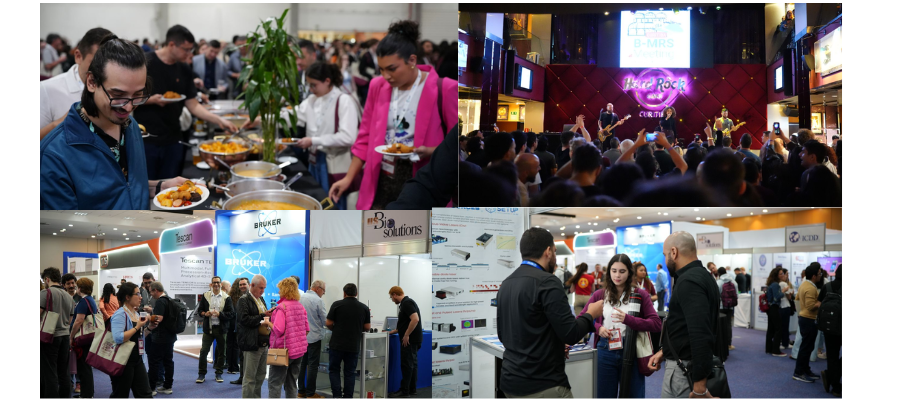
Throughout the event, in addition to engaging with the scientific program, attendees had the opportunity to visit an exhibition featuring companies and startups—which saw a record number of 35 exhibitors—and enjoy a social program that included an opening cocktail reception on Sunday, complete with draft beer and local culinary specialties, as well as a lively party on Tuesday, held exclusively for event participants at the Hard Rock Cafe in Curitiba.
At the beginning of the closing ceremony, chair Gregório expressed his thanks: to the participants; to the organizers of the symposia, workshops, and short courses; to the sponsors and supporters; to the B-MRS Board and staff; to the students who served as volunteers during the event; and to chair Paula, who, according to him, was responsible for everything that went well at the event. “Over these past few days, we’ve seen scientific discussion taking place at the poster sessions, in the meeting rooms, during coffee breaks… My thanks to all of you who made these moments possible,” said Gregório.
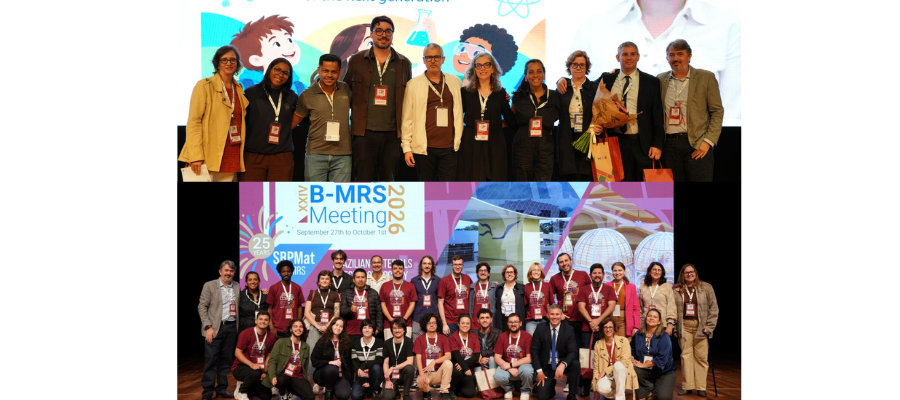
Furthermore, the chair presented the event’s final figures, highlighting a historic record in the number of actual participants, the presence of individuals from nearly every Brazilian state, and the fact that the majority of attendees (approximately 60%) were students. “The primary mission of this event is to contribute to the education and development of students,” the chair stated.
Following this, B-MRS President Ivan congratulated the chairs on the excellent event numbers and expressed his gratitude for the partnership of Administrative Director Ieda, whom he dubbed the “Wonder Woman” of B-MRS. Ivan took the opportunity to point out that gender representation is still lacking at the highest levels of scientific careers. “We men need to help promote equity within our institutions,” he stated.
With palpable emotion, President Ivan made a special remark regarding the exhibition of science clubs from public schools, highlighting the efforts of the teachers who, together with their students, make this project a reality. He shared that when he asked students at the exhibition what motivated them to participate in these clubs, one replied that “science makes the world a better place.” “These teenagers are expressing something very important—something that some people outside of academia, including influential politicians, either do not know or choose to deny,” Ivan said.
In the second part of the ceremony, amidst an atmosphere of joy, director Ieda announced that the next B-MRS Meeting will be held in Fortaleza, the capital of Ceará, from September 12 to 16, 2027, and handed the floor to the event’s chairs.
On stage, Yara Galvão Gobato (from the Department of Physics at UFSCar) and Alejandro Pedro Ayala (from the Department of Physics at UFC) presented striking images of the Ceará Event Center, the city of Fortaleza, and other locations across the state, highlighting aspects of its history, culture, and natural beauty. Furthermore, they introduced the five confirmed international plenary speakers: Amalia Patanè (University of Nottingham), Brendan Kennedy (The University of Sydney), Brian A. Korgel (The University of Texas at Austin), Molly Shoichet (University of Toronto), and Stephanie Reich (Freie Universität Berlin). Following this, the 26th edition of the event was announced. It will take place in the city of Balneário Camboriú, in the state of Santa Catarina, from September 24 to 28, 2028, and will be coordinated by two young professors from UFSC: Juliana Eccher, from the Department of Physics, and Eduard Westphal, from the Department of Chemistry. The announcement was met with great enthusiasm by the audience.
The final part of the ceremony was dedicated to the highly anticipated unveiling of the award winners from the XXIV B-MRS Meeting. First, the recipients of the B-MRS Science Popularization Prize—sponsored this year by the startup Arqueatec—were announced. The competition encouraged event participants to share their materials research through short videos for social media. The submissions were evaluated by the public via B-MRS Instagram account, as well as by a committee of experts in scientific outreach. The creators of the three best videos received certificates and cash prizes.
Next, the winner of the third edition of the Award for Early-Career Women Scientists—sponsored by the journal Electronic Materials (published by MDPI)—was revealed. This award recognizes the best work presented during the symposium oral sessions by a researcher who earned her PhD within the last ten years. The researcher’s overall professional trajectory is also taken into account during the evaluation process.
Subsequently, awards for students were presented. Forty students were invited to the stage to receive certificates for the Bernhard Gross Award, which honors the best work presented by undergraduate, master’s, and doctoral students within each symposium. Among these finalists, six received cash prizes from the American Chemical Society (ACS), and another six received prizes from the Royal Society of Chemistry (RSC), in recognition of having presented the best works across the entire event. Finally, a new award was introduced, aimed at recognizing the best poster and the best oral presentation by undergraduate students. In its inaugural edition, the journal Physica B, published by Elsevier, presented cash prizes to two winners, in addition to an honorable mention.
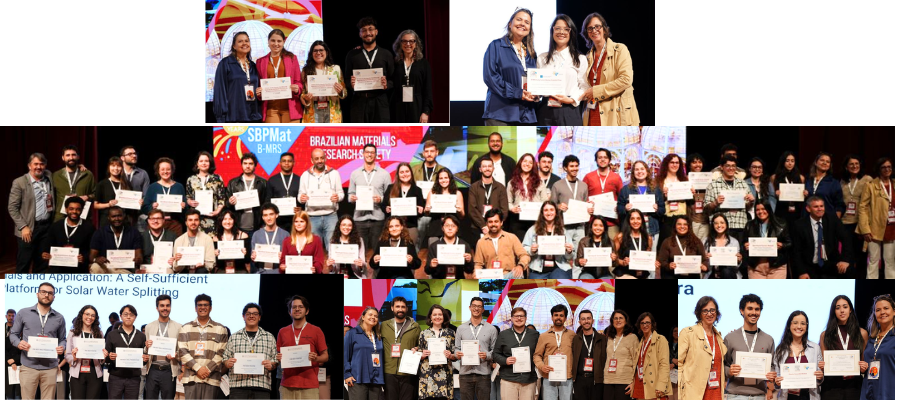
See the list of award winners.
See photos from the closing and awards ceremony.
The event concluded, once again, with dozens of people on stage—award winners, the volunteer team, and research groups—posing for photos.
Outside the theater, Curitiba awaited the attendees and organizers with its beautiful parks, charming historic center, museums, restaurants, public market, and cultural spaces. Throughout the afternoon, photos of participants—some still wearing their event badges—visiting the city’s landmarks appeared on the B-MRS Instagram Stories.
Yes, Curitiba will be missed… But we are already getting ready for Fortaleza!
See the call for symposia for the XXV B-MRS Meeting, which closes on November 23.