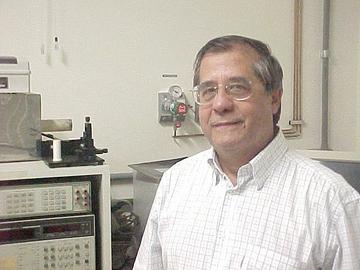
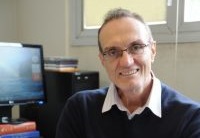
Professor Elson Longo (CDMF-UFSCar), founding member and former president of B-MRS, is the corresponding author of an article that appears in the Top 100 2018 ranking of the journal Scientific Reports in the area of Materials Science. The ranking highlights the most read articles in 2018, among those published that year in the journal of the Nature group. The paper was published on January 30, 2018 and received 1,042 views throughout the year.
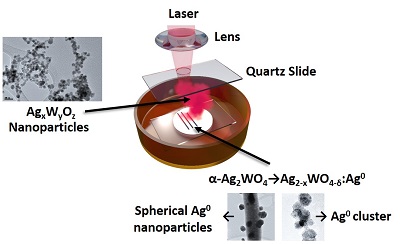
Entitled Towards the scale-up of the formation of nanoparticles on alpha-Ag2WO4 with bactericidal properties by femtosecond laser irradiation, the article is signed by eleven authors, six of them from Brazilian institutions, including the researcher Camila Cristina de Foggi (UNESP), who is also a B-MRS member.
The work proposes a new process to produce bactericidal nanocomposites based on silver nanoparticles and semiconductor materials. The method increases 32 times the bactericidal action of the nanocomposite and, at the same time, generates a new class of spherical nanoparticles.
A specialist in functionalizing carbon nanomaterials, Professor Maurizio Prato has been working on this subject for a quarter of a century. In his research group at the University of Trieste (Italy), he has developed methods to add organic molecules to the surface of fullerenes, carbon nanotubes and graphene. By so doing, Prato contributed to diversify the range of properties and functions of these nanomaterials and, consequently, their applications, especially in the field of nanomedicine.
The work he developed yielded many high-impact publications. According to Google Scholar, the Italian scientist has over 67,700 citations (being more than 3,800 in only one article) and owns a h-index of 119.
From 1983 to 1992, Prato was an Assistant Professor at the University of Padova (Italy). He then joined the University of Trieste as an Associate Professor. He became Full Professor in 2000. Since 2015, he also works at the Center for Cooperative Research in Biomaterials (CICbiomaGUNE), located in San Sebastian (Spain). Professor Prato leads the Carbon Nanotechnology Group in Trieste and the Bionanotechnology Group in San Sebastian. Throughout his career, he spent terms as a visiting researcher/ professor at Yale University and University of California, Santa Barbara (United States), Ecole Normale Superieure (France) and University of Namur (Belgium).
This prominent Italian scientist will be in September in Balneario Camboriu, participating in the XVIII B-MRS Meeting, where he will give a plenary lecture. He will speak about some of his more instigating recent research, such as the use of functionalized carbon nanomaterials for neuron growth and interneuronal communication, and the application of carbon nanotubes to the generation of hydrogen – a source of clean energy.
See our mini interview with Professor Maurizio Prato.
B-MRS Newsletter: – We´d like to know more about your scientific work. Please choose two papers of your own, briefly describe them, and share the references.
Among others, we work on two relevant problems: one is related to the recovery of motility after a spinal cord injury, the second deals with the so-called “artificial photosynthesis”.
Cure of spinal cord injury using carbon nanotubes. In the recent past, our group has demonstrated the incredible potential of carbon nanotubes (CNTs) in the field of artificial neural networks and nerve tissue regeneration. CNTs can provide advanced scaffolds, owing to their known electrifying effect on neurons, possessing the structural and functional fitness to suit the stringent requirements for growing healthy networks of cardiomyocytes and neurons. It is not just a matter of providing an appropriate substrate for cell growth, it has actually emerged that CNTs have an electrifying effect on cells. In other words, specialized cells grown in contact with CNTs appear to be electrically more active. Recently, the ability of CNT substrates to impact on a central nervous system (CNS) tissue has been tested by co-culturing entire slices of spinal cord, used as ex-vivo models. These exciting results show that 3D scaffolds of CNT provide an efficient three-dimensional interface with the biological tissue and its injuries for in vivo insertion and testing.
Ref: S. Usmani, E. R. Aurand, M. Medelin, A. Fabbro, D. Scaini, J. Laishram, F. B. Rosselli, A. Ansuini, D. Zoccolan, M. Scarselli, M. De Crescenzi, S. Bosi, M. Prato, L. Ballerini. 3D meshes of carbon nanotubes guide functional reconnection of segregated spinal explants. Science Advances, 2, e1600087 (2016)
Artificial Photosynthesis: Energy is another field that has enjoyed great benefit from CNTs. These carbon nanostructures have been combined with inorganic catalysts, and especially metal oxides (MOx) and nanoparticles (NP), in a countless number of nanocomposites and hybrids. Energy is an emerging field of research, gaining a strong momentum, in parallel with the general interest in new and efficient processes that promise to set our society free from the unsustainable thirst of fossil fuels. An exciting perspective in energy research is represented by the fascinating possibility to carry out artificial photosynthesis. At the heart of the natural phenomenon lies the energetically very demanding water oxidation process, carried out by a metal-oxygen cluster with four manganese atoms and one calcium atom, Mn4Ca. We used a nanocatalyst based on the combination of a Ru polyoxometalate (Ru4POM) and functionalized CNTs to modify an oxygen evolving anode. More recently, we translated this concept to a self-assembled system, based on perylene bisimide/Ru4POM complex, to fabricate a photoactive framework around the catalytic center to transfer electrons and slow down recombination
Ref: Bonchio, M.; Syrgiannis, Z.; Burian, M.; Marino, N.; Pizzolato, E.; Dirian, K.; Rigodanza, F.; Volpato, G. A.; La Ganga, G.; Demitri, N.; Berardi, S.; Amenitsch, H.; Guldi, D. M.; Caramori, S.; Bignozzi, C. A.; Sartorel, A.; Prato, M., Hierarchical organization of perylene bisimides and polyoxometalates for photo-assisted water oxidation. Nature Chemistry 2019,11 (2), 146-153
B-MRS Newsletter: – Are there any products in the nanomedicine market based on functionalized carbon nanomaterials? If not, what are, in your opinion, the steps that need to be taken to turn the scientific advances in this field into products? In terms of safety, is there a consensus on the possibility of using these nanomaterials without major health risks?
The family of carbon nanomaterials is very broad, the most representative examples being fullerenes, carbon nanotubes and graphene. These materials have opened new scientific horizons, with many exciting discoveries. There are already many commercial items that contain carbon nanostructures, especially graphene. On the other hand, as many other types of nanomaterials, also those based on carbon have raised safety issues. In our group, we have discovered that the functionalization process increases a lot the biocompatibility of these materials, making them more easily dispersible in water and biological media. Therefore, we consider the functionalization process a key step on the way to applications, at least for some of these new materials.
For more information on this speaker and the plenary talk he will deliver at the XVIII B-MRS Meeting, click on the speaker’s photo and the title of the lecture here https://www.sbpmat.org.br/18encontro/#lectures.
Call for applications at the admission process of the master and PhD courses from the Graduate Program in Physics from UFSC – Florianópolis, entrance at the semester 2019/2.
Deadline for applications close at May 24, 2019 until 5:00 pm.
Remember that the applications are online and the candidate no needs to furnish the grade of EUF to fill the application form. It’s enough furnishes the inscription number and the month/year when he/she took the EUF.
Participating of the Admission Process the master candidate must take one of two last editions of EUF (Brazilian Unified Exam of Physics Graduate Courses) and the PhD candidate must take some of last five editions.
Professor Victor C. Pandolfelli (DEMa – UFSCar), a member of B-MRS, is a co-author of the scientific paper chosen for the JECS Best Paper Award, a biennial prize of the Journal of the European Ceramic Society (impact factor 3,794) for the best paper published in this journal.
The article chosen for the period 2017-2018 is “Nacre-like ceramic refractories for high temperature applications” (http://dx.doi.org/10.1016/j.jeurceramsoc.2017.10.042), and is signed by seven authors, four of them Brazilians, including Pandolfelli.
The JECS Best Paper Award will be presented during the 16th Conference and Exhibition of the European Ceramic Society (Turin, Italy, June 16-22, 2019). It will be the first time the prize is given to authors from the American continent.
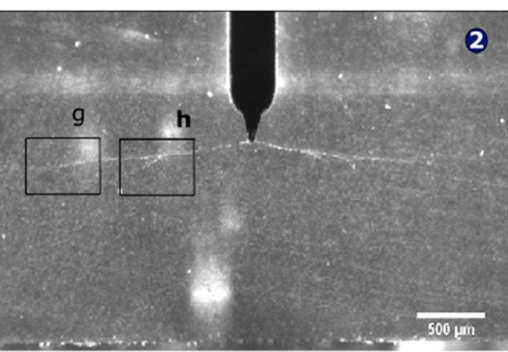
According to Pandolfelli, the work proposes a new advanced ceramic material, of relatively low cost and simple processing, for applications in temperatures of up to 1,400°C. The material exhibits high mechanical strength and high fracture energy. Its microstructure is bioinspired.
Figure shows the propagation of the crack in a plane perpendicular to the mechanical loading, very similar to what would happen when testing, for example, a piece of bamboo.
On behalf of the Organizing Committee, we invite you to participate the XVIII Brazil MRS Conference (XVIII B-MRS), which will be held in the city of Balneário Camboriú-SC, in the period of September 22nd-26th, 2019.
There is a remarkable list of top international plenarists, and 23 symposia in all scientific themes in materials science with high level of confirmed invited speakers. Don’t miss the opportunity of participating this important international scientific event on Materials Science and submit your Abstract for Oral or Poster Presentation. More details: https://www.sbpmat.org.br/18encontro/
The opening ceremony with Memorial Lecture and the welcome cocktail will occur at one of the most beautiful touristic place of Balneário Camboriú, the “Complexo Cristo Luz” https://www.cristoluz.com.br/en/.
Applications for postdoctoral fellowships are invited for conducting fundamental and innovative research at the Center for Research, Technology and Education in Vitreous Materials (CeRTEV). One of the positions is to work at the LEMAF – Laboratory of Spectroscopy of Functional Materials at Physics Institute of USP in São Carlos and the other at the LAVIE – Laboratory of Special Glasses at Chemistry Institute of UNESP, in in Araraquara, Brazil; The period of the fellowship is two years, starting in SeptemberOctober 2019, renewable for two additional years upon mutual consent.
CeRTEV is an 11-year (started in 2013) joint effort of the Federal University at São Carlos (UFSCar), the University of São Paulo (USP) and the São Paulo State University (UNESP), to research the area of Functional Glasses and Glass-Ceramics.
The post-doctoral research will be focused on fundamental investigations in optical and magnetic glasses with views to innovative applications. Position one will focus on the development (design, synthesis and characterization) of optical glasses for photonic and biophotonic applications among which could be sensing (ionizing radiation, temperature, gas, etc), optical amplifying, lasing, etc. Position two will focus on the synthesis and characterization of different families of glasses and glass-ceramics (oxide, phosphate and fluoride) with magnetic properties. This is a very new field of application for glasses and many opportunities and possibilities are available. Previous experiences with magnetic characterization techniques and/or synthesis of magnetic nanoparticles are also desired.
The researcher is expected to conduct the post-doc activities in one of the joint CeRTEV laboratories cited above under supervision ofthe leading Principal Investigator in these labs, but also working in close collaboration with the other CeRTEV researchers and students.
Applicants should have a Ph.D. degree in Physics, Chemistry, Materials Science or Engineering (knowledge in electronics and device building is also welcome), previous experience in glass science, solid state physics or chemistry is advantageous. The language requirements are English, Spanish, French or Portuguese.
The monthly fellowships (non-taxable) include ca. BRL 7,373,10 -plus 15% professional expenses (e.g., for travel). Our post-docs from Canada, Russia, Iran, India, Colombia, Pakistan and Brazil typically spend from BRL2000 to BRL2500/month for comfortable living style. Travel expenses from and to their home countries will also be covered.
Please send your application including CV, list of publications, a 2-page research proposal, and the names and email addresses of two senior references by July 10, 2019 to the following persons: Profa. Andrea de Camargo (email- andreasc@ifsc.usp.br) and Prof. Marcelo Nalin (email – marcelo.nalin@unesp.br)