B-MRS live on materials research and COVID-19.

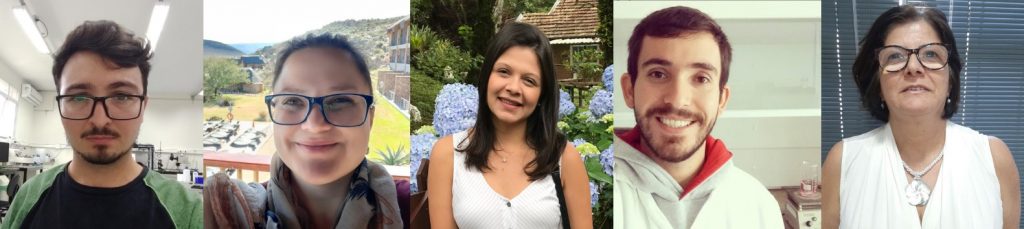
B-MRS live gathered 4 panelists from different points of the country  and around 100 participants.
B-MRS live gathered 4 panelists from different points of the country and around 100 participants.

In several Brazilian universities, multidisciplinary scientific teams are currently working to deliver to society, in the shortest possible time, solutions to help combat COVID-19. Beyond generating publications, and even knowledge, the main objective of these works is to save lives.

The materials research community is actively participating in some of these challenges, which could generate important solutions such as rapid, reliable diagnostic tests and virucidal materials for ventilator valves, as well as personal protective equipment (PPEs) produced in Brazil.

In the early afternoon of May 7, in its first live transmission, B-MRS brought together four researchers who are working on these challenges. These scientists told an audience of about 100 how they organized to respond to this emergency situation, and what may be the social impact of their projects. The reports showed the importance of continuous investment in research and collaboration between individuals and institutions.

The discussion was mediated by Carlos César Bof Bufon, researcher and head of the Devices Division at the Brazilian Nanotechnology Laboratory (LNNano/CNPEM). Bufon is part of the organizing committee of the next annual B-MRS event, the XIX B-MRS Meeting.

The online discussion panel, broadcasted on B-MRS’s Zoom platform and Facebook, was held within the Brazilian Virtual March for Science, an event promoted by Brazilian Society for the Progress of Science (SBPC) with the aim of calling attention to the importance of science.

National tests for COVID-19 diagnosis and detection of antibodies.

The scientists Mariana Roesch Ely (professor at the University of Caxias do Sul, UCS) and Talita Mazon (researcher at CTI Renato Archer) talked about their respective works to develop sensors for COVID-19 diagnostic tests, which they are carrying out with the support of specialists in the Chemistry, Electronics, Informatics, Physics, Materials, Biology and Health areas.

Both sensors are point-of-care instruments. This expression designates miniaturized devices that allow performing tests anywhere, without the need for laboratories or other equipment, and receiving the result within a few minutes.

According to the researchers, the sensors they are developing will be able to detect those infected with COVID-19 within the first day of infection – a characteristic that none of the diagnostic techniques currently used in the country allows. Finally, they said that the new sensors will provide more accurate results (with fewer false negatives or positives) than many of the rapid tests that are currently available on the market.

In both works, the development of the sensors is quite advanced. However, the two scientists concur in stating that 6 months is a reasonable time for a product to be ready, tested with respect to the RT-PCR method (the most reliable at the moment) and viable at an industrial scale.

In her statement, Professor Mariana said that since 2012 she has been working on developing sensors based on magnetoelastic technology, initially aimed at the detection of bacteria and yeasts. When Brazil experienced the outbreak of the Zika virus in 2015, the scientist and her entire research network directed their work towards this virus, gaining experience in detecting this type of organisms, which are much smaller than bacteria. According to Professor Mariana Roesch Ely, the magnetoelastic sensor would be able to detect both the viral particle (from the beginning of the infection) and the antibodies produced by the person who is or has been infected. Thus, it could be an important tool to define measures and protocols in all phases of the pandemic, including the resumption of face-to-face economic activities.

Researcher Talita Mazon said that she has worked five years on integrating ceramic and biological materials to develop point-of-care sensors, which, in her view, are well adapted to the Brazilian reality, given that a large part of the population lives far away from laboratories and hospitals. With the experience accumulated during that time, the scientist was able to finalize in 2019, together with a multidisciplinary team, an electrochemical sensor that detects the Zika virus accurately and within a few minutes. She is currently adapting this platform to detect Sars-COV-2 (the virus that causes the COVID-19 disease).

Thinking about the possibility of producing the sensor without the need for imported inputs, mainly at an industrial scale, the researcher looked for local partners and adapted the sensor to the biological inputs that could be produced in Brazil. In addition, she is establishing a partnership with the public microelectronics company CEITEC, located in the state of Rio Grande do Sul, whose installed capacity would allow it to manufacture the chips for all the sensors needed to test the Brazilian population in the next phases of the pandemic. “We have to join forces to develop solutions that can actually be met by the country’s industrial capacity,” said Professor Talita Mazon.

Virucidal materials for masks and respirators

In the panel, Dachamir Hotza, professor at the Federal University of Santa Catarina (UFSC), told of the individual and group efforts carried out to bring responses to society during the COVID-19 pandemic. In one of these works, the researcher and his collaborators are carrying out the physical and biochemical characterization of masks used in hospitals in order to define precisely when the masks lose their functionality and need to be replaced. In addition, working with other institutions and a regional company he previously collaborated with, the researcher is advancing in the development of fabrics with virucidal activity. One difficulty that has not yet been overcome, said the researcher, was accessing a laboratory that has the appropriate level of biosafety procedures to perform tests with the new coronavirus.

Active materials in the elimination of the Sars-COV-2 virus were also addressed by Professor Petrus Santa Cruz, from the Federal University of Pernambuco (UFPE). The scientist told how he accumulated knowledge generated over decades, available in articles and patents from his research group, for his work related to fighting the pandemic. One example relates to an emergency action aimed at providing the public health system with respirator valves that could be used in patients infected with COVID-19 in a phase prior to intubation, given situations of high occupancy rates of ICU beds and mechanical ventilators. Professor Petrus’ interdisciplinary team, which includes software experts, was able to overcome the challenge of manufacturing these valves on 3D printers with the necessary surface roughness to prevent the bacterial adherence (initially bacteria and, probably, also viruses). In addition, the group is working to give this and other materials an active role in eliminating the virus, using nanotechnology to break through the wall that protects the viral RNA.

Continuous investments for fast results

The four panelists highlighted that the capacity of science to quickly respond to society in times of emergency is the result of many years of efforts and investments. “There is no on/off button for science, because it is made up of the accumulation of knowledge,” said Professor Petrus.

On the other hand, with successive cuts to the CTI budget, many Brazilian researchers have developed strategies to circumvent the difficulties and continue working. It is a characteristic of the Brazilian scientist to adapt to adverse situations, commented Professor Dachamir.

The panelists’ statements showed that a combination of expertise and persistence, on the one hand, and creativity and reinvention, on the other, is part of the method they are applying in their work related to fighting the pandemic.

Another aspect the scientists highlighted as fundamental to the success of emergency projects was the work in multidisciplinary collaborative networks, including with companies that could produce solutions at an industrial scale. “This is the time to intersect everyone’s expertise to give a quick response to society,” said Professor Mariana Roesch Ely.

Founding member of B-MRS among the most cited and downloaded authors in the Journal of Non-Crystalline Solids.

Prof Edgar Zanotto
Prof Edgar Zanotto

Professor Edgar D. Zanotto (DEMa – UFSCar) is highlighted in the report of the most downloaded and most cited articles in 2019 from the Journal of Non-Crystalline Solids (JNCS). The founding member of B-MRS is co-author of 3 of the 10 most downloaded articles in 2019, among more than 27,000 papers in the journal. In addition, 2 articles signed by Zanotto are among the 5 most cited articles in 2019.

Founded in 1968, JNCS is a prestigious Elsevier journal in the field of vitreous materials science.

More information: http://www.ppgcem.ufscar.br/pt-br/artigos-de-professores-e-alunos-do-ppgcem-em-destaque-no-journal-of-non-crystalline-solids

B-MRS Newsletter. Year 7, issue 4.


logo header 400

Newsletter of the
Brazilian Materials
Research Society

Year 7, issue 4. May 8, 2020.

B-MRS News

– B-MRS Meeting. B-MRS and IUMRS announce a new schedule and the confirmed plenary speakers for the joint event, which, due to the COVID-19 pandemic, was postponed to 2021. Learn more.

– Letter to the Minister of Health. B-MRS and more than 60 scientific entities have endorsed the letter sent to Minister Nelson Teich on April 29 requesting an action plan to combat the COVID-19 pandemic “based on data collected by science and mirrored in attitudes that were successfully implemented by governments in other countries.” Know more.

– Letter to the Minister of STI. B-MRS subscribed, along with about 70 scientific entities, a letter addressed to Minister Marcos Pontes, sent on April 29. The document highlights the importance of basic science and asks for the creation of a work group with representatives of the scientific community to define strategies related to fundamental research. Know more.

– Pact for life and for Brazil. B-MRS and more than 100 entities have endorsed the document, which was forwarded to the presidents of the three branches of Brazilian government on World Health Day, on April 7. The document asks for the coalescing of all of society, solidarity, discipline and ethical and transparent government code, based on the guidelines of science and public health organizations in facing the pandemic. Learn more.

Featured Paper

A team of researchers in the dental and materials fields has developed a coating for titanium, a material widely used in dental implants. The highly rough superhydrophobic coating significantly reduces the accumulation of bacteria on its surface. The material can be a promising strategy to prevent infections around dental implants. The work was recently reported on ACS Applied Materials and Interfaces. Learn more.

imagem news

Featured Scientist

We interviewed Edson Roberto Leite, professor at UFSCar and scientific director at LNNano-CNPEM. B-MRS awarded Professor Leite the José Arana Varela Award in its first edition. An outstanding scientist in the field of materials, with internationally recognized contributions in the study of the growth of nanocrystals, in the interview Edson Leite talks about his favorite scientific contributions and his taste for science, and shares memories of José Arana Varela, whom he considers his scientific father. See here.

leite news

logo 560

XIX B-MRS Meeting + IUMRS ICEM
(Foz do Iguaçu, Brazil,
August 29 – September 2, 2021)

Postponed due to the Covid-19 pandemic.

New date: August 29 – September 2, 2021.

Same venue: Rafain Convention Center – Foz do Iguaçu (Iguassu Falls), Brazil.

Symposium proposals submission: May 4 – November 2, 2020.

Abstract submission: February 1 – April 11, 2021.

Plenary sessions: 7 plenary speakers and 1 memorial lecture confirmed.

Event website with new schedule: www.sbpmat.org.br/19encontro/

More information about the call for symposia: https://www.sbpmat.org.br/en/sbpmatb-mrs-e-iumrs-anunciam-novo-cronograma-e-plenaristas-do-evento-conjunto-em-2021/

Reading Tips

– Scientists prepare ultra-thin flexible film of normally brittle oxide and develop a technique to manipulate, stretch and keep it stretched, thereby controlling its electrical conductivity (Science paper). Know more.

– Combination of polymers with a wide range of ionic liquids generates new materials with adjustable properties for use in sensors, environmental remediation, batteries, biomedicine … Materials can be compatible with 3D printing (Advanced Functional Materials). Know more.

– With sophisticated nanoengineering, scientists are able to produce a porous nanometric structure that was theoretically predicted and confirm that this lightweight nanostructure is stronger than diamond (Nature Communications). Know more.

– Scientists manage to find in 8 weeks the best materials for a new battery among 3 million candidates, thanks to a method for training neural networks (ACS Central Science). Know more.

Opportunities

– Call for proposals for transnational and high risk research or innovation in materials, from Fapesp + M-ERA consortium. NET. Know more.

– Researcher position at CNPEM in the area of bioelectronics based on graphene and 2D materials (LNNano). Know more.

– Researcher position at CNPEM in computational methods applied to enzymes (LNNano and LNBR). Know more.

Events

XLI Congresso Brasileiro de Aplicações de Vácuo na Indústria e na Ciência. Foz do Iguaçu, PR (Brazil). October 5 – 7, 2020. Site.

5th International Conference of Surfaces, Coatings and NanoStructured Materials – Americas (NANOSMAT-Americas). Foz do Iguaçu, PR (Brazil). October 7 – 10, 2020. Site.

7th Meeting on Self Assembly Structures in Solution and at Interfaces. Bento Gonçalves, RS (Brazil). November 4 – 6, 2020. Site.

– Pan American Ceramics Congress and Ferroelectrics Meeting of Americas (PACC-FMAs 2020). Panama (Panama). November 15 – 19, 2020. Site.

4th Workshop on Coated Tools & Multifunctional Thin Films. Campinas, SP (Brazil). November 16 – 19, 2020. Site.

XIX B-MRS Meeting + IUMRS ICEM (International Conference on Electronic Materials). Foz do Iguaçu, PR (Brazil). August 29 – September 2, 2021. Site.

Follow us on social media

You can suggest news, opportunities, events or reading tips in the materials field to be covered by B-MRS Newsletter. Write to comunicacao@sbpmat.org.br.

Unsubscribe if you don´t want to receive our newsletters anymore.


B-MRS and IUMRS announce new schedule and plenary sessions for the joint event to be held in 2021.

logo2021b_400pxThe Brazilian Materials Research Society (B-MRS) and the International Union of Materials Research Societies (IUMRS) announce the new schedule and confirm the plenary speakers of the joint event XIX B-MRS Meeting + IUMRS ICEM. Due to the Covid-19 pandemic, the joint event, which would be held this year, was postponed to be held from August 29 to September 2, 2021. The venue will be maintained: the Rafain Palace Hotel and Conventions, located in Foz do Iguaçu (PR, Brazil).

The new call for thematic symposium proposals starts on May 4 and ends on November 2, 2020. The symposium organizers who submitted proposals in 2019 will be able to again submit them in this new call. In addition, the system will be open to receive new proposals, which should be prepared by groups of researchers, preferably composed of international researchers, on topics related to any type of materials, from synthesis to applications (including electronic materials, which are the focus of IUMRS ICEM).

To submit a symposium proposal, simply complete the online form on the event website. The symposium proposals will be evaluated by the event committee, and, the list of approved symposia will be released between the end of 2020 and the beginning of 2021. The submission of abstracts for presentation within the symposia will remain open from February 1st to April 11th, 2021. The symposium organizers will be responsible for the evaluation of the submitted abstracts and for the symposium program.

The symposia will be the main axis of the event along with the plenary lectures, which will feature internationally renowned scientists, such as Alex Zunger (University of Colorado Boulder, USA), Edson Leite (LNNano, Brazil), Hideo Hosono (TokyoInstitute of Technology, Japan), John Rogers (Northwestern University, USA), Luisa Torsi (Università degli Studi di Bari “A. Moro”, Italy), Tao Deng (Shanghai Jiaotong University, China) and Thuc-Quyen Nguyen (University of California Santa Barbara, USA). The traditional memorial lecture of the B-MRS Meeting will be given by professor Cid Bartolomeu de Araújo (UFPE, Brazil). All speakers have confirmed their presence at the event.

The organizing committee of XIX B-MRS Meeting + IUMRS – ICEM 2021 is formed by professor Gustavo Martini Dalpian (UFABC) as conference chair, Carlos Cesar Bof Bufon (LNNANO) as program chair, and Flavio Leandro de Souza (UFABC) in the general secretary. In the international committee, the event has scientists from America, Asia, Europe and Oceania.

Event website: https://www.B-MRS .org.br/19encontro/

Featured scientist: Edson Roberto Leite.

Prof Edson Roberto Leite

Edson Roberto Leite memories related to science are all very pleasant: the book about rockets in his childhood in the interior of São Paulo, the opportunity to use an exceptional microscope during the sabbatical period in the United States, the discovery of a mechanism for the growth of nanocrystals at the Brazilian National Synchrotron Light Laboratory…

Some of these wonderful memories include the many occasions experienced alongside his tutor and scientific father, Professor José Arana Varela, a prominent Brazilian materials scientist who died in 2016. Arana Varela was honored by B-MRS with the creation, in 2019, of an award that bears his name, and which annually distinguishes a prominent researcher from Brazil, who gives a plenary lecture at the Society’s annual event. In its first edition, the award was befittingly granted to Edson Roberto Leite, professor at the Federal University of São Carlos (UFSCar) and scientific director of the Brazilian National Nanotechnology Laboratory (LNNano-CNPEM). Leite is also editor for Latin America of the Journal of Nanoparticle Research (Springer).

Edson Roberto Leite received his first degree in Materials Engineering from UFSCar in 1988. In doubt between pursuing a career in industry or academia, he initially tried to reconcile both. After graduating, he worked in the research and development area at 3M, while doing his master’s degree and starting his doctorate, both in Materials Science and Engineering at UFSCar. In 1992, he left the company in order to dedicate his time to the doctorate, a decision that he recalls did not please his father-in-law, who was concerned with the livelihood of the family that by now included two children. However, over the years, the results of this decision have been very positive. In 1994, shortly after defending his doctorate, Leite became a professor in the Chemistry Department at UFSCar and started a career as a researcher in materials, which would not only be fruitful, but also enjoyable.

Co-author of more than 400 scientific articles published with more than 19 thousand citations, today Leite has an h index of 72 (Google Scholar). The scientist is also the editor of three books related to materials for energy and co-author of a book on the process of nucleation and growth of nanocrystals. Leite received several awards, including the Scopus Prize from Elsevier/CAPES (2006), for the excellence of his scientific production as a whole, and the John Simon Guggenheim Memorial Foundation Fellowship (2009), awarded to scientists with exceptional research skills. In 2012, Edson Leite was elected member of the World Academy of Ceramics and the Academy of Sciences of the State of São Paulo. In 2014, he was cochair of the Spring Meeting of Materials Research Society, held in San Frascisco (USA). In 2019 he was elected full member of the Brazilian Academy of Sciences (ABC).

Read our interview and learn more about this scientist, his main contributions and his memories of Professor Arana Varela.

B-MRS newsletter: At school, you had more affinity with science subjects, right? Do you remember how this taste for science originated?

Edson Roberto Leite: A person’s story always has the personal version and the version of the people who interacted with him. I will recount my perspective of how it happened.

At school I always had a strong affinity for Science and History. A striking memory was when I was in the third grade of elementary school and my father took me to the Municipal Library of Araras to take out a membership card so I could access books. The first book I chose was about rockets. I have always loved the conquest of space and the science behind fundamental historical moments. It is noteworthy that man had reached the moon only a few years earlier, nuclear power was seen as the global energy solution and semiconductors were just beginning.

In addition to this fond memory, there were other motivations, including Jonny Quest, a really cool cartoon. This animation, in addition to the adventures, had a lot of science fiction, and Jonny’s father (Dr. Benton Quest) was a renowned scientist with an excellent research laboratory in his own home.

My childhood, then, was always marked by a strong influence of science classes. I think it easily guided me to choose Engineering. At first the idea was to become a mechanical engineer, but during my prep course for the entrance exam I was introduced to Materials Engineering, at UFSCar. I took the exam in the middle of 1983 and passed. From then on I knew what I wanted and what I liked.

However, there was still a doubt, whether to go to the academic area or go to industry (my father was a Nestlé employee in Araras and the industrial sector always caught my attention). During my undergraduate studies, I went to live at the student housing headed by Celso V. Santilli (today an important researcher in the field of Materials, Professor at IQ-UNESP-Araraquara) and he helped me to participate in an undergraduate research program with professors Elson Longo and José Arana Varela. That was when I learned what science was and that increased my taste for the academic area. In 1984, I had the first undergraduate scholarship from FAPESP under the guidance of Professor Varela (who was a visiting professor in the Materials Engineering department (DEMa) at UFSCar). In 1988 I graduated, joined the DEMa-UFSCar master’s degree program and went to work as a development engineer at 3M do Brasil, in Sumaré, SP. My director at 3M was the engineer Aloysio Pizarro and he released me for the master’s degree (which I defended in 1990 under the guidance of Professor Elson) and for the doctorate (in 1990). In 1992, I realized it would be impossible to reconcile the research area and my activities at 3M, so I left 3M to focus entirely on my academic research, returning to São Carlos. I finished my doctorate in 1993 under the supervision of Professor José A. Varela. In January 1994, I became an adjunct professor in the Chemistry department at UFSCar and joined LIEC (Interdisciplinary Laboratory of Electrochemistry and Ceramics), founded by Elson, Varela and Bulhões (Professor Luís Otávio S. Bulhões). I went back to the place that had introduced me to science.

Those moments influenced me…

B-MRS newsletter: In your assessment, what are your main contributions to the Materials area?

Edson Roberto Leite: Ever since undergraduate research, I have been working mainly with inorganic materials, more specifically with ceramic materials. So, I will report the contributions I believe are most important, according to my point of view (in fact these may be the contributions I most enjoyed working with).

Since 1994 I have been working with chemical and physical-chemical materials and have been involved in several areas, among them: chemical synthesis of ceramic oxides, synthesis of nanoparticles with controlled size and morphology, growth of nanocrystals, electrical properties of ceramic oxides, materials for application in alternative energy devices and transmission electron microscopy (TEM). During this period, always developing works in collaboration with professors Elson Longo and José A. Varela, at LIEC of DQ-UFSCar. Among these different areas I will highlight my contributions to the growth of nanocrystals and the work on alternative energy.

In 1998, that is, 4 years after I was hired, I went on a sabbatical in the USA, in the group of Professor Martin P. Harmer, at Lehigh University (Betlehem, PA). In my sabbatical, I worked on converting polycrystalline ceramics into monocrystalline ceramics, using controlled grain growth. It was a wonderful year and my recollection of that period is vivid in my memory. I still remember the smell of the laboratory and the friendships I cultivated. From a professional point of view, the work drew my attention to the process of solid-state crystal growth. My contribution to the project was to characterize the growth process using advanced transmission electron microscopy techniques. At that time I had the opportunity to operate the VG-603 analytical transmission electron microscope. There were few microscopes like this being produced, and I still remember the words of the coordinator of the Lehigh microscopy laboratory, Dr. Dave Ackland saying that “few researchers in the world have had the honor of operating this equipment.” Returning to Brazil in 1999, I dedicated a lot of my time to microscopy and, with the help of the newly created Electronic Microscopy Laboratory of LNLS (created in 1997 by Dr. Daniel Ugarte), I began studying the process of growing nanocrystals in colloidal solution. I quickly identified, for SnO2 nanocrystals, a growth mechanism recently described in the literature known as “Oriented Attachment” (OA). The first article we published about this nanocrystal growth mechanism was in 2003. During this period I created a group of high-level master and doctoral students (today these students are researchers and professors), which truly allowed exploring this growth mechanism. In fact, we published, almost simultaneously with American groups, the first kinetic model to describe this growth process, and shortly afterwards we published two important articles, one related to the growth of anisotropic nanocrystals and the other correlating the OA process with a polymerization process. Both articles are considered pioneers in the area. International recognition in the area came with the invitation to publish two review articles (one at Nanoscale and the other at CrysEngComm), one of them in collaboration with leading international experts in the field of nanocrystal growth kinetics by OA.

I started working in alternative energy in 2004, when I helped organize a symposium on the theme at the MRS Spring Meeting in San Francisco. After that, we invested in this area and, with a new group of brilliant students, we achieved fantastic results, between 2007 and 2016, regarding the development of hematite photo anodes to promote water photo-electrolysis aimed at hydrogen production. We developed an electrode manufacturing process based on colloidal nanocrystal deposition. This enabled the highest impact publications of my career, in journals such as JACS and Energy Environ. Sci. In the same period we developed a method for synthesizing MoS2 (2D material), combining non-hydrolytic sol-gel method and microwave reaction. This again resulted in excellent materials for electrocatalysis and for supercapacitors. This research also enabled publications in high-impact journals, such as Chem. Comm and Advanced Energy Materials. Without a doubt, this team of students placed us in the state-of-the-art to develop materials for alternative energy.

I would like to highlight just one more important contribution, which was in the study of the combustion process in glass-melting furnaces, carried out with funding from White Martins/Praxair. In this work, carried out with Professor Carlos Paskocimas (currently at UFRN) and Professors Elson and Varela, we characterized the corrosion rate of the furnaces and proposed technological solutions to inhibit this corrosion. This work was a success at the time and we were invited to present the results at Corning Glass and Praxair in the United States.

B-MRS newsletter: You were celebrated in the first edition of the B-MRS José Arana Varela award, which honors this prominent Brazilian scientist (who died in 2016), former president of B-MRS. Professor Varela was your doctoral advisor and co-author of many published articles. Could you share with us some memories about Professor Varela and comment on the scientific partnership both of you developed over time? Feel free to leave any more personal comments.

Edson Roberto Leite: As I mentioned above, I was introduced to Professors Varela and Elson during my undergraduate years, and Professor Varela was my undergraduate and PhD advisor. In fact, I was Varela’s first doctoral student, in 1993. Being the first to win this award is an honor, which made me very happy. Besides being my advisor, Professor Varela was a tutor and almost a father, teaching me and introducing me to the national and international scientific community. It was with him that I made my first trip abroad, in 1993, where he introduced me to the great names of international Ceramics at the American Congress of The American Ceramic Society. It was at this opportunity that I met Professor Gary Messing and Professor Harmer. I remember him introducing me to the famous Professor W.D. Kingery, the father of modern Ceramics. It was Varela who encouraged me to be a member of World Academy of Ceramics. There were several trips, opening new work fronts and new research areas. As a tutor and advisor he knew how to get my attention and point out my mistakes. I remember, more recently, at an MRS Fall meeting in Boston (USA), a long discussion that we had where he, without hesitation, “pulled my ear” and helped me handle future problems I would face as a group leader in the Materials Chemistry area. I know he saw me as a rebellious student, but I’m sure he was proud of the training he gave me. His premature death took me by surprise and I miss him very much. I miss our discussions, our conversations and especially his advice and guidance.

B-MRS newsletter: Please leave a message for our younger readers who are starting a scientific career or are evaluating this possibility.

Edson Roberto Leite: I am not good with words, my students and former students know that I am very direct. I never worried about planning my career, everything was happening as I followed my instincts. What I am today is largely due to my students and the support of two scientific parents, professors Elson and Varela. My job is not a job, it is a hobby. So my message is: To achieve success in a scientific career you must really like what you do.