
|
||||||||||||||||||||||||||||||
|
||||||||||||||||||||||||||||||
|
|
||||||||||||||||||||||||||||||
|
||||||||||||||||||||||||||||||
|
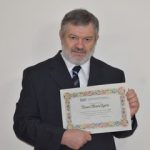 Professor Daniel Mario Ugarte (UNICAMP), founding member of B-MRS, was sworn in as a fellow of TWAS (The World Academy of Sciences) in a virtual ceremony held on November 4 within the 15th TWAS general conference.
The election of Ugarte as a member, in the field of Physics, took place in 2019, but the inauguration ceremony was postponed due to the Covid-19 pandemic.
TWAS fellows are scientists whose contributions to science meet international standards of excellence and who work in or promote research in developing countries.
More information on TWAS member election: https://twas.org/directory/regulations.
|
|||||||||||||||||||||
|
 A month ago, on August 30th, 2021, the XIX B-MRS Meeting began. In its nineteenth edition, the annual event of the Brazilian Materials Research Society (B-MRS) did not take place in a beautiful Brazilian city, as in past editions. This time, around 1,100 participants from more than 30 countries met in a cyberspace setting. Due to the Covid-19 pandemic, the event was held online for the first time. Another characteristic of this year’s event was that it was held in conjunction with the seventeenth edition of the international conference on electronic materials of the International Union of Materials Research Societies (IUMRS ICEM 2021).
An event that had to be reinvented
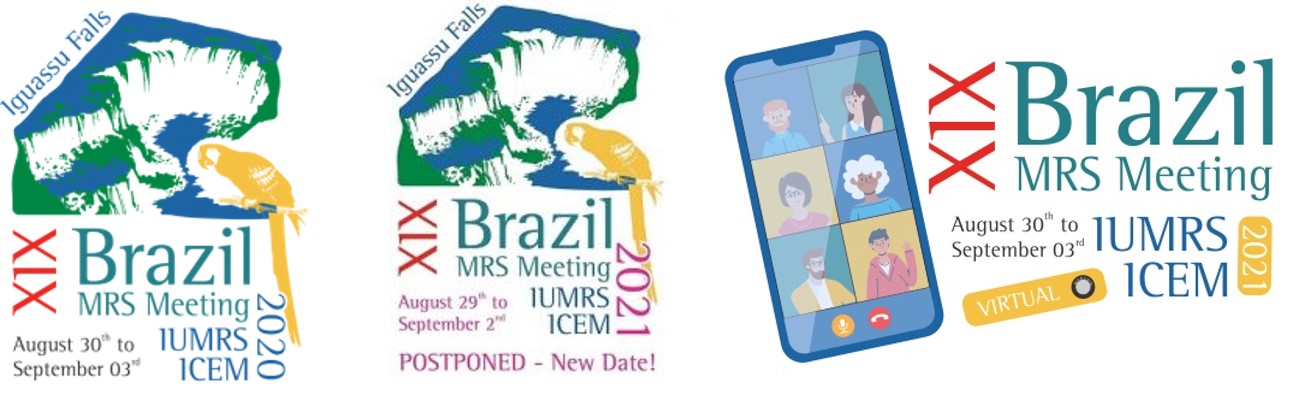
The organization of the joint event started in 2018, when Professor Gustavo Dalpian (UFABC) took over the coordination and, nearly two years in advance, announced the location and date of the event: Hotel Rafain, Foz do Iguaçu, from August 30 to September 3, 2020. In the call for thematic symposia, held at the end of 2019, the organization received 49 proposals submitted by researchers from 18 different countries.
When, on March 11, 2020, WHO declared the Covid-19 pandemic, the organization of the XIX B-MRS Meeting + IUMRS ICEM was already in full swing, with Professor Dalpian as general coordinator (chairman), Professor Carlos Bufon as program coordinator and Professor Flavio Souza as general secretary. At that time, abstract submissions had been open for over a month. However, the organizing committee and the B-MRS and IUMRS boards were closely following the epidemiological situation and by the end of the month they announced that “due to the uncertainties related to COVID-19, and to reduce the risk of harming the health of our community” the XIX B-MRS Meeting + IUMRS ICEM would be postponed for one year. It would be held from 29 August to 2 September 2021. The venue would be maintained. The decision was widely approved by the community and a new call for symposia was opened.
On the afternoon of August 30, 2020, the day the event would open if the pandemic had not changed the plans, B-MRS held a live transmission to talk about the progress of the B-MRS Meeting and about the activities the Society was offering in the context of the pandemic. The live transmission also included a lecture by Professor Osvaldo Novais de Oliveira Jr (former president of B-MRS) regarding perspectives of science in the post-pandemic scenario.
On January 31, 2021, given the continuity of the pandemic and uncertainties regarding vaccination in Brazil, the chair of the XIX B-MRS Meeting + IUMRS ICEM announced a new change: the event would be held from August 30 to September 3 virtually, on a platform that was being developed by Aptor, a company that has provided B-MRS the event management system since its first events.
“We used our know-how acquired over 16 years working with scientific events, as well as our academic experience to provide a virtual experience that could transpose an entire complex physical program to a virtual one, without losing content,” says Leandro D´Agostino, executive director of Aptor. “When planning the module, we focused mainly on B-MRS, as it is an event with very rich content and impressively dynamic,” he says.
There were various challenges in putting together an online event, even for the organizing committee and the B-MRS team, which, for example, had to consider the time zones of the presenters from 33 countries. Another challenge, according to Professor Dalpian, was to mobilize the community. “In this unusual period, we have been exposed to a large number of online events, and it was more difficult to encourage students and researchers to participate in the event in this modality,” says the chairman. “Even so, I believe we had great success, with around 1,100 participants in the event,” he conveys. “During the conference I had the opportunity to talk with several colleagues, and everyone stated that the result was much better than expected for an online event,” says Dalpian.
An intense week
Finally, the XIX B-MRS Meeting + IUMRS ICEM was held in virtual format between the end of August and the beginning of September 2021, with an intense and varied schedule. The event took place live on Aptor’s Eventweb platform, based on the virtual rooms on the Zoom platform. During the hours with more activity, 15 virtual rooms worked simultaneously.
The axis of the program included the 10 plenary sessions with lectures by world-renowned scientists, as well as the symposia’s oral and poster sessions. There were 23 symposia on materials research topics, proposed and organized by 110 researchers from 15 countries, in addition to the symposium of the B-MRS University Chapters (UCs), which this year was about scientific entrepreneurship. Approximately 1,000 works were presented within the symposia by students of all levels and professionals (postdocs, professors and researchers from universities, research institutes and companies).
All presentations took place at scheduled times, with real-time interactions between speakers and presenters and their audiences. In the poster sessions, PDFs and audio files were available to visitors throughout the event, but the presenters were in attendance at the appropriate times to interact with interested parties via chat or video call.
The symposia covered a wide range of topics in Materials Science and Technology, from design to applications, comprising synthesis, manufacture, modification and characterization of materials. There were symposia on nanomaterials, conducting polymers, hydrogels, hybrid materials and nanocomposites, metal oxides, electroceramics, biomaterials, superconductors and quantum materials, among others. Regarding applications, the presentations addressed energy harvesting, conversion and storage, oil and gas industry, decontamination, dentistry and medicine, electronics, and photonics. Advances in the toxicology of nanomaterials and their respective regulation were also discussed.
“The event’s highlight was definitely the quality of the works presented,” says Professor Dalpian, adding that “we were able to watch, for example, really high-level presentations by undergraduate students.”
The event also featured 9 technical webinars on techniques, instruments and tools for research and education, and an exhibition with 16 virtual stands of products, services and inputs for research. Another highlight was the workshops that were offered, at no extra cost, to the event’s participants. On Sunday afternoon, August 29th, the traditional “School of Young Researchers,” was held, given by Professor Valtencir Zucolotto (IFSC-USP, Brazil), to help students and young researchers develop some necessary skills to carry out high-impact science. On Monday night, Professor Eduardo G. Ciapina’s (UNESP, Brazil) addressed the most important aspects for preparing and presenting a scientific work. About 100 people participated in each of the workshops.
The program also had a presentation by the Brazil-Argentina Nanotechnology Center (CBAN) about opportunities for bilateral cooperation, and a panel discussion that brought together speakers from academia, industry and research funding to discuss the application of perovskites in the photovoltaic industry. In addition, on Thursday night, the event hosted a panel discussion on the underrepresentation of women in science aggravated by race and geographic distribution, and the impacts of the pandemic on that reality. The discussion, with broad public participation, was based on short presentations by four female scientists from Argentina, Brazil and the United States, with outstanding scientific careers and active in gender and race issues. The panel was broadcast in a virtual room at the event and, simultaneously, on B-MRS’s YouTube, where the recording is still available.
Opening and plenary lectures
The opening, held on Monday morning, August 30th, featured short speeches by Professor Monica Cotta (President of B-MRS), Professor Rodrigo Martins (President of IUMRS), Paulo César Rezende de Carvalho Alvim (Secretary of Entrepreneurship and Innovation at the Brazilian Ministry of Science, Technology and Innovation) and the general coordinator of the event, Professor Gustavo Dalpian.
In the words of the members of the opening virtual table, those who died as a result of the Covid-19 pandemic were remembered, as well as the role of science and innovation in the pandemic and its importance in increasing the quality of life of human beings. Over 300 people virtually attended the ceremony.
Next, the traditional Memorial Lecture Joaquim da Costa Ribeiro was held. This special lecture was created by B-MRS to honor the pioneer of Materials research in Brazil and, at the same time, to distinguish a senior Brazilian researcher for his or her scientific trajectory. In this event edition, the distinction was granted to Professor Cid de Araújo (UFPE), pioneer of Brazilian Non-Linear Optics. After commenting on Costa Ribeiro’s contributions to Brazilian research and to the organization of the national scientific system, the speaker presented the plasmonic nanocomposites that he uses in Non-Linear Optics experiments. These materials are formed by glasses or colloids with metallic nanoparticles, which act as nanoantennas that significantly increase some optical properties of the material.
The following plenary was given by Professor Thuc-Quyen Nguyen, from the University of California at Santa Barbara (USA), where she directs the Center for Polymers and Organic Solids. The researcher spoke about organic semiconductors, a family of materials that combine the lightness, flexibility and semi-transparency of polymers with the electronic properties of semiconductors. She showed that these materials can be easily processed into films and used in solar cells integrated into building façades and interiors; in portable, wearable devices, as well as in light detectors for night vision and healthcare applications.
On Tuesday, the morning plenary was given by one of the fathers of iron-based superconductors: Professor Hideo Hosono, from the Tokyo Institute of Technology (Japan), whose h index is 141. The scientist explained why iron was considered the worst enemy of superconductivity and how this idea was overturned. He also presented the advances made over the last 15 years in the synthesis, processing and characterization of these materials.
In the afternoon, the topic of the plenary was the discovery of functional materials, which was done for thousands of years based on trial and error. Professor Alex Zunger, from the University of Colorado Boulder (USA), showed that recently, theoretical computational methods have allowed us to further accelerate the discovery of useful materials for humanity. In this context, he presented the Inverse Design, a paradigm based on collaboration between theoretical and experimental scientists, to determine what functionalities are needed for a given application and, based on that, use computational tools to find materials that meet these needs. Zunger, who has an h-index of 151, is the founder of a center and a research group on inverse design in the United States.
Wednesday opened with the plenary of Professor Paula Vilarinho (University of Aveiro, Portugal), deputy director of the largest Portuguese institute in Materials Science and Engineering, CICECO. According to Professor Vilarinho, in a “smart” world where people and objects are increasingly connected via the internet, sensors and actuators play a critical role, and these devices need piezoelectric materials. At the same time, the planet is demanding for materials and sustainable technologies, such as the KNN-based piezoelectric materials (compounds of potassium, sodium and niobium with a perovskite structure) presented by the speaker.

During the afternoon plenary, in a ceremony full of emotion, Professor Edson Leite (UFSCar, Brazil), scientific director of Brazilian National Nanotechnology Laboratory, received the first José Arana Varela Award, created by B-MRS in honor this great Brazilian scientist and former B-MRS president, who died in 2016. Leite was Varela’s first doctoral student and considers him his “scientific father.” Professor Elson Longo also participated as Varela and Leite´s very good friend and collaborator. In the lecture, Edson Leite spoke about colloidal nanocrystals, which, despite having an obviously crystalline structure, have different degrees of structural disorder that impact their properties. He described the challenges involved in the characterization of nanocrystals and the advances achieved, mainly through the ePDF technique.
The seventh plenary of the event was given by Luisa Torsi, Professor at the University of Bari (Italy), and also committed to the role of model for younger women scientists. She presented sensors capable of detecting a single molecule on a micrometer surface (something similar to finding a drop of water in a lake). The researcher and her team are dedicating efforts to develop these devices that can help diagnose various diseases in early stages, for example pancreatic cancer, thus enabling treatment and cure.
In the following plenary, Professor Sergio Rezende (UFPE, Brazil) shared his broad and deep knowledge in the field of Spintronics, which explores the possibilities of an electron spin to generate new functionalities in materials. He presented the main discoveries that advanced Spintronics from the 1980s onwards, thus opening technological frontiers in Electronics. Rezende has developed a very productive and distinguished trajectory both as a researcher of magnetic materials and as STI manager (he was Brazil’s Minister of Science and Technology, among many other positions).
Every problem is a thermal problem, said Professor Tao Deng (Shanghai Jiaotong University, China) at the event’s penultimate plenary. Deng has been committed to developing bio-inspired materials that make thermal processes more efficient. One of the contributions he presented was the development of plasmonic films, inspired by human skin, which allow heating and evaporating the surface of water bodies using sunlight, with applications in water desalination and sterilization, generation of electricity and hydrogen, and energy harvesting.
At the closing plenary, John Rogers (Northwestern University, USA) showed devices that can be comfortably worn on the skin of patients and athletes to monitor various indicators, mainly through the collection and analysis of sweat. This collection is done through tiny channels developed with microfluidic technology. Some of these devices are small clinical laboratories. They can prevent, for example, children with health problems from having to go to hospital or having more invasive or uncomfortable procedures. Rogers, whose h-index is 191, is a co-inventor on more than 100 patents and a co-founder of several startups.
The event’s plenary sessions had an average audience of 160 people and received several questions from the audience at the end, which were sent via chat and formulated by the chairs of the lectures. According to the event’s chair, “the plenary lectures brought a lot of information and originated discussions and questions from the community. This is, without a doubt, the result we planned to reap.”

Closing and awards
In the closing session, held around noon on Friday, September 3, the meeting chair highlighted the quality of the presentations and shared the event’s data, in addition to thanking everyone who made the event possible: his colleagues on the organizing committee, Aptor and B-MRS team, B-MRS and IUMRS boards, symposium organizers, volunteers, participants and sponsors.
The chairman of the XIX B-MRS Meeting then gave the floor to the chairlady of the XX B-MRS Meeting: Professor Lucimara Stolz Roman (UFPR, Brazil), who coordinates the organization of next year’s event with Professor Marcela Mohallen Oliveira (UTFPR, Brazil). Lucimara made a long-awaited announcement: the next B-MRS Meeting will be held in Foz do Iguaçu, at the Rafain Hotel, from 25 to 29 September 2022, resuming the proposal that was initially announced in 2018. The chairlady invited the community to submit proposals for the symposium to organize the event, in the call that is open until October 31st.
Finally, after the words of the presidents of B-MRS and IUMRS, the Student Awards ceremony began, encompassing the Bernhard Gross Awards, given by B-MRS to the best oral presentation and best poster presentation of each symposium, and the awards from the publishers of the American Chemical Society (ACS) and the Royal Society of Chemistry (RSC). ACS gave cash prizes to the 5 best posters and 5 best oral presentations of the entire event, and RSC gave book vouchers to the 6 best works of the event. In total, 51 awards were announced at the ceremony.
The winners were selected based on the evaluation of all the works that applied by sending an extended abstract. The organizers of each symposium were responsible for classifying the candidates according to a series of criteria and then defining one finalist for the oral presentation and another for the poster presentation category. These finalists comprised the list of Bernhard Gross Award winners. ACS and RSC award winners were chosen from this list by the event’s awards committee based on the classification score they received. The complete list of award-winning works is available on the B-MRS website.
“Despite being completely online, due to the pandemic, our event maintained its usual quality, with inspiring plenary sessions and extremely motivated presentations by our researchers and students,” says Professor Mônica Cotta, president of B-MRS. “We looked for various formats, with discussion panels about new technologies and about the underrepresentation of gender in science.” She highlights that “our UCs dazzled us with an extremely innovative workshop, and we could even feel the emotion of the many awards on the small screen!!!” concluding that “In a moment of crisis, we came together to be stronger.”

B-MRS member Mariana Amorim Fraga is the editor, together with 3 other researchers from the United States and Turkey, of a book on challenges for the efficient use of solar energy. Entitled “Sustainable Material Solutions for Solar Energy Technologies. Processing Techniques and Applications“, the book was recently published by Elsevier Publishing.
Fraga is a professor at Universidade Presbiteriana Mackenzie and visiting professor at UNIFESP.
More information about the book: https://www.elsevier.com/books/sustainable-material-solutions-for-solar-energy-technologies/fraga/978-0-12-821592-0