B-MRS End of Year Message.

The year 2020 will undoubtedly be marked with sadness in our lives by the pandemic of Covid-19, which violently altered our daily lives, imposed tragic losses for many of us and gave more space to scientific negacionism, reinforcing the feeling of “nonsense” that we experience in today’s society.

However, at the same time, it was in 2020 that Science was once again a safe haven, pointing out alternatives and strategies to combat this terrible disease, while, in record time, decoding the virus genome and manufacturing vaccines with high efficacy. Brazilian researchers played an active part in building this knowledge chain, while resiliently fighting against threats to the country’s Science, Technology and Innovation (ST&I) structure. The materials research community could not abstain at such a critical moment and therefore quickly adapted research on biosensors, drug-carrying nanoparticles, materials with virucidal properties, etc. to combat SARS-CoV-2.

In 2020 B-MRS also had to reinvent itself. With the postponement of its annual meeting due to the health crisis, the virtual platform was our form of communication. And the community responded! With a strong presence in webinars, online events, and participating in awareness actions to maintain the country’s ST&I infrastructure as well as our most precious resource for the future, young PhDs and undergraduate and graduate students. The drive and motivation that students at our University Chapters show in their activities, brings us the certainty that there is a light at the end of the tunnel for Brazil.

And may 2021 come! We will be ready, equipped with the powerful resources of Science, to build a better year, with more health and decent living conditions for Brazilian citizens.

An excellent end of the year to everyone – as far as possible and observing all necessary care :).

B-MRS Board
EUSMAT opens a new call for Erasmus Mundus Scholarships for the AMASE Master Programme.

Students can apply for joining the AMASE Master Programme, which provides Erasmus Mundus scholarships for carrying out a two-year international Master in Advanced Materials Science and Engineering. The application for the intake 2021 is now open.

The Joint European Master Programme in Advanced Materials Science and Engineering (AMASE) is aimed at students who have already obtained their Bachelor in Materials Science, Materials Engineering or other related Engineering Sciences, as well as Physics, Chemistry or other Natural Sciences. The programme is carried out by:

  • UdS – Universität des Saarlandes / Germany
  • LTU – Luleå tekniska universitet / Sweden
  • UL – Université de Lorraine / France
  • UPC – Universitat Politècnica de Catalunya Barcelonatech /Spain
  • MUL – Montanuniversität Leoben / Austria
  • UPD – Università degli Studi di Padua / Italy

Within AMASE, students spend the first year at one of the partner universities and the third semester at a Second University. In the fourth (last) semester the student writes the Master’ thesis either at the Second or the Entrance University.

Through this exchange of cultures, the student gains vast advantages on the academic labour market, profits from personal growth and learns at least one new language. A particularity of the AMASE programme is that students have to study in two different languages by selecting the corresponding university (Spanish at UPC, French at UL, German at UdS and English at LTU, MUL and UPD). Language courses, as well as training in intercultural communication and complementary skills, are provided during the course.

Participation costs for the programme are 1.500 € per semester for EU-students and 4.500 € per semester for Non-EU students. Basic health and social insurance is included in the fees. To support students, the European Commission provides Erasmus Mundus Programme scholarships for especially gifted and motivated students. These scholarships consist of 1.000 € monthly allowance, a contribution for travel costs and installation (depending on the country of origin); and covering of participation costs.

Deadline for applying for Erasmus Mundus financial contribution is 15th of February 2021 (15th of January for students starting at LTU).

For more information please check our website www.amase-master.net or contact us at: office@eusmat.net.

If you are interested in our programme, you can apply for the scholarships and the study place through: https://amasemaster.net/application/SubmitAbstract.php

B-MRS former president elected vice president of IUMRS.

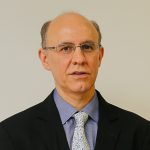
chuProf. Osvaldo Novais de Oliveira Junior (IFSC-USP), B-MRS member, was elected First Vice President of the International Union of Materials Research Societies (IUMRS).

The Brazilian scientist was chosen for the position unanimously, in an election held this December, involving materials research societies from around the world that participate in IUMRS.

He will hold the position of First Vice President for two years, from 2021 to 2022. At the end of his term, Oliveira Junior, who was the President of B-MRS from 2016 to 2020, will automatically assume the presidency of IUMRS.

B-MRS member is the new director of CINE.

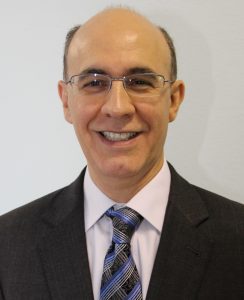
ana flaviaProf. Ana Flávia Nogueira (UNICAMP), B-MRS member, took on the position of general director of the Center for Innovation in New Energies (CINE) this December.

Founded in 2018 by the São Paulo Research Foundation (FAPESP) and the company Shell, CINE brings together research groups from UNICAMP, IPEN and USP and their collaborators to develop research on the frontier of knowledge and transfer technology to the industry in the area of new energies.

Former B-MRS president is elected full member of the Brazilian Academy of Sciences.

Osvaldo Novais de Oliveira JrProfessor Osvaldo Novais de Oliveira Junior (IFSC-USP), B-MRS member, was elected a full member of the Brazilian Academy of Sciences (ABC) in the area of Physical Sciences. The professor was president of B-MRS for two consecutive terms, from 2016 to 2020.

The election of the 21 new full members of ABC was held at an ordinary general meeting on December 3, 2020, based on nominations made by full members of ABC.

B-MRS Newsletter. Year 7, issue 11.


logo header 400

Newsletter of the
Brazilian Materials
Research Society

Year 7, issue 11. December 21, 2020.

boas festas sbpmat

B-MRS End of Year Message

The year 2020 will undoubtedly be marked with sadness in our lives by the pandemic of Covid-19, which violently altered our daily lives, imposed tragic losses for many of us and gave more space to scientific negacionism, reinforcing the feeling of “nonsense” that we experience in today’s society.

However, at the same time, it was in 2020 that Science was once again a safe haven, pointing out alternatives and strategies to combat this terrible disease, while, in record time, decoding the virus genome and manufacturing vaccines with high efficacy. Brazilian researchers played an active part in building this knowledge chain, while resiliently fighting against threats to the country’s Science, Technology and Innovation (ST&I) structure. The materials research community could not abstain at such a critical moment and therefore quickly adapted research on biosensors, drug-carrying nanoparticles, materials with virucidal properties, etc. to combat SARS-CoV-2.

In 2020 B-MRS also had to reinvent itself. With the postponement of its annual meeting due to the health crisis, the virtual platform was our form of communication. And the community responded! With a strong presence in webinars, online events, and participating in awareness actions to maintain the country’s ST&I infrastructure as well as our most precious resource for the future, young PhDs and undergraduate and graduate students. The drive and motivation that students at our University Chapters show in their activities, brings us the certainty that there is a light at the end of the tunnel for Brazil.

And may 2021 come! We will be ready, equipped with the powerful resources of Science, to build a better year, with more health and decent living conditions for Brazilian citizens.

An excellent end of the year to everyone – as far as possible and observing all necessary care :).

B-MRS Board

Featured Paper

By adopting a strategy inspired by nature, a team led by researchers from Brazil was able to produce a material that stimulates bone regeneration, which is very similar to the natural material that performs this function in the body. The research was recently reported on ACS Applied Materials & Interfaces. Know more.

imagem news

Unpaid Researchers

We share the story of Thiago Marinho Duarte, 33, PhD in Chemistry from UFPB. First in his family to obtain a university degree, Thiago had to disregard the thirteen years dedicated to his scientific education and training. He has been doing electrician jobs while applying, without success, for postdoctoral scholarships and temporary positions in the area. See here.

thiago_news

A Nature article about a survey carried out with more than 7,600 postdocs in the world shows the instability and devaluation they experience, and reports that 2/3 of the interviewees want to continue in academia, despite the difficulties. See here.

News from B-MRS Members

– Prof. Osvaldo Novais de Oliveira Junior (IFSC-USP), former B-MRS president, was elected Vice President of IUMRS (know more) and full member of the Brazilian Academy of Sciences (know more).

– Prof. Andrea S. S. de Camargo (IFSC-USP), B-MRS scientific director, was appointed editor of the Journal of Materials Science. Know more.

Prof. Ana Flávia Nogueira (UNICAMP), B-MRS member, took on the position of general director of the Center for Innovation in New Energies. Know more.

B-MRS News

– Represented by Prof. Daniel Mario Ugarte (UNICAMP), B-MRS delivered a plaque in honor of the scientist and engineer Ricardo Rodrigues, one of the leaders in the construction of Brazilian synchrotron light sources. Know more.

Advocacy & Policy

– B-MRS and dozens of scientific entities signed the “Letter from the City of Natal”, manifesto in defense of science and technology, quality education at all levels, environment, sustainable development and democracy in Brazil. See document.

Reading Tips

– Using two-dimensional materials, scientists create a new way to fix electrons and distribute them in regular arrangements, generating “electron crystals”, and develop a method that can analyze this structure without interfering with it (Nature). Know more.

– Based on simulation data, scientists were to able to train a neural network that sheds light on the relationship between monomer sequences and polymer properties. Artificial intelligence tools should help develop polymers with the desired properties (Science Advances). Know more.

– Use of a new liquid resin combined with an innovative 3D printing technique generates resistant, rigid or flexible objects within a few minutes (Advanced Materials). Know more.

– Via 3D printing, scientists use paint with graphene flakes to manufacture “sandwiches” with several two-dimensional layers, which allowed to understand how electrons advance between the flakes. The study opens possibilities for 3D printing of optoelectronic devices based on 2D materials (Advanced Functional Materials). Know more.

– Scientists develop piezoelectric nylon fibers that utilize the vibrations of body movement as a source of energy. The study opens possibilities in electronic fabrics (Advanced Functional Materials). Know more.

Opportunities

– Abstract submission for the special issue on surfaces for energy efficiency of the journal Frontiers in Chemical Engineering is open until February 4th. Know more.

boas festas sbpmat

Follow us on social media

You can suggest news, opportunities, events or reading tips in the materials field to be covered by B-MRS Newsletter. Write to comunicacao@sbpmat.org.br.